Independent music radio dedicated to instrumental and country sounds from around the world. Here, style matters more than language, and music travels across cultures
Le 12 avril, le monde entier célébrera la Journée internationale des vols habités dans l’espace, une célébration annuelle de l’anniversaire du premier vol spatial habité de Yuri Gagarin.
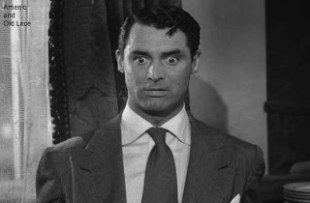
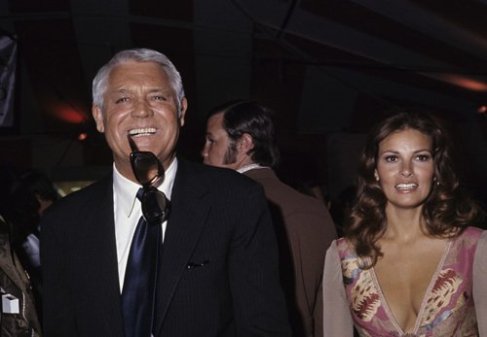
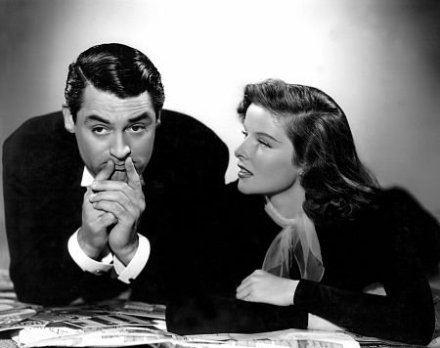
Cary Grant (born Archibald Alexander Leach; January 18, 1904 – November 29, 1986) was an English stage and Hollywood film actor who became an American citizen in 1942. Known for his transatlantic accent, debonair demeanor and “dashing good looks”, Grant is considered one of classic Hollywood‘s definitive leading men.
Archibald Alexander Leach was born at 15 Hughenden Road, Horfield, Bristol, England, to Elsie Maria (née Kingdon) Leach (1877–1973) and Elias James Leach (1873–1935). An only child, Leach had an unhappy upbringing, attending Bishop Road Primary School.
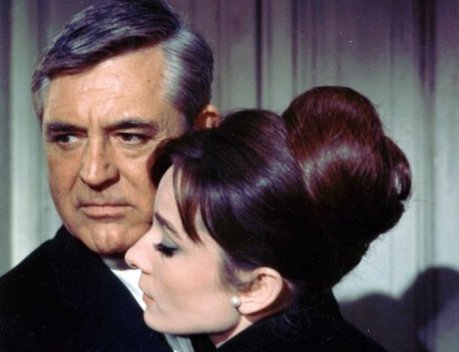
CARY GRANT WITH AUDREY HEPBURN
His mother had suffered from clinical depression since the death of a previous child. Her husband placed her in a mental institution and told his 9-year-old son only that she had gone away on a “long holiday”. Believing she was dead, Leach did not learn otherwise until he was 31 and discovered her alive in a care facility. When Leach was 10, his father abandoned him after remarrying and having a baby with his new young wife.
Leach was expelled from the Fairfield Grammar School in Bristol in 1918. After joining the “Bob Pender Stage Troupe”, Leach performed as a stilt walker and traveled with the group to the United States in 1920 at the age of 16 on the RMS Olympic, on a two-year tour of the country. He was processed at Ellis Island on July 28, 1920.
When the troupe returned to the UK, he decided to stay in the U.S. and continue his stage career. During this time, he became a part of thevaudeville world and toured with Parker, Rand, and Leach.
Still using his birth name, he performed on the stage at The Muny in St. Louis,Missouri, in such shows as Irene (1931), Music in May (1931), Nina Rosa (1931), Rio Rita (1931), Street Singer (1931), The Three Musketeers (1931), and Wonderful Night (1931). Leach’s experience on stage as a stilt walker, acrobat, juggler, and mime taught him “phenomenal physical grace and exquisite comic timing” and the value of teamwork, skills which would benefit him in Hollywood.
Leach became a naturalized United States citizen on June 26, 1942, at which time he also legally changed his name from “Archibald Alexander Leach” to “Cary Grant”.
After appearing in several musicals on Broadway under the name Archie Leach, Leach went to Hollywood in 1931. When told to change his name, he proposed “Cary Lockwood”, the name of the character he had played in the Broadway show Nikki, based upon the recent film The Last Flight.
He signed with Paramount Pictures, where studio bosses decided that the name “Cary” was acceptable but that “Lockwood” was too similar to another actor’s surname. Paramount gave their new actor a list of surnames to choose from, and he selected “Grant” because the initials C and G had already proved lucky for Clark Gable and Gary Cooper, two of Hollywood’s biggest film stars.
I’m No Angel was a tremendous financial success and, along with She Done Him Wrong, which was nominated for an Academy Award for Best Picture, saved Paramount from bankruptcy. Paramount put Grant in a series of unsuccessful films until 1936, when he signed with Columbia Pictures. His first major comedy hit was when he was loaned to Hal Roach‘s studio for the 1937 Topper (which was distributed by MGM).
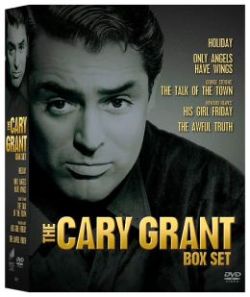
The Awful Truth (1937) was a pivotal film in Grant’s career, establishing for him a screen persona as a sophisticated light comedy leading man. As Grant later wrote, “I pretended to be somebody I wanted to be and I finally became that person. Or he became me. Or we met at some point.” Grant is said to have based his characterization in The Awful Truth on the mannerisms and intonations of the film’s director, Leo McCarey, whom he resembled physically. As writer/director Peter Bogdanovich noted, “After The Awful Truth, when it came to light comedy, there was Cary Grant and then everyone else was an also-ran.”
Grant remained one of Hollywood’s top box-office attractions for almost 30 years. Howard Hawks said that Grant was “so far the best that there isn’t anybody to be compared to him”.[15]David Thomson called him “the best and most important actor in the history of the cinema“.
Grant was a favorite of Hitchcock, who called him “the only actor I ever loved in my whole life”.
Besides Suspicion, Grant appeared in the Hitchcock classics Notorious (1946), To Catch a Thief(1955), and North by Northwest (1959). Biographer Patrick McGilligan wrote that in 1965 Hitchcock asked Grant to star in Torn Curtain (1966) only to learn that Grant had decided to retire after making one more film, Walk, Don’t Run (1966);
Paul Newman was cast instead, oppositeJulie Andrews. Producers Broccoli and Saltzman originally sought Cary Grant for the role of James Bond in Dr. No but discarded the idea as Grant would be committed to only one feature film and the producers decided to go after someone who could be part of a franchise.
Grant was the first actor to “go independent” by not renewing his studio contract, effectively leaving the studio system, which almost completely controlled what an actor could or could not do. In this way, Grant was able to control every aspect of his career, at the risk of not working because no particular studio had an interest in his career long term.
He decided which films he was going to appear in, often had personal choice of directors and co-stars, and at times even negotiated a share of the gross revenue, something uncommon at the time. Grant received more than $700,000 for his 10% of the gross for To Catch a Thief while Hitchcock received less than $50,000 for directing and producing it.
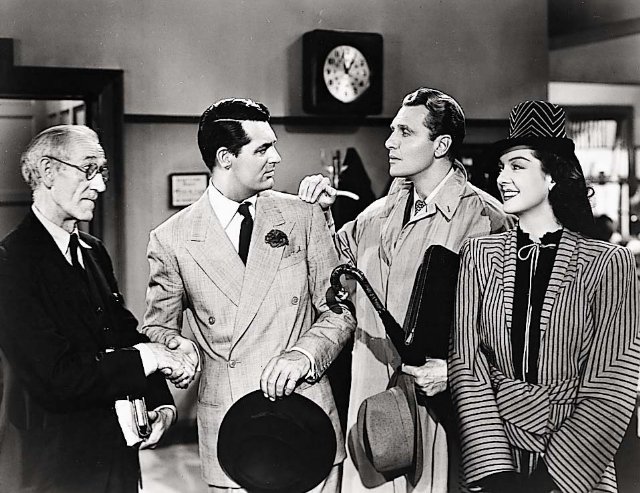
Grant poked fun at himself with statements such as “Everyone wants to be Cary Grant—even I want to be Cary Grant”, and in ad-lib lines—such as in the film His Girl Friday, saying, “I never had so much fun since Archie Leach died”. In Arsenic and Old Lace (1944), a gravestone is seen bearing the name Archie Leach. According to a famous story now believed to be apocryphal, after seeing a telegram from a magazine editor to his agent asking “How old Cary Grant?” Grant reportedly responded with “Old Cary Grant fine. How you?
Cary Grant retired from the screen at 62 when his daughter Jennifer was born, in order to focus on bringing her up and to provide a sense of permanency and stability in her life.
While bringing up his daughter, he archived artifacts of her childhood and adolescence in a bank-quality room-sized vault he had installed in the house.
His daughter attributed this meticulous collection to the fact that artifacts of his own childhood had been destroyed during the Luftwaffe’s bombing of Bristol in the Second World War (an event that also claimed the lives of his uncle, aunt, and cousin as well as the cousin’s husband and grandson), and he may have wanted to prevent her from experiencing a similar loss.
Although Grant had retired from the screen, he remained active.
CARY GRANT – MARTIN LANDAU
In the late 1960s, he accepted a position on the board of directors at Fabergé. By all accounts this position was not honorary, as some had assumed; Grant regularly attended meetings and his mere appearance at a product launch would almost certainly guarantee its success. The position also permitted use of a private plane, which Grant could use to fly to see his daughter wherever her mother, Dyan Cannon, was working.
He later joined the boards of Hollywood Park, the Academy of Magical Arts (The Magic Castle, Hollywood, California), Western Airlines (now Delta Air Lines), andMGM.
He was a keen motoring enthusiast and, like many other Hollywood stars of the era, owned many notable cars. One of the first he owned was a 1929 Cadillac Cabriolet. His love of Cadillacs never waned and he later purchased a Cadillac Eldorado Biarritz. Other cars that he owned included an MG Magnette and a Sunbeam Alpine series one roadster.
In the last few years of his life, Grant undertook tours of the United States in a one-man show, A Conversation with Cary Grant, in which he would show clips from his films and answer audience questions. Grant was preparing for a performance at the Adler Theatre in Davenport, Iowa, on the afternoon of November 29, 1986, when he sustained a cerebral hemorrhage (he had previously suffered a stroke in October 1984). His wife did not know what was going on and she went to a local pharmacy to get aspirin. He died at 11:22 p.m. in St. Luke’s Hospital at the age of 82.
The bulk of his estate, worth millions of dollars, went to his fifth wife, Barbara Harris, and his daughter, Jennifer Grant
In 2001, a statue of Grant was erected in Millennium Square, a regenerated area next to Bristol Harbour in his city of birth, Bristol.
In November 2005, Grant came in first in the “The 50 Greatest Movie Stars of All Time” list by Premiere magazine. Richard Schickel, the film critic, said about Grant: “He’s the best star actor there ever was in the movies.
Joseph Ira Dassin, dit Joe Dassin, né le 5 novembre 1938 à New York et mort le 20 août 1980 à Papeete (Tahiti), est un chanteur, compositeur et écrivain américano-français. En seize ans de carrièr…
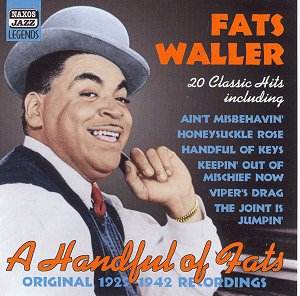
Thomas Wright “Fats” Waller (May 21, 1904 – December 15, 1943) was an American jazz pianist, organist, composer, singer, and comedic entertainer, whose innovations to the Harlem stride style laid the groundwork for modern jazz piano, and whose best-known compositions, “Ain’t Misbehavin'” and “Honeysuckle Rose”, were inducted into the Grammy Hall of Fame in 1984 and 1999.
Waller’s son Maurice wrote in his 1977 biography of his father that Waller had once complained on hearing the song, and came from upstairs to admonish him never to play it in his hearing because he had had to sell it when he needed money.
Maurice Waller’s biography similarly notes his father’s objections to hearing “On the Sunny Side of the Street” playing on the radio.
Waller recorded “I Can’t Give You…” in 1938, playing the tune but making fun of the lyrics; the recording was with Adelaide Hall who had introduced the song to the world at Les Ambassadeurs Club in New York in 1928.
The anonymous sleeve notes on the 1960 RCA Victor album Handful of Keys state that Waller copyrighted over 400 songs, many of which co-written with his closest collaborator Andy Razaf.
Razaf described his partner as “the soul of melody… a man who made the piano sing… both big in body and in mind… known for his generosity… a bubbling bundle of joy”.
Gene Sedric, a clarinetist who played with Waller on some of his 1930s recordings, is quoted in these same sleeve notes recalling Waller’s recording technique with considerable admiration: “Fats was the most relaxed man I ever saw in a studio, and so he made everybody else relaxed.
After a balance had been taken, we’d just need one take to make a side, unless it was a kind of difficult number.”
Waller played with many performers, from Nathaniel Shilkret and Gene Austin, to Erskine Tate, Fletcher Henderson, McKinney’s Cotton Pickers and Adelaide Hall, but his greatest success came with his own five- or six-piece combo, “Fats Waller and his Rhythm”.
His playing once put him at risk of injury. Waller was kidnapped in Chicago leaving a performance in 1926. Four men bundled him into a car and took him to the Hawthorne Inn, owned by Al Capone.
Waller was ordered inside the building, and found a party in full swing. Gun to his back, he was pushed towards a piano, and told to play. A terrified Waller realized he was the “surprise guest” at Capone’s birthday party, and took comfort that the gangsters did not intend to kill him.
It is rumored that Waller stayed at the Hawthorne Inn for three days and left very drunk, extremely tired, and had earned thousands of dollars in cash from Capone and other party-goers as tips.
In 1926, Waller began his recording association with the Victor Talking Machine Company/RCA Victor, his principal record company for the rest of his life, with the organ solos “St. Louis Blues” and his own composition, “Lenox Avenue Blues”.
Although he recorded with various groups, including Morris’s Hot Babes (1927), Fats Waller’s Buddies (1929) (one of the earliest multiracial groups to record), and McKinney’s Cotton Pickers (1929), his most important contribution to the Harlem stride piano tradition was a series of solo recordings of his own compositions: “Handful of Keys”, “Smashing Thirds”, “Numb Fumblin'”, and “Valentine Stomp” (1929).
After sessions with Ted Lewis (1931), Jack Teagarden (1931) and Billy Banks’ Rhythmakers (1932), he began in May 1934 the voluminous series of recordings with a small band known as Fats Waller and his Rhythm.
This six-piece group usually included Herman Autrey (sometimes replaced by Bill Coleman or John “Bugs” Hamilton), Gene Sedric or Rudy Powell, and Al Casey.
Waller wrote “Squeeze Me” (1919), “Keepin’ Out of Mischief Now”, “Ain’t Misbehavin'” (1929), “Blue Turning Grey Over You”, “I’ve Got a Feeling I’m Falling” (1929), “Honeysuckle Rose” (1929) and “Jitterbug Waltz” (1942). He composed stride piano display pieces such as “Handful of Keys”, “Valentine Stomp” and “Viper’s Drag”.
He enjoyed success touring the United Kingdom and Ireland in the 1930s. He appeared in one of the first BBC television broadcasts.
This slideshow requires JavaScript.
While in Britain, Waller also recorded a number of songs for EMI on their Compton Theatre organ located in their Abbey Road Studios in St John’s Wood. He appeared in several feature films and short subject films, most notably Stormy Weather in 1943, which was released July 21, just months before his death.
For the hit Broadway show Hot Chocolates, he and Razaf wrote “(What Did I Do to Be So) Black and Blue” (1929), which became a hit for Ethel Waters and Louis Armstrong.
Waller performed Bach organ pieces for small groups on occasion. Waller influenced many pre-bebop jazz pianists; Count Basie and Erroll Garner have both reanimated his hit songs. In addition to his playing, Waller was known for his many quips during his performances.
Between 1926 and the end of 1927, Waller recorded a series of pipe organ solo records. These represent the first time syncopated jazz compositions were performed on a full-sized church organ.
Waller contracted pneumonia and died on a cross-country train trip near Kansas City, Missouri, on December 15, 1943. His final recording session was with an interracial group in Detroit, Michigan, that included white trumpeter Don Hirleman.
Waller was returning to New York City from Los Angeles, after the smash success of Stormy Weather, and after a successful engagement at the Zanzibar Room, during which he had fallen ill.
More than 4,000 people attended his funeral in Harlem, which prompted Dr. Adam Clayton Powell, Jr., who delivered the eulogy, to say that Fats Waller “always played to a packed house.”
Afterwards he was cremated and his ashes were scattered, from an airplane piloted by an unidentified World War black aviator, over Harlem.
One of his surviving relatives is former Georgia Tech Yellow Jacket and current Baltimore Ravens wideout Darren Waller, who is Fats’ paternal great-grandson.
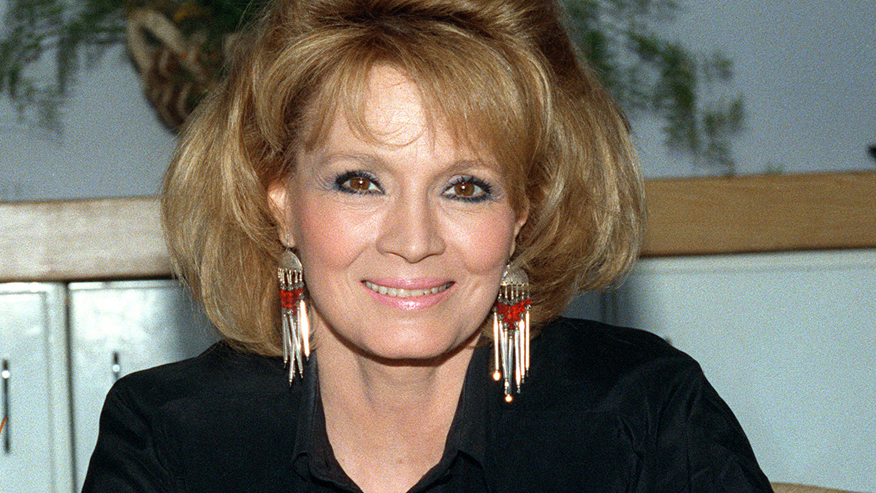
Angie Dickinson (born September 30, 1931) is an American actress. She began her career on television, appearing in many anthology series during 1950s, before landing her breakthrough role in the 1959 western film Rio Bravo, for which she received Golden Globe Award for New Star of the Year.
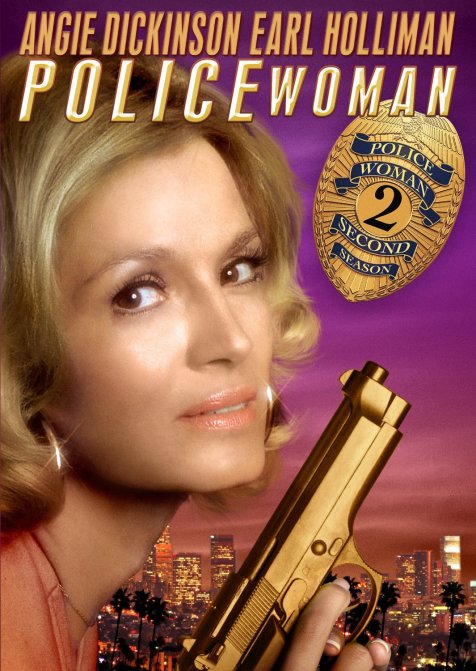
Dickinson has appeared in more than 50 films, including Ocean’s 11 (1960), The Sins of Rachel Cade (1961), Jessica (1962), Captain Newman, M.D. (1963), The Killers (1964), The Art of Love (1965), The Chase (1966) and the neo-noir classic Point Blank (1967). From 1974 to 1978, Dickinson starred as Sergeant Leann “Pepper” Anderson in the NBC crime series Police Woman, for which she received Golden Globe Award for Best Actress – Television Series Drama and three Primetime Emmy Award for Outstanding Lead Actress in a Drama Series nominations.
During her later career, Dickinson starred in a number of television movies and miniseries, also playing supporting roles in films such as Sabrina (1995), Pay It Forward (2000) and Big Bad Love (2001). As lead actress, she starred in the 1980 erotic crime thriller Dressed to Kill, for which she received a Saturn Award for Best Actress.
Dickinson, the second of four daughters, was born Angeline Brown (called “Angie” by family and friends) in Kulm, North Dakota, the daughter of Fredericka (née Hehr) and Leo Henry Brown.
Her family is of German descent and she was raised Roman Catholic.
Her father was a small-town newspaper publisher and editor, working on the Kulm Messenger and the Edgeley Mail.
In 1942, her family moved to Burbank, California, where she attended Bellarmine-Jefferson High School, graduating in 1947 at 15 years of age. The previous year, she had won the Sixth Annual Bill of Rights essay contest.
She studied at Glendale Community College and in 1954 graduated from Immaculate Heart College with a degree in business. Taking a cue from her publisher father, she had intended to be a writer. While a student from 1950–52, she worked as a secretary at Lockheed Air Terminal in Burbank (now Bob Hope Airport) and in a parts factory. She became Angie Dickinson in 1952, when she married football player Gene Dickinson.
Dickinson entered a beauty pageant in 1953 and placed second. The exposure brought her to the attention of a television industry producer, who asked her to consider a career in acting. She studied the craft and a few years later was approached by NBC to guest-star on a number of variety shows, including The Colgate Comedy Hour. She soon met Frank Sinatra, who became a lifelong friend. She later was cast as Sinatra’s wife in the film Ocean’s 11.
On New Year’s Eve 1954, Dickinson made her television acting debut in an episode of Death Valley Days. This led to other roles in such productions as Matinee Theatre (eight episodes), Buffalo Bill Jr., City Detective, It’s a Great Life (two episodes), Gray Ghost, General Electric Theater, Broken Arrow, The People’s Choice (twice), Meet McGraw (twice), Northwest Passage, Gunsmoke, The Virginian, Tombstone Territory, Cheyenne, and The Restless Gun.
In 1956, Dickinson was cast as Ann Drew, who slips a gun to her jailed husband, Harry (John Craven), a former associate of the Jesse James gang, in the ABC/Desilu western series, The Life and Legend of Wyatt Earp, starring Hugh O’Brian. In the story line, Harry vowed never to go to prison and was shot to death while escaping.
In 1957, she was cast as Amy Bender in Richard Boone’s series “Have Gun-Will Travel” in the episode “A Matter of Ethics.” She played the sister of a man who was killed and who wanted the murderer lynched.
In 1958, she was cast as Laura Meadows in the episode “The Deserters” of an ABC/Warner Brothers western series, Colt .45, with Wayde Preston.
That year she also played the role of defendant Mrs. Fargo in the Perry Mason episode “The Case of the One-Eyed Witness.”
Dickinson went on to create memorable characters in Mike Hammer, Wagon Train, and Men into Space. In 1965, she had a recurring role as Carol Tredman on NBC’s Dr. Kildare. She had a memorable turn as the duplicitous murder conspirator in a 1964 episode of The Fugitive series with David Janssen and fellow guest star Robert Duvall. She was at her evil best as an unfaithful wife and bank robber in the 1958 “Wild Blue Yonder” episode of Rod Cameron’s syndicated television series State Trooper.
She starred in two Alfred Hitchcock Hour episodes, “Captive Audience” with James Mason on Oct. 18, 1962, and “Thanatos Palace Hotel” on Feb. 1, 1965.
Dickinson’s motion picture career began with a small, uncredited role in Lucky Me (1954) starring Doris Day, followed by The Return of Jack Slade (1955), Man with the Gun (1955), and Hidden Guns (1956). She had her first starring role in Gun the Man Down (1956) with James Arness, followed by the Sam Fuller cult film China Gate (1957), which depicted an early view of the Vietnam War.
Rejecting the Marilyn Monroe/Jayne Mansfield style of platinum blonde sex-symbolism because she felt it would narrow her acting options, Dickinson initially allowed studios to lighten her naturally brunette hair to only honey-blonde.
She appeared early in her career mainly in B-movies or westerns, including Shoot-Out at Medicine Bend (1957), in which she co-starred with James Garner. In the 1958 crime drama Cry Terror!, Dickinson had a supporting role opposite James Mason and Rod Steiger as a femme fatale.
In 1959, Dickinson’s big-screen breakthrough role came in Howard Hawks’ Rio Bravo, in which she played a flirtatious gambler called “Feathers” who becomes attracted to the town sheriff played by Dickinson’s childhood idol John Wayne. The film co-starred Dean Martin, Ricky Nelson, and Walter Brennan. When Hawks sold his personal contract with her to a major studio without her knowledge, she was unhappy. Dickinson nonetheless became one of the more prominent leading ladies of the next decade, beginning with The Bramble Bush with Richard Burton. She also took a supporting role in Ocean’s 11 with friends Sinatra and Martin, released in 1960.
These were followed by a political potboiler, A Fever in the Blood (1961); a Belgian Congo-based melodrama, The Sins of Rachel Cade (1961), in which she played a missionary nurse tempted by lust; a scheming woman in Rome Adventure (1962), filmed in Italy, and the title role in Jean Negulesco’s Jessica (1962) with Maurice Chevalier, in which she played a young midwife resented by the married women of the town, set in Sicily.
Angie would also share the screen with friend Gregory Peck as a military nurse in the dark comedy Captain Newman, M.D. (1963).
For The Killers (1964), originally intended to be the very first made-for-television movie but released to theatres due to its violent content, Dickinson played a femme fatale opposite future U.S. President Ronald Reagan in his last movie role.
Directed by Don Siegel, it was a remake of the 1946 version based on a story by Ernest Hemingway and the only film Reagan made in which he was cast as a villain. He viciously slaps Dickinson in one of the film’s scenes.[8]
Dickinson co-starred in the comedy The Art of Love (1965), playing the love interest of both James Garner and Dick Van Dyke. She joined a star-studded Arthur Penn/Sam Spiegel production, The Chase (1966), along with Marlon Brando, Jane Fonda, Robert Redford, and Robert Duvall. That same year she was featured in Cast a Giant Shadow, a war story with Kirk Douglas.
Dickinson’s best movie of this era was arguably John Boorman’s cult classic Point Blank (1967), a lurid crime drama with Lee Marvin as a criminal betrayed by his wife and best friend and out for revenge. The film epitomized the stark urban mood of the period, and its reputation has grown through the years.
Westerns would continue to be a part of her work in the late ’60s, when she starred in The Last Challenge opposite Glenn Ford, in Young Billy Young with Robert Mitchum, and in Sam Whiskey, where she gave rising star Burt Reynolds his first on-screen kiss.
In 1971, she played a lascivious substitute high school teacher in the dark comedy Pretty Maids All in a Row for director Roger Vadim and writer-producer Gene Roddenberry, in which her character seduces a sexually inexperienced student, portrayed by John David Carson, against the backdrop of a series of murders of female students at the same high school; it was a box-office failure. In 1972’s The Outside Man, a French movie shot in L.A., with Jean-Louis Trintignant, directed by Jacques Deray, she plays the wife of a mobster. In 1973, she co-starred with Roy Thinnes in the supernatural thriller The Norliss Tapes, a TV movie produced and directed by Dan Curtis.
One of Dickinson’s best known and most sexually provocative movie roles followed, that of the tawdry widow Wilma McClatchie from the Great Depression romp Big Bad Mama (1974) with William Shatner and Tom Skerritt. Although well into her forties at the time, she appeared nude in several scenes, which created interest in the movie and a new generation of male fans for Dickinson.
A 1966 Esquire magazine cover gained Dickinson additional fame and notoriety, her having posed in nothing but a sweater and a pair of panty hose. The photo became so iconic that, while celebrating the magazine’s 70th anniversary in 2003, the Dickinson pose was recreated for the cover by Britney Spears.
Police Woman
Dickinson as Pepper Anderson, 1975 in Police Woman
Dickinson returned to the small screen in March 1974 for an episode of the critically acclaimed hit anthology series Police Story. That one guest appearance proved to be so popular that NBC offered Dickinson her own television show, which became a ground-breaking weekly series called Police Woman; it was the first successful dramatic TV series to feature a woman in the title role. At first, Dickinson was reluctant, but when producers told her she could become a household name, she accepted the role. They were right.
In the series, she played Sgt. Leann “Pepper” Anderson, an officer of the Los Angeles Police Department’s Criminal Conspiracy Unit who often works undercover.
The show became a hit, reaching number one in many countries in which it aired during its first year. It ran for four seasons and Dickinson would win a Golden Globe award, and receive Emmy nominations for three consecutive years.
Angie Dickinson
Co-starring on the show was Earl Holliman as Sergeant Bill Crowley, Anderson’s commanding officer, along with Charles Dierkop as investigator Pete Royster and Ed Bernard as investigator Joe Styles.
The series ran from 1974 to 1978. The same year the show ended, Dickinson reprised her Pepper Anderson character on the television special Ringo, co-starring with Ringo Starr and John Ritter. She also parodied the part in the 1975 and 1979 Bob Hope Christmas specials for NBC. She would do the same years later on the 1987 Christmas episode of NBC’s Saturday Night Live.
Police Woman caused a surge of applications for employment from women to police departments around the United States; journalists who have in recent years examined the inspiration for long-term female law enforcement officials to adopt this vocation as their own have been surprised by how often Dickinson’s Police Woman has been referenced.
Dickinson and Police Woman proved that a female lead could carry an hour-long television series, paving the way for several female-starring, hour-long TV series during the 1970s and 1980s, such as Charlie’s Angels, Wonder Woman, The Bionic Woman and Cagney and Lacey. In 1987, the Los Angeles Police Department awarded Dickinson an honorary doctorate, which led her to quip, “Now you can call me Doctor Pepper.”
On occasion during the 1970s, Dickinson took part in the popular Dean Martin Celebrity Roast on television, and herself was the guest of honor on August 2, 1977, roasted by a dais of celebrities that included James Stewart, Orson Welles and her Police Woman series co-star Earl Holliman.
The 1980s
Having done a television series plus the mini-series Pearl (1978) about the Pearl Harbor bombing of 1941, Dickinson’s career in feature films appeared to be in decline. But she returned to the big screen in Brian De Palma’s erotic thriller Dressed to Kill (1980), for which she gained considerable notice, particularly for a long, silent scene in a museum before the character meets her fate. The role of Kate Miller, a sexually frustrated New York housewife, earned her a 1981 Saturn Award for Best Actress. “The performers are excellent,” wrote Vincent Canby in his July 25, 1980 New York Times review, “especially Miss Dickinson.”
She took a less substantial role in 1981’s Death Hunt, reuniting her with Lee Marvin, and also appeared in Charlie Chan and the Curse of the Dragon Queen. Earlier that year, she had been the first choice to play the character Krystle Carrington on the television series Dynasty but, deciding she wanted to spend more time with her daughter, she turned it down; the role instead went to Linda Evans. In the mid-1980s Dickinson declined the role of Sable Colby on the Dynasty spin-off, The Colbys.
After nixing her own Johnny Carson-produced prospective sitcom, The Angie Dickinson Show, in 1980 after only two episodes had been shot because she did not feel she was funny enough, the private-eye series Cassie & Co. became her unsuccessful attempt at a television comeback. She then starred in several TV movies, such as One Shoe Makes It Murder (1982), Jealousy (1984), A Touch of Scandal (1984), and Stillwatch (1987). She had a pivotal role in the highly rated mini-series Hollywood Wives (1985), based on a novel by Jackie Collins.
In 1982, and again in 1986, Dickinson appeared in two of Perry Como’s Christmas specials for the ABC television network, in both of which she did something she was not known to have done before: singing. The specials in which she appeared, and in which she sang songs, were Perry Como’s Christmas In Paris, produced on location in Paris, France, which was transmitted on Saturday, December 18, 1982, and The Perry Como Christmas Special, produced on location in San Antonio, Texas, and transmitted on Saturday, December 6, 1986. As of early January of 2013, these two specials were not known to be available on home video.[citation needed] Dickinson later denied having sung on camera since then in an interview with Larry King conducted at the approximate time of her appearance in Duets.
In motion pictures, Dickinson reprised her role as Wilma McClatchie for Big Bad Mama II (1987) and completed the television movie Kojak: Fatal Flaw, in which she was reunited with Telly Savalas. She co-starred with Willie Nelson and numerous buddies in the 1988 television western Once Upon a Texas Train.
She was presented one of the Golden Boot Awards in 1989 for her contributions to western cinema.
1990s and 2000s
In the 1993 ABC miniseries Wild Palms, produced by Oliver Stone, she was the sadistic, militant sister of Senator Tony Kruetzer, played by Robert Loggia. That same year, she starred as a ruthless Montana spa owner in Gus Van Sant’s Even Cowgirls Get the Blues with Uma Thurman.
In 1995, Sydney Pollack cast her as the prospective mother-in-law of Greg Kinnear in the romantic comedy Sabrina starring Harrison Ford, a remake of the Billy Wilder classic. She played Burt Reynolds’ wife in the thriller The Maddening and the mother of Rick Aiello and Robert Cicchini in the National Lampoon comedy The Don’s Analyst. In 1997, she seduced old flame Artie (Rip Torn) in an episode of HBO’s The Larry Sanders Show called “Artie and Angie and Hank and Hercules.”
Dickinson acted out the alcoholic, homeless mother of Helen Hunt’s character in Pay It Forward (2000); the grandmother of Gwyneth Paltrow’s character in the drama Duets (2000), and the mother of Arliss Howard’s character in Big Bad Love (2001), co-starring Debra Winger.
Having appeared in the original Ocean’s 11 (1960) with good friends Frank Sinatra and Dean Martin, four decades later she made a brief cameo in the 2001 remake with George Clooney and Brad Pitt.
An avid poker player, during the summer of 2004 she participated in the second season of Bravo’s Celebrity Poker Showdown. After announcing her name, host Dave Foley said, “Sometimes, when we say ‘celebrity,’ we actually mean it.”
Dickinson is a recipient of the state of North Dakota’s Rough Rider Award.
In 1999, Playboy ranked Dickinson No. 42 on their list of the “100 Sexiest Stars of the Century.” In 2002, TV Guide ranked her No. 3 on a list of the “50 Sexiest Television Stars of All Time,” behind Diana Rigg and George Clooney (who tied for No. 1).
In 2009, Dickinson starred in a Hallmark Channel film, Mending Fences. It is her last screen role to date.
Personal life
With husband-composer Burt Bacharach and new child, 1966
She was married to Gene Dickinson, a former football player, from 1952 to 1960. Close friends with John Kenneth Galbraith and Catherine Galbraith, her extensive visits to them and touring when John was American Ambassador to India is amply recounted in Galbraith memoirs including Ambassador’s Journal and A Life in Our Times. Dickinson kept her married name after her first divorce.
She married Burt Bacharach in 1965. They remained a married couple for 15 years, though late in their marriage, they had a period of separation where each dated other people.
Their daughter, Lea Nikki, known as Nikki, arrived a year after they were married. Born three months prematurely, Nikki suffered from chronic health problems, including visual impairment; she was later diagnosed with Asperger syndrome. Burt composed the music of the song Nikki for their fragile young daughter, and Angie rejected many roles to focus on caring for their daughter. Nikki’s parents eventually placed her at the Wilson Center, a psychiatric residential treatment facility for adolescents in Faribault, Minnesota, where she remained for nine years. Later, Nikki studied geology at California Lutheran University, but her poor eyesight prevented her from pursuing a career in that field. On January 4, 2007, Nikki killed herself by suffocation in her apartment in the Ventura County suburb of Thousand Oaks. She was 40.
In a joint statement, Dickinson and Bacharach said, “She quietly and peacefully committed suicide to escape the ravages to her brain brought on by Asperger’s… She loved kitties, earthquakes, glacial calving, meteor showers, science, blue skies and sunsets, and Tahiti. She was one of the most beautiful creatures created on this earth, and she is now in the white light, at peace.”
In a 2006 interview with NPR, Dickinson stated that she was a Democrat. She supported John F. Kennedy’s presidential campaign in 1960.
The Statler Brothers (sometimes referred to in country music circles as simply The Statlers) were an American country music, gospel, and vocal group. The quartet was founded in 1955 and began their career backing Johnny Cash.
The statler Brothers are DAILY played on RADIO SATELLITE2 ( click on Logo RS2, to listen)
between 10h00 PM and Midnight Paris Time
Originally performing gospel music at local churches, the group billed themselves as The Four Star Quartet, and later The Kingsmen.
In 1963, when the song “Louie, Louie” by the garage rock band also called The Kingsmen became famous, the group elected to bill themselves as The Statler Brothers. Despite the name, only two members of the group (Don and Harold Reid) are actual brothers and none have the surname of Statler.
The band, in fact, named themselves after a brand of facial tissue they had noticed in a hotel room (they joked that they could have turned out to be the Kleenex Brothers).
Don Reid sang lead; Harold Reid, Don’s older brother, sang bass; Phil Balsley sang baritone; and Lew DeWitt sang tenor and was the guitarist of the Statlers before being replaced by Jimmy Fortune in 1983 due to DeWitt’s ill health.
DeWitt died on August 15, 1990, of heart and kidney disease, stemming from complications of Crohn’s disease.
The band’s style was closely linked to their gospel roots. “We took gospel harmonies,” said Harold Reid, “and put them over in country music.”
The group remained closely tied to their gospel roots, with a majority of their records containing at least one gospel song. They produced several albums containing only gospel music and recorded a tribute song to the Blackwood Brothers, who influenced their music. The Statler Brothers also wrote a tribute song to Johnny Cash, who discovered them. The song was called “We Got Paid by Cash”, and it reminisces about their time with Cash.
Very early on in the group’s history, before the group named themselves “The Statler Brothers,” Joe McDorman was their original lead singer.
The Statler Brothers started their career at a performance at Lyndhurst Methodist Church near their hometown of Staunton.
In 1964, they started to become Johnny Cash’s backing vocal for an 8 1⁄2-year run as his opening act.
This period of their career was memorialized in their song “We Got Paid by Cash”. They were featured regularly on Cash’s hit show The Johnny Cash Show on ABC. The show ran from 1969-1971. Due to their expanding career the Statlers left Cash’s entourage around the mid 1970s to pursue their own careers. They left Cash on good terms.
Two of their best-known songs are “Flowers on the Wall”, their first major hit that was composed and written by Lew DeWitt, and the socially conscious “Bed of Rose’s”. In the 1980s, the Statlers were a mainstay on The Nashville Network (TNN), where their videos were shown regularly. Also on TNN, between 1991 and 1998, they hosted their own show, The Statler Brothers Show, a weekly variety show which was the channel’s top-rated program for its entire run.
Their songs have been featured on several film soundtracks. These range from “Charlotte’s Web” in Smokey and the Bandit II, to “Flowers on the Wall” in the crime dramedy Pulp Fiction.
Throughout their career, much of their appeal was related to their incorporation of comedy and parody into their musical act, thanks in large part to the humorous talent of group member Harold Reid; they were frequently nominated for awards for their comedy as well as their singing. They recorded two comedy albums as Lester “Roadhog” Moran and the Cadillac Cowboys, and one-half of one side of the album Country Music Then and Now was devoted to satirizing small-town radio stations’ Saturday morning shows.
They earned the number one spot on the Billboard chart four times: for “Do You Know You Are My Sunshine?” in 1978; “Elizabeth” in 1984; and in 1985, “My Only Love” and “Too Much on My Heart”.
Since forming, the Statler Brothers have released over 40 albums.
The Statler Brothers purchased and renovated their former elementary school in Staunton, and occupied the complex for several years.
The complex consisted of offices for the group, a small museum and auditorium, as well as an adjacent building which served as office space for unrelated businesses. A garage was built to store the two tour buses that the group had used for many years. The group has since sold the building which has been converted back into a school.[citation needed]
In 1970, the group began performing at an annual Independence Day festival in Gypsy Hill Park in Staunton. The event, known as “Happy Birthday USA”, lasted for 25 years and included many country music figures including Mel Tillis, Charley Pride and many others. The event drew as many as 100,000 fans each year. The group also honored their hometown with the song “Staunton, Virginia” on their 1973 album Do You Love Me Tonight.
Retirement
The group disbanded and retired after completing a farewell tour on October 26, 2002. Balsley and the Reid brothers continue to reside in Staunton, while Fortune relocated to Nashville, where he is continuing his music career as a solo artist. He has released three albums as a soloist. The Statlers continue to be one of the most awarded acts in the history of country music.
Since the Statlers’ retirement in 2002, Don Reid has pursued a second career as an author. He authored or co-authored three books: Heroes and Outlaws of the Bible, Sunday Morning Memories, and You’ll Know It’s Christmas When…. He and brother Harold co-wrote a history of the Statler Brothers titled Random Memories released in February 2008.
Grandstaff/Wilson Fairchild
Wil and Langdon Reid, the sons of Harold and Don respectively, formed a duo in the 1990s, originally performing under the name Grandstaff. In 2007, Grandstaff recorded “The Statler Brothers Song”, a tribute song to the Statler Brothers.
In an interview on Nashville’s WSM (AM) on March 25, 2010, Wil Reid said that they decided to change their name to Wilson Fairchild after many people got the name “Grandstaff” wrong during introductions. The name comes from “Wilson”, Wil’s middle name, and “Fairchild”, Langdon’s middle name.
FRENCH VERSION
Les Statler Brothers sont un groupe de musique country américain qui s’est formé en 1955 dans la ville de Staunton en Virginie.
Originellement chanteurs de gospel dans les églises de leur état, les membres du groupe se sont ensuite attribué le surnom de « Four Stars » (Quatre étoiles) puis de Kingsmen.
Mais étant donné que le groupe The Kingsmen portait déjà ce nom, le groupe prit finalement le nom de Statler Brothers.
Le groupe avoua par la suite avoir pris ce nom en référence à une marque de mouchoirs. En plaisantant, ils expliquèrent même qu’ils auraient tout aussi bien pu s’appeler les Kleenex Brothers.
Le groupe se compose bel et bien de deux frères, Don Reid (soliste) et Harold Reid (basse).
Les deux autres membres sont le baryton Phil Balsley et le tenor Jimmy Fortune, qui a remplacé Lew DeWitt, l’un des fondateurs du groupe, lorsqu’il prit sa retraite, en 1982, afin de soigner la Maladie de Crohn, dont il souffrait depuis son adolescence, et dont les complications provoquèrent son décès en 1990.
Le style musical du groupe est resté tout au long de sa carrière très proche de ses racines de gospel. Ainsi, Harold Reid expliqua que le groupe utilisa « les mélodies du gospel pour les transposer dans la musique country ».
Ainsi, la plupart des albums proposent des titres issus du gospel. Certains albums reposaient même intégralement sur du gospel.
Les chansons des Statler Brothers sont apparues dans de nombreuses bandes originales de films ou de jeux vidéo. Ainsi, la chanson Flowers on the wall apparaît dans Pulp Fiction de Quentin Tarantino, et les chansons Bed of Roses et New York City apparaissent dans le jeu vidéo Grand Theft Auto: San Andreas, sur la station K-Rose.
La carrière du groupe a duré 47 ans, depuis 1955 jusqu’en 2002, où Don Reid, Harold Reid et Phil Balsley ont annoncé leur retraite au cours d’une tournée d’adieu. Jimmy Fortune (en) continue depuis sa carrière en solo.
La carrière du groupe a débuté dans la Lynhurst Methodist Church située dans leur ville d’origine, Staunton.
En 1963 débuta une série de huit années de premières parties dans les concerts de Johnny Cash. Cette première partie de carrière fut immortalisée dans leur chanson We were paid by cash (littéralement Nous étions payés cash).
Deux de leurs chansons les plus célèbres sont Flowers on the wall, leur premier gros titre, et Bed of Roses qui firent tous deux l’objet d’un album portant le même nom.
Dans les années 1980, les Statlers comptèrent parmi les groupes les plus importants de la chaîne câblée The Nashville Network où leurs vidéos étaient régulièrement diffusées. Entre 1991 et 1998, ils animèrent même leur propre émission, le The Statler Brothers Show, diffusé quotidiennement sur le TTN.
Le programme devint dès lors l’émission la plus regardée de l’émission durant toute la durée de sa diffusion.
Tout au long de leur carrière, leur succès reposa tant sur leurs talents musicaux que sur leur talent pour la comédie et la parodie qu’ils mettaient en œuvres lorsqu’ils chantaient.
Ils étaient ainsi souvent nominés pour des récompenses de comédiens, autant que de chanteurs. Deux de leurs albums, Lester Moran et Cadillac Cowboys se voulaient fondamentalement comiques, et la moitié de l’album Country Music Then and Now était consacré à une satire des émissions dominicales sur les petites radios locales.
Le groupe a atteint à quatre reprises la tête du Classement du Billboard avec leurs chansons Do You Know You Are My Sunshine? en 1978, Elizabeth en 1982, My Only Love en 1984, et Too Much on My Heart en 1985. Au cours de leur carrière, les Statler Brothers ont sorti plus de 40 albums.
This slideshow requires JavaScript.
La carrière des Statler Brothers a été auréolée de trois Grammy Award : ceux de Best New Country and Western Artist, de Best New Country Music Artist et de Best Contemporary (R&R) Performance en 1965.
Le 29 octobre 2007, cinq années après sa dernière tournée, le groupe a été officiellement intronisé au Gospel Music Hall of Fame de Nashville dans le Tennessee. Le 12 février 2008, l’entrée du groupe dans le Country Music Hall of Fame a été officiellement annoncée.
Once Upon a Time is an American fairy tale dramatic series that premiered on October 23, 2011, on ABC. The show takes place in the fictional seaside town of Storybrooke, Maine, whose residents are characters from various fairy tales transported to the “real world” town and robbed of their real memories by a powerful curse.
Episodes typically feature a primary storyline in Storybrooke, as well as a secondary storyline from another point in a character’s life before the curse was enacted.
It borrows elements and characters from Disney films, including Snow White and the Seven Dwarfs, Pinocchio, Alice in Wonderland, Peter Pan, Sleeping Beauty, 101 Dalmatians, The Sword in the Stone, Robin Hood, The Little Mermaid, Beauty and the Beast, Hercules, Mulan, Tangled, Brave, Oz the Great and Powerful, and Frozen.
Once Upon a Time was created by Lost and Tron: Legacy writers Edward Kitsis and Adam Horowitz. The series was renewed for a fifth season in May 2015. A spin-off series, Once Upon a Time in Wonderland, consisting of 13 episodes, premiered on October 10, 2013, and concluded on April 3, 2014.
The series takes place in the fictional seaside town of Storybrooke, Maine, in which the residents are actually characters from various fairy tales and other stories that were transported to the “real world” town and robbed of their original memories by the Evil Queen Regina (Lana Parrilla), using a powerful curse obtained from Rumplestiltskin (Robert Carlyle).
The residents of Storybrooke, where Regina is mayor, have lived an unchanging existence for 28 years, unaware of their own lack of aging.
The town’s only hope lies with a bounty hunter named Emma Swan (Jennifer Morrison), the daughter of Snow White (Ginnifer Goodwin) and Prince Charming (Josh Dallas), who was transported from the Enchanted Forest to our world as an infant before she could be cursed.
As such, she is the only person who can break the curse and restore the characters’ lost memories. She is aided by her son, Henry (Jared S. Gilmore), with whom she has recently reunited after giving him up for adoption upon his birth, and his Once Upon a Time book of fairy tales that holds the key to breaking the curse.
Henry is also the adopted son of Regina, providing a source of both conflict and common interest between the two women.
Episodes usually have one segment that details the characters’ past lives that, when serialized, adds a piece to the puzzle about the characters and their connection to the events that preceded the curse and its consequences.
The other, set in the present day, follows a similar pattern with a different outcome but also offers similar insights.
ARTICLE IN FRENCH
Once Upon a Time ou Il était une fois au Québec est une série télévisée fantastique américaine créée par Edward Kitsis et Adam Horowitz, basée sur tous les contes de fées. Elle est diffusée depuis le 23 octobre 2011 sur le réseau ABC1 aux États-Unis sur le réseau CTV2 au Canada.
En Belgique, la série est diffusée depuis le 6 août 2012 sur BeTV3 ainsi que depuis le 29 juin 2013 sur RTL-TVI4
En France, depuis le 1er décembre 2012 sur M65 puis à partir du 19 août 2014 sur 6ter6,
En Suisse, depuis le 31 octobre 2013 sur RTS Deux7
Au Québec, depuis le 6 janvier 2014 sur AddikTV8 puis à partir du 1er avril 2015 sur le réseau TVA.
Le jour du mariage de Blanche-Neige et du Prince Charmant, la méchante Reine fait irruption et lance une malédiction.
Tout le monde est inquiet et les jeunes mariés craignent pour leur enfant à venir. Ils décident de consulter Rumplestiltskin / le Ténébreux, un étrange et dangereux personnage.
Ce dernier les informe que l’enfant qu’ils attendent viendra les sauver lors de son 28e anniversaire.
La petite Emma naît et la malédiction se rapproche. Le prince réussit à envoyer sa fille dans un endroit sûr.
Cependant, la Reine arrive et tous sont envoyés dans un monde sans magie, où ils ne se souviennent pas de leur véritable identité.
À Boston, Emma Swan vit une existence solitaire.
Le jour de son 28e anniversaire, Henry, le petit garçon qu’elle a abandonné 10 ans auparavant, lui rend visite.
This slideshow requires JavaScript.
Elle ne souhaite pas reprendre contact avec son fils, mais accepte de le ramener chez lui. Sur le chemin, Henry lui montre un livre de contes de fées et explique à Emma que toutes les histoires sont réelles et que les personnages qui y figurent habitent en réalité à Storybrooke dans le Maine, la ville où il vit.
Il ajoute aussi qu’elle est la seule à pouvoir vaincre la malédiction qui règne sur la ville, car elle est la fille de Blanche-Neige et du Prince Charmant. Emma découvre qu’Henry a été adopté par Regina Mills, le maire de la ville qui, d’après Henry, est la méchante Reine.
Emma est sceptique, mais décide finalement de rester quelque temps pour s’assurer que son fils va bien. L’horloge de la ville se remet alors en marche, ainsi que le temps jusqu’alors arrêté.



 Le 12 avril, le monde entier célébrera la Journée internationale des vols habités dans l’espace, une célébration annuelle de l’anniversaire du premier vol spatial habité de Yuri Gagarin.