Independent music radio dedicated to instrumental and country sounds from around the world. Here, style matters more than language, and music travels across cultures
Bartolo “Buddy” Valastro Jr. (born March 3, 1977) is an American celebrity chef, entrepreneur, and reality television personality of Italian heritage. He is the owner of Carlo’s Bakery, as well as the face of Buddy V’s Ristorante.
He is perhaps best known as the star of the reality television series Cake Boss, which premiered in April 2009. He has also starred in Kitchen Boss (2011), The Next Great Baker (2010), and Buddy’s Bakery Rescue (2013).
Surprisingly, Buddy Valastro did a cameo in the hit movie Bridesmaids, where he baked one cupcake in the kitchen baking scene only showing his hands.
(credit Photo: NY DAILY NEWS)
Valastro is the owner and head baker of Carlo’s Bakery—the bakery featured on Cake Boss. Carlo’s has since opened 17 more bakeries due to the popularity of the show. In January 2012, as a result of the attention that the shop and the TV series had brought to the city of Hoboken, the Hudson Reporter named #Valastro as an honorable mention in its list of Hudson County’s 50 most influential people.
Carlo’s Bakery currently has 7 locations in New Jersey—Hoboken, Marlton, Morristown, Red Bank, Ridgewood, Wayne, and Westfield. Outside of New Jersey, the bakery operates locations in Philadelphia, PA; Bethlehem, PA; Westbury and New York, NY; Orlando, FL; Frisco, Dallas, and The Woodlands, TX; Sao Paulo, Brazil; Uncasville, CT; Las Vegas and most recently in Minneapolis, The Lackawanna Factory in nearby Jersey City, serves as the corporate office for the business and is used as additional space to create wedding and specialty cakes, as well as bake their specialty baked goods for shipment across the country. Valastro launched an Event Planning & Catering company, Buddy V’s Events. The company was launched in June 2014, and specializes in catering everything from corporate events to family gathers, as well as planning events such as weddings and galas.
In 2016 Valastro partnered with Whole Earth Sweetener Co. on a campaign to “Rethink Sweet.” “Buddy will serve as the official brand ambassador for the new line of zero- and lower-calorie sweeteners, and will work to help his fans make healthy lifestyle choices, without compromising on taste. Buddy will share his culinary expertise, along with all-new, original and seasonally festive recipes for mouthwatering treats using Whole Earth Sweetener Co. products.”
Home Free is an American acappella group of five vocalists, Austin Brown, Rob Lundquist, Adam Rupp, Tim Foust, and Adam Chance. Starting as a show group, they toured around 200 shows a year across the United States.
The group competed in and won the fourth season of The Sing-Off on NBC in 2013. They sang an arrangement of Hunter Hayes’ “I Want Crazy,” as their final competitive song, earning the group $100,000 and a recording contract with Sony.
Home Free released their first album, Crazy Life, on February 18, 2014. It was released digitally on January 14, 2014.
Home Free
Home Free vocal band
Home Free
Home Free vocal band
The group Home Free was originally formed in 2000 by Chris Rupp in Mankato, Minnesota, when some of its members were still in their teens. The five founding members were brothers Chris and Adam Rupp, Matt Atwood, Darren Scruggs, and Dan Lemke; taking their name from a boat owned by Atwood’s grandfather who helped support the group financially in the early years. The group began as a hobby for the singers, but they gradually gained in experience and popularity. By 2007 they had enough of a following to pursue music full-time. During this period, the Rupp brothers and Atwood formed the core of the group, with Atwood singing lead tenor. Other members of the group came and went. Current member Rob Lundquist, another Minnesotan, joined in 2008.
For much of the group’s history they worked with many talented bass singers, but did not have a full-time committed bass voice. In 2007 Chris Foss (currently a member of Cantus) sang with them. Elliott Robinson was added as bass in September 2008, and was replaced in June 2009 by Troy Horne. Later that year, Horne left to rejoin The House Jacks. To replace Horne they turned to Tim Foust, who first sang with them as a guest on their 2010 tour. A Texas native, Foust was then pursuing a career as a singer/songwriter of country music and had recently released a solo album, but was not ready to sign on full-time. Matthew Tuey sang with the group in the interim of 2011, until Foust joined them full-time in January 2012.
The five members of Home Free, performing at the Decatur Celebration Party in August 2015. From top to bottom: Austin Brown, Rob Lundquist, Chris Rupp, Tim Foust, Adam Rupp.
In 2012, Matthew “Austin” Brown was working on a Royal Caribbean cruise ship as a featured singer in their production shows. When Home Free joined the cruise as a guest performing group, they met and became close. Brown, who was born in Tifton, Georgia, let Home Free know that he would be interested in joining the group if they ever had an opening. At the end of 2012 lead singer Matt Atwood, who had gotten married the previous year, and his wife were expecting their first child. Finding the group’s touring schedule incompatible with family life, and having an opportunity to take over his family’s real estate business in Mankato, Atwood made the decision to retire from the group. Home Free then invited Brown to join as lead tenor. He sang his first show with the group in October 2012, and became full-time in January 2013.
In 2015 they made a guest appearance on Kenny Rogers’ holiday album Once Again It’s Christmas on the track “Children Go Where I Send Thee”; a music video was released in November 2015.
On March 18, 2016 it was announced that after 16 years founder Chris Rupp would be leaving the group to pursue a solo career and would be replaced after May 8 by Adam Chance, formerly of Street Corner Symphony.
Chris has gone on to release his own solo album Shine and has also formed a new mixed group called 7th Ave that is non-acappella based.
Musical background and style
All five of Home Free’s singers have formal musical training. Lundquist and the Rupp brothers all have bachelor’s degrees in music. Adam Rupp’s primary instrument is trumpet, but he also plays drums, keyboard, and bass guitar. Since joining, Foust and Brown have also become very active in writing and arranging.
In terms of musical roles, Home Free is structured like a traditional barbershop quartet, with a lead tenor, two harmony voices, and a bass. The lead tenor, who fronts the group and sings most of the solos, is Austin Brown. Tenor harmony is sung by Rob Lundquist, baritone harmony is sung by Adam Chance, and Tim Foust sings bass. In addition to the four voices, percussion sounds are provided by beatboxer Adam Rupp. Although Brown is Home Free’s primary soloist, all of the other members occasionally sing solos as well.
Home Free’s styling as a country group is relatively recent. Before Foust joined the group, Home Free was an all-purpose a cappella group, singing in a wide variety of styles, of which country was only a minor one. With the additions of Foust and Brown, the group moved more in the direction of country and found that audiences responded well to it. Home Free had three times auditioned for The Sing-Off (without Foust and Brown) and not been accepted. When auditioning for the fourth season, they made a conscious decision to style themselves as a country group. In an interview Brown said this identity is what grabbed the attention of The Sing-Off’s casting director, who said, “You guys really fit something we don’t have.”
@TimFoust
@austinBrown
@adamchance
@adamrupp
@rodlundquist
#HomeFree
Sources Wikipedia
Read also : https://wordpress.com/post/radiosatellite.co/8010
The A-Team is an American action-adventure television series that ran from 1983 to 1987 about a fictitious former United States Army Special Forces unit whose members, after being court-martialed “for a crime they didn’t commit”, escaped from military prison and, while still on the run, worked as soldiers of fortune. A feature film based on the series was released by 20th Century Fox in June 2010.
The A-Team was created by writers and producers Stephen J. Cannell and Frank Lupo at the behest of Brandon Tartikoff, NBC’s Entertainment president. Cannell was fired from ABC in the early 1980s, after failing to produce a hit show for the network, and was hired by NBC;
His first project was The A-Team. Brandon Tartikoff pitched the series to Cannell as a combination of The Dirty Dozen, Mission Impossible, The Magnificent Seven, Mad Max and Hill Street Blues, with “Mr. T driving the car”.
The A-Team was not generally expected to become a hit, although Stephen J. Cannell has said that George Peppard suggested it would be a huge hit “before we ever turned on a camera”.
The show became very popular; the first regular episode, which aired after Super Bowl XVII on January 30, 1983, reached 26.4% of the television audience, placing fourth in the top 10 Nielsen-rated shows.
The A-Team was always portrayed as acting on the side of good and helping the oppressed. Cannell was known for having a particular skill at capitalizing on momentary cultural trends, such as the helicopters, machine guns, cartoonish violence, and joyful militarism of this series, which are now recognizable as trademarks of popular entertainment in the 1980s as seen in the TV shows Magnum, P.I. and Airwolf as well as the films Rambo: First Blood Part II and Top Gun.
GEORGE PEPPARD AKA HANNIBAL
GEORGE PEPPARD
The show remains prominent in popular culture for its cartoonish, over-the-top violence (in which people were seldom seriously hurt), formulaic episodes, its characters’ ability to form weaponry and vehicles out of old parts, and its distinctive theme tune.
The show boosted the career of Mr. T, who portrayed the character of B. A. Baracus, around whom the show was initially conceived. Some of the show’s catchphrases, such as “I love it when a plan comes together”, “Hannibal’s on the jazz”, and “I ain’t gettin’ on no plane!” have also made their way onto T-shirts and other merchandise.
The show’s name comes from the “A-Teams”, the nickname coined for U.S. Special Forces’ Operational Detachments Alpha (ODA) during the Vietnam War, although this connection was never referenced on-screen.
In a 2003 Yahoo! survey of 1,000 television viewers, The A-Team was voted the one “oldie” television show viewers would most like to see revived, beating out such popular television series from the 1980s as The Dukes of Hazzard and Knight Rider.
DIRK BENEDICT
DIRK BENEDICT
“In 1972, a crack commando unit was sent to prison by a military court for a crime they didn’t commit. These men promptly escaped from a maximum security stockade to the Los Angeles underground. Today, still wanted by the government, they survive as soldiers of fortune. If you have a problem, if no one else can help, and if you can find them, maybe you can hire… the A-Team.”
The A-Team is a naturally episodic show, with few overarching stories, except the characters’ continuing motivation to clear their names, with few references to events in past episodes and a recognizable and steady episode structure.
In describing the ratings drop that occurred during the show’s fourth season, reviewer Gold Burt points to this structure as being a leading cause for the decreased popularity “because the same basic plot had been used over and over again for the past four seasons with the same predictable outcome”.
Similarly, reporter Adrian Lee called the plots “stunningly simple” in a 2006 article for The Express (UK newspaper), citing such recurring elements “as BA’s fear of flying, and outlandish finales when the team fashioned weapons from household items”.
DWIGHT SHULTZ
DWIGHT SHULTZ
The show became emblematic of this kind of “fit-for-TV warfare” due to its depiction of high-octane combat scenes, with lethal weapons, wherein the participants (with the notable exception of General Fulbright) are never killed and rarely seriously injured (see also On-screen violence section).
As the television ratings of The A-Team fell dramatically during the fourth season, the format was changed for the show’s final season in 1986–87 in a bid to win back viewers.
After years on the run from the authorities, the A-Team is finally apprehended by the military. General Hunt Stockwell, a mysterious CIA operative played by Robert Vaughn, propositions them to work for him, whereupon he will arrange for their pardons upon successful completion of several suicide missions. In order to do so, the A-Team must first escape from their captivity.
With the help of a new character, Frankie “Dishpan Man” Santana, Stockwell fakes their deaths before a military firing squad. The new status of the A-Team, no longer working for themselves, remained for the duration of the fifth season while Eddie Velez and Robert Vaughn received star billing along with the principal cast.
Mr T
Mr T
The missions that the team had to perform in season five were somewhat reminiscent of Mission: Impossible, and based more around political espionage than beating local thugs, also usually taking place in foreign countries, including successfully overthrowing an island dictator, the rescue of a scientist from East Germany, and recovering top secret Star Wars defense information from Soviet hands.
These changes proved unsuccessful with viewers, however, and ratings continued to decline. Only 13 episodes aired in the fifth season. In what was supposed to be the final episode, “The Grey Team” (although “Without Reservations” was broadcast on NBC as the last first-run episode in March 1987), Hannibal, after being misled by Stockwell one time too many, tells him that the team will no longer work for him.
At the end, the team discusses what they were going to do if they get their pardon, and it is implied that they would continue doing what they were doing as the A-Team. The character of Howling Mad Murdock can be seen in the final scene wearing a T-shirt that says, “fini”.
ROBERT VAUGHN
ROBERT VAUGHN
During the Vietnam War, the A-Team were members of the 5th Special Forces Group (see Season 1, Episode 10, “West Coast Turnaround”).
In Season 2, Episode 4, “Bad Time on the Border”, Colonel John “Hannibal” Smith, portrayed by George Peppard, indicated that the A-Team were “ex–Green Berets”.
During the Vietnam War, the A-Team’s commanding officer, Colonel Morrison, gave them orders to rob the Bank of Hanoi to help bring the war to an end. They succeeded in their mission, but on their return to base four days after the end of the war, they discovered that Morrison had been killed by the Viet Cong, and that his headquarters had been burned to the ground.
This meant that the proof that the A-Team members were acting under orders had been destroyed. They were arrested, and imprisoned at Fort Bragg, from which they quickly escaped before standing trial.
The origin of the A-Team is directly linked to the Vietnam War, during which the team formed.
This slideshow requires JavaScript.
The show’s introduction in the first four seasons mentions this, accompanied by images of soldiers coming out of a helicopter in an area resembling a forest or jungle.
Besides this, The A-Team would occasionally feature an episode in which the team came across an old ally or enemy from those war days.
For example, the first season’s final episode “A Nice Place To Visit” revolved around the team traveling to a small town to honor a fallen comrade and end up avenging his death, and in season two’s “Recipe For Heavy Bread”, a chance encounter leads the team to meet both the POW cook who helped them during the war, and the American officer who sold his unit out.
An article in the New Statesman (UK) published shortly after the premiere of The A-Team in the United Kingdom, also pointed out The A-Team’s connection to the Vietnam War, characterizing it as the representation of the idealization of the Vietnam War, and an example of the war slowly becoming accepted and assimilated into American culture.
One of the team’s primary antagonists, Col. Roderick Decker (Lance LeGault), had his past linked back to the Vietnam War, in which he and Hannibal had come to fisticuffs in “the DOOM Club” (Da Nang Open Officers’ Mess).
At other times, members of the team would refer back to a certain tactic used during the War, which would be relevant to the team’s present predicament. Often, Hannibal would refer to such a tactic, after which the other members of the team would complain about its failure during the War. This was also used to refer to some of Face’s past accomplishments in scamming items for the team, such as in the first season episode “Holiday In The Hills”, in which Murdock fondly remembers Face being able to secure a ’53 Cadillac while in the Vietnam jungle.
The team’s ties to the Vietnam War were referenced again in the fourth season finale, “The Sound of Thunder”, in which the team is introduced to Tia (Tia Carrere), a war orphan and daughter of fourth season antagonist General Fulbright. Returning to Vietnam, Fulbright is shot in the back and gives his last words as he dies.
The 2006 documentary Bring Back The A-Team joked that the scene lasted seven and a half minutes, but his death actually took a little over a minute. His murderer, a Vietnamese colonel, is killed in retaliation. Tia then returns with the team to the United States (see also: casting).
This episode is notable for having one of the show’s few truly serious dramatic moments, with each team member privately reminiscing on their war experiences, intercut with news footage from the war with Barry McGuire’s Eve of Destruction playing in the background.
The show’s ties to the Vietnam War are fully dealt with in the opening arc of the fifth season, dubbed “The Revolution”/”The Court-Martial”, in which the team is finally court-martialed for the robbery of the bank of Hanoi.
The character of Roderick Decker makes a return on the witness stand, and various newly introduced characters from the A-Team’s past also make appearances. The team, after a string of setbacks, decides to plead guilty to the crime and they are sentenced to be executed. They escape this fate and come to work for a General Hunt Stockwell, leading into the remainder of the fifth season.
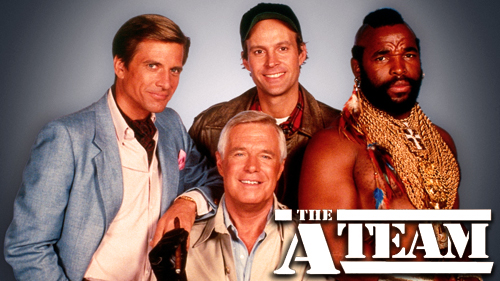
The A-Team revolves around the four members of a former commando outfit, now mercenaries.
Their leader is Lieutenant Colonel/Colonel John “Hannibal” Smith (George Peppard), whose plans tend to be unorthodox but effective.
Lieutenant Templeton Peck (Dirk Benedict; Tim Dunigan appeared as Templeton Peck in the pilot), usually called “Face” or “Faceman”, is a smooth-talking con man who serves as the team’s appropriator of vehicles and other useful items, as well as the team’s second-in-command.
The team’s pilot is Captain H.M. “Howling Mad” Murdock (Dwight Schultz), who has been declared insane and lives in a Veterans’ Administration mental institution for the show’s first four seasons.
Finally, there is the team’s strong man, mechanic and Sergeant First Class Bosco Albert “B.A.”, or “Bad Attitude”, Baracus (Mr. T).
It is unclear to which U.S. Army unit the four belonged. A patch on Hannibal’s uniform in the season 1 episode “A Nice Place To Visit” indicates they belonged to the 101st Airborne division in Vietnam, but the patch was replaced by the 1st Air Cavalry Division patch in the Season 5 episode “Trial by Fire”. In the Season 1 episode “West Coast Turnaround”, Hannibal stated they were with the 5th Special Forces Group.
Then, in Season 2 episode “Bad Time on the Border”, Hannibal refers to his friends as “ex-Green Berets”. Though the name they have adopted comes from the “A-Teams”, the nickname coined for Special Forces Operational Detachments Alpha, these detachments usually consisted of twelve members; whether the four were considered a “detachment” of their own or had once had eight compatriots who were killed in action was never revealed.
For its first season and the first half of the second season, the team was assisted by reporter Amy Amanda Allen (Melinda Culea).
In the second half of the second season, Allen was replaced by fellow reporter Tawnia Baker (Marla Heasley). The character of Tia (Tia Carrere), a Vietnam war orphan now living in the United States, was meant to join the Team in the fifth season, but she was replaced by Frankie Santana (Eddie Velez), who served as the team’s special effects expert. Velez was added to the opening credits of the fifth season after its second episode.
During their adventures, the A-Team was constantly met by opposition from the Military Police. In the show’s first season, the MPs were led by Colonel Francis Lynch (William Lucking), but he was replaced for the second, third, and earlier fourth season by Colonel Roderick Decker (Lance LeGault) and his aide Captain Crane (Carl Franklin).
Lynch returned for one episode in the show’s third season (“Showdown!”) but was not seen after. Decker was also briefly replaced by a Colonel Briggs (Charles Napier) in the third season for one episode (“Fire!”) when LeGault was unavailable, but returned shortly after. For the latter portion of the show’s fourth season, the team was hunted by General Harlan “Bull” Fulbright (Jack Ging), who would later hire the A-Team to find Tia in the season four finale, during which Fulbright was killed.
The fifth season introduced General Hunt Stockwell (Robert Vaughn) who, while serving as the team’s primary antagonist, was also the team’s boss and joined them on several missions. He was often assisted by Carla (Judith Ledford, sometimes credited as Judy Ledford).
Character traits
John “Hannibal” Smith: Master of Disguise. His most used disguise (although not onscreen) is Mr. Lee, the dry cleaner. This is one of the final parts of the client screening process, as he tells the client where to go in order to make full contact with the A-Team. He dresses most often in a white safari jacket and black leather gloves. He also is constantly seen smoking a cigar. Hannibal carries either a Browning Hi-Power, Colt M1911A1 or a Smith & Wesson Model 39 as a sidearm, most often “Mexican Carried” although he uses a holster when on missions. His catchphrase is “I love it when a plan comes together”. Often said, usually by B.A., to be “on the jazz” when in the fury of completing a mission.
Templeton “Faceman” Peck: Master of the Persuasive Arts. The team’s scrounger, he can get virtually anything he sets his mind to, usually exploiting women with sympathy-appeal and flirtation. However, he is not without integrity, as stated by Murdock in the episode “Family Reunion”: “He would rip the shirt off his back for you, and then scam one for himself.” Faceman is also the A-Team’s accountant. He dresses suavely, often appearing in suits. Faceman carries a Colt Lawman Mk III revolver for protection, and drives a white Corvette with orange trim.
Bosco Albert “B.A.” (Bad Attitude) Baracus: The muscle for the A-Team, Able to perform amazing feats of strength. He is also the team’s mechanic. B.A. affects a dislike for Murdock, calling him a “crazy fool”, but his true feelings of friendship are revealed when he prevents Murdock from drowning in his desire to live like a fish. B.A. also has a deep fear of flying, and the others usually have to trick and/or knock him out in order to get him on a plane.
It is very rare that B.A is awake while flying, and even rarer for him actually to consent to it. However, he then goes into a catatonic state. B.A generally wears overalls and leopard or tiger print shirts in the early seasons, then later wears a green jumpsuit in the later seasons.
He is almost always seen with about 50 pounds of gold necklaces and rings on every finger, and also wears a weightlifting belt. Baracus’s hair is always styled in a mohawk-like cut. He drives a customized black GMC van, which is the team’s usual mode of transport.
H.M “Howling Mad” Murdock: The A-Team’s pilot, he can fly any kind of aircraft with extreme precision. However, due to a helicopter crash in Vietnam, Murdock apparently went insane. He lives in a Veterans’ Hospital in the mental wing. Whenever the rest of the team requires a pilot, they have to break him out of the hospital, generally using Faceman to do so. In Seasons 1-4, Murdock has a different pet, imaginary friend, or persona in each episode. Whenever one of his pets or imaginary friends is killed by an enemy, Murdock snaps and takes revenge (but never kills).
Many times, when B.A is mad at Murdock for being crazy, Hannibal will side with Murdock in a sympathetic way. Once he is discharged from the hospital in Season 5, Murdock has a different job each episode. Essentially, B.A. and Murdock get on each other’s nerves. Murdock usually wears a leather flight jacket, a baseball cap, and basketball sneakers.
Casting
Although the part of Face was written by Frank Lupo and Stephen J. Cannell with Dirk Benedict in mind, NBC insisted that the part should be played by another actor, instead.
Therefore, in the pilot, Face was portrayed by Tim Dunigan, who was later replaced by Dirk Benedict, with the comment that Dunigan was “too tall and too young”.
According to Dunigan: “I look even younger on camera than I am. So it was difficult to accept me as a veteran of the Vietnam War, which ended when I was a sophomore in high school.”
Carrere was intended to join the principal cast of the show in its fifth season after appearing in the season four finale, providing a tie to the team’s inception during the war. Unfortunately for this plan, Carrere was under contract to General Hospital, which prevented her from joining The A-Team. Her character was abruptly dropped as a result.
According to Mr. T’s account in Bring Back… The A-Team in 2006, the role of B. A. Baracus was written specifically for him. This is corroborated by Stephen J. Cannell’s own account of the initial concept proposed by Tartikoff.
James Coburn, who co-starred in The Magnificent Seven, was considered for the role of Hannibal in The A-Team, while George Peppard (Hannibal) was the original consideration for the role of Vin (played by Steve McQueen instead) in The Magnificent Seven.
Robert Vaughn, of course, actually appeared in the film.
According to Dirk Benedict, Robert Vaughn was actually added to the cast in season 5 because of his friendship with the notoriously difficult George Peppard. It was hoped that Vaughn would help ease worsening tensions between Peppard and Mr. T.
L’Agence tous risques (The A-Team) est une série télévisée américaine en 98 épisodes de 45 minutes, créée par Frank Lupo et Stephen J. Cannell, diffusée entre le 23 janvier 19831 et le 8 mars 1987 sur le réseau NBC.
En France, les saisons 1 à 4 ont été diffusées à partir du 1er juillet 1984 sur TF12. Diffusion de la saison 5 inédite du 5 février 19963 au 16 février 19964 sur TF1. Rediffusion intégrale du 6 juillet 20025 au 8 mai 20046 sur M6. Puis en 20037 sur 13e rue, de juin 2010 à août 2013 sur TMC ainsi qu’à partir du 16 décembre 2013 jusqu’en juillet 2014 sur HD1 et depuis le 19 février 2015 sur Paris Première.
Le 16 juin 2010, un film du même nom est commercialisé par 20th Century Fox8.
Pendant la guerre du Viêt Nam, le chef hiérarchique de l’Agence tous risque, le général Morrison, leur a donné l’ordre de voler la banque de Hanoï afin de précipiter la fin de la guerre. La mission est un succès, mais quatre jours après la fin de la guerre, ils retrouvent le général assassiné par les Viet Cong, le quartier général étant entièrement brûlé. Par conséquent, aucune preuve indiquant que l’Agence tous risques agissait sur ordre n’existe. Les membres passent alors devant une cour de justice militaire, celle-ci les condamnant à la prison. Incarcérés aux États-Unis, ils s’évadent rapidement et mènent désormais une vie de mercenaires au service « de la veuve et de l’orphelin », combattant les injustices locales.
Tim Dunigan : lieutenant Templeton « Futé » Peck (VO : « Face ») (épisode pilote uniquement)
L’Agence tous risques a été créée par les producteurs américains Stephen J. Cannell et Frank Lupo à la demande du président du réseau NBC, Brandon Tartikoff.
Stephen J. Cannell a été renvoyé de chez ABC au début des années 1980, après avoir échoué dans sa tentative de produire une émission à succès pour la chaîne. Cannell est engagé à la NBC et son premier projet était de créer L’Agence tous risques.
Brandon Tartikoff considère l’émission comme un mélange de Les Douze Salopards, Mission Impossible, Les Sept Mercenaires, Mad Max et Capitaine Furillo, avec « Mr. T conduisant l’engin. »
L’Agence tous risques n’était, au départ, pas considérée comme une future série à succès, mais Stephen J. Cannell explique que George Peppard était persuadé qu’elle deviendrait un succès « avant même que l’on allume la caméra »13. L’émission se popularise ; le premier épisode, diffusée juste après le Super Bowl XVII le 30 janvier 1983, atteint 26,4 % de l’audience sur la chaîne, le classant ainsi quatrième sur l’Échelle de Nielsen.
Le titre original de la série vient des « Special Forces » (SF, « forces spéciales »), que les américains surnomment A-Teams et populairement connues sous le surnom des « bérets verts » (green berets), qui sont une des forces spéciales de l’US Army.
Spécialisées dans la guerre non conventionnelle, les actions commandos et la formation de troupes alliées, elles ont, depuis leur création au début des années 1950, été engagées dans la plupart des conflits impliquant les États-Unis.
La série s’inscrit dans un contexte particulier aux États-Unis, qui voit apparaître divers avatars de vétérans de la guerre du Viêt Nam, comme le détective privé Thomas Magnum ou le sergent T.J. Hooker.
Rapatriés après la fin officielle de la guerre, en 1975, de très nombreux vétérans américains ont éprouvé de grandes difficultés à se réintégrer dans une société qui ne les reconnaissait plus.
D’une part, les traumatismes physiques et psychologiques des soldats les rendaient extrêmement fragiles, d’autre part, à la frustration patriotique de la population s’est ajouté le rejet de soldats dont l’opinion publique découvrit brusquement les techniques de combat.
En effet, si l’Amérique moyenne soutenait la guerre au début des années 1960, dans un contexte de guerre froide, il en allait tout autrement quinze ans plus tard.
Les milliers de morts et de blessés dans le camp américain ne trouvaient plus aucun sens dans l’opinion publique, tandis que de nombreux journalistes révélaient la nature des combats, opposant des soldats lourdement armés à des combattants mêlés à la population.
Des photos d’enfants brûlés au napalm ont tôt fait de retourner le peuple américain contre une guerre jugée mal préparée, idéologiquement discutée et grande consommatrice d’hommes et d’argent public.
Dans ce contexte d’après-guerre, la société américaine rejette les vétérans du Viêt Nam, une attitude illustrée notamment par la chanson Born in the USA de Bruce Springsteen, le film Rambo ou plus tard le film Né un 4 juillet avec Tom Cruise.
L’Agence tous risques en est une autre illustration, puisque des soldats ayant agi sur ordre de la hiérarchie se retrouvent face à la justice de leur pays, pour un délit qu’ils n’ont commis que dans le cadre de leur fonction.
Évadés, ils seront pourchassés pour ce délit, ne parvenant pas à faire reconnaître par le département de la Défense le contexte dans lequel les faits reprochés ont été commis.
Par ailleurs, d’un point de vue plus strictement formel, la série marque une évolution (ou du moins y participe) dans la structure des personnages. Autrefois seul, tel un Colombo ou une Arabesque, le héros se multiplie, ici par quatre, offrant plus de possibilités d’identification au spectateur.
Chaque personnage est nettement marqué dans ses singularités, l’ensemble formant une équipe hétérogène mais néanmoins soudée, où tous les grands types de caractères se reconnaîtront.
Cette formule d’écriture des séries coexistera néanmoins avec d’autres personnages isolés, tels Magnum ou MacGyver, mais elle continuera de se développer pour atteindre un casting étendu dans des séries comparable à Jump Street, Beverly Hills ou Urgences. Dans ces derniers exemples, il est possible de voir apparaître une nébuleuse de personnages, chacun développant une histoire parallèle ou imbriquée avec celle des autres protagonistes.
De multiples spectateurs peuvent désormais s’identifier à un personnage en particulier, peu importe leur race, sexe, religion ou orientation sexuelle dans certains cas.
Enfin, pour les séries plus récentes, une telle évolution correspond peut-être aussi aux plans de carrière des acteurs, qui profitent des séries pour développer une carrière au cinéma (tels Johnny Depp) ou pas (Jason Priestley).
Dans une telle perspective, les producteurs de la série ne peuvent se permettre d’interrompre une saison à cause du départ du rôle-titre. La multiplication des héros offre une solution à ce problème, puisqu’une série peut se passer d’un personnage dont l’histoire dira qu’il est parti à l’étranger, décédé ou quoi que ce soit qui explique son absence au générique.
Saisons une à quatre
Les épisodes sont en général construits sur des schémas très semblables. Le début de l’épisode correspond à la prise de contact entre un client qui est terrorisé par une association de malfaiteurs ou un potentat local.
La manière classique de cette rencontre est que le client entre en contact alors qu’Hannibal Smith est déguisé, afin de vérifier que le client n’est pas en réalité à la solde des militaires.
Dans d’autres cas, l’Agence est en train de rouler et tombe sur quelqu’un qui a besoin d’aide. La plupart du temps, les honoraires pour l’intervention de l’Agence ne sont soit pas demandés, soit pas perçus ou sont récupérés d’une autre manière (en prélevant sur l’argent des malfaiteurs par exemple).
Généralement, Looping n’est pas présent dans l’équipe car il est interné dans un hôpital psychiatrique, et l’Agence utilise en général Futé pour aller le récupérer grâce à divers stratagèmes.
Ou alors il s’évade de lui-même pour aller rejoindre l’Agence. Dans beaucoup d’épisodes, il aime avoir un objet ou un animal qui ne le quitte pas jusqu’à la fin, tel qu’un cafard, un homard, une chaussette, avec lequel il agace généralement Barracuda avec ses facéties.
Ensuite, l’Agence qui doit se rendre sur le lieu des crimes et délits des malfaiteurs emprunte parfois l’avion, ce que Barracuda déteste particulièrement auquel cas ils doivent l’endormir.
Une fois sur les lieux, il y a souvent une annonce d’Hannibal aux malfaiteurs indiquant qu’ils doivent désormais compter avec eux. Cela produit en général une bagarre sans armes que l’Agence gagne facilement, tout en laissant curieusement leurs ennemis s’échapper.
Peut-être dans l’espoir que ces derniers, impressionnés par les membres de l’Agence, abandonnent leurs entreprises malhonnêtes et s’en aillent.
Les antagonistes reviennent et au lieu de tuer les membres de l’Agence, les laissent (souvent, sans même les ligoter et/ou les bâillonner) dans une grange, un garage ou un entrepôt, voire une mine.
Privés de leurs armes, ils ont néanmoins à leur disposition du matériel tel que de l’acétylène, de la poudre, des tôles et des tubes d’acier permettant à Barracuda de bricoler des armes ou de refaire fonctionner un engin (voiture, tracteur…) ce qui leur permet de s’échapper, et d’arriver à arrêter les malfaiteurs.
Dans d’autres cas, Looping arrive à prendre le contrôle d’un hélicoptère, souvent sous le nez de son propriétaire, ce qui permet de constituer un appui aérien non négligeable.
L’arrestation finale des méchants se fait parfois par un combat à mains nues, qui oppose toujours les méchants à l’agence en respectant la hiérarchie (Hannibal contre le chef de l’équipe, Barracuda contre le noir ou le plus costaud des méchants), ou alors au terme d’une des innombrables poursuites homériques de la série, qui permettent à chaque fois d’admirer les talents de pilote de Barracuda au volant de sa camionnette ou d’un bolide étrange bricolé par l’agence.
Ils doivent souvent partir rapidement après l’arrestation des méchants pour échapper aux colonels Lynch ou Decker. Dans tous les cas, il n’y a en général, même avec l’utilisation d’armes de guerres mortelles, pas de personnes qui soient tuées, voire sérieusement blessées.
La plupart du temps, les ennemis sont sonnés, ou très légèrement blessés (une douleur à un membre ou à la tête). Il n’y a eu, en tout et pour tout, que deux morts dans toute la série. Cette série est devenue pour cette raison un genre à part entière dans la télévision, puisque c’est la première série violente à avoir été diffusée aux heures de grande écoute aux États-Unis justement en raison de l’absence, ou presque, de morts.
À ce titre, la série apparaît quelquefois peu crédible, notamment dans l’épisode Tirez sur le Cheik, où l’hélicoptère des méchants s’écrase contre une falaise et que leurs occupants en ressortent indemnes.
Cinquième saison
L’avant-dernière saison perdant en popularité[réf. nécessaire], le format de la série a été changé pour la dernière saison (1986-1987).
Après avoir échappé pendant des années aux militaires, l’Agence tous risques est finalement arrêtée. Ils ont le choix entre retourner en prison, être exécutés ou être affectés à une agence gouvernementale dirigée par le général Hunt Stockwell qui réalise des missions secrètes. Ils choisissent de travailler avec Stockwell.
Arrêt de la série
Selon le producteur Stephen J. Cannell, la série s’est arrêtée au bout de cinq ans parce qu’elle devenait de plus en plus chère à produire. Qui plus est, les acteurs George Peppard, Dirk Benedict et Mr. T étaient de plus en plus démotivés (ce dernier avait d’ailleurs sa propre série, de 1988 à 1990).
Générique
L’Agence tous risques bénéficie de génériques différents à chaque saison, avec une accroche commune : « Il y a dix ans (en 1972), une unité de commando d’élite stationnée au Viêt Nam fut envoyée en prison par un tribunal militaire, pour un crime qu’ils n’avaient pas commis.
Ces hommes s’évadèrent rapidement de leur prison militaire de haute sécurité, se réfugiant dans les bas-fonds de Los Angeles. Aujourd’hui, encore recherchés par le gouvernement, ils fuient encore et toujours devant leurs poursuivants et survivent comme des mercenaires.
Si vous avez un problème, si vous êtes seul, si personne ne peut vous aider, si vous êtes acculé, si la justice ne peut plus rien pour vous, il vous reste un recours, un seul : l’Agence tous risques. »
Plus tard, au cours de la saison 2, l’accroche fut modifiée : « accusés d’un vol qu’ils n’ont pas commis, n’ayant aucun moyen d’en faire la preuve, ils fuient sans cesse devant leurs poursuivants. Pour subsister, ils emploient leurs compétences. Si la loi ne peut plus rien pour vous, il vous reste un recours, un seul : l’Agence tous risques. »
Mamma Mia! (promoted as Mamma Mia! The Movie) is a 2008 British-American-Swedish musical romantic comedy film adapted from the 1999 West End/2001 Broadway musical of the same name, based on the songs of successful popgroup ABBA, with additional music composed by ABBA member Benny Andersson.
The film was directed by Phyllida Lloyd and distributed by Universal Pictures in partnership with Tom Hanks and Rita Wilson’s Playtone and Littlestar and the title originates from ABBA’s 1975 chart-topper “Mamma Mia”.
Meryl Streep heads the cast, playing the role of single mother Donna Sheridan. Pierce Brosnan (Sam Carmichael), Colin Firth (Harry Bright), and Stellan Skarsgård (Bill Anderson) play the three possible fathers to Donna’s daughter, Sophie (Amanda Seyfried).
Mamma Mia! received mixed reviews from critics and earned $609.8 million on a $52 million budget.
On a Greek island called Kalokairi, bride-to-be Sophie Sheridan posts three wedding invitations (“I Have a Dream”) to different men.
Sophie’s bridesmaids, Ali and Lisa, arrive. Sophie reveals that she found her mother’s diary and has three possible fathers: Irish-American architect Sam Carmichael, Swedish adventurer and writer Bill Anderson, and British banker Harry Bright.
As Sophie wants her father to give her away at the altar, she invited them without telling her mother, believing that after she spends time with them she will know who her father is (“Honey, Honey”).
Villa owner Donna Sheridan, Sophie’s mom, is ecstatic to reunite with her former Dynamos bandmates, wisecracking author Rosie Mulligan and wealthy multiple divorcée Tanya Chesham-Leigh, and reveals her bafflement at her daughter’s desire to get married.
Donna shows off the villa to Rosie and Tanya (“Money, Money, Money”). The three men arrive;
Sophie smuggles them to their room and explains that she sent the invitations. She begs them to hide so Donna will have a surprise at the wedding: seeing the old friends of whom she “so often” favourably speaks. They overhear Donna working (humming “Fernando”) and swear not to reveal her secret.
Donna spies them and is dumbfounded to find herself facing former lovers (“Mamma Mia”), and is adamant that they leave.
She confides in Tanya and Rosie (“Chiquitita”) that she is uncertain which of the men is Sophie’s father. Tanya and Rosie rally her spirits by getting Donna to dance with the female staff and islanders (“Dancing Queen”).
Sophie finds the men aboard Bill’s yacht, and they sail around Kalokairi (“Our Last Summer”) and tell stories of Donna as a carefree girl. Sophie plans to tell her fiancé Sky about her ploy, but loses her nerve.
Sky and Sophie sing to each other (“Lay All Your Love on Me”), but Sky is snatched for his bachelor party.
At Sophie’s bachelorette party, Donna, Tanya and Rosie perform as Donna and The Dynamos (“Super Trouper”). The festivities are interrupted by the arrival of Sam, Bill and Harry. Sophie decides to talk with each of her prospective dads alone.
While her girlfriends dance with the men (“Gimme! Gimme! Gimme! (A Man After Midnight)”), Sophie learns from Bill that Donna received the money to invest in her villa from his great aunt Sofia.
Sophie guesses she must be Sofia’s namesake and Bill is her father. She asks him to give her away and keep their secret from Donna until the wedding.
Sophie’s happiness is short-lived as Sam and Harry each tell her they must be her dad and will give her away (“Voulez-Vous”). Sophie cannot tell them the truth and, overwhelmed by the consequences of her actions, faints.
In the morning, Rosie and Tanya assure Donna they will take care of the men.
Bill and Harry are about to confide in each other, but are interrupted by Rosie. Donna confronts Sophie, believing Sophie wants the wedding stopped. Sophie says that all she wants is to avoid her mother’s mistakes.
Donna is accosted by Sam, concerned about Sophie getting married so young. Donna confronts him and they realize they still have feelings for each other (“SOS”). Tanya and young Pepper continue their flirtations from the previous night (“Does Your Mother Know”). Sophie confesses to Sky and asks for his help.
He reacts angrily to Sophie’s deception and she turns to her mother for support. As Donna helps her daughter dress for the wedding, their rift is healed and Donna reminisces about Sophie’s childhood and how quickly she has grown (“Slipping Through My Fingers”). Donna admits that her own mother disowned her when she learned that she was pregnant. Sophie asks Donna to give her away.
As the bridal party walks to the chapel, Sam intercepts Donna. She reveals the pain she felt over losing him (“The Winner Takes It All”).
Sophie and Donna walk down the aisle as the band plays “Knowing Me, Knowing You”. Donna tells Sophie that her father could be any of the three men.
Sam reveals that while he left to get married, he did not go through with it, and returned to find Donna with another man.
Harry confesses that Donna was the first and last woman he loved and he has begun a relationship with a waiter from the taverna.
The men agree that they would be happy to be one-third of a father for Sophie. She tells Sky they should postpone their wedding and travel the world as they have wanted. Sam proposes to Donna (“I Do, I Do, I Do, I Do, I Do”).
She accepts and they are married. At the reception, Sam sings to Donna (“When All Is Said and Done”), which prompts Rosie to make a play for Bill (“Take a Chance on Me”). All the couples present proclaim their love (“Mamma Mia” reprise).
Sophie and Sky sail away (“I Have a Dream” reprise).
During the principal credits, Donna, Tanya and Rosie reprise “Dancing Queen”, followed by “Waterloo” with the rest of the cast. Amanda Seyfried sings “Thank You for the Music” over the end credits, followed by an instrumental of “Does Your Mother Know”.
Cast
Meryl Streep as Donna Sheridan, Sophie’s mother, owner of the hotel Villa Donna, wife and one true love of Sam at the end.
Amanda Seyfried as Sophie Sheridan, Donna’s daughter, Sky’s fiancée.
Pierce Brosnan as Sam Carmichael, Sophie’s possible father and an Irish-American architect, husband and one true love of Donna.
Colin Firth as Harry Bright, Sophie’s possible father and a British banker; based on “Our Last Summer”, which he sings at one point.
Stellan Skarsgård as Bill Anderson, Sophie’s possible father, a Swedish sailor and travel writer.
Dominic Cooper as Sky, Sophie’s fiancé, designing a website for the hotel.
Julie Walters as Rosie Mulligan, one of Donna’s former bandmates in Donna and the Dynamos; an unmarried fun-loving author.
Christine Baranski as Tanya Chesham-Leigh, Donna’s other former bandmate; a rich three-time divorcee.
Philip Michael as Pepper, Sky’s best man who likes Tanya. He is also a bartender.
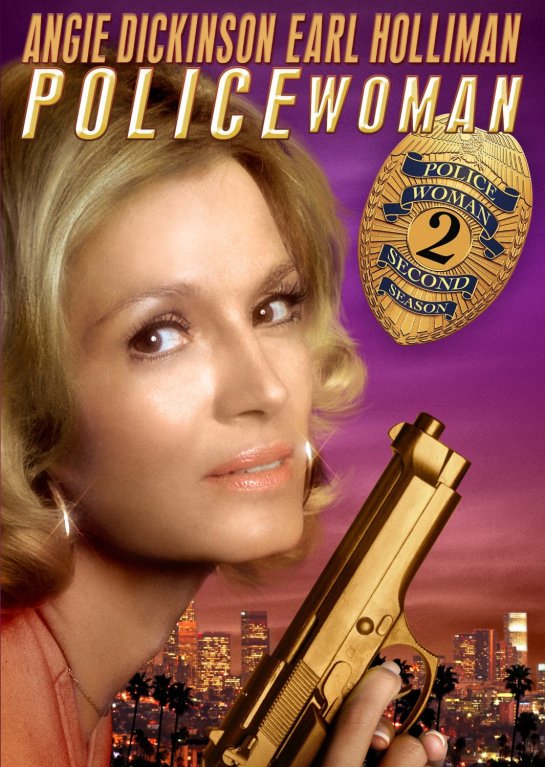
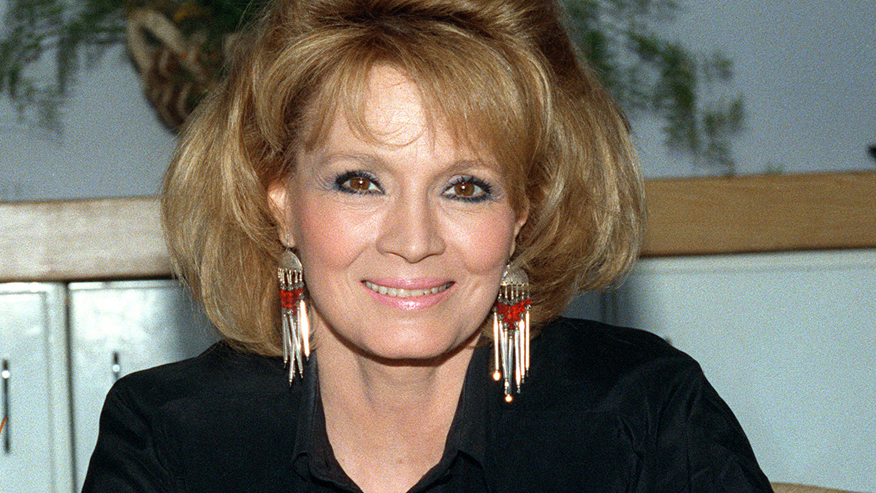
Angie Dickinson (born September 30, 1931) is an American actress. She began her career on television, appearing in many anthology series during 1950s, before landing her breakthrough role in the 1959 western film Rio Bravo, for which she received Golden Globe Award for New Star of the Year.
Dickinson has appeared in more than 50 films, including Ocean’s 11 (1960), The Sins of Rachel Cade (1961), Jessica (1962), Captain Newman, M.D. (1963), The Killers (1964), The Art of Love (1965), The Chase (1966) and the neo-noir classic Point Blank (1967). From 1974 to 1978, Dickinson starred as Sergeant Leann “Pepper” Anderson in the NBC crime series Police Woman, for which she received Golden Globe Award for Best Actress – Television Series Drama and three Primetime Emmy Award for Outstanding Lead Actress in a Drama Series nominations.
During her later career, Dickinson starred in a number of television movies and miniseries, also playing supporting roles in films such as Sabrina (1995), Pay It Forward (2000) and Big Bad Love (2001). As lead actress, she starred in the 1980 erotic crime thriller Dressed to Kill, for which she received a Saturn Award for Best Actress.
Dickinson, the second of four daughters, was born Angeline Brown (called “Angie” by family and friends) in Kulm, North Dakota, the daughter of Fredericka (née Hehr) and Leo Henry Brown.
Her family is of German descent and she was raised Roman Catholic.
Her father was a small-town newspaper publisher and editor, working on the Kulm Messenger and the Edgeley Mail.
In 1942, her family moved to Burbank, California, where she attended Bellarmine-Jefferson High School, graduating in 1947 at 15 years of age. The previous year, she had won the Sixth Annual Bill of Rights essay contest.
She studied at Glendale Community College and in 1954 graduated from Immaculate Heart College with a degree in business. Taking a cue from her publisher father, she had intended to be a writer. While a student from 1950–52, she worked as a secretary at Lockheed Air Terminal in Burbank (now Bob Hope Airport) and in a parts factory. She became Angie Dickinson in 1952, when she married football player Gene Dickinson.
Dickinson entered a beauty pageant in 1953 and placed second. The exposure brought her to the attention of a television industry producer, who asked her to consider a career in acting. She studied the craft and a few years later was approached by NBC to guest-star on a number of variety shows, including The Colgate Comedy Hour. She soon met Frank Sinatra, who became a lifelong friend. She later was cast as Sinatra’s wife in the film Ocean’s 11.
On New Year’s Eve 1954, Dickinson made her television acting debut in an episode of Death Valley Days. This led to other roles in such productions as Matinee Theatre (eight episodes), Buffalo Bill Jr., City Detective, It’s a Great Life (two episodes), Gray Ghost, General Electric Theater, Broken Arrow, The People’s Choice (twice), Meet McGraw (twice), Northwest Passage, Gunsmoke, The Virginian, Tombstone Territory, Cheyenne, and The Restless Gun.
In 1956, Dickinson was cast as Ann Drew, who slips a gun to her jailed husband, Harry (John Craven), a former associate of the Jesse James gang, in the ABC/Desilu western series, The Life and Legend of Wyatt Earp, starring Hugh O’Brian. In the story line, Harry vowed never to go to prison and was shot to death while escaping.
In 1957, she was cast as Amy Bender in Richard Boone’s series “Have Gun-Will Travel” in the episode “A Matter of Ethics.” She played the sister of a man who was killed and who wanted the murderer lynched.
In 1958, she was cast as Laura Meadows in the episode “The Deserters” of an ABC/Warner Brothers western series, Colt .45, with Wayde Preston.
That year she also played the role of defendant Mrs. Fargo in the Perry Mason episode “The Case of the One-Eyed Witness.”
Dickinson went on to create memorable characters in Mike Hammer, Wagon Train, and Men into Space. In 1965, she had a recurring role as Carol Tredman on NBC’s Dr. Kildare. She had a memorable turn as the duplicitous murder conspirator in a 1964 episode of The Fugitive series with David Janssen and fellow guest star Robert Duvall. She was at her evil best as an unfaithful wife and bank robber in the 1958 “Wild Blue Yonder” episode of Rod Cameron’s syndicated television series State Trooper.
She starred in two Alfred Hitchcock Hour episodes, “Captive Audience” with James Mason on Oct. 18, 1962, and “Thanatos Palace Hotel” on Feb. 1, 1965.
Dickinson’s motion picture career began with a small, uncredited role in Lucky Me (1954) starring Doris Day, followed by The Return of Jack Slade (1955), Man with the Gun (1955), and Hidden Guns (1956). She had her first starring role in Gun the Man Down (1956) with James Arness, followed by the Sam Fuller cult film China Gate (1957), which depicted an early view of the Vietnam War.
Rejecting the Marilyn Monroe/Jayne Mansfield style of platinum blonde sex-symbolism because she felt it would narrow her acting options, Dickinson initially allowed studios to lighten her naturally brunette hair to only honey-blonde.
She appeared early in her career mainly in B-movies or westerns, including Shoot-Out at Medicine Bend (1957), in which she co-starred with James Garner. In the 1958 crime drama Cry Terror!, Dickinson had a supporting role opposite James Mason and Rod Steiger as a femme fatale.
In 1959, Dickinson’s big-screen breakthrough role came in Howard Hawks’ Rio Bravo, in which she played a flirtatious gambler called “Feathers” who becomes attracted to the town sheriff played by Dickinson’s childhood idol John Wayne. The film co-starred Dean Martin, Ricky Nelson, and Walter Brennan. When Hawks sold his personal contract with her to a major studio without her knowledge, she was unhappy. Dickinson nonetheless became one of the more prominent leading ladies of the next decade, beginning with The Bramble Bush with Richard Burton. She also took a supporting role in Ocean’s 11 with friends Sinatra and Martin, released in 1960.
These were followed by a political potboiler, A Fever in the Blood (1961); a Belgian Congo-based melodrama, The Sins of Rachel Cade (1961), in which she played a missionary nurse tempted by lust; a scheming woman in Rome Adventure (1962), filmed in Italy, and the title role in Jean Negulesco’s Jessica (1962) with Maurice Chevalier, in which she played a young midwife resented by the married women of the town, set in Sicily.
Angie would also share the screen with friend Gregory Peck as a military nurse in the dark comedy Captain Newman, M.D. (1963).
For The Killers (1964), originally intended to be the very first made-for-television movie but released to theatres due to its violent content, Dickinson played a femme fatale opposite future U.S. President Ronald Reagan in his last movie role.
Directed by Don Siegel, it was a remake of the 1946 version based on a story by Ernest Hemingway and the only film Reagan made in which he was cast as a villain. He viciously slaps Dickinson in one of the film’s scenes.[8]
Dickinson co-starred in the comedy The Art of Love (1965), playing the love interest of both James Garner and Dick Van Dyke. She joined a star-studded Arthur Penn/Sam Spiegel production, The Chase (1966), along with Marlon Brando, Jane Fonda, Robert Redford, and Robert Duvall. That same year she was featured in Cast a Giant Shadow, a war story with Kirk Douglas.
Dickinson’s best movie of this era was arguably John Boorman’s cult classic Point Blank (1967), a lurid crime drama with Lee Marvin as a criminal betrayed by his wife and best friend and out for revenge. The film epitomized the stark urban mood of the period, and its reputation has grown through the years.
Westerns would continue to be a part of her work in the late ’60s, when she starred in The Last Challenge opposite Glenn Ford, in Young Billy Young with Robert Mitchum, and in Sam Whiskey, where she gave rising star Burt Reynolds his first on-screen kiss.
In 1971, she played a lascivious substitute high school teacher in the dark comedy Pretty Maids All in a Row for director Roger Vadim and writer-producer Gene Roddenberry, in which her character seduces a sexually inexperienced student, portrayed by John David Carson, against the backdrop of a series of murders of female students at the same high school; it was a box-office failure. In 1972’s The Outside Man, a French movie shot in L.A., with Jean-Louis Trintignant, directed by Jacques Deray, she plays the wife of a mobster. In 1973, she co-starred with Roy Thinnes in the supernatural thriller The Norliss Tapes, a TV movie produced and directed by Dan Curtis.
One of Dickinson’s best known and most sexually provocative movie roles followed, that of the tawdry widow Wilma McClatchie from the Great Depression romp Big Bad Mama (1974) with William Shatner and Tom Skerritt. Although well into her forties at the time, she appeared nude in several scenes, which created interest in the movie and a new generation of male fans for Dickinson.
A 1966 Esquire magazine cover gained Dickinson additional fame and notoriety, her having posed in nothing but a sweater and a pair of panty hose. The photo became so iconic that, while celebrating the magazine’s 70th anniversary in 2003, the Dickinson pose was recreated for the cover by Britney Spears.
Police Woman
Dickinson as Pepper Anderson, 1975 in Police Woman
Dickinson returned to the small screen in March 1974 for an episode of the critically acclaimed hit anthology series Police Story. That one guest appearance proved to be so popular that NBC offered Dickinson her own television show, which became a ground-breaking weekly series called Police Woman; it was the first successful dramatic TV series to feature a woman in the title role. At first, Dickinson was reluctant, but when producers told her she could become a household name, she accepted the role. They were right.
In the series, she played Sgt. Leann “Pepper” Anderson, an officer of the Los Angeles Police Department’s Criminal Conspiracy Unit who often works undercover.
The show became a hit, reaching number one in many countries in which it aired during its first year. It ran for four seasons and Dickinson would win a Golden Globe award, and receive Emmy nominations for three consecutive years.
Angie Dickinson
Co-starring on the show was Earl Holliman as Sergeant Bill Crowley, Anderson’s commanding officer, along with Charles Dierkop as investigator Pete Royster and Ed Bernard as investigator Joe Styles.
The series ran from 1974 to 1978. The same year the show ended, Dickinson reprised her Pepper Anderson character on the television special Ringo, co-starring with Ringo Starr and John Ritter. She also parodied the part in the 1975 and 1979 Bob Hope Christmas specials for NBC. She would do the same years later on the 1987 Christmas episode of NBC’s Saturday Night Live.
Police Woman caused a surge of applications for employment from women to police departments around the United States; journalists who have in recent years examined the inspiration for long-term female law enforcement officials to adopt this vocation as their own have been surprised by how often Dickinson’s Police Woman has been referenced.
Dickinson and Police Woman proved that a female lead could carry an hour-long television series, paving the way for several female-starring, hour-long TV series during the 1970s and 1980s, such as Charlie’s Angels, Wonder Woman, The Bionic Woman and Cagney and Lacey. In 1987, the Los Angeles Police Department awarded Dickinson an honorary doctorate, which led her to quip, “Now you can call me Doctor Pepper.”
On occasion during the 1970s, Dickinson took part in the popular Dean Martin Celebrity Roast on television, and herself was the guest of honor on August 2, 1977, roasted by a dais of celebrities that included James Stewart, Orson Welles and her Police Woman series co-star Earl Holliman.
The 1980s
Having done a television series plus the mini-series Pearl (1978) about the Pearl Harbor bombing of 1941, Dickinson’s career in feature films appeared to be in decline. But she returned to the big screen in Brian De Palma’s erotic thriller Dressed to Kill (1980), for which she gained considerable notice, particularly for a long, silent scene in a museum before the character meets her fate. The role of Kate Miller, a sexually frustrated New York housewife, earned her a 1981 Saturn Award for Best Actress. “The performers are excellent,” wrote Vincent Canby in his July 25, 1980 New York Times review, “especially Miss Dickinson.”
She took a less substantial role in 1981’s Death Hunt, reuniting her with Lee Marvin, and also appeared in Charlie Chan and the Curse of the Dragon Queen. Earlier that year, she had been the first choice to play the character Krystle Carrington on the television series Dynasty but, deciding she wanted to spend more time with her daughter, she turned it down; the role instead went to Linda Evans. In the mid-1980s Dickinson declined the role of Sable Colby on the Dynasty spin-off, The Colbys.
After nixing her own Johnny Carson-produced prospective sitcom, The Angie Dickinson Show, in 1980 after only two episodes had been shot because she did not feel she was funny enough, the private-eye series Cassie & Co. became her unsuccessful attempt at a television comeback. She then starred in several TV movies, such as One Shoe Makes It Murder (1982), Jealousy (1984), A Touch of Scandal (1984), and Stillwatch (1987). She had a pivotal role in the highly rated mini-series Hollywood Wives (1985), based on a novel by Jackie Collins.
In 1982, and again in 1986, Dickinson appeared in two of Perry Como’s Christmas specials for the ABC television network, in both of which she did something she was not known to have done before: singing. The specials in which she appeared, and in which she sang songs, were Perry Como’s Christmas In Paris, produced on location in Paris, France, which was transmitted on Saturday, December 18, 1982, and The Perry Como Christmas Special, produced on location in San Antonio, Texas, and transmitted on Saturday, December 6, 1986. As of early January of 2013, these two specials were not known to be available on home video.[citation needed] Dickinson later denied having sung on camera since then in an interview with Larry King conducted at the approximate time of her appearance in Duets.
In motion pictures, Dickinson reprised her role as Wilma McClatchie for Big Bad Mama II (1987) and completed the television movie Kojak: Fatal Flaw, in which she was reunited with Telly Savalas. She co-starred with Willie Nelson and numerous buddies in the 1988 television western Once Upon a Texas Train.
She was presented one of the Golden Boot Awards in 1989 for her contributions to western cinema.
1990s and 2000s
In the 1993 ABC miniseries Wild Palms, produced by Oliver Stone, she was the sadistic, militant sister of Senator Tony Kruetzer, played by Robert Loggia. That same year, she starred as a ruthless Montana spa owner in Gus Van Sant’s Even Cowgirls Get the Blues with Uma Thurman.
In 1995, Sydney Pollack cast her as the prospective mother-in-law of Greg Kinnear in the romantic comedy Sabrina starring Harrison Ford, a remake of the Billy Wilder classic. She played Burt Reynolds’ wife in the thriller The Maddening and the mother of Rick Aiello and Robert Cicchini in the National Lampoon comedy The Don’s Analyst. In 1997, she seduced old flame Artie (Rip Torn) in an episode of HBO’s The Larry Sanders Show called “Artie and Angie and Hank and Hercules.”
Dickinson acted out the alcoholic, homeless mother of Helen Hunt’s character in Pay It Forward (2000); the grandmother of Gwyneth Paltrow’s character in the drama Duets (2000), and the mother of Arliss Howard’s character in Big Bad Love (2001), co-starring Debra Winger.
Having appeared in the original Ocean’s 11 (1960) with good friends Frank Sinatra and Dean Martin, four decades later she made a brief cameo in the 2001 remake with George Clooney and Brad Pitt.
An avid poker player, during the summer of 2004 she participated in the second season of Bravo’s Celebrity Poker Showdown. After announcing her name, host Dave Foley said, “Sometimes, when we say ‘celebrity,’ we actually mean it.”
Dickinson is a recipient of the state of North Dakota’s Rough Rider Award.
In 1999, Playboy ranked Dickinson No. 42 on their list of the “100 Sexiest Stars of the Century.” In 2002, TV Guide ranked her No. 3 on a list of the “50 Sexiest Television Stars of All Time,” behind Diana Rigg and George Clooney (who tied for No. 1).
In 2009, Dickinson starred in a Hallmark Channel film, Mending Fences. It is her last screen role to date.
Personal life
With husband-composer Burt Bacharach and new child, 1966
She was married to Gene Dickinson, a former football player, from 1952 to 1960. Close friends with John Kenneth Galbraith and Catherine Galbraith, her extensive visits to them and touring when John was American Ambassador to India is amply recounted in Galbraith memoirs including Ambassador’s Journal and A Life in Our Times. Dickinson kept her married name after her first divorce.
She married Burt Bacharach in 1965. They remained a married couple for 15 years, though late in their marriage, they had a period of separation where each dated other people.
Their daughter, Lea Nikki, known as Nikki, arrived a year after they were married. Born three months prematurely, Nikki suffered from chronic health problems, including visual impairment; she was later diagnosed with Asperger syndrome. Burt composed the music of the song Nikki for their fragile young daughter, and Angie rejected many roles to focus on caring for their daughter. Nikki’s parents eventually placed her at the Wilson Center, a psychiatric residential treatment facility for adolescents in Faribault, Minnesota, where she remained for nine years. Later, Nikki studied geology at California Lutheran University, but her poor eyesight prevented her from pursuing a career in that field. On January 4, 2007, Nikki killed herself by suffocation in her apartment in the Ventura County suburb of Thousand Oaks. She was 40.
In a joint statement, Dickinson and Bacharach said, “She quietly and peacefully committed suicide to escape the ravages to her brain brought on by Asperger’s… She loved kitties, earthquakes, glacial calving, meteor showers, science, blue skies and sunsets, and Tahiti. She was one of the most beautiful creatures created on this earth, and she is now in the white light, at peace.”
In a 2006 interview with NPR, Dickinson stated that she was a Democrat. She supported John F. Kennedy’s presidential campaign in 1960.
Lana Parrilla (born July 15, 1977) is an American actress.
Parrilla is best known for her roles on television and radio.
IN ENGLISH (EN FRANCAIS PLUS BAS / IN FRENCH BELOW )
She was a regular cast member in the fifth season of the ABC sitcom Spin City from 2000 to 2001.
She ( later )guest-starred in Boomtown (2002-2003), Windfall (2006), Swingtown (2008) and as Doctor Eva Zambrano in the short-lived medical drama Miami Medical (2010). She also played the role of Sarah Gavin on the season four of Fox series 24 in 2005. In 2011, Parrilla began starring as The Evil Queen/Regina Mills in the ABC fantasy drama series, Once Upon a Time.
Parrilla was born in Brooklyn. Her father, Sam Parrilla (1943–94), was a Puerto Rican-born baseball player who played professionally for 11 seasons (1963–73), including one season with the Major League Philadelphia Phillies in 1970 as an outfielder.
Her mother is an American painter of Sicilian descent who works in banking. Parrilla has one older sister, Deena, and a nephew named Sammy.
She is also the niece of character actress Candice Azzara. Parrilla’s parents legally divorced when she was four years old. She spent her first ten years living with her mother, and then lived with her father. During the time she lived with her father, he was too protective to allow her to attend a performing arts school, which delayed her acting career.
Parrilla lived with her father until his murder in 1994, when she was 16 and he was 50. Her father was shot once in the chest by a 15-year-old female assailant at point blank range and later died from the wound.
After the death of her father, Parrilla moved in with her mother in Burbank, California. Parrilla visited Granada in 2007 to learn Spanish. After high school she moved to Los Angeles and attended Beverly Hills Playhouse to study acting. She also studied voice for ten years. Parrilla then began to be cast in small parts and later on, larger ones.
In her early career, Parrilla appeared in several movies, including Very Mean Men (2000), Spiders (2000), Replicant (2001) and Frozen Stars (2003). She made her television debut in 1999, on the UON sitcom Grown Ups.
In 2000, she joined the cast of the ABC comedy series Spin City, playing Angie Ordonez for one season. She left the show in 2001.
After that she joined Donnie Wahlberg and Neal McDonough in the 2002 critically acclaimed but short-lived crime drama Boomtown, for which she received the Imagen Award for Best Supporting Actress, for her portrayal of Teresa, a paramedic. Initially a success, Boomtown began to struggle, and Parrilla’s character became a police academy rookie, to tie her more closely to the rest of the show. “Boomtown” was cancelled just two episodes into its second season.
Parrilla guest-starred in a number of television dramas, including JAG, Six Feet Under, Covert Affairs, Medium, The Defenders and Chase. She had a recurring role in 2004 as Officer Janet Grafton in NYPD Blue.
In 2005, Parrilla took a recurring guest role on the fourth season of the Fox series 24 as Sarah Gavin, a Counter Terrorist Unit agent. After just six episodes, Lana was made a regular cast member; but in the thirteenth episode, her character was written out after she tried to thwart another character’s promotion from temporary to permanent CTU head Michelle Dessler (Reiko Aylesworth).
In 2006, Parrilla starred in the NBC summer series Windfall alongside Luke Perry, fellow former 24 cast member Sarah Wynter, and Parilla’s former Boomtown castmate Jason Gedrick. In 2007, she guest starred as Greta during the third season of ABC’s Lost in the episodes “Greatest Hits” and “Through the Looking Glass” In 2008, she had a leading role on the Lifetime movie The Double Life of Eleanor Kendall, in which she played Nellie, a divorcee whose identity has been stolen.
Also in 2008, she starred in the CBS summer series Swingtown as Trina Decker, a woman who is part of a Swinging couple. In 2010, Parrilla had a female lead role in the Jerry Bruckheimer-produced Miami Medical on CBS, which had a short run towards the end of the 2009–10 television season before it was canceled in July 2010.
Windfall, Swingtown and Miami Medical were all canceled after 13 episodes.
In February 2011, she was cast as Mayor Regina Mills/The Evil Queen, the main antagonist in the ABC adventure fantasy drama pilot, Once Upon a Time created by Edward Kitsis and Adam Horowitz.
The series debuted in October 2011.
The pilot episode was watched by 12.93 million viewers and achieved an adult 18–49 rating/share of 4.0/10 during the first season, receiving generally favorable reviews from critics.
Parrilla’s performance also received positive reviews from critics. In 2012 and 2013, she was regarded as a promising contender for an Emmy Award in the Outstanding Supporting Actress in a Drama Series category, though she did not receive a nomination.
She won the TV Guide Award for Favorite Villain and the ALMA Award for Outstanding Actress in a Drama Series in 2012.
Parrilla also received a nomination for Best Supporting Actress on Television from the 38th Saturn Awards.
Parrilla became engaged to boyfriend Fred Di Blasio on April 28, 2013, while in Israel.
The two were married June 5, 2014, shortly before Parrilla began filming the fourth season of Once Upon a Time.”
Parrilla confirmed the news on her Twitter account on August 1. Parrilla is the stepmother to Di Blasio’s three sons: Jack, age 18, Patrick, age 15, and Matthew, age 13.
EN FRANCAIS
LANA PARRILLA
Lana Maria Parrilla, née le 15 juillet 1977 à Brooklyn dans l’État de New York, est une actrice américaine.
Lana Parrilla est née d’une mère italienne artiste-peintre et d’un père porto-ricain, Sam Parrilla. Ce dernier fut un joueur professionnel de baseball américain évoluant dans l’équipe des Phillies de Philadelphie dans les années 1970. Il est assassiné en 1994 à la suite d’une altercation qui a mal tourné. Elle a une sœur aînée prénommée Deena et est la nièce de l’actrice Candice Azzara, qui l’a inspirée dans sa carrière d’actrice.
Après le lycée, Lana Parrilla a déménagé à Los Angeles pour commencer sa carrière où elle a étudié à la Beverly Hills Playhouse.
Elle réside à Vancouver avec son mari Alfredo “Fred” DiBlasio. Elle n’a pas d’enfant mais vit avec les trois adolescents de son compagnon ainsi que leurs animaux de compagnie. Elle s’est fiancée en Israël le 29 avril 2013 et s’est mariée le 5 juillet 2014.
Elle développe très jeune un goût pour la comédie, inspirée par sa tante, l’actrice américaine Candice Azzara. Elle suit des cours à Los Angeles avant de débuter dans une série en 1999, Grown Ups durant deux épisodes. Elle enchaîne les séries avec le rôle régulier d’Angie Ordonez dans Spin City en 2000, puis Boomtown en 2002.
Elle joue dans des séries d’action et policier avec JAG en 2000, New York Police Blues en 2004 ainsi que dans une saison de 24 heures chrono dans le rôle de Sarah Gavin.
En 2008, elle incarne Trina Decker dans la série Swingtown. Elle incarne une voisine d’un couple qui va découvrir, grâce à elle, la libération sexuelle.
En 2011, dans la nouvelle série télévisée fantastique américaine Once Upon a Time, elle joue l’un des rôles principaux féminins en incarnant le Maire de Storybrooke, Regina Mills, ainsi que le personnage de la Méchante Reine, belle-mère de Blanche-Neige.
Lana Parrilla a été attaquée à dix ans par un chien, ce qui lui a laissé une cicatrice visible sur le côté droit de sa lèvre supérieure
Elle est également une chanteuse à certaines occasions, prêtant sa voix en fond sonore pour un tube de musique composé par deux des trois fils de son compagnon. Ces derniers forment un groupe de musique appelé 45 Spacer et Lana a contribué à leur tube appelé Naughty Boys, en 2012 ainsi qu’à You and Me en 2013.
Elle a obtenu le rôle régulier d’Angie Ordonez dans la série Spin City en 2000 après avoir dû passer six auditions au total.
Lana Parrilla connaissait toute l’histoire de la Reine Regina dès le pilote de la saison 1 de Once Upon a Time. Les scénaristes Edward Kitsis et Adam Horowitz lui ont révélé le passé du personnage avec Blanche-Neige afin qu’elle incarne au mieux son rôle.
Lana et l’acteur Jorge Garcia se connaissent depuis près de vingt ans. En effet, ils ont débuté ensemble leurs cours de théâtre à Los Angeles et sont devenus très amis. Ils se sont retrouvés lors du tournage de la saison 3 de Lost, en 2006, où Garcia incarnait un survivant alors qu’ils étaient logés dans la même hutte. Ils se sont ensuite retrouvés ensemble dans la saison 2 de Once Upon a Time.
Jack DiBlasio, le fils aîné de son compagnon, a fait une apparition dans le dernier épisode de la saison 2 de Once Upon a Time, dans le rôle d’un des Enfants Perdus du Pays Imaginaire.
Elle a une petite plume tatouée au poignet droit, symbole d’espoir.
Cinéma
2000 : Spiders de Gary Jones : Marci
2000 : Very Mean Men de Tony Vitale : Teresa
2001 : Replicant de Ringo Lam : Marci
2003 : One Last Ride de Tony Vitale : Antoinette
Télévision
1999 : Grown Ups de Brian K. Roberts & Richard Correll (Série TV) : Une serveuse
2000 – 2001 : Spin City de Ted Wass (Série TV) : Angie Ordonez
2001 : Semper fi de Michael W. Watkins (Téléfilm)
2002 – 2003 : Boomtown de Frederick King Keller, Jon Avnet (Série TV) : Teresa Ortiz
2002 : The Shield de Scott Brazil (Série TV) : Sedona Tellez
2002 : JAG de Terrence O’Hara (Série TV) : Lt. Stephanie Donato
2004 : Six Feet Under (Six Feet Under) de Peter Webber et Miguel Arteta (Série TV) : Maile
2004 : New York Police Blues (NYPD Blue) de Robert J. Doherty, Mark Tinker & Dennis Dugan (Série TV) : Officier Janet Grafton
2005 : 24 heures chrono de Ken Girotti, Jon Cassar (Série TV) : Sarah Gavin
2006 : Windfall : Des dollars tombés du ciel d’Ellen S. Pressman, Matt Shakman (Série TV) : Nina Schaefer
2007 : Lost : Les Disparus de Stephen Williams & Jack Bender (Série TV) : Greta
Sur RS2, “Spécial Laurie Leblanc” : Nous diffuserons toute cette semaine, les tubes de Laurie Leblanc et des extraits de son nouvel album.
Certains titres du nouvel album seront diffusés dès la parution de cet article, sur RS2 , en attendant, sur notre site: Voici des titres connus, des hits du continent Nord Américain des albums de l’artiste LAURIE LEBLANC ( Musique acadienne ) ( Tout connaitre sur les acadiens )
Faisons un petit tour du côté de Moscou. Un voyage en vidéo HD pour le plaisir audio visuel. Moscou grande capitale, capitale des grands hommes et des grands combats qui ont marqué l’histoire du monde. Поездка в Москву
Merle Ronald Haggard (born April 6, 1937) is an American country and Western songwriter, singer, guitarist, fiddler, and instrumentalist.
Merle Haggard
Along with Buck Owens, Haggard and his band The Strangers helped create the Bakersfield sound, which is characterized by the unique twang of Fender Telecaster and the unique mix with the traditional country steel guitar sound, new vocal harmony styles in which the words are minimal, and a rough edge not heard on the more polished Nashville sound recordings of the same era.
By the 1970s, Haggard was aligned with the growing outlaw country movement, and has continued to release successful albums through the 1990s and into the 2000s. In 1994, he was inducted into the Country Music Hall of Fame. In 1997, he was inducted into the Oklahoma Music Hall of Fame.
Haggard’s parents, Flossie Mae Harp and James Francis Haggard, moved to California from their home in Checotah, Oklahoma, during the Great Depression, after their barn burned in 1934.
They settled with their children, Lowell and Lillian, in an apartment in Bakersfield, while James Francis Haggard started working for the Santa Fe Railroad. A woman who owned a boxcar, which was placed in Oildale, a nearby town north of Bakersfield, asked Haggard’s father about the possibility of converting it into a house. He remodeled the boxcar, and soon after moved in, also purchasing the lot, where Merle Ronald Haggard was born on April 6, 1937.
The property was eventually expanded by building a bathroom, a second bedroom, a kitchen and a breakfast nook in the adjacent lot.
His father died of a brain hemorrhage in 1945, an event that deeply affected Haggard during his childhood, and the rest of his life.
To support the family, his mother worked as a bookkeeper. His brother, Lowell, gave Haggard his used guitar as a gift when he was 12 years old. Haggard learned to play alone, with the records he had at home, influenced by Bob Wills, Lefty Frizzell and Hank Williams.
As his mother was absent due to work, Haggard became progressively rebellious. His mother sent him for a weekend to a juvenile detention center to change his attitude, which worsened.
Haggard committed a number of minor offences, such as thefts and writing bad checks. He was sent to a juvenile detention center for shoplifting in 1950.
When he was 14, Haggard ran away to Texas with his friend Bob Teague. He rode freight trains and hitchhiked throughout the state. When he returned the same year, he and his friend were arrested for robbery. Haggard and Teague were released when the real robbers were found. Haggard was later sent to the juvenile detention center, from which he and his friend escaped again to Modesto, California.
He worked a series of laborer jobs, including driving a potato truck, being a short order cook, a hay pitcher, and an oil well shooter. His debut performance was with Teague in a Modesto bar named “Fun Center,” being paid US$5, with free beer.
He returned to Bakersfield in 1951, and was again arrested for truancy and petty larceny and sent to a juvenile detention center. After another escape, he was sent to the Preston School of Industry, a high-security installation. He was released 15 months later, but was sent back after beating a local boy during a burglary attempt.
After his release, Haggard and Teague saw Lefty Frizzell in concert. After hearing Haggard sing along to his songs backstage, Frizzell refused to sing unless Haggard would be allowed to sing first.
He sang songs that were well received by the audience. Due to the positive reception, Haggard decided to pursue a career in music. While working as a farmhand or in oil fields, he played in nightclubs. He eventually landed a spot on the local television show Chuck Wagon, in 1956.
Married and plagued by financial issues, he was arrested in 1957 shortly after he tried to rob a Bakersfield roadhouse. He was sent to Bakersfield Jail, and was later transferred after an escape attempt to San Quentin Prison, on February 21, 1958. While in prison, Haggard discovered that his wife was expecting a child from another man, which pressed him psychologically.
He was fired from a series of prison jobs, and planned to escape along with another inmate nicknamed “Rabbit”. Haggard was convinced not to escape by fellow inmates.
Haggard started to run a gambling and brewing racket with his cellmate. After he was caught drunk, he was sent for a week to solitary confinement where he encountered Caryl Chessman, an author and death row inmate.
Meanwhile, “Rabbit” had successfully escaped, only to shoot a police officer and return to San Quentin for execution. Chessman’s predicament, along with the execution of “Rabbit,” inspired Haggard to turn his life around. Haggard soon earned a high school equivalency diploma and kept a steady job in the prison’s textile plant, while also playing for the prison’s country music band, attributing a 1958 performance by Johnny Cash at the prison as his main inspiration to join it.
Upon his release in 1960, Haggard said it took about four months to get used to being out of the penitentiary and that, at times, he actually wanted to go back in. He said it was the loneliest he had ever felt.
According to Rolling Stone, “In 1972, then–California governor Ronald Reagan expunged Haggard’s criminal record, granting him a full pardon.”
Upon his release, Haggard started digging ditches and wiring houses for his brother. Soon he was performing again, and later began recording with Tally Records.
The Bakersfield Sound was developing in the area as a reaction against the over-produced honky tonk of the Nashville Sound. Haggard’s first song was “Skid Row”.
In 1962, Haggard wound up performing at a Wynn Stewart show in Las Vegas and heard Wynn’s “Sing a Sad Song”. He asked for permission to record it, and the resulting single was a national hit in 1964.
The following year he had his first national top ten record with “(My Friends Are Gonna Be) Strangers”, written by Liz Anderson (mother of country singer Lynn Anderson) and his career was off and running.
In his 1981 autobiography Merle Haggard: Sing Me Back Home, Haggard recalls having been talked into visiting Anderson—a woman he didn’t know—at her house to hear her sing some songs she had written. “If there was anything I didn’t wanna do, it was sit around some danged woman’s house and listen to her cute little songs. But I went anyway. She was a pleasant enough lady, pretty, with a nice smile, but I was all set to be bored to death, even more so when she got out a whole bunch of songs and went over to an old pump organ…There they were.
My God, one hit right after another. There must have been four or five number one songs there…” In 1966, Haggard recorded his first number-one song “I’m a Lonesome Fugitive”, also written by Liz Anderson, which Haggard acknowledges in his autobiography remains his most popular number with audiences.”
Haggard felt a connection to the song immediately and when it was released it became his first number one country hit. When Anderson played the song for Haggard, she was unaware about his prison stretch.
“I guess I didn’t realize how much the experience at San Quentin did to him, ’cause he never talked about it all that much,” Bonnie Owens, Haggard’s backup singer and then-wife, is quoted by music journalist Daniel Cooper in the liner notes to the 1994 retrospective Down Every Road. “I could tell he was in a dark mood…and I said, ‘Is everything okay?’ And he said, ‘I’m really scared.’ And I said, ‘Why?’ And he said, ‘Cause I’m afraid someday I’m gonna be out there…and there’s gonna be some convict…some prisoner that was in there the same time I was in, stand up – and they’re gonna be about the third row down – and say, ‘What do you think you’re doing, 45200?'”
Cooper notes that the news had little effect on Haggard’s career:
“It’s unclear when or where Merle first acknowledged to the public that his prison songs were rooted in personal history, for to his credit, he doesn’t seem to have made some big splash announcement. In a May 1967 profile in Music City News, his prison record is never mentioned. But in July 1968, in the very same publication, it’s spoken of as if it were common knowledge.”
The 1966 album Branded Man kicked off an incredible artistic run for Haggard; in 2013 Haggard biographer David Cantwell states, “The immediate successors to I’m a Lonesome Fugitive – Branded Man in 1967 and, in ’68, Sing Me Back Home and The Legend of Bonnie and Clyde – were among the finest albums of their respective years.” Haggard’s new recordings largely centered around Roy Nichols’s Telecaster, Ralph Mooney’s steel guitar, and the harmony vocals provided by Bonnie Owens.
M HAGGARD
At the time of Haggard’s first top-ten hit “(My Friends Are Gonna Be) Strangers” in 1965, Owens was actually the better known performer, a fixture on the Bakersfieldclub scene who had recorded and appeared on television. Bonnie, who had been married to Buck Owens, won the new Academy of Country Music’s first ever award for Female Vocalist after her 1965 debut album, Don’t Take Advantage of Me, hit the top five on the country albums chart. However, there were no more hit singles, and although Owens recorded six solo albums on Capitol between 1965 and 1970, she became mainly known for her background harmonies on Haggard hits like “Sing Me Back Home” and “Branded Man.”
Producer Ken Nelson took a hands-off approach to producing Haggard. In the episode of American Masters dedicated to him, Haggard remembers: “The producer I had at that time, Ken Nelson, was an exception to the rule. He called me ‘Mr. Haggard’ and I was a little twenty-four, twenty-five year old punk from Oildale…
He gave me complete responsibility. I think if he’d jumped in and said, ‘Oh, you can’t do that,’ it would’ve destroyed me.” In the documentary series Lost Highway, Nelson recalls, “When I first started recording Merle, I became so enamored with his singing that I would forget what else was going on, and I suddenly realized, ‘Wait a minute, there’s musicians here you’ve got to worry about!’ But his songs – he was a great writer.”
Towards the end of the decade, Haggard went on a songwriting tear, composing several #1 hits as “Mama Tried,” “The Legend of Bonnie and Clyde,” “Hungry Eyes,” and “Sing Me Back Home.” Daniel Cooper calls “Sing Me Back Home,” “a ballad that works on so many different levels of the soul it defies one’s every attempt to analyze it.”
In a 1977 interview inBillboard with Bob Eubanks, Haggard reflected, “Even though the crime was brutal and the guy was an incorrigible criminal, it’s a feeling you never forget when you see someone you know make that last walk. They bring him through the yard, and there’s a guard in front and a guard behind – that’s how you know a death prisoner.
They brought Rabbit out…taking him to see the Father,…prior to his execution. That was a strong picture that was left in my mind.” In 1968, Haggard’s first tribute LP Same Train, Different Time: A Tribute to Jimmie Rodgers, was released to acclaim.
Okie From Muskogee”, 1969’s apparent political statement, was, according to some Merle Haggard interviews decades later, actually written as a humorous character portrait. In one such interview, Haggard called the song a “documentation of the uneducated that lived in America at the time
However, he said later on the Bob Edwards Show that “I wrote it when I recently got out of the joint. I knew what it was like to lose my freedom, and I was getting really mad at these protesters.
They didn’t know anything more about the war in Vietnam than I did. I thought how my dad, who was from Oklahoma, would have felt. I felt I knew how those boys fighting in Vietnam felt.” In the country music documentary series Lost Highway, he elaborates: “My dad passed away when I was nine, and I don’t know if you’ve ever thought about somebody you’ve lost and you say, ‘I wonder what so-and-so would think about this?’ I was drivin’ on Interstate 40 and I saw a sign that said “19 Miles to Muskogee.”
Muskogee was always referred to in my childhood as ‘back home.’ So I saw that sign and my whole childhood flashed before my eyes and I thought, ‘I wonder what dad would think about the youthful uprising that was occurring at the time, On December 19, 2006, the Kern County Board of Supervisors approved a citizen-led resolution to rename a portion of 7th Standard Road in Oildale as Merle Haggard Drive, which will stretch from North Chester Avenue west to U.S. Route 99.
The first street travelers will turn onto when they leave the new airport terminal will be Merle Haggard Drive.
In 2006, Haggard was honored as a BMI Icon at the 54th annual BMI Pop Awards. During his songwriting career, Haggard has earned 48 BMI Country Awards, nine BMI Pop Awards, a BMI R&B Award, and 16 BMI “Million-Air” awards, all from a catalog of songs that adds up to over 25 million performances.
Merle Haggard accepted the prestigious award for lifetime achievement and “outstanding contribution to American culture” from the John F. Kennedy Center for the Performing Arts on December 4, 2010. At a December 5, 2010 gala in Washington, D.C. he was honored with musical performances by Kris Kristofferson, Willie Nelson, Sheryl Crow, Vince Gill, Jamey Johnson, Kid Rock, Miranda Lambert and Brad Paisley. This tribute was featured on the December 28, 2010 CBS telecast of the Kennedy Center Honors.
On June 14, 2013, the California State University, Bakersfield, honored Merle Haggard for his contributions to the arts with the honorary degree, Doctor of Fine Arts. Haggard stepped to the podium and said, “Thank you. It’s nice to be noticed.” On January 26, 2014, Haggard performed his 1969 song “Okie from Muskogee” at the 56th Annual Grammy Awards along with Kris Kristofferson, Willie Nelson, and Blake Shelton
Gary Keck, a chemistry professor at the University of Utah and an ardent fan of Haggard, introduced a series of chemical analogues of a biologically active natural product called bryostatin 1 and named them “Merle compunds” to honor his idol’s legacy….I understood them, I got along with it, but what if he was to come alive at this moment?
And I thought, what a way to describe the kind of people in America that are still sittin’ in the center of the country sayin’, ‘What is goin’ on on these campuses?’
” In the American Masters episode about his life and career, however, a more defiant Haggard states that the song was more than a satire: “
That’s how I got into it with the hippies…I thought they were unqualified to judge America, and I thought they were lookin’ down their noses at something that I cherished very much, and it pissed me off. And I thought, ‘You sons of bitches, you’ve never been restricted away from this great, wonderful country, and yet here you are in the streets bitchin’ about things, protesting about a war that they didn’t know any more about than I did.
They weren’t over there fightin’ that war anymore than I was.” Haggard began performing the song in concert in the fall of 1969 and was astounded at the reaction it received. As David Cantwell notes in his 2013 book Merle Haggard: The Running Kind, “The Haggard camp knew they were on to something.
Everywhere they went, every show, ‘Okie’ did more than prompt enthusiastic applause. There was an unanticipated adulation racing through the crowds now, standing ovations that went on and on and sometimes left the audience and the band-members alike teary-eyed.
Merle had somehow stumbled upon a song that expressed previously inchoate fears, spoke out loud gripes and anxieties otherwise only whispered, and now people were using his song, were using him, to connect themselves to these larger concerns and to one another.”
The studio version, which is far mellower than the usually raucous concert versions, topped the charts in the fall of 1969, where it remained for a month, and also hit number 41 on the pop charts, becoming Haggard’s all-time biggest hit (until his 1973 crossover Christmas smash “If We Make It Through December”) and signature tune.
Haggard was beginning to attract attention from artists outside the country field, such as crooner Dean Martin, who recorded “I Take a Lot of Pride in What I Am” for his album of the same name in 1969.
In addition, the Gram Parsons incarnation of the Byrds had performed “Sing Me Back Home” on the Grand Ole Opry and had recorded Haggard’s “Life in Prison” for their album Sweetheart of the Rodeo the same year.
In 1969 the Grateful Dead began performing Haggard’s tune “Mama Tried”, which appeared on their 1971 eponymous live album. The song became a staple in their repertoire until the band’s end in 1995.
Singer-activist Joan Baez, whose political leanings could not be more different from those expressed in Haggard’s above-referenced songs, nonetheless covered “Sing Me Back Home” and “Mama Tried” in 1969. The Everly Brothers also used both songs in their 1968 country-rock album Roots.
In the original Rolling Stone review for Haggard’s 1968 album Mama Tried, Andy Wickham wrote, “His songs romanticize the hardships and tragedies of America’s transient proletarian and his success is resultant of his inherent ability to relate to his audience a commonplace experience with precisely the right emotional pitch…Merle Haggard looks the part and sounds the part because he is the part. He’s great.”
However, his next single, 1970’s “The Fightin’ Side of Me”, was so unapologetically right wing that it left no doubt as to where Haggard stood politically.
It became his fourth consecutive #1 country hit and also made an appearance on the pop chart, but any ideas that Haggard was a closeted liberal sympathizer were irretrievably squashed.
In the song, Haggard allows that he doesn’t mind the counterculture “switchin’ sides and standin’ up for what they believe in” but resolutely declares, “If you don’t love it, leave it!” In May 1970, Haggard explained to John Grissom of Rolling Stone, “I don’t like their views on life, their filth, their visible self-disrespect, y’ know. They don’t give a shit what they look like or what they smell like…What do they have to offer humanity?”
Ironically, Haggard had wanted to follow “Okie from Muskogee” with “Irma Jackson,” a song that dealt head-on with an interracial romance between a white man and an African-American woman.
His producer Ken Nelson discouraged him from releasing it as a single.
As Jonathan Bernstein recounts in his online Rolling Stone article “Merle Haggard Reluctantly Unveils ‘The Fightin’ Side of Me'”, “Hoping to distance himself from the harshly right-wing image he had accrued in the wake of the hippie-bashing “Muskogee,” Haggard wanted to take a different direction and release “Irma Jackson” as his next single…
When the Bakersfield, California native brought the song to his record label, executives were reportedly appalled.
In the wake of ‘Okie,’ Capitol Records was not interested in complicating Haggard’s conservative, blue-collar image.”After “The Fightin’ Side of Me” was released instead, Haggard later commented to the Wall Street Journal, “People are narrow-minded.
Down South they might have called me a nigger lover.. In an interview in 2001, Haggard stated that Nelson, who was also head of the country division at Capitol at the time, never interfered with his music but “this one time he came out and said, ‘Merle…I don’t believe the world is ready for this yet’…And he might have been right. I might’ve canceled out where I was headed in my career..
“Okie From Muskogee”, “The Fightin’ Side of Me”, and “I Wonder If They Think of Me” were hailed as anthems of the Silent Majority and presaged a trend in patriotic songs that would reappear years later with Charlie Daniels’ “In America”, Lee Greenwood’s “God Bless the USA”, and others. Haggard’s next LP was A Tribute to the Best Damn Fiddle Player in the World, dedicated to Bob Wills, which helped spark a permanent revival and expanded audience for western swing.
By this point, Haggard was one of the most famous country singers in the world, having enjoyed an immensely successful artistic and commercial run with Capitol accumulating twenty-four #1 country singles since 1966.
On Tuesday, March 14, 1972, shortly after “Carolyn” became another number one country hit, then-California governor Ronald Reagan granted Haggard a full pardon for his past crimes. In the fall of 1972, “Let Me Tell You about A Song,” the first TV special starring Merle Haggard, was nationally syndicated by Capital Cities TV Productions.
It was a semi-autobiographical, musical profile of Haggard, akin to the contemporary “Behind The Music,” produced and directed by Michael Davis. The 1973 recession anthem “If We Make It Through December” furthered Haggard’s status as a champion of the working class.
“If We Make It Through December” turned out to be Haggard’s last pop hit. Haggard appeared on the cover of TIME on May 6, 1974. He also wrote and performed the theme song to the television series Movin’ On, which in 1975 gave him another number one country hit. During the early to mid-1970s, Haggard’s chart domination continued with songs like “Someday We’ll Look Back”, “Grandma Harp”, “Always Wanting You”, and “The Roots of My Raising”.
Between 1973 and 1976, Haggard scored 9 consecutive #1 country hits. In 1977, he switched to MCA Records and began exploring the themes of depression, alcoholism, and middle age on albums like Serving 190 Proof and The Way I Am. Haggard sang a duet cover of Billy Burnette’s What’s A Little Love Between Friends with Lynda Carter in her 1980 television music special Lynda Carter: Encore!
He also scored a #1 hit in 1980 with “Bar Room Buddies,” a duet with movie star Clint Eastwood that appeared on the Bronco Billy soundtrack.
In 1981, Haggard published an autobiography, Sing Me Back Home. That same year, he alternately spoke and sang the ballad “The Man in the Mask”. Written by Dean Pitchford (whose other output includes “Fame”, “Footloose”, “Sing”, “Solid Gold”, and the musical Carrie), this was the combined narration/theme from the movie The Legend of the Lone Ranger, a box-office flop.
Haggard also jumped record labels again in 1981, moving to Epic and releasing one of his most critically acclaimed albums, Big City. Between 1981 and 1985, Haggard scored twelve Top 10 country hits, with nine of them reaching #1, including “My Favorite Memory,” “Going Where the Lonely Go,” “Someday When Things Are Good,” and “Natural High.”
In addition, Haggard recorded two chart topping duets with George Jones (“Yesterdays’ Wine” in 1982) and Willie Nelson (“Pancho and Lefty” in 1983).
Nelson believed the 1983 Academy Award-winning film Tender Mercies, about the life of fictional singer Mac Sledge, was based on the life of Merle Haggard. Actor Robert Duvall and other filmmakers denied this and claimed the character was based on nobody in particular. Duvall, however, said he was a big fan of Haggard. He won a Grammy Award for Best Male Country Vocal Performance for his 1984 remake of “That’s The Way Love Goes.” Haggard and third wife Leona Williams divorced in 1983 after five stormy years of marriage and the split, which took Haggard by surprise, served as a license to party for Haggard, who spent much of the next decade becoming mired in alcohol and drug problems. Haggard has often stated that he was in the stages of his own mid-life crisis, or “male menopause,” around this time. In the documentary Learning to Live With Myself, the singer is quoted in an interview from around the time: “Things that you’ve enjoyed for years don’t seem nearly as important, and you’re at war with yourself as to what’s happening. ‘Why don’t I like that anymore? Why do I like this now?’ And finally, I think you actually go through a biological change, you just, you become another…
Your body is getting ready to die and your mind doesn’t agree.” By the mid-eighties he was addicted to cocaine but managed to kick the habit. However, he was hampered by financial woes well into the 1990s as his presence on the charts continued to diminish as newer singers had begun to take over country music, and singers like George Strait and Randy Travis had taken over the charts. Haggard’s last number one hit was “Twinkle, Twinkle Lucky Star” from his smash album Chill Factor in 1988.
In 1989, Haggard recorded a song, “Me and Crippled Soldiers Give a Damn”, in response to the Supreme Court’s decision to allow flag burning under the First Amendment. After CBS Records Nashville avoided releasing the song, Haggard bought his way out of the contract and signed with Curb Records, which was willing to release the song.
Of the situation, Haggard commented, “I’ve never been a guy that can do what people told me…It’s always been my nature to fight the system.”
In 2000, Haggard made a comeback of sorts, signing with the independent record label Anti and releasing the spare If I Could Only Flyto critical acclaim.
He followed it in 2001 with Roots, vol. 1, a collection of Lefty Frizzell, Hank Williams, and Hank Thompson covers, along with three Haggard originals.
The album, recorded in Haggard’s living room with no overdubs, featured Haggard’s longtime bandmates The Strangers as well as Frizzell’s original lead guitarist, Norman Stephens.
In December 2004, Haggard spoke at length on Larry King Live about his incarceration as a young man and said it was “hell” and “the scariest experience of my life”.
Haggard’s number one hit single “Mama Tried” is featured in the 2003 film Radio with Cuba Gooding, Jr. and Ed Harris as well as in Bryan Bertino’s “The Strangers” with Liv Tyler. In addition, his song “Swingin’ Doors” can be heard in the 2004 film Crash and his 1981 hit “Big City” is heard in Joel and Ethan Coen’s 1996 film “Fargo” and in the 2008 Larry Bishop film “Hell Ride”.
In October 2005, Haggard released his album Chicago Wind to mostly positive reviews. The album contained an anti-Iraq war song titled “America First,” in which he laments the nation’s economy and faltering infrastructure, applauds its soldiers, and sings, “Let’s get out of Iraq, and get back on track.”
This follows from his 2003 release “Haggard Like Never Before” in which he includes a song, “That’s The News”. Haggard released a bluegrass album, The Bluegrass Sessions, on October 2, 2007.
In 2008, Haggard was going to perform at Riverfest in Little Rock, Arkansas, but the concert was canceled because he was ailing, and three other concerts were canceled as well; however, he was back on the road in June and successfully completed a tour that ended on October 19.
In April 2010, Haggard released a new album, I Am What I Am. Released to strong reviews, Haggard performed the title song on The Tonight Show with Jay Leno in February 2011. His 2014 and 2015 tour schedule has been aggressive, including over 30 cities in 2015 alone, suggesting the kind of performing stamina usually characterized by artists half Haggard’s age.
In 2000, Haggard made a comeback of sorts, signing with the independent record label Anti and releasing the spare If I Could Only Flyto critical acclaim.
He followed it in 2001 with Roots, vol. 1, a collection of Lefty Frizzell, Hank Williams, and Hank Thompson covers, along with three Haggard originals.
The album, recorded in Haggard’s living room with no overdubs, featured Haggard’s longtime bandmates The Strangers as well as Frizzell’s original lead guitarist, Norman Stephens.
In December 2004, Haggard spoke at length onLarry King Live about his incarceration as a young man and said it was “hell” and “the scariest experience of my life”.
Haggard’s number one hit single “Mama Tried” is featured in the 2003 film Radio with Cuba Gooding, Jr. and Ed Harris as well as in Bryan Bertino’s “The Strangers” with Liv Tyler.
In addition, his song “Swingin’ Doors” can be heard in the 2004 film Crash and his 1981 hit “Big City” is heard in Joel and Ethan Coen’s 1996 film “Fargo” and in the 2008 Larry Bishop film “Hell Ride”.
In October 2005, Haggard released his album Chicago Wind to mostly positive reviews. The album contained an anti-Iraq war song titled “America First,” in which he laments the nation’s economy and faltering infrastructure, applauds its soldiers, and sings, “Let’s get out of Iraq, and get back on track.” This follows from his 2003 release “Haggard Like Never Before” in which he includes a song, “That’s The News”.
Haggard released a bluegrass album, The Bluegrass Sessions, on October 2, 2007. In 2008, Haggard was going to perform at Riverfest in Little Rock, Arkansas, but the concert was canceled because he was ailing, and three other concerts were canceled as well; however, he was back on the road in June and successfully completed a tour that ended on October 19.
In April 2010, Haggard released a new album, I Am What I Am. Released to strong reviews, Haggard performed the title song on The Tonight Show with Jay Leno in February 2011.
His 2014 and 2015 tour schedule has been aggressive, including over 30 cities in 2015 alone, suggesting the kind of performing stamina usually characterized by artists half Haggard’s age.
Haggard has been married five times, first to Leona Hobbs from 1956 to 1964. They had four children: Dana, Marty, Kelli, Noel. They divorced, and in 1965 he married singer Bonnie Owens, former wife of Buck Owens, and a successful country singer at the time. Haggard has credited her with helping him make his big break as a country artist. Haggard shared the writing credit with Owens for his hit “Today I Started Loving You Again”, and has acknowledged, including on stage, that the song was about a sudden burst of special feelings he experienced for her while they were touring together.
She also helped care for Haggard’s children from his first wife and was the maid of honor for Haggard’s third marriage. Haggard and Owens divorced in 1978. In 1978 Haggard married Leona Williams; they divorced in 1983.
In 1985 Haggard married Debbie Parret, but they divorced in 1991. He married his current wife, Theresa Ann Lane, on September 11, 1993. They have two children, Jenessa and Ben.
On December 19, 2006, the Kern County Board of Supervisors approved a citizen-led resolution to rename a portion of 7th Standard Road in Oildale as Merle Haggard Drive, which will stretch from North Chester Avenue west to U.S. Route 99. The first street travelers will turn onto when they leave the new airport terminal will be Merle Haggard Drive.
In 2006, Haggard was honored as a BMI Icon at the 54th annual BMI Pop Awards. During his songwriting career, Haggard has earned 48 BMI Country Awards, nine BMI Pop Awards, a BMI R&B Award, and 16 BMI “Million-Air” awards, all from a catalog of songs that adds up to over 25 million performances.
Merle Haggard accepted the prestigious award for lifetime achievement and “outstanding contribution to American culture” from the John F. Kennedy Center for the Performing Arts on December 4, 2010. At a December 5, 2010 gala in Washington, D.C.
he was honored with musical performances by Kris Kristofferson, Willie Nelson, Sheryl Crow, Vince Gill, Jamey Johnson, Kid Rock, Miranda Lambert and Brad Paisley.
This tribute was featured on the December 28, 2010 CBS telecast of the Kennedy Center Honors. On June 14, 2013, the California State University, Bakersfield, honored Merle Haggard for his contributions to the arts with the honorary degree, Doctor of Fine Arts.
Haggard stepped to the podium and said, “Thank you. It’s nice to be noticed.” On January 26, 2014, Haggard performed his 1969 song “Okie from Muskogee” at the 56th Annual Grammy Awards along with Kris Kristofferson, Willie Nelson, and Blake Shelton
Gary Keck, a chemistry professor at the University of Utah and an ardent fan of Haggard, introduced a series of chemical analogues of a biologically active natural product called bryostatin 1 and named them “Merle compunds” to honor his idol’s legacy.
The Change-Up is a 2011 American comedy film produced and directed by David Dobkin, written by Jon Lucas and Scott Moore, and starring Ryan Reynolds and Jason Bateman.
The film was released on August 5, 2011, in North America, by Universal Pictures, and received mostly negative reviews, with commentators criticizing the overly crude humor and generic plot, but praising the cast and particularly Bateman’s against-type performance.
Dave Lockwood (Jason Bateman) and Mitch Planko (Ryan Reynolds) are close friends who are each jealous of the other’s lifestyle.
While Dave is a lawyer with a wife and kids, Mitch is a freewheeling actor who has sex with many different women.
After getting drunk at a bar, Mitch and Dave urinate in a park’s fountain, and simultaneously wish that they had each other’s lives.
The next morning, Mitch and Dave realize they have switched bodies. Mitch remembers the wish they made the night before and they drive back to the park, planning to urinate again in the fountain and wish for their original lives back, but find the fountain has been removed for restorations.