Independent music radio dedicated to instrumental and country sounds from around the world. Here, style matters more than language, and music travels across cultures
Rick Steves’ Europe Travel Guide | Check your local public television station for this Rick Steves’ Europe episode
Bulgaria, so mysterious, has a vivid identity as a crossroads of the Balkans. We’ll trace the country’s complex history, from ancient Thracian tombs to medieval Orthodox Christian monasteries to Soviet monuments. And we’ll enjoy an intimate taste of contemporary culture: the yellow brick road of Sofia; the gregarious craftspeople of the medieval capital, Veliko Tarnovo; and the thriving pedestrian zones of cosmopolitan Plovdiv.
ricksteves.com for more information about this destination and other destinations in Europe.
Nous sommes ce que nous pensons. Même si nous nous mentons et que nos dires et nos actes ne vont pas tout à fait dans le même sens, ce que nous pensons fini toujours par nous modeler. L’enlignement de cohérence entre ce que nous pensons, nous disons et ce que nous faisons est une tension continue qui finit par faire son œuvre.
Dans cette perspective, il est plus facile de comprendre les personnes qui se cherchent une vision du monde à partir d’une pensée unique. Que ce soit dans l’espace spirituel, religieux, politique ou des mouvements sociaux, ils se simplifient la vie pour maintenir l’enlignement de cohérence. Le champ des possibilités du discours ou des comportements sont ainsi réduit.
Il y a pourtant de grands moments d’émerveillement et de dépassements dans l’expérience de l’ouverture, de l’acceptation de la diversité et des doutes qui en découlent, du questionnement des faits et…
When I think back on all the trips I have done so far, my road trip from Cape Town to Windhoek will definitely go down as one of my all time favourites. 25 mots de plus
La technique que je propose dans cette vidéo est à utiliser lorsque nous avons eu un coup dur et que nous ressentons que nous sommes en train de basculer dans un puits de tristesse ou encore lorsque nous sommes déstabilisés par une période de stress intense.
Cette façon de faire peut aussi être utilisée lorsque nous vivons des minuscules frustrations qui répétées tout au long de la journée nous font perdre notre bonne humeur et notre énergie et nous décentre complètement de la direction que nous désirons donner à notre journée.
Elle est aussi très efficace pour reprogrammer nos autoroutes émotionnelles, nos « patterns émotionnels », comme je l’explique dans ma vidéo. Il faut comprendre que c’est notre cerveau qui crée les émotions en activant différents circuits électriques et en libérant des hormones qui vont colorer notre état interne. Plus nous vivons une émotion à répétition et plus nous renforçons son circuit, plus celle-ci devient prédominante et plus elle se transforme en humeur puis en caractère et en trait de personnalité.
Si nos autoroutes sont surtout celles qui véhiculent le cortisol, nous serons davantage soit sur la défensive ou encore agressif et nous aurons probablement l’étiquette d’être « bougon » ou encore « soupe au lait ». Nous aurions avantage à utiliser cette technique rapidement.
Attention, je ne suis pas en train de dire qu’il faille refouler nos émotions aversives (négatives ou déplaisantes) et privilégier les émotions appétitives (positives ou plaisantes), celles que nous aimons vivre. Toutes nos émotions sont importantes, elles sont des messagères. Il est bon de savoir les raisons pour lesquelles nous vivons ces émotions et il ne faudrait pas les banaliser ou encore les balayer sous le tapis.
J’aime beaucoup la métaphore du camembert à cet effet. « Les émotions c’est un peu comme du camembert, si nous les mettons dans l’armoire en croyant se libérer, cela prendra quelques temps pour que toutes les pièces de la maison embaument de son odeur. »
Une émotion doit être ressentie et comprise avant tout, puis libérée. Nous croyons que nous n’avons que deux choix : exprimer nos émotions ou les refouler, les cacher pour qu’elles ne dérangent personne. Nous avons aussi le choix « d’être avec », ce qui veut dire les écouter même lorsqu’elles murmurent et les valider, leur donner du sens pour mieux comprendre ce qui se passe en nous. Pour avoir une chronique complète sur le sujet c’est ici Comment baisser sa réactivité grâce aux neurones inhibiteurs
Car effectivement nous avons tendance à chercher l’origine de nos émotions à l’extérieur de nous et ainsi abandonner notre pouvoir personnel et rester à la merci des circonstances. Mais en fait, nos émotions viennent toujours de nous, du sens que l’on donne à l’évènement. C’est un peu comme si nous avions un centre d’analyse où il y avait une énorme bibliothèque dans notre cerveau, et chaque sensation y était répertorié et associé à une émotion ( voir article à ce sujet ) Souhaiteriez-vous cocréer avec votre coeur et votre cerveau?).
Ce qui veut dire que pour quelqu’un, la vue et l’odeur d’un biscuit à l’avoine suscite un apaisement et sentiment de douceur car sa grand-mère l’accueillait au retour de l’école avec ces biscuits frais sortis du four. Ici je simplifie au maximum mais ce centre détient les associations que notre cerveau a élaborées tout au long de notre vie.
Prenons l’exemple de Colette qui revient de vacances. Elle croise le regard de son directeur lors d’un évènement, mais il ne lui fait aucun sourire. Tout de suite le cerveau de Colette s’active, elle ressent une émotion d’inconfort, puis de la confusion, ce qui la porte à se poser encore plus de questions car le cerveau de Colette associe ce « non sourire » à un manque de respect, ce qui lui fait libérer encore plus de cortisol. Elle se demande: mais quelle est la raison pour laquelle il ne m’a pas souri? Peut-être était-il trop occupé? Mais peut-être aussi s’est-il aperçu pendant mon absence que je ne suis pas importante car ne pas sourire à quelqu’un, c’est de lui dire qu’il n’est pas important, qu’il n’a pas sa place dans le groupe. Peut-être a-t-il pris la décision de me renvoyer? Etc…
Si la libération de cortisol perdure c’est parce que nous l’encourageons avec nos pensées. Aussi tout dépend de comment le cerveau de Colette a hiérarchisé sa place dans la pyramide sociale de son milieu de travail et de l’influence de ses conditionnements passés et alors, , elle réagira d’une façon ou d’une autre. Ce ne sont pas toutes les personnes qui auraient réagi de la même façon à cette situation. Si vos désirez avoir plus d’informations sur la pyramide sociale c’et ici Profitez de l’été pour reprogrammer votre cerveau
En même temps la sérotonine que nous sécrétons par notre rang social inconscient est priorisé par tous car nous l’interprétons comme une question cruciale à notre survie.Colette aurait très bien pu se calmer simplement en se retirant du groupe, en s’assoyant pour être simplement dans son corps avec ses ressentis, en respirant à travers ceux-ci, en étant simplement à l’écoute de ses sensations corporelles jusqu’à ce qu’elles soient dissipées. Habituellement lorsque le mental se tait, c’est très rapide. Puis une fois calmée, elle irait trouver son directeur afin de vérifier ses doutes.
Par moment certaines situations nous causent beaucoup d’émotions et de pensées et nous nous sentons bloqués comme si nous étions incapables d’avancer. Nous ne savons pas comment vivre la situation et ainsi nos émotions aversives prennent beaucoup d’énergie et peuvent même nous faire basculer dans un état dépressif ou de grande colère ou de nervosité. Si nous comprenons ce qu’il nous arrive et que nous savons exactement ce dont nous avons besoin pour faire un lâcher prise et que nous désirons reprendre rapidement notre énergie, cette façon de faire est avantageuse pour nous. Mais attention elle ne doit surtout pas être utilisée comme une « aspirine » pour camoufler les symptômes si nous manquons de recul et de compréhension envers la situation.
Il est important de mémoriser, que toute émotion que l’on essaie de refouler est un peu comme si nous essayons de garder sous l’eau, un énorme ballon de plage. Cela demande beaucoup d’énergie et nous risquons de recevoir le ballon au visage, un jour ou l’autre, et cela sans avertissement. De plus, à réprimer nos émotions aversives, nous perdons en intensité sur nos émotions appétitives. Le but n’est pas d’éteindre notre feu émotionnel mais plutôt cocréer avec notre corps et notre système nerveux tout comme nous utilisons la méditation et la pratique de la cohérence cardiaque pour mieux se recentrer et avoir une plus grande tolérance à la frustration.
Voici un vidéo qui fait sourire
POUR CE FAIRE
Lorsque nous sourions ou rions, ainsi notre pression artérielle diminue, notre thorax se détend et nous respirons plus facilement. Notre cerveau libère des neurotransmetteurs essentiels comme :
• la sérotonine qui améliore l’humeur et les cycles du sommeil, suscite aussi le sentiment d’être respecté par les autres et nous donne de la fierté. C’est elle qui nous donne ce sentiment de paix, de bien-être et elle est présente en plus grande quantité dans notre tube digestif car elle y joue un rôle primordial.
• l’endorphine qui est décrite comme étant l’hormone du bonheur, elle provoque l’euphorie, elle est anxiolytique et revitalisante en plus d’être un antidouleur efficace.
Tout en respectant nos émotions, il est possible d’utiliser les moments où nous sommes au neutre, pour développer des autoroutes différentes de celles auxquelles nous sommes habitués et ainsi sortir de nos automatismes émotionnels ou encore des réponses naturelles de notre corps à la suite d’évènements difficiles.
Utilisons le corps pour déjouer notre cerveau et augmenter notre intelligence émotionnelle.
Nous pouvons déjouer notre cerveau des émotions (le cerveau limbique) et transformer nos émotions car elles sont avant tout des ressentis physiques interprétés par notre cerveau qui vient y associer une signification similaire à notre passé . C’est pour cette raison que les pratiques corporelles sont très efficaces pour modifier nos « patterns » émotionnels.
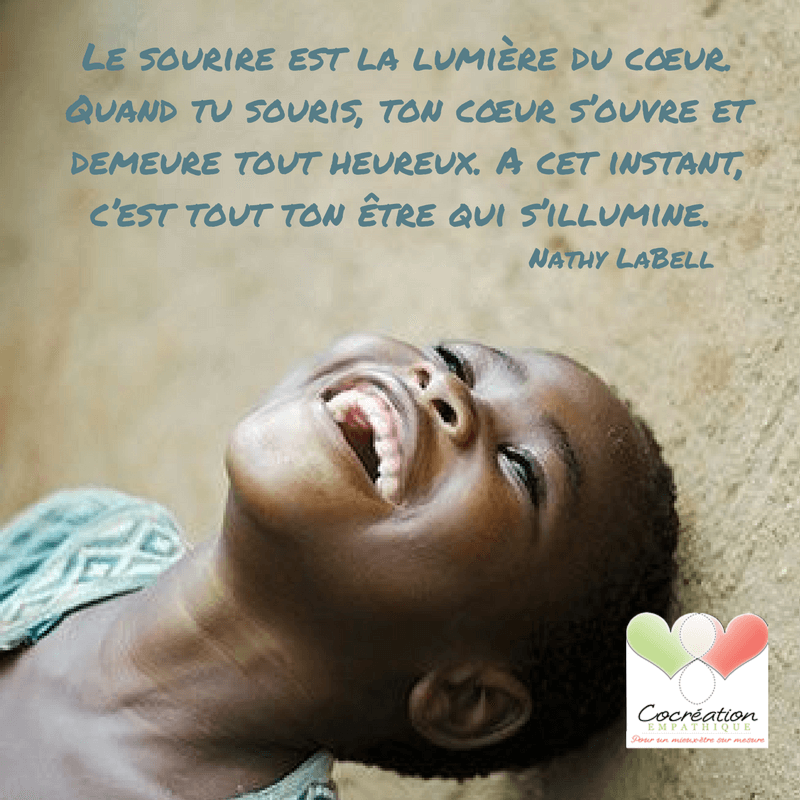
Utiliser le rire, c’est un soleil artificiel qui illumine notre quotidien. Si cette brillante lumière a suffisamment éclairé notre journée, nous nous endormons facilement comme un enfant car eux ont encore leurs cœurs d’enfant et ils rient beaucoup plus souvent que nous dans une journée. Le rire est un aimant. Avez-vous remarqué comme il est contagieux et comme nous sommes curieux de savoir ce qui fait rire nos voisins, nous souhaitons rire aussi à notre tour.
2. Aussi le rire tisse les liens. Nous aimons être en présence de personnes qui allègent notre journée par le rire. Il donne des vitamines, il est bon pour le corps et notre cerveau. Nous l’avons compris rapidement, car nous allons facilement vers ceux qui nous font rire.
3. Écouter une musique entraînante, chanter, danser, tous ces gestes illuminent notre journée, elle met de la lumière là où il en manque.
4. Pour penser à sourire et rire, dessinons-nous sur la main un bonhomme sourire et commençons à apprendre des blagues que nous pourrons raconter à nos proches. Sourire c’est rajeunir!
À Bruxelles, les touristes viennent en nombre pour voir le Manneken-Pis uriner de l’eau. Mais la ville était loin de se douter que ce petit jet générait un grand gaspillage.
Acadia National park est une aire de loisirs de la côte Atlantique de 47 000 acres principalement sur l’île des monts déserts du Maine. Son paysage est marqué par des forêts, des plages rocheuses et des pics de granit érodés, le glacier comme Cadillac Mountain, point culminant de la côte est des États-Unis. Parmi la faune sont les orignaux, les ours, les baleines et les oiseaux de mer.
I was taken aback when a co-worker asked me where I was born… I answered the Philippines, of course… then he said, ” I mean, on what island .?????” I thought for a minute before replying….Uhm… Luzon Island ???
I told him I’d always thought of my birthplace as a country and not an island ( if that makes sense). Well, the Philippines is comprised of 7, 641 islands ( or 7, 107 at high tide, ha ha ) , and though I find his question a bit strange, I have to admit it makes sense… After all, the former name of the Philippines was Las Islas Filipinas ( as a Spanish colony.. .. islas means islands ) , Philippine Islands ( as American colony) , Commonwealth of the Philippines, ( still American colony) , then Republic of the Philippines ( after independence)
So, I ran off to tell my Filipino co-worker and she was…
You can find here, the complete team of RadioSatellite and RadioSatellite2
For RadioSatellite : Instrumental music / Lounge / Jazz :
Guido : Presenting his program : In the Zone (Lounge) (Netherlands)
Michael Maretimo : Presenting his program : Maretimo Sessions (Lounge) (Nethelands)
Steve Hart : Presenting his program : Cool Nights ( Soft Jazz) (New Zealand)
For RadioSatellite2 : Oldies Pop from 60s to 80s + Soft Jazz + Blues + Country Music
Artie Martello : Presenting his daily program : Mostly Folk ( Folk, Pop and Americana) (USA)
Steve Hart : Presenting his daily program : Cool Nights ( Soft Jazz) (New Zealand)
Rojene Bailey : Presenting his “week end” program : Blues Time In the City ( Blues) (USA)
Paul Farrar : Presenting his program : Paul Farrar Comedy Show (Comedy)(UK)
Jason Curtman : Presenting his daily program : The Jason Curtman Show (American Oldies RocknRoll and pop ) (USA)
Ben Morris : Presenting his program : Rockin Back the clock (UK)
Matthew Lasar, Paul Riismandel, and Jennifer Waits : Presenting their program: Radio Survivor (Reports / news and interviews about radios and webradios) (USA)
CLICK ON VIDEO BELOW TO DISCOVER SHOWS ON RADIOSATELLITE & RADIOSATELLITE2
Music composition + Audio and Video creation : by Pierre .
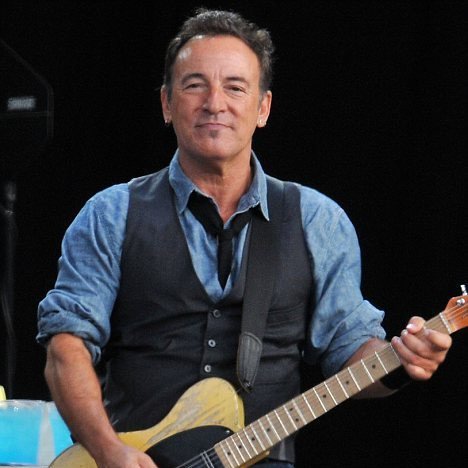
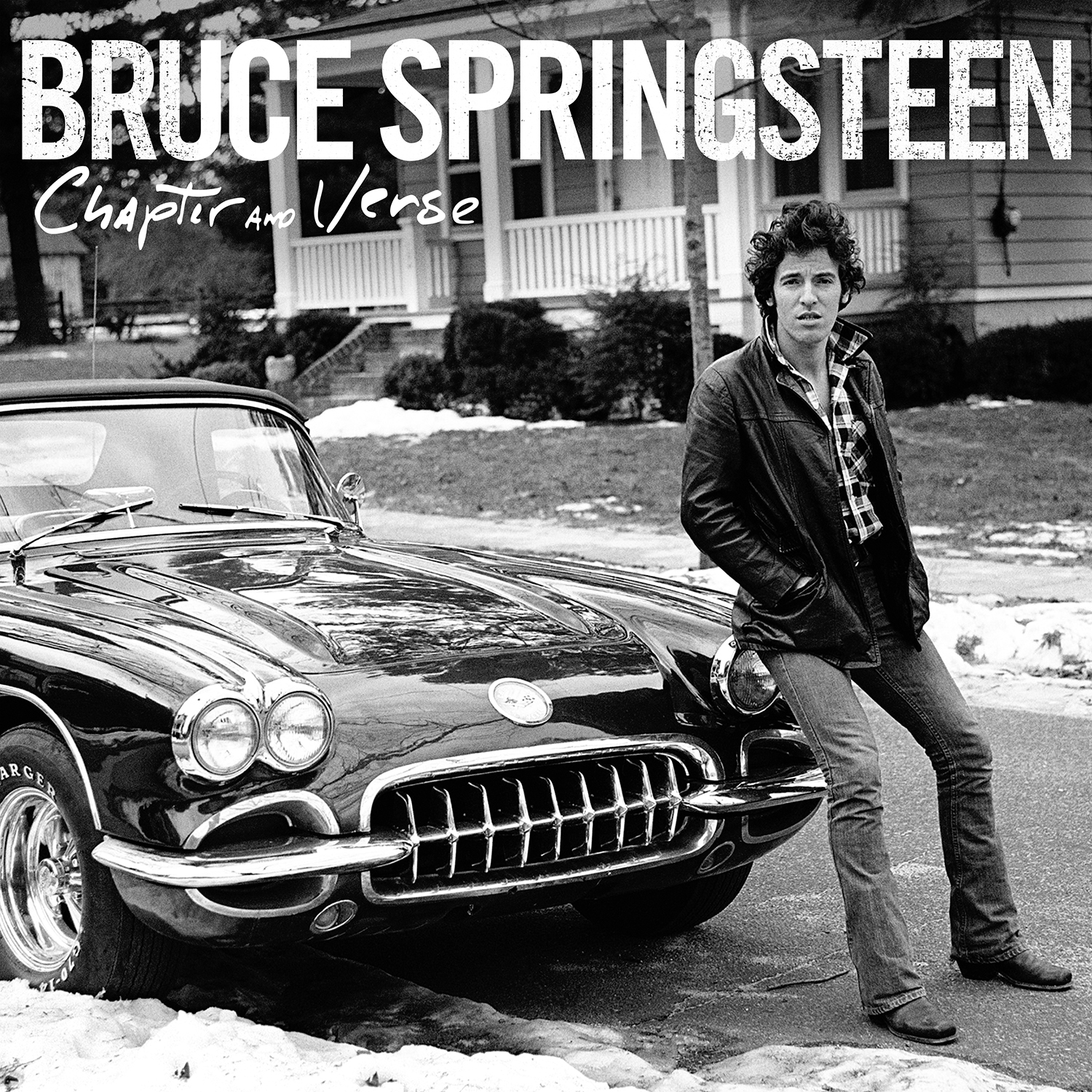
Bruce Frederick Joseph Springsteen (born September 23, 1949) is an American singer-songwriter, known for his work with the E Street Band. Nicknamed “The Boss”.
Bruce Springsteen
He is widely known for his brand of poetic lyrics, Americana, working class, sometimes political sentiments centered on his native New Jersey, his distinctive voice, and his lengthy and energetic stage performances—with concerts from the 1970s to the present decade running at up to four hours in length. His artistic endeavors reflect both his personal growth and the zeitgeist of the times.
Springsteen’s recordings have included both commercially accessible rock albums and more somber folk-oriented works. His most successful studio albums, Born to Run (1975) and Born in the U.S.A. (1984) find pleasures in the struggles of daily American life. He has sold more than 120 million records worldwide and more than 64 million records in the United States, making him one of the world’s best-selling artists of all time.
He has earned numerous awards for his work, including 20 Grammy Awards, two Golden Globes, and an Academy Award as well as being inducted into both the Songwriters Hall of Fame and the Rock And Roll Hall Of Fame in 1999. In 2009, Springsteen was a Kennedy Center Honors recipient, in 2013 was named MusiCares person of the year, and in 2016 was awarded the Presidential Medal of Freedom.
He married Patti Scialfa in 1991, and the couple have had three children – Evan James, Jessica Rae and Sam Ryan.
Bruce Frederick Joseph Springsteen was born on September 23, 1949, at Monmouth Medical Center in Long Branch, New Jersey.
He was brought home from the hospital to Freehold Borough where he spent his childhood. He lived on South Street and attended Freehold Borough High School. His father, Douglas Frederick Springsteen, was of Dutch and Irish ancestry, and worked as a bus driver, among other vocations, although he was mostly unemployed. Springsteen said his mother, Adele Ann (née Zerilli), a legal secretary and of Italian ancestry, was the main breadwinner.
His maternal grandfather was born in Vico Equense, a town near Naples.
He has two younger sisters, Virginia and Pamela. Pamela had a brief film career, but left acting to pursue still photography full-time; she took photos for his Human Touch, Lucky Town and The Ghost of Tom Joad albums.
Springsteen’s last name is topographic and of Dutch origin, literally translating to “jumping stone” but more generally meaning a kind of stone used as a stepping stone in unpaved streets or between two houses.
The Springsteens are among the early Dutch families who settled in the colony of New Netherland in the 1600s.
Raised a Roman Catholic, Springsteen attended the St. Rose of Lima Catholic school in Freehold Borough, where he was at odds with the nuns and rejected the strictures imposed upon him, even though some of his later music reflects a Catholic ethos and includes a few rock-influenced, traditional Irish-Catholic hymns
In a 2012 interview, he explained that it was his Catholic upbringing rather than political ideology that most influenced his music. He noted in the interview that his faith had given him a “very active spiritual life”, although he joked that this “made it very difficult sexually.” He added: “Once a Catholic, always a Catholic.”
In the ninth grade, Springsteen transferred to the public Freehold High School, but did not fit in there either. Former teachers have said he was a “loner, who wanted nothing more than to play his guitar.” He completed high school, but felt so uncomfortable that he skipped his own graduation ceremony. He briefly attended Ocean County College, but dropped out.
Springsteen grew up hearing fellow New Jersey singer Frank Sinatra on the radio. He became interested in being involved in music himself when, in 1956 at the age of seven, he saw Elvis Presley on The Ed Sullivan Show.
In 1964, Springsteen bought his first guitar for $18. 1964 was also an important year for Springsteen, having seen The Beatles’ appearance on The Ed Sullivan Show.
Thereafter he started playing for audiences with a band called the Rogues at local venues such as the Elks Lodge in Freehold. In 1965, Springsteen’s mother took out a loan to buy her 16-year-old son a $60 Kent guitar, an act he subsequently memorialized in his song “The Wish”.
In the same year, he went to the house of Tex and Marion Vinyard, who sponsored young bands in town. They helped him become the lead guitarist and subsequently one of the lead singers of the Castiles.
His first gig with the Castiles was possibly at a trailer park on New Jersey Route 34. The Castiles recorded two original songs at a public recording studio in Brick Township and played a variety of venues, including Cafe Wha? in Greenwich Village. Marion Vinyard said that she believed the young Springsteen when he promised he would make it big.
Called for conscription in the United States Armed Forces when he was 18, Springsteen failed the physical examination and did not serve in the Vietnam War. He had suffered a concussion in a motorcycle accident when he was 17, and this together with his “crazy” behavior at induction gave him a classification of 4F, which made him unacceptable for service.
In the late-1960s, Springsteen performed briefly in a power trio known as Earth, playing in clubs in New Jersey, with one major show at the Hotel Diplomat in New York City. Earth consisted of John Graham on bass, and Mike Burke on drums.
Bob Alfano was later added on organ, but was replaced for two gigs by Frank ‘Flash’ Craig.
Springsteen acquired the nickname “The Boss” during this period; when he played club gigs with a band he took on the task of collecting the band’s nightly pay and distributing it amongst his bandmates.
The nickname also reportedly sprang from games of Monopoly that Springsteen would play with other Jersey Shore musicians.
Springsteen is not fond of this nickname, due to his dislike of bosses, but seems to have since tacitly accepted it. Previously he had the nickname “Doctor”.
From 1969 through early 1971, Springsteen performed with Steel Mill (originally called Child), which included Danny Federici, Vini Lopez, Vinnie Roslin and later Steve Van Zandt and Robbin Thompson. During this time he performed regularly at venues on the Jersey Shore, in Richmond, Virginia, Nashville, Tennessee, and a set of gigs in California, quickly gathering a cult following.
San Francisco Examiner music critic Philip Elwood gave Springsteen credibility in his glowing assessment of Steel Mill: “I have never been so overwhelmed by totally unknown talent.” Elwood went on to praise their “cohesive musicality” and, in particular, singled out Springsteen as “a most impressive composer”.
His prolific songwriting ability, with “More words in some individual songs than other artists had in whole albums”, as his future record label would describe it in early publicity campaigns, brought his skill to the attention of several people who were about to change his life: new managers Mike Appel and Jim Cretecos, who in turn brought him to the attention of Columbia Records talent scout John Hammond, who auditioned Springsteen in May 1972.
Even after Springsteen gained international acclaim, his New Jersey roots showed through in his music, and he often praised “the great state of New Jersey” in his live shows. Drawing on his extensive local appeal, he has routinely sold out consecutive nights in major New Jersey, Philadelphia and New York venues. He has also made many surprise appearances at The Stone Pony and other shore nightclubs over the years.
Springsteen was signed to Columbia Records in 1972 by Clive Davis, after having initially piqued the interest of John Hammond, who had signed Bob Dylan to the same label a decade earlier.
Despite the expectations of Columbia Records’ executives that Springsteen would record an acoustic album, he brought many of his New Jersey-based colleagues into the studio with him, thus forming the E Street Band (although it would not be formally named for several months). His debut album Greetings from Asbury Park, N.J., released in January 1973, established him as a critical favorite[20] though sales were slow.
Bruce Springsteen and Bryan Adams
In September 1973, Springsteen’s second album The Wild, the Innocent & the E Street Shuffle was released, again to critical acclaim but no commercial success. Springsteen’s songs became grander in form and scope, with the E Street Band providing a less folksy, more R&B vibe, and the lyrics often romanticized teenage street life. ”
In the May 22, 1974 issue of Boston’s The Real Paper music critic Jon Landau wrote, after seeing a performance at the Harvard Square Theater, “I saw rock and roll future, and its name is Bruce Springsteen.
And on a night when I needed to feel young, he made me feel like I was hearing music for the very first time.” Landau helped to finish the epic new album Born to Run and subsequently became Springsteen’s manager and producer. Given an enormous budget in a last-ditch effort at a commercially viable record, Springsteen became bogged down in the recording process while striving for a “Wall of Sound” production. But fed by the release of an early mix of “Born to Run” to nearly a dozen radio stations, anticipation built toward the album’s release.
On August 13, 1975, Springsteen and the E Street Band began a five-night, 10-show stand at New York’s The Bottom Line club. This attracted major media attention and was broadcast live on WNEW-FM. (Decades later, Rolling Stone magazine would name the stand as one of the 50 Moments That Changed Rock and Roll.)
Oklahoma City rock radio station WKY, in association with Carson Attractions, staged an experimental promotional event that resulted in a sold out house at the (6,000 seat) Civic Center Music Hall.
With the release of Born to Run on August 25, 1975, Springsteen finally found success. The album peaked at No. 3 on the Billboard 200, and while reception at US top 40 radio outlets for the album’s two singles was not overwhelming.
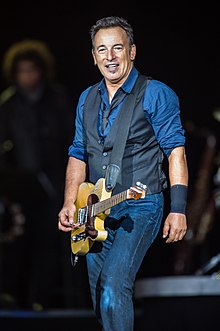
Bruce Springsteen
Springsteen appeared on the covers of both Time and Newsweek in the same week, on October 27 of that year. So great did the wave of publicity become that he eventually rebelled against it during his first venture overseas, tearing down promotional posters before a concert appearance in London
By the late 1970s, Springsteen had earned a reputation in the pop world as a songwriter whose material could provide hits for other bands. Manfred Mann’s Earth Band had achieved a US No. 1 pop hit with a heavily rearranged version of Greetings’ “Blinded by the Light” in early 1977.
Patti Smith reached No. 13 with her take on Springsteen’s unreleased “Because the Night” (with revised lyrics by Smith) in 1978, while The Pointer Sisters hit No. 2 in 1979 with Springsteen’s also unreleased “Fire”. Although not a critical success, long time friend Southside Johnny recorded Springsteen’s “The Fever” in early 1976 and “Talk to Me” in 1978. The two of them along with Steve Van Zandt collaborated to produce “Trapped Again” in 1978.
In September 1979, Springsteen and the E Street Band joined the Musicians United for Safe Energy anti-nuclear power collective at Madison Square Garden for two nights, playing an abbreviated set while premiering two songs from his upcoming album.
Springsteen continued to focus on working-class life with the 20-song double album The River in 1980, which included an intentionally paradoxical range of material from good-time party rockers to emotionally intense ballads, and finally yielded his first hit Top Ten single as a performer, “Hungry Heart”.
The River was followed in 1982 by the stark solo acoustic Nebraska. Recording sessions had been held to expand on a demo tape Springsteen had made at his home on a simple, low-tech four-track tape deck. However, during the recording process Springsteen and producer Jon Landau realized the songs worked better as solo acoustic numbers than full band renditions and the original demo tape was released as the album.
Although the recordings of the E Street Band were shelved, other songs from these sessions would later be released, including “Born in the U.S.A” and “Glory Days”.
Springsteen is probably best known for his album Born in the U.S.A. (1984), which sold 15 million copies in the U.S., 30 million worldwide, and became one of the best-selling albums of all time with seven singles hitting the Top 10.
During the Born in the U.S.A. Tour, Springsteen met actress Julianne Phillips, whom he would marry in 1985. He also that year took part in the recording of the USA For Africa charity song “We Are The World”; however he declined to play at Live Aid. He later stated that he “simply did not realise how big the whole thing was going to be”.
He has since expressed regret at turning down Bob Geldof’s invitation, stating that he could have played a couple of acoustic songs had there been no slot available for a full band performance.
Springsteen was inducted into the Rock and Roll Hall of Fame in 1999 by Bono (the lead singer of U2), a favor he returned in 2005.
In 2002, Springsteen released his first studio effort with the full band in 18 years, The Rising, produced by Brendan O’Brien. The album, mostly a reflection on the September 11 attacks, was a critical and popular success. (Many of the songs were influenced by phone conversations Springsteen had with family members of victims of the attacks who in their obituaries had mentioned how his music touched their lives.)
The title track gained airplay in several radio formats, and the record became Springsteen’s best-selling album of new material in 15 years.
At the Grammy Awards of 2003, Springsteen performed The Clash’s “London Calling” along with Elvis Costello, Dave Grohl, and E Street Band member Steven Van Zandt and No Doubt’s bassist, Tony Kanal, in tribute to Joe Strummer; Springsteen and the Clash had once been considered multiple-album-dueling rivals at the time of the double The River and the triple Sandinista!.
In 2004, Springsteen and the E Street Band participated in the Vote for Change tour, along with John Mellencamp, John Fogerty, the Dixie Chicks, Pearl Jam, R.E.M., Bright Eyes, the Dave Matthews Band, Jackson Browne, and other musicians.
Devils & Dust was released on April 26, 2005, and was recorded without the E Street Band. It is a low-key, mostly acoustic album, in the same vein as Nebraska and The Ghost of Tom Joad although with a little more instrumentation.
Some of the material was written almost 10 years earlier during, or shortly after, the Ghost of Tom Joad Tour, with a few having been performed then but not released.
In the early 1980s, Springsteen met Patti Scialfa at The Stone Pony, a bar in New Jersey where local musicians regularly perform. On that particular evening she was performing alongside one of Springsteen’s pals, Bobby Bandiera, with whom she had written “At Least We Got Shoes” for Southside Johnny. Springsteen liked her voice and after the performance, introduced himself to her. Soon after that, they started spending time together and became friends.
Early in 1984, Springsteen asked Scialfa to join the E Street Band for the upcoming Born in the U.S.A. Tour. According to the book Bruce Springsteen on Tour 1969–2005 by Dave Marsh, it looked like Springsteen and Scialfa were on the brink of becoming a couple through the first leg of the tour. But before that could happen, Barry Bell introduced Julianne Phillips to Springsteen and on May 13, 1985, they were married.
Springsteen and Scialfa lived in New Jersey, before moving to Los Angeles, where they decided to start a family.
On July 25, 1990, Scialfa gave birth to the couple’s first child, Evan James Springsteen.
On June 8, 1991, Springsteen and Scialfa married at their Los Angeles home in a very private ceremony, only attended by family and close friends.
Their second child, Jessica Rae Springsteen, was born on December 30, 1991; and their third child, Samuel Ryan Springsteen, was born on January 5, 1994.
In April 2006, Springsteen released We Shall Overcome: The Seeger Sessions.
Springsteen’s next album, titled Magic, was released on October 2, 2007. Recorded with the E Street Band, it had 10 new Springsteen songs plus “Long Walk Home”, performed once with the Sessions band, and a hidden track (the first included on a Springsteen studio release), “Terry’s Song”, a tribute to Springsteen’s long-time assistant Terry Magovern, who died on July 30, 2007.
Magic debuted at No. 1 in Ireland and the UK. Greatest Hits reentered the Irish charts at No. 57, and Live in Dublin almost cracked the top 20 in Norway again. Sirius Satellite Radio also restarted E Street Radio on September 27, 2007, in anticipation of Magic.
Radio conglomerate Clear Channel Communications was alleged to have sent an edict to its classic rock stations to not play any songs from the new album, while continuing to play older Springsteen material.
Sources: YouTube / Wikipedia
For further informations about Bruce Springsteen’s tours :
The Love Boat is an American television series set on a cruise ship, which aired on the ABC Television Networkfrom May 5, 1977, until May 24, 1986; three-hour specials aired in 1986–87 and 1990.
This slideshow requires JavaScript.
The series revolves around the ship’s captain (played by Gavin MacLeod) and a handful of its crew, with several passengers – played by various guest actors for each episode – having romantic and humorous adventures. It was part of ABC’s popular Saturday-night lineup that included Fantasy Island until that series ended in 1984.
The original 1976 made-for-TV movie on which the show was based (also titled The Love Boat) was itself based on the nonfiction book Love Boats by Jeraldine Saunders, a real-life cruise director. Two more TV movies (titled The Love Boat II and The New Love Boat) would follow before the series began its first season in September 1977.
The executive producer for the series was Aaron Spelling, who produced several TV series for Four Star, and ABC from the 1960s into the 1980s.
In 1997, the episode with segment titles “Hidden Treasure,” “Picture from the Past,” and “Ace’s Salary” (season 9, episode 3) was ranked No. 82 on TV Guide’s 100 Greatest Episodes of All Time. The Love Boat ran for nine seasons plus four specials. A made-for-TV movie, titled The Love Boat: A Valentine Voyage, starring four of the original cast members, aired on February 12, 1990.
Gavin MacLeod as Captain Merrill Stubing Bernie Kopell as Dr. Adam “Doc” Bricker, ship’s physician
Fred Grandy as Burl “Gopher” Smith, Yeoman Purser (seasons 1–9) Ted Lange as Isaac Washington, bartender Lauren Tewes as Julie McCoy, Cruise Director (seasons 1–7, 9 (1 episode), 4 specials) Jill Whelan as Vicki Stubing, the captain’s daughter (seasons 3–9, 4 specials, made-for-TV movie, plus a guest star appearance in Season 2 episode 8) Ted McGinley as Ashley “Ace” Covington Evans, ship’s photographer (seasons 7–9), Pat Klous as Judy McCoy, Julie’s sister and successor as cruise director (seasons 8–9)
MacLeod, Kopell and Lange are the only cast members to appear in every episode of the TV series as well as the last three made-for-TV movies. Grandy was in every episode throughout the run of the series, but was not in the last of the TV movies. MacLeod was not the captain of the Pacific Princess in the first two TV movies and did not appear in them, although when his character was introduced there was a mention of him being “the new captain”.
#Australia
#The_Love_Boat
#Canada
#The_Love_Boat
#Cyprus
#Toploio_tis_agapis
(The Ship of Love)
#Denmark
#The_Love_Boat
#Finland
#Lemmenlaiva
#Canada : #TheFunCruise
#France #La_croisière_samuse
#Germany
#LoveBoat
#Gibraltar
#LoveBoat
#Greece
#ΤοΠλοίο_της_Αγάπης
(The Ship of Love)
#Hungary
#Szerelemhajó
#(Love Ship)
#Israel
ספינת_האהבה#
(The Love Boat)
#Italy
Love Boat
#Netherlands
The Love Boat
#New_Zealand
The Love Boat
#Norway
#Kjærlighetsskipet
(The Love Ship)
#Philippines
The Love Boat
#Poland
#Statek_miłości
(The Love Boat)
#Portugal
#Barc_ do_Amor
(The Love Boat)
#Slovakia
#Loď_lásky
(Love Ship)
#SouthAfrica
#Die_Plesierboot
(The Pleasure Boat)
#SouthKorea
#사랑의 유람선
(Cruise ship of Love)
#Thailand
#เรือรัก_เรือสำราญ
(Ship of Love, Ship of Fun)
#Spain
#Vacacione_En_el_mar
(Sea Holidays)
#Sweden
#Kärlek_ombord
(Love on Board)
#Taiwan
#愛之船
(The Boat of Love)
#Turkey
#Aşk_Gemisi
(The Love Boat)
#United_Kingdom
The Love Boat
#Venezuela
American Graffiti is a 1973 American coming-of-age comedy-drama film directed and co-written by George Lucas starring Richard Dreyfuss, Ron Howard, Paul Le Mat, Harrison Ford, Charles Martin Smith, Cindy Williams, Candy Clark, Mackenzie Phillips, Bo Hopkins, and Wolfman Jack. Suzanne Somers and Joe Spano also appear in the film.
Set in Modesto, California in 1962, the film is a study of the cruising and rock and roll cultures popular among the post–World War II baby boom generation. The film is told in a series of vignettes, telling the story of a group of teenagers and their adventures over a single night.
The genesis of American Graffiti was in Lucas‘ own teenage years in early 1960s Modesto. He was unsuccessful in pitching the concept to financiers and distributors but found favor at Universal Pictures after United Artists, 20th Century Fox, Columbia Pictures, Metro-Goldwyn-Mayer, Warner Bros., and Paramount Pictures turned him down. Filming was initially set to take place in San Rafael, California, but the production crew was denied permission to shoot beyond a second day.
American Graffiti premiered on August 2, 1973 at the Locarno International Film Festival in Switzerland and was released on August 11, 1973 in the United States. The film received widespread critical acclaim and was nominated for the Academy Award for Best Picture. Produced on a $777,000 budget, it has become one of the most profitable films of all time. Since its initial release, American Graffiti has garnered an estimated return of well over $200 million in box office gross and home video sales, not including merchandising. In 1995, the United States Library of Congress deemed the film “culturally, historically, or aesthetically significant” and selected it for preservation in the National Film Registry.
In early September 1962 in Modesto, California, on the last evening of summer vacation, recent high school graduates and longtime friends, Curt Henderson and Steve Bolander, meet John Milner, the drag-racing king of the town, and Terry “The Toad” Fields in the parking lot of the local Mel’s Drive-In diner. Curt and Steve are scheduled to travel the next morning to Northeastern United States to start college. Despite receiving a $2,000 scholarship from the local Moose Lodge, Curt has second thoughts about leaving Modesto. Steve gives Toad his 1958 Chevrolet Impala to watch while he’s away at college until he returns at Christmas. Steve’s girlfriend, Laurie, who is also Curt’s sister, arrives in her car. Steve suggests to Laurie, who is already glum about him going to college, that they see other people while he is away in order to “strengthen” their relationship. Though not openly upset, she is displeased with his proposal which affects their interactions the rest of the evening.
Curt accompanies Steve, last year’s high school student class president, and Laurie, the current head cheerleader, to the back-to-high-school sock hop. In one story line, Curt is desperate to find a beautiful blonde girl driving a white 1956 Ford Thunderbird that he sees en route to the dance: at a stoplight, she appears to say “I love you” before disappearing around the corner. After leaving the hop, Curt is coerced by a group of greasers (“The Pharaohs”) to participate in an initiation rite that involves hooking a chain to a police car and ripping out its back axle. The Pharaohs tell Curt that “The Blonde” is a trophy wife or prostitute, but he refuses to believe either.
Determined to get a message to the blonde girl, Curt drives to the local radio station to ask DJ Wolfman Jack, who is omnipresent on the car radios, to announce a message for the blonde girl. Inside the radio station, Curt encounters a bearded man who tells him that the voice of The Wolfman is pre-taped from afar.
The man still accepts the message from Curt to see what he could do. As he is leaving the station, Curt sees the man talking into the microphone and hears the voice of The Wolfman, and realizes the man is the actual DJ himself.
Sure enough, The Wolfman eventually reads the message on the radio for “The Blonde” to meet Curt or call him at a number which happens to be a telephone booth. Curt waits by the telephone booth and early the next morning, he is awakened by the phone ringing. It turns out to be “The Blonde” who says she knows him and maybe she would see him cruising the coming night. Curt replies probably not, intimating that he decided to go to college and will be leaving that morning.
The Toad, in Steve’s car, and John, in his yellow 1932 Ford Deuce Coupé hot rod, cruise the strip of Modesto. Toad, who is normally socially inept with girls, successfully picks up a flirtatious, and somewhat rebellious, girl named Debbie. John inadvertently picks up Carol, an annoying 12-year-old who seems fond of him. Another drag racer, the handsome and arrogant Bob Falfa, is searching out John in order to challenge him to a race.
Steve and Laurie have a series of arguments and make-ups through the evening. They finally split and, as the story lines intertwine, Bob Falfa picks up Laurie in his black 1955 Chevrolet One-Fifty Coupé. Bob finally finds John and goads him into racing. A parade of cars follow them to “Paradise Road” to watch the race. Laurie rides shotgun with Bob as Toad starts the race. As Bob begins taking a lead in the race, he loses control of the car when a front tire blows, and the car plunges into a ditch and rolls over. Steve and John leap out of their cars and rush to the wreck as a dazed Bob and Laurie stagger out of the car before it explodes. Distraught, Laurie grips Steve tightly and begs him not to leave her. He assures her that he will stay in Modesto.
At the airfield in the morning, Curt says goodbye to his parents, his sister Laurie, Steve, John and The Toad. As the plane takes off, Curt, gazing out of the window, sees the white Ford Thunderbird belonging to the mysterious blonde driving down a country road.
An on-screen epilogue reveals that
John is killed by a drunk driver in December 1964,
Toad is reported missing in action near An Lộc in December 1965,
Steve is an insurance agent in Modesto, California,






 À Bruxelles, les touristes viennent en nombre pour voir le Manneken-Pis uriner de l’eau. Mais la ville était loin de se douter que ce petit jet générait un grand gaspillage.