BARBRA STREISAND


Barbara Joan “Barbra” Streisand born April 24, 1942 is an American singer, songwriter, actress, and filmmaker.

Her career spanning six decades, she has become an icon in multiple fields of entertainment, and has been recognized with two Academy Awards, ten Grammy Awards including the Grammy Lifetime Achievement Award and the Grammy Legend Award, five Emmy Awards including one Daytime Emmy, a Special Tony Award, an American Film Institute award, a Kennedy Center Honors prize, four Peabody Awards, the Presidential Medal of Freedom, and nine Golden Globes.


She is among a small group of entertainers who have been honored with an Emmy, Grammy, Oscar, and Tony Award, and is one of only two artists who have also won a Peabody.

barbra-streisand

Barbra Streisand

Streisand is one of the best-selling music artists of all time, with more than 68.5 million albums in the United States and with a total of 145 million records sold worldwide, (The only female in the top ten, and the only artist outside of the rock ‘n’ roll genre.) making her the best-selling female artist among the top-selling artists recognized by the Recording Industry Association of America


After beginning a successful recording career in the 1960s, Streisand ventured into film by the end of that decade. She starred in the critically acclaimed Funny Girl, for which she won the Academy Award and Golden Globe Award for Best Actress.

Her other films include The Owl and the Pussycat, The Way We Were, and A Star Is Born, for which she received her second Academy Award, composing music for the love theme “Evergreen”, the first woman to be honored as a composer.

With the release of Yentl in 1983, Streisand became the first woman to write, produce, direct, and star in a major studio film.

The film won an Oscar for Best Score and a Golden Globe for Best Motion Picture Musical; Streisand received the Golden Globe Award for Best Director, the first (and to date only) woman to win that award.


The RIAA and Billboard recognize Streisand as holding the record for the most top 10 albums of any female recording artist: a total of 34 since 1963. According to Billboard, Streisand holds the record for the female with the most number one albums .


Billboard also recognizes Streisand as the greatest female of all time on its Billboard 200 chart and one of the greatest artists of all time on its Hot 100 chart.

Streisand is the only recording artist to have a number-one album in each of the last six decades, having released 53 gold albums, 31 platinum albums, and 14 multi-platinum albums in the United States.


barbara-streisand3

Barbra streisand ( barbara)


Family


Barbara Joan Streisand was born on April 24, 1942, in Brooklyn, New York, the daughter of Diana (born Ida Rosen) and Emanuel Streisand. Her mother had been a soprano singer in her youth and considered a career in music, but later became a school secretary.

Her father was a high school teacher at the same school, where they first met. Her paternal grandparents emigrated from Galicia (Poland–Ukraine) and her maternal grandparents from the Russian Empire, where her grandfather had been a cantor.


Her father earned a master’s degree from City College of New York in 1928 and was considered athletic and handsome. As a student, he spent his summers outdoors, once working as a lifeguard and another hitchhiking through Canada. “He’d try anything,” his sister Molly said. “He wasn’t afraid of anything.” He married Ida in 1930, two years after graduating, and became a highly respected educator with a focus on helping underprivileged and delinquent youth.


In August 1943, a few months after Streisand’s first birthday, her father died suddenly at age 34 from complications from an epileptic seizure, possibly the result of a head injury years earlier.

The family fell into near-poverty, with her mother working as a low-paid bookkeeper.

As an adult, Streisand remembered those early years as always feeling like an “outcast,” explaining, “Everybody else’s father came home from work at the end of the day. Mine didn’t.”

Her mother tried to pay their bills but could not give her daughter the attention she craved: “When I wanted love from my mother, she gave me food,” Streisand says.
bs8

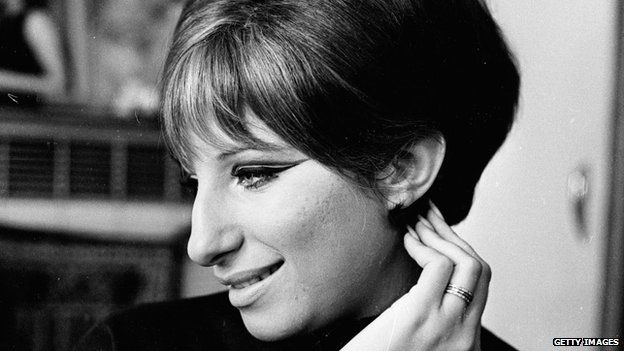
Barbra Streisand the 70s


Streisand recalls that her mother had a “great voice” and sang semi-professionally on occasion, in her operatic soprano voice. During a visit to the Catskills when Streisand was thirteen, she told Rosie O’Donnell, she and her mother recorded some songs on tape. That session was the first time Streisand ever asserted herself as an artist, which also became her “first moment of inspiration” as an artist.


She has an older brother, Sheldon, and a half-sister, the singer Roslyn Kind, from her mother’s remarriage to Louis Kind in 1949. Roslyn is nine years younger than Streisand.


Education


Streisand began her education at the Jewish Orthodox Yeshiva of Brooklyn when she was five. There, she was considered to be bright and extremely inquisitive about everything; however, she lacked discipline, often shouting answers to questions out of turn.

She next entered Public School 89 in Brooklyn, and during those early school years began watching television and going to movies. Watching the glamorous stars on the screen, she was soon entranced by acting and now hoped someday to become an actress, partly as a means of escape: “I always wanted to be somebody, to be famous . . .You know, get out of Brooklyn.


Streisand became known by others in the neighborhood for her voice. With the other kids she remembers sitting on the stoop in front of their flat and singing: “I was considered the girl on the block with the good voice.” That talent became a way for her to gain attention. She would often practice her singing in the hallway of her apartment building which gave her voice an echoing quality.


She made her singing debut at a PTA assembly, where she became a hit to everyone but her mother, who was mostly critical of her daughter. Young Streisand was invited to sing at weddings and summer camp, along with having an unsuccessful audition at MGM records when she was nine. By the time she was thirteen, her mother began supporting her talent, helping her make a four-song demo tape, including “Zing! Went the Strings of My Heart,” and “You’ll Never Know.”


Although she knew her voice was good and she liked the attention, becoming an actress was her main objective. That desire was made stronger when she saw her first Broadway play, The Diary of Anne Frank, when she was fourteen. The star in the play was Susan Strasberg, whose acting she wanted to emulate if ever given the chance.

To help achieve that goal, Streisand began spending her spare time in the library, studying the biographies of various stage actresses such as Eleanora Duse and Sarah Bernhardt. In addition, she began reading novels and plays, including some by Shakespeare and Ibsen, and also on her own, studied the acting theories of Konstantin Stanislavski and Michael Chekhov.


She attended Erasmus Hall High School in Brooklyn in 1955 where she became an honor student in modern history, English, and Spanish. She also joined the Freshman Chorus and Choral Club, where she sang with another choir member and classmate, Neil Diamond.

Diamond recalls, “We were two poor kids in Brooklyn. We hung out in the front of Erasmus High and smoked cigarettes.” The school was near an art-movie house, and he recalls that she was always aware of the films they were showing, while he wasn’t as interested.


During the summer of 1957 she got her first stage experience as a walk-on at the Playhouse in Malden Bridge, New York. That small part was followed by a role as the kid sister in Picnic and one as a vamp in Desk Set.


She returned to school in Brooklyn but never took dramatic arts classes, preferring instead to gain some real-world stage experience. To that end, in her sophomore year, she took a night job at the Cherry Lane Theater in Greenwich Village helping backstage. When she was a senior, she rehearsed for a small part in Driftwood, a play staged in a midtown attic space.

Her co-star in Driftwood was Joan Rivers.


At age sixteen, she graduated from Erasmus Hall in January 1959, and despite her mother’s pleas that she stay out of show business, she immediately set out trying to get roles on the New York City stage.

After renting a small apartment on 48th street, in the heart of the theater district, she accepted any job she could involving the stage, and at every opportunity, she “made the rounds” of the casting offices.


Career beginnings


At sixteen, then living on her own, Streisand’s youth and ambition worked in her favor, but she lacked a mature woman’s physical features which were needed for serious female roles. She therefore took various menial jobs to have some income.

At one period, she lacked a permanent address, and found herself sleeping at the home of friends or anywhere else she could set up the army cot she carried around to save on rent expense. When desperate, she would return to her mother’s flat in Brooklyn for a home-cooked meal.

However, her mother would be horrified by her daughter’s “gypsy-like lifestyle,” wrote biographer Karen Swenson, and again begged her to give up trying to get into show business;

but Streisand took her mother’s pleadings as even more reason to keep trying: “My desires were strengthened by wanting to prove to my mother that I could be a star.”


She took a job as an usher at the Lunt-Fontanne Theater for The Sound of Music, early in 1960. During the run of the play, she heard that the casting director was auditioning for more singers, and it marked the first time she sang in pursuit of a job.

Although the director felt she was not right for the part, he encouraged her to begin including her talent as a singer on her résumé when looking for other work.

That suggestion prodded Streisand to think seriously about a singing career, in addition to acting. She asked her boyfriend, Barry Dennen, to tape her singing, copies of which she could then give out to possible employers. Dennen had acted with her briefly in an off-Broadway play, but had no reason to think she had any talent as a singer, and she never mentioned it. Nevertheless, he agreed and found a guitarist to accompany her:


We spent the afternoon taping, and the moment I heard the first playback I went insane. . . . This nutty little kook had one of the most breathtaking voices I’d ever heard . . . when she was finished and I turned off the machine, I needed a long moment before I dared look up at her.


Dennen grew enthusiastic and he convinced her to enter a talent contest at the Lion, a gay nightclub in Manhattan’s Greenwich Village. She performed two songs, after which there was a “stunned silence” from the audience, followed by “thunderous applause” when she was pronounced the winner.

She was invited back and sang at the club for several weeks.

It was during this time that she dropped the second “a” from her first name, switching from “Barbara” to “Barbra”, due to her dislike of her original name.


Nightclub shows and Broadway stage


Streisand was next asked to audition at the Bon Soir nightclub, after which she was signed up at $125 a week. It became her first professional engagement, in September 1960, where she was the opening act for comedian Phyllis Diller. She recalls it was the first time she had been in that kind of upper-scale environment: “I’d never been in a nightclub until I sang in one.”


Dennen now wanted to expose Streisand to his vast record collection of female singers, including Billie Holiday, Mabel Mercer, Ethel Waters, and Édith Piaf. His effort made a difference in her developing style, as she gained new respect for the art of popular singing. She also realized that she could still become an actress by first gaining recognition as a singer.

According to biographer Christopher Nickens, hearing other great female singers benefited her style, as she began creating different emotional characters when performing, which gave her singing a greater range.

This range allowed her to sing with a dramatic voice or a lighthearted, and playful one. Feeling more self-confident, she improved her stage presence when speaking to the audience between songs. She discovered that her Brooklyn-bred style of humor was received quite favorably.

During the next six months appearing at the club, some began comparing her singing voice to famous names such as Judy Garland, Lena Horne and Fanny Brice. Her conversational ability to charm an audience with spontaneous humor during performances became more sophisticated and professional.

Theater critic Leonard Harris, in one of his reviews, could already envision her future success: “She’s twenty; by the time she’s thirty she will have rewritten the record books.”

Streisand, however, never lost her desire to be a stage actress, and accepted her first role on the New York stage in Another Evening with Harry Stoones, a satirical comedy play in which she acted and sang two solos. The show received terrible reviews and closed the next day.

With the help of her new personal manager, Martin Erlichman, she had successful shows in Detroit and St. Louis.

Erlichman then booked her at an even more upscale nightclub in Manhattan, the Blue Angel, where she became an even bigger hit during the period of 1961 to 1962. Streisand once told Jimmy Fallon, whom she sang a duet with, on the Tonight Show, that Erlichman was a “fantastic manager” and still managed her career after 50 years.


While appearing at the Blue Angel, theater director and playwright Arthur Laurents asked her to audition for a new musical comedy he was directing, I Can Get It for You Wholesale. She got the part of secretary to the lead actor businessman, played by then unknown Elliott Gould.

They fell in love during rehearsals and eventually moved into a small apartment together above a seafood restaurant on Third Avenue. The show opened on March 22, 1962, at the Shubert Theater, and received rave reviews. Her performance “stopped the show cold,” writes Nickens, and she became Broadway’s most exciting and youngest new star.

Groucho Marx, while hosting the Tonight Show, told her that twenty was an “extremely young age to be a success on Broadway.”

Streisand received a Tony nomination and a New York Drama Critic’s prize for Best Supporting Actress.

The show was recorded and it was the first time the public could purchase an album of her singing.


Television appearances, marriage, and first albums


Streisand’s first television appearance was on The Tonight Show, then credited to its usual host Jack Paar. She was seen during an April 1961 episode on which Orson Bean substituted for Paar. She sang Harold Arlen’s “A Sleepin’ Bee”.

During her appearance, Phyllis Diller, also a guest on the show, called her “one of the great singing talents in the world.”


Later in 1961, before she was cast in Another Evening With Harry Stoones, she became a semi-regular on PM East/PM West, a talk/variety series hosted by Mike Wallace and Joyce Davidson.


Her appearance with Orson Bean and his other guest Phyllis Diller on The Tonight Show was preserved by kinescope and has been viewed online by many people who were not alive in 1961. None of the video of Streisand on PM East/PM West was preserved for posterity.


In May 1962, Streisand appeared on The Garry Moore Show, where she sang “Happy Days Are Here Again” for the first time. Her sad, slow version of the 1930s upbeat Democratic Party theme song became her signature song during this early phase of her career.


Johnny Carson had her on the Tonight Show half a dozen times in 1962 and 1963, and she became a favorite of his television audience and himself personally. He described her as an “exciting new singer.”

During one show she joked with Groucho Marx, who liked her style of humor.


In December 1962 she made the first of a number of appearances on the Ed Sullivan Show, was later a cohost on the Mike Douglas Show, and made an impact on a number of Bob Hope specials. Performing with her on the Ed Sullivan Show was Liberace who became an instant fan of the young singer. Liberace invited her to Las Vegas, Nevada to perform as his opening act at the Riviera Hotel.


Liberace is credited with introducing Barbara to Western American audiences.

The following September, during her ongoing shows at Harrah’s Hotel in Lake Tahoe, she and Elliott Gould took time off to get married in Carson City, Nevada. With her career and popularity rising so quickly, she saw her marriage to Gould as a “stabilizing influence.”


Her first album, The Barbra Streisand Album in early 1963, made the top 10 on the Billboard chart and won three Grammy Awards.

The album made her the best-selling female vocalist in the country.

That summer she also released The Second Barbra Streisand Album, which established her as the “most exciting new personality since Elvis Presley.”

She ended that breakthrough year of 1963 by performing one-night concerts in Indianapolis, San Jose, Chicago, Sacramento, and Los Angeles.


Streisand returned to Broadway in 1964 with an acclaimed performance as entertainer Fanny Brice in Funny Girl at the Winter Garden Theatre. The show introduced two of her signature songs, “People” and “Don’t Rain on My Parade.”

Because of the play’s overnight success, she appeared on the cover of Time. In 1964 Streisand was nominated for a Tony Award for Best Actress in a Musical but lost to Carol Channing in Hello, Dolly! Streisand received an honorary “Star of the Decade” Tony Award in 1970.


In 1966, she repeated her success with Funny Girl in London’s West End at the Prince of Wales Theatre. From 1965 to 1967 she appeared in her first four solo television specials.


Career


Singing


Streisand has recorded 50 studio albums, almost all with Columbia Records.

Her early works in the 1960s (her debut The Barbra Streisand Album, The Second Barbra Streisand Album, The Third Album, My Name Is Barbra, etc.) are considered classic renditions of theatre and cabaret standards, including her pensive version of the normally uptempo “Happy Days Are Here Again”.

She performed this in a duet with Judy Garland on The Judy Garland Show. Garland referred to her on the air as one of the last great belters. They also sang “There’s No Business Like Show Business” with Ethel Merman joining them.


Beginning with My Name Is Barbra, her early albums were often medley-filled keepsakes of her television specials. Starting in 1969, she began attempting more contemporary material, but like many talented singers of the day, she found herself out of her element with rock.

Her vocal talents prevailed, and she gained newfound success with the pop and ballad-oriented Richard Perry-produced album Stoney End in 1971. The title track, written by Laura Nyro, was a major hit for Streisand.


During the 1970s, she was also highly prominent on the pop charts, with Top 10 recordings such as “The Way We Were” (US No. 1),

“Evergreen (Love Theme from A Star Is Born)” (US No. 1),

“No More Tears (Enough Is Enough)” (1979, with Donna Summer), which as of 2010 is reportedly still the most commercially successful duet, (US No. 1),

“You Don’t Bring Me Flowers” (with Neil Diamond) (US No. 1)

and “The Main Event” (US No. 3), some of which came from soundtrack recordings of her films.

As the 1970s ended, Streisand was named the most successful female singer in the U.S. — only Elvis Presley and The Beatles had sold more albums.

In 1980, she released her best-selling effort to date, the Barry Gibb-produced Guilty. The album contained the hits “Woman in Love” (which spent several weeks on top of the pop charts in the fall of 1980), “Guilty”, and “What Kind of Fool”.


After years of largely ignoring Broadway and traditional pop music in favor of more contemporary material, Streisand returned to her musical-theatre roots with 1985’s The Broadway Album, which was unexpectedly successful, holding the coveted No. 1 Billboard position for three straight weeks, and being certified quadruple platinum.


The album featured tunes by Rodgers and Hammerstein, George Gershwin, Jerome Kern, and Stephen Sondheim, who was persuaded to rework some of his songs especially for this recording.

The Broadway Album was met with acclaim, including a Grammy nomination for album of the year and, ultimately, handed Streisand her eighth Grammy as Best Female Vocalist.

After releasing the live album One Voice in 1986, Streisand was set to release another album of Broadway songs in 1988.

She recorded several cuts for the album under the direction of Rupert Holmes, including “On My Own” (from Les Misérables),

a medley of “How Are Things in Glocca Morra?”

and “Heather on the Hill” (from Finian’s Rainbow and Brigadoon, respectively),

“All I Ask of You” (from The Phantom of the Opera), “Warm All Over” (from The Most Happy Fella) and an unusual solo version of “Make Our Garden Grow” (from Candide).

Streisand was not happy with the direction of the project and it was ultimately scrapped.

Only “Warm All Over” and a reworked, lite FM-friendly version of “All I Ask of You” were ever released, the latter appearing on Streisand’s 1988 effort, Till I Loved You.

At the beginning of the 1990s, Streisand started focusing on her film directorial efforts and became almost inactive in the recording studio. In 1991, a four-disc box set, Just for the Record, was released.

A compilation spanning Streisand’s entire career to date, it featured over 70 tracks of live performances, greatest hits, rarities and previously unreleased material.


The following year, Streisand’s concert fundraising events helped propel former Pres. Bill Clinton into the spotlight and into office.

Streisand later introduced Clinton at his inauguration in 1993. Streisand’s music career, however, was largely on hold. A 1992 appearance at an APLA benefit as well as the aforementioned inaugural performance hinted that Streisand was becoming more receptive to the idea of live performances.

A tour was suggested, though Streisand would not immediately commit to it, citing her well-known stage fright as well as security concerns. During this time, Streisand finally returned to the recording studio and released Back to Broadway in June 1993.

The album was not as universally lauded as its predecessor, but it did debut at No. 1 on the pop charts (a rare feat for an artist of Streisand’s age, especially given that it relegated Janet Jackson’s Janet to the No. 2 spot).

One of the album’s highlights was a medley of “I Have A Love” / “One Hand, One Heart”, a duet with Johnny Mathis, who Streisand said is one of her favorite singers.
barbra-streisand2

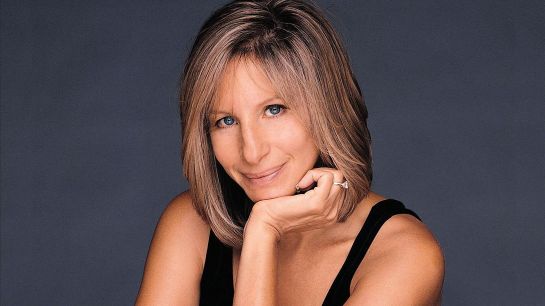
Barbra Streisand THE star is really borned

In 1993, New York Times music critic Stephen Holden wrote that Streisand “enjoys a cultural status that only one other American entertainer, Frank Sinatra, has achieved in the last half century”.

In September 1993, Streisand announced her first public concert appearances in 27 years (if one does not count her Las Vegas nightclub performances between 1969 and 1972).

What began as a two-night New Year’s event at the MGM Grand Las Vegas eventually led to a multi-city tour in the summer of 1994. Tickets for the tour were sold out in under one hour.

Streisand also appeared on the covers of major magazines in anticipation of what Time magazine named “The Music Event of the Century.”

The tour was one of the biggest all-media merchandise parlays in history. Ticket prices ranged from US$50 to US$1,500 – making Streisand the highest-paid concert performer in history. Barbra Streisand:

The Concert went on to be the top-grossing concert of the year and earned five Emmy Awards and the Peabody Award, while the taped broadcast on HBO is, to date, the highest-rated concert special in HBO’s 30-year history.

Following the tour’s conclusion, Streisand once again kept a low profile musically, instead focusing her efforts on acting and directing duties as well as a burgeoning romance with actor James Brolin.


In 1996, Streisand released “I Finally Found Someone” as a duet with Canadian singer and songwriter Bryan Adams. The song was nominated for an Oscar as it was part of the soundtrack of Streisand’s self-directed movie The Mirror Has Two Faces. It reached #8 on the Billboard Hot 100, and was her first significant hit in almost a decade and her first top 10 hit on the Hot 100 (and first gold single) since 1981.


In 1997, she finally returned to the recording studio, releasing Higher Ground, a collection of songs of a loosely inspirational nature which also featured a duet with Céline Dion.

The album received generally favorable reviews and, remarkably, once again debuted at No. 1 on the pop charts. Following her marriage to Brolin in 1998, Streisand recorded an album of love songs entitled A Love Like Ours the following year.

Reviews were mixed, with many critics complaining about the somewhat syrupy sentiments and overly-lush arrangements; however, it did produce a modest hit for Streisand in the country-tinged “If You Ever Leave Me”, a duet with Vince Gill.

bs-7

On New Year’s Eve 1999, Streisand returned to the concert stage, selling out in the first few hours, eight months before her return.

At the end of the millennium, she was the number one female singer in the U.S., with at least two No. 1 albums in each decade since she began performing.

A two-disc live album of the concert entitled Timeless: Live in Concert was released in 2000. Streisand performed versions of the Timeless concert in Sydney and Melbourne, Australia, in early 2000. In advance of four concerts (two each in Los Angeles and New York) in September 2000, Streisand announced that she was retiring from playing public concerts. Her performance of the song “People” was broadcast on the Internet via America Online.


Streisand’s most recent albums have been Christmas Memories (2001), a somewhat somber collection of holiday songs (which felt entirely —albeit unintentionally— appropriate in the early post-9/11 days), and The Movie Album (2003), featuring famous film themes and backed by a large symphony orchestra. Guilty Pleasures (called Guilty Too in the UK), a collaboration with Barry Gibb and a sequel to their Guilty, was released worldwide in 2005.


In February 2006, Streisand recorded the song “Smile” alongside Tony Bennett at Streisand’s Malibu home.

The song is included on Bennett’s 80th birthday album, Duets. In September 2006, the pair filmed a live performance of the song for a special directed by Rob Marshall entitled Tony Bennett: An American Classic.

The special aired on NBC November 21, 2006, and was released on DVD the same day. Streisand’s duet with Bennett opened the special. In 2006, Streisand announced her intent to tour again, in an effort to raise money and awareness for multiple issues.

After four days of rehearsal at the Sovereign Bank Arena in Trenton, New Jersey, the tour began on October 4 at the Wachovia Center in Philadelphia, continued with a featured stop in Fort Lauderdale, Florida, (this was the concert Streisand chose to film for a TV special), and concluded at Staples Center in Los Angeles on November 20, 2006. Special guests Il Divo were interwoven throughout the show.

The show was known as Streisand: The Tour.


Streisand’s 20-concert tour set box-office records.

At the age of 64, well past the prime of most performers, she grossed $92,457,062 and set house gross records in 14 of the 16 arenas played on the tour.

She set the third-place record for her October 9, 2006 show at Madison Square Garden, the first- and second-place records of which are held by her two shows in September 2000.

She set the second-place record at the MGM Grand Garden Arena, with her December 31, 1999 show being the house record and the highest-grossing concert of all time.

This led many people to openly criticize Streisand for price gouging, as many tickets sold for upwards of $1,000.


A collection of performances culled from different stops on this tour, Live in Concert 2006, debuted at No. 7 on the Billboard 200, making it Streisand’s 29th Top 10 album.

In the summer of 2007, Streisand gave concerts for the first time in continental Europe. The first concert took place in Zürich (June 18), then Vienna (June 22), Paris (June 26), Berlin (June 30), Stockholm (July 4, canceled), Manchester (July 10) and Celbridge, near Dublin (July 14), followed by three concerts in London (July 18, 22 and 25), the only European city where Streisand had performed before 2007.

Tickets for the London dates cost between £100.00 and £1,500.00 and for the Ireland date between €118 and €500.

The Ireland date was marred by problems, with serious parking and seating problems leading to the event’s being dubbed a fiasco by Hot Press. The tour included a 58-piece orchestra.


In February 2008, Forbes listed Streisand as the No.-2-earning female musician, between June 2006 and June 2007, with earnings of about $60 millions.

On November 17, 2008, Streisand returned to the studio to begin recording what would be her sixty-third album and it was announced that Diana Krall was producing the album.

Streisand is one of the recipients of the 2008 Kennedy Center Honors. On December 7, 2008, she visited the White House as part of the ceremonies.


On April 25, 2009, CBS aired Streisand’s latest television special, Streisand: Live in Concert, highlighting the aforementioned featured stop from her 2006 North American tour, in Fort Lauderdale, Florida.

On September 26, 2009, Streisand performed a one-night-only show at the Village Vanguard in New York City’s Greenwich Village.

This performance was later released on DVD as One Night Only: Barbra Streisand and Quartet at The Village Vanguard.

On September 29, 2009, Streisand and Columbia Records released her newest studio album, Love is the Answer, produced by Diana Krall.

On October 2, 2009, Streisand made her British television performance debut with an interview on Friday Night with Jonathan Ross to promote the album.

This album debuted at No. 1 on the Billboard 200 and registered her biggest weekly sales since 1997, making Streisand the only artist in history to achieve No. 1 albums in five different decades.


On February 1, 2010, Streisand joined over eighty other artists in recording a new version of the 1985 charity single “We Are the World”. Quincy Jones and Lionel Richie planned to release the new version to mark the 25th anniversary of its original recording.

These plans changed, however, in view of the devastating earthquake that hit Haiti on January 12, 2010, and on February 12, the song, now called “We Are the World 25 for Haiti”, made its debut as a charity single to support relief aid for the beleaguered island nation.


In 2011, she sang Somewhere from the Broadway musical West Side Story, with child prodigy Jackie Evancho, on Evancho’s album Dream with Me.


Streisand was honored as MusiCares Person of the Year on February 11, 2011, two days prior to the 53rd Annual Grammy Awards.


On October 11, 2012, Streisand gave a three-hour concert performance before a crowd of 18,000 as part of the ongoing inaugural events of Barclays Center (and part of her current Barbra Live tour) in her native Brooklyn (her first-ever public performance in her home borough). Streisand was joined onstage by trumpeter Chris Botti, Italian operatic trio Il Volo, and her son Jason Gould. The concert included musical tributes by Streisand to Donna Summer and Marvin Hamlisch, both of whom had died earlier in 2012.

Confirmed attendees included Barbara Walters, Jimmy Fallon, Sting, Katie Couric, Woody Allen, Michael Douglas and New York City mayor Michael Bloomberg, as well as designers Calvin Klein, Donna Karan, Ralph Lauren and Michael Kors.

In June 2013 she gave two concerts in Bloomfield Stadium, Tel Aviv.


Streisand is one of many singers who use teleprompters during their live performances. Streisand has defended her choice in using teleprompters to display lyrics and, sometimes, banter.


In September 2014, she released Partners, a new album of duets that features collaborations with Elvis Presley, Andrea Bocelli, Stevie Wonder, Lionel Richie, Billy Joel, Babyface, Michael Bublé, Josh Groban, John Mayer, John Legend, Blake Shelton and Jason Gould. This album topped the Billboard 200 with sales of 196,000 copies in the first week, making Streisand the only recording artist to have a number-one album in each of the last six decades.

It was also certified gold in November 2014 and platinum in January 2015, thus becoming Streisand’s 52nd gold and 31st Platinum album, more than any other female artist in history.


In May 2016, Streisand announced the upcoming album Encore: Movie Partners Sing Broadway to be released in August following a nine-city concert tour, Barbra: The Music, The Mem’ries, The Magic, including performances in Los Angeles, Las Vegas, Philadelphia, and a return to her hometown of Brooklyn.


Acting


Her first film was a reprise of her Broadway hit, Funny Girl (1968), an artistic and commercial success directed by Hollywood veteran William Wyler. Streisand won the 1968 Academy Award for Best Actress for the role,  sharing it with Katharine Hepburn (The Lion in Winter), the only time there has been a tie in this Oscar category.

Her next two movies were also based on musicals, Jerry Herman’s Hello, Dolly!, directed by Gene Kelly (1969); and Alan Jay Lerner’s and Burton Lane’s On a Clear Day You Can See Forever, directed by Vincente Minnelli (1970); while her fourth film was based on the Broadway play The Owl and the Pussycat (1970).


During the 1970s, Streisand starred in several screwball comedies, including What’s Up, Doc? (1972) and The Main Event (1979), both co-starring Ryan O’Neal, and For Pete’s Sake (1974) with Michael Sarrazin. One of her most famous roles during this period was in the drama The Way We Were (1973) with Robert Redford, for which she received an Academy Award nomination as Best Actress. She earned her second Academy Award for Best Original Song (with lyricist Paul Williams) for the song “Evergreen”, from A Star Is Born in 1976,[76] in which she also starred.


Along with Paul Newman, Sidney Poitier and later Steve McQueen, Streisand formed First Artists Production Company in 1969, so that the actors could secure properties and develop movie projects for themselves. Streisand’s initial outing with First Artists was Up the Sandbox (1972).


From a period beginning in 1969 and ending in 1980, Streisand appeared in Top Ten Money Making Stars Poll, the annual motion picture exhibitors poll of Top 10 Box Office attractions a total of 10 times, often as the only woman on the list. After the commercially disappointing All Night Long in 1981, Streisand’s film output decreased considerably. She has acted in only eight films since.


Streisand produced a number of her own films, setting up Barwood Films in 1972. For Yentl (1983), she was producer, director, and star, an experience she repeated for The Prince of Tides (1991) and The Mirror Has Two Faces (1996).


There was controversy when Yentl received five Academy Award nominations, but none for the major categories of Best Picture, Actress, or Director.[80] The Prince of Tides received even more Oscar nominations, including Best Picture and Best Screenplay, although not for director. Upon completion of the film, its screenwriter, Pat Conroy, who also authored the novel, called Streisand “a goddess who walks upon the earth.”


Streisand also scripted Yentl, something for which she is not always given credit. According to The New York Times editorial page editor Andrew Rosenthal in an interview with Allan Wolper, “The one thing that makes Barbra Streisand crazy is when nobody gives her the credit for having written Yentl.”


In 2004, Streisand made a return to film acting after an eight-year hiatus, in the comedy Meet the Fockers (a sequel to Meet the Parents), playing opposite Dustin Hoffman, Ben Stiller, Blythe Danner and Robert De Niro.

In 2005, Streisand’s Barwood Films, Gary Smith, and Sonny Murray purchased the rights to Simon Mawer’s book Mendel’s Dwarf.

In December 2008, she stated that she was considering directing an adaptation of Larry Kramer’s play The Normal Heart, a project she has worked on since the mid-1990s.


In December 2010, Streisand appeared in Little Fockers, the third film from the Meet the Parents trilogy. She reprised the role of Roz Focker alongside Dustin Hoffman.


On January 28, 2011, The Hollywood Reporter announced that Paramount Pictures had given the green light to begin shooting the road-trip comedy My Mother’s Curse, with Seth Rogen playing Streisand’s character’s son.

Anne Fletcher directed the project with a script by Dan Fogelman, produced by Lorne Michaels, John Goldwyn, and Evan Goldberg. Executive producers included Streisand, Rogen, Fogelman, and David Ellison, whose Skydance Productions co-financed the road movie.

Shooting began in spring 2011 and wrapped in July; the film’s title was eventually altered to The Guilt Trip, and the movie was released in December 2012.


It’s confirmed that Streisand has been set to star in a new feature film adaptation of the musical Gypsy – featuring music by Jules Styne, a book by Arthur Laurents and lyrics by Stephen Sondheim – with Richard LaGravenese reportedly attached to the project as screenwriter.[85] In April 2016, it was reported that Streisand was in advanced negotiations to star in and produce the film, which will be directed by Barry Levinson and distributed by STX Entertainment.

Two months later, it was reported that the film’s script had been completed and that production is aiming to begin in early 2017.


Barbra Streisand is set to direct the historical drama Catherine the Great, a feature biopic about the 18th-century Russian empress, based on the top 2014 Black List script, produced by Gil Netter.


Artistry


Streisand is a mezzo-soprano who has a range consisting of three octaves and 2 notes from B2 to a D6.

However, she has been identified by Whitney Balliett of The New Yorker as “a contralto with a couple of octaves at her command, and she wows her listeners with her shrewd dynamics (in-your-ear soft here, elbowing-loud there), her bravura climbs, her rolling vibrato, and the singular Streisand-from-Brooklyn nasal quality of her voice — a voice as immediately recognizable in its way as Louis Armstrong’s.

Music writer Allegra Rossi adds that Streisand creates complete compositions in her head:


Even though she can’t read or write music, Barbra hears melodies as completed compositions in her head. She hears a melody and takes it in, learning it quickly. Barbra developed her ability to sustain long notes because she wanted to. She can mold a tune that others cannot; she’s able to sing between song and speech, keeping in tune, carrying rhythm and meaning.


While she is predominantly a pop singer, Streisand’s voice has been described as “semi-operatic” due to its strength and quality of tone.[94] According to Adam Feldman of Time Out, Streisand’s “signature vocal style” is “a suspension bridge between old-school belting and microphone pop.”

She is known for her ability to hold relatively high notes, both loud and soft, with great intensity, as well as for her ability to make slight but unobtrusive embellishments on a melodic line. The former quality led classical pianist Glenn Gould to call himself “a Streisand freak”.

In recent years, critics and audiences have noted that her voice has “lowered and acquired an occasionally husky edge”. However, New York Times music critic Stephen Holden noted that her distinctive tone and musical instincts remain, and that she still “has the gift of conveying a primal human longing in a beautiful sound”.

Paul Taylor of The Independent wrote that Streisand “has sounded a little scratchy and frayed, though the stout resolve and superb technique with which Streisand manages to hoist it over these difficulties has come to seem morally as well aesthetically impressive.”

Reviewing Streisand’s most recent studio effort Partners, Gil Naveh of Haaretz described Streisand’s voice as “velvety, clear and powerful … and the passing years have given it a fascinating depth and roughness.


Personal life


Streisand has been married twice. Her first husband was actor Elliott Gould, to whom she was married from 1963 until 1971. They had one child, Jason Gould, who appeared as her on-screen son in The Prince of Tides. In 1969 and 1970, Streisand dated Canadian Prime Minister Pierre Trudeau.


She started a relationship with hairdresser/producer Jon Peters in 1974. He went on to be her manager and producer. She is the godmother of his daughters, Caleigh Peters and Skye Peters.


Streisand dated tennis champion Andre Agassi in the early 1990s. Writing about the relationship in his 2009 autobiography, Agassi said: “We agree that we’re good for each other, and so what if she’s twenty-eight years older? We’re simpatico, and the public outcry only adds spice to our connection. It makes our friendship feel forbidden, taboo – another piece of my overall rebellion. Dating Barbra Streisand is like wearing Hot Lava.”


Her second husband is actor James Brolin, whom she married on July 1, 1998.

While they have no children together, Brolin has two children from his first marriage, including actor Josh Brolin, and one child from his second marriage.


Name


Streisand changed her name from Barbara to Barbra because, she said, “I hated the name, but I refused to change it.”

Streisand further explained, “Well, I was 18 and I wanted to be unique, but I didn’t want to change my name because that was too false. You know, people were saying you could be Joanie Sands, or something like that. (My middle name is Joan.) And I said, ‘No, let’s see, if I take out the ‘a,’ it’s still ‘Barbara,’ but it’s unique.”

A 1967 biography with a concert program said, “the spelling of her first name is an instance of partial rebellion: she was advised to change her last name and retaliated by dropping an “a” from the first instead.”


Politics


Streisand has long been an active supporter of the Democratic Party and many of its causes.


In 1971, Streisand was one of the celebrities listed on President Richard Nixon’s infamous Enemies List.


Streisand is a supporter of gay rights, and in 2007 helped raise funds in an unsuccessful attempt to defeat Proposition 8 in California.

In June 2013 she helped celebrate the 90th birthday of Shimon Peres held at Jerusalem’s international convention center.

She also performed at two other concerts in Tel Aviv that same week, part of her first concert tour of Israel.


In August 2016 she stated that if Donald Trump is elected President that she will either move to Australia or Canada.


Philanthropy


In 1984, Streisand donated the Emanuel Streisand Building for Jewish Studies to the Hebrew University of Jerusalem, in the Mount Scopus campus, in memory of her father, an educator and scholar who died when she was young.


Streisand has personally raised $25 millions  for organizations through her live performances. The Streisand Foundation, established in 1986, has contributed over $16 million through nearly 1,000 grants to “national organizations working on preservation of the environment, voter education, the protection of civil liberties and civil rights, women’s issues and nuclear disarmament”.


In 2006, Streisand donated $1 million to the William J. Clinton Foundation in support of former President Bill Clinton’s climate change initiative.


In 2009, Streisand gifted $5 million to endow the Barbra Streisand Women’s Cardiovascular Research and Education Program at Cedars-Sinai Medical Center’s Women’s Heart Center.

In September that year, Parade magazine included Streisand on its Giving Back Fund’s second annual Giving Back 30 survey, “a ranking of the celebrities who have made the largest donations to charity in 2007 according to public records”, as the third most generous celebrity. The Giving Back Fund claimed Streisand donated $11 million, which The Streisand Foundation distributed.

In 2012 she raised $22 million to support her women’s cardiovascular center, bringing her own personal contribution to $10 million.

The program was officially named the Barbra Streisand Women’s Heart Center.


At Julien’s Auctions in October 2009, Streisand, a longtime collector of art and furniture, sold 526 items, with all the proceeds going to her foundation. Items included a costume from Funny Lady and a vintage dental cabinet purchased by the performer at 18 years old. The sale’s most valuable lot was a painting by Kees van Dongen.


In December 2011, she appeared at a fundraising gala for Israel Defense Forces charities.

bs-and-robert-redford

Barbra Streisand and Robert Redford

Legacy


Honors


Streisand was presented Distinguished Merit Award by Mademoiselle in 1964, and selected as Miss Ziegfeld in 1965.

In 1968, she received the Israel Freedom Medal, the highest civilian award of Israel, and she was awarded Pied Piper Award by ASCAP and Prix De L’Academie Charles Cros in 1969, Crystal Apple by her hometown City of New York, Woman of Achievement in the Arts by Anti-Defamation League in 1978.


In 1984, Streisand was awarded the Women in Film Crystal Award for outstanding women who, through their endurance and the excellence of their work, have helped to expand the role of women within the entertainment industry.

She received the Woman of Courage Award by the National Organization for Women (NOW), the Ordre des Arts et des Lettres and Scopus Award by American Friends of The Hebrew University.


She received Breakthrough Awards for “making films that portray women with serious complexity” at the Women, Men and Media symposium in 1991.

In 1992, she was given the Commitment to Life Award by AIDS Project Los Angeles(APLA), and the Bill of Rights Award by the American Civil Liberties Union of Southern California, the Dorothy Arzner Special Recognition by Women in Film, and the Golden Plate by the Academy of Achievement.

She was honored with the Harry Chapin Humanitarian Award from the ASCAP in 1994 and the Peabody Award in 1995, the same year she was accorded an Honorary Doctorate In Arts and Humanities by Brandeis University.

She was also awarded Filmmaker of the Year Award for “lifetime achievement in filmmaking” by ShowEast and Peabody Award in 1996, Christopher Award in 1998.
bs10

In 2000, President Bill Clinton presented Streisand with the National Medal of Arts,the highest honor specifically given for achievement in the arts and Library of Congress Living Legend

she also received the highest honor for a career in film AFI Life Achievement Award from American Film Institute and Liberty and Justice Award from Rainbow/PUSH Coalition, Gracie Allen Award,First Annual Jewish Image Awards in 2001, and Humanitarian Award “for her years of leadership, vision, and activism in the fight for civil liberties, including religion, race, gender equality and freedom of speech, as well as all aspects of gay rights” from Human Rights Campaign in 2004.

In 2007, French President Nicolas Sarkozy presented Streisand with Legion of Honour, the highest decoration in France, and President George W. Bush presented her Kennedy Center Honors, the highest recognition of cultural achievement.
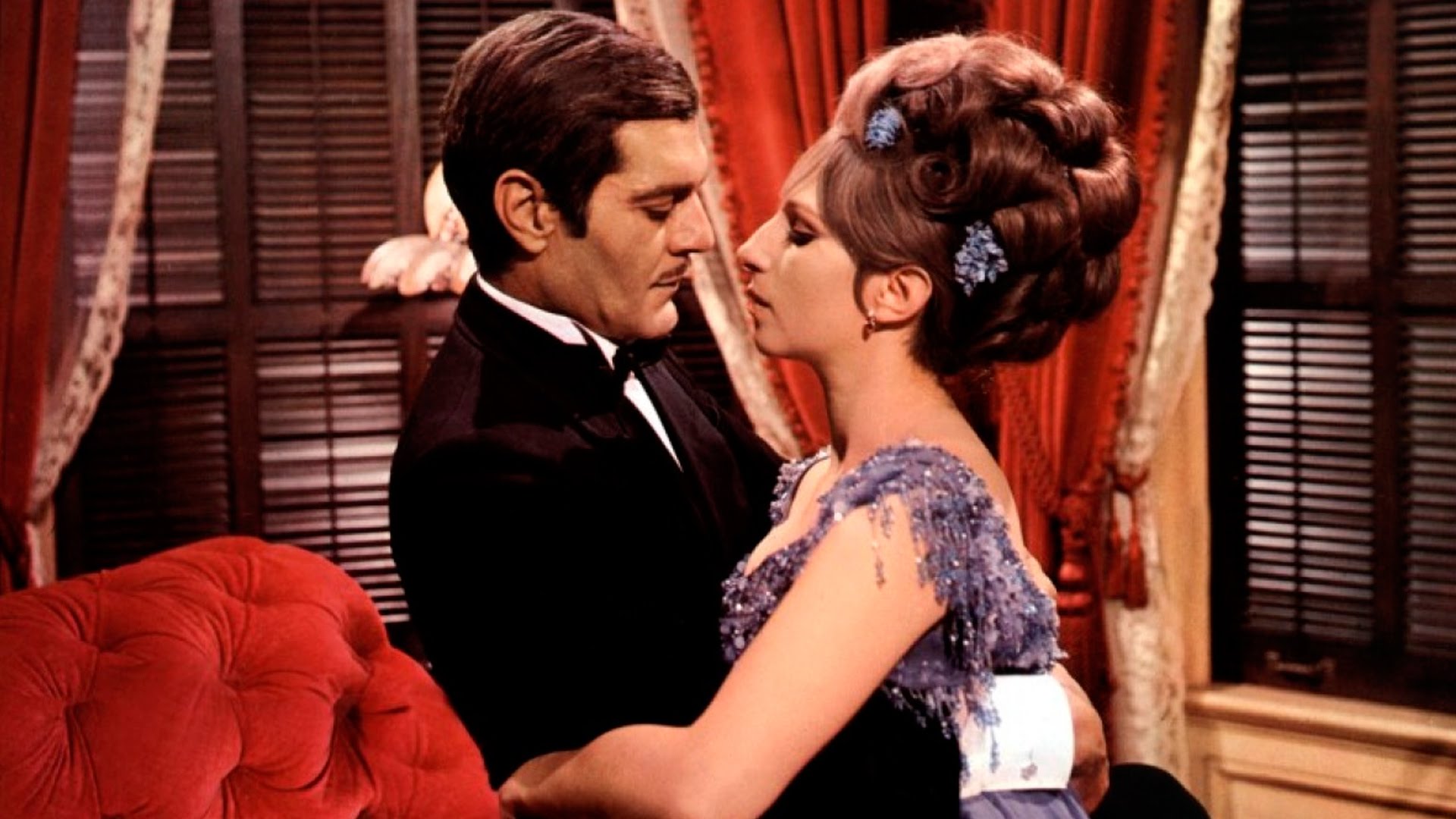
bs12-and-omar-shariff

B Streisand and Omar Sharif

In 2011, she was given Board of Governors Humanitarian Award for her efforts on behalf of women’s heart health and her many other philanthropic activities.” by Cedars-Sinai Heart Institute. She received the L’Oréal Paris Legend Award in 18th Elle Magazine Women in Hollywood. In 2012, she received a Lifetime Achievement Award from the Women Film Critics Circle.

She was accorded an Honorary Doctorate of Philosophy by the Hebrew University of Jerusalem in 2013.

In that year, she was also recipient of the Charlie Chaplin Award for Lifetime Achievement by the Film Society of Lincoln Center as the only female artist to direct, write, produce and star in the same major studio film, Yentl

along with a Lifetime Achievement Glamour Awards.

In 2014, Streisand was on one of eight different New York Magazine covers celebrating the magazine’s “100 Years, 100 Songs, 100 Nights: A Century of Pop Music in New York”. She also received the American Society of Cinematographers (ASC) Board of Governors Award, the Sherry Lansing Leadership Award at The Hollywood Reporter’s annual Women in Entertainment Breakfast, and came first in the 1010 Wins Iconic Celebrity Poll by CBS in 2015.

In November 2015, President Barack Obama announced that Streisand would receive the Presidential Medal of Freedom, the highest civilian award of the United States.

Streisand was inducted into and Hollywood Walk of Fame in 1976, Goldmine Hall of Fama in 2002, Long Island Music Hall of Fame in 2007, the Hit Parade Hall of Fame in 2009, National Museum of American Jewish History and California Hall of Fame in 2010.


In 1970, she received a Special Tony Award named Star of the Decade,and selected as Star of the Decade by the National Association of Theatre Owners (NATO) in 1980, Star of Decade by NATO/ShowWest and President’s Award by NARM in 1988.

That year she was also named as All-Time Favorite Musical Performer by People’s Choice Awards. In 1986, Life named her as one of Five Hollywood’s Most Powerful Women.

In 1998, Harris Poll reported that she is the “Most Popular Singer Among Adult Americans of All Ages.”

She was also featured on VH1’s 100 Greatest Women of Rock N Roll, the Top 100 Singers of all time by Mojo magazine, named the century’s best female singer in a Reuters/Zogby poll and “Top Female Artist of the Century” by Recording Industry Association of America in 1999.

In 2006, Streisand was one of honorees at Oprah Winfrey’s white-tie Legends Ball.

In 2011, the British tabloid The Sun ranked Streisand as “The 50 female singers who will never be forgotten”.


The Daily Telegraph ranked Streisand as the 10 top female singer-songwriters of all time.

A&E’s Biography magazine ranked Streisand as one of their favorite leading actress of all time,[she was also featured on the Voices of the Century list by BBC, the “100 Greatest Movie Stars of Time” list compiled by People,

VH1’s list of the “200 Greatest Pop Culture Icons of All Time”,

the “100 Greatest Entertainers of All Time”(ranked at #13) and the “Greatest Movie Star of all time list” by Entertainment Weekly, “The 50 Greatest Actresses of All Tim” by AMC, and Billboard Hot 100 All-Time Top Artists.

Billboard also ranked Streisand as the top female Jewish musician of all time. As a gay icon, Streisand was named by The Advocate as one of the “25 Coolest Women” and the “9 Coolest Women Appealing to Both Lesbians and Gay Men”, and was also placed among the “12 Greatest Female Gay Icons of All Time” by Out magazine.

She was recognized as one of the top gay icons of the past three decades by Gay Times.


During the first decade of the 21st century, the American Film Institute celebrated 100 years of the greatest films in American cinema. Four of Streisand’s songs were represented on AFI’s 100 Years…

100 Songs, which highlighted “America’s Greatest Music in the Movies”: “The Way We Were” at

“Evergreen (Love Theme From A Star Is Born)” , “People” , and “Don’t Rain On My Parade” . Many of her films were represented on AFI’s 100 Years… series. AFI’s 100 Years…100 Laughs, highlighting “the films and film artists that have made audiences laugh throughout the century,” ranked What’s Up, Doc? . AFI’s 100 Years…

100 Passions highlighted the top 100 greatest love stories in American cinema and placed The Way We Were at, Funny Girl at, and What’s Up, Doc? at . AFI’s Greatest Movie Musicals highlighted the 25 greatest American movie musicals, ranking Funny Girl at


Professional memberships


As one of the most acclaimed actresses, singers, directors, writers, composers, producers, designers, photographers, and activists in every medium that she’s worked in, Barbra is the only artist who is concurrently a member of the American Society of Composers, Authors and Publishers, the Screen Actors Guild, the American Federation of Television and Radio Artists, the Academy of Motion Pictures Arts and Sciences, and Actors’ Equity Association, as well as the honorary chairwoman of the board of directors of Hadassah’s International Research Institute on Women.


Barbra Streisand in popular culture


References in television


On the sketch comedy show Saturday Night Live, in the recurring skit “Coffee Talk”, character Linda Richman, played by Mike Myers, hosts a talk show dedicated to, among other things, the adoration of Streisand. Streisand, in turn, made an unannounced guest appearance on the show, surprising Myers and his guests Madonna and Roseanne Barr. Myers also appeared as the Linda Richman character on stage with Streisand at her 1994 MGM Grand concert, as well as a few of the 1994 Streisand tour shows.


References in music


Sound clips of Streisand’s heated exchange with a supporter of former U.S. president George W. Bush were sampled in the 2009 Lucian Piane dance song “Bale Out”, making it sound as if she were arguing with actor Christian Bale (whose recorded outbursts during the filming of Terminator Salvation were the centerpiece of the song).


“Barbra Streisand” is a disco house song by American-Canadian DJ duo Duck Sauce (Armand Van Helden & A-Trak). It was released on September 10, 2010. The song peaked at number one in Poland, Belgium, the Netherlands, Finland, Switzerland and Austria. It became a top ten hit in Australia, the United Kingdom, France, Germany, Ireland, and Italy.


References on stage


Daniel Stern’s 2003 Off-Broadway play Barbra’s Wedding was set against the backdrop of Streisand’s 1998 wedding to James Brolin.


The 2013 comedy play Buyer & Cellar, written by Jonathan Tolins, is set in Streisand’s Malibu house cellar. A struggling actor finds a job there and one day meets the star. It is a one-man show starring Michael Urie that premiered at Rattlestick Playwrights Theatre in April 2013.


References in fashion


In 1972, the modern hair crimping iron was invented by Geri Cusenza, the original founder of Sebastian, for Streisand’s hair.


In 1977, Streisand become the first woman celebrity to be on the cover of Playboy who was interviewed inside.


In 2011, Jennifer Aniston paid tribute to Streisand in a series of poses that recreated some of Streisand’s classic looks on the cover of Harper’s Bazaar.


In 2013, Victoria Beckham revealed that Streisand was her own style icon. “She is the epitome of chic. She looked magnificent. She wears lots of Donna Karan, and she had on this fabulous Donna Karan dress that just draped perfectly. She had this gorgeous hair. She was just beautiful. I love her.”.


Sources Wikipedia

Christmas time


https://radiosatellite.co/2015/12/26/kelly-clarkson-again-on-rs2

VIDEO RS2 OCTOBER 2016


Radio Satellite2 new pictures


rs2-fresh-music

http://radiosatellite.co    Radio Satellite2


country-rs2

#CountryMusic on  #RadioSatellite2

Some videos


Some videos for you dear listeners of RadioSatellite2

Don’t hesistate to listen to our Internet Radio : You have Internet? So you can listen 🙂


Enjoy


Comment écouter de la belle musique en 2016


Il fut une époque où les gens achetaient des albums… Avant le CD, c’était les disques Vinyls dits “Long Play / LP ” ou 33 tous Donc arriva l’époque où Polygram (Contra…

Source : Comment écouter de la belle musique en 2016

Comment écouter de la belle musique en 2016


WEBRADIO RADIOSATELLITE

WEBRADIO RADIOSATELLITE

Il fut une époque où les gens achetaient des albums…
Avant le CD, c’était les disques Vinyls dits “Long Play / LP ” ou 33 tous

Donc arriva l’époque où Polygram (Contraction de Phonogram et Polydor )( 2 marques d’éditions musicales de la maison mère PHILIPS) lança le CD ( vers 1980 )

Polygram étant le mariage des allemands ( Polydor ) et Phonogram (Pays bas)
Les japonais n’étaient pas en reste…A partir de leur île, ils ont lancé auss des tests via SONY MUSIC ( EX CBS Music ) rachetée aux USA

Donc acheter des albums en CD étaient “encore à la mode” même si d’aucuns préféraient le LP : Le plaisir d’avoir une couverture / pochette d’album ( belle photo ); les photographes et artistes pouvaient exprimer leurs désirs via de grandes belles images.. Chose que le CD a relegué au 2e plan… La couverture étant “trop petite pour être appréciée artistiquement”


This slideshow requires JavaScript.

Par la suite, ce fut progressivement, l’explosion du dématérialisé : Le MP3

Nous passâmes de l’achat de l’album entier… Souvent pour 12 titres, seuls 4 ou 5 maxi nous interessaient…Les autres, c’était Kif kif… Juste parce qu’on aimait l’artiste qu’on achetait l’album

Donc, nous disions : Passage de l’album entier vers l’achat du/ des titres que nous voulions… Super… On disait.. c vrai… quelle économie d’argent !!

Ce qui était vrai. Oui.

Le petit bémol, que nous pouvons soulever…Nous,   producteurs de radios, les professionnels de la musique,  du moins, dans le domaine de la diffusion: Concernant cette méthode : Vis à vis des amateurs, des acheteurs de musique, des auditeurs lambda… Cette méthode a fait en sorte que les gens aient perdu une certaine culture musicale quant à l’artiste…. Ils connaissaient super bien le titre acheté et que “la radio ” leur a fait découvrir….Mais rien…aucune connaissance des autres titres du même chanteur… Rien.. Nada…Que dalle…

Du coup… Bien que le rôle des radios fut primordial, les années 50 60 70 80 et 90…. Ce rôle fut encore plus vital…Le citoyen auditeur ne pouvait découvrir les titres QUE si la radio passe CE titre…

A moins d’acheter tout l’album de l’artiste..Mais..Vous nous direz “Pourquoi acheter l’album entier? Si nous sommes interessés par 1 ou 2 titres”.. VRAI

Notre réponse: Comment sauriez-vous, si ces autres titres…Vous les aimerez? ou non? Si la / les radios ne vous permettent pas l’écoute et l’habitude…

Il faut préciser ici : Qu’écouter un extrait de titre est possible évidemment sur les plateformes de ventes.. Mais par expérience, lorsque l’acheteur de musique “passe à l’action” c’est après avoir écouté ce titre …4… 5 ou 10 fois …Le temps de bien assimiler ce nouveau titre découvert…Le temps aussi qu’il entende son entourage, les médias…en parler.. Donc c’est un tout…

Rares sont les achats qui se font suite à une seule écoute d’extrait ou sur coup de tête.

Du coup… L’explosion du numérique a engendré aussi l’explosion des RADIOS NUMERIQUES dont nous en faisons partie au sein de RADIO SATELLITE2

cropped-logo-rs2-257-x-157-with-website.jpg

Notre différence? Nos atouts? C’est tout BENEF pour vous, chers lecteurs / auditeurs de musique

1) Nous n’avons pas de limite Géographique: Contrairement aux ancêtres de la radio FM : Nous diffusons de la musique sur toute la planète… Sans aucune limite…Là où internet existe..Nous existons. D’ailleurs, même les radios FM ont crée par la suite,  leurs webradios aussi.

Donc pas d’antennes… Pas de contraintes musicales…

Résultat ? Nos musiques ( du moins au sein de RADIO SATELLITE2 ) : chansons francophones ( Belges, acadiennes,Suisses…) Américaines, Russes, turques…

Toutes les BELLES musiques sont diffusables pour nous. Peu importe la langue: Une belle orchestration, un super arrangement musical, une belle musique mélodieuse? On achète.. On diffuse.

2) Autre avantage? Notre INDEPENDANCE: Nous ne sommes PAS des radios commerciales. Donc pas d’actionnaires, pas de compte à rendre à des actionnaires, pas de publicités, pas de jeux SMS où la question est souvent simpliste…Donc réponse aussi facile…Le but étant juste de faire payer l’auditeur X euros via des SMS

Donc pas de tout ceci chez les webradios en général.

La radio étant une passion. Etant professionnels du monde de la radio certes, cependant, nos activités professionnelles ( pour vivre ) sont ailleurs.

La radio que nous vous proposons sert à offrir aux auditeurs un choix riche, haut en couleurs, sans frontières géographiques et sans langue unique ( Nos animations sont faites en Anglais et en Français )

Reste LA question que de nombreuses personnes pose : Comment vous écouter? 🙂

Facile: Si vous êtes dans votre bureau: face à l’ordi: Notre site:
http://radiosatellite.co

En cliquant sur le logo bleu , en haut , à droite…Vous êtes redirigés sur une autre site . Là, cliquez sur le lecteur et voilà la musique. RIEN A INSTALLER

Si vous êtes comme nous? Mobiles… Ne voulant pas être face à un ordi ( souvent en voiture…à pied… A la montagne.. Dans votre salle de gym/sport…Au lit, faisant une sieste ou juste allongé… En train de faire du rangement..)

Nous vous conseillons vivement d’installer sur votre téléphone (APPLE donc IPHONE ou IPAD ) ANDROID ( Samsung et bien d’autres marques) … BLACKBERRY si c’est la marque de votre smartphone/ mobile..

Installez GRATUITEMENT l’application à partir des APPLE STORE / GOOGLE STORE ou GOOGLE PLAY )

Comme vous avez déjà , sans doute, installé d’autres applications sur votre téléphone… Soit par la méthode de “recherche” ( search) donc saisir
RADIO SATELLITE2 ( le 2 collé )

Soit en cliquant sur ces liens ( via votre mobile…Par votre ordi, cela ne servira qu’à ouvrir le site mais en cliquant dessus via votre connection mobile, vous pourrez installer l’appli selon votre marque utilisée)


Si vous possédez un IPHONE / IPAD :
https://itunes.apple.com/us/app/radio-satellite2/id975597379?mt=8

Si vous possédez un ANDROID ( SAMSUNG et certaines autres marques): Voir le store: ce doit être GOOGLE
https://play.google.com/store/apps/details?id=com.nobexinc.wls_80172696.rc

Si vous possédez un BLACKBERRY
https://appworld.blackberry.com/webstore/content/59955997/?countrycode=FR&lang=en

Donc facile.. Simple de nous écouter en final…

N’hésitez pas surtout que grâce à Radio Satellite2, vous pourrez découvrir des horizons que les radios traditionnelles ne vous permettent pas.

En espérant vous retrouver parmi nos fidèles auditeurs (déjà plus de 300 000 fidèles auditeurs de par le monde, sans compter ceux qui nous écoutent de temps en temps… )

Country music on RS2


Rainer Niederleithner3

Promo and introduction to Country Music Program

Générique / Generic

Click on video to watch ( to listen)

Cliquer sur vidéo pour voir ( et écouter)


Banjo and Bluegrass


  Amaizing / Fantastic

Superbe et fabuleux

Kids playing bluegrass / Des enfants jouant du Bluegrass


banjo

COLETTE KAVANAGH ON RS2


RS2 covering ALL countries… Covering YOUR country


Wherever you are… What ever is YOUR country, your city on this planet named ” earth”

You can listen FOR FREE to RS2  on #RadioWays   on this website ( click on the logo )

On our APPS ( #APPLE  #ANDROID  and #BLACKBERRY ) on #ITUNES  on #TUNEin etc…


#Mostlyfolk
#JasonCurtman


Enjoy your day with RS2 ( Videos )


Enjoy your days with our best music on webradio : RS2


NATIONAL GEOGRAPHIC : TESTEZ VOTRE CERVEAU


CERVEAU SOUS INFLUENCE

Documentaire en langue Française

A voir…TRES intéressant.


MOSTLY FOLK


MOSTLY FOLK: Folk music and interviews on RS2


#Music
#Folk

#Webradios
#Vidéo
#Video

#Show

ZACH KING VIDEOS TO WATCH … A VOIR…


FATS WALLER …


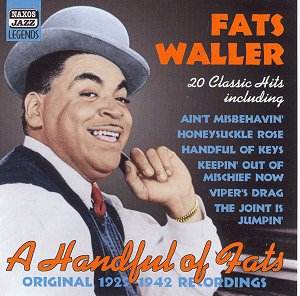
Thomas Wright “Fats” Waller (May 21, 1904 – December 15, 1943) was an American jazz pianist, organist, composer, singer, and comedic entertainer, whose innovations to the Harlem stride style laid the groundwork for modern jazz piano, and whose best-known compositions, “Ain’t Misbehavin'” and “Honeysuckle Rose”, were inducted into the Grammy Hall of Fame in 1984 and 1999.

Fats_Waller


Thomas Wright Waller was the youngest of 11 children (five survived childhood) born to Adeline Locket Waller and Reverend Edward Martin Waller in New York City.
He started playing the piano when he was six and graduated to the organ of his father’s church four years later.
His mother instructed him as a youth. At the age of 14 he was playing the organ at Harlem’s Lincoln Theater and within 12 months he had composed his first rag. Waller’s first piano solos (“Muscle Shoals Blues” and “Birmingham Blues”) were recorded in October 1922 when he was 18 years old.
He was the prize pupil, and later friend and colleague, of stride pianist James P. Johnson.
Overcoming opposition from his clergyman father, Waller became a professional pianist at 15, working in cabarets and theaters.[citation needed] In 1918 he won a talent contest playing Johnson’s “Carolina Shout”, a song he learned from watching a player piano play it.
Waller ultimately became one of the most popular performers of his era, finding critical and commercial success in his homeland and in Europe. He was also a prolific songwriter and many songs he wrote or co-wrote are still popular, such as “Honeysuckle Rose”, “Ain’t Misbehavin'” and “Squeeze Me”.
Fellow pianist and composer Oscar Levant dubbed Waller “the black Horowitz”. Waller is believed to have composed many novelty tunes in the 1920s and 1930s and sold them for relatively small sums, the attributions of which, on becoming widely known, went only to a later composer and lyricist.
Standards alternatively and sometimes controversially attributed to Waller include “I Can’t Give You Anything but Love, Baby”.
Biographer Barry Singer conjectured that this jazz classic was written by Waller and lyricist Andy Razaf, and provides a description of the sale given by Waller to the NY Post in 1929—for $500, to a white songwriter, ultimately for use in a financially successful show (consistent with Jimmy McHugh’s contributions first to Harry Delmar’s Revels, 1927, and then to Blackbirds, 1928).
He further supports the conjecture, noting that early handwritten manuscripts in the Dana Library Institute of Jazz Studies of “Spreadin’ Rhythm Around” (Jimmy McHugh ©1935) are in Waller’s hand.
Jazz historian P.S. Machlin comments that the Singer conjecture has “considerable [historical] justification”.


Waller’s son Maurice wrote in his 1977 biography of his father that Waller had once complained on hearing the song, and came from upstairs to admonish him never to play it in his hearing because he had had to sell it when he needed money.
Maurice Waller’s biography similarly notes his father’s objections to hearing “On the Sunny Side of the Street” playing on the radio.
Waller recorded “I Can’t Give You…” in 1938, playing the tune but making fun of the lyrics; the recording was with Adelaide Hall who had introduced the song to the world at Les Ambassadeurs Club in New York in 1928.
The anonymous sleeve notes on the 1960 RCA Victor album Handful of Keys state that Waller copyrighted over 400 songs, many of which co-written with his closest collaborator Andy Razaf.
Razaf described his partner as “the soul of melody… a man who made the piano sing… both big in body and in mind… known for his generosity… a bubbling bundle of joy”.
Gene Sedric, a clarinetist who played with Waller on some of his 1930s recordings, is quoted in these same sleeve notes recalling Waller’s recording technique with considerable admiration: “Fats was the most relaxed man I ever saw in a studio, and so he made everybody else relaxed.
After a balance had been taken, we’d just need one take to make a side, unless it was a kind of difficult number.”


Waller played with many performers, from Nathaniel Shilkret and Gene Austin, to Erskine Tate, Fletcher Henderson, McKinney’s Cotton Pickers and Adelaide Hall, but his greatest success came with his own five- or six-piece combo, “Fats Waller and his Rhythm”.
His playing once put him at risk of injury. Waller was kidnapped in Chicago leaving a performance in 1926. Four men bundled him into a car and took him to the Hawthorne Inn, owned by Al Capone.
Waller was ordered inside the building, and found a party in full swing. Gun to his back, he was pushed towards a piano, and told to play. A terrified Waller realized he was the “surprise guest” at Capone’s birthday party, and took comfort that the gangsters did not intend to kill him.
It is rumored that Waller stayed at the Hawthorne Inn for three days and left very drunk, extremely tired, and had earned thousands of dollars in cash from Capone and other party-goers as tips.
In 1926, Waller began his recording association with the Victor Talking Machine Company/RCA Victor, his principal record company for the rest of his life, with the organ solos “St. Louis Blues” and his own composition, “Lenox Avenue Blues”.
Although he recorded with various groups, including Morris’s Hot Babes (1927), Fats Waller’s Buddies (1929) (one of the earliest multiracial groups to record), and McKinney’s Cotton Pickers (1929), his most important contribution to the Harlem stride piano tradition was a series of solo recordings of his own compositions: “Handful of Keys”, “Smashing Thirds”, “Numb Fumblin'”, and “Valentine Stomp” (1929).
After sessions with Ted Lewis (1931), Jack Teagarden (1931) and Billy Banks’ Rhythmakers (1932), he began in May 1934 the voluminous series of recordings with a small band known as Fats Waller and his Rhythm.
This six-piece group usually included Herman Autrey (sometimes replaced by Bill Coleman or John “Bugs” Hamilton), Gene Sedric or Rudy Powell, and Al Casey.
Waller wrote “Squeeze Me” (1919), “Keepin’ Out of Mischief Now”, “Ain’t Misbehavin'” (1929), “Blue Turning Grey Over You”, “I’ve Got a Feeling I’m Falling” (1929), “Honeysuckle Rose” (1929) and “Jitterbug Waltz” (1942). He composed stride piano display pieces such as “Handful of Keys”, “Valentine Stomp” and “Viper’s Drag”.
He enjoyed success touring the United Kingdom and Ireland in the 1930s. He appeared in one of the first BBC television broadcasts.

This slideshow requires JavaScript.


While in Britain, Waller also recorded a number of songs for EMI on their Compton Theatre organ located in their Abbey Road Studios in St John’s Wood. He appeared in several feature films and short subject films, most notably Stormy Weather in 1943, which was released July 21, just months before his death.
For the hit Broadway show Hot Chocolates, he and Razaf wrote “(What Did I Do to Be So) Black and Blue” (1929), which became a hit for Ethel Waters and Louis Armstrong.
Waller performed Bach organ pieces for small groups on occasion. Waller influenced many pre-bebop jazz pianists; Count Basie and Erroll Garner have both reanimated his hit songs. In addition to his playing, Waller was known for his many quips during his performances.
Between 1926 and the end of 1927, Waller recorded a series of pipe organ solo records. These represent the first time syncopated jazz compositions were performed on a full-sized church organ.
Waller contracted pneumonia and died on a cross-country train trip near Kansas City, Missouri, on December 15, 1943. His final recording session was with an interracial group in Detroit, Michigan, that included white trumpeter Don Hirleman.

Waller was returning to New York City from Los Angeles, after the smash success of Stormy Weather, and after a successful engagement at the Zanzibar Room, during which he had fallen ill.
More than 4,000 people attended his funeral in Harlem, which prompted Dr. Adam Clayton Powell, Jr., who delivered the eulogy, to say that Fats Waller “always played to a packed house.”
Afterwards he was cremated and his ashes were scattered, from an airplane piloted by an unidentified World War black aviator, over Harlem.
One of his surviving relatives is former Georgia Tech Yellow Jacket and current Baltimore Ravens wideout Darren Waller, who is Fats’ paternal great-grandson.


Sources WIKIPEDIA


ANGIE DICKINSON


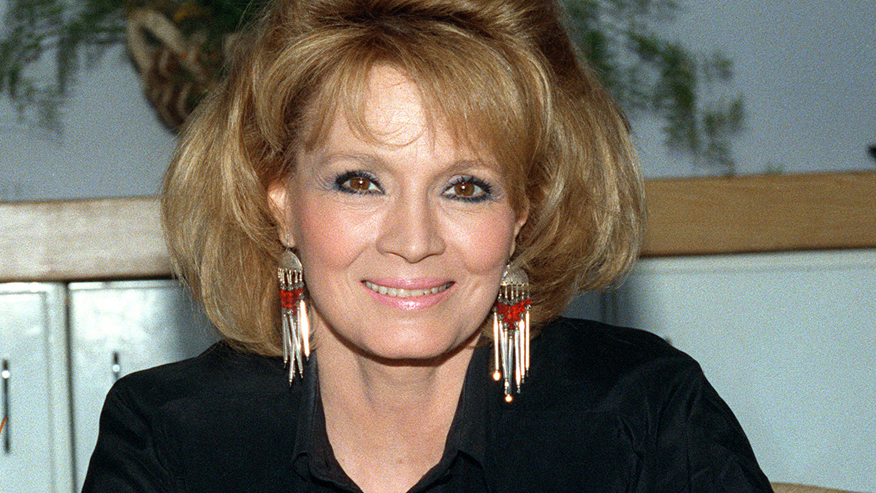
Angie Dickinson (born September 30, 1931) is an American actress. She began her career on television, appearing in many anthology series during 1950s, before landing her breakthrough role in the 1959 western film Rio Bravo, for which she received Golden Globe Award for New Star of the Year.

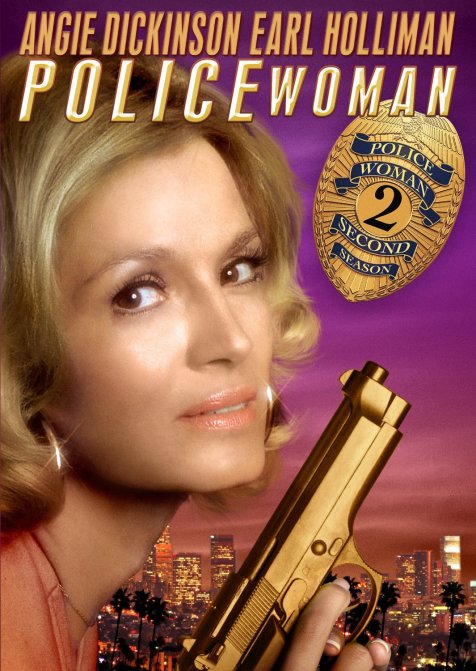
Dickinson has appeared in more than 50 films, including Ocean’s 11 (1960), The Sins of Rachel Cade (1961), Jessica (1962), Captain Newman, M.D. (1963), The Killers (1964), The Art of Love (1965), The Chase (1966) and the neo-noir classic Point Blank (1967). From 1974 to 1978, Dickinson starred as Sergeant Leann “Pepper” Anderson in the NBC crime series Police Woman, for which she received Golden Globe Award for Best Actress – Television Series Drama and three Primetime Emmy Award for Outstanding Lead Actress in a Drama Series nominations.

During her later career, Dickinson starred in a number of television movies and miniseries, also playing supporting roles in films such as Sabrina (1995), Pay It Forward (2000) and Big Bad Love (2001). As lead actress, she starred in the 1980 erotic crime thriller Dressed to Kill, for which she received a Saturn Award for Best Actress.

Dickinson, the second of four daughters, was born Angeline Brown (called “Angie” by family and friends) in Kulm, North Dakota, the daughter of Fredericka (née Hehr) and Leo Henry Brown.

Her family is of German descent and she was raised Roman Catholic.

Her father was a small-town newspaper publisher and editor, working on the Kulm Messenger and the Edgeley Mail.

In 1942, her family moved to Burbank, California, where she attended Bellarmine-Jefferson High School, graduating in 1947 at 15 years of age. The previous year, she had won the Sixth Annual Bill of Rights essay contest.

She studied at Glendale Community College and in 1954 graduated from Immaculate Heart College with a degree in business. Taking a cue from her publisher father, she had intended to be a writer. While a student from 1950–52, she worked as a secretary at Lockheed Air Terminal in Burbank (now Bob Hope Airport) and in a parts factory. She became Angie Dickinson in 1952, when she married football player Gene Dickinson.

Dickinson entered a beauty pageant in 1953 and placed second. The exposure brought her to the attention of a television industry producer, who asked her to consider a career in acting. She studied the craft and a few years later was approached by NBC to guest-star on a number of variety shows, including The Colgate Comedy Hour. She soon met Frank Sinatra, who became a lifelong friend. She later was cast as Sinatra’s wife in the film Ocean’s 11.

On New Year’s Eve 1954, Dickinson made her television acting debut in an episode of Death Valley Days. This led to other roles in such productions as Matinee Theatre (eight episodes), Buffalo Bill Jr., City Detective, It’s a Great Life (two episodes), Gray Ghost, General Electric Theater, Broken Arrow, The People’s Choice (twice), Meet McGraw (twice), Northwest Passage, Gunsmoke, The Virginian, Tombstone Territory, Cheyenne, and The Restless Gun.

In 1956, Dickinson was cast as Ann Drew, who slips a gun to her jailed husband, Harry (John Craven), a former associate of the Jesse James gang, in the ABC/Desilu western series, The Life and Legend of Wyatt Earp, starring Hugh O’Brian. In the story line, Harry vowed never to go to prison and was shot to death while escaping.

In 1957, she was cast as Amy Bender in Richard Boone’s series “Have Gun-Will Travel” in the episode “A Matter of Ethics.” She played the sister of a man who was killed and who wanted the murderer lynched.

In 1958, she was cast as Laura Meadows in the episode “The Deserters” of an ABC/Warner Brothers western series, Colt .45, with Wayde Preston.

That year she also played the role of defendant Mrs. Fargo in the Perry Mason episode “The Case of the One-Eyed Witness.”

Dickinson went on to create memorable characters in Mike Hammer, Wagon Train, and Men into Space. In 1965, she had a recurring role as Carol Tredman on NBC’s Dr. Kildare. She had a memorable turn as the duplicitous murder conspirator in a 1964 episode of The Fugitive series with David Janssen and fellow guest star Robert Duvall. She was at her evil best as an unfaithful wife and bank robber in the 1958 “Wild Blue Yonder” episode of Rod Cameron’s syndicated television series State Trooper.

She starred in two Alfred Hitchcock Hour episodes, “Captive Audience” with James Mason on Oct. 18, 1962, and “Thanatos Palace Hotel” on Feb. 1, 1965.

Dickinson’s motion picture career began with a small, uncredited role in Lucky Me (1954) starring Doris Day, followed by The Return of Jack Slade (1955), Man with the Gun (1955), and Hidden Guns (1956). She had her first starring role in Gun the Man Down (1956) with James Arness, followed by the Sam Fuller cult film China Gate (1957), which depicted an early view of the Vietnam War.

Rejecting the Marilyn Monroe/Jayne Mansfield style of platinum blonde sex-symbolism because she felt it would narrow her acting options, Dickinson initially allowed studios to lighten her naturally brunette hair to only honey-blonde.

She appeared early in her career mainly in B-movies or westerns, including Shoot-Out at Medicine Bend (1957), in which she co-starred with James Garner. In the 1958 crime drama Cry Terror!, Dickinson had a supporting role opposite James Mason and Rod Steiger as a femme fatale.

In 1959, Dickinson’s big-screen breakthrough role came in Howard Hawks’ Rio Bravo, in which she played a flirtatious gambler called “Feathers” who becomes attracted to the town sheriff played by Dickinson’s childhood idol John Wayne. The film co-starred Dean Martin, Ricky Nelson, and Walter Brennan. When Hawks sold his personal contract with her to a major studio without her knowledge, she was unhappy. Dickinson nonetheless became one of the more prominent leading ladies of the next decade, beginning with The Bramble Bush with Richard Burton. She also took a supporting role in Ocean’s 11 with friends Sinatra and Martin, released in 1960.

These were followed by a political potboiler, A Fever in the Blood (1961); a Belgian Congo-based melodrama, The Sins of Rachel Cade (1961), in which she played a missionary nurse tempted by lust; a scheming woman in Rome Adventure (1962), filmed in Italy, and the title role in Jean Negulesco’s Jessica (1962) with Maurice Chevalier, in which she played a young midwife resented by the married women of the town, set in Sicily.

Angie would also share the screen with friend Gregory Peck as a military nurse in the dark comedy Captain Newman, M.D. (1963).

For The Killers (1964), originally intended to be the very first made-for-television movie but released to theatres due to its violent content, Dickinson played a femme fatale opposite future U.S. President Ronald Reagan in his last movie role.

Directed by Don Siegel, it was a remake of the 1946 version based on a story by Ernest Hemingway and the only film Reagan made in which he was cast as a villain. He viciously slaps Dickinson in one of the film’s scenes.[8]

Dickinson co-starred in the comedy The Art of Love (1965), playing the love interest of both James Garner and Dick Van Dyke. She joined a star-studded Arthur Penn/Sam Spiegel production, The Chase (1966), along with Marlon Brando, Jane Fonda, Robert Redford, and Robert Duvall. That same year she was featured in Cast a Giant Shadow, a war story with Kirk Douglas.

Dickinson’s best movie of this era was arguably John Boorman’s cult classic Point Blank (1967), a lurid crime drama with Lee Marvin as a criminal betrayed by his wife and best friend and out for revenge. The film epitomized the stark urban mood of the period, and its reputation has grown through the years.

Westerns would continue to be a part of her work in the late ’60s, when she starred in The Last Challenge opposite Glenn Ford, in Young Billy Young with Robert Mitchum, and in Sam Whiskey, where she gave rising star Burt Reynolds his first on-screen kiss.

In 1971, she played a lascivious substitute high school teacher in the dark comedy Pretty Maids All in a Row for director Roger Vadim and writer-producer Gene Roddenberry, in which her character seduces a sexually inexperienced student, portrayed by John David Carson, against the backdrop of a series of murders of female students at the same high school; it was a box-office failure. In 1972’s The Outside Man, a French movie shot in L.A., with Jean-Louis Trintignant, directed by Jacques Deray, she plays the wife of a mobster. In 1973, she co-starred with Roy Thinnes in the supernatural thriller The Norliss Tapes, a TV movie produced and directed by Dan Curtis.

One of Dickinson’s best known and most sexually provocative movie roles followed, that of the tawdry widow Wilma McClatchie from the Great Depression romp Big Bad Mama (1974) with William Shatner and Tom Skerritt. Although well into her forties at the time, she appeared nude in several scenes, which created interest in the movie and a new generation of male fans for Dickinson.

A 1966 Esquire magazine cover gained Dickinson additional fame and notoriety, her having posed in nothing but a sweater and a pair of panty hose. The photo became so iconic that, while celebrating the magazine’s 70th anniversary in 2003, the Dickinson pose was recreated for the cover by Britney Spears.

Police Woman

Dickinson as Pepper Anderson, 1975 in Police Woman

Dickinson returned to the small screen in March 1974 for an episode of the critically acclaimed hit anthology series Police Story. That one guest appearance proved to be so popular that NBC offered Dickinson her own television show, which became a ground-breaking weekly series called Police Woman; it was the first successful dramatic TV series to feature a woman in the title role. At first, Dickinson was reluctant, but when producers told her she could become a household name, she accepted the role. They were right.

In the series, she played Sgt. Leann “Pepper” Anderson, an officer of the Los Angeles Police Department’s Criminal Conspiracy Unit who often works undercover.

The show became a hit, reaching number one in many countries in which it aired during its first year. It ran for four seasons and Dickinson would win a Golden Globe award, and receive Emmy nominations for three consecutive years.

dickinson police woman

Angie Dickinson

Co-starring on the show was Earl Holliman as Sergeant Bill Crowley, Anderson’s commanding officer, along with Charles Dierkop as investigator Pete Royster and Ed Bernard as investigator Joe Styles.

The series ran from 1974 to 1978. The same year the show ended, Dickinson reprised her Pepper Anderson character on the television special Ringo, co-starring with Ringo Starr and John Ritter. She also parodied the part in the 1975 and 1979 Bob Hope Christmas specials for NBC. She would do the same years later on the 1987 Christmas episode of NBC’s Saturday Night Live.

Police Woman caused a surge of applications for employment from women to police departments around the United States; journalists who have in recent years examined the inspiration for long-term female law enforcement officials to adopt this vocation as their own have been surprised by how often Dickinson’s Police Woman has been referenced.

Dickinson and Police Woman proved that a female lead could carry an hour-long television series, paving the way for several female-starring, hour-long TV series during the 1970s and 1980s, such as Charlie’s Angels, Wonder Woman, The Bionic Woman and Cagney and Lacey. In 1987, the Los Angeles Police Department awarded Dickinson an honorary doctorate, which led her to quip, “Now you can call me Doctor Pepper.”

Dickinson

On occasion during the 1970s, Dickinson took part in the popular Dean Martin Celebrity Roast on television, and herself was the guest of honor on August 2, 1977, roasted by a dais of celebrities that included James Stewart, Orson Welles and her Police Woman series co-star Earl Holliman.

The 1980s

Having done a television series plus the mini-series Pearl (1978) about the Pearl Harbor bombing of 1941, Dickinson’s career in feature films appeared to be in decline. But she returned to the big screen in Brian De Palma’s erotic thriller Dressed to Kill (1980), for which she gained considerable notice, particularly for a long, silent scene in a museum before the character meets her fate. The role of Kate Miller, a sexually frustrated New York housewife, earned her a 1981 Saturn Award for Best Actress. “The performers are excellent,” wrote Vincent Canby in his July 25, 1980 New York Times review, “especially Miss Dickinson.”

She took a less substantial role in 1981’s Death Hunt, reuniting her with Lee Marvin, and also appeared in Charlie Chan and the Curse of the Dragon Queen. Earlier that year, she had been the first choice to play the character Krystle Carrington on the television series Dynasty but, deciding she wanted to spend more time with her daughter, she turned it down; the role instead went to Linda Evans. In the mid-1980s Dickinson declined the role of Sable Colby on the Dynasty spin-off, The Colbys.

After nixing her own Johnny Carson-produced prospective sitcom, The Angie Dickinson Show, in 1980 after only two episodes had been shot because she did not feel she was funny enough, the private-eye series Cassie & Co. became her unsuccessful attempt at a television comeback. She then starred in several TV movies, such as One Shoe Makes It Murder (1982), Jealousy (1984), A Touch of Scandal (1984), and Stillwatch (1987). She had a pivotal role in the highly rated mini-series Hollywood Wives (1985), based on a novel by Jackie Collins.

In 1982, and again in 1986, Dickinson appeared in two of Perry Como’s Christmas specials for the ABC television network, in both of which she did something she was not known to have done before: singing. The specials in which she appeared, and in which she sang songs, were Perry Como’s Christmas In Paris, produced on location in Paris, France, which was transmitted on Saturday, December 18, 1982, and The Perry Como Christmas Special, produced on location in San Antonio, Texas, and transmitted on Saturday, December 6, 1986. As of early January of 2013, these two specials were not known to be available on home video.[citation needed] Dickinson later denied having sung on camera since then in an interview with Larry King conducted at the approximate time of her appearance in Duets.

AD

In motion pictures, Dickinson reprised her role as Wilma McClatchie for Big Bad Mama II (1987) and completed the television movie Kojak: Fatal Flaw, in which she was reunited with Telly Savalas. She co-starred with Willie Nelson and numerous buddies in the 1988 television western Once Upon a Texas Train.

She was presented one of the Golden Boot Awards in 1989 for her contributions to western cinema.

1990s and 2000s

In the 1993 ABC miniseries Wild Palms, produced by Oliver Stone, she was the sadistic, militant sister of Senator Tony Kruetzer, played by Robert Loggia. That same year, she starred as a ruthless Montana spa owner in Gus Van Sant’s Even Cowgirls Get the Blues with Uma Thurman.

In 1995, Sydney Pollack cast her as the prospective mother-in-law of Greg Kinnear in the romantic comedy Sabrina starring Harrison Ford, a remake of the Billy Wilder classic. She played Burt Reynolds’ wife in the thriller The Maddening and the mother of Rick Aiello and Robert Cicchini in the National Lampoon comedy The Don’s Analyst. In 1997, she seduced old flame Artie (Rip Torn) in an episode of HBO’s The Larry Sanders Show called “Artie and Angie and Hank and Hercules.”

Dickinson acted out the alcoholic, homeless mother of Helen Hunt’s character in Pay It Forward (2000); the grandmother of Gwyneth Paltrow’s character in the drama Duets (2000), and the mother of Arliss Howard’s character in Big Bad Love (2001), co-starring Debra Winger.

Having appeared in the original Ocean’s 11 (1960) with good friends Frank Sinatra and Dean Martin, four decades later she made a brief cameo in the 2001 remake with George Clooney and Brad Pitt.

An avid poker player, during the summer of 2004 she participated in the second season of Bravo’s Celebrity Poker Showdown. After announcing her name, host Dave Foley said, “Sometimes, when we say ‘celebrity,’ we actually mean it.”

Dickinson is a recipient of the state of North Dakota’s Rough Rider Award.

In 1999, Playboy ranked Dickinson No. 42 on their list of the “100 Sexiest Stars of the Century.” In 2002, TV Guide ranked her No. 3 on a list of the “50 Sexiest Television Stars of All Time,” behind Diana Rigg and George Clooney (who tied for No. 1).

In 2009, Dickinson starred in a Hallmark Channel film, Mending Fences. It is her last screen role to date.

Personal life

With husband-composer Burt Bacharach and new child, 1966

She was married to Gene Dickinson, a former football player, from 1952 to 1960. Close friends with John Kenneth Galbraith and Catherine Galbraith, her extensive visits to them and touring when John was American Ambassador to India is amply recounted in Galbraith memoirs including Ambassador’s Journal and A Life in Our Times. Dickinson kept her married name after her first divorce.

She married Burt Bacharach in 1965. They remained a married couple for 15 years, though late in their marriage, they had a period of separation where each dated other people.

Their daughter, Lea Nikki, known as Nikki, arrived a year after they were married. Born three months prematurely, Nikki suffered from chronic health problems, including visual impairment; she was later diagnosed with Asperger syndrome. Burt composed the music of the song Nikki for their fragile young daughter, and Angie rejected many roles to focus on caring for their daughter. Nikki’s parents eventually placed her at the Wilson Center, a psychiatric residential treatment facility for adolescents in Faribault, Minnesota, where she remained for nine years. Later, Nikki studied geology at California Lutheran University, but her poor eyesight prevented her from pursuing a career in that field. On January 4, 2007, Nikki killed herself by suffocation in her apartment in the Ventura County suburb of Thousand Oaks. She was 40.

In a joint statement, Dickinson and Bacharach said, “She quietly and peacefully committed suicide to escape the ravages to her brain brought on by Asperger’s… She loved kitties, earthquakes, glacial calving, meteor showers, science, blue skies and sunsets, and Tahiti. She was one of the most beautiful creatures created on this earth, and she is now in the white light, at peace.”

In a 2006 interview with NPR, Dickinson stated that she was a Democrat. She supported John F. Kennedy’s presidential campaign in 1960.

This slideshow requires JavaScript.

Filmography

Film

Year Title Role Notes
1954 Lucky Me Party Guest Uncredited
1955 Tennessee’s Partner Abby Dean
1955 The Return of Jack Slade Polly Logan
1955 Man with the Gun Kitty Uncredited
1956 Down Liberty Road Mary Short film
1956 Hidden Guns Becky Carter
1956 Tension at Table Rock Cathy
1956 Gun the Man Down Janice
1956 The Black Whip Sally Morrow
1957 Shoot-Out at Medicine Bend Priscilla King
1957 China Gate Lucky Legs
1957 Calypso Joe Julie
1957 Run of the Arrow Yellow Moccasin Voice
1958 I Married a Woman Screen Wife
1958 Cry Terror! Eileen Kelly
1959 Rio Bravo Feathers
1960 I’ll Give My Life Alice Greenway Bradford
1960 The Bramble Bush Fran
1960 Ocean’s Eleven Beatrice Ocean
1961 A Fever in the Blood Cathy Simon
1961 The Sins of Rachel Cade Rachel Cade
1962 Jessica Jessica Brown Visconti
1962 Rome Adventure Lyda Kent
1963 Captain Newman, M.D. Lt. Francie Corum
1964 The Killers Sheila Farr
1965 The Art of Love Laurie Gibson
1966 The Chase Ruby Calder
1966 Cast a Giant Shadow Emma Marcus
1966 The Poppy Is Also a Flower Linda Benson
1967 Point Blank Chris
1967 The Last Challenge Lisa Denton
1969 Sam Whiskey Laura Breckenridge
1969 Some Kind of a Nut Rachel Amidon
1969 Young Billy Young Lily Beloit
1971 Pretty Maids All in a Row Miss Betty Smith
1971 The Resurrection of Zachary Wheeler Dr. Layle Johnson
1972 The Outside Man Jackie Kovacs
1974 Big Bad Mama Wilma McClatchie
1979 L’homme en colère Karen
1980 Klondike Fever Belinda McNair
1980 Dressed to Kill Kate Miller
1981 Charlie Chan and the Curse of the Dragon Queen Dragon Queen
1981 Death Hunt Vanessa McBride
1987 Big Bad Mama II Wilma McClatchie
1993 Even Cowgirls Get the Blues Miss Adrian
1995 Sabrina Ingrid Tyson
1996 The Maddening Georgina Scudder
1996 The Sun, the Moon and the Stars Abbie McGee
2000 The Last Producer Poker Player Cameo
2000 Duets Blair
2001 Pay It Forward Grace
2001 Big Bad Love Mrs. Barlow
2001 Ocean’s Eleven Boxing Spectator Cameo
2004 Elvis Has Left the Building Bobette

Television

Year Title Role Notes
1954 I Led 3 Lives Comrade Margaret Episode: “Asylum”
1954 The Mickey Rooney Show Receptionist Episode: “The Executive”
1954 Death Valley Days Salina Harris 3 episodes
1955 City Detective Cigarette Girl Episode: “The Perfect Disguise”
1955 Buffalo Bill, Jr. Anna Louise Beaumont Episode: “The Death of Johnny Ringo”
1955 Matinee Theatre 7 episodes
1955 It’s a Great Life Myra Episode: “The Raffle Ticket”
1956 General Electric Theater Shaw Episode: “Try to Remember”
1956 It’s a Great Life Rita Moore Episode: “The Voice”
1956 The Life and Legend of Wyatt Earp Ann Drew Episode: “One of Jesse’s Gang”
1956 Chevron Hall of Stars Bertha Episode: “Mr. Thompson”
1956 Four Star Playhouse Episode: “The Rites of Spring”
1956 The Millionaire Jane Carr / Janice Corwin Episode: “Millionaire Jane Carr”
1956 Schlitz Playhouse of Stars Ann Episode: “Always the Best Man”
1956 Broken Arrow Terry Weaver Episode: “The Conspirators”
1957 The Gray Ghost Edie Page Episode: “Point of Honor”
1957 Gunsmoke Rose Daggit Episode: “War Party”
1957 Alcoa Theatre Mrs. Garron Episode: “Circumstantial”
1957 Have Gun – Will Travel Amy Bender Episode: “A Matter of Ethics”
1956-1957 The Lineup Doris Collins 3 episodes
1957 M Squad Hazel McLean Episode: “Diamond Hard”
1957 Meet McGraw Mary Gaan Episode: “Tycoon”
1957 Meet McGraw Lisa Parish Episode: “McGraw in Reno”
1958 The Restless Gun Evelyn Niemack Episode: “Imposter for a Day”
1958 Perry Mason Marian Gallagher Episode: “The Case of the One-Eyed Witness”
1958 The Bob Cummings Show Milly Episode: “Bob and Automation”
1958 Tombstone Territory Dolores Episode: “Geronimo”
1958 State Trooper Betty Locke Episode: “Wild Green Yonder”
1958 Colt .45 Laura Meadows Episode: “The Deserters”
1958 Studio 57 Episode: “Gambler’s Luck”
1958 The People’s Choice Geraldine Gibson Hexley Episodes: “Rollo Makes Good” and “Rollo’s Wedding”
1958 Mike Hammer Lucille Hart Episode: “Letter Edged in Blackmail”
1958 Mike Hammer Rita Patten Episode: “Look at the Old Man Go”
1958 Target Betty Nelson Episode: “Unreasonable Doubt”
1958 Northwest Passage Rose Carver Episode: “The Bound Women”
1958 Man with a Camera Norma Delgado Episode: “Closeup on Violence”
1959 Wagon Train Clara Duncan Episode: “The Clara Duncan Story”
1959 Men Into Space Mary McCauley Episode: “Moon Probe”
1960 Lock Up Betty Nelson Episode: “Sentenced to Die”
1962 Checkmate Karen Vale Episode: “Remembrance of Crimes Past”
1962 The Alfred Hitchcock Hour Janet West Episode: “Captive Audience”
1962 The Dick Powell Show Judy Maxwell Episode: “No Strings Attached”
1964 The Fisher Family Helen Episode: “Bright Shadows”
1965 The Fugitive Norma Sessions Episode: “Brass Ring”
1965 The Man Who Bought Paradise Ruth Paris Pilot
1965 The Alfred Hitchcock Hour Ariane Shaw Episode: “Thanatos Palace Hotel”
1965 Dr. Kildare Carol Tredman 3 episodes
1966 The Virginian Annie Carlson Episode: “Ride to Delphi”
1966 Bob Hope Presents the Chrysler Theatre Christina Episode: “And Baby Makes Five”
1968 A Case of Libel Anita Corcoran Television film
1970 The Love War Sandy Television film
1971 Thief Jean Melville Television film
1971 The Man and the City Charlene Episode: “Running Scared”
1971 See the Man Run Joanne Taylor Television film
1972 Ghost Story Carol Finney Episode: “Creatures of the Canyon”
1973 The Norliss Tapes Ellen Sterns Cort Television film
1973 Hec Ramsey Sarah Detweiler Episode: “The Detroit Connection”
1974 Pray for the Wildcats Nancy McIlvain Television film
1974 Police Story Lisa Episode: “The Gamble”
1977 A Sensitive, Passionate Man Marjorie ‘Margie’ Delaney Television film
1974-1978 Police Woman Sgt. Suzanne ‘Pepper’ Anderson Series regular, 91 episodes
1978 Ringo Sgt. Suzanne ‘Pepper’ Anderson Television film
1978 Overboard Lindy Garrison Television film
1978 Pearl Midge Forrest Miniseries
1979 The Suicide’s Wife Diana Harrington Television film
1981 Dial M for Murder Margot Wendice Television film
1982 Cassie & Co. Cassie Holland Series regular, 13 episodes
1982 One Shoe Makes It Murder Fay Reid Television film
1984 Jealousy Georgia / Laura / Ginny Television film
1984 A Touch of Scandal Katherine Gilvey Television film
1984 Hollywood Wives Sadie LaSalle Miniseries
1987 Stillwatch Abigail Winslow Television film
1987 Police Story: The Freeway Killings Officer Anne Cavanaugh Television film
1988 Once Upon a Texas Train Maggie Hayes Television film
1989 Fire and Rain Beth Mancini Television film
1989 Prime Target Sgt. Kelly Mulcahaney Television film
1991 Empty Nest Jackie Sheridan Episode: “Almost Like Being in Love”
1991 Kojak: Fatal Flaw Carolyn Payton Television film
1992 Treacherous Crossing Beverly Thomas Television film
1993 Wild Palms Josie Ito Miniseries
1993 Daddy Dearest Mrs. Winters Episode: “Mother Love”
1996 Remembrance Margaret Fullerton Television film
1997 Deep Family Secrets Rénee Chadway Television film
1997 The Don’s Analyst Victoria Leoni Television film
1997 Diagnosis Murder Capt. Cynthia Pike Episode: “Murder Blues”
1997 Ellen Betsy Episode: “G.I. Ellen”
1997 George & Leo Sheila Smith Episode: “The Witness”
1999 Sealed with a Kiss Lucille Ethridge Television film
2004 Judging Amy Evelyn Worth Episode: “Catching It Early”
2009 Mending Fences Ruth Hanson Television film

You can read also : Vous pouvez lire aussi :  JOHN WAYNE

Sources Wikipedia

The STATLER BROTHERS & RS2 video


THE STATLER BROTHERS


The Statler Brothers (sometimes referred to in country music circles as simply The Statlers) were an American country music, gospel, and vocal group. The quartet was founded in 1955 and began their career backing Johnny Cash.


The statler Brothers are DAILY played on RADIO SATELLITE2 ( click on Logo RS2, to listen) 

between 10h00 PM and Midnight Paris Time


Originally performing gospel music at local churches, the group billed themselves as The Four Star Quartet, and later The Kingsmen.

In 1963, when the song “Louie, Louie” by the garage rock band also called The Kingsmen became famous, the group elected to bill themselves as The Statler Brothers. Despite the name, only two members of the group (Don and Harold Reid) are actual brothers and none have the surname of Statler.


The band, in fact, named themselves after a brand of facial tissue they had noticed in a hotel room (they joked that they could have turned out to be the Kleenex Brothers).

Don Reid sang lead; Harold Reid, Don’s older brother, sang bass; Phil Balsley sang baritone; and Lew DeWitt sang tenor and was the guitarist of the Statlers before being replaced by Jimmy Fortune in 1983 due to DeWitt’s ill health.

DeWitt died on August 15, 1990, of heart and kidney disease, stemming from complications of Crohn’s disease.

The band’s style was closely linked to their gospel roots. “We took gospel harmonies,” said Harold Reid, “and put them over in country music.”

The group remained closely tied to their gospel roots, with a majority of their records containing at least one gospel song. They produced several albums containing only gospel music and recorded a tribute song to the Blackwood Brothers, who influenced their music. The Statler Brothers also wrote a tribute song to Johnny Cash, who discovered them. The song was called “We Got Paid by Cash”, and it reminisces about their time with Cash.

Very early on in the group’s history, before the group named themselves “The Statler Brothers,” Joe McDorman was their original lead singer.

The Statler Brothers started their career at a performance at Lyndhurst Methodist Church near their hometown of Staunton.

In 1964, they started to become Johnny Cash’s backing vocal for an 8 1⁄2-year run as his opening act.

This period of their career was memorialized in their song “We Got Paid by Cash”. They were featured regularly on Cash’s hit show The Johnny Cash Show on ABC. The show ran from 1969-1971. Due to their expanding career the Statlers left Cash’s entourage around the mid 1970s to pursue their own careers. They left Cash on good terms.

Two of their best-known songs are “Flowers on the Wall”, their first major hit that was composed and written by Lew DeWitt, and the socially conscious “Bed of Rose’s”. In the 1980s, the Statlers were a mainstay on The Nashville Network (TNN), where their videos were shown regularly. Also on TNN, between 1991 and 1998, they hosted their own show, The Statler Brothers Show, a weekly variety show which was the channel’s top-rated program for its entire run.

Their songs have been featured on several film soundtracks. These range from “Charlotte’s Web” in Smokey and the Bandit II, to “Flowers on the Wall” in the crime dramedy Pulp Fiction.

Throughout their career, much of their appeal was related to their incorporation of comedy and parody into their musical act, thanks in large part to the humorous talent of group member Harold Reid; they were frequently nominated for awards for their comedy as well as their singing. They recorded two comedy albums as Lester “Roadhog” Moran and the Cadillac Cowboys, and one-half of one side of the album Country Music Then and Now was devoted to satirizing small-town radio stations’ Saturday morning shows.

They earned the number one spot on the Billboard chart four times: for “Do You Know You Are My Sunshine?” in 1978; “Elizabeth” in 1984; and in 1985, “My Only Love” and “Too Much on My Heart”.


Since forming, the Statler Brothers have released over 40 albums.

The Statler Brothers purchased and renovated their former elementary school in Staunton, and occupied the complex for several years.

The complex consisted of offices for the group, a small museum and auditorium, as well as an adjacent building which served as office space for unrelated businesses. A garage was built to store the two tour buses that the group had used for many years. The group has since sold the building which has been converted back into a school.[citation needed]

In 1970, the group began performing at an annual Independence Day festival in Gypsy Hill Park in Staunton. The event, known as “Happy Birthday USA”, lasted for 25 years and included many country music figures including Mel Tillis, Charley Pride and many others. The event drew as many as 100,000 fans each year. The group also honored their hometown with the song “Staunton, Virginia” on their 1973 album Do You Love Me Tonight.


Retirement

The group disbanded and retired after completing a farewell tour on October 26, 2002. Balsley and the Reid brothers continue to reside in Staunton, while Fortune relocated to Nashville, where he is continuing his music career as a solo artist. He has released three albums as a soloist. The Statlers continue to be one of the most awarded acts in the history of country music.

Since the Statlers’ retirement in 2002, Don Reid has pursued a second career as an author. He authored or co-authored three books: Heroes and Outlaws of the Bible, Sunday Morning Memories, and You’ll Know It’s Christmas When…. He and brother Harold co-wrote a history of the Statler Brothers titled Random Memories released in February 2008.

Grandstaff/Wilson Fairchild

Wil and Langdon Reid, the sons of Harold and Don respectively, formed a duo in the 1990s, originally performing under the name Grandstaff. In 2007, Grandstaff recorded “The Statler Brothers Song”, a tribute song to the Statler Brothers.

In an interview on Nashville’s WSM (AM) on March 25, 2010, Wil Reid said that they decided to change their name to Wilson Fairchild after many people got the name “Grandstaff” wrong during introductions. The name comes from “Wilson”, Wil’s middle name, and “Fairchild”, Langdon’s middle name.


FRENCH VERSION

Les Statler Brothers sont un groupe de musique country américain qui s’est formé en 1955 dans la ville de Staunton en Virginie.

Originellement chanteurs de gospel dans les églises de leur état, les membres du groupe se sont ensuite attribué le surnom de « Four Stars » (Quatre étoiles) puis de Kingsmen.

Mais étant donné que le groupe The Kingsmen portait déjà ce nom, le groupe prit finalement le nom de Statler Brothers.

Le groupe avoua par la suite avoir pris ce nom en référence à une marque de mouchoirs. En plaisantant, ils expliquèrent même qu’ils auraient tout aussi bien pu s’appeler les Kleenex Brothers.

Le groupe se compose bel et bien de deux frères, Don Reid (soliste) et Harold Reid (basse).

Les deux autres membres sont le baryton Phil Balsley et le tenor Jimmy Fortune, qui a remplacé Lew DeWitt, l’un des fondateurs du groupe, lorsqu’il prit sa retraite, en 1982, afin de soigner la Maladie de Crohn, dont il souffrait depuis son adolescence, et dont les complications provoquèrent son décès en 1990.

Le style musical du groupe est resté tout au long de sa carrière très proche de ses racines de gospel. Ainsi, Harold Reid expliqua que le groupe utilisa « les mélodies du gospel pour les transposer dans la musique country ».


Ainsi, la plupart des albums proposent des titres issus du gospel. Certains albums reposaient même intégralement sur du gospel.

Les chansons des Statler Brothers sont apparues dans de nombreuses bandes originales de films ou de jeux vidéo. Ainsi, la chanson Flowers on the wall apparaît dans Pulp Fiction de Quentin Tarantino, et les chansons Bed of Roses et New York City apparaissent dans le jeu vidéo Grand Theft Auto: San Andreas, sur la station K-Rose.

La carrière du groupe a duré 47 ans, depuis 1955 jusqu’en 2002, où Don Reid, Harold Reid et Phil Balsley ont annoncé leur retraite au cours d’une tournée d’adieu. Jimmy Fortune (en) continue depuis sa carrière en solo.

La carrière du groupe a débuté dans la Lynhurst Methodist Church située dans leur ville d’origine, Staunton.

En 1963 débuta une série de huit années de premières parties dans les concerts de Johnny Cash. Cette première partie de carrière fut immortalisée dans leur chanson We were paid by cash (littéralement Nous étions payés cash).

Deux de leurs chansons les plus célèbres sont Flowers on the wall, leur premier gros titre, et Bed of Roses qui firent tous deux l’objet d’un album portant le même nom.

Dans les années 1980, les Statlers comptèrent parmi les groupes les plus importants de la chaîne câblée The Nashville Network où leurs vidéos étaient régulièrement diffusées. Entre 1991 et 1998, ils animèrent même leur propre émission, le The Statler Brothers Show, diffusé quotidiennement sur le TTN.


Le programme devint dès lors l’émission la plus regardée de l’émission durant toute la durée de sa diffusion.

Tout au long de leur carrière, leur succès reposa tant sur leurs talents musicaux que sur leur talent pour la comédie et la parodie qu’ils mettaient en œuvres lorsqu’ils chantaient.

Ils étaient ainsi souvent nominés pour des récompenses de comédiens, autant que de chanteurs. Deux de leurs albums, Lester Moran et Cadillac Cowboys se voulaient fondamentalement comiques, et la moitié de l’album Country Music Then and Now était consacré à une satire des émissions dominicales sur les petites radios locales.

Le groupe a atteint à quatre reprises la tête du Classement du Billboard avec leurs chansons Do You Know You Are My Sunshine? en 1978, Elizabeth en 1982, My Only Love en 1984, et Too Much on My Heart en 1985. Au cours de leur carrière, les Statler Brothers ont sorti plus de 40 albums.


This slideshow requires JavaScript.

La carrière des Statler Brothers a été auréolée de trois Grammy Award : ceux de Best New Country and Western Artist, de Best New Country Music Artist et de Best Contemporary (R&R) Performance en 1965.

Le 29 octobre 2007, cinq années après sa dernière tournée, le groupe a été officiellement intronisé au Gospel Music Hall of Fame de Nashville dans le Tennessee. Le 12 février 2008, l’entrée du groupe dans le Country Music Hall of Fame a été officiellement annoncée.


SOURCES WIKIPEDIA

CLAUDE GIRAUD dans Rabbi Jacob…Entre autres


Aide / cotisation / Contribution

RadioSatellite: Rédaction et radio sont une activité non commerciale. Seuls votre participation et cotisation libre peut aider le site/la radio à poursuivre leurs activités pour acquérir matériel et outils. Merci. —————————————– —————————————– Radio Satellite: Website and radio are a non-commercial activity. Only your participation and free subscription can help the site / radio to continue their activities to acquire equipment and tools. Thank you

€2.00

Ce jour  (05 Février) est l’anniversaire de M.CLAUDE GIRAUD

Petit rappel ? CLAUDE GIRAUD c’est le fameux MOHAMED LARBI SLIMANE  dans le film RABBI jacob

GIRAUD ET DE FUNES

CLAUDE GIRAUD & LOUIS DE FUNES


Claude Giraud est un acteur français né le 5 février 1936 à Chamalières.

Très actif dans le milieu du doublage, il a été entre autres la voix française régulière des acteurs Robert Redford, Tommy Lee Jones et Alan Rickman. Il est aussi la voix d’Ulysse dans la série d’animation Ulysse 31 diffusée en 1981.


Enfance, formation et débuts

Fils d’un gynécologue, Claude Giraud grandit à Clermont Ferrand où son oncle possède plusieurs salles de cinéma.

C’est par Pierre Fresnay qu’il rencontre Henri Rollan4. Il est admis au Conservatoire national supérieur d’art dramatique à Paris. À sa sortie en 1962, il est engagé à la Comédie-Française, dont il devient le 460e sociétaire en 1976.

Carrière

Claude Giraud quitte la Comédie-Française fin 1982 pour participer à la création de la compagnie de Jean-Laurent Cochet au théâtre Hébertot où, à l’instar de sa « maison » précédente, plusieurs spectacles seront donnés en alternance.

Il a joué de nombreux rôles à la télévision dont Roger Mortimer dans la série Les Rois maudits (1972), le principal protagoniste des Compagnons de Jéhu (1966) et le père de Sébastien dans Sébastien parmi les hommes (1968), aux côtés de Mehdi El Glaoui. Toujours à la télévision, il est Cinna (1962) devant la caméra de Jean Kerchbron, Mehdi Ben Barka dans La guerre du pétrole n’aura pas lieu (1974) de Souheil Ben Barka et donne la réplique à Claude Jade dans Mamie Rose (1975) de Pierre Goutas .

Au cinéma, il est Philippe de Plessis-Bellière dans la série des Angélique (1964-1966), Hippolyte dans Phèdre (1968) de Pierre Jourdan et Slimane dans Les Aventures de Rabbi Jacob (1973) de Gérard Oury.

Cependant, c’est surtout en tant que comédien de doublage que Claude Giraud s’est imposé depuis les années 1970, prêtant principalement sa voix à Robert Redford (Nos plus belles années, Les Hommes du président, Un pont trop loin, Out of Africa, L’Homme qui murmurait à l’oreille des chevaux), Tommy Lee Jones (Le Fugitif), Harrison Ford (Les Aventuriers de l’arche perdue), Sean Connery (dans Le Nom de la rose), Alan Rickman (Harry Potter, Sweeney Todd et Michael Collins) et Liam Neeson (La Liste de Schindler et Batman Begins). Il est également la voix française d’Ulysse dans la série animée Ulysse 31 (1981).

Il double Robert Redford dans la bande-annonce du film Sous surveillance en 2012 mais, ayant pris sa retraite avant la sortie en salles, C Giraud, est remplacé pour le doublage du film par Patrick Béthune. On peut néanmoins entendre sa voix en 2014 dans Les Luminessences d’Avignon, un spectacle en 3D dans la cour d’honneur du Palais des papes.

This slideshow requires JavaScript.


Vie privée

Marié avec la comédienne Catherine Demanet, Claude Giraud a deux enfants : Louis (1964) et Marianne (1966), épouse du comédien et metteur en scène Jean Martinez.