Independent music radio dedicated to instrumental and country sounds from around the world. Here, style matters more than language, and music travels across cultures
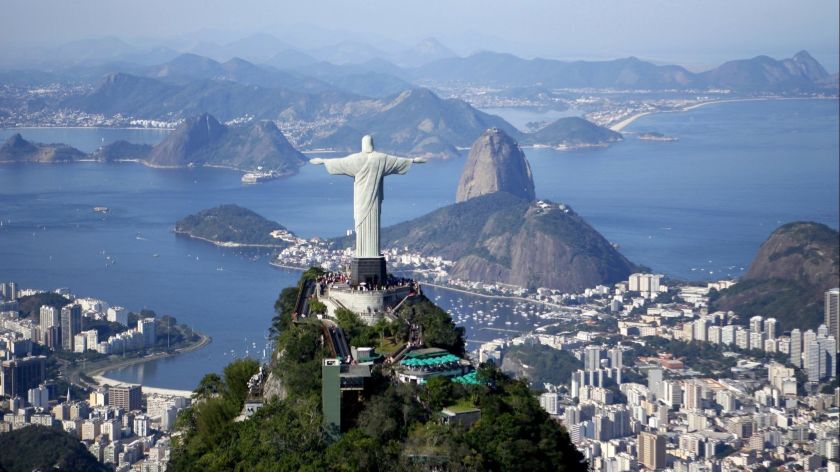
Virtual trip through more than 30 countries Sit in a car, listen to the local radio of the city you are visiting and visit by car, through your screen the city
More than 30 cities between Russia, Brazil, India, Germany, Turkey, the USA, Argentina, Cuba etc … to visit (recommended: a computer screen or large tablet to appreciate videos in HD)
CLICK ON LINK AND ENJOY THIS AMAIZING TOUR / VIDEO AROUND THE WORLD ( OR ALMOST THE WORLD)
<p value="<amp-fit-text layout="fixed-height" min-font-size="6" max-font-size="72" height="80">Vous pouvez aussi lire cet article Vous pouvez aussi lire cet article
Notre nouveau site additif en langue Française, orienté plutôt Middle East proposant comme ici , la diffusion de RadioSatellite avec en plus quelques podcasts, informations internationales de divers flux média ( BFM TV, LCI…)
Le passage vers 2021 a été grandiose avec le show présenté par Stéphane Bern sur FTV (France TV )
Nous avons assisté à un show musical : Chansons et danses. Des stars de grand talents: Pour n’en citer que certains: Patrick Bruel, Amir et bien d’autres. Nous aimerions rendre hommage à M Hugues Aufray qui nous a interprété le seul et unique SANTIANO
Le passage en l’an 2021 fut assuré par les feux d’artifices et MIKA qui a fait la jonction musicale entre ces 2 années.
Voici 2 extraits de vidéo des feux d’artifices.
photo: Fireworks / Feux d’artifices from F2 (France TV )
Un petit flashback à une époque où les gens se mélangeaient, mangeaient dans les restaurants sans masque, sans crainte de virus covid ou autre
Nous avons puisé dans nos archives à la radio. Archives pas si lointaines pourtant. Nous avons ressorti quelques vidéos que nous avons regroupé en une seule.
Un petit tour dans le métro de Paris.
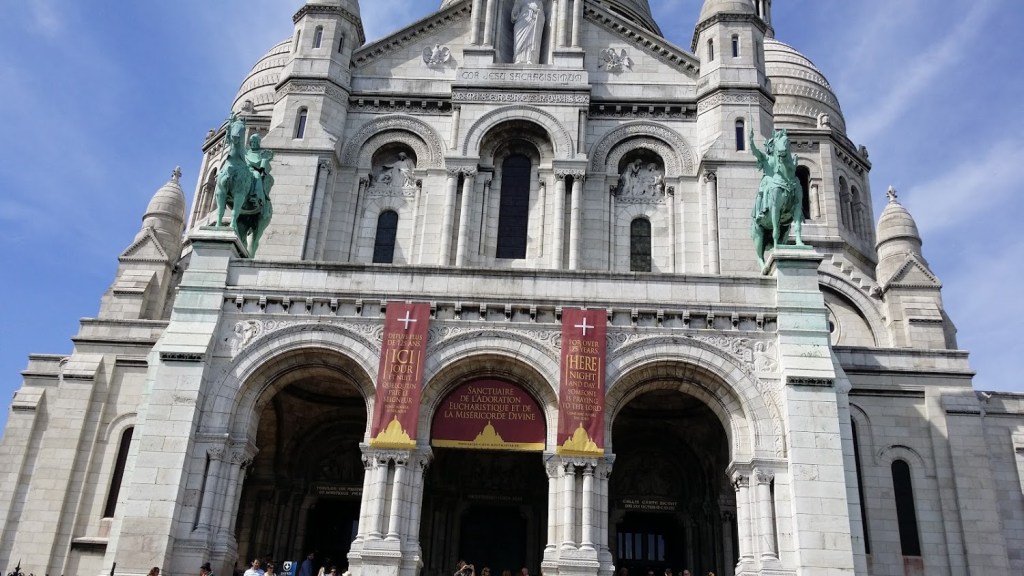
Un petit tour du côté du Sacré-Coeur en flanant dans le quartier artistique de Montmartre. Evidemment, outre les caricaturistes, peintres et autres artistes. Nous avons croisé un groupe musical.
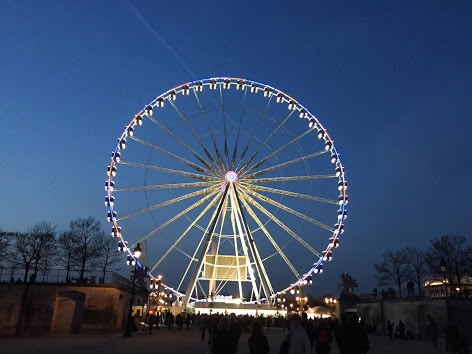
Un peu plu tôt, nous étions du côté de la place de la concorde pour nous promener dans le jardin des tuileries. ( enfin, plutôt le parc )
N’oubliez pas que vous pouvez nous retrouver ainsi que toute l’équipe sur RADIOSATELLITE
Pour les amateurs de soft Jazz : Steve Hart sera au rendez-vous tous les soirs à 20h00 heures de Paris. Steve vous…
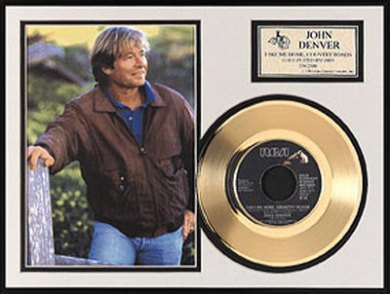
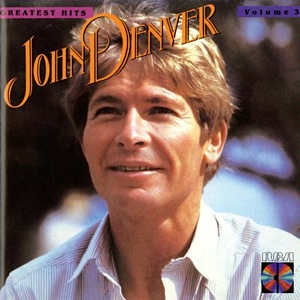
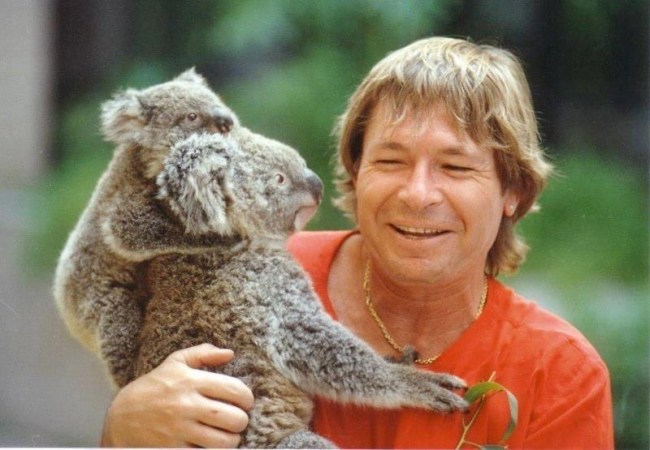
Henry John Deutschendorf, Jr. (December 31, 1943 – October 12, 1997), known professionally as John Denver.
John was an American singer, songwriter, actor, activist, and humanitarian. He was one of the most popular acoustic artists of the 1970s and one of the greatest songwriters of the 20th century. After traveling and living in numerous locations while growing up in his military family, Denver began his music career in folk music groups in the late 1960s. His greatest commercial success was as a solo singer, starting in the 1970s. Throughout his life, Denver recorded and released approximately 300 songs, about 200 of which he composed.
He performed primarily with an acoustic guitar and sang about his joy in nature, his enthusiasm for music, and his relationship trials. Denver’s music appeared on a variety of charts, including country and western, the Billboard Hot 100, and adult contemporary, in all earning him twelve gold and four platinum albums with his signature songs “Take Me Home, Country Roads”, “Annie’s Song”, “Rocky Mountain High”, and “Sunshine on My Shoulders”.
Doris Day and John Denver
Denver further starred in films and several notable television specials in the 1970s and 1980s. In the following decade, he continued to record, but also focused on calling attention to environmental issues, lent his vocal support to space exploration, and testified in front of Congress to protest against censorship in music. He was known for his love of the state of Colorado, which he sang about numerous times. He lived in Aspen, Colorado, for much of his life. He was named Poet Laureate of the state in 1974. The Colorado state legislature also adopted “Rocky Mountain High” as one of its state songs in 2007. Denver was an avid pilot, and died in a single fatality crash of his personal aircraft at the age of 53.
Biography
Early years
Henry John Deutschendorf, Jr., was born in Roswell, New Mexico, to Erma Louise Swope and Lt. Col. Henry John Deutschendorf, Sr. an Air Force officer (who set three speed records in the B-58 Hustler bomber and earned a place in the Air Force Hall of Fame).
Henry Sr. was of German ancestry, and met and married his “Oklahoma Sweetheart”. Denver’s Irish Catholic and German maternal grandmother was the one who imbued Denver with his love of music. In his autobiography, Take Me Home, Denver described his life as the eldest son of a family shaped by a stern father who could not show his love for his children. He is also the nephew of singer Dave Deutschendorf of The New Christy Minstrels.
Because Denver’s father was in the military, the family moved often, making it difficult for Denver to make friends and fit in with people of his own age. Constantly being the new kid was agony for the introverted child, and he grew up always feeling as if he should be somewhere else, but never knowing where that “right” place was. While living in Tucson, Arizona, Denver was a member of the Tucson Arizona Boys Chorus for two years.
Denver was happy living in Tucson, but his father was transferred to Montgomery, Alabama, then in the midst of the Montgomery boycotts. The family later moved to Fort Worth, Texas, where Denver graduated from Arlington Heights High School. Attending high school in Fort Worth was a distressing experience for the disenfranchised Denver. In his third year of high school, he borrowed his father’s car and ran away to California to visit family friends and begin his music career. His father flew to California to bring him back, and Denver unhappily returned to finish high school.
At the age of 11, Denver received an acoustic guitar from his grandmother. He learned to play well enough to perform at local clubs by the time he was in college. He adopted the surname “Denver” after the capital of his favorite state, Colorado. He decided to change his name when Randy Sparks, founder of The New Christy Minstrels, suggested that “Deutschendorf” wouldn’t fit comfortably on a marquee.
Denver studied Architecture at Texas Tech University in Lubbock and sang in a folk-music group called “The Alpine Trio” while pursuing architecture studies. He was also a member of Delta Tau Delta Fraternity. Denver dropped out of the Texas Tech School of Engineering in 1963, and moved to Los Angeles, where he sang in folk clubs. In 1965, Denver joined the Chad Mitchell Trio, a folk group that had been renamed “The Mitchell Trio” prior to Chad Mitchell’s departure and before Denver’s arrival, and then “Denver, Boise, and Johnson” (John Denver, David Boise, and Michael Johnson).
In 1969, John Denver abandoned the band life to pursue a solo career and released his first album for RCA Records: Rhymes & Reasons. Two years prior, Denver had made a self-produced demo recording of some of the songs he played at his concerts. He included in the demo a song called “Babe I Hate to Go”, later renamed “Leaving on A Jet Plane”. Denver made several copies and gave them out as presents for Christmas. Producer Milt Okun, who produced records for the Mitchell Trio and the high-profile folk group Peter, Paul and Mary, had become Denver’s producer as well. Okun brought the unreleased “Jet Plane” song to Peter, Paul and Mary. Their version of the song hit number one on the Billboard Hot 100.
Although RCA did not actively promote Rhymes & Reasons with a tour, Denver himself embarked on an impromptu supporting tour throughout the Midwest, stopping at towns and cities as the fashion took him, offering to play free concerts at local venues. When he was successful in persuading a school, college, American Legion Hall, or local coffee-house to let him play, he would spend a day or so distributing posters in the town and could usually be counted upon to show up at the local radio station, guitar in hand, offering himself for an interview.[citation needed] With his foot-in-the-door for authoring “Leaving on a Jet Plane”, he was often successful in gaining some valuable promotional airtime, usually featuring one or two songs performed live. Some venues would let him play for the “door”; others restricted him to selling copies of the album at intermission and after the show. After several months of this constant low-key touring schedule, however, he had sold enough albums to persuade RCA to take a chance on extending his recording contract. He had also built a sizable and solid fan base, many of whom remained loyal throughout his career.
Denver recorded two more albums in 1970, Take Me to Tomorrow and Whose Garden Was This, including a mix of songs he had written and cover versions of other artists’ compositions.
Career peak
His next album, Poems, Prayers, and Promises (released in 1971), was a breakthrough for him in the U.S., thanks in part to the single “Take Me Home, Country Roads”, which went to number 2 on the Billboard charts despite the first pressings of the track being distorted. Its success was due in part to the efforts of his new manager, future Hollywood producer Jerry Weintraub, who signed Denver in 1970. Weintraub insisted on a re-issue of the track and began a radio-airplay campaign that started in Denver, Colorado. Denver’s career flourished from then on, and he had a series of hits over the next four years. In 1972, Denver scored his first Top Ten album with Rocky Mountain High, with its title track reaching the Top Ten in 1973.
Between 1974 and 1975, Denver experienced an impressive chart dominance, with a string of four No.1 songs (“Sunshine on My Shoulders”, “Annie’s Song”, “Thank God I’m a Country Boy”, and “I’m Sorry”) and three No.1 albums (John Denver’s Greatest Hits, Back Home Again, and Windsong).
In the 1970s, Denver’s onstage appearance included long blond hair, embroidered shirts emblazoned with images commonly associated with the American West (created by designer & appliqué artist Anna Zapp), and “granny” glasses. His manager, Jerry Weintraub, insisted on a significant number of television appearances, including a series of half-hour shows in England, despite Denver’s protests at the time, “I’ve had no success in Britain… I mean none.”
Weintraub explained to Maureen Orth of Newsweek in December 1976, “I knew the critics would never go for John. I had to get him to the people.”
After appearing as a guest on many shows, Denver went on to host his own variety/music specials, including several concerts from Red Rocks Amphitheatre near Denver. His seasonal special, Rocky Mountain Christmas, was watched by more than 60 million people and was the highest-rated show for the ABC network at that time.[citation needed]
His live concert special, An Evening with John Denver, won the 1974–1975 Emmy for Outstanding Special, Comedy-Variety or Music. When Denver ended his business relationship because of Weintraub’s focus on other projects, Weintraub threw Denver out of his office and called him a Nazi.
Denver would later tell Arthur Tobier, when the latter transcribed his autobiography,[citation needed] “…I’d bend my principles to support something he wanted of me. And of course every time you bend your principles – whether because you don’t want to worry about it, or because you’re afraid to stand up for fear of what you might lose – you sell your soul to the devil.”
Denver was also a guest star on The Muppet Show, the beginning of the lifelong friendship between Denver and Jim Henson that spawned two television specials with The Muppets.
He also tried his hand at acting, appearing in the The Colorado Cattle Caper episode of the McCloud television movie on February 24, 1974, and starring in the 1977 film Oh, God! opposite George Burns.
Denver hosted the Grammy Awards five times in the 1970s and 1980s and guest-hosted The Tonight Show on multiple occasions. In 1975, Denver was awarded the Country Music Association’s Entertainer of the Year award.
At the ceremony, the outgoing Entertainer of the Year Charlie Rich presented the award to his successor, but in protest of what he considered the inappropriateness of Denver’s selection, Rich set fire to the envelope containing the official notification of the award. However, Denver’s music was defended by country singer Kathy Mattea, who told Alanna Nash of Entertainment Weekly, “A lot of people write him off as lightweight, but he articulated a kind of optimism, and he brought acoustic music to the forefront, bridging folk, pop, and country in a fresh way… People forget how huge he was worldwide.”
In 1977, Denver cofounded The Hunger Project with Werner Erhard and Robert W. Fuller. He served for many years and supported the organization until his death.
Denver was also appointed by President Jimmy Carter to serve on the President’s Commission on World Hunger, writing the song “I Want to Live” as its theme song. In 1979, Denver performed “Rhymes & Reasons” at the Music for UNICEF Concert. Royalties from the concert performances were donated to UNICEF.
His father taught him to fly in the mid-1970s, which led to a reconciliation between father and son.
T In 1980, Denver and his father, Lt. Col. “Dutch” Deutschendorf, co-hosted an award winning television special, “The Higher We Fly: the History of Flight”. It won the Osborn Award from the Aviation/Space Writers’ Association, and was honored by the Houston Film Festival.
Denver became outspoken in politics in the mid-1970s. He expressed his ecologic interests in the epic 1975 song “Calypso,” which is an ode to the exploration ship and team of environmental activist Jacques Cousteau. In 1976, he campaigned for Jimmy Carter, who became a close friend and ally. Denver was a supporter of the Democratic Party and of a number of charitable causes for the environmental movement, the homeless, the poor, the hungry, and the African AIDS crisis. He founded the charitable Windstar Foundation in 1976, to promote sustainable living. His dismay at the Chernobyl disaster led to precedent-setting concerts in parts of communist Asia and Europe.
During the 1980s, Denver was critical of the Ronald Reagan Presidential Administration, but he remained active in his campaign against hunger, for which Reagan awarded Denver the Presidential World Without Hunger Award in 1985.
Later years and humanitarian work
He had a few more U.S. Top 30 hits as the 1970s ended, but nothing to match his earlier success. He began to focus more on humanitarian and sustainability causes, focusing extensively on conservation projects. He made public expression of his acquaintances and friendships with ecological-design researchers such as Richard Buckminster Fuller (about whom he wrote and composed “What One Man Can Do”) and Amory Lovins, from whom he said he learned much. He also founded two environmental groups; the Windstar Foundation and Plant-It 2020 (originally Plant-It 2000).
Denver had a keen interest in solutions to world hunger. He visited Africa during the 1980s to witness first-hand the suffering caused by starvation and to work with African leaders toward solutions.
In 1983 and 1984, Denver hosted the annual Grammy Awards. In the 1983 finale, Denver was joined on stage by folk-music legend Joan Baez with whom he led an all-star version of “Blowin’ in the Wind” and “Let The Sunshine In,” joined by such diverse musical icons as Jennifer Warnes, Donna Summer, and Rick James.
In 1984, Roone Arledge, president of ABC Sports, asked Denver to compose and sing the theme song for the 1984 Winter Olympics in Sarajevo. Denver worked as both a performer and a skiing commentator. (Skiing was another avocation of Denver’s.) He had written and composed “The Gold and Beyond,” and he sang it for the Olympic Games athletes, as well as local venues including many schools.
In 1985, Denver asked to participate in the singing of “We Are the World,” but he was turned down. According to Ken Kragen (who helped to produce the song), the reason Denver was turned down was that many people felt his image would hurt the credibility of the song as a pop-rock anthem. “I didn’t agree” with this assessment, Kragen said, but reluctantly turned Denver down anyway.
For Earth Day 1990, Denver was the on-camera narrator of a well-received environmental TV program, In Partnership With Earth, with then–EPA Administrator William K. Reilly.
With Denver’s innate love of flying, he was naturally attracted to NASA and became dedicated to America’s work in outer space. He conscientiously worked to help bring into being the “Citizens in Space” program. Denver received the NASA Public Service Medal, in 1985 for “helping to increase awareness of space exploration by the peoples of the world,” an award usually restricted to spaceflight engineers and designers. Also in 1985, Denver passed NASA’s rigorous physical exam and was in line for a space flight, a finalist for the first citizen’s trip on the Space Shuttle in 1986. But he was not chosen. After the Challenger disaster with teacher Christa McAuliffe aboard, Denver dedicated his song “Flying for Me” to all astronauts, and he continued to support NASA.
Denver testified before the Senate Labor and Commerce Committee on the topic of censorship during a Parents Music Resource Center hearing in 1985. Denver also toured Russia in 1985. His 11 Soviet Union concerts were the first by any American artist in more than 10 years, and they marked a very important cultural exchange that culminated in an agreement to allow other western artists to perform there.
He returned two years later to perform at a benefit concert for the victims of the Chernobyl disaster. In October 1992, Denver undertook a multiple-city tour of the People’s Republic of China. He also released a greatest-hits CD, “Homegrown,” to raise money for homeless charities.
In 1994, he published his autobiography, Take Me Home, in which he candidly spoke of his marijuana, LSD, and cocaine use, his marital infidelities, and his history of domestic violence. In 1996, he was inducted into the Songwriters Hall of Fame.
In early 1997, Denver filmed an episode for the Nature series, centering on the natural wonders that inspired many of his best-loved songs. The episode contains his last song, “Yellowstone, Coming Home,” which he composed while rafting along the Colorado River with his son and young daughter.
In the summer of 1997, Denver recorded a children’s train album for Sony Wonder, titled All Aboard! This was produced by long-time friend Roger Nichols. The album consisted of old-fashioned swing, big band, folk, bluegrass, and gospel styles of music woven into a theme of railroad songs. This album won a posthumous Best Musical Album For Children Grammy for Denver, which was his only Grammy.
Personal life
Denver’s first marriage was to Annie Martell of St. Peter, Minnesota. Their wedding was held at the Christ Chapel at Gustavus Adolphus College. Annie was the subject of his hit Annie’s Song, which he composed in only ten minutes while on a ski lift in 1974.
The couple lived in Edina, Minnesota, from 1968 to 1971. Following the success of “Rocky Mountain High”, Denver purchased a residence in Aspen, Colorado and owned one home in Aspen continuously until his death. He and Annie adopted a son, Zachary, and daughter, Anna Kate, who John would say were “meant to be” theirs.[4] John once said, “I’ll tell you the best thing about me. I’m some guy’s dad; I’m some little gal’s dad. When I die, Zachary John and Anna Kate’s father, boy, that’s enough for me to be remembered by. That’s more than enough.” Zachary was the subject of “A Baby Just Like You”, a song that included the line “Merry Christmas, little Zachary” and which he wrote for Frank Sinatra. Denver and Annie Martell divorced in 1982 and the ensuing property settlement caused Denver to become so enraged he nearly choked his ex-wife, then used a chainsaw to cut the marital bed in half. Martell continues to live in Aspen.
Denver married actress Cassandra Delaney in 1988, after a two-year courtship. Settling at Denver’s home in Aspen, the couple had a daughter, Jesse Belle. Denver and Delaney separated in 1991 and divorced in 1993. Of his second marriage, Denver would later recall that “before our short-lived marriage ended in divorce, she managed to make a fool of me from one end of the valley to the other”. In 1993, Denver pleaded guilty to a drunken driving charge, and was placed on probation.
In August 1994, while still on probation, he was again charged with misdemeanor driving under the influence after crashing his Porsche into a tree in Aspen. Though a jury trial in July 1997 resulted in a hung jury on the second DUI charge, prosecutors later decided to reopen the case, which was closed only after Denver’s accidental death in October 1997. In 1996, the FAA decided that Denver could no longer fly a plane due to medical disqualification for failure to abstain from alcohol, a condition that the FAA had imposed in October 1995 after his prior drunk-driving conviction.
Denver’s talent extended beyond music. He was a painter as well, but because of his limiting schedule, he pursued photography. He once said that “photography is a way to communicate a feeling”. Denver was an avid skier and golfer. His love of flying was secondary only to his love for music. He collected vintage biplanes, and in 1974, he bought a Learjet, which he used to fly himself to concerts. He also bought a Christen Eagle aerobatic plane, two Cessna 210 and in 1997, an experimental, amateur-built Rutan Long-EZ.
On October 12, 1997, Denver was killed at the age of 53, when his experimental Rutan Long-EZ plane, aircraft registration number N555JD, crashed into the Pacific Ocean near Pacific Grove, California, while making a series of touch-and-go landings at the nearby Monterey Peninsula Airport. The National Transportation Safety Board’s (NTSB) accident ID is LAX98FA008. Denver was the only occupant of the aircraft.
In 2000, CBS presented the television movie Take Me Home: The John Denver Story loosely based on his memoirs, starring Chad Lowe. The New York Post observed, “An overachiever like John Denver couldn’t have been this boring.”
Denver’s music remains popular around the world. Previously unreleased and unnoticed recordings are now sought-after collectibles in pop, folk and country genres.[citation needed] Also in demand are copies of Denver’s many television appearances, especially his one-hour specials from the 1970s and his six-part series for Britain’s BBC, The John Denver Show. Despite strong interest in these programs, no sign of “official” release is evident for the vast majority of this material.[citation needed] An anthology musical featuring John Denver’s music, Back Home Again: A John Denver Holiday, premiered at the Rubicon Theatre Company in November 2006.
On March 12, 2007, the Colorado Senate passed a resolution to make Denver’s trademark 1972 hit “Rocky Mountain High” one of the state’s two official state songs, sharing duties with its predecessor, “Where the Columbines Grow”. The resolution passed 50–11 in the House, defeating an objection by Rep. Debbie Stafford (R-Aurora) that the song reflected drug use, most specifically the line, “friends around the campfire and everybody’s high”. Sen. Bob Hagedorn, the Aurora Democrat who sponsored the proposal, defended the song as nothing to do with drugs, but everything to do with sharing with friends the euphoria of experiencing the beauty of Colorado’s mountain vistas. Nancy Todd (D-Aurora) said that “John Denver to me is an icon of what Colorado is
On September 24, 2007, the California Friends of John Denver and The Windstar Foundation unveiled a bronze plaque near the spot where his plane went down near Pacific Grove. The site had been marked by a driftwood log carved (by Jeffrey Pine of Colorado) with the singer’s name, but fears that the memorial could be washed out to sea sparked the campaign for a more permanent memorial. Initially the Pacific Grove Council denied permission for the memorial, fearing the place would attract ghoulish curiosity from extreme fans. Permission was finally granted in 1999, but the project was put on hold at the request of the singer’s family. Eventually, over 100 friends and family attended the dedication of the plaque, which features a bas-relief of the singer’s face and lines from his song “Windsong”: “So welcome the wind and the wisdom she offers. Follow her summons when she calls again.”
To mark the 10th anniversary of Denver’s death, his family released a set of previously unreleased recordings of Denver’s 1985 concert performances in the Soviet Union. This two-CD set, John Denver – Live in the USSR, was produced by Denver’s friend Roger Nichols, and released by AAO Music. These digital recordings were made during 11 concerts, and then rediscovered in 2002. Included in this set is a previously unpublished rendition of “Annie’s Song” in Russian. The collection was released November 6, 2007.
On October 13, 2009, a DVD box set of previously unreleased concerts recorded throughout Denver’s career was released by Eagle Rock Entertainment. Around the World Live is a 5-disc DVD set featuring three complete live performances with full band from Australia in 1977, Japan in 1981, and England in 1986. These are complemented by a solo acoustic performance from Japan in 1984, and performances at Farm Aid from 1985, 1987 and 1990. The final disc has two-hour-long documentaries made by Denver.
On April 21, 2011, John Denver became the first inductee into the Colorado Music Hall of Fame. A benefit concert was held at Broomfield’s 1stBank Center and hosted by Olivia Newton-John. Other performers participating in the event included Nitty Gritty Dirt Band, Lee Ann Womack and John Oates. Both of his ex-wives were in attendance, and the award was presented to his three children.
The John Denver “Spirit” statue is a 2002 bronze sculpture statue that was financed by Denver’s fans.
Henry John Deutschendorf Jr ( 31 Décembre 1943 – 12 Octobre 1997 ) connu sous le pseudo de JOHN DENVER
John Denver (31 décembre 1943 – 12 octobre 1997), né Henry John Deutschendorf, Jr. , est un chanteur américain, également compositeur, musicien et acteur. Il est mort à l’âge de 53 ans près de la côte de Monterey en Californie en pilotant un avion Rutan modèle Long-EZ, un avion expérimental en fibre de verre.
Il est né à Roswell, au Nouveau-Mexique. Son père, Henry Deutschendorf, Sr, était instructeur dans l’Armée de l’air des États-Unis. Denver est né alors que son père était en poste au Roswell Army Air Field. Il a passé son enfance dans diverses bases militaires du Sud-ouest américain. Il fréquente le lycée de Fort Worth dans le Texas, et plus tard inscrit à Texas Tech où il était un membre de la fraternité « Delta Tau Delta ». Son goût pour jouer de la musique est venu à l’âge de douze ans lorsque sa grand-mère lui a donné une guitare acoustique Gibson de 1910. Denver a commencé à se produire dans des clubs locaux ainsi qu’à l’université. Il a laissé tomber l’université en 1964 et s’est déplacé à Los Angeles pour rejoindre le trio Chad Mitchell Trio, un groupe de musique folklorique. En 1966, il écrit la chanson Leaving on a Jet Plane, dont l’enregistrement le plus célèbre provient de Peter, Paul and Mary. Il quitte le groupe connu sous le nom de Denver, Boise et Johnson, en 1969 pour poursuivre une carrière solo. La même année il sort son premier album Rhymes and Reasons, (des rimes et des raisons). Durant les quatre années qui suivent, il sort des albums comme Whose Garden Was This, Take Me to Tomorrow, et Poems, Prayers and Promises et devient une célébrité de la chanson populaire en Amérique.
Une de ses chansons les plus connues Take me home, Country roads enregistrée en 1971 sera reprise en France d’abord par Marie Laforêt sous le titre « Mon pays est ici » puis par Claude François sous le titre « J’ai encore ma maison », et encore quelques années plus tard par Dick Rivers sous le titre « Faire un pont ». Cette même chanson connaîtra également une adaptation en japonais dans le film Si tu tends l’oreille (1995). Elle a pour nom Mimi o sumaseba (耳をすませば) au pays du soleil levant.
John Denver and Placido Domingo
Célèbre dans le chant et dans l’écriture de chanson, il connaît une carrière mineure en tant qu’acteur.
Ses films les plus connus étant en 1977 Oh, God! avec George Burns.
En 1994, Denver a écrit son autobiographie intitulée Take Me Home. Il se rend à Aspen dans le Colorado en 1970 suivant son premier succès solo avec la chanson Leaving on a Jet Plane (en partant sur un avion à réaction). Denver est connu non seulement pour ses capacités musicales mais également pour son travail humanitaire.
Il a travaillé intensivement sur des projets humanitaires et a aidé à créer un refuge national en Alaska. Il a également fondé son propre groupe environnemental appelé Windstar Foundation. Denver a montré un vif intérêt pour la lutte contre la famine, et s’est rendu en Afrique au cours des années 1980, œuvrant également avec des chefs africains à la recherche d’une solution.
Défiant toutes les étiquettes conventionnelles, John Denver a tenu un rôle singulier dans la musique américaine : un compositeur dont le travail immensément populaire s’est répandu avec une parenté profonde et en lien avec les gens. Ses chansons sont restées populaires dans le monde. Elles sont caractérisées par leurs mélodies douces, une guitare élégante et son interprétation soul du lyrique. Il est devenu un des quelques chanteurs occidentaux largement connus dans le monde non-européen comprenant l’Afrique, l’Inde et l’Asie du Sud-Est.
John Denver était passionné par deux choses : la musique et l’aviation. Pilote expérimenté, il pilotait ses propres Lear Jet et pratiquait le vol acrobatique. Cependant, c’est cette passion qui a causé sa mort : John Denver s’est abîmé en mer le 12 octobre 1997 aux commandes de son Rutan Long-EZ.
1969 : Rhymes and Reasons
1970 : Take Me To Tomorrow
1970 : Whose Garden Was This?
1971 : Poems, Prayers and Promises
1972 : Aerie
1972 : Rocky Mountain High
1974 : Farewell Andromeda
1974 : John Denver’s Greatest Hits
1974 : Back Home Again
1975 : An Evening With John Denver
1975 : Windsong
1975 : Calypso, un hommage musical à Jacques-Yves Cousteau et à sa cause
Un petit flashback à une époque où les gens se mélangeaient, mangeaient dans les restaurants sans masque, sans crainte de virus covid ou autre
Nous avons puisé dans nos archives à la radio. Archives pas si lointaines pourtant. Nous avons ressorti quelques vidéos que nous avons regroupé en une seule.
Un petit tour dans le métro de Paris.
Un petit tour du côté du Sacré-Coeur en flanant dans le quartier artistique de Montmartre. Evidemment, outre les caricaturistes, peintres et autres artistes. Nous avons croisé un groupe musical.
Un peu plu tôt, nous étions du côté de la place de la concorde pour nous promener dans le jardin des tuileries. ( enfin, plutôt le parc )
N’oubliez pas que vous pouvez nous retrouver ainsi que toute l’équipe sur RADIOSATELLITE
Pour les amateurs de soft Jazz : Steve Hart sera au rendez-vous tous les soirs à 20h00 heures de Paris. Steve vous propose son émission COOL NIGHTS à partir de chez lui en Nouvelle Zeelande.
Pour les amateurs de Folk musique et américana: Artie Martello vous propose MOSTLY FOLK. Artie vous propose son émission à partir des montagnes de Catskill dans l’étant de New York
Pour les amateurs de musique pop, rock des années 60: Jason Curtman vous propose THE JASON CURTMAN SHOW à partir de Southern New Mexico
Le lounge music : Ca sera nos 2 amis : Guido son émission : IN THE ZONE
Et une autre émission proposée par Michael Maretimo : Maretimo Sessions.
Nous vous écrivons cet article alors que le monde entier vit une période assez particulière. L’envie de voyager et de voir d’autres contrées est présente en chacun d’entre nous
Raison pour laquelle, nous avons ressorti de nos archives quelques vidéos.
Vidéos d’un autre temps…Si proche? Si loin? Lorsque les gens se mélangeaient… Les gens ne se souciaient pas de “masques”, de gel hydroalcoolique ( Sanitizer ) et autres…
Sur cette vidéo qui en fait, regroupe plusieurs petites prises de vue , sur plusieurs voyages en Turquie notamment Instanbul
Nous avons gardé les vidéos telle quelles. Sans aucun artifice, montage musical rajouté. Vidéos à l’état brut où vous entendrez les touristes qui étaient à nos côtés . Nous n’avons pas souhaité “enjolivé” encore plus les vidéos par des extaits musicaux.
Nous pourrons voir l’aquiaruim d’Istanbul. Bob l’éponge ( Bob the sponge) en réel.
Nous verrons diverses vue du bosphore, notamment la nuit avec les bateaux naviguant tout le long de ce Bosphore.
Un de nos quartiers préférés se trouve du côté asiatique d’istanbul. (KADIKÖY) . Le côté européen est la partie “la plus touristique”. La partie où presque tous les sites à visiter y sont. Visitables, monuments (Aya Sofia / Sainte sophie, la mosquée bleue etc..) tout est concentré dans cette partie. Normal que les cars, les opérateurs de tourisme et les touristes du monde entier y aillent. D’où “le trop plein” de touristes. Du coup, comme notre équipe a déjà visité à maintes reprises ces lieux touristiques, elle s’est plutôt orientée vers la turquie des Istanbouliotes et non vers celle des touristes. D’où la partie Asiatique.
D’autant plus que côté asiatique, nous pouvons encore trouver des marchands de sandwichs, (marchands ambulants) , des snacks où l’on peut encore manger sur le pouce. Du côté Européen notamment la région où se trouve les grands monuments (et même du côté du Grand Bazar) nous devons déjeûner obligatoirement dans un restaurant .
Parlant de restaurant, nous rigolions au début en nous disant “nous voilà à Instabul, allons manger au Mc Do du coin” ( en guise de boutade). Cependant, détrompez-vous ….Le Mac Do ( Ou Burger King) à Instabul : Le goût de ses sandwichs n’a rien à voir avec les mêmes restaurants de la chaine de par le monde….Le goût de la viande est carrément différent ( en meilleur évidemment ). On aurait dit un goût de chawarma planqué dans le sandwich. Même les fast foods sont délicieux là bas.
Ne nous cachons pas derrière notre petit doigt : L’une des spécialités et l’un de leur patrimoine : c’est le culinaire. Ils le savent. Tout est articulé autour de la “bonne” nouriture”. Riche nourriture : Non pas en terme de calories …Cependant Richesse en terme de variétés et de choix. Que ce soit Salé ou sucré. Le choix est là.
Sur cette vidéo, nous verrons aussi bien le musée “miniaturc” ( tout est en miniature, y compris l’aéroport, les avions etc…Du fake bien réel ) et le bouquet final ( dernière prise sur la vidéo ) SultanAhmet, la nuit avec tous les lumières du parc : C’est un quartier au nom de la mosque gigantesque et superbe.
Nous vous laissons avec cette vidéo : Visionnez la et passez de bons moment en compagnie de notre radio ( eh oui…Vous nous retrouverez aussi en audio sur notre webradio / radio en ligne / internet radio ) juste en cliquant entre autres sur
Le parc de Sceaux, ensemble du domaine de Sceaux, est propriété du département des Hauts-de-Seine et son parc s’étend sur les territoires des communes de Sceaux et d’Antony.
Parc de Sceaux
Le parc fut dessiné par André Le Nôtre à la fin du XVII siècle à la demande de Colbert puis de son fils le marquis de Seignelay. À la Révolution, par les spéculations de la Bande Noire, le domaine est pillé, revendu à un exploitant agricole, Jean François Hippolyte Lecomte, et le château comme les cascades sont détruits. Un nouveau château est érigé à partir de 1856 par sa fille, Anne-Marie Lecomte-Stuart, mariée au duc de Trévise.
La superficie du parc est de 181 hectares : 121 sur la commune de Sceaux, 60 à Antony.
Le château de Sceaux accueille depuis 1937 les collections du musée de l’Île-de-France, renommé en 2013 musée du domaine départemental de Sceaux.
Au XV siècle, il y a à Sceaux un manoir : en 1470, le seigneur de Sceaux, Jean II Baillet (1400-1477), maître des requêtes ordinaires de l’hôtel du roi, y reçoit le roi Louis XI et la reine Charlotte de Savoie avec toute la Cour.
Au début du XVII siècle, les Potier de Gesvres, seigneurs de Sceaux depuis 1597, font construire un château de style Henri IV ou Louis XIII. C’est une famille de bourgeois qui finiront par devenir ducs : ducs de Tresmes et ensuite ducs de Gesvres. Sceaux est érigée en châtellenie en 1612 et en baronnie en 1619-1624 pour le fils cadet de Louis, Antoine Potier de Sceaux, greffier des ordres du Roi.
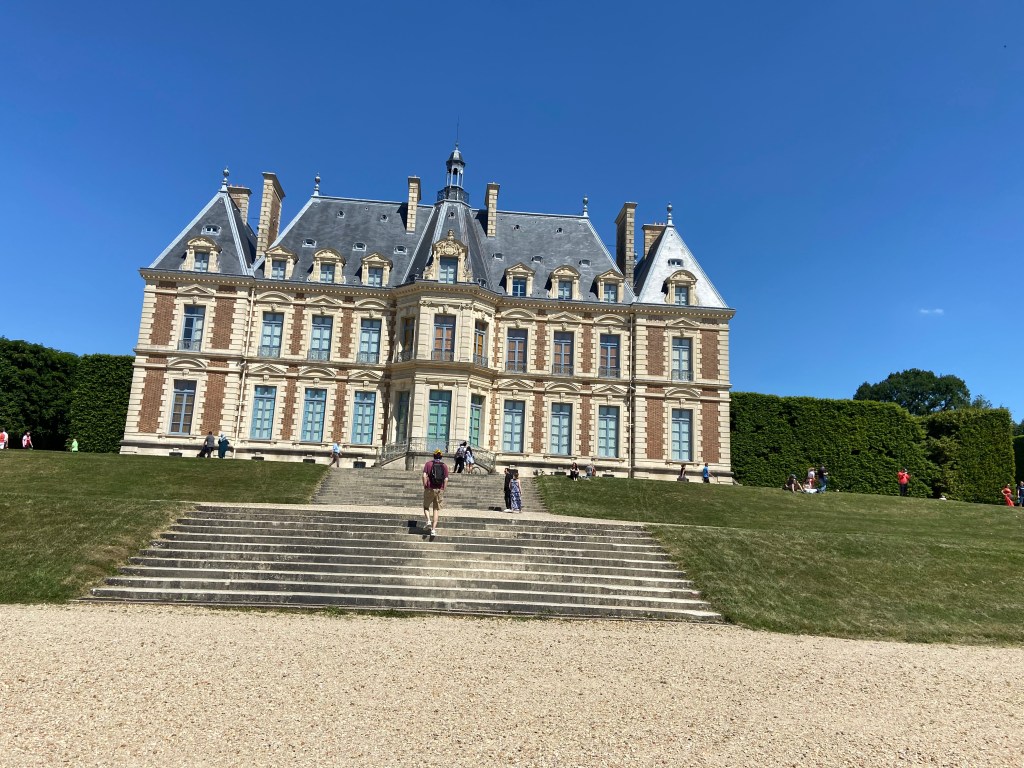
Chateau ( au parc de Sceaux )
Lorsque Colbert meurt en septembre 1683, le château de Sceaux devient la propriété de son fils, l’aîné de neuf enfants, le marquis de Seignelay, homme brillant qui succéda également dans plusieurs des charges de son père : Marine et secrétariat d’État à la Maison du roi. Celui-ci fait luxueusement réaménager les intérieurs, commandant notamment un appartement dans le goût chinois, décoré de laques, destiné à sa femme. Il fait construire en 1686 par Jules Hardouin-Mansart l’orangerie qui subsiste en partie aujourd’hui (longue à l’origine de 80 mètres, elle a été amputée de sa partie est pendant la guerre de 1870). Elle fera l’admiration des contemporains et servira dès le début de galerie d’art, visitée par les ambassadeurs du roi du Siam.
Il agrandit considérablement le parc, en achetant la seigneurie de Châtenay au chapitre de Notre-Dame de Paris, portant la surface du domaine à environ 227 hectares. Parc dans lequel il fait créer par Le Nôtre un second axe, perpendiculaire à l’axe originel, en creusant le Grand Canal, long de 1 140 mètres, achevé en 1691 et la création de la terrasse le surplombant dite aujourd’hui « Terrasse des Pintades ». L’ensemble des terrassements et des parterres devant le château sont remaniés pour créer quatre niveaux de terrasses en pente douce, ornés de parterres de broderies avec bassins, d’un parterre de compartiments surplombant le canal et d’un Tapis Vert en direction de Châtenay-Malabry à l’ouest.
Le 16 juillet 1685, Seignelay reçoit le roi et la Cour lors d’une fête demeurée célèbre, organisée par l’ornemaniste Jean Berain. Le roi se promène longuement dans les jardins. Il admire le pavillon de l’Aurore, les bassins et les fontaines puis il regagne le château. L’orangerie qui occupe alors l’aile sud du château a été transformée en salle de spectacle ou l’on donna L’Idylle de Sceaux ou Idylle de la Paix, œuvre de Lully et de Racine, chantée par les membres de l’Opéra. La fête se termine par un somptueux festin. Les tables ont été disposées autour d’un nouveau bassin proche de l’aile sud du château.
Le marquis de Seignelay meurt en 1690 et son épouse en 1699 ; leurs enfants ne profiteront pas du domaine qui sera vendu par leur tuteur au duc et à la duchesse du Maine.
En 1700, les héritiers du marquis de Seignelay vendent le château au duc du Maine, fils naturel légitimé et préféré de Louis XIV et de madame de Montespan. La duchesse du Maine (1676-1753), petite-fille du Grand Condé, tient à Sceaux une cour brillante. Elle fait construire par Jacques de La Guépière le pavillon de la Ménagerie (détruit), situé au nord du grand parc et entouré d’un jardin. Ils donnent une fête brillante pour célébrer le départ du duc d’Anjou, petit-fils de Louis XIV, en Espagne, dont il deviendra roi sous le nom de Philippe V. Elle crée, en 1703, l’ordre de la Mouche à Miel et sa devise est : « Je suis petite certes mais je fais de cruelles blessures », vers tiré de L’Amintas du Tasse.
À la mort de la duchesse du Maine en 1753, le château passe à ses fils, d’abord au prince de Dombes puis, au décès de celui-ci en 1755, au comte d’Eu. En 1775, à la mort du comte d’Eu, son cousin le duc de Penthièvre récupère l’héritage, et se sépare du château de Crécy dont il emporte tous les décors dont douze toiles peintes par François Boucher et huit peintes par Alexis Peyrotte. Ces dernières servirent à décorer le boudoir de Marie-Fortunée d’Este, princesse de Conti (1776) sa belle-sœur. En 1786, le duc projette de transformer une partie du parc en jardin à l’anglaise. En 1791, il donne le domaine à sa fille, la duchesse d’Orléans. Le duc de Penthièvre meurt le 4 mars 1793. Ses biens sont confisqués dès 1793. Les tableaux de Peyrotte furent vendus et les quatre ensembles comprenant cartons de François Boucher furent achetés en 1872 par le duc de Trévise.
La marquise de Trévise continue à veiller sur le domaine. Les troupes françaises l’occupent en 1914. En 1923, l’héritière du marquis de Trévise, sa fille Marie Léonie Mortier de Trévise, par son mariage princesse de Faucigny-Cystria, envisage la cession de ce domaine qu’elle est dans l’incapacité d’entretenir. Jean-Baptiste Bergeret de Frouville, maire de Sceaux de 1919 à 1925, sauve le domaine en réussissant à convaincre le conseil général du département de la Seine d’en faire l’acquisition. En 1971, le domaine est devenu la propriété du département des Hauts-de-Seine.
Pour financer la restauration du domaine, le département de la Seine en lotit le tiers. Les travaux de restauration sont entrepris à partir de 1928 sous la direction de l’architecte Léon Azéma. Le parc de Sceaux retrouve, dans leurs grandes lignes, les dispositions voulues par Le Nôtre. Des mascarons sculptés par Auguste Rodin viennent orner les Grandes Cascades recréées. Le parti-pris d’ensemble est fidèle au classicisme, même si les détails révèlent, par leur dépouillement non exempt d’une certaine sécheresse, une exécution dans les années 1930. Ce parti-pris permet aussi de limiter les frais d’entretien. Œuvre de longue haleine, la restitution ne s’achève que dans les années 1970 avec la recréation du Tapis Vert.
Quelques vestiges significatifs rappellent le château de Colbert et de son fils. La grille d’entrée est encadrée de guérites sommées d’animaux sculptés par Jean-Baptiste Théodon (attribués précédemment par tradition à Antoine Coysevox) qui illustrent les vertus dont le ministre de Louis XIV avait voulu se parer : la licorne transperçant un dragon symbolise la pureté et le désintéressement, tandis que le dogue, qui prend un loup à la gorge, représente la fidélité. À droite de l’entrée, les écuries attribuées à Antoine Le Pautre. Dans le jardin, derrière les communs, le Pavillon de l’Aurore, est surmonté d’une coupole sur laquelle Charles Le Brun a peint l’Aurore chassant la Nuit et décoré de peintures de Nicolas Delobel. On peut également mentionner, outre l’orangerie déjà citée, l’entrée d’honneur avec les deux pavillons de garde en pierre et les bâtiments de la ferme.
Près du château, on avait installé à l’occasion de l’exposition Île-de-France-Brabant, le groupe, œuvre de Martin Desjardins (1686), des quatre nations soumises (l’Empire, la Hollande, l’Espagne et le Brandebourg) qui escortaient la statue pédestre de Louis XIV de la place des Victoires à Paris (aujourd’hui au musée du Louvre, salle Pujet). Au fond du parc, on a remonté en 1932 la façade du pavillon de Hanovre, construit entre 1758 et 1760 par l’architecte Jean-Michel Chevotet dans les jardins de l’hôtel du duc de Richelieu, rue Neuve-Saint-Augustin (actuellement boulevard des Italiens), démonté lors de la construction du Palais Berlitz.
Le château accueille le musée de l’Île-de-France, inauguré en 1937. Le parc est ouvert au public tous les jours du lever jusqu’au coucher du soleil.
Le parc accueille également plusieurs écoles de la région pour leurs activités d’EPS et parcours d’orientation, ainsi que les journées d’intégration de certains établissements scolaires.
Du fait de la présence de nombreux cerisiers du Japon dans la partie ouest du parc, celui-ci est devenu un lieu de rendez-vous de la communauté japonaise d’Île-de-France pour la fête du hanami durant les premières semaines de floraison au printemps.Un théâtre de marionnettes à gaine a été créé et inauguré en avril 2015. Le parc abrite un mémorial du génocide arménien. Des travaux réalisés en 2013 et 2014 ont permis de reconstituer le parterre le plus proche du château dans son état origine avec des broderies de buis (perspective ouest), telles qu’elles avaient été réalisées par André Le Nôtre, augmentées pour le second parterre de gazon (en contrebas).
Le domaine à la Révolution
Le domaine est confisqué comme bien national dès 1793. Il est transformé en école d’agriculture. La plupart des statues sont enlevées par Alexandre Lenoir pour son musée des monuments français. Le domaine est acheté en 1798 par Jean François Hippolyte Lecomte, négociant affairiste, enrichi dans le commerce du vin, proche de Fouché, qui, vers 1803, détruit le château pour en vendre les matériaux.
Le château du duc de Trévise
En 1828, Anne-Marie Lecomte-Stuart (1808-1870), fille de M. Lecomte épouse Napoléon Mortier de Trévise (1804-1869), fils du maréchal Mortier, duc de Trévise. Deuxième duc de Trévise en 1835, celui-ci fait construire à l’emplacement du château de Colbert, le château de style Louis XIII en brique et pierre que l’on peut voir aujourd’hui. Les travaux sont dirigés par l’architecte Joseph-Michel Le Soufaché entre 1856 et 1862, d’après les projets de l’architecte Auguste Théophile Quantinet. Le parc est soigneusement replanté sur les tracés de Le Nôtre. Sous le Second Empire, le domaine est le théâtre de fêtes brillantes.
Le second duc de Trévise meurt en 1869. En 1870, le domaine est occupé par les troupes bavaroises qui saccagent le village de Sceaux. La propriété reste en indivision quelques années puis Hippolyte Mortier de Trévise, marquis de Trévise rachète leurs parts à ses frères et sœurs et continue à entretenir le domaine jusqu’à sa mort en 1892. Sceaux devient alors la propriété de sa fille, la princesse Léonie de Faucigny-Lucinge-Cystria.
Celle-ci se désintéresse du domaine dont sa mère garde l’usufruit. En 1923, lorsque le domaine est cédé au département, les tableaux restèrent dans la famille de Trévise et quittèrent les lieux. Ils furent acquis pour la somme de 400 000 euros par le domaine départemental de Sceaux et retrouvent donc pour la troisième fois le château
Restent de l’époque de l’Ancien Régime, antérieure à la Révolution . L’axe menant de la route d’Orléans à l’entrée d’honneur du château avec ses douves sèches, son pont dormant et ses deux pavillons de garde ;
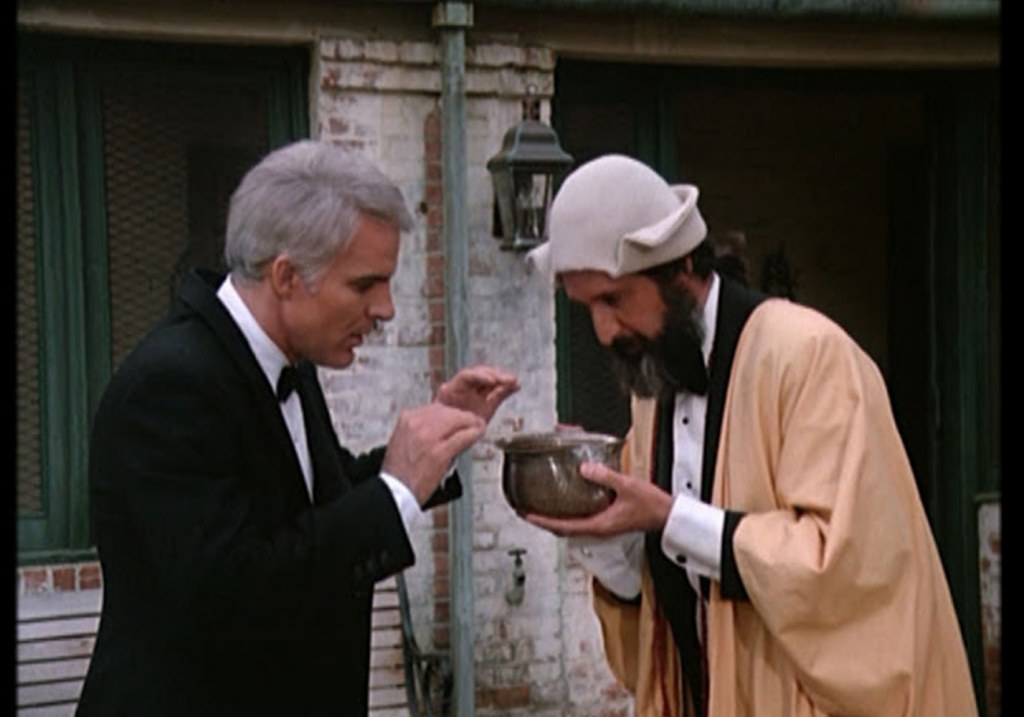
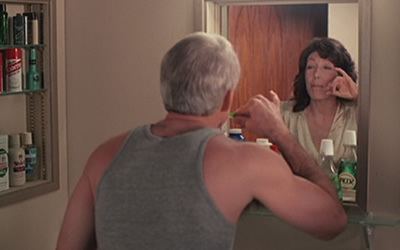
All of Me film américain( Titre en Français : Solo pour 2 ) : Réalisation Carl Reiner
Une femme riche et excentrique mourante désire transférer son esprit dans le corps d’une jeune femme dont le père est employé d’écurie chez elle.
Cependant, l’opération foire. La dame malade , Edwina CUTWATER ( rôle tenu par Lily Tomlin) se retrouve dans le corps de son avocat. Corps qu’ils partagent à 2.
Elle occupe et maitrise les organes du corps se trouvant au côté droit ( pied et main droite) alors que l’avocat ROGER COBB ( rôle joué par Steve Martin) contrôle le bras et pied gauche.
Evidemment ca se complique au quotidien du fait qu’il faille coordonnées leurs gestes pour faire « bouger » aussi bien le pied gauche que droite pour marcher. Idem pour écrire et …pour aller aux toilettes. COBB étant droitier, donc il a besoin de la « participation » d’Edwina pour ses besoins sanitaires (pour ouvrir la braguette et toute la suite, en tant que droitier).
Tout se complique par la suite. Sans rentrer dans les détails du film que nous vous laisserons voir si l’occasion se présente.
Un film Paramount qui date de 1984 mais qui vaut le détour.
Même si le sujet du film semble relativement frivole. Il est même surréaliste ( parce que dans le film, changer de corps via un gourou venant d’on ne sait où mais vivant au Tibet apparemment : Ce changement de corps se fait en moins de 15 secondes et aussi facilement qu’on changerait de chemise. D’où l’absurdité du sujet mais le message étant plus profond : Il essaie de transmettre l’idée de vivre « sa vie », en profiter, « vivre avec soi et avec les autres » ( Dans ce cas, c’est exagéré puisque l’autre vit dans le même corps) mais au final, la richesse n’aura servi à rien à Edwin qui n’a jamais accompli de bien autour d’elle. Tout comme elle n’avait aucun ami.
Même chose pour COBB, musicien de jazz à ses heures perdues. Il se morfondait dans un cabinet d’avocat où le patron ne lui confiait que des missions de « messagers » ou de paperasses sans intérêt et sans pour aider « son prochain » : Cobb ayant voulu faire carrière en tant qu’avocat pour aider les pauvres. Au final, il aidait les riches à la demande de son patron
(Le cas d’Edwina, multimilliardaire)
Pour résumer : Une comédie surréaliste, sympa divertissante mettant en scène :Un avocat désespéré, une malade désespérée, une jeune fille au casier judiciaire lourd, un gourou qui ne parle pas et un musicien ( ami de COBB) qui ne voit pas mais a vite cru l’histoire de transfert sans poser de question et sans s’en étonner.