JERRY LEE LEWIS


Among teenagers of a musical bent, there was much anticipation 50 years ago this week.

Jerry Lee Lewis, an American rock and roll singer with long blond hair who played a frenetic boogie woogie piano while standing up, and often with one foot on the keyboard, was on his way to Britain for a six-week tour.

This may not seem like a big deal today, as rock musicians criss-cross the Atlantic all the time, but in May 1958 it was thrilling.
To us, that first generation of rock fans, this guy was the real thing.

And that was important, because, having been completely overlooked by Elvis Presley who’d never come to Britain (and who was by then in the U.S. Army, anyway), there was a feeling that we were getting everything second-hand and missing all the fun.

True, we’d had a couple of would-be early rock stars of our own, but they were limp counterfeits like Tommy Steele, who already seemed to have one eye on becoming the dreaded all-round entertainers.

Jerry Lee Lewis, however, or, “The Killer”, as he was known, had enjoyed two classic worldwide hits with Whole Lotta Shakin’ Goin’ On and Great Balls Of Fire, and had even appeared in a Hollywood rock film, High School Confidential.

Nor was he middle-aged like Bill Haley. He was young and vital.

Could he possibly live up to his advance billing, those of us who bought the music papers wondered, as we read about him on our way to school.

Would he be the wild man of the Louisiana swamps we’d been led to believe?

No sooner had he landed at Heathrow than we had our answer, in no small part due to the inquiries of a Daily Mail reporter called Paul Tanfield.

Meeting the star at the airport, Tanfield noticed that there was a very young girl in The Killer’s party. Tanfield asked whom she might be.

“I’m Myra,” answered the girl. “Jerry’s wife.”

Tanfield was astonished. “And how old is Myra?” he asked Jerry Lee.

This slideshow requires JavaScript.

“Fifteen,” the singer replied, obviously thinking that sounded suitably mature.

It wasn’t. Despite Lewis’s assertions that Myra was “a grown woman”, as far as Britain was concerned, she was below the age of consent.

The headlines the next day were not good for the star’s first day in Britain.

But they were about to get much worse when it was quickly discovered that Lewis, 22 at the time of the wedding, had been lying.

Myra wasn’t 15. She was 13, and, therefore, absolutely not a “grown woman”.

What’s more, she was the singer’s first cousin once removed.

And if that wasn’t enough, it was also revealed that he may have been bigamously married to her, since he hadn’t yet become divorced from his second wife, whom he’d married at 17, having wed his first wife at 14.

If you’re becoming confused, think how we must have felt back in 1958 as the hillbilly courting behaviour of some citizens of America’s Deep South unfolded in our newspapers.

We’d heard about the phenomenon of the child bride in fiction from the Tennessee Williams’ play and the film Baby Doll. But buttoned-up, respectable, repressed Fifties Britain had never come across the real thing before.

With Jerry Lee, the Louisiana swamps had exceeding all expectations in what they had thrown up.

Goodness gracious, as the man himself was wont to sing. This furore soon was great balls of fire!

In this way began one of the most extraordinary episodes in the history of rock music — and, let’s face it, there have been quite a few.

Right from the beginning, rock and roll music had been soaked in scandal, perhaps not too surprisingly when it’s remembered that the actual words “rock and roll” had been, in black American nightclubs, a euphemism for sexual activity long before they became associated with music.

So, when the music swept the world a couple of years earlier, teachers, preachers, parents and pundits alike had been quick to fulminate against  the youthful, on-stage gyrations of Elvis Presley, describing them as obscene, and to read into the lyrics of rock songs a lewd carnality which was probably accurate but being missed by most young fans.

Up to this point, however, most of the outrage against rock had happened in America. Now, as Jerry Lee Lewis and Myra arrived in London, a storm of outrage erupted here, too.

And instantly the fashionable Westbury Hotel in London’s Mayfair, into which The Killer’s retinue was booked, found itself besieged by competing armies of fans, the Press, police and outraged citizens.

To start with, Lewis seemed to find it difficult to understand what all the fuss was about.

In fact, initially he was quite pleased with all the publicity he was getting.

While, for her part, Myra was happy watching children’s television in their suite, chirpily telling anyone who would listen that although her husband had given her a red Cadillac, what she really wanted was a wedding ring.

Were this to happen today, any star would instantly surround himself with a legion of publicists who would do their utmost to put a positive gloss on the situation — not the easiest of tasks, I have to admit.

Come to think of it, just about impossible.

But those were less sophisticated times when it came to media manipulation.

The best thing to do, Jerry Lee decided, was to get on with his tour as if nothing had happened, and, since he maintained he was a God-fearing country boy, to ask the good Lord for help.

Consequently, it is said, he and his whole entourage fell down on their knees and prayed for a full hour before he took the stage at the Gaumont State, Kilburn, North London.

For some reason, God doesn’t seem to have been listening — but then in the Southern states where Lewis came from, many people believed that rock and roll was the Devil’s music.

Whatever the reason, nothing stopped The Killer, dressed in what was described witheringly in one newspaper as a “custard-coloured jacket”, making his British debut to a half-full theatre with a performance that was repeatedly interrupted by whistles and boos and cries of “cradle snatcher” from the audience.

Off stage, things were getting much, much worse.

On learning of Myra’s age, the police had turned up at the Westbury Hotel to interview the star and his bride, after which their notes were passed on to the Director of Public Prosecutions to see if any British laws had been broken.

Meanwhile, in the House of Commons, the Home Office minister, Iain Macleod, was called upon to answer questions from MPs.

Jerry Lee thought he could struggle on and win the fans round. By now, however, the posh Westbury Hotel had had enough.

The star was asked to leave.

Desperately, Lewis and his manager tried to explain that it wasn’t that unusual for girls of 13 to marry in Mississippi, and that the marriage to Myra couldn’t have been bigamous, because at the time of Jerry Lee’s second marriage he’d still been married to his first wife.

Thus the second marriage had been null and void, and as he was now divorced from the first wife, everything was fine and dandy!

Neither the newspaper reporters nor the Rank and Grade organisations, in whose theatres the Jerry Lee concerts were to have taken place, were convinced.

After only three appearances, the tour was cancelled, and Jerry Lee and Myra, his managers and hangers-on, were back on a plane to America.

A little less than nine months later, Myra gave birth to a boy.

The maker of some classic rock hits he might have been, but The Killer’s career never properly recovered. He became a musical pariah.

And after disc jockeys around the world refused to play his records, he never had another big hit.

From $10,000-a-night shows, he was reduced to earning $100 a night.

Myra divorced him in 1970, after 12 years of marriage when she was all of 25, became an estate agent and wrote her autobiography, Great Balls Of Fire, which was filmed with Dennis Quaid as Jerry Lee and Winona Ryder as Myra.

The scandal of 1958 proved, however, to have lasting effects in quite different ways.

It may have been coincidental, but very quickly attempts were made in America to clean up the image of rock and roll.

Payola investigations were begun and several famous disc jockeys were revealed as having taken bribes to play records.

And when the mighty Elvis himself fell in love with a 14-year-old girl, Priscilla Beaulieu, the following year, steps were taken to make sure that not a word of scandal leaked out.

As for us here in Britain, within a few months, we’d come up with our own pop star, someone whose reputation was, and would remain, cleaner than clean.

His name was Cliff Richard.

One thing, however, couldn’t be denied. Although the affair had ruined the career of Jerry Lee Lewis, it had also made him very famous, infamous, actually.

And as the Fifties rolled into the Sixties, rock Svengalis-would soon see that the right kind of scandal, carefully managed and well publicised, could work wonders for the careers of rock stars.

Five years later, Andrew Loog Oldham, the young manager of the Rolling Stones, would give a masterclass in how this could be done.

While the nicely-turned out Beatles began to find fame by sticking carefully, in public, anyway, to the goody-goody script neatly mapped out for them by their manager Brian Epstein, Oldham did everything he could to grab outrageous headlines for the five, gurning, rebellious Rolling Stones.

Stunt followed stunt, from urinating in public, to singing more blatantly than anyone else about sex.

If there was a rule to be broken, the Stones broke it, and in the process built legends for themselves as the bad boys of rock and roll.

Indeed, by the mid-Sixties it had got to the point that just about anything could be believed about them, whether true or not.

There never was a Mars Bar at that party with Marianne Faithfull down at Keith Richards’ house in 1967, but anyone who had followed their careers in the newspapers believed there was, and the band didn’t mind at all.

Confrontational in the extreme, they milked scandal about themselves for all it was worth.

Of course, as with Jerry Lee Lewis and every other rock attraction, there were always a lot of girls involved, though none as young as Myra Lewis — at least, not until, having left the band, 47-year-old bass player Bill Wyman fell for 13-year-old Mandy Smith.

He married her when she was 18.

By the Seventies, outrageous behaviour had become synonymous with rock music, as groups vied with each other for publicity. Some set their amplifiers on fire on stage while others drove cars or pushed grand pianos into swimming pools.

It was all about creating controversy, getting headlines, and nothing to do with music.

Thus the punk group the Sex Pistols swore on television, Ozzy Osbourne was alleged to have bitten the head off a bat and Madonna disgracefully mimed having sex on Top Of The Pops.

And so it goes on, as every new generation of stars struggles to be noticed in the rush.

Sometimes, of course, publicity isn’t sought, as both Michael Jackson and Phil Spector have recently found in lurid and tragic circumstances.

But, believe me, the bigger the headlines about rock music the greater the stepping stones to stardom.

Quite what Jerry Lee Lewis thinks about the behaviour of some of today’s musicians would be worth knowing.

Today, at 73, after suffering from bouts of alcoholism and depression, he still tours.

Appreciated by some stalwart fans as one of the pioneers of rock and roll, he is remembered by most of us, if at all, for that week in London 50 years ago when his bizarre marital life shocked the nation.

 FROM : http://www.dailymail.co.uk/

By RAY CONNOLLY FOR MAILONLINE

http://www.dailymail.co.uk/tvshowbiz/article-1021569/Great-Balls-Scandal-How-Jerry-Lee-Lewis-marriage-13-year-old-wrecked-career.html


FROM : http://www.dailymail.co.uk/

By RAY CONNOLLY FOR MAILONLINE

SUMMER TIME IN PARIS… L’ETE A PARIS


PARIS EN VIDEO

This slideshow requires JavaScript.

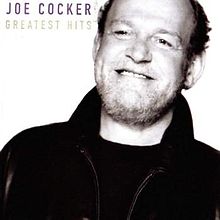
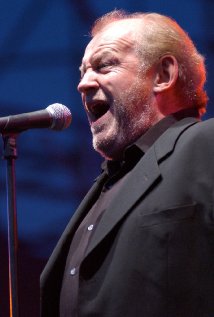
Joe Coker


John Robert “Joe” Cocker OBE (20 May 1944 – 22 December 2014) was an English rock and blues singer, who came to popularity in the 1960s, and is known for his gritty voice, his spasmodic body movement in performance and his cover versions of popular songs, particularly those of the Beatles.

j coker11 His cover of the Beatles’ “With a Little Help from My Friends” reached number one in the UK in 1968, and he performed the song live at Woodstock in 1969. His version also became the theme song for the TV series The Wonder Years. His 1975 hit single, “You Are So Beautiful”, reached number five in the US. Cocker is the recipient of several awards, including a 1983 Grammy Award for his US number one “Up Where We Belong”, a duet with Jennifer Warnes. In 1993 he was nominated for the Brit Award for Best British Male, and in 2008 he received an OBE at Buckingham Palace for services to music.  


Cocker was ranked #97 on Rolling Stone’s 100 greatest singers list. Cocker was born on 20 May 1944 at 38 Tasker Road, Crookes, Sheffield, West Riding of Yorkshire. He is the youngest son of a civil servant, Harold Cocker, and Madge Cocker. According to differing family stories, Cocker received his nickname of Joe either from playing a childhood game called “Cowboy Joe” or from a local window cleaner named Joe. joe coker the essential Cocker’s main musical influences growing up were Ray Charles and Lonnie Donegan. Cocker’s first experience singing in public was at age 12 when his elder brother Victor invited him on stage to sing during a gig of his skiffle group. In 1960, along with three friends, Cocker formed his first group, the Cavaliers. For the group’s first performance at a youth club, they were required to pay the price of admission before entering. The Cavaliers eventually broke up after a year and Cocker left school to become an apprentice gasfitter while simultaneously pursuing a career in music.


In 1961, under the stage name Vance Arnold, Cocker continued his career with a new group, Vance Arnold and the Avengers. The name was a combination of Vince Everett, Elvis Presley’s character in Jailhouse Rock, (which Cocker misheard as Vance) and country singer Eddy Arnold. The group mostly played in the pubs of Sheffield, performing covers of Chuck Berry and Ray Charles songs. In 1963, they booked their first significant gig when they supported the Rolling Stones atSheffield City Hall. In 1964, Cocker signed a recording contract as a solo act with Decca and released his first single, a cover of the Beatles’ “I’ll Cry Instead” (with Big Jim Sullivan and Jimmy Page playing guitars).


Despite extensive promotion from Decca lauding his youth and working class roots, the record was a flop and his recording contract with Decca lapsed at the end of 1964. After Cocker recorded the single, he dropped his stage name and formed a new group, Joe Cocker’s Big Blues. There is only one known recording of Joe Cocker’s and Big Blues on an EP given out by Sheffield College during Rag Week and called Rag Goes Mad at the Mojo. It contained a cover of Curtis Mayfield’s “I’ve Been Trying” and a track of “Saved”. joe cokerThe Grease Band (1966–1969) In 1966, after a year-long hiatus from music, Cocker teamed up with Chris Stainton, whom he had met several years before, to form the Grease Band.The Grease Band was named after Cocker read an interview with jazz musician Jimmy Smith, where Smith described another musician as “having a lot of grease”.


Like the Avengers, Cocker’s group mostly played in pubs in and around Sheffield. The Grease Band came to the attention of Denny Cordell, the producer of Procol Harum, the Moody Blues and Georgie Fame. Cocker recorded the single “Marjorine” without the Grease Band for Cordell in a London studio. He then moved to London with Chris Stainton, and the Grease Band was dissolved. Cordell set Cocker up with a residency at the Marquee Club in London, and a “new” Grease Band was formed with Stainton and keyboardist Tommy Eyre. After minor success in the US with the single “Marjorine”, Cocker entered the big time with a groundbreaking rearrangement of “With a Little Help from My Friends”, another Beatles cover, which, many years later, was used as the opening theme for The Wonder Years.


The recording features lead guitar from Jimmy Page, drumming by BJ Wilson, backing vocals from Sue and Sunny, and Tommy Eyre on organ. The single made the Top Ten on the British charts, remaining there for thirteen weeks and eventually reaching number one, on 9 November 1968. It also reached number 68 on the US charts. The new touring line-up of Cocker’s Grease Band featured Henry McCullough on lead guitar, who would go on to briefly play with McCartney’s Wings. After touring the UK with the Who in autumn 1968 and Gene Pitney and Marmalade in early winter 1969, the Grease Band embarked on their first tour of the US in spring 1969. Cocker’s album With a Little Help from My Friends was released soon after their arrival and made number 35 on the American charts, eventually going gold. joe coker2 During his US tour, Cocker played at several large festivals, including the Newport Rock Festivaland the Denver Pop Festival.


In August, Denny Cordell heard about the planned concert inWoodstock, New York and convinced organiser Artie Kornfeld to book Cocker and the Grease Band for the Woodstock Festival. The group had to be flown into the festival by helicopter due to the large crowds. They performed several songs, including “Delta Lady”, “Something’s Comin’ On”, “Let’s Go Get Stoned”, “I Shall Be Released”, and “With a Little Help from My Friends”. Cocker would later say that the experience was “like an eclipse… it was a very special day.”


Directly after Woodstock, Cocker released his second album, Joe Cocker!. Impressed by his cover of “With a Little Help from My Friends”, Paul McCartney and George Harrison allowed Cocker to use their songs “She Came in Through the Bathroom Window” and “Something” for the album. Recorded during a break in touring in the spring and summer, the album reached number 11 on the US charts and garnered a second UK hit with the Leon Russell song, “Delta Lady”. Throughout 1969 he was featured on variety TV shows like The Ed Sullivan Show and This Is Tom Jones. Onstage, he exhibited an idiosyncratic physical intensity, flailing his arms and playing air guitar, occasionally giving superfluous cues to his band. 


At the end of the year Cocker was unwilling to embark on another US tour, so he dissolved the Grease Band. Despite Cocker’s reluctance to venture out on the road again, an American tour had already been booked so he had to quickly form a new band in order to fulfil his contractual obligations. It proved to be a large group of more than 30 musicians, including pianist and bandleader Leon Russell, three drummers, and backing vocalists Rita Coolidge and Claudia Lennear.

The new band was christened “Mad Dogs and Englishmen” by Denny Cordell after the Noël Coward song of the same name. joe coker3 His music at this time evolved into a more bluesy type of rock, often compared to that of the Rolling Stones. During the ensuing Mad Dogs and Englishmen tour (later described by drummer Jim Keltner as “a big, wild party”), Cocker toured 48 cities, recorded a live album, and received very positive reviews from Time and Life for his performances. However, the pace of the tour was exhausting. Russell and Cocker had personal problems and Cocker became depressed and began drinking excessively as the tour wound down in May 1970.


Meanwhile, he enjoyed several chart entries in the US with “Cry Me a River” and “Feelin’ Alright” by Dave Mason. His cover of the Box Tops’ hit “The Letter”, which appeared on the live album and film, Mad Dogs and Englishmen, became his first US Top Ten hit. After spending several months in Los Angeles, Cocker returned home to Sheffield where his family became increasingly concerned with his deteriorating physical and mental health. During this time, in periods between work, Cocker wrote the overture played by Ted Heathon the occasion the Prime Minister famously conducted a live orchestra whilst in office. In the summer of 1971 the A&M Recordssingle release appeared in the US of “High Time We Went”.


This became a hit, reaching number 22 on the US Billboard Hot 100 chart, but was not issued on an album until November 1972 on the Joe Cocker album. In early 1972, after nearly two years away from music, Cocker went on tour with a group that Chris Stainton had formed. He opened with a performance in Madison Square Garden which was attended by about 20,000 people. After touring the US, he embarked on a European tour where he played to large audiences in Milan, Italyand Germany. He then returned to the US for another tour in autumn 1972. During these tours the group cut the songs that would be part of his newest album, Joe Cocker. A mixture of live songs and studio recordings, the album peaked at number 30 on the US charts.Joe Cocker with his OBE, 2007


Cocker performing on 16 October 1980 in the National Stadium, Dublin

In October 1972, when Cocker toured Australia, he and six members of his entourage were arrested in Adelaide by police for possession of marijuana. The next day in Melbourne, assault charges were laid after a brawl at the Commodore Chateau Hotel, and Cocker was given 48 hours to leave the country by the Australian Federal Police.


This caused huge public outcry in Australia, as Cocker was a high-profile overseas artist and had a strong support base, especially amongst the baby boomers who were coming of age and able to vote for the first time. It sparked hefty debate about the use and legalisation of marijuana in Australia and gained Cocker the nickname of “the Mad Dog”. Shortly after the Australian tour, Stainton retired from his music career to establish his own recording studio. After his friend’s departure and estrangement from longtime producer Denny Cordell, Cocker sank into depression and began using heroin. In June 1973 he kicked the habit, but continued to drink heavily. At the end of 1973, Cocker returned to the studio to record a new album, I Can Stand A Little Rain. The album, released in August 1974, was number 11 on the US charts and one single, a cover of Dennis Wilson and Billy Preston’s “You Are So Beautiful”, which reached the number 5 slot. Despite positive reviews for the album, Cocker struggled with live performances, largely due to his problems with alcohol.


One such instance was reported in a 1974 issue of Rolling Stone magazine, saying during two West Coast performances in October of that year he threw up on stage.jcoker12 In January 1975, he released a second album that had been recorded at the same time as I Can Stand a Little Rain, Jamaica Say You Will. To promote his new album, Cocker embarked on another tour of Australia, made possible by the country’s newLabor government. In late 1975, he contributed vocals on a number of the tracks on Bo Diddley’s The 20th Anniversary of Rock ‘n’ Roll all-star album. He also recorded a new album in a Kingston, Jamaica studio, Stingray.


However, record sales were disappointing; the album reached only number 70 on the US charts. In 1976, Cocker performed “Feelin’ Alright” on Saturday Night Live. John Belushi joined him on stage doing his famous impersonation of Cocker’s stage movements. At the time, Cocker was $800,000 in debt to A&M Records and struggling with alcoholism. Several months later, he met producer Michael Lang, who agreed to manage him on the condition that he stay sober.


With a new band, Cocker embarked on a tour of New Zealand, Australia and South America. He then recorded a new album with session work by Steve Gadd and Chuck Rainey, and a new, young bassist from Scotland, Rob Hartley. Hartley also toured briefly with Cocker’s friends in 1977. In the autumn of 1978, he went on a North American tour promoting his album, Luxury You Can Afford. Despite this effort, it received mixed reviews and only sold around 300,000 copies. In 1979, Cocker joined the “Woodstock in Europe” tour, which featured musicians like Arlo Guthrie and Richie Havens who had played at the 1969 Woodstock Festival.


He also performed in New York’s Central Park to an audience of 20,000 people. The concert was recorded and released as the live album, Live in New York. He also toured Europe and appeared on the German television recording amphitheatre, Rockpalast, the first of many performances on the show. In 1982, Cocker recorded two songs with the jazz group the Crusaders on their album Standing Tall. One song, ‘I’m So Glad I’m Standing Here Today’ was nominated for a Grammy Award and Cocker performed it with the Crusaders at the awards ceremony. joe coker4 The Crusaders wrote this song with Cocker in mind to sing it. Cocker then released a new reggae-influenced album, Sheffield Steel, recorded with the Compass Point All Stars, produced by Chris Blackwell and Alex Sadkin.


In 1982, at the behest of producer Stewart Levine, Cocker recorded the duet “Up Where We Belong” with Jennifer Warnes for the soundtrack of the 1982 film An Officer and a Gentleman. The song was an international hit, reaching number 1 on theBillboard Hot 100, and winning a Grammy Award for Best Pop Performance by a Duo. The duet also won an Academy Award for Best Original Song, and Cocker and Warnes performed the song at the awards ceremony. Several days later, he was invited to perform “You Are So Beautiful” with Ray Charles in a television tribute to the musician.


He then joined singer Ronnie Lane’s 1983 tour to raise money for the London-based organisation Action for Research into Multiple Sclerosis, in particular because Lane was beginning to suffer from the degenerative disease. Musicians such as Pete Townshend, Eric Clapton, Jimmy Page,Jeff Beck and Chris Stainton also participated in the tour which included a performance at New York City’s Madison Square Garden. While on another tour that year, Cocker was arrested by Austrian police after refusing to perform because of inadequate sound equipment.


The charges were eventually dropped and Cocker was released. Shortly after the incident, he released his ninth studio album, Civilized Man. His next album Cocker was dedicated to his mother, Madge, who died when he was recording in the studio with producer Terry Manning. A track from the album, “You Can Leave Your Hat On” was featured in the 1986 film 9½ Weeks. The album eventually went Platinum on the European charts. 


His 1987 album Unchain My Heartwas nominated for a Grammy Award, although it did not win. One Night of Sin was also a commercial success, surpassingUnchain My Heart in sales.jcoker14 Throughout the 1980s, Cocker continued to tour around the world, playing to large audiences in Europe, Australia and the United States.


In 1988, he performed at London’s Royal Albert Hall and appeared on The Tonight Show. After Barclay James Harvest and Bob Dylan Cocker was the first to give Rock concerts in the German Democratic Republic, in East Berlin and Dresden.


The venue, the Blüherwiese, next to the Rudolf-Harbig-Stadion, bears the vernacular name Cockerwiese (Cocker meadow) today.He also performed for President George Bush at an inauguration concert in February 1989. In 1992, his version of Bryan Adams’ “Feels Like Forever” made the UK Top 40. At the 1993 Brit Awards, Cocker was nominated for Best British Male.Cocker performed the opening set at Woodstock ’94 as one of the few alumni who played at the original Woodstock Festival in 1969 and was very well received.


On 3 June 2002, Cocker performed “With A Little Help From My Friends” accompanied by Phil Collins on drums and Queen guitarist Brian May at the Party at the Palace concert in the grounds of Buckingham Palace, an event in commemoration of the Golden Jubilee of Elizabeth II. In 2007, Cocker appeared playing minor characters in the film Across the Universe, as the lead singer on another Beatles’ hit, “Come Together”. Cocker was awarded an OBE in the Queen’s 2007 Birthday Honours list for services to music.To celebrate receiving his award in mid December 2007, Cocker played two concerts in London and in his home town of Sheffield.


joe coker5 In April and May 2009, Cocker conducted a North American tour in support of his album Hymn for My Soul. He sang the vocals on Little Wing for the Carlos Santana album, Guitar Heaven: The Greatest Guitar Classics of All Time, released on 21 September 2010.


In the autumn of 2010, Cocker toured Europe promoting his studio album Hard Knocks. Cocker returned to Australia in 2008 and again in 2011, the latter of which featured George Thorogood and the Destroyers as an opening act.


On 20 March 2011, Joe Cocker took part in a benefit concert for Cornell Dupree at B.B. King’s Blues Club in New York. Dupree played on two Cocker albums Stingray (1976) and Luxury You Can Afford (1978). Dupree’s band Stuff was also Cocker’s backing band on a tour promoting Stingray in 1976. While performing a concert at Madison Square Garden on 17 September 2014, veteran rock singer Billy Joel stated that Cocker was “not very well right now” and asked that he be inducted into the Rock and Roll Hall of Fame.


In 1963, Cocker began dating Eileen Webster, also a resident of Sheffield. The couple dated intermittently for the next 13 years, separating permanently in 1976. In 1978, Cocker moved onto a ranch owned by Jane Fonda in Santa Barbara, California. Pam Baker, a local summer camp director and fan of Cocker’s music, persuaded the actress to let the house to Cocker. Baker began dating Cocker and they eventually married on 11 October 1987.The couple resided on the Mad Dog Ranch in Crawford, Colorado. Cocker was not related to fellow Sheffield-born musician Jarvis Cocker, despite this being a rumour (particularly in Australia, where Jarvis’s father Mac Cocker, a radio DJ, allowed listeners to believe he was Joe Cocker’s brother). On 22 December 2014, Cocker died of lung cancer at his home in Colorado at the age of 70.


Source Wikipedia


Mystery…Mystère


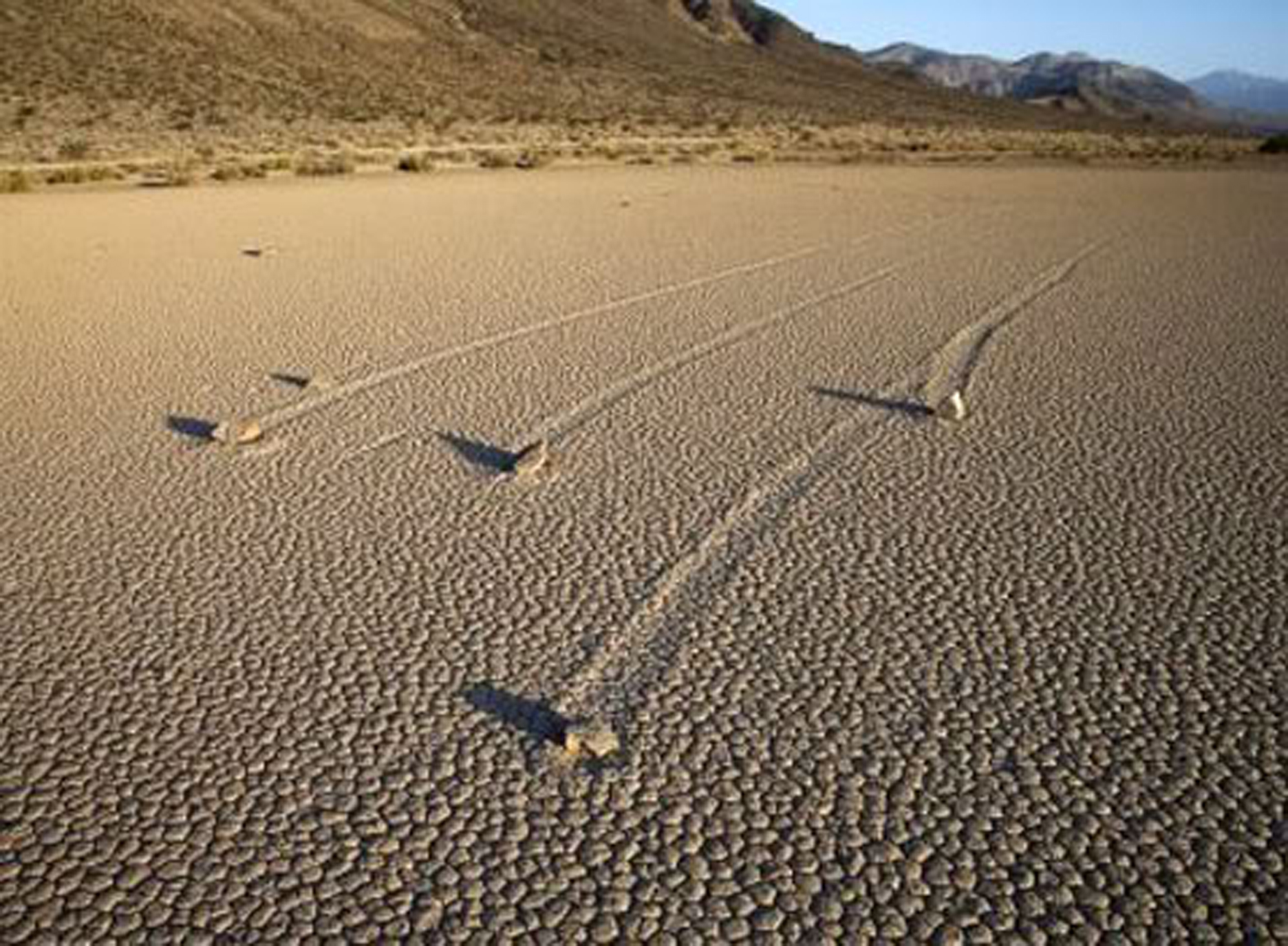
Racetrack Playa is home to an enduring Death Valley mystery. Littered across the surface of this dry lake, also called a “playa,” are hundreds of rocks — some weighing as much as 320 kilograms (700 pounds) — that seem to have been dragged across the ground, leaving synchronized trails that can stretch for hundreds of meters.Death_Valley

What powerful force could be moving them? Researchers have investigated this question since the 1940s, but no one has seen the process in action — until now.

In a paper published in the journal PLOS ONE on Aug. 27, a team led by Scripps Institution of Oceanography, UC San Diego, paleobiologist Richard Norris reports on first-hand observations of the phenomenon.

Because the stones can sit for a decade or more without moving, the researchers did not originally expect to see motion in person. Instead, they decided to monitor the rocks remotely by installing a high-resolution weather station capable of measuring gusts to one-second intervals and fitting 15 rocks with custom-built, motion-activated GPS units. (The National Park Service would not let them use native rocks, so they brought in similar rocks from an outside source.) The experiment was set up in winter 2011 with permission of the Park Service. Then — in what Ralph Lorenz of the Applied Physics Laboratory at the Johns Hopkins University, one of the paper’s authors, suspected would be  “the most boring experiment ever” — they waited for something to happen.

But in December 2013, Norris and co-author and cousin Jim Norris arrived in Death Valley to discover that the playa was covered with a pond of water seven centimeters (three inches) deep. Shortly after, the rocks began moving.

Sailing StonesDeathValley


‘Element of luck’

“Science sometimes has an element of luck,” Richard Norris said. “We expected to wait five or 10 years without anything moving, but only two years into the project, we just happened to be there at the right time to see it happen in person.”

Their observations show that moving the rocks requires a rare combination of events. First, the playa fills with water, which must be deep enough to form floating ice during cold winter nights but shallow enough to expose the rocks. As nighttime temperatures plummet, the pond freezes to form thin sheets of “windowpane” ice, which must be thin enough to move freely but thick enough to maintain strength. On sunny days, the ice begins to melt and break up into large floating panels, which light winds drive across the playa, pushing rocks in front of them and leaving trails in the soft mud below the surface.

“On Dec. 21, 2013, ice breakup happened just around noon, with popping and cracking sounds coming from all over the frozen pond surface,” said Richard Norris. “I said to Jim, ‘This is it!’”Sailing stones2

These observations upended previous theories that had proposed hurricane-force winds, dust devils, slick algal films, or thick sheets of ice as likely contributors to rock motion. Instead, rocks moved under light winds of about 3-5 meters per second (10 miles per hour) and were driven by ice less than 3-5 millimeters (0.25 inches) thick, a measure too thin to grip large rocks and lift them off the playa, which several papers had proposed as a mechanism to reduce friction. Further, the rocks moved only a few inches per second (2-6 meters per minute), a speed that is almost imperceptible at a distance and without stationary reference points.

“It’s possible that tourists have actually seen this happening without realizing it,” said Jim Norris of the engineering firm Interwoof in Santa Barbara. “It is really tough to gauge that a rock is in motion if all the rocks around it are also moving.”

Individual rocks remained in motion for anywhere from a few seconds to 16 minutes. In one event, the researchers observed rocks three football fields apart began moving simultaneously and traveled over 60 meters (200 feet) before stopping. Rocks often moved multiple times before reaching their final resting place. The researchers also observed rock-less trails formed by grounding ice panels — features that the Park Service had previously suspected were the result of tourists stealing rocks.

Rare events

“The last suspected movement was in 2006, and so rocks may move only about one millionth of the time,” said Lorenz. “There is also evidence that the frequency of rock movement, which seems to require cold nights to form ice, may have declined since the 1970s due to climate change.”

Richard and Jim Norris, and co-author Jib Ray of Interwoof, started studying the Racetrack’s moving rocks to solve the “public mystery” and set up the “Slithering Stones Research Initiative” to engage a wide circle of friends in the effort. They needed the help of volunteers who repeatedly visited the remote dry lake, quarried the rocks that were fitted with GPS, and maintained custom-made instruments. Lorenz and Brian Jackson of the Department of Physics at Boise State University started working on the phenomenon for their own reasons: They wanted to study dust devils and other desert weather features that might have analogs to processes happening on other planets.

sailingrocks02“What is striking about prior research on the Racetrack is that almost everybody was doing the work not to gain fame or fortune, but because it is such a neat problem,” said Jim Norris.

So is the mystery of the sliding rocks finally solved?

“We documented five movement events in the two and a half months the pond existed and some involved hundreds of rocks,” says Richard Norris. “So we have seen that even in Death Valley, famous for its heat, floating ice is a powerful force in rock motion. But we have not seen the really big boys move out there….Does that work the same way?”

Article taken from

Scripps Institution of Oceanography, UC San Diego

University of california.

The Regents of the University of California

ISTANBUL….RADIOSATELLITE….. ISTANBUL SWIMMING TOURS… ENJOY MUSIC and LIFE


istanbul swimming tours and radiosatellite istanbul swimming tours and radiosatellite
Istanbul Istanbul

radiosatellite1

VIDEOS TO WATCH


ON PARLE DE RADIO SATELLITE DANS LA PRESSE


RADIO SATELLITE A LA UNE

http://www.lawebradio.com/news/radiosatellite-webradio-en-position-geostationnaire/


Lawebradio.com

Lawebradio.com

MUSIQUE DU MONDE ENTIER


WORLDWILDE  MUSIC 


Comme d’habitude,  nos webradios “Radio Satelllite2”  et “Radio Satellite” vous écoutent et répondent  à vos requêtes. Nous avons donc préparé un programme de 2 heures 30 minutes.Image

burcu gunesVendredi 02 Mai 2014 à MIDI (CET , heure de Paris) nous avons le plaisir de vous présenter un programme regroupant des musiques, chansons, titres traditionnels de plusieurs pays et communautés: 

Nous aurons des musiques /chansons espagnoles, indiennes, libanaises, turques, greques, irlandaises, écossaises, néerlandaises etc…

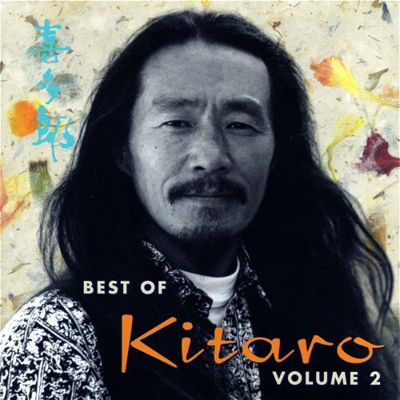
Nous aurons des musiques traditionnelles hebraiques, des artistes originaires du Maroc interprétant des titres en langue espagnole, des artistes russes, italiens, coréens…02 heures 30 minutes regroupant les meilleures musiques du monde.Kitaro


Enjoy 🙂

Image

RAGHEB ALAMA

LA MUSIQUE DANS VOTRE VIE


http://radiosatellite.co    site officiel de RS2 et RS.

Relax...enjoy...let the music play... Laissez la musique envahir vos journées

NOS 2 WEBRADIOS SONT A VOTRE DISPOSITION


Où que vous soyez, restez connectez sur RS2 et RS: 2 webradios 24/24 via les applis, tv, ordi et tablettes.


Our apps for tablets and smartphones / Nos applis pour tablettes et smartphones

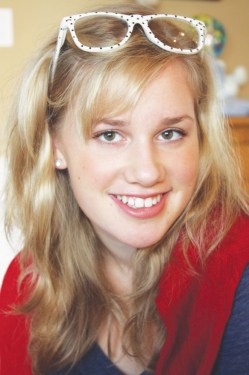
VICTORIA CELESTINE


 Une artiste américaine qui a vécu près de 8 années en France


DECOUVRONS CETTE ARTISTE

 Après avoir passé 8 ans en France.  Victoria est revenue à San Antonio au Texas à
l’âge de 12 ans;

VICTORIA CELESTINE

VICTORIA CELESTINE

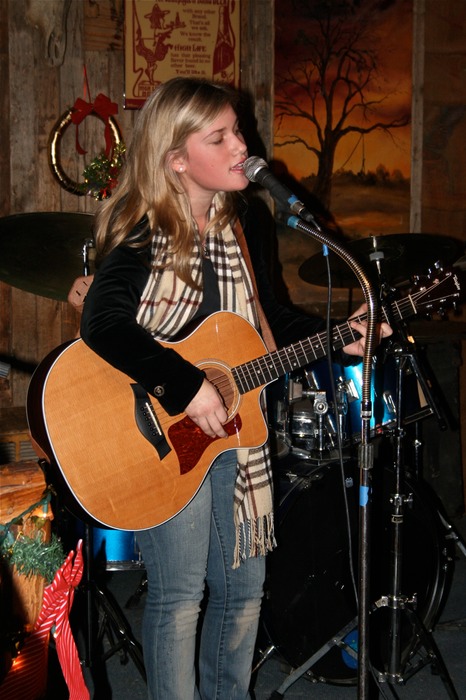
commençant le chant et la guitare un an après, elle a réussi en 3 ans. a sortir
2 albums complets de chansons originales ainsi que un EP produit et écrit avec Jeff Blue le
producteur et découvreur de Likkin Park et Macy gray entre autre.

VICTORIA CELESTINE on RADIO SATELLITE

VICTORIA CELESTINE on RADIO SATELLITE

De plus Victoria se place régulièrement en finale de concours de chants et de musique;
notamment deux fois en 2eme place de l’ISC (International Songwriting Competition) category
teen, se distinguant parmi 20000 candidats payants.

“Homework” un nouveau single, raconte une nuit sans sommeil de Victoria qui essaye de faire
ses devoirs en retard! après avoir été sur les “charts” de itunes 99 fois (dans différents pays)
avec son premier single “In the World”, ce nouveau single sera lui aussi promu par l’application
Video Star de l’Iphone/Ipad le 26 Septembre.

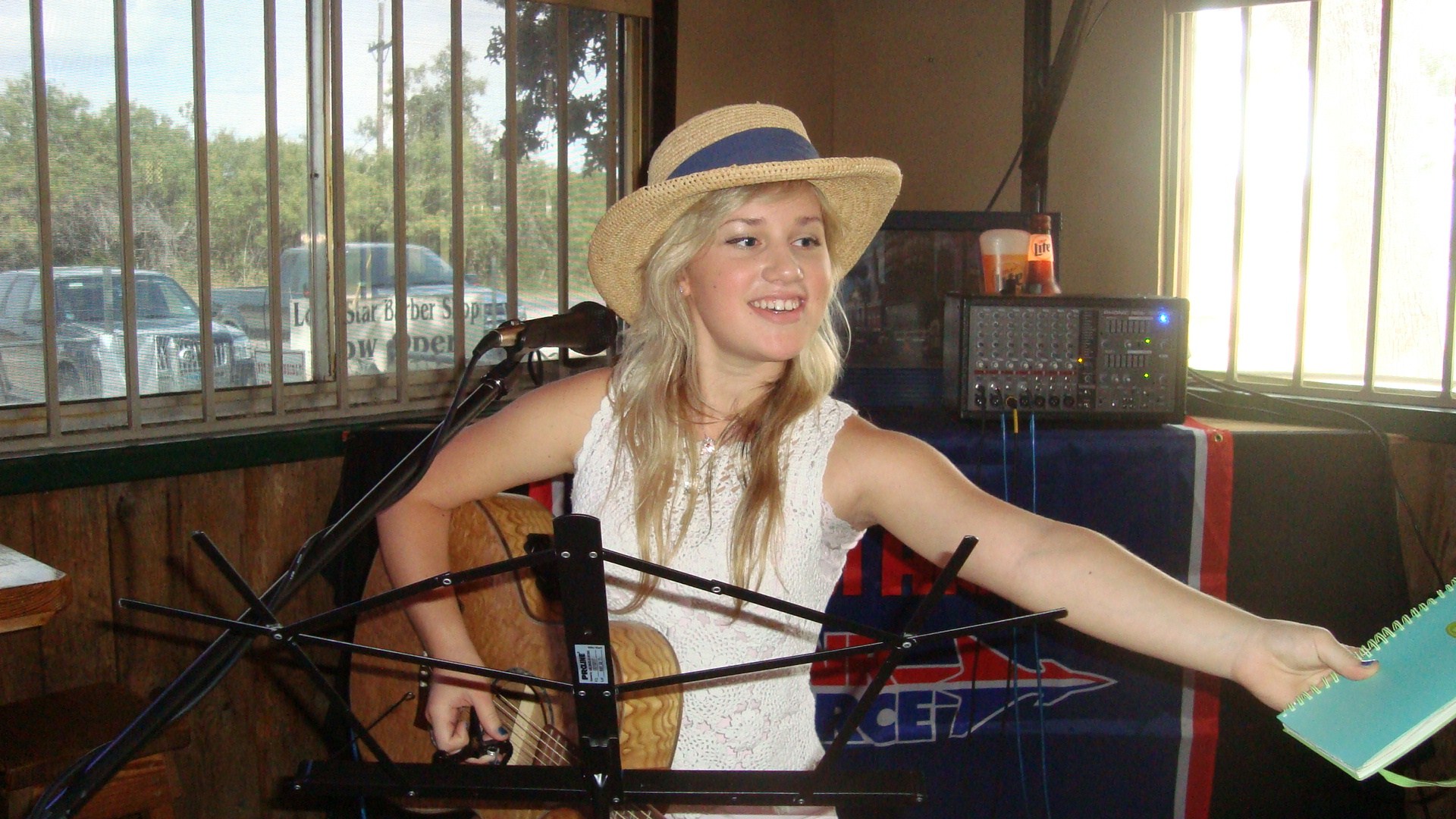
ImageVictoria Celestine picked up the guitar at age 13 with Bobby Flores, at his Bulverde Academy
of Music, and began writing songs the following summer (2010). Gordon Raphael, (producer –
Regina Spektor, the Strokes) caught her singing during the next Christmas holidays , and
invited her to record her first 7 songs acoustically.Image

The following April, she recorded her debut album at 14, “From the Outside”, with Jacob Sciba,
at Pedernales Studios, in Austin, TX. She received “Best Female Teen Artist of the Year”, from
Indie Music Channel at the House of Blues in Hollywood, and then received 2nd place (teen
category) from the International Songwriting Competition for the song “In The World”, as well
as Honorable Mention for the song “From the Outside” (performance category). April 2012,

ImageThis document was created using iPool music promotion software – http://iPool.info
Victoria co-wrote and recorded 3 singles with Jeff Blue (Linkin Park, Macy Gray) and Mike
Gonsolin in Hollywood (“The Story of Us”, “Mother”, and “It Only Gets Better”) which have been
released. Her first music video (of the song “In the World”), has been distributed by Pulse
Records to 8000 retailers, (including Sam’s Club, where it has recently been played).Image


The same song caught the attention of Video Star, who featured it on their popular app for iphone/ipad in
Jan.2013 which propped her #42 on USA iTunes Music chart. The song “Mother” as well has
been featured by VideoStar for mother’s day week. She received again the 2nd place Prize from
the ISC 2012 with the song Drift Away .

ImageHaving turned 17, Victoria has finished recording her latest album “Back home in San Antone” which is expected to be released in few weeks.

In the mean time Video Star is featuring one of her new song “Homework” on Thursday September
26th  which has just been released digitally.

Image

VICTORIA CELESTINE

PARTNERSHIP WINDOWS MEDIA GUIDE and RADIO SATELLITE


Comme prévu et convenu, le partenariat RADIO SATELLITE et  WINDOWS MEDIA GUIDE a repris sur 2014.

D’une part RADIO SATELLITE, après avoir testé et essayé divers players, il s’est avéré que le plus fiable est celui de WINDOWS: D’où l’installation du WINDOWS MEDIA PLAYER sur la page Facebook de Radio Satellite ( www.facebook.com/radiosatellite.live )

D’autres part, WMG a testé RADIO SATELLITE. Après écoute et analyses, Votre “radio Satellite “fut choisie comme LA radio Numéro 1 ,  actuellement,  sur le site de WMG.

Pour la suite, restez à l’écoute de Radio Satellite pour de nombreuses surprises.

Satellite Team

Image

RADIO SATELLITE ET WINDOWS MEDIA GUIDE SONT PARTENAIRES


Image

You can listen to Radio Satellite on WINDOWS MEDIA GUIDE.

Partenariat entre Windows media et Satellite Media

incluant Radio Satellite2  & Radio Satellite


Un accord et partenariat déjà conclu en 2013 est renouvellé cette année aussi entre RADIO SATELLITE et WINDOWS MEDIA GUIDE ( du groupe Windows / Microsoft ) EN 2014

Nous rappellons que vous pouvez écouter RADIO SATELLITE sur le site annuaire des guides radios

WINDOWS MEDIA GUIDE.

Radio Satellite fera la UNE en 2014 à plusieurs reprises.

Nous vous conseillons vivement d’écouter Radio Satellite sur le player de Windows qui retransmet une super bonne qualité de son.

UN CV QUI DIT DU MAL DE VOUS. ENVOYEZ LE


Envoyer un CV qui ne dit que du mal de vous. Meilleure méthode pour vous faire recruter?


Et elle a trouvé un emploi par cette méthode…Le travail c’est la santé dit on..

Merci de cliquer sur le lien ci-dessus pour ouvrir et lire

Tks to click on the link ( above )

Old commercials – Anciennes publicités


Pour les fans de publicités “oldies”: Enjoy


Old commercials / Anciennes publicités.


Cliquez svp sur le lien pour voir la vidéo

Click pls on the link to watch the commercial ( video)

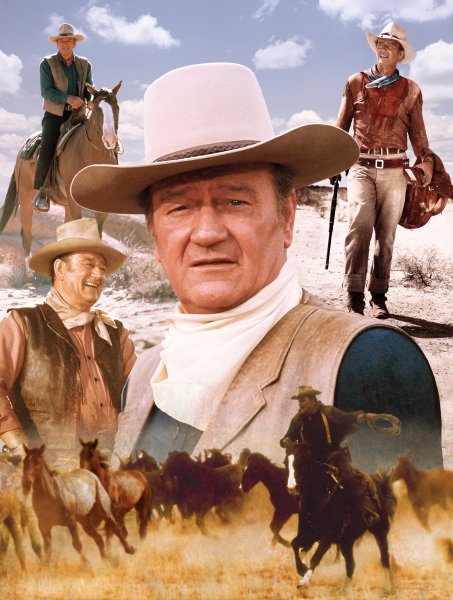
JOHN WAYNE La légende


John WAYNE: Considéré comme l’américain patriote, héroique, symbolisant à lui seul


JOHN WAYNE

john wayne

john wayne

Marion Mitchell Morrison, dit John Wayne, né le 26 mai 1907 à Winterset dans l’Iowa, aux États-Unis, et mort le 11 juin 1979 àLos Angeles, est un acteurréalisateur et producteur américain.

S’il a joué dans des films policiers, des films de guerre et quelques comédies romantiques, c’est dans ses nombreux westernsque John Wayne s’est réellement imposé, sous la direction de deux réalisateurs particulièrement : John Ford (La Chevauchée fantastiqueLe Massacre de Fort ApacheLa Charge héroïqueRio GrandeLa Prisonnière du désert ou encore L’Homme qui tua Liberty Valance) et Howard Hawks (La Rivière rougeRio BravoEl Dorado ou Rio Lobo). Il tourna également plusieurs films avec Henry Hathaway dont Cent dollars pour un shérif, qui lui valut en 1970 l’unique Oscar de sa carrière.

En 1960, il passa derrière la caméra pour réaliser une fresque historique d’envergure, Alamo, relatant les derniers jours de Davy Crockett et ses compagnons lors de la guerre d’indépendance du Texas. Huit ans plus tard, il coréalisa Les Bérets verts, film engagé justifiant l’intervention américaine au Viêt Nam. Ses deux réalisations reflètent l’engagement personnel de John Wayne, républicain et ardent patriote

Classé 13e plus grande star de légende par l’American Film Institute en 1999, John Wayne est certainement un des acteurs les plus représentatifs du western, une incarnation à lui seul de l’Amérique conquérante. Surnommé « The Duke » (le Duc), il reste toujours aujourd’hui, grâce à ses films, le symbole d’une certaine virilité. Il interpréta ce rôle d’homme viril, dur, solitaire et un peu machiste tout au long de sa carrière, ce qui lui fit déclarer : « J’ai joué John Wayne dans tous mes films et ça m’a plutôt pas mal réussi ».

Enfance et scolarité


Glendale aujourd’hui, où vécut John Wayne de 1916 à 1924.

Né dans une famille modeste et presbytérienne, son père est Clyde Leonard Morrison (1884–1937), d’ascendance irlandaise et écossaise et fils d’un vétéran de la Guerre de Sécession, Marion Mitchell Morrison (1845–1915). Sa mère est Mary Alberta Brown (1885–1970), d’origine irlandaise. En décembre 1912 naquit son frère Robert. Ses parents changèrent alors son identité en Marion Mitchell Morrison (toutefois il a souvent affirmé que son vrai nom aurait été Marion Michael Morrison).

John Wayne

John Wayne


Peu après son père eut des lésions aux poumons et fut contraint de « changer d’air » pour sa santé. Il mit en vente sa pharmacie et acheta une maison délabrée près du désert des Mojaves, à Palmdale, et des terres où il décida de faire pousser du maïs. Sa femme et ses enfants vinrent le rejoindre en 1914. « Je crois que c’était une misérable baraque. Ni gaz, ni électricité, ni eau courante. […] Nous étions absolument coupés du monde. » C’est pour aider son père qu’il apprit à se servir d’un fusil et à monter à cheval. « Je suis très à l’aise en selle, mais je ne suis pas amoureux des chevaux. Ils sont seulement utiles dans une ferme ou pour tourner un film. »

Lassée du climat rude et de la pauvreté de la famille, Mary Morrison poussa son mari à tout vendre. Ils partirent à Glendale, faubourg de Los Angeles, en 1916, où le père trouva un emploi dans une pharmacie5. Ils déménagèrent régulièrement, s’installant à chaque fois dans une maison plus petite. Marion devint vite un bon élève, lisant beaucoup à la bibliothèque municipale. À douze ans, il enchaîna, en parallèle des cours, des petits boulots  : livreur de journaux, livreur, ouvreur du cinéma Palace.

Son premier vrai souvenir d’un film est probablement Les Quatre Cavaliers de l’Apocalypse avec Rudolph Valentino6. Grâce à son job d’ouvreur, il pouvait accéder à un très grand nombre de films, dont des westerns avec Harry Carey ou des films d’aventures avec Douglas Fairbanks. Il se lia d’amitié avec Bob Steele, future star de westerns des années 1920. C’est aussi dès cette époque que Marion fut surnommé « Big Duke » en référence à son chien, « Little Duke », qu’il emmenait partout avec lui. Au collège, il appartenait aux clubs sportifs et culturels, et fit du théâtre, non comme acteur, mais comme accessoiriste. Ses rares performances d’acteur ne furent pas convaincantes, trop pétrifié qu’il était par le trac

Sportif et accessoiriste

En 1924, l’Université de Californie du Sud décida de recruter les meilleurs éléments des clubs alentours pour sa propre équipe de football, les Trojans, dont Marion Morrison. Pouvant faire ses études gratuitement grâce à une bourse sportive, il fut aussi initié à une fraternité, Sigma Chi8. Il rencontra peu après la vedette Tom Mix, qui assistait à tous les matchs de l’équipe. Appréciant la carrure du jeune homme, il lui offrit un rôle dans un film qu’il devait tourner quelques mois après.

Entre-temps, lors d’un weekend à Balboa, il fut victime d’un accident de bodysurf : il se déchira un muscle de l’épaule après une chute qui le fit entrer en contact avec le fond, tenta vainement quelque temps de continuer le football mais fut évincé de l’équipe, avec toutefois un diplôme de la Fédération de football. Il n’y joua plus jamais. L’été au studio, la star méprisa le jeune Morrison, qui fut toutefois engagé, mais comme accessoiriste.

 
La rencontre avec John Ford fut décisive pour la carrière de John Wayne, même si c’est Raoul Walshqui lui confia son premier grand rôle
 
.
 

Après une figuration sur le film The drop Kick, il fut appelé sur le tournage de Maman de mon cœur, dirigé par John Ford, réalisateur déjà respecté à Hollywood. Celui-ci décida un jour de provoquer gentiment le jeune footballeur Morrison en le faisant se mettre en position, puis en lui faisant mordre la poussière. La pareille que lui rendit aussitôt le jeune homme le fit grimper dans l’estime du réalisateur.

JOHN FORD

JOHN FORD

JOHN WAYNE

john wayne

Il l’embaucha d’ailleurs comme acteur sur son film suivant, La Maison du bourreau, dans un petit rôle de paysan condamné par un juge. John Ford le fit d’abord renvoyer à cause de son comportement (il fut pris d’un fou rire), puis le rappela et tourna la scène.

À partir de 1928, il décida de ne plus aller à l’université. N’ayant plus la bourse accordée grâce à l’équipe de football, il ne pouvait s’offrir les cours. Il retourna à la Fox et devint accessoiriste pendant trois années. « J’ai été menuisier, manœuvre, électricien, charpentier, peintre et tapissier. J’ai tout fait, je connais tous les problèmes du métier et les trucs pour les résoudre. » Il travailla alors de nouveau avec John Ford et d’autres réalisateurs, et fit un peu de figuration, notamment dans Words and musicRough Romance ou Cheer up and smile. Dans Salute, il se confronta pour une des premières fois à un autre étudiant-footballeur voulant participer au film de Ford, Wardell Bond. Dans Hommes sans femmes il fut engagé comme cascadeur, mais payé au tarif d’un accessoiriste
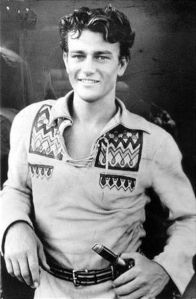
JW young

JW young

Le faux départ

Le cinéma parlant avait rendu difficile la réalisation de westerns. Le réalisateur Raoul Walsh prouva le contraire en coréalisant In Old Arizona qui fut un gros succès. La Fox voulut alors lui confier la réalisation d’un grand western, au budget d’un million de dollars. Des acteurs de théâtre furent engagés  : Tyrone Power et Ian Keith. Pour le rôle principal, le choix s’orienta vers Gary Cooper, mais celui-ci était indisponible car sous contrat avecSamuel Goldwyn. Walsh remarqua alors par hasard cet accessoiriste qui déchargeait un camion, Duke Morrison, puis décida de lui faire faire un bout d’essai. Le producteur délégué et le réalisateur décidèrent juste après de lui faire changer de nom. Par admiration pour le général Anthony Wayne, on lui trouva un nom. Et tout bêtement parce que « John » faisait Américain et simple, on lui donna ce prénom. Ainsi Duke Morrison devint John Wayne, sans même avoir été consulté.

Le tournage de La Piste des géants commença à Yuma. Wayne fut victime d’une dysenterie qui l’obligea à un régime et lui fit perdre trois semaines de tournage. Le film fut tourné en70 mm, près de vingt ans avant le CinemaScope. La première mondiale eut lieu le 24 octobre 1930 dans un grand cinéma de Hollywood et la société de production fit faire à sa nouvelle vedette une promotion mensongère, lui inventant une nouvelle biographie.

Le film fut un échec notoire et la conséquence pour John Wayne fut de redevenir un acteur inconnu, sous contrat, à 75 dollars la semaine. De plus, il se fâcha quelque temps avec John Ford

Les années 1930 : entre échecs et nouveau départ

Un acteur de séries B

Duke fut engagé en 1930 pour tourner Girls demand excitement, une comédie musicale dirigée par un chorégraphe de New York parfaitement inexpérimenté, avec Virginia Cherrill. Puis avec Loretta Young, ce fut Three girls lost. Présenté le 1er mai 1931, le film fut résumé par un critique par : « Tout cela est assez idiot ! » La Fox ne renouvela pas le contrat de John Wayne, qui fut embauché par Harry Cohn, grand patron de la Columbia, qui lui fit tourner un autre film sans intérêt, Men are like that. Ces films permirent toutefois à Wayne de se faire un public. Mais une brouille avec Cohn lui fit perdre son statut de vedette, et il devint un second rôle, au profit de Tim McCoy notamment. Il n’oublia jamais cette offense et, devenu une grande vedette, refusa toujours de tourner pour la Columbia.

La mode était aux films d’aviation. John Wayne, qui venait de prendre un agent, Al Kingston, tourna L’ombre d’un aigle. C’est sur ce tournage qu’il rencontra Yakima Canutt, qui allait devenir l’un des cascadeurs les plus connus du cinéma américain. Il enchaîna avec Hurricane express où il interprétait un aviateur décidé à venger son père, tué dans un accident de chemin de fer. Le 24 juin 1933, il se maria enfin à celle qu’il aimait depuis des années, Josie (Josephine Saenz).

cette dernière lui permit d’obtenir un petit rôle, celui d’un boxeur, dans La Vie de Jimmy Dolan avec Douglas Fairbanks. Al Kingston arrangea ensuite un entretien avec Trem Carr et Leo Ostrow qui venaient de fonder la sociétéMonogram Pictures et Duke se vit offrir un contrat de huit westerns par an, payés 2500 $. Il tourna la même année Les Cavaliers du destin où il fut un cow-boy chantant. Exaspéré par cette expérience humiliante, il déclara plus tard que sa chansonnette en play-back lui donnait l’impression « d’être une foutue pédale. » Pourtant cette époque laissa à Wayne de bons souvenirs, il déclara plus tard  : « D’avril à septembre on travaillait comme des dingues pour fournir de la pellicule aux petites salles qui achetaient la production en bloc et d’avance. Puis, à la fin de l’été, je filais chasser la palombe. Ensuite c’était la saison des oies sauvages et des canards. […] Oui c’était le bon temps

LORETTA YOUNG

LORETTA YOUNG

De nouvelles expériences navrantes

Marié et à présent père, John Wayne refusa un nouveau contrat de 24 000 $ proposé par Herbert J. Yates pour Monogram Pictures, las de vivre loin de sa famille et de ses enfants. Il s’essaya sans succès à la gestion d’une agence immobilière. Puis, sous le nom de Duke Morrison, devint boxeur et fit quelques combats dans le Nevada19. Encore une fois, sans grand succès. Résolu à revenir au cinéma, il tenta de se faire remarquer par Cecil B. DeMille,
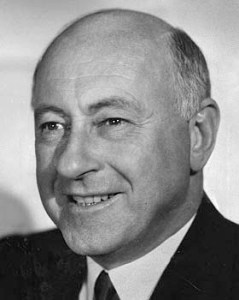
cecil_b_de_mille

cecil_b_de_mille

en vain. Son ami Paul Fix lui proposa alors une pièce de théâtre, Red Sky At Evening, avecSally Blane. D’abord enthousiasmé, il déchanta assez vite, se rappelant ses expériences navrantes de jeunesse. La seule et unique représentation fut un désastre  : ayant vidé une bouteille de whisky pour se donner du courage, Wayne entra sur scène ivre, oubliant ses répliques et demandant : « Où suis-je? »

Il reprit alors le chemin des studios et tourna pour Universal quelques films où il abandonnait son personnage de cow-boy. Entre 1936 et 1937, il tourna ainsi Les Pirates de la merConflic où il joua un boxeur, I Cover de war dans le rôle d’un reporter, et L’idole de la foule. Produits à coûts réduits, ces films furent des échecs cuisants. Son public fidèle ne voulait de John Wayne qu’il ne fût qu’un cow-boy, sachant se battre et manier son pistolet. Il revint alors vers Herbert J. Yates et tourna d’autres films médiocres, dont certains ne sortirent qu’une fois John Wayne devenu une star.

« Sauvé » par John Ford

À l’été 1937, John Ford invita Wayne à bord de son bateau, l’Araner, et lui donna à lire un scénario de Dudley NicholsLa Chevauchée fantastique, pour avoir son avis quant à l’acteur qui pourrait endosser le premier rôle. Vexé, il proposa néanmoins Lloyd Nolan. Ce n’est que le lendemain que Ford lui demanda : « Idiot, tu penses que tu ne pourrais pas le jouer le rôle ? » Mais les producteurs envisageaient plutôt des vedettes confirmées  : Gary Cooper et Marlène Dietrich.

Le réalisateur réussit finalement à imposer Wayne et Claire Trevor, ainsi que d’autres acteurs expérimentés, tels que Thomas Mitchell ou George Bancroft.

Le film fut tourné d’octobre à décembre 1938, avec un budget modeste. Quelques scènes furent filmées à Monument Valley, le reste en CalifornieYakima Canutt doubla John Wayne, notamment lors de la grande attaque de la diligence. Ce dernier fut tout au long du tournage tyrannisé par le réalisateur, Ford le reprenant sans cesse sur sa façon de marcher, de jouer, de parler. « Je l’aurais tué. Il me mettait en rage. Mais Ford savait ce qu’il faisait. Il savait que j’avais honte d’être un cow-boy de westerns de séries B et de me retrouver là, en compagnie de ces grandes vedettes. » Ford offrit à son acteur vedette l’une des « plus belles entrées de star de l’histoire du cinéma », avec son fameux mouvement de caméra laissant apparaître Ringo Kid, une selle dans une main, un fusil dans l’autre.
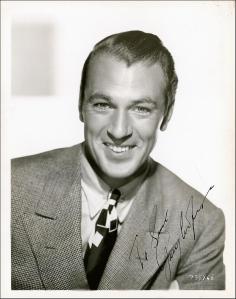
GARY COOPER

GARY COOPER

La Chevauchée fantastique fut un succès public et reçut sept nominations aux Oscar du cinéma. Les conséquences furent nombreuses  : le western comme genre de cinéma fut réhabilité (le critique Frank S. Nugent écrivit  : « Dans un grand geste superbe, John Ford a balayé dix ans d’artifice et de compromis et a réalisé un film qui fait chanter la caméra ») et John Wayne sortit enfin de l’impasse dans laquelle il se trouvait depuis le début des années 1930.

1940-1951 : L’affirmation d’un héros de cinéma américain

Des retrouvailles professionnelles

 John Wayne dans Les Naufrageurs des mers du sud, de Cecil B. DeMille, en 1942.

Le succès international de La Chevauchée fantastique fit de John Wayne une star, auprès du public et des réalisateurs. Son salaire fut multiplié par trois, puis par onze en 1946, et il devint alors un des acteurs les plus chers avec Gary Cooper ou Clark Gable. Il retrouva le réalisateur Raoul Walsh en 1940 pour un western sur fond de guerre civile, L’Escadron noir, avec Claire Trevor. La même année, il fut engagé pour incarner un Américain accueillant des réfugiés allemands fuyant le régime nazi dans Les Déracinés, et retrouva John Ford pour Les Hommes de la mer. Tourné rapidement et pour un coût relativement modeste, le film ne fut pas un succès public. De plus, Wayne n’était toujours pas pris au sérieux par le réalisateur qui ne le pensait pas capable de jouer des rôles plus complexes. Il tourna un dernier film cette année 1940, La Maison des sept péchés, première collaboration avec Marlène Dietrich, avec qui il s’entendit à merveille33.

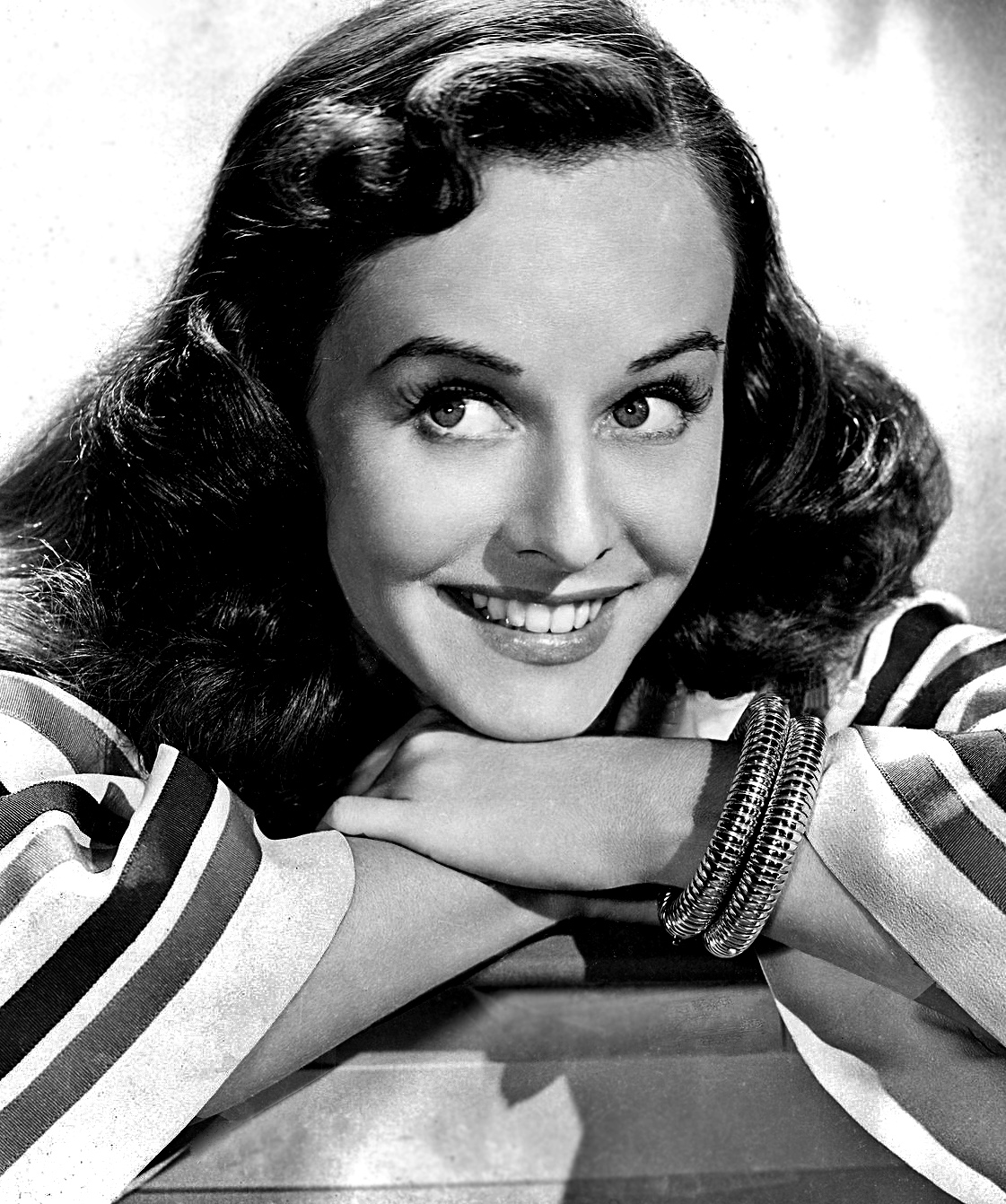
PAULETTE GODARD


Il fut contacté par le réalisateur Cecil B. DeMille. Wayne, qui n’avait pas oublié sa première rencontre infructueuse avec lui, refusa de jouer dans son film, en lui adressant une longue notice visant à modifier le scénario. DeMille le rappela, John Wayne se fit prier et, après plusieurs discussions, DeMille obtint que John Wayne tournât dans Les Naufrageurs des mers du sud, en compagnie de Ray Milland et Paulette Goddard,
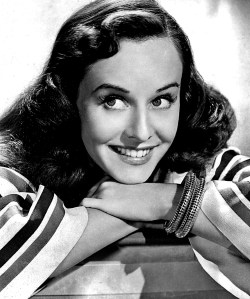
PAULETTE GODARD

PAULETTE GODARD

l’histoire d’un pilleur d’épaves dans les Caraïbes. Le tournage fut agréable, l’entente parfaite, ce qui fit déclarer à Wayne  : « Après avoir tourné avec lui, j’ai pu garder la tête haute, en dépit des films dégueulasses que je devais faire pour Republic. » L’année 1942 vit également Lady for a Night, de Leigh Jason avec Joan Blondell pour partenaire.

Après l’entrée en guerre des États-Unis, John Wayne voulut s’engager pour partir combattre en Europe. Mais, marié et père de quatre enfants, sa demande fut rejetée à plusieurs reprises. Sa participation se réduisit alors à des visites dans des camps. Il déclara plus tard  : « J’ai toujours eu honte de ne pas avoir combattu. Lorsque j’interprète un officier à la tête de son commando, j’ai une piètre opinion de moi-même. »

Patriote et soldat au cinéma

JULES DASSIN (qui est aussi le père de Joe Dassin )

Il retrouva Marlène Dietrich en 1942 dans une nouvelle adaptation du roman de Rex BeachLes Écumeurs, avec un jeune premier, Randolph Scott, puis dans La Fièvre de l’or noir, qui connut un accueil chaleureux de la part du public. Wayne incarna également un pilote de l’armée américaine combattant les Japonais dans Les Tigres volants, film de propagande réalisé par David MillerSacramento, un nouveau western, fut choisi par John Wayne car il devait incarner un pharmacien, une manière de rendre hommage à son père décédé en 1938.

Les années suivantes, John Wayne tourna une série de films de guerre  : Quelque part en France de Jules Dassin

JULES DASSIN (qui est aussi le père de Joe Dassin )

JULES DASSIN (qui est aussi le père de Joe Dassin )

où il incarna un pilote réfugié en Normandie, puis Alerte aux marines. Aux côtés d’ Anthony Quinn, il incarna un colonel américain luttant avec les résistants philippins dans Retour aux Philippines. Républicain et patriote, Wayne critiqua par la suite le travail du réalisateur Edward Dmytryk, qui fut lié au parti communiste et figura sur la liste des Dix d’Hollywood, ainsi que le scénario. Il retrouva ensuite John Ford pour Les Sacrifiés – qui se déroule pendant la guerre du Pacifique – aux côtés d’un jeune acteur, Robert Montgomery. Le film rapporta de l’argent et se classa parmi les vingt plus gros succès de l’année.

Entre temps, John Wayne revint au western dans L’Amazone aux yeux verts, revenant sur sa déclaration de ne plus jamais en tourner. Scénarisé et interprété par son ami Paul Fix, le film imposa durablement l’image virile, nonchalante et misogyne de son personnage.

En revanche, King Vidor ne peut le diriger avec Hedy Lamarr dans Duel au soleil (1946), western lyrique et exacerbé finalement interprété par Gregory Peck et Jennifer Jones et devenu un classique. Il enchaîna par la suite quelques films passés inaperçus, La Femme du pionnierSans réserve avec Claudette Colbert et L’Ange et le mauvais garçon. Pour faire « rentrer l’argent », il tourna également Taïkoun, de nouveau avec Anthony Quinn. En 1948, John Wayne, devenu une vedette importante, faisait partie des acteurs préférés du public américain, avec Clark GableGary Cooper et Humphrey Bogart.

Hawks, la Cavalerie et le Pacifique

En 1947, John Ford tourna le premier volet d’une trilogie consacrée à la cavalerie américaine, Le Massacre de Fort Apache avec pour vedettesHenry Fonda et John Wayne dans un rôle d’officier « humain et pacifiste ». Tourné à Monument Valley pour un budget modeste, le film réunit également Ward Bond et Victor McLaglen. John Wayne, habitué aux humeurs du réalisateur, fut un soutien psychologique précieux pour le jeune John Agar, martyrisé par Ford48. L’accueil public fut chaleureux. Il enchaina avec un rôle de nouveau refusé par Gary Cooper, celui de Tom Dunson dans La Rivière rouge de Howard Hawks qui signait là son premier western. Dans un rôle de cow-boy dur et brutal, Wayne eut pour partenaire Montgomery Clift avec qui il ne s’entendit pas immédiatement. Ce film tourné en extérieurs fut également un grand succès, rapportant plus de dix millions de dollars. Et s’il ne fut pas récompensé, John Wayne impressionna John Ford qui déclara par la suite àHawks : « Je ne savais pas que ce grand fils de pute pouvait jouer ».

OLIVER HARDY


En 1948, il engagea à nouveau John Wayne pour Le fils du désert, film en technicolor avec Harry Carey Jr., tourné dans la vallée de la Mort. Wayne tourna ensuite deux films, Le Réveil de la sorcière rouge avec Gail Russell et Le Bagarreur du Kentucky avec Oliver Hardy,

Oliver Hardy

Oliver Hardy

western sans moyens. Deuxième épisode de la trilogie de la cavalerie de FordLa Charge héroïque fut tourné en 1949 à Monument Valley et remporta un grand succès. L’année suivante, Rio Grande, suite du Massacre de Fort Apache, le mit en scène aux côtés de Maureen O’Haraqui devint une partenaire fidèle en même temps qu’une grande amie.

John Wayne enfila de nouveau l’uniforme de l’armée américaine dans trois films : Iwo Jima de Allan Dwan, pour lequel il fut nommé aux Oscars56Opération dans le Pacifique puis Les Diables de Guadalcanal de Nicholas Ray (qui désavoua le film par la suite, au même titre que Wayne qui le considérait comme une œuvre mineure), clôturant ainsi sa série de films en hommage aux combattants de la guerre du Pacifique.

1952-1959 : Une incarnation de l’Amérique à l’écran, un héros aux multiples visages

En 1952, John Wayne tourna à nouveau avec Maureen O’Hara et John Ford. Si Ford ne peut engager le couple d’acteurs pour son adaptation de What Price Glory (qu’ils ont joué sous sa direction sur scène), ils se consolent largement avec L’Homme tranquille, tourné en Irlande (terre des ancêtres du réalisateur), pour un cachet dérisoire. Le film, qui racontait le retour d’un boxeur américain dans son pays d’origine, fut un gros succès commercial dans le monde entier et remporta l’Oscar du Meilleur Film. Big Jim McLain, réalisé la même année parEdward Ludwig le mettait dans la peau d’un enquêteur de la Commission sur les activités anti-américaines au service du sénateur McCarthyL’Homme de bonne volonté, réalisé en 1953 par Michael Curtiz ne remporta pas le succès espéré et orienta de nouveau John Wayne vers des films héroïques. Sous la direction de William Wellman, il tourna Aventure dans le Grand Nord, qu’il coproduisit, et refusa un rôle principal dans Géant (qui fut interprété par Rock Hudson). Également coproducteur de Hondo, l’homme du désert, il fut obligé de reprendre le rôle titre, la star du film Glenn Ford étant en désaccord avec le réalisateur, puis retrouva l’équipe de Aventure dans le Grand Nord pour un nouveau film catastrophe, Écrit dans le ciel. Le film fut un grand succès public, nommé aux Oscars (seule la musique de Dimitri Tiomkin reçut la récompense). Sa collaboration avec Lana Turner pour Le Renard des océans fut houleuse, mais il s’entendit à merveille avec Lauren Bacall sur le tournage de L’Allée sanglante, qui fut un succès immédiat.

 La Prisonnière du désert a été désigné plus grand western de tous les temps par l’American Film Institute.

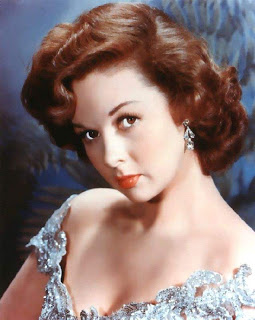
Le tournage du Conquérant en 1956 fut éprouvant65. Produit par Howard Hughes et réalisé par Dick Powell, il mettait en scène John Wayne dans le rôle … du chef asiatique Gengis Khan, avec Susan Hayward pour partenaire.


Tourné près d’un site d’essais nucléaires, il fut probablement à l’origine du cancer de l’acteur (et d’une grande partie de l’équipe du film). En outre, il fut un lourd échec au box-office. La même année, Wayne tourna un nouveau western sous la direction de John FordLa Prisonnière du désert. Tourné sur deux saisons (l’hiver et l’été), à Monument Valley notamment, le film permit à John Wayne de créer un personnage sombre et violent. Le film fut un énorme succès à sa sortie et plusieurs critiques louèrent le travail du réalisateur. En outre, il est aujourd’hui considéré par l’American Film Institute comme le plus grand western de tous les temps.


En 1957, de nouveau avec Ford, il tourna L’aigle vole au soleil, un film de guerre adapté de la biographie du héros Frank Wead, avant d’enchainer avec un film d’espionnage, Les espions s’amusent. Mise en scène par Joseph von Sternberg, avec l’actrice Janet Leigh, cette comédie d’espionnage était considérée par John Wayne comme son plus mauvais film. L’année suivante, il forma un couple à l’écran avec Sophia Loren dans La Cité disparue, tourné en partie en Italie par Henry Hathaway, puis entama le tournage du Barbare et la Geisha, sous la direction de John Huston. Les relations furent souvent tendues entre les deux hommes, et le film fut un échec. Wayne fut engagé de nouveau par Howard Hawks pour jouer dans Rio Bravo, aux côtés de Dean Martin et Rick Nelson. Construit comme l’opposition scénaristique du Train sifflera trois fois, le film fut un gros succès populaire et critique. Son nouveau projet avec John Ford et William HoldenLes Cavaliers, fut difficile : le scénario était complexe, le réalisateur vieillissait, des tensions intervinrent entre les sociétés de production et un cascadeur se tua sur le tournage.

susan hayward

susan hayward

1960-1976 : La fin du géant

John Wayne réalise en 1960 Alamo, qui fut une très belle fresque historique. Néanmoins le scénariste de ce film se permit quelques libertés par rapport aux causes et au déroulement de la bataille. En réalisant ce film, John Wayne souhaitait montrer l’abnégation des hommes à défendre une cause qui leur semble juste, telle la république ou la liberté. L’acteur reste fidèle à ce genre et retrouve à plusieurs reprises Henry Hathaway (1960 : Le Grand Sam avec Stewart Granger, 1965 : Les Quatre Fils de Katie Elder avec Dean Martin, 1969 : Cent dollars pour un shérif), Howard Hawks (1966 : El Dorado avec Robert Mitchum, 1970 : Rio Lobo avec Jennifer O’Neill), et bien sûr Ford pour L’Homme qui tua Liberty Valance (1962) face àJames Stewart, plus tard tournant beaucoup avec Andrew V. McLaglen (1963 : Le Grand McLintock qui réunit Wayne avec Maureen O’Hara et Yvonne De Carlo, 1969 : Les Géants de l’Ouest face à Rock Hudson, 1970 : Chisum, 1973 : Les Cordes de la potence).


La star continue de privilégier le film d’aventure  : exotique (en 1962 Hatari ! de Hawks), de guerre (en 1962 Le Jour le plus long, en 1965 Première Victoire d’Otto Preminger avec Kirk Douglas, en 1966 L’Ombre d’un géant avec Yul Brynner et Frank Sinatra). Il participe aux superproductions Le Plus Grand Cirque du monde d’Hathaway (1964) avec Rita Hayworth
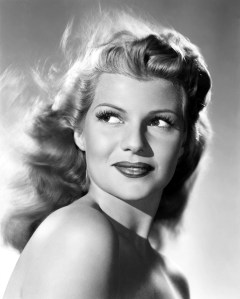
Rita Hayworth

Rita Hayworth

etClaudia Cardinale et La Plus Grande Histoire jamais contée de George Stevens (1965) où il incarne le centurion de la Crucifixion. Finalement il ne se détend vraiment à l’écran que chez Ford, dans La Taverne de l’Irlandais (1963).

Lui-même revient à la mise en scène en 1968 pour le très polémique Les Bérets verts. L’essentiel est ailleurs : miné par la maladie mais toujours très actif, ce grand séducteur de l’écran s’offre un dernier tour avec sa partenaire favorite, Maureen O’Hara, dans Big Jake en 1971 (que Wayne coréalise), et un duel avec une autre géante, Katharine Hepburn, dans le western humoristique Une bible et un fusil (1975). Sur le tard, il tourne deux policiers : Un silencieux au bout du canon de John Sturges (1974) et Brannigan (1975). L’année de sa mort, sa carrière se clôt sur un western au titre mythique : Le Dernier des géants, dirigé par Don Siegel, où John retrouve James Stewart et Lauren Bacall. Une époque disparaît.

En 1964, on diagnostique chez Wayne un cancer du poumon. Des rumeurs affirment que le responsable de ce cancer était le site nucléaire de Yucca Flat, proche du plateau de cinéma lors du tournage du film Le Conquérant. Patriote, John Wayne pensait que les six paquets de cigarettes qu’il fumait par jour en étaient la cause.

 John Wayne dans Rio Bravo

Toujours présent à l’écran dans des premiers rôles malgré la maladie jusqu’en 1976, il décède finalement d’un cancer de l’estomac le 11 juin 1979. D’après son fils Patrick, il se convertit au catholicisme peu avant sa mort . Il est enterré au cimetière de Pacific View à Corona del Mar.

Engagement politique

John Wayne était connu pour ses opinions patriotiques, anti-communistes et conservatrices. Star du parti républicain, il s’impliqua dans la création de la Motion Picture Alliance for the Preservation of American Ideals, une association américaine de cinéma conservatrice. S’il n’a pas été incorporé pendant la Seconde Guerre mondiale pour des raisons familiales, il a toujours soutenu l’effort de guerre américain  : il incarnera toutes les catégories de soldats américains et cosigne, en 1968, avec Les Bérets verts le seul film américain ouvertement pro-guerre du Vietnam.

En 1964, il soutient encore la candidature de Barry Goldwater à la présidence des États-Unis et, en 1968, est approché pour être lui-même le candidat du parti républicain. Il déclina la proposition au prétexte qu’il ne pensait pas que le public pourrait envoyer un acteur à la Maison-Blanche. Il fut même approché pour être le colistier du candidat dixiecrat George Wallace. Il ne donna pas suite. John Wayne fut cependant un ardent soutien de son ami, l’acteur Ronald Reagan, lors de ses candidatures au poste de gouverneur de Californie en 1966 et 1970.

Famille

Il est le père de Michael Wayne (19342003), acteur et producteur, et de Patrick Wayne (né en 1939), acteur.

Décoration

Le Congrès américain lui décerne le 26 mai 1979 la Médaille d’or du Congrès (plus haute distinction civile qui puisse être accordée à un citoyen). Événement exceptionnel car cette décoration ne fut décernée que deux fois à des acteurs du cinéma, John Wayne et Francis Albert Sinatra, dit Frank Sinatra, le 14 mai 1997.
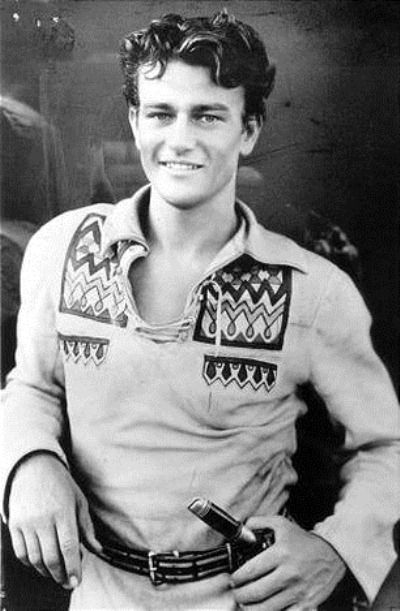
John Wayne the legend

John Wayne the legend


Vous pouvez lire aussi   / You can real also :  Angie Dickinson (Rio Bravo)

CARY GRANT : On PARAMOUNT CHANNEL


PARAMOUNT CHANNEL : CARY GRANT

Image


Wikipedia sources: 

Cary Grant (born Archibald Alexander Leach; January 18, 1904 – November 29, 1986) was an English stage and Hollywood film actor who became an American citizen in 1942. Known for his transatlantic accent, debonair demeanor and “dashing good looks”, Grant is considered one of classic Hollywood‘s definitive leading men.

Image

Notorious (1946), The Bishop’s Wife (1947), To Catch a Thief (1955), An Affair to Remember (1957), North by Northwest (1959), and Charade (1963).

Nominated twice for the Academy Award for Best Actor (Penny Serenade and None But the Lonely Heart) and five times for a Golden Globe Award for Best Actor, Grant was continually passed over. In 1970, he was presented an Honorary Oscar at the 42nd Academy Awards by Frank Sinatra “for his unique mastery of the art of screen acting with the respect and affection of his colleagues

Early life and career

Archibald Alexander Leach was born at 15 Hughenden Road, HorfieldBristolEngland, to Elsie Maria (née Kingdon) Leach (1877–1973) and Elias James Leach (1873–1935). An only child, Leach had an unhappy upbringing, attending Bishop Road Primary School.

Image

CARY GRANT WITH AUDREY HEPBURN

His mother had suffered from clinical depression since the death of a previous child. Her husband placed her in a mental institution and told his 9-year-old son only that she had gone away on a “long holiday”. Believing she was dead, Leach did not learn otherwise until he was 31 and discovered her alive in a care facility.  When Leach was 10, his father abandoned him after remarrying and having a baby with his new young wife. 

Leach was expelled from the Fairfield Grammar School in Bristol in 1918. After joining the “Bob Pender Stage Troupe”, Leach performed as a stilt walker and traveled with the group to the United States in 1920 at the age of 16 on the RMS Olympic, on a two-year tour of the country. He was processed at Ellis Island on July 28, 1920.

When the troupe returned to the UK, he decided to stay in the U.S. and continue his stage career. During this time, he became a part of thevaudeville world and toured with Parker, Rand, and Leach.

Image

Still using his birth name, he performed on the stage at The Muny in St. Louis,Missouri, in such shows as Irene (1931), Music in May (1931), Nina Rosa (1931), Rio Rita (1931), Street Singer (1931), The Three Musketeers (1931), and Wonderful Night (1931). Leach’s experience on stage as a stilt walker, acrobat, juggler, and mime taught him “phenomenal physical grace and exquisite comic timing” and the value of teamwork, skills which would benefit him in Hollywood.

Leach became a naturalized United States citizen on June 26, 1942, at which time he also legally changed his name from “Archibald Alexander Leach” to “Cary Grant”.

After appearing in several musicals on Broadway under the name Archie Leach, Leach went to Hollywood in 1931.  When told to change his name, he proposed “Cary Lockwood”, the name of the character he had played in the Broadway show Nikki, based upon the recent film The Last Flight.

Image

He signed with Paramount Pictures, where studio bosses decided that the name “Cary” was acceptable but that “Lockwood” was too similar to another actor’s surname. Paramount gave their new actor a list of surnames to choose from, and he selected “Grant” because the initials C and G had already proved lucky for Clark Gable and Gary Cooper, two of Hollywood’s biggest film stars.

Grant appeared as a leading man opposite Marlene Dietrich in Blonde Venus (1932), and his stardom was given a further boost by Mae Westwhen she chose him for her leading man in two of her most successful films, She Done Him Wrong and I’m No Angel (both 1933).  

I’m No Angel was a tremendous financial success and, along with She Done Him Wrong, which was nominated for an Academy Award for Best Picture, saved Paramount from bankruptcy. Paramount put Grant in a series of unsuccessful films until 1936, when he signed with Columbia Pictures. His first major comedy hit was when he was loaned to Hal Roach‘s studio for the 1937 Topper (which was distributed by MGM).

The Awful Truth (1937) was a pivotal film in Grant’s career, establishing for him a screen persona as a sophisticated light comedy leading man. As Grant later wrote, “I pretended to be somebody I wanted to be and I finally became that person. Or he became me. Or we met at some point.”  Grant is said to have based his characterization in The Awful Truth on the mannerisms and intonations of the film’s director, Leo McCarey, whom he resembled physically. As writer/director Peter Bogdanovich noted, “After The Awful Truth, when it came to light comedy, there was Cary Grant and then everyone else was an also-ran.”

Image

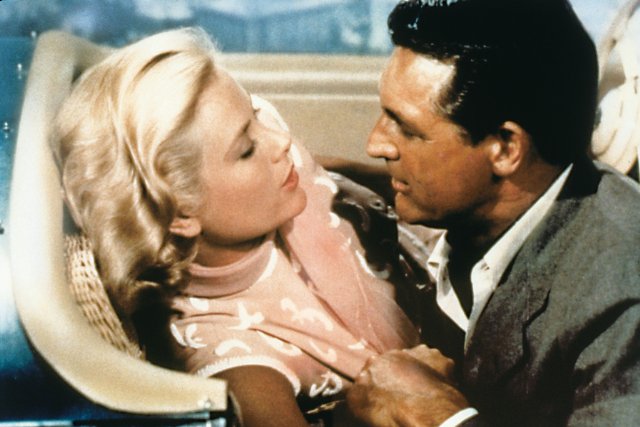
CARY GRANT and GRACE KELLY

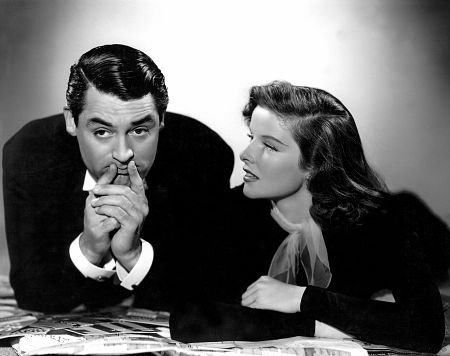
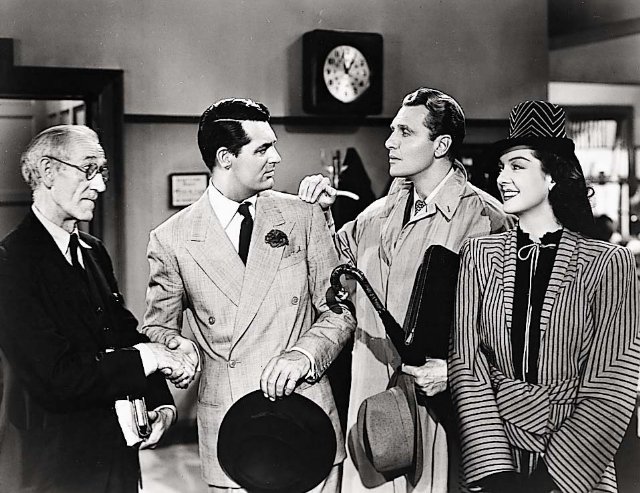
The Awful Truth began what The Atlantic later called “the most spectacular run ever for an actor in American pictures”.   During the next four years, Grant appeared in several classic romantic comedies and screwball comedies, including Holiday (1938) and Bringing Up Baby (1938), both opposite Katharine HepburnThe Philadelphia Story (1940) with Hepburn and James StewartHis Girl Friday (1940) with Rosalind Russell; and My Favorite Wife (1940), which reunited him with Irene Dunne, his co-star in The Awful Truth. During this time, he also made the adventure films Gunga Din (1939) with Douglas Fairbanks, Jr. and Only Angels Have Wings (1939) with Jean Arthur and Rita Hayworth and dramas Penny Serenade (1941), also with Dunne, and Suspicion (1941), the first of Grant’s four collaborations with Alfred Hitchcock.

Grant remained one of Hollywood’s top box-office attractions for almost 30 years.  Howard Hawks said that Grant was “so far the best that there isn’t anybody to be compared to him”.[15] David Thomson called him “the best and most important actor in the history of the cinema“.

Grant was a favorite of Hitchcock, who called him “the only actor I ever loved in my whole life”.  

Image

Besides Suspicion, Grant appeared in the Hitchcock classics Notorious (1946), To Catch a Thief(1955), and North by Northwest (1959). Biographer Patrick McGilligan wrote that in 1965 Hitchcock asked Grant to star in Torn Curtain (1966) only to learn that Grant had decided to retire after making one more film, Walk, Don’t Run (1966); 

Paul Newman was cast instead, oppositeJulie Andrews.   Producers Broccoli and Saltzman originally sought Cary Grant for the role of James Bond in Dr. No but discarded the idea as Grant would be committed to only one feature film and the producers decided to go after someone who could be part of a franchise.

In the mid-1950s, Grant formed his own production company, Granart Productions, and produced a number of films distributed by Universal, such as Operation Petticoat (1959), Indiscreet (1958),That Touch of Mink (co-starring with Doris Day, 1962), and Father Goose (1964). In 1963, he appeared opposite Audrey Hepburn in Charade. His last feature film was Walk, Don’t Run three years later, with Samantha Eggar and Jim Hutton.

Grant was the first actor to “go independent” by not renewing his studio contract, effectively leaving the studio system,  which almost completely controlled what an actor could or could not do. In this way, Grant was able to control every aspect of his career, at the risk of not working because no particular studio had an interest in his career long term.

He decided which films he was going to appear in, often had personal choice of directors and co-stars, and at times even negotiated a share of the gross revenue, something uncommon at the time. Grant received more than $700,000 for his 10% of the gross for To Catch a Thief while Hitchcock received less than $50,000 for directing and producing it.

Image

Grant was nominated for two Academy Awards, for Penny Serenade (1941) and None But the Lonely Heart (1944), but never won a competitive Oscar; he received a special Academy Award for Lifetime Achievement in 1970. Accepting the Best Original Screenplay Oscar in 1965, Father Goose co-writer Peter Stone had quipped, “My thanks to Cary Grant, who keeps winning these things for other people.” In 1981, Grant was accorded the Kennedy Center Honors.

Grant poked fun at himself with statements such as “Everyone wants to be Cary Grant—even I want to be Cary Grant”, and in ad-lib lines—such as in the film His Girl Friday, saying, “I never had so much fun since Archie Leach died”. In Arsenic and Old Lace (1944), a gravestone is seen bearing the name Archie Leach. According to a famous story now believed to be apocryphal, after seeing a telegram from a magazine editor to his agent asking “How old Cary Grant?” Grant reportedly responded with “Old Cary Grant fine. How you?

Cary Grant retired from the screen at 62 when his daughter Jennifer was born, in order to focus on bringing her up and to provide a sense of permanency and stability in her life.

While bringing up his daughter, he archived artifacts of her childhood and adolescence in a bank-quality room-sized vault he had installed in the house.

His daughter attributed this meticulous collection to the fact that artifacts of his own childhood had been destroyed during the Luftwaffe’s bombing of Bristol in the Second World War (an event that also claimed the lives of his uncle, aunt, and cousin as well as the cousin’s husband and grandson), and he may have wanted to prevent her from experiencing a similar loss.

Although Grant had retired from the screen, he remained active.

CARY GRANT - MARTIN LANDAU

CARY GRANT – MARTIN LANDAU

In the late 1960s, he accepted a position on the board of directors at Fabergé. By all accounts this position was not honorary, as some had assumed; Grant regularly attended meetings and his mere appearance at a product launch would almost certainly guarantee its success. The position also permitted use of a private plane, which Grant could use to fly to see his daughter wherever her mother, Dyan Cannon, was working.

Image

He later joined the boards of Hollywood Park, the Academy of Magical Arts (The Magic Castle, Hollywood, California), Western Airlines (now Delta Air Lines), andMGM.

He was a keen motoring enthusiast and, like many other Hollywood stars of the era, owned many notable cars. One of the first he owned was a 1929 Cadillac Cabriolet. His love of Cadillacs never waned and he later purchased a Cadillac Eldorado Biarritz. Other cars that he owned included an MG Magnette and a Sunbeam Alpine series one roadster.

In the last few years of his life, Grant undertook tours of the United States in a one-man show, A Conversation with Cary Grant, in which he would show clips from his films and answer audience questions. Grant was preparing for a performance at the Adler Theatre in DavenportIowa, on the afternoon of November 29, 1986, when he sustained a cerebral hemorrhage (he had previously suffered a stroke in October 1984). His wife did not know what was going on and she went to a local pharmacy to get aspirin. He died at 11:22 p.m.  in St. Luke’s Hospital at the age of 82.

The bulk of his estate, worth millions of dollars, went to his fifth wife, Barbara Harris, and his daughter, Jennifer Grant

In 2001, a statue of Grant was erected in Millennium Square, a regenerated area next to Bristol Harbour in his city of birth, Bristol.

In November 2005, Grant came in first in the “The 50 Greatest Movie Stars of All Time” list by Premiere magazine.  Richard Schickel, the film critic, said about Grant: “He’s the best star actor there ever was in the movies.

Image

CARY GRANT – ROGER MOORE

Filmography[edit]

Year Film Role Notes
1932 This Is the Night Stephen With Lili DamitaCharles Ruggles, and Thelma Todd
Sinners in the Sun Ridgeway With Carole Lombard and Chester Morris
Singapore Sue First Sailor Musical Comedy short subject
Merrily We Go to Hell Charlie Baxter UK title: Merrily We Go to _____With Sylvia Sidney and Fredric March
Devil and the Deep Lieutenant Jaeckel With Tallulah Bankhead and Gary Cooper
Blonde Venus Nick Townsend With Marlene Dietrich
Hot Saturday Romer Sheffield With Nancy Carroll and Edward Woods
Madame Butterfly Lieutenant B.F. Pinkerton With Sylvia Sidney and Charles Ruggles
1933 She Done Him Wrong Capt. Cummings With Mae West and Noah Beery, Sr.
The Woman Accused Jeffrey Baxter With Nancy Carroll
The Eagle and the Hawk Henry Crocker With Fredric March and Carole Lombard
Gambling Ship Ace Corbin With Jack La Rue and Glenda Farrell
I’m No Angel Jack Clayton With Mae West
Alice in Wonderland The Mock Turtle With W. C. Fields and Gary Cooper
1934 Thirty-Day Princess Porter Madison III With Sylvia Sidney and Edward Arnold
Born to Be Bad Malcolm Trevor With Loretta Young(Heavily censored by the Hayes Office)
Kiss and Make-Up Dr. Maurice Lamar With Helen Mack and the WAMPAS Baby Stars of 1934
Ladies Should Listen Julian De Lussac With Frances Drake and Edward Everett Horton
1935 Enter Madame Gerald Fitzgerald With top-billed Elissa Landi
Wings in the Dark Ken Gordon With top-billed Myrna Loy
The Last Outpost Michael Andrews With Claude Rains
Sylvia Scarlett Jimmy Monkley Directed by George CukorWith Katharine Hepburn
1936 Big Brown Eyes Det. Sgt. Danny Barr With Joan Bennett and Walter Pidgeon
Suzy Andre With Jean Harlow and Franchot Tone
The Amazing Quest of Ernest Bliss Ernest Bliss US title: Romance and RichesAlt title: The Amazing Adventure
Wedding Present Charlie With Joan Bennett
1937 When You’re in Love Jimmy Hudson UK title: For You AloneWith Grace Moore
Topper George Kerby With Constance Bennett
The Toast of New York Nicholas “Nick” Boyd With Edward Arnold and Jack Oakie
The Awful Truth Jerry Warriner Directed by Leo McCarey
With Irene Dunne and Ralph Bellamy
Introduced the “Cary Grant persona”
1938 Bringing up Baby Dr. David Huxley Directed by Howard Hawks
With Katharine Hepburn and Charles Ruggles
Holiday John “Johnny” Case Directed by George Cukor
With Katharine Hepburn
UK title: Free to Live
1939 Gunga Din Sgt. Archibald Cutter Directed by George Stevens
With Victor McLaglen and Douglas Fairbanks, Jr.
Only Angels Have Wings Geoff Carter Directed by Howard Hawks
With Jean ArthurThomas Mitchell and Rita Hayworth
In Name Only Alec Walker With Carole Lombard and Charles Coburn
1940 His Girl Friday Walter Burns Directed by Howard Hawks
Remake of The Front Page
With Rosalind Russell and Ralph Bellamy
My Favorite Wife Nick Co-written by Leo McCarey
Directed by Garson Kanin
With Irene Dunne and Gail Patrick
The Howards of Virginia Matt Howard UK title: The Tree of Liberty
With Martha Scott
The Philadelphia Story C.K. Dexter Haven With Katharine Hepburn and James Stewart
1941 Penny Serenade Roger Adams Nominated—Academy Award for Best Actor
Directed by George Stevens
With Irene Dunne and Edgar Buchanan
Suspicion Johnnie Directed by Alfred Hitchcock
With Joan Fontaine
1942 The Talk of the Town Leopold Dilg aka Joseph With Ronald Colman and Jean Arthur
Once Upon a Honeymoon Patrick “Pat” O’Toole Directed by Leo McCarey
With Ginger Rogers
1943 Mr. Lucky Joe Adams/Joe Bascopolous With Laraine Day and Charles Bickford
Destination Tokyo Capt. Cassidy With John Garfield and Dane Clark
1944 Once Upon a Time Jerry Flynn With Janet Blair
Arsenic and Old Lace Mortimer Brewster With Priscilla Lane and Peter Lorre
None But the Lonely Heart Ernie Mott Nominated—Academy Award for Best ActorWritten and directed by Clifford Odets
With Ethel Barrymore
1946 Without Reservations Himself (cameo) With Claudette Colbert and John Wayne
Night and Day Cole Porter Directed by Michael Curtiz
Notorious T.R. Devlin Directed by Alfred Hitchcock
With Ingrid Bergman and Claude Rains
1947 The Bachelor and the Bobby-Soxer Dick UK title: Bachelor KnightWith Myrna Loy and Shirley Temple
The Bishop’s Wife Dudley With Loretta Young and David Niven
1948 Mr. Blandings Builds His Dream House Jim Blandings With Myrna Loy and Melvyn Douglas
Every Girl Should Be Married Dr. Madison W. Brown With Betsy Drake
1949 I Was a Male War Bride Capt. Henri Rochard UK title: You Can’t Sleep Here
With Ann Sheridan
1950 Crisis Dr. Eugene Norland Ferguson With Jose Ferrer
1951 People Will Talk Dr. Noah Praetorius With Jeanne Crain
1952 Room for One More George “Poppy” Rose With Betsy Drake
Monkey Business Dr. Barnaby Fulton Directed by Howard Hawks
With Ginger Rogers and Marilyn Monroe
1953 Dream Wife Clemson Reade With Deborah Kerr and Walter Pidgeon
1955 To Catch a Thief John Robie Directed by Alfred Hitchcock
With Grace Kelly
1957 The Pride and the Passion Anthony With Frank Sinatra and Sophia Loren
An Affair to Remember Nickie Ferrante A same-script remake of Love Affair (1939 film), both directed by Leo McCareyWith Deborah Kerr
Kiss Them for Me Cmdr. Andy Crewson Directed by Stanley Donen
With Jayne Mansfield and Suzy Parker
1958 Indiscreet Philip Adams Nominated—Golden Globe Award for Best Actor – Motion Picture Musical or Comedy
Directed by Stanley Donen
With Ingrid Bergman
Houseboat Tom Winters With Sophia Loren
1959 North by Northwest Roger O. Thornhill Directed by Alfred HitchcockWith Eva Marie SaintJames Mason and Martin Landau
Famous scene of Grant being chased by a biplane
Operation Petticoat Lt. Cmdr. Matt T. Sherman Nominated—Golden Globe Award for Best Actor – Motion Picture Musical or Comedy
With Dina Merrill and Arthur O’Connell
1960 The Grass Is Greener Victor Rhyall, Earl Nominated—Golden Globe Award for Best Actor – Motion Picture Musical or ComedyDirected by Stanley Donen
With Deborah KerrRobert Mitchum and Jean Simmons
1962 That Touch of Mink Philip Shayne Nominated—Golden Globe Award for Best Actor – Motion Picture Musical or Comedy
Directed by Delbert Mann
With Doris Day and Gig Young
1963 Charade Peter Joshua / Alexander Dyle / Adam Canfield / Brian Cruikshank Nominated—BAFTA Award for Best Foreign Actor
Nominated—Golden Globe Award for Best Actor – Motion Picture Musical or Comedy
Directed by Stanley Donen
With Audrey HepburnWalter Matthau and James Coburn
1964 Father Goose Walter Christopher Eckland Directed by Ralph Nelson
With Leslie Caron and Trevor Howard
1966 Walk, Don’t Run Sir William Rutland With Samantha EggarRemake of The More the Merrier

 CARY GRANT : Here also another article

A lire aussi ( A french article)

http://www.radiosatellite2.com/archives/2014/07/06/30199855.html


GOOGLE SEARCH OF FUTURE

ERIC CLAPTON

Single Or Married