Independent music radio dedicated to instrumental and country sounds from around the world. Here, style matters more than language, and music travels across cultures
Il fut une époque où les gens achetaient des albums…
Avant le CD, c’était les disques Vinyls dits “Long Play / LP ” ou 33 tous
Donc arriva l’époque où Polygram (Contraction de Phonogram et Polydor )( 2 marques d’éditions musicales de la maison mère PHILIPS) lança le CD ( vers 1980 )
Polygram étant le mariage des allemands ( Polydor ) et Phonogram (Pays bas)
Les japonais n’étaient pas en reste…A partir de leur île, ils ont lancé auss des tests via SONY MUSIC ( EX CBS Music ) rachetée aux USA
Donc acheter des albums en CD étaient “encore à la mode” même si d’aucuns préféraient le LP : Le plaisir d’avoir une couverture / pochette d’album ( belle photo ); les photographes et artistes pouvaient exprimer leurs désirs via de grandes belles images.. Chose que le CD a relegué au 2e plan… La couverture étant “trop petite pour être appréciée artistiquement”
This slideshow requires JavaScript.
Par la suite, ce fut progressivement, l’explosion du dématérialisé : Le MP3
Nous passâmes de l’achat de l’album entier… Souvent pour 12 titres, seuls 4 ou 5 maxi nous interessaient…Les autres, c’était Kif kif… Juste parce qu’on aimait l’artiste qu’on achetait l’album
Donc, nous disions : Passage de l’album entier vers l’achat du/ des titres que nous voulions… Super… On disait.. c vrai… quelle économie d’argent !!
Ce qui était vrai. Oui.
Le petit bémol, que nous pouvons soulever…Nous, producteurs de radios, les professionnels de la musique, du moins, dans le domaine de la diffusion: Concernant cette méthode : Vis à vis des amateurs, des acheteurs de musique, des auditeurs lambda… Cette méthode a fait en sorte que les gens aient perdu une certaine culture musicale quant à l’artiste…. Ils connaissaient super bien le titre acheté et que “la radio ” leur a fait découvrir….Mais rien…aucune connaissance des autres titres du même chanteur… Rien.. Nada…Que dalle…
Du coup… Bien que le rôle des radios fut primordial, les années 50 60 70 80 et 90…. Ce rôle fut encore plus vital…Le citoyen auditeur ne pouvait découvrir les titres QUE si la radio passe CE titre…
A moins d’acheter tout l’album de l’artiste..Mais..Vous nous direz “Pourquoi acheter l’album entier? Si nous sommes interessés par 1 ou 2 titres”.. VRAI
Notre réponse: Comment sauriez-vous, si ces autres titres…Vous les aimerez? ou non? Si la / les radios ne vous permettent pas l’écoute et l’habitude…
Il faut préciser ici : Qu’écouter un extrait de titre est possible évidemment sur les plateformes de ventes.. Mais par expérience, lorsque l’acheteur de musique “passe à l’action” c’est après avoir écouté ce titre …4… 5 ou 10 fois …Le temps de bien assimiler ce nouveau titre découvert…Le temps aussi qu’il entende son entourage, les médias…en parler.. Donc c’est un tout…
Rares sont les achats qui se font suite à une seule écoute d’extrait ou sur coup de tête.
Du coup… L’explosion du numérique a engendré aussi l’explosion des RADIOS NUMERIQUES dont nous en faisons partie au sein de RADIO SATELLITE2
Notre différence? Nos atouts? C’est tout BENEF pour vous, chers lecteurs / auditeurs de musique
1) Nous n’avons pas de limite Géographique: Contrairement aux ancêtres de la radio FM : Nous diffusons de la musique sur toute la planète… Sans aucune limite…Là où internet existe..Nous existons. D’ailleurs, même les radios FM ont crée par la suite, leurs webradios aussi.
Donc pas d’antennes… Pas de contraintes musicales…
Résultat ? Nos musiques ( du moins au sein de RADIO SATELLITE2 ) : chansons francophones ( Belges, acadiennes,Suisses…) Américaines, Russes, turques…
Toutes les BELLES musiques sont diffusables pour nous. Peu importe la langue: Une belle orchestration, un super arrangement musical, une belle musique mélodieuse? On achète.. On diffuse.
2) Autre avantage? Notre INDEPENDANCE: Nous ne sommes PAS des radios commerciales. Donc pas d’actionnaires, pas de compte à rendre à des actionnaires, pas de publicités, pas de jeux SMS où la question est souvent simpliste…Donc réponse aussi facile…Le but étant juste de faire payer l’auditeur X euros via des SMS
Donc pas de tout ceci chez les webradios en général.
La radio étant une passion. Etant professionnels du monde de la radio certes, cependant, nos activités professionnelles ( pour vivre ) sont ailleurs.
La radio que nous vous proposons sert à offrir aux auditeurs un choix riche, haut en couleurs, sans frontières géographiques et sans langue unique ( Nos animations sont faites en Anglais et en Français )
Reste LA question que de nombreuses personnes pose : Comment vous écouter? 🙂
En cliquant sur le logo bleu , en haut , à droite…Vous êtes redirigés sur une autre site . Là, cliquez sur le lecteur et voilà la musique. RIEN A INSTALLER
Si vous êtes comme nous? Mobiles… Ne voulant pas être face à un ordi ( souvent en voiture…à pied… A la montagne.. Dans votre salle de gym/sport…Au lit, faisant une sieste ou juste allongé… En train de faire du rangement..)
Nous vous conseillons vivement d’installer sur votre téléphone (APPLE donc IPHONE ou IPAD ) ANDROID ( Samsung et bien d’autres marques) … BLACKBERRY si c’est la marque de votre smartphone/ mobile..
Installez GRATUITEMENT l’application à partir des APPLE STORE / GOOGLE STORE ou GOOGLE PLAY )
Comme vous avez déjà , sans doute, installé d’autres applications sur votre téléphone… Soit par la méthode de “recherche” ( search) donc saisir
RADIO SATELLITE2 ( le 2 collé )
Soit en cliquant sur ces liens ( via votre mobile…Par votre ordi, cela ne servira qu’à ouvrir le site mais en cliquant dessus via votre connection mobile, vous pourrez installer l’appli selon votre marque utilisée)
N’hésitez pas surtout que grâce à Radio Satellite2, vous pourrez découvrir des horizons que les radios traditionnelles ne vous permettent pas.
En espérant vous retrouver parmi nos fidèles auditeurs (déjà plus de 300 000 fidèles auditeurs de par le monde, sans compter ceux qui nous écoutent de temps en temps… )
The A-Team is an American action-adventure television series that ran from 1983 to 1987 about a fictitious former United States Army Special Forces unit whose members, after being court-martialed “for a crime they didn’t commit”, escaped from military prison and, while still on the run, worked as soldiers of fortune. A feature film based on the series was released by 20th Century Fox in June 2010.
The A-Team was created by writers and producers Stephen J. Cannell and Frank Lupo at the behest of Brandon Tartikoff, NBC’s Entertainment president. Cannell was fired from ABC in the early 1980s, after failing to produce a hit show for the network, and was hired by NBC;
His first project was The A-Team. Brandon Tartikoff pitched the series to Cannell as a combination of The Dirty Dozen, Mission Impossible, The Magnificent Seven, Mad Max and Hill Street Blues, with “Mr. T driving the car”.
The A-Team was not generally expected to become a hit, although Stephen J. Cannell has said that George Peppard suggested it would be a huge hit “before we ever turned on a camera”.
The show became very popular; the first regular episode, which aired after Super Bowl XVII on January 30, 1983, reached 26.4% of the television audience, placing fourth in the top 10 Nielsen-rated shows.
The A-Team was always portrayed as acting on the side of good and helping the oppressed. Cannell was known for having a particular skill at capitalizing on momentary cultural trends, such as the helicopters, machine guns, cartoonish violence, and joyful militarism of this series, which are now recognizable as trademarks of popular entertainment in the 1980s as seen in the TV shows Magnum, P.I. and Airwolf as well as the films Rambo: First Blood Part II and Top Gun.
GEORGE PEPPARD AKA HANNIBAL
GEORGE PEPPARD
The show remains prominent in popular culture for its cartoonish, over-the-top violence (in which people were seldom seriously hurt), formulaic episodes, its characters’ ability to form weaponry and vehicles out of old parts, and its distinctive theme tune.
The show boosted the career of Mr. T, who portrayed the character of B. A. Baracus, around whom the show was initially conceived. Some of the show’s catchphrases, such as “I love it when a plan comes together”, “Hannibal’s on the jazz”, and “I ain’t gettin’ on no plane!” have also made their way onto T-shirts and other merchandise.
The show’s name comes from the “A-Teams”, the nickname coined for U.S. Special Forces’ Operational Detachments Alpha (ODA) during the Vietnam War, although this connection was never referenced on-screen.
In a 2003 Yahoo! survey of 1,000 television viewers, The A-Team was voted the one “oldie” television show viewers would most like to see revived, beating out such popular television series from the 1980s as The Dukes of Hazzard and Knight Rider.
DIRK BENEDICT
DIRK BENEDICT
“In 1972, a crack commando unit was sent to prison by a military court for a crime they didn’t commit. These men promptly escaped from a maximum security stockade to the Los Angeles underground. Today, still wanted by the government, they survive as soldiers of fortune. If you have a problem, if no one else can help, and if you can find them, maybe you can hire… the A-Team.”
The A-Team is a naturally episodic show, with few overarching stories, except the characters’ continuing motivation to clear their names, with few references to events in past episodes and a recognizable and steady episode structure.
In describing the ratings drop that occurred during the show’s fourth season, reviewer Gold Burt points to this structure as being a leading cause for the decreased popularity “because the same basic plot had been used over and over again for the past four seasons with the same predictable outcome”.
Similarly, reporter Adrian Lee called the plots “stunningly simple” in a 2006 article for The Express (UK newspaper), citing such recurring elements “as BA’s fear of flying, and outlandish finales when the team fashioned weapons from household items”.
DWIGHT SHULTZ
DWIGHT SHULTZ
The show became emblematic of this kind of “fit-for-TV warfare” due to its depiction of high-octane combat scenes, with lethal weapons, wherein the participants (with the notable exception of General Fulbright) are never killed and rarely seriously injured (see also On-screen violence section).
As the television ratings of The A-Team fell dramatically during the fourth season, the format was changed for the show’s final season in 1986–87 in a bid to win back viewers.
After years on the run from the authorities, the A-Team is finally apprehended by the military. General Hunt Stockwell, a mysterious CIA operative played by Robert Vaughn, propositions them to work for him, whereupon he will arrange for their pardons upon successful completion of several suicide missions. In order to do so, the A-Team must first escape from their captivity.
With the help of a new character, Frankie “Dishpan Man” Santana, Stockwell fakes their deaths before a military firing squad. The new status of the A-Team, no longer working for themselves, remained for the duration of the fifth season while Eddie Velez and Robert Vaughn received star billing along with the principal cast.
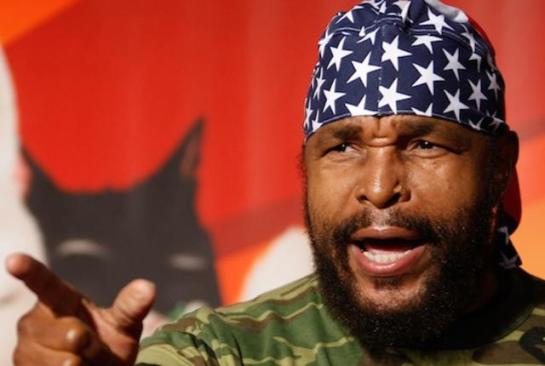
Mr T
Mr T
The missions that the team had to perform in season five were somewhat reminiscent of Mission: Impossible, and based more around political espionage than beating local thugs, also usually taking place in foreign countries, including successfully overthrowing an island dictator, the rescue of a scientist from East Germany, and recovering top secret Star Wars defense information from Soviet hands.
These changes proved unsuccessful with viewers, however, and ratings continued to decline. Only 13 episodes aired in the fifth season. In what was supposed to be the final episode, “The Grey Team” (although “Without Reservations” was broadcast on NBC as the last first-run episode in March 1987), Hannibal, after being misled by Stockwell one time too many, tells him that the team will no longer work for him.
At the end, the team discusses what they were going to do if they get their pardon, and it is implied that they would continue doing what they were doing as the A-Team. The character of Howling Mad Murdock can be seen in the final scene wearing a T-shirt that says, “fini”.
ROBERT VAUGHN
ROBERT VAUGHN
During the Vietnam War, the A-Team were members of the 5th Special Forces Group (see Season 1, Episode 10, “West Coast Turnaround”).
In Season 2, Episode 4, “Bad Time on the Border”, Colonel John “Hannibal” Smith, portrayed by George Peppard, indicated that the A-Team were “ex–Green Berets”.
During the Vietnam War, the A-Team’s commanding officer, Colonel Morrison, gave them orders to rob the Bank of Hanoi to help bring the war to an end. They succeeded in their mission, but on their return to base four days after the end of the war, they discovered that Morrison had been killed by the Viet Cong, and that his headquarters had been burned to the ground.
This meant that the proof that the A-Team members were acting under orders had been destroyed. They were arrested, and imprisoned at Fort Bragg, from which they quickly escaped before standing trial.
The origin of the A-Team is directly linked to the Vietnam War, during which the team formed.
This slideshow requires JavaScript.
The show’s introduction in the first four seasons mentions this, accompanied by images of soldiers coming out of a helicopter in an area resembling a forest or jungle.
Besides this, The A-Team would occasionally feature an episode in which the team came across an old ally or enemy from those war days.
For example, the first season’s final episode “A Nice Place To Visit” revolved around the team traveling to a small town to honor a fallen comrade and end up avenging his death, and in season two’s “Recipe For Heavy Bread”, a chance encounter leads the team to meet both the POW cook who helped them during the war, and the American officer who sold his unit out.
An article in the New Statesman (UK) published shortly after the premiere of The A-Team in the United Kingdom, also pointed out The A-Team’s connection to the Vietnam War, characterizing it as the representation of the idealization of the Vietnam War, and an example of the war slowly becoming accepted and assimilated into American culture.
One of the team’s primary antagonists, Col. Roderick Decker (Lance LeGault), had his past linked back to the Vietnam War, in which he and Hannibal had come to fisticuffs in “the DOOM Club” (Da Nang Open Officers’ Mess).
At other times, members of the team would refer back to a certain tactic used during the War, which would be relevant to the team’s present predicament. Often, Hannibal would refer to such a tactic, after which the other members of the team would complain about its failure during the War. This was also used to refer to some of Face’s past accomplishments in scamming items for the team, such as in the first season episode “Holiday In The Hills”, in which Murdock fondly remembers Face being able to secure a ’53 Cadillac while in the Vietnam jungle.
The team’s ties to the Vietnam War were referenced again in the fourth season finale, “The Sound of Thunder”, in which the team is introduced to Tia (Tia Carrere), a war orphan and daughter of fourth season antagonist General Fulbright. Returning to Vietnam, Fulbright is shot in the back and gives his last words as he dies.
The 2006 documentary Bring Back The A-Team joked that the scene lasted seven and a half minutes, but his death actually took a little over a minute. His murderer, a Vietnamese colonel, is killed in retaliation. Tia then returns with the team to the United States (see also: casting).
This episode is notable for having one of the show’s few truly serious dramatic moments, with each team member privately reminiscing on their war experiences, intercut with news footage from the war with Barry McGuire’s Eve of Destruction playing in the background.
The show’s ties to the Vietnam War are fully dealt with in the opening arc of the fifth season, dubbed “The Revolution”/”The Court-Martial”, in which the team is finally court-martialed for the robbery of the bank of Hanoi.
The character of Roderick Decker makes a return on the witness stand, and various newly introduced characters from the A-Team’s past also make appearances. The team, after a string of setbacks, decides to plead guilty to the crime and they are sentenced to be executed. They escape this fate and come to work for a General Hunt Stockwell, leading into the remainder of the fifth season.
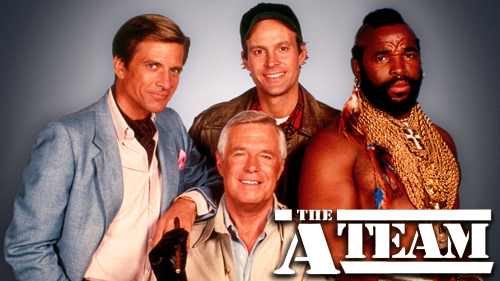
The A-Team revolves around the four members of a former commando outfit, now mercenaries.
Their leader is Lieutenant Colonel/Colonel John “Hannibal” Smith (George Peppard), whose plans tend to be unorthodox but effective.
Lieutenant Templeton Peck (Dirk Benedict; Tim Dunigan appeared as Templeton Peck in the pilot), usually called “Face” or “Faceman”, is a smooth-talking con man who serves as the team’s appropriator of vehicles and other useful items, as well as the team’s second-in-command.
The team’s pilot is Captain H.M. “Howling Mad” Murdock (Dwight Schultz), who has been declared insane and lives in a Veterans’ Administration mental institution for the show’s first four seasons.
Finally, there is the team’s strong man, mechanic and Sergeant First Class Bosco Albert “B.A.”, or “Bad Attitude”, Baracus (Mr. T).
It is unclear to which U.S. Army unit the four belonged. A patch on Hannibal’s uniform in the season 1 episode “A Nice Place To Visit” indicates they belonged to the 101st Airborne division in Vietnam, but the patch was replaced by the 1st Air Cavalry Division patch in the Season 5 episode “Trial by Fire”. In the Season 1 episode “West Coast Turnaround”, Hannibal stated they were with the 5th Special Forces Group.
Then, in Season 2 episode “Bad Time on the Border”, Hannibal refers to his friends as “ex-Green Berets”. Though the name they have adopted comes from the “A-Teams”, the nickname coined for Special Forces Operational Detachments Alpha, these detachments usually consisted of twelve members; whether the four were considered a “detachment” of their own or had once had eight compatriots who were killed in action was never revealed.
For its first season and the first half of the second season, the team was assisted by reporter Amy Amanda Allen (Melinda Culea).
In the second half of the second season, Allen was replaced by fellow reporter Tawnia Baker (Marla Heasley). The character of Tia (Tia Carrere), a Vietnam war orphan now living in the United States, was meant to join the Team in the fifth season, but she was replaced by Frankie Santana (Eddie Velez), who served as the team’s special effects expert. Velez was added to the opening credits of the fifth season after its second episode.
During their adventures, the A-Team was constantly met by opposition from the Military Police. In the show’s first season, the MPs were led by Colonel Francis Lynch (William Lucking), but he was replaced for the second, third, and earlier fourth season by Colonel Roderick Decker (Lance LeGault) and his aide Captain Crane (Carl Franklin).
Lynch returned for one episode in the show’s third season (“Showdown!”) but was not seen after. Decker was also briefly replaced by a Colonel Briggs (Charles Napier) in the third season for one episode (“Fire!”) when LeGault was unavailable, but returned shortly after. For the latter portion of the show’s fourth season, the team was hunted by General Harlan “Bull” Fulbright (Jack Ging), who would later hire the A-Team to find Tia in the season four finale, during which Fulbright was killed.
The fifth season introduced General Hunt Stockwell (Robert Vaughn) who, while serving as the team’s primary antagonist, was also the team’s boss and joined them on several missions. He was often assisted by Carla (Judith Ledford, sometimes credited as Judy Ledford).
Character traits
John “Hannibal” Smith: Master of Disguise. His most used disguise (although not onscreen) is Mr. Lee, the dry cleaner. This is one of the final parts of the client screening process, as he tells the client where to go in order to make full contact with the A-Team. He dresses most often in a white safari jacket and black leather gloves. He also is constantly seen smoking a cigar. Hannibal carries either a Browning Hi-Power, Colt M1911A1 or a Smith & Wesson Model 39 as a sidearm, most often “Mexican Carried” although he uses a holster when on missions. His catchphrase is “I love it when a plan comes together”. Often said, usually by B.A., to be “on the jazz” when in the fury of completing a mission.
Templeton “Faceman” Peck: Master of the Persuasive Arts. The team’s scrounger, he can get virtually anything he sets his mind to, usually exploiting women with sympathy-appeal and flirtation. However, he is not without integrity, as stated by Murdock in the episode “Family Reunion”: “He would rip the shirt off his back for you, and then scam one for himself.” Faceman is also the A-Team’s accountant. He dresses suavely, often appearing in suits. Faceman carries a Colt Lawman Mk III revolver for protection, and drives a white Corvette with orange trim.
Bosco Albert “B.A.” (Bad Attitude) Baracus: The muscle for the A-Team, Able to perform amazing feats of strength. He is also the team’s mechanic. B.A. affects a dislike for Murdock, calling him a “crazy fool”, but his true feelings of friendship are revealed when he prevents Murdock from drowning in his desire to live like a fish. B.A. also has a deep fear of flying, and the others usually have to trick and/or knock him out in order to get him on a plane.
It is very rare that B.A is awake while flying, and even rarer for him actually to consent to it. However, he then goes into a catatonic state. B.A generally wears overalls and leopard or tiger print shirts in the early seasons, then later wears a green jumpsuit in the later seasons.
He is almost always seen with about 50 pounds of gold necklaces and rings on every finger, and also wears a weightlifting belt. Baracus’s hair is always styled in a mohawk-like cut. He drives a customized black GMC van, which is the team’s usual mode of transport.
H.M “Howling Mad” Murdock: The A-Team’s pilot, he can fly any kind of aircraft with extreme precision. However, due to a helicopter crash in Vietnam, Murdock apparently went insane. He lives in a Veterans’ Hospital in the mental wing. Whenever the rest of the team requires a pilot, they have to break him out of the hospital, generally using Faceman to do so. In Seasons 1-4, Murdock has a different pet, imaginary friend, or persona in each episode. Whenever one of his pets or imaginary friends is killed by an enemy, Murdock snaps and takes revenge (but never kills).
Many times, when B.A is mad at Murdock for being crazy, Hannibal will side with Murdock in a sympathetic way. Once he is discharged from the hospital in Season 5, Murdock has a different job each episode. Essentially, B.A. and Murdock get on each other’s nerves. Murdock usually wears a leather flight jacket, a baseball cap, and basketball sneakers.
Casting
Although the part of Face was written by Frank Lupo and Stephen J. Cannell with Dirk Benedict in mind, NBC insisted that the part should be played by another actor, instead.
Therefore, in the pilot, Face was portrayed by Tim Dunigan, who was later replaced by Dirk Benedict, with the comment that Dunigan was “too tall and too young”.
According to Dunigan: “I look even younger on camera than I am. So it was difficult to accept me as a veteran of the Vietnam War, which ended when I was a sophomore in high school.”
Carrere was intended to join the principal cast of the show in its fifth season after appearing in the season four finale, providing a tie to the team’s inception during the war. Unfortunately for this plan, Carrere was under contract to General Hospital, which prevented her from joining The A-Team. Her character was abruptly dropped as a result.
According to Mr. T’s account in Bring Back… The A-Team in 2006, the role of B. A. Baracus was written specifically for him. This is corroborated by Stephen J. Cannell’s own account of the initial concept proposed by Tartikoff.
James Coburn, who co-starred in The Magnificent Seven, was considered for the role of Hannibal in The A-Team, while George Peppard (Hannibal) was the original consideration for the role of Vin (played by Steve McQueen instead) in The Magnificent Seven.
Robert Vaughn, of course, actually appeared in the film.
According to Dirk Benedict, Robert Vaughn was actually added to the cast in season 5 because of his friendship with the notoriously difficult George Peppard. It was hoped that Vaughn would help ease worsening tensions between Peppard and Mr. T.
L’Agence tous risques (The A-Team) est une série télévisée américaine en 98 épisodes de 45 minutes, créée par Frank Lupo et Stephen J. Cannell, diffusée entre le 23 janvier 19831 et le 8 mars 1987 sur le réseau NBC.
En France, les saisons 1 à 4 ont été diffusées à partir du 1er juillet 1984 sur TF12. Diffusion de la saison 5 inédite du 5 février 19963 au 16 février 19964 sur TF1. Rediffusion intégrale du 6 juillet 20025 au 8 mai 20046 sur M6. Puis en 20037 sur 13e rue, de juin 2010 à août 2013 sur TMC ainsi qu’à partir du 16 décembre 2013 jusqu’en juillet 2014 sur HD1 et depuis le 19 février 2015 sur Paris Première.
Le 16 juin 2010, un film du même nom est commercialisé par 20th Century Fox8.
Pendant la guerre du Viêt Nam, le chef hiérarchique de l’Agence tous risque, le général Morrison, leur a donné l’ordre de voler la banque de Hanoï afin de précipiter la fin de la guerre. La mission est un succès, mais quatre jours après la fin de la guerre, ils retrouvent le général assassiné par les Viet Cong, le quartier général étant entièrement brûlé. Par conséquent, aucune preuve indiquant que l’Agence tous risques agissait sur ordre n’existe. Les membres passent alors devant une cour de justice militaire, celle-ci les condamnant à la prison. Incarcérés aux États-Unis, ils s’évadent rapidement et mènent désormais une vie de mercenaires au service « de la veuve et de l’orphelin », combattant les injustices locales.
Tim Dunigan : lieutenant Templeton « Futé » Peck (VO : « Face ») (épisode pilote uniquement)
L’Agence tous risques a été créée par les producteurs américains Stephen J. Cannell et Frank Lupo à la demande du président du réseau NBC, Brandon Tartikoff.
Stephen J. Cannell a été renvoyé de chez ABC au début des années 1980, après avoir échoué dans sa tentative de produire une émission à succès pour la chaîne. Cannell est engagé à la NBC et son premier projet était de créer L’Agence tous risques.
Brandon Tartikoff considère l’émission comme un mélange de Les Douze Salopards, Mission Impossible, Les Sept Mercenaires, Mad Max et Capitaine Furillo, avec « Mr. T conduisant l’engin. »
L’Agence tous risques n’était, au départ, pas considérée comme une future série à succès, mais Stephen J. Cannell explique que George Peppard était persuadé qu’elle deviendrait un succès « avant même que l’on allume la caméra »13. L’émission se popularise ; le premier épisode, diffusée juste après le Super Bowl XVII le 30 janvier 1983, atteint 26,4 % de l’audience sur la chaîne, le classant ainsi quatrième sur l’Échelle de Nielsen.
Le titre original de la série vient des « Special Forces » (SF, « forces spéciales »), que les américains surnomment A-Teams et populairement connues sous le surnom des « bérets verts » (green berets), qui sont une des forces spéciales de l’US Army.
Spécialisées dans la guerre non conventionnelle, les actions commandos et la formation de troupes alliées, elles ont, depuis leur création au début des années 1950, été engagées dans la plupart des conflits impliquant les États-Unis.
La série s’inscrit dans un contexte particulier aux États-Unis, qui voit apparaître divers avatars de vétérans de la guerre du Viêt Nam, comme le détective privé Thomas Magnum ou le sergent T.J. Hooker.
Rapatriés après la fin officielle de la guerre, en 1975, de très nombreux vétérans américains ont éprouvé de grandes difficultés à se réintégrer dans une société qui ne les reconnaissait plus.
D’une part, les traumatismes physiques et psychologiques des soldats les rendaient extrêmement fragiles, d’autre part, à la frustration patriotique de la population s’est ajouté le rejet de soldats dont l’opinion publique découvrit brusquement les techniques de combat.
En effet, si l’Amérique moyenne soutenait la guerre au début des années 1960, dans un contexte de guerre froide, il en allait tout autrement quinze ans plus tard.
Les milliers de morts et de blessés dans le camp américain ne trouvaient plus aucun sens dans l’opinion publique, tandis que de nombreux journalistes révélaient la nature des combats, opposant des soldats lourdement armés à des combattants mêlés à la population.
Des photos d’enfants brûlés au napalm ont tôt fait de retourner le peuple américain contre une guerre jugée mal préparée, idéologiquement discutée et grande consommatrice d’hommes et d’argent public.
Dans ce contexte d’après-guerre, la société américaine rejette les vétérans du Viêt Nam, une attitude illustrée notamment par la chanson Born in the USA de Bruce Springsteen, le film Rambo ou plus tard le film Né un 4 juillet avec Tom Cruise.
L’Agence tous risques en est une autre illustration, puisque des soldats ayant agi sur ordre de la hiérarchie se retrouvent face à la justice de leur pays, pour un délit qu’ils n’ont commis que dans le cadre de leur fonction.
Évadés, ils seront pourchassés pour ce délit, ne parvenant pas à faire reconnaître par le département de la Défense le contexte dans lequel les faits reprochés ont été commis.
Par ailleurs, d’un point de vue plus strictement formel, la série marque une évolution (ou du moins y participe) dans la structure des personnages. Autrefois seul, tel un Colombo ou une Arabesque, le héros se multiplie, ici par quatre, offrant plus de possibilités d’identification au spectateur.
Chaque personnage est nettement marqué dans ses singularités, l’ensemble formant une équipe hétérogène mais néanmoins soudée, où tous les grands types de caractères se reconnaîtront.
Cette formule d’écriture des séries coexistera néanmoins avec d’autres personnages isolés, tels Magnum ou MacGyver, mais elle continuera de se développer pour atteindre un casting étendu dans des séries comparable à Jump Street, Beverly Hills ou Urgences. Dans ces derniers exemples, il est possible de voir apparaître une nébuleuse de personnages, chacun développant une histoire parallèle ou imbriquée avec celle des autres protagonistes.
De multiples spectateurs peuvent désormais s’identifier à un personnage en particulier, peu importe leur race, sexe, religion ou orientation sexuelle dans certains cas.
Enfin, pour les séries plus récentes, une telle évolution correspond peut-être aussi aux plans de carrière des acteurs, qui profitent des séries pour développer une carrière au cinéma (tels Johnny Depp) ou pas (Jason Priestley).
Dans une telle perspective, les producteurs de la série ne peuvent se permettre d’interrompre une saison à cause du départ du rôle-titre. La multiplication des héros offre une solution à ce problème, puisqu’une série peut se passer d’un personnage dont l’histoire dira qu’il est parti à l’étranger, décédé ou quoi que ce soit qui explique son absence au générique.
Saisons une à quatre
Les épisodes sont en général construits sur des schémas très semblables. Le début de l’épisode correspond à la prise de contact entre un client qui est terrorisé par une association de malfaiteurs ou un potentat local.
La manière classique de cette rencontre est que le client entre en contact alors qu’Hannibal Smith est déguisé, afin de vérifier que le client n’est pas en réalité à la solde des militaires.
Dans d’autres cas, l’Agence est en train de rouler et tombe sur quelqu’un qui a besoin d’aide. La plupart du temps, les honoraires pour l’intervention de l’Agence ne sont soit pas demandés, soit pas perçus ou sont récupérés d’une autre manière (en prélevant sur l’argent des malfaiteurs par exemple).
Généralement, Looping n’est pas présent dans l’équipe car il est interné dans un hôpital psychiatrique, et l’Agence utilise en général Futé pour aller le récupérer grâce à divers stratagèmes.
Ou alors il s’évade de lui-même pour aller rejoindre l’Agence. Dans beaucoup d’épisodes, il aime avoir un objet ou un animal qui ne le quitte pas jusqu’à la fin, tel qu’un cafard, un homard, une chaussette, avec lequel il agace généralement Barracuda avec ses facéties.
Ensuite, l’Agence qui doit se rendre sur le lieu des crimes et délits des malfaiteurs emprunte parfois l’avion, ce que Barracuda déteste particulièrement auquel cas ils doivent l’endormir.
Une fois sur les lieux, il y a souvent une annonce d’Hannibal aux malfaiteurs indiquant qu’ils doivent désormais compter avec eux. Cela produit en général une bagarre sans armes que l’Agence gagne facilement, tout en laissant curieusement leurs ennemis s’échapper.
Peut-être dans l’espoir que ces derniers, impressionnés par les membres de l’Agence, abandonnent leurs entreprises malhonnêtes et s’en aillent.
Les antagonistes reviennent et au lieu de tuer les membres de l’Agence, les laissent (souvent, sans même les ligoter et/ou les bâillonner) dans une grange, un garage ou un entrepôt, voire une mine.
Privés de leurs armes, ils ont néanmoins à leur disposition du matériel tel que de l’acétylène, de la poudre, des tôles et des tubes d’acier permettant à Barracuda de bricoler des armes ou de refaire fonctionner un engin (voiture, tracteur…) ce qui leur permet de s’échapper, et d’arriver à arrêter les malfaiteurs.
Dans d’autres cas, Looping arrive à prendre le contrôle d’un hélicoptère, souvent sous le nez de son propriétaire, ce qui permet de constituer un appui aérien non négligeable.
L’arrestation finale des méchants se fait parfois par un combat à mains nues, qui oppose toujours les méchants à l’agence en respectant la hiérarchie (Hannibal contre le chef de l’équipe, Barracuda contre le noir ou le plus costaud des méchants), ou alors au terme d’une des innombrables poursuites homériques de la série, qui permettent à chaque fois d’admirer les talents de pilote de Barracuda au volant de sa camionnette ou d’un bolide étrange bricolé par l’agence.
Ils doivent souvent partir rapidement après l’arrestation des méchants pour échapper aux colonels Lynch ou Decker. Dans tous les cas, il n’y a en général, même avec l’utilisation d’armes de guerres mortelles, pas de personnes qui soient tuées, voire sérieusement blessées.
La plupart du temps, les ennemis sont sonnés, ou très légèrement blessés (une douleur à un membre ou à la tête). Il n’y a eu, en tout et pour tout, que deux morts dans toute la série. Cette série est devenue pour cette raison un genre à part entière dans la télévision, puisque c’est la première série violente à avoir été diffusée aux heures de grande écoute aux États-Unis justement en raison de l’absence, ou presque, de morts.
À ce titre, la série apparaît quelquefois peu crédible, notamment dans l’épisode Tirez sur le Cheik, où l’hélicoptère des méchants s’écrase contre une falaise et que leurs occupants en ressortent indemnes.
Cinquième saison
L’avant-dernière saison perdant en popularité[réf. nécessaire], le format de la série a été changé pour la dernière saison (1986-1987).
Après avoir échappé pendant des années aux militaires, l’Agence tous risques est finalement arrêtée. Ils ont le choix entre retourner en prison, être exécutés ou être affectés à une agence gouvernementale dirigée par le général Hunt Stockwell qui réalise des missions secrètes. Ils choisissent de travailler avec Stockwell.
Arrêt de la série
Selon le producteur Stephen J. Cannell, la série s’est arrêtée au bout de cinq ans parce qu’elle devenait de plus en plus chère à produire. Qui plus est, les acteurs George Peppard, Dirk Benedict et Mr. T étaient de plus en plus démotivés (ce dernier avait d’ailleurs sa propre série, de 1988 à 1990).
Générique
L’Agence tous risques bénéficie de génériques différents à chaque saison, avec une accroche commune : « Il y a dix ans (en 1972), une unité de commando d’élite stationnée au Viêt Nam fut envoyée en prison par un tribunal militaire, pour un crime qu’ils n’avaient pas commis.
Ces hommes s’évadèrent rapidement de leur prison militaire de haute sécurité, se réfugiant dans les bas-fonds de Los Angeles. Aujourd’hui, encore recherchés par le gouvernement, ils fuient encore et toujours devant leurs poursuivants et survivent comme des mercenaires.
Si vous avez un problème, si vous êtes seul, si personne ne peut vous aider, si vous êtes acculé, si la justice ne peut plus rien pour vous, il vous reste un recours, un seul : l’Agence tous risques. »
Plus tard, au cours de la saison 2, l’accroche fut modifiée : « accusés d’un vol qu’ils n’ont pas commis, n’ayant aucun moyen d’en faire la preuve, ils fuient sans cesse devant leurs poursuivants. Pour subsister, ils emploient leurs compétences. Si la loi ne peut plus rien pour vous, il vous reste un recours, un seul : l’Agence tous risques. »
Mamma Mia! (promoted as Mamma Mia! The Movie) is a 2008 British-American-Swedish musical romantic comedy film adapted from the 1999 West End/2001 Broadway musical of the same name, based on the songs of successful popgroup ABBA, with additional music composed by ABBA member Benny Andersson.
The film was directed by Phyllida Lloyd and distributed by Universal Pictures in partnership with Tom Hanks and Rita Wilson’s Playtone and Littlestar and the title originates from ABBA’s 1975 chart-topper “Mamma Mia”.
Meryl Streep heads the cast, playing the role of single mother Donna Sheridan. Pierce Brosnan (Sam Carmichael), Colin Firth (Harry Bright), and Stellan Skarsgård (Bill Anderson) play the three possible fathers to Donna’s daughter, Sophie (Amanda Seyfried).
Mamma Mia! received mixed reviews from critics and earned $609.8 million on a $52 million budget.
On a Greek island called Kalokairi, bride-to-be Sophie Sheridan posts three wedding invitations (“I Have a Dream”) to different men.
Sophie’s bridesmaids, Ali and Lisa, arrive. Sophie reveals that she found her mother’s diary and has three possible fathers: Irish-American architect Sam Carmichael, Swedish adventurer and writer Bill Anderson, and British banker Harry Bright.
As Sophie wants her father to give her away at the altar, she invited them without telling her mother, believing that after she spends time with them she will know who her father is (“Honey, Honey”).
Villa owner Donna Sheridan, Sophie’s mom, is ecstatic to reunite with her former Dynamos bandmates, wisecracking author Rosie Mulligan and wealthy multiple divorcée Tanya Chesham-Leigh, and reveals her bafflement at her daughter’s desire to get married.
Donna shows off the villa to Rosie and Tanya (“Money, Money, Money”). The three men arrive;
Sophie smuggles them to their room and explains that she sent the invitations. She begs them to hide so Donna will have a surprise at the wedding: seeing the old friends of whom she “so often” favourably speaks. They overhear Donna working (humming “Fernando”) and swear not to reveal her secret.
Donna spies them and is dumbfounded to find herself facing former lovers (“Mamma Mia”), and is adamant that they leave.
She confides in Tanya and Rosie (“Chiquitita”) that she is uncertain which of the men is Sophie’s father. Tanya and Rosie rally her spirits by getting Donna to dance with the female staff and islanders (“Dancing Queen”).
Sophie finds the men aboard Bill’s yacht, and they sail around Kalokairi (“Our Last Summer”) and tell stories of Donna as a carefree girl. Sophie plans to tell her fiancé Sky about her ploy, but loses her nerve.
Sky and Sophie sing to each other (“Lay All Your Love on Me”), but Sky is snatched for his bachelor party.
At Sophie’s bachelorette party, Donna, Tanya and Rosie perform as Donna and The Dynamos (“Super Trouper”). The festivities are interrupted by the arrival of Sam, Bill and Harry. Sophie decides to talk with each of her prospective dads alone.
While her girlfriends dance with the men (“Gimme! Gimme! Gimme! (A Man After Midnight)”), Sophie learns from Bill that Donna received the money to invest in her villa from his great aunt Sofia.
Sophie guesses she must be Sofia’s namesake and Bill is her father. She asks him to give her away and keep their secret from Donna until the wedding.
Sophie’s happiness is short-lived as Sam and Harry each tell her they must be her dad and will give her away (“Voulez-Vous”). Sophie cannot tell them the truth and, overwhelmed by the consequences of her actions, faints.
In the morning, Rosie and Tanya assure Donna they will take care of the men.
Bill and Harry are about to confide in each other, but are interrupted by Rosie. Donna confronts Sophie, believing Sophie wants the wedding stopped. Sophie says that all she wants is to avoid her mother’s mistakes.
Donna is accosted by Sam, concerned about Sophie getting married so young. Donna confronts him and they realize they still have feelings for each other (“SOS”). Tanya and young Pepper continue their flirtations from the previous night (“Does Your Mother Know”). Sophie confesses to Sky and asks for his help.
He reacts angrily to Sophie’s deception and she turns to her mother for support. As Donna helps her daughter dress for the wedding, their rift is healed and Donna reminisces about Sophie’s childhood and how quickly she has grown (“Slipping Through My Fingers”). Donna admits that her own mother disowned her when she learned that she was pregnant. Sophie asks Donna to give her away.
As the bridal party walks to the chapel, Sam intercepts Donna. She reveals the pain she felt over losing him (“The Winner Takes It All”).
Sophie and Donna walk down the aisle as the band plays “Knowing Me, Knowing You”. Donna tells Sophie that her father could be any of the three men.
Sam reveals that while he left to get married, he did not go through with it, and returned to find Donna with another man.
Harry confesses that Donna was the first and last woman he loved and he has begun a relationship with a waiter from the taverna.
The men agree that they would be happy to be one-third of a father for Sophie. She tells Sky they should postpone their wedding and travel the world as they have wanted. Sam proposes to Donna (“I Do, I Do, I Do, I Do, I Do”).
She accepts and they are married. At the reception, Sam sings to Donna (“When All Is Said and Done”), which prompts Rosie to make a play for Bill (“Take a Chance on Me”). All the couples present proclaim their love (“Mamma Mia” reprise).
Sophie and Sky sail away (“I Have a Dream” reprise).
During the principal credits, Donna, Tanya and Rosie reprise “Dancing Queen”, followed by “Waterloo” with the rest of the cast. Amanda Seyfried sings “Thank You for the Music” over the end credits, followed by an instrumental of “Does Your Mother Know”.
Cast
Meryl Streep as Donna Sheridan, Sophie’s mother, owner of the hotel Villa Donna, wife and one true love of Sam at the end.
Amanda Seyfried as Sophie Sheridan, Donna’s daughter, Sky’s fiancée.
Pierce Brosnan as Sam Carmichael, Sophie’s possible father and an Irish-American architect, husband and one true love of Donna.
Colin Firth as Harry Bright, Sophie’s possible father and a British banker; based on “Our Last Summer”, which he sings at one point.
Stellan Skarsgård as Bill Anderson, Sophie’s possible father, a Swedish sailor and travel writer.
Dominic Cooper as Sky, Sophie’s fiancé, designing a website for the hotel.
Julie Walters as Rosie Mulligan, one of Donna’s former bandmates in Donna and the Dynamos; an unmarried fun-loving author.
Christine Baranski as Tanya Chesham-Leigh, Donna’s other former bandmate; a rich three-time divorcee.
Philip Michael as Pepper, Sky’s best man who likes Tanya. He is also a bartender.
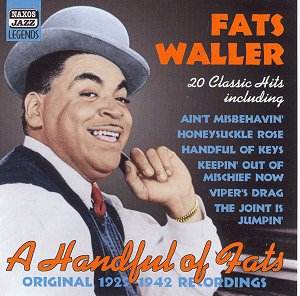
Thomas Wright “Fats” Waller (May 21, 1904 – December 15, 1943) was an American jazz pianist, organist, composer, singer, and comedic entertainer, whose innovations to the Harlem stride style laid the groundwork for modern jazz piano, and whose best-known compositions, “Ain’t Misbehavin'” and “Honeysuckle Rose”, were inducted into the Grammy Hall of Fame in 1984 and 1999.
Waller’s son Maurice wrote in his 1977 biography of his father that Waller had once complained on hearing the song, and came from upstairs to admonish him never to play it in his hearing because he had had to sell it when he needed money.
Maurice Waller’s biography similarly notes his father’s objections to hearing “On the Sunny Side of the Street” playing on the radio.
Waller recorded “I Can’t Give You…” in 1938, playing the tune but making fun of the lyrics; the recording was with Adelaide Hall who had introduced the song to the world at Les Ambassadeurs Club in New York in 1928.
The anonymous sleeve notes on the 1960 RCA Victor album Handful of Keys state that Waller copyrighted over 400 songs, many of which co-written with his closest collaborator Andy Razaf.
Razaf described his partner as “the soul of melody… a man who made the piano sing… both big in body and in mind… known for his generosity… a bubbling bundle of joy”.
Gene Sedric, a clarinetist who played with Waller on some of his 1930s recordings, is quoted in these same sleeve notes recalling Waller’s recording technique with considerable admiration: “Fats was the most relaxed man I ever saw in a studio, and so he made everybody else relaxed.
After a balance had been taken, we’d just need one take to make a side, unless it was a kind of difficult number.”
Waller played with many performers, from Nathaniel Shilkret and Gene Austin, to Erskine Tate, Fletcher Henderson, McKinney’s Cotton Pickers and Adelaide Hall, but his greatest success came with his own five- or six-piece combo, “Fats Waller and his Rhythm”.
His playing once put him at risk of injury. Waller was kidnapped in Chicago leaving a performance in 1926. Four men bundled him into a car and took him to the Hawthorne Inn, owned by Al Capone.
Waller was ordered inside the building, and found a party in full swing. Gun to his back, he was pushed towards a piano, and told to play. A terrified Waller realized he was the “surprise guest” at Capone’s birthday party, and took comfort that the gangsters did not intend to kill him.
It is rumored that Waller stayed at the Hawthorne Inn for three days and left very drunk, extremely tired, and had earned thousands of dollars in cash from Capone and other party-goers as tips.
In 1926, Waller began his recording association with the Victor Talking Machine Company/RCA Victor, his principal record company for the rest of his life, with the organ solos “St. Louis Blues” and his own composition, “Lenox Avenue Blues”.
Although he recorded with various groups, including Morris’s Hot Babes (1927), Fats Waller’s Buddies (1929) (one of the earliest multiracial groups to record), and McKinney’s Cotton Pickers (1929), his most important contribution to the Harlem stride piano tradition was a series of solo recordings of his own compositions: “Handful of Keys”, “Smashing Thirds”, “Numb Fumblin'”, and “Valentine Stomp” (1929).
After sessions with Ted Lewis (1931), Jack Teagarden (1931) and Billy Banks’ Rhythmakers (1932), he began in May 1934 the voluminous series of recordings with a small band known as Fats Waller and his Rhythm.
This six-piece group usually included Herman Autrey (sometimes replaced by Bill Coleman or John “Bugs” Hamilton), Gene Sedric or Rudy Powell, and Al Casey.
Waller wrote “Squeeze Me” (1919), “Keepin’ Out of Mischief Now”, “Ain’t Misbehavin'” (1929), “Blue Turning Grey Over You”, “I’ve Got a Feeling I’m Falling” (1929), “Honeysuckle Rose” (1929) and “Jitterbug Waltz” (1942). He composed stride piano display pieces such as “Handful of Keys”, “Valentine Stomp” and “Viper’s Drag”.
He enjoyed success touring the United Kingdom and Ireland in the 1930s. He appeared in one of the first BBC television broadcasts.
This slideshow requires JavaScript.
While in Britain, Waller also recorded a number of songs for EMI on their Compton Theatre organ located in their Abbey Road Studios in St John’s Wood. He appeared in several feature films and short subject films, most notably Stormy Weather in 1943, which was released July 21, just months before his death.
For the hit Broadway show Hot Chocolates, he and Razaf wrote “(What Did I Do to Be So) Black and Blue” (1929), which became a hit for Ethel Waters and Louis Armstrong.
Waller performed Bach organ pieces for small groups on occasion. Waller influenced many pre-bebop jazz pianists; Count Basie and Erroll Garner have both reanimated his hit songs. In addition to his playing, Waller was known for his many quips during his performances.
Between 1926 and the end of 1927, Waller recorded a series of pipe organ solo records. These represent the first time syncopated jazz compositions were performed on a full-sized church organ.
Waller contracted pneumonia and died on a cross-country train trip near Kansas City, Missouri, on December 15, 1943. His final recording session was with an interracial group in Detroit, Michigan, that included white trumpeter Don Hirleman.
Waller was returning to New York City from Los Angeles, after the smash success of Stormy Weather, and after a successful engagement at the Zanzibar Room, during which he had fallen ill.
More than 4,000 people attended his funeral in Harlem, which prompted Dr. Adam Clayton Powell, Jr., who delivered the eulogy, to say that Fats Waller “always played to a packed house.”
Afterwards he was cremated and his ashes were scattered, from an airplane piloted by an unidentified World War black aviator, over Harlem.
One of his surviving relatives is former Georgia Tech Yellow Jacket and current Baltimore Ravens wideout Darren Waller, who is Fats’ paternal great-grandson.
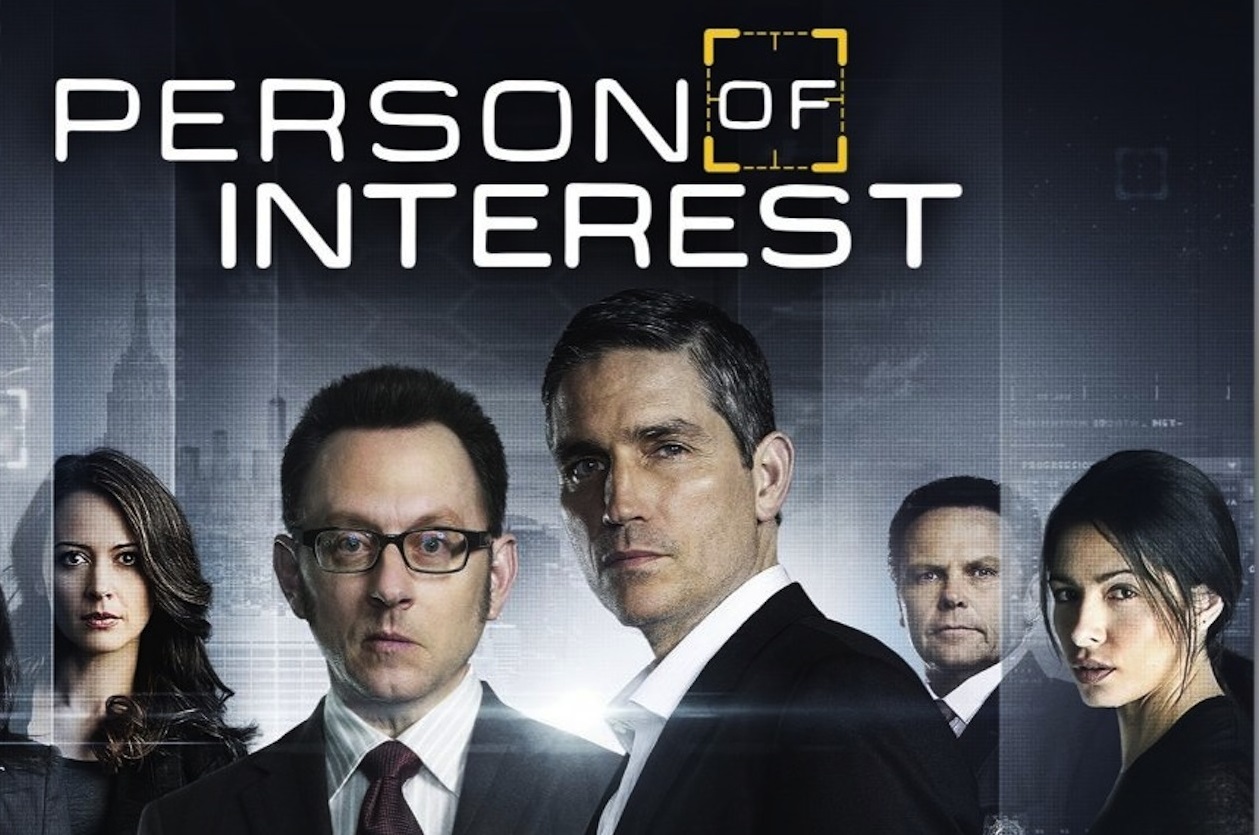
Person of Interest ou Personne d’intérêt au Québec est une série télévisée américaine créée par Jonathan Nolan et produite par J. J. Abrams.
PERSON OF INTEREST est diffusée en simultané depuis le 22 septembre 2011 sur CBS aux États-Unis et sur Citytv pour les deux premières saisons, puis sur le réseau CTV au Canada.
En Belgique, la série est diffusée depuis le 28 août 2012 sur La Une, chaîne du groupe de la RTBF, au Québec, depuis le 5 septembre 2012 sur le réseau V, en France, depuis le 6 mars 2013 sur TF1 et en Suisse, depuis le 30 juin 2013 sur RTS Un.
La série est aussi rediffusée dans le cadre d’une syndication sur la chaîne du câble américaine WGN America et également sur Netflix États-Unis, depuis l’automne 2015.
Person of Interest est souvent citée comme étant une des meilleures séries diffusées sur une grande chaîne américaine.
Les critiques soulignent entre autres la capacité que la série a à s’améliorer saison après saison, ses personnages très travaillés ou encore son ambiance réaliste d’une Amérique post-11 septembre.
Si la série est parfois désignée comme étant « la meilleure série de science-fiction actuellement diffusée », Person of Interest s’inscrit dans une thématique bien réelle, notamment depuis les révélations d’Edward Snowden sur la surveillance globale mise en place par les États-Unis, et soulève de nombreuses questions quant au respect de la vie privée. Elle a été nommée pour un Primetime Emmy Awards en 201211, 2012, 2013,2014.
John Reese, un ex-agent paramilitaire de la CIA présumé mort, est engagé par le mystérieux milliardaire Harold Finch. Dans le passé, ce dernier a conçu un système de surveillance de masse pour le gouvernement voulant éviter un nouveau 11 septembre. Le système est capable de prédire les actes terroristes dans le monde, en s’appuyant sur de nombreuses données comme les enregistrements des caméras de surveillance et des appels téléphoniques, ou les antécédents judiciaires.
Cependant, la Machine repère aussi les crimes entre citoyens ordinaires considérés comme mineurs par le gouvernement. Les autorités ayant décidé de ne pas tenir compte de ces données, Finch s’est laissé une porte de sortie et reçoit chaque jour les numéros de sécurité sociale des personnes impliquées à New York ou dans ses environs. C’est avec l’aide de Reese qu’il va tenter de retrouver ces « Persons of Interest » (trad. litt. : « Personnes d’intérêt ») et de découvrir si elles ont le rôle de victime ou de coupable dans l’affaire concernée.
Traqués par le lieutenant de police Jocelyn « Joss » Carter, ils sont aidés par un autre lieutenant, anciennement véreux, Lionel Fusco, qui leur fournit des informations et garde un œil sur sa collègue policière. Mais l’arrivée dans New York de deux justiciers va également contrarier plusieurs organisations criminelles.
Acteurs principaux
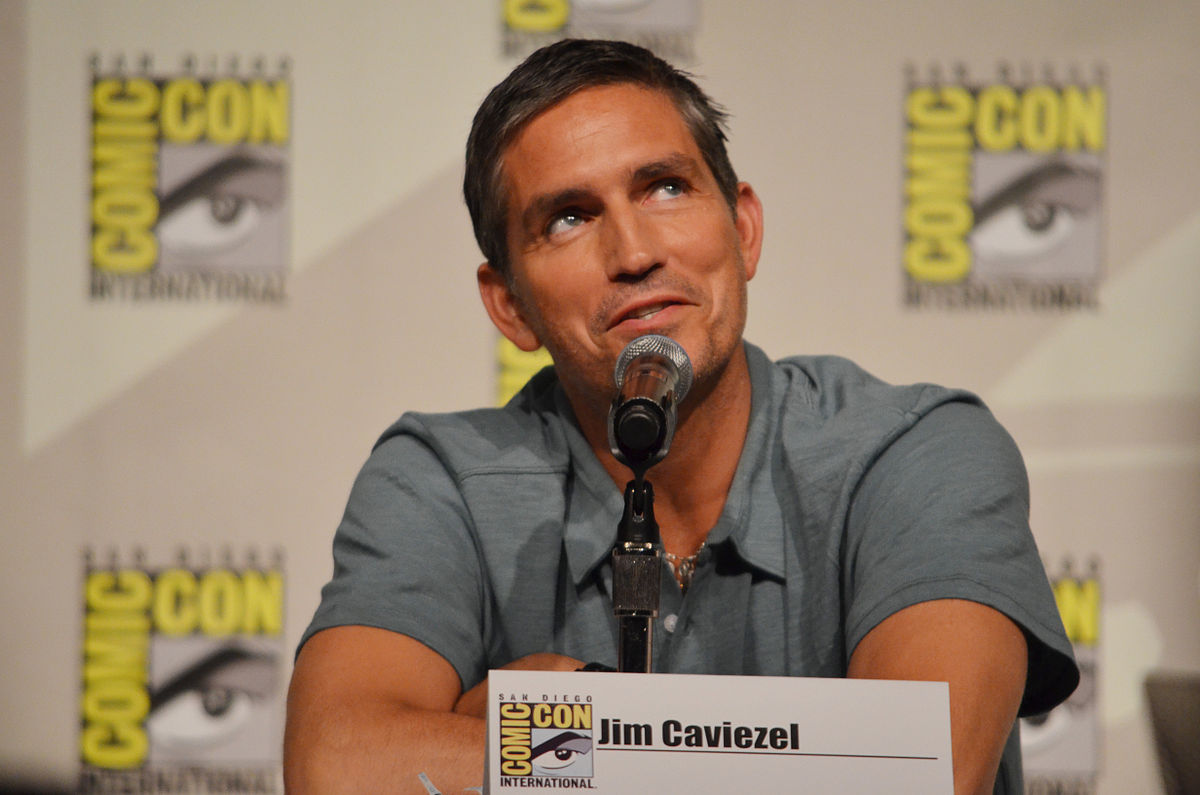
Jim Caviezel: John Reese
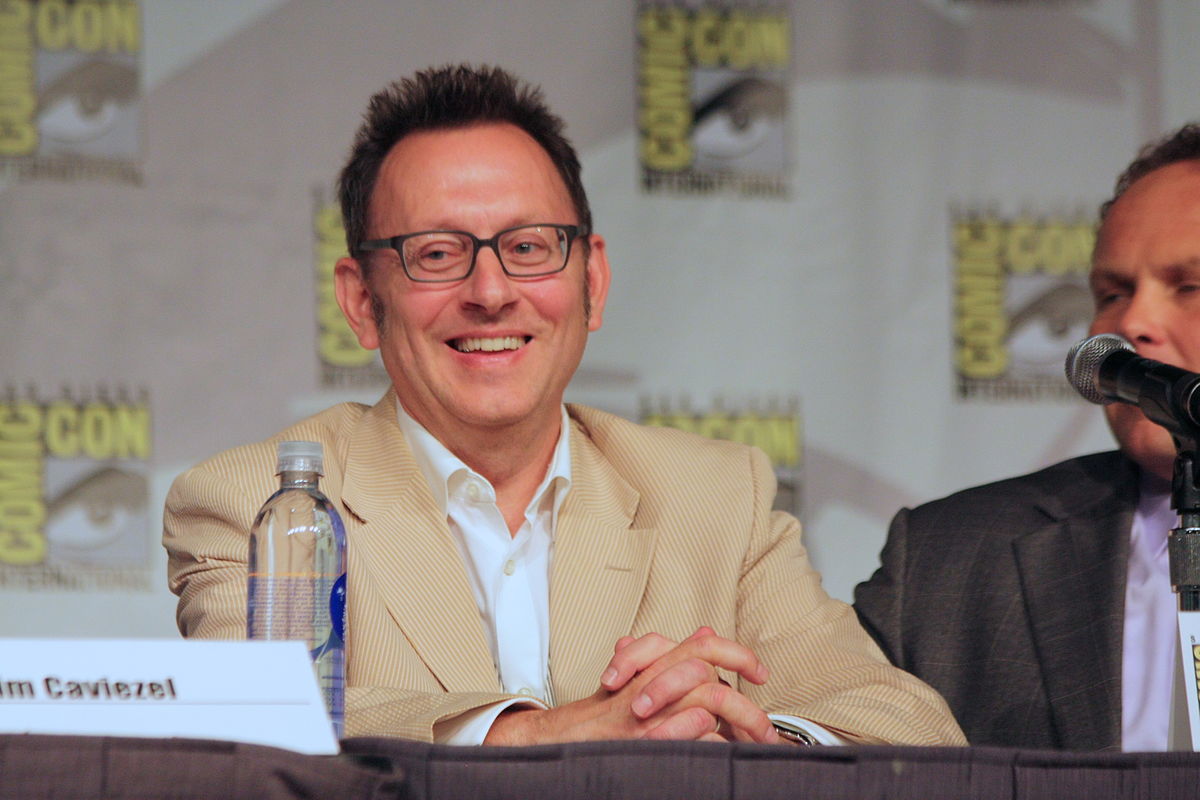
Michael Emerson: Harold Finch
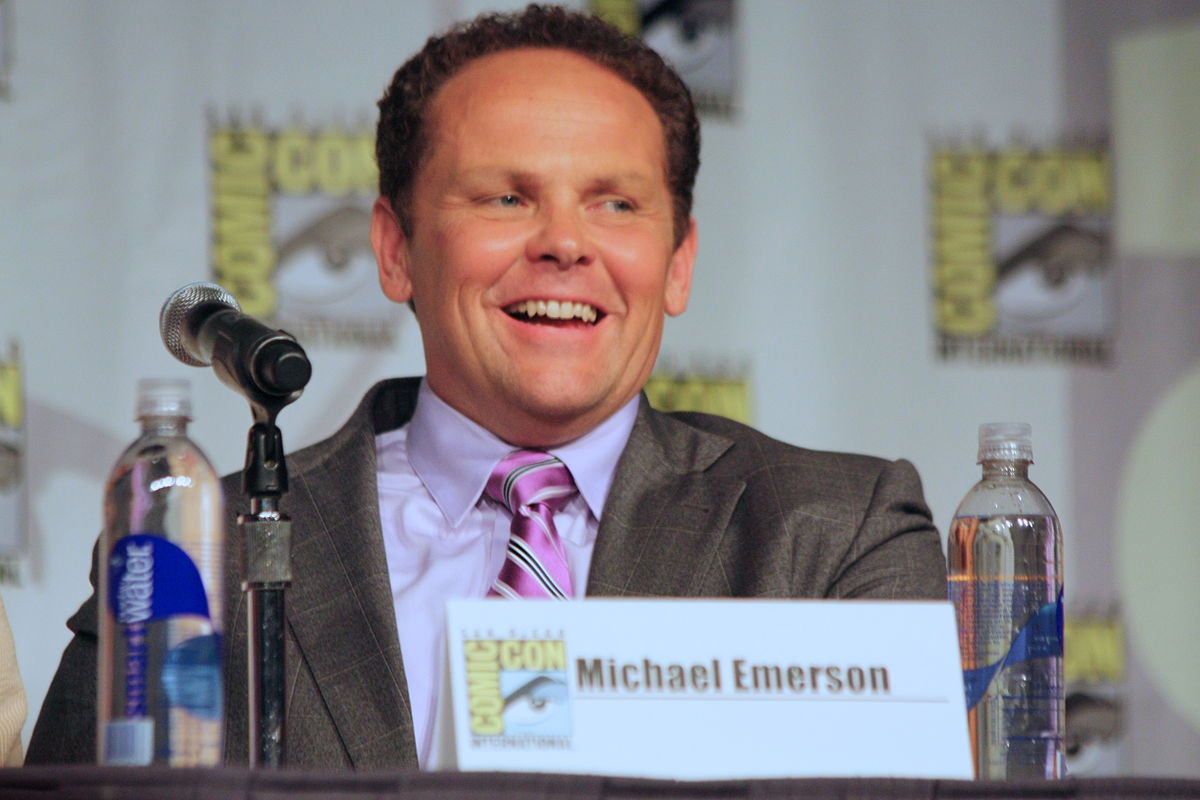
Kevin Chapman: le lieutenant Lionel Fusco
Amy Acker: Samantha « Sam » Groves alias « Root » (invitée saison 1, récurrente saison 2, principale à partir de la saison 3)
Sarah Shahi : Sameen Shaw (récurrente saison 2 , principale à partir de la saison 3)
Person of Interest is an American science fiction crime drama television series created by Jonathan Nolan that premiered on September 22, 2011, on CBS.
It is produced by Nolan, alongside J.J. Abrams, Bryan Burk, and Greg Plageman. It stars Jim Caviezel as John Reese, a former CIA agent who is presumed dead.
He is approached by a mysterious billionaire named Harold Finch (Michael Emerson) who is trying to prevent violent crimes before they happen by using an advanced surveillance system dubbed “The Machine”, which turns out to have evolved into a sentient AI.
Their unique brand of vigilante justice attracts the attention of two NYPD officers, Jocelyn “Joss” Carter (Taraji P. Henson) and Lionel Fusco (Kevin Chapman), whom Reese uses to his advantage as he investigates persons of interest.
Reese and Finch are later aided by Samantha “Root” Groves (Amy Acker), a highly intelligent computer hacker and contract killer whom the Machine later identifies as its “analog interface”, and Sameen Shaw (Sarah Shahi), a former ISA assassin who unknowingly dealt with the “relevant” numbers found by the Machine.
From season 3, the series sees the advent of a new rival AI called “Samaritan”, which is brought into existence by Decima Technologies. Much of season 4 is centered on the struggle between the two competing AIs and their human agents.
The series was renewed for a fifth season to debut mid-season during the 2015–16 television season.
The fifth season, which consists of 13 episodes, is expected to premiere in spring 2016.
CBS has yet to announce whether it is the final season or not, although the writers have written it as a final season.
The series has received generally positive reception from critics, including an increase in acclaim when the series introduced more serialized storylines and its exploration of artificial intelligence.
John Reese, a former Green Beret/Delta Force operator and CIA operative, is burnt out and living as a vagrant in New York City after the death of the woman he loved; he is presumed dead.
He is approached by Harold Finch, a reclusive billionaire software genius who is living under an assumed identity.
Finch explains that, after September 11, 2001, he built a computer system for the government that uses information gleaned from omnipresent surveillance to predict future terrorist attacks.
However, Finch discovered that the computer was predicting ordinary crimes as well.
The government is not interested in these results, but Finch is determined to stop the predicted crimes.
He hires Reese to conduct surveillance and intervene as needed, using the repertoire of skills he gained in the military and the CIA.
Through a back door built into the system, Finch receives the Social Security number of someone who will be involved in an imminent crime, at which point he contacts Reese. Without knowing what the crime will be, when it will occur, or even if the person they were alerted to is a victim or perpetrator, Reese and Finch must try to stop the crime from occurring.
They are helped by NYPD Detectives Lionel Fusco, a corrupt officer whom Reese coerces into helping them, and Joss Carter, who in early episodes investigates Reese for his vigilante activities.
Michael Emerson aka Harold FINCH
Although Reese arranges for Carter and Fusco to be partners in the NYPD early in the series, for the entirety of season one neither is aware that the other is also working with Finch and Reese. Periodically, the team enlists the aid of Zoe Morgan, a professional “fixer” who applies her skills to particularly difficult tasks.
The series features several subplots. One significant story arc involves “HR”, an organization of corrupt NYPD officers who are initially in league with budding mob boss Carl Elias and later with the Russian mafia; in earlier parts of this arc, Fusco is forced to go undercover. Another important story line revolves around Root, a psychopathic hacker who is determined to gain access to The Machine. During season two, another organization of powerful business figures, Decima Technologies, is revealed to be attempting to gain access to the Machine.
AMY ACKER
Carter vows vengeance against HR after they have her boyfriend, Detective Cal Beecher, murdered. Reese and Finch encounter Sameen Shaw, an ISA assassin, on the run after being betrayed by her employers. Shaw learns about The Machine in the season two finale and subsequently becomes a member of Reese and Finch’s team. In Season three, Carter delves deeper into her investigation of HR, eventually uncovering its leader; but she is killed. In his grief, Reese briefly leaves the team. The team also battles Vigilance, a violent anti-government organization devoted to securing people’s privacy.
During the second half of season 3, Decima Technologies starts to acquire hardware to bring to life a new artificial intelligence called Samaritan, using the codes from Harold’s old college classmate, Arthur Claypool. In the season 3 finale, it is revealed that Vigilance was created by Decima to make them appear as domestic terrorists. This allowed Decima to obtain all the NSA feeds to make Samaritan operational.
KEVIN CHAPMAN
The Machine creates new identities for the Team so that they can fly beneath Samaritan’s radar.
The Machine
The Machine is an artificially intelligent mass surveillance system that is able to accurately predict premeditated violent crime by monitoring and analyzing all surveillance cameras and electronic communications worldwide.
It divides those crimes based on whether they are relevant to national security; those relevant cases are handled by the U.S. government, while the non-relevant cases in New York City are the focus of the show.
Built by Harold Finch following the events of 9/11, it was originally housed in two unoccupied floors of IFT, the company run by Harold and Nathan Ingram (his best friend from college).
When Finch discovered that the Machine was tracking all premeditated crimes (Episode 2, “Ghosts”), he programmed it to delete the personal, non-relevant cases every night at midnight, explaining to Ingram that the Machine is not built “to save somebody, we built it to save everybody.”
When delivered to the government, the finished Machine was installed in a fake nuclear reactor in Washington State.
SARAH SHAHI
During season two, it moved itself, piece by piece, to an unknown location or locations, and by the end of season four it is shown to have distributed itself to control boxes on utility poles.
An intense believer in privacy rights, Finch originally programmed the Machine so that it would be a complete black box, able to provide only the Social Security Number of people involved with the crime.
While this meant that the government was not able to use it without regard for privacy, it means that numbers Finch and his associates received could belong to a victim or a perpetrator.
Originally unknown to Finch, however, Nathan Ingram created a routine called “Contingency”, on the eve of the government handover, to access the non-relevant data (shown accessed in the Season 2 episode “Zero Day”). Finch is appalled that Ingram has the data sent directly to him and shuts down the routine, before reactivating it after Ingram’s death. To minimize detectability, The Machine feeds him numbers in coded messages through public telephones.
TARAJI HENSON AKA Lt Joss CARTER Season 1 to 3
Within the ISA, the program responsible for The Machine was known as Northern Lights before—after being leaked to the public, Northern Lights was shut down.
The private technology firm Decima Technologies steals some of the Machine’s original code and builds Samaritan, in season three, and replaces Northern Lights in supplying information to the government. Samaritan takes a much more active role in shaping society, and The Machine and its human associates go underground, spending season four under cover.
Much of the series is from the point of view of The Machine, with flashbacks framed as The Machine reviews past tapes in real time.
Over the course of the series, the internal workings of The Machine are shown, including the prediction models and probability trees it uses. In the Machine-generated perspective, individuals are marked by dashed boxes with different colors indicating, for example, what the person’s status is in relation to The Machine and whether they pose a threat. Season four features Samaritan’s point of view, using a different UI—though some episodes jump back and forth between the two UIs.
The Machine in its current iteration started running on January 1, 2002, following 42 failed attempts. During the season 4 episode “Prophets”, a previous generation of The Machine’s source code was shown on screen, which was that of the Stuxnet worm. It generated the first relevant number on February 8, 2005, following three years of training by Finch.
Based in Austin, TX, Dena Taylor is a jazz vocalist who harkens back to the days of smoke filled clubs and smoky voiced chanteuses.
Her sound is solid; without a lot of vocal gymnastics in the Jazz Standards she covers. She inhabits the songs and makes them her own – feeling happiness, anger, joy, sorrow, love and hate. She draws listeners in and allows them to relate to these songs all over again. Dena was named “Best Female Jazz Artist of the Year” by Indie Music Channel in 2014. Her album “The Nearness of You” showcases her vocal talents and reminds us that even though she is a “seasoned” artist singing Standards, these songs don’t lose their ability to move and touch the audience just because they may have fallen out of vogue.
Dena is so full of passion for these songs that her jovial attitude can’t help but be contagious. An engaging personality, Dena wants to share her love of Jazz Standards and the American Songbook with her audience. She has honed her craft over the years – spending 12 years abroad serving her country in the US military and, whenever possible, performing with touring USO shows. Then, upon her return, Dena settled in Florida where she took to the stage as a member of the prestigious Cocoa Village Playhouse “Gold Star” company. She also began to reestablish her solo career and released her cd “Round Midnight” in 2008. With a voice that contains a bit of a knowing edge reminiscent of Gladys Knight in her prime, Dena became a “go to” vocalist for national Jazz and Blues groups touring in Florida.
After relocating to Austin, TX, Dena continued her collaboration with some of the best musicians in the jazz and blues genres including GRAMMY® Award Winners guitarist Redd Volkaert and keyboardist Floyd Domino and Gold Record drummer Ernie Durawa. Volkaert and Durawa both worked on her second album, “Certitude” in 2010. One of the tracks from this effort, “Song for My Father,” was rewarded with an IAIRA Certification of “International Top 100 Hit” shortly after its release.The team worked so well together that Dena chose to work with them for her next record in 2014, “The Nearness of You.” She was subsequently named one of the Top Five Vocalists in the SingersUniverse ” Best Vocalist Of The Month” Competition, in addition to the aforementioned IMC 2014 Best Female Jazz Artist of the Year Award.
CLICK , WATCH LISTEN and ENJOY :
The path to success hasn’t been an easy one for Dena. In 1999 she suffered a horrific car crash, resulting in a traumatic brain injury. The damage was so severe that it took Dena two years to learn to speak and walk again. She persevered through that and a battle with breast cancer to come out on the other side with an outlook on life that allows her to pursue her music with even more zeal. Learning not to be paralyzed by the fear of what “might happen” has kept Dena moving forward and gives her vocals a ripened maturity that just isn’t found in the pop stars of today.
And, in advance of some serious surgery on her throat, Dena joined forces with Austin powerhouse friends to take a musical walk from her beginnings in country and ending where she most happily lives and that is tucked inside the American Songbook. No last minute throw-together, “You’ve Changed” (scheduled release is January 2016) is a carefully thought out project and, whether it’s the last music she records or not .. it will certainly be one of her best.
In a pre-release review, Bree Noble (CEO of Women of Substance Radio) said, “With the opening notes of “You’ve Changed,” it’s clear that what has changed is that Dena Taylor has confidently taken the reins of her music career and is making bold, risky decisions that are paying off.”
While she was initially going to keep her most recent health challenge to herself, she decided to share the journey to her “new” normal through a blog in the hopes that it will encourage others!
Dena continues to share her musical gifts and donates her time to various charities that are close to her heart including her own charity, The Lullaby Project. This charity is supported by the beautiful album, Lullabies, recorded and released in 2015.
Listen to Dena’s songs on RS2 : Every night between Midnight and 03h00 AM ( Paris Time) On http://radiosatellite.co & Also on our FREE APPS for smartphones/ tablets.
Sur RS2, “Spécial Laurie Leblanc” : Nous diffuserons toute cette semaine, les tubes de Laurie Leblanc et des extraits de son nouvel album.
Certains titres du nouvel album seront diffusés dès la parution de cet article, sur RS2 , en attendant, sur notre site: Voici des titres connus, des hits du continent Nord Américain des albums de l’artiste LAURIE LEBLANC ( Musique acadienne ) ( Tout connaitre sur les acadiens )