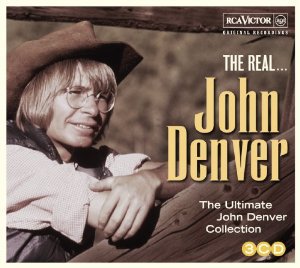
 No talks…No comments..Just music… Enjoy music on RS2 Also about John Denver : ALSO ABOUT JOHN DENVER Also about John Denver on RS2 :  …
Source : John Denver …let’s listen

No talks…No comments..Just music… Enjoy music on RS2 Also about John Denver : ALSO ABOUT JOHN DENVER Also about John Denver on RS2 :  …
Source : John Denver …let’s listen
#Music
#Folk
#Webradios
#Vidéo
#Video
#Show
Every : SATURDAY & MONDAY at 03h00 AM Paris Time ( Fridays & Sundays 08h00 PM US central time 09H00 pm Eastern)
Every: MONDAY & THURSDAY at 07h00 PM ( 12h00 PM US central time )
The A-Team was created by writers and producers Stephen J. Cannell and Frank Lupo at the behest of Brandon Tartikoff, NBC’s Entertainment president. Cannell was fired from ABC in the early 1980s, after failing to produce a hit show for the network, and was hired by NBC;
His first project was The A-Team. Brandon Tartikoff pitched the series to Cannell as a combination of The Dirty Dozen, Mission Impossible, The Magnificent Seven, Mad Max and Hill Street Blues, with “Mr. T driving the car”.
The A-Team was not generally expected to become a hit, although Stephen J. Cannell has said that George Peppard suggested it would be a huge hit “before we ever turned on a camera”.
The show became very popular; the first regular episode, which aired after Super Bowl XVII on January 30, 1983, reached 26.4% of the television audience, placing fourth in the top 10 Nielsen-rated shows.
The A-Team was always portrayed as acting on the side of good and helping the oppressed. Cannell was known for having a particular skill at capitalizing on momentary cultural trends, such as the helicopters, machine guns, cartoonish violence, and joyful militarism of this series, which are now recognizable as trademarks of popular entertainment in the 1980s as seen in the TV shows Magnum, P.I. and Airwolf as well as the films Rambo: First Blood Part II and Top Gun.


The show remains prominent in popular culture for its cartoonish, over-the-top violence (in which people were seldom seriously hurt), formulaic episodes, its characters’ ability to form weaponry and vehicles out of old parts, and its distinctive theme tune.
The show boosted the career of Mr. T, who portrayed the character of B. A. Baracus, around whom the show was initially conceived. Some of the show’s catchphrases, such as “I love it when a plan comes together”, “Hannibal’s on the jazz”, and “I ain’t gettin’ on no plane!” have also made their way onto T-shirts and other merchandise.
The show’s name comes from the “A-Teams”, the nickname coined for U.S. Special Forces’ Operational Detachments Alpha (ODA) during the Vietnam War, although this connection was never referenced on-screen.
In a 2003 Yahoo! survey of 1,000 television viewers, The A-Team was voted the one “oldie” television show viewers would most like to see revived, beating out such popular television series from the 1980s as The Dukes of Hazzard and Knight Rider.


“In 1972, a crack commando unit was sent to prison by a military court for a crime they didn’t commit. These men promptly escaped from a maximum security stockade to the Los Angeles underground. Today, still wanted by the government, they survive as soldiers of fortune. If you have a problem, if no one else can help, and if you can find them, maybe you can hire… the A-Team.”
The A-Team is a naturally episodic show, with few overarching stories, except the characters’ continuing motivation to clear their names, with few references to events in past episodes and a recognizable and steady episode structure.
In describing the ratings drop that occurred during the show’s fourth season, reviewer Gold Burt points to this structure as being a leading cause for the decreased popularity “because the same basic plot had been used over and over again for the past four seasons with the same predictable outcome”.
Similarly, reporter Adrian Lee called the plots “stunningly simple” in a 2006 article for The Express (UK newspaper), citing such recurring elements “as BA’s fear of flying, and outlandish finales when the team fashioned weapons from household items”.


The show became emblematic of this kind of “fit-for-TV warfare” due to its depiction of high-octane combat scenes, with lethal weapons, wherein the participants (with the notable exception of General Fulbright) are never killed and rarely seriously injured (see also On-screen violence section).
As the television ratings of The A-Team fell dramatically during the fourth season, the format was changed for the show’s final season in 1986–87 in a bid to win back viewers.
After years on the run from the authorities, the A-Team is finally apprehended by the military. General Hunt Stockwell, a mysterious CIA operative played by Robert Vaughn, propositions them to work for him, whereupon he will arrange for their pardons upon successful completion of several suicide missions. In order to do so, the A-Team must first escape from their captivity.
With the help of a new character, Frankie “Dishpan Man” Santana, Stockwell fakes their deaths before a military firing squad. The new status of the A-Team, no longer working for themselves, remained for the duration of the fifth season while Eddie Velez and Robert Vaughn received star billing along with the principal cast.

Mr T
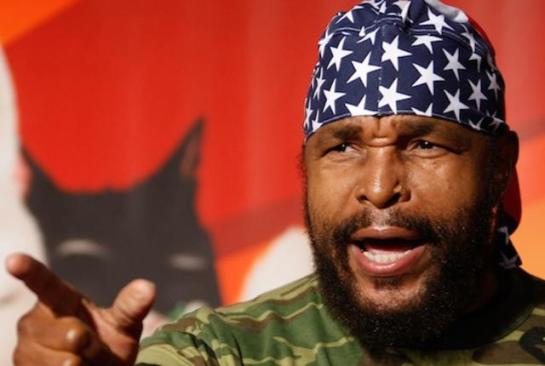
Mr T
The missions that the team had to perform in season five were somewhat reminiscent of Mission: Impossible, and based more around political espionage than beating local thugs, also usually taking place in foreign countries, including successfully overthrowing an island dictator, the rescue of a scientist from East Germany, and recovering top secret Star Wars defense information from Soviet hands.
These changes proved unsuccessful with viewers, however, and ratings continued to decline. Only 13 episodes aired in the fifth season. In what was supposed to be the final episode, “The Grey Team” (although “Without Reservations” was broadcast on NBC as the last first-run episode in March 1987), Hannibal, after being misled by Stockwell one time too many, tells him that the team will no longer work for him.
At the end, the team discusses what they were going to do if they get their pardon, and it is implied that they would continue doing what they were doing as the A-Team. The character of Howling Mad Murdock can be seen in the final scene wearing a T-shirt that says, “fini”.


During the Vietnam War, the A-Team were members of the 5th Special Forces Group (see Season 1, Episode 10, “West Coast Turnaround”).
In Season 2, Episode 4, “Bad Time on the Border”, Colonel John “Hannibal” Smith, portrayed by George Peppard, indicated that the A-Team were “ex–Green Berets”.
During the Vietnam War, the A-Team’s commanding officer, Colonel Morrison, gave them orders to rob the Bank of Hanoi to help bring the war to an end. They succeeded in their mission, but on their return to base four days after the end of the war, they discovered that Morrison had been killed by the Viet Cong, and that his headquarters had been burned to the ground.
This meant that the proof that the A-Team members were acting under orders had been destroyed. They were arrested, and imprisoned at Fort Bragg, from which they quickly escaped before standing trial.
The origin of the A-Team is directly linked to the Vietnam War, during which the team formed.
The show’s introduction in the first four seasons mentions this, accompanied by images of soldiers coming out of a helicopter in an area resembling a forest or jungle.
Besides this, The A-Team would occasionally feature an episode in which the team came across an old ally or enemy from those war days.
For example, the first season’s final episode “A Nice Place To Visit” revolved around the team traveling to a small town to honor a fallen comrade and end up avenging his death, and in season two’s “Recipe For Heavy Bread”, a chance encounter leads the team to meet both the POW cook who helped them during the war, and the American officer who sold his unit out.
An article in the New Statesman (UK) published shortly after the premiere of The A-Team in the United Kingdom, also pointed out The A-Team’s connection to the Vietnam War, characterizing it as the representation of the idealization of the Vietnam War, and an example of the war slowly becoming accepted and assimilated into American culture.
One of the team’s primary antagonists, Col. Roderick Decker (Lance LeGault), had his past linked back to the Vietnam War, in which he and Hannibal had come to fisticuffs in “the DOOM Club” (Da Nang Open Officers’ Mess).
At other times, members of the team would refer back to a certain tactic used during the War, which would be relevant to the team’s present predicament. Often, Hannibal would refer to such a tactic, after which the other members of the team would complain about its failure during the War. This was also used to refer to some of Face’s past accomplishments in scamming items for the team, such as in the first season episode “Holiday In The Hills”, in which Murdock fondly remembers Face being able to secure a ’53 Cadillac while in the Vietnam jungle.
The team’s ties to the Vietnam War were referenced again in the fourth season finale, “The Sound of Thunder”, in which the team is introduced to Tia (Tia Carrere), a war orphan and daughter of fourth season antagonist General Fulbright. Returning to Vietnam, Fulbright is shot in the back and gives his last words as he dies.
The 2006 documentary Bring Back The A-Team joked that the scene lasted seven and a half minutes, but his death actually took a little over a minute. His murderer, a Vietnamese colonel, is killed in retaliation. Tia then returns with the team to the United States (see also: casting).
This episode is notable for having one of the show’s few truly serious dramatic moments, with each team member privately reminiscing on their war experiences, intercut with news footage from the war with Barry McGuire’s Eve of Destruction playing in the background.
The show’s ties to the Vietnam War are fully dealt with in the opening arc of the fifth season, dubbed “The Revolution”/”The Court-Martial”, in which the team is finally court-martialed for the robbery of the bank of Hanoi.
The character of Roderick Decker makes a return on the witness stand, and various newly introduced characters from the A-Team’s past also make appearances. The team, after a string of setbacks, decides to plead guilty to the crime and they are sentenced to be executed. They escape this fate and come to work for a General Hunt Stockwell, leading into the remainder of the fifth season.
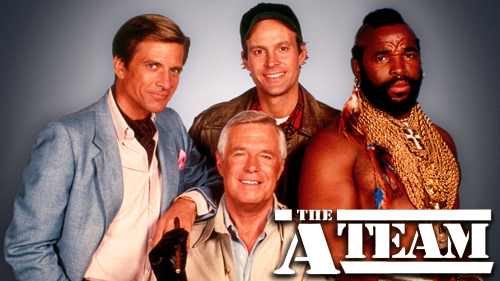
The A-Team revolves around the four members of a former commando outfit, now mercenaries.
Their leader is Lieutenant Colonel/Colonel John “Hannibal” Smith (George Peppard), whose plans tend to be unorthodox but effective.
Lieutenant Templeton Peck (Dirk Benedict; Tim Dunigan appeared as Templeton Peck in the pilot), usually called “Face” or “Faceman”, is a smooth-talking con man who serves as the team’s appropriator of vehicles and other useful items, as well as the team’s second-in-command.
The team’s pilot is Captain H.M. “Howling Mad” Murdock (Dwight Schultz), who has been declared insane and lives in a Veterans’ Administration mental institution for the show’s first four seasons.
Finally, there is the team’s strong man, mechanic and Sergeant First Class Bosco Albert “B.A.”, or “Bad Attitude”, Baracus (Mr. T).
It is unclear to which U.S. Army unit the four belonged. A patch on Hannibal’s uniform in the season 1 episode “A Nice Place To Visit” indicates they belonged to the 101st Airborne division in Vietnam, but the patch was replaced by the 1st Air Cavalry Division patch in the Season 5 episode “Trial by Fire”. In the Season 1 episode “West Coast Turnaround”, Hannibal stated they were with the 5th Special Forces Group.
Then, in Season 2 episode “Bad Time on the Border”, Hannibal refers to his friends as “ex-Green Berets”. Though the name they have adopted comes from the “A-Teams”, the nickname coined for Special Forces Operational Detachments Alpha, these detachments usually consisted of twelve members; whether the four were considered a “detachment” of their own or had once had eight compatriots who were killed in action was never revealed.
For its first season and the first half of the second season, the team was assisted by reporter Amy Amanda Allen (Melinda Culea).
In the second half of the second season, Allen was replaced by fellow reporter Tawnia Baker (Marla Heasley). The character of Tia (Tia Carrere), a Vietnam war orphan now living in the United States, was meant to join the Team in the fifth season, but she was replaced by Frankie Santana (Eddie Velez), who served as the team’s special effects expert. Velez was added to the opening credits of the fifth season after its second episode.
During their adventures, the A-Team was constantly met by opposition from the Military Police. In the show’s first season, the MPs were led by Colonel Francis Lynch (William Lucking), but he was replaced for the second, third, and earlier fourth season by Colonel Roderick Decker (Lance LeGault) and his aide Captain Crane (Carl Franklin).
Lynch returned for one episode in the show’s third season (“Showdown!”) but was not seen after. Decker was also briefly replaced by a Colonel Briggs (Charles Napier) in the third season for one episode (“Fire!”) when LeGault was unavailable, but returned shortly after. For the latter portion of the show’s fourth season, the team was hunted by General Harlan “Bull” Fulbright (Jack Ging), who would later hire the A-Team to find Tia in the season four finale, during which Fulbright was killed.
The fifth season introduced General Hunt Stockwell (Robert Vaughn) who, while serving as the team’s primary antagonist, was also the team’s boss and joined them on several missions. He was often assisted by Carla (Judith Ledford, sometimes credited as Judy Ledford).
John “Hannibal” Smith: Master of Disguise. His most used disguise (although not onscreen) is Mr. Lee, the dry cleaner. This is one of the final parts of the client screening process, as he tells the client where to go in order to make full contact with the A-Team. He dresses most often in a white safari jacket and black leather gloves. He also is constantly seen smoking a cigar. Hannibal carries either a Browning Hi-Power, Colt M1911A1 or a Smith & Wesson Model 39 as a sidearm, most often “Mexican Carried” although he uses a holster when on missions. His catchphrase is “I love it when a plan comes together”. Often said, usually by B.A., to be “on the jazz” when in the fury of completing a mission.
Templeton “Faceman” Peck: Master of the Persuasive Arts. The team’s scrounger, he can get virtually anything he sets his mind to, usually exploiting women with sympathy-appeal and flirtation. However, he is not without integrity, as stated by Murdock in the episode “Family Reunion”: “He would rip the shirt off his back for you, and then scam one for himself.” Faceman is also the A-Team’s accountant. He dresses suavely, often appearing in suits. Faceman carries a Colt Lawman Mk III revolver for protection, and drives a white Corvette with orange trim.
Bosco Albert “B.A.” (Bad Attitude) Baracus: The muscle for the A-Team, Able to perform amazing feats of strength. He is also the team’s mechanic. B.A. affects a dislike for Murdock, calling him a “crazy fool”, but his true feelings of friendship are revealed when he prevents Murdock from drowning in his desire to live like a fish. B.A. also has a deep fear of flying, and the others usually have to trick and/or knock him out in order to get him on a plane.
It is very rare that B.A is awake while flying, and even rarer for him actually to consent to it. However, he then goes into a catatonic state. B.A generally wears overalls and leopard or tiger print shirts in the early seasons, then later wears a green jumpsuit in the later seasons.
He is almost always seen with about 50 pounds of gold necklaces and rings on every finger, and also wears a weightlifting belt. Baracus’s hair is always styled in a mohawk-like cut. He drives a customized black GMC van, which is the team’s usual mode of transport.
H.M “Howling Mad” Murdock: The A-Team’s pilot, he can fly any kind of aircraft with extreme precision. However, due to a helicopter crash in Vietnam, Murdock apparently went insane. He lives in a Veterans’ Hospital in the mental wing. Whenever the rest of the team requires a pilot, they have to break him out of the hospital, generally using Faceman to do so. In Seasons 1-4, Murdock has a different pet, imaginary friend, or persona in each episode. Whenever one of his pets or imaginary friends is killed by an enemy, Murdock snaps and takes revenge (but never kills).
Many times, when B.A is mad at Murdock for being crazy, Hannibal will side with Murdock in a sympathetic way. Once he is discharged from the hospital in Season 5, Murdock has a different job each episode. Essentially, B.A. and Murdock get on each other’s nerves. Murdock usually wears a leather flight jacket, a baseball cap, and basketball sneakers.
Although the part of Face was written by Frank Lupo and Stephen J. Cannell with Dirk Benedict in mind, NBC insisted that the part should be played by another actor, instead.
Therefore, in the pilot, Face was portrayed by Tim Dunigan, who was later replaced by Dirk Benedict, with the comment that Dunigan was “too tall and too young”.
According to Dunigan: “I look even younger on camera than I am. So it was difficult to accept me as a veteran of the Vietnam War, which ended when I was a sophomore in high school.”
Carrere was intended to join the principal cast of the show in its fifth season after appearing in the season four finale, providing a tie to the team’s inception during the war. Unfortunately for this plan, Carrere was under contract to General Hospital, which prevented her from joining The A-Team. Her character was abruptly dropped as a result.
According to Mr. T’s account in Bring Back… The A-Team in 2006, the role of B. A. Baracus was written specifically for him. This is corroborated by Stephen J. Cannell’s own account of the initial concept proposed by Tartikoff.
James Coburn, who co-starred in The Magnificent Seven, was considered for the role of Hannibal in The A-Team, while George Peppard (Hannibal) was the original consideration for the role of Vin (played by Steve McQueen instead) in The Magnificent Seven.
Robert Vaughn, of course, actually appeared in the film.
According to Dirk Benedict, Robert Vaughn was actually added to the cast in season 5 because of his friendship with the notoriously difficult George Peppard. It was hoped that Vaughn would help ease worsening tensions between Peppard and Mr. T.
L’Agence tous risques (The A-Team) est une série télévisée américaine en 98 épisodes de 45 minutes, créée par Frank Lupo et Stephen J. Cannell, diffusée entre le 23 janvier 19831 et le 8 mars 1987 sur le réseau NBC.
En France, les saisons 1 à 4 ont été diffusées à partir du 1er juillet 1984 sur TF12. Diffusion de la saison 5 inédite du 5 février 19963 au 16 février 19964 sur TF1. Rediffusion intégrale du 6 juillet 20025 au 8 mai 20046 sur M6. Puis en 20037 sur 13e rue, de juin 2010 à août 2013 sur TMC ainsi qu’à partir du 16 décembre 2013 jusqu’en juillet 2014 sur HD1 et depuis le 19 février 2015 sur Paris Première.
Le 16 juin 2010, un film du même nom est commercialisé par 20th Century Fox8.
Pendant la guerre du Viêt Nam, le chef hiérarchique de l’Agence tous risque, le général Morrison, leur a donné l’ordre de voler la banque de Hanoï afin de précipiter la fin de la guerre. La mission est un succès, mais quatre jours après la fin de la guerre, ils retrouvent le général assassiné par les Viet Cong, le quartier général étant entièrement brûlé. Par conséquent, aucune preuve indiquant que l’Agence tous risques agissait sur ordre n’existe. Les membres passent alors devant une cour de justice militaire, celle-ci les condamnant à la prison. Incarcérés aux États-Unis, ils s’évadent rapidement et mènent désormais une vie de mercenaires au service « de la veuve et de l’orphelin », combattant les injustices locales.
George Peppard : colonel John « Hannibal » Smith
Dirk Benedict : lieutenant Peck « Futé » Templeton (VO : « Face ») (à partir de l’épisode 2)
Dwight Schultz : capitaine Henry « Looping » Murdock (VO : « Howling Mad »)
Mister T. : sergent Bosco Albert « Barracuda » Baracus (VO : « B. A. »
Melinda Culea : Amy Amanda « Triple A » Allen (saisons 1 et 2)
Robert Vaughn : général Hunt Stockwell (saison 5)
Eddie Velez : Frankie Santana (saison 5)
Tim Dunigan : lieutenant Templeton « Futé » Peck (VO : « Face ») (épisode pilote uniquement)
L’Agence tous risques a été créée par les producteurs américains Stephen J. Cannell et Frank Lupo à la demande du président du réseau NBC, Brandon Tartikoff.
Stephen J. Cannell a été renvoyé de chez ABC au début des années 1980, après avoir échoué dans sa tentative de produire une émission à succès pour la chaîne. Cannell est engagé à la NBC et son premier projet était de créer L’Agence tous risques.
Brandon Tartikoff considère l’émission comme un mélange de Les Douze Salopards, Mission Impossible, Les Sept Mercenaires, Mad Max et Capitaine Furillo, avec « Mr. T conduisant l’engin. »
L’Agence tous risques n’était, au départ, pas considérée comme une future série à succès, mais Stephen J. Cannell explique que George Peppard était persuadé qu’elle deviendrait un succès « avant même que l’on allume la caméra »13. L’émission se popularise ; le premier épisode, diffusée juste après le Super Bowl XVII le 30 janvier 1983, atteint 26,4 % de l’audience sur la chaîne, le classant ainsi quatrième sur l’Échelle de Nielsen.
Le titre original de la série vient des « Special Forces » (SF, « forces spéciales »), que les américains surnomment A-Teams et populairement connues sous le surnom des « bérets verts » (green berets), qui sont une des forces spéciales de l’US Army.
Spécialisées dans la guerre non conventionnelle, les actions commandos et la formation de troupes alliées, elles ont, depuis leur création au début des années 1950, été engagées dans la plupart des conflits impliquant les États-Unis.
La série s’inscrit dans un contexte particulier aux États-Unis, qui voit apparaître divers avatars de vétérans de la guerre du Viêt Nam, comme le détective privé Thomas Magnum ou le sergent T.J. Hooker.
Rapatriés après la fin officielle de la guerre, en 1975, de très nombreux vétérans américains ont éprouvé de grandes difficultés à se réintégrer dans une société qui ne les reconnaissait plus.
D’une part, les traumatismes physiques et psychologiques des soldats les rendaient extrêmement fragiles, d’autre part, à la frustration patriotique de la population s’est ajouté le rejet de soldats dont l’opinion publique découvrit brusquement les techniques de combat.
En effet, si l’Amérique moyenne soutenait la guerre au début des années 1960, dans un contexte de guerre froide, il en allait tout autrement quinze ans plus tard.
Les milliers de morts et de blessés dans le camp américain ne trouvaient plus aucun sens dans l’opinion publique, tandis que de nombreux journalistes révélaient la nature des combats, opposant des soldats lourdement armés à des combattants mêlés à la population.
Des photos d’enfants brûlés au napalm ont tôt fait de retourner le peuple américain contre une guerre jugée mal préparée, idéologiquement discutée et grande consommatrice d’hommes et d’argent public.
Dans ce contexte d’après-guerre, la société américaine rejette les vétérans du Viêt Nam, une attitude illustrée notamment par la chanson Born in the USA de Bruce Springsteen, le film Rambo ou plus tard le film Né un 4 juillet avec Tom Cruise.
L’Agence tous risques en est une autre illustration, puisque des soldats ayant agi sur ordre de la hiérarchie se retrouvent face à la justice de leur pays, pour un délit qu’ils n’ont commis que dans le cadre de leur fonction.
Évadés, ils seront pourchassés pour ce délit, ne parvenant pas à faire reconnaître par le département de la Défense le contexte dans lequel les faits reprochés ont été commis.
Par ailleurs, d’un point de vue plus strictement formel, la série marque une évolution (ou du moins y participe) dans la structure des personnages. Autrefois seul, tel un Colombo ou une Arabesque, le héros se multiplie, ici par quatre, offrant plus de possibilités d’identification au spectateur.
Chaque personnage est nettement marqué dans ses singularités, l’ensemble formant une équipe hétérogène mais néanmoins soudée, où tous les grands types de caractères se reconnaîtront.
Cette formule d’écriture des séries coexistera néanmoins avec d’autres personnages isolés, tels Magnum ou MacGyver, mais elle continuera de se développer pour atteindre un casting étendu dans des séries comparable à Jump Street, Beverly Hills ou Urgences. Dans ces derniers exemples, il est possible de voir apparaître une nébuleuse de personnages, chacun développant une histoire parallèle ou imbriquée avec celle des autres protagonistes.
De multiples spectateurs peuvent désormais s’identifier à un personnage en particulier, peu importe leur race, sexe, religion ou orientation sexuelle dans certains cas.
Enfin, pour les séries plus récentes, une telle évolution correspond peut-être aussi aux plans de carrière des acteurs, qui profitent des séries pour développer une carrière au cinéma (tels Johnny Depp) ou pas (Jason Priestley).
Dans une telle perspective, les producteurs de la série ne peuvent se permettre d’interrompre une saison à cause du départ du rôle-titre. La multiplication des héros offre une solution à ce problème, puisqu’une série peut se passer d’un personnage dont l’histoire dira qu’il est parti à l’étranger, décédé ou quoi que ce soit qui explique son absence au générique.
Les épisodes sont en général construits sur des schémas très semblables. Le début de l’épisode correspond à la prise de contact entre un client qui est terrorisé par une association de malfaiteurs ou un potentat local.
La manière classique de cette rencontre est que le client entre en contact alors qu’Hannibal Smith est déguisé, afin de vérifier que le client n’est pas en réalité à la solde des militaires.
Dans d’autres cas, l’Agence est en train de rouler et tombe sur quelqu’un qui a besoin d’aide. La plupart du temps, les honoraires pour l’intervention de l’Agence ne sont soit pas demandés, soit pas perçus ou sont récupérés d’une autre manière (en prélevant sur l’argent des malfaiteurs par exemple).
Généralement, Looping n’est pas présent dans l’équipe car il est interné dans un hôpital psychiatrique, et l’Agence utilise en général Futé pour aller le récupérer grâce à divers stratagèmes.
Ou alors il s’évade de lui-même pour aller rejoindre l’Agence. Dans beaucoup d’épisodes, il aime avoir un objet ou un animal qui ne le quitte pas jusqu’à la fin, tel qu’un cafard, un homard, une chaussette, avec lequel il agace généralement Barracuda avec ses facéties.
Ensuite, l’Agence qui doit se rendre sur le lieu des crimes et délits des malfaiteurs emprunte parfois l’avion, ce que Barracuda déteste particulièrement auquel cas ils doivent l’endormir.
Une fois sur les lieux, il y a souvent une annonce d’Hannibal aux malfaiteurs indiquant qu’ils doivent désormais compter avec eux. Cela produit en général une bagarre sans armes que l’Agence gagne facilement, tout en laissant curieusement leurs ennemis s’échapper.
Peut-être dans l’espoir que ces derniers, impressionnés par les membres de l’Agence, abandonnent leurs entreprises malhonnêtes et s’en aillent.
Les antagonistes reviennent et au lieu de tuer les membres de l’Agence, les laissent (souvent, sans même les ligoter et/ou les bâillonner) dans une grange, un garage ou un entrepôt, voire une mine.
Privés de leurs armes, ils ont néanmoins à leur disposition du matériel tel que de l’acétylène, de la poudre, des tôles et des tubes d’acier permettant à Barracuda de bricoler des armes ou de refaire fonctionner un engin (voiture, tracteur…) ce qui leur permet de s’échapper, et d’arriver à arrêter les malfaiteurs.
Dans d’autres cas, Looping arrive à prendre le contrôle d’un hélicoptère, souvent sous le nez de son propriétaire, ce qui permet de constituer un appui aérien non négligeable.
L’arrestation finale des méchants se fait parfois par un combat à mains nues, qui oppose toujours les méchants à l’agence en respectant la hiérarchie (Hannibal contre le chef de l’équipe, Barracuda contre le noir ou le plus costaud des méchants), ou alors au terme d’une des innombrables poursuites homériques de la série, qui permettent à chaque fois d’admirer les talents de pilote de Barracuda au volant de sa camionnette ou d’un bolide étrange bricolé par l’agence.
Ils doivent souvent partir rapidement après l’arrestation des méchants pour échapper aux colonels Lynch ou Decker. Dans tous les cas, il n’y a en général, même avec l’utilisation d’armes de guerres mortelles, pas de personnes qui soient tuées, voire sérieusement blessées.
La plupart du temps, les ennemis sont sonnés, ou très légèrement blessés (une douleur à un membre ou à la tête). Il n’y a eu, en tout et pour tout, que deux morts dans toute la série. Cette série est devenue pour cette raison un genre à part entière dans la télévision, puisque c’est la première série violente à avoir été diffusée aux heures de grande écoute aux États-Unis justement en raison de l’absence, ou presque, de morts.
À ce titre, la série apparaît quelquefois peu crédible, notamment dans l’épisode Tirez sur le Cheik, où l’hélicoptère des méchants s’écrase contre une falaise et que leurs occupants en ressortent indemnes.
L’avant-dernière saison perdant en popularité[réf. nécessaire], le format de la série a été changé pour la dernière saison (1986-1987).
Après avoir échappé pendant des années aux militaires, l’Agence tous risques est finalement arrêtée. Ils ont le choix entre retourner en prison, être exécutés ou être affectés à une agence gouvernementale dirigée par le général Hunt Stockwell qui réalise des missions secrètes. Ils choisissent de travailler avec Stockwell.
Selon le producteur Stephen J. Cannell, la série s’est arrêtée au bout de cinq ans parce qu’elle devenait de plus en plus chère à produire. Qui plus est, les acteurs George Peppard, Dirk Benedict et Mr. T étaient de plus en plus démotivés (ce dernier avait d’ailleurs sa propre série, de 1988 à 1990).
L’Agence tous risques bénéficie de génériques différents à chaque saison, avec une accroche commune : « Il y a dix ans (en 1972), une unité de commando d’élite stationnée au Viêt Nam fut envoyée en prison par un tribunal militaire, pour un crime qu’ils n’avaient pas commis.
Ces hommes s’évadèrent rapidement de leur prison militaire de haute sécurité, se réfugiant dans les bas-fonds de Los Angeles. Aujourd’hui, encore recherchés par le gouvernement, ils fuient encore et toujours devant leurs poursuivants et survivent comme des mercenaires.
Si vous avez un problème, si vous êtes seul, si personne ne peut vous aider, si vous êtes acculé, si la justice ne peut plus rien pour vous, il vous reste un recours, un seul : l’Agence tous risques. »
Plus tard, au cours de la saison 2, l’accroche fut modifiée : « accusés d’un vol qu’ils n’ont pas commis, n’ayant aucun moyen d’en faire la preuve, ils fuient sans cesse devant leurs poursuivants. Pour subsister, ils emploient leurs compétences. Si la loi ne peut plus rien pour vous, il vous reste un recours, un seul : l’Agence tous risques. »
SOURCES WIKIPEDIA
The film was directed by Phyllida Lloyd and distributed by Universal Pictures in partnership with Tom Hanks and Rita Wilson’s Playtone and Littlestar and the title originates from ABBA’s 1975 chart-topper “Mamma Mia”.
Meryl Streep heads the cast, playing the role of single mother Donna Sheridan. Pierce Brosnan (Sam Carmichael), Colin Firth (Harry Bright), and Stellan Skarsgård (Bill Anderson) play the three possible fathers to Donna’s daughter, Sophie (Amanda Seyfried).
Mamma Mia! received mixed reviews from critics and earned $609.8 million on a $52 million budget.
On a Greek island called Kalokairi, bride-to-be Sophie Sheridan posts three wedding invitations (“I Have a Dream”) to different men.
Sophie’s bridesmaids, Ali and Lisa, arrive. Sophie reveals that she found her mother’s diary and has three possible fathers: Irish-American architect Sam Carmichael, Swedish adventurer and writer Bill Anderson, and British banker Harry Bright.
As Sophie wants her father to give her away at the altar, she invited them without telling her mother, believing that after she spends time with them she will know who her father is (“Honey, Honey”).
Villa owner Donna Sheridan, Sophie’s mom, is ecstatic to reunite with her former Dynamos bandmates, wisecracking author Rosie Mulligan and wealthy multiple divorcée Tanya Chesham-Leigh, and reveals her bafflement at her daughter’s desire to get married.
Donna shows off the villa to Rosie and Tanya (“Money, Money, Money”). The three men arrive;
Sophie smuggles them to their room and explains that she sent the invitations. She begs them to hide so Donna will have a surprise at the wedding: seeing the old friends of whom she “so often” favourably speaks. They overhear Donna working (humming “Fernando”) and swear not to reveal her secret.
Donna spies them and is dumbfounded to find herself facing former lovers (“Mamma Mia”), and is adamant that they leave.
She confides in Tanya and Rosie (“Chiquitita”) that she is uncertain which of the men is Sophie’s father. Tanya and Rosie rally her spirits by getting Donna to dance with the female staff and islanders (“Dancing Queen”).
Sophie finds the men aboard Bill’s yacht, and they sail around Kalokairi (“Our Last Summer”) and tell stories of Donna as a carefree girl. Sophie plans to tell her fiancé Sky about her ploy, but loses her nerve.
Sky and Sophie sing to each other (“Lay All Your Love on Me”), but Sky is snatched for his bachelor party.
At Sophie’s bachelorette party, Donna, Tanya and Rosie perform as Donna and The Dynamos (“Super Trouper”). The festivities are interrupted by the arrival of Sam, Bill and Harry. Sophie decides to talk with each of her prospective dads alone.
While her girlfriends dance with the men (“Gimme! Gimme! Gimme! (A Man After Midnight)”), Sophie learns from Bill that Donna received the money to invest in her villa from his great aunt Sofia.
Sophie guesses she must be Sofia’s namesake and Bill is her father. She asks him to give her away and keep their secret from Donna until the wedding.
Sophie’s happiness is short-lived as Sam and Harry each tell her they must be her dad and will give her away (“Voulez-Vous”). Sophie cannot tell them the truth and, overwhelmed by the consequences of her actions, faints.
In the morning, Rosie and Tanya assure Donna they will take care of the men.
Bill and Harry are about to confide in each other, but are interrupted by Rosie. Donna confronts Sophie, believing Sophie wants the wedding stopped. Sophie says that all she wants is to avoid her mother’s mistakes.
Donna is accosted by Sam, concerned about Sophie getting married so young. Donna confronts him and they realize they still have feelings for each other (“SOS”). Tanya and young Pepper continue their flirtations from the previous night (“Does Your Mother Know”). Sophie confesses to Sky and asks for his help.
He reacts angrily to Sophie’s deception and she turns to her mother for support. As Donna helps her daughter dress for the wedding, their rift is healed and Donna reminisces about Sophie’s childhood and how quickly she has grown (“Slipping Through My Fingers”). Donna admits that her own mother disowned her when she learned that she was pregnant. Sophie asks Donna to give her away.
As the bridal party walks to the chapel, Sam intercepts Donna. She reveals the pain she felt over losing him (“The Winner Takes It All”).
Sophie and Donna walk down the aisle as the band plays “Knowing Me, Knowing You”. Donna tells Sophie that her father could be any of the three men.
Sam reveals that while he left to get married, he did not go through with it, and returned to find Donna with another man.
Harry confesses that Donna was the first and last woman he loved and he has begun a relationship with a waiter from the taverna.
The men agree that they would be happy to be one-third of a father for Sophie. She tells Sky they should postpone their wedding and travel the world as they have wanted. Sam proposes to Donna (“I Do, I Do, I Do, I Do, I Do”).
She accepts and they are married. At the reception, Sam sings to Donna (“When All Is Said and Done”), which prompts Rosie to make a play for Bill (“Take a Chance on Me”). All the couples present proclaim their love (“Mamma Mia” reprise).
Sophie and Sky sail away (“I Have a Dream” reprise).
During the principal credits, Donna, Tanya and Rosie reprise “Dancing Queen”, followed by “Waterloo” with the rest of the cast. Amanda Seyfried sings “Thank You for the Music” over the end credits, followed by an instrumental of “Does Your Mother Know”.
Meryl Streep as Donna Sheridan, Sophie’s mother, owner of the hotel Villa Donna, wife and one true love of Sam at the end.
Amanda Seyfried as Sophie Sheridan, Donna’s daughter, Sky’s fiancée.
Pierce Brosnan as Sam Carmichael, Sophie’s possible father and an Irish-American architect, husband and one true love of Donna.
Colin Firth as Harry Bright, Sophie’s possible father and a British banker; based on “Our Last Summer”, which he sings at one point.
Stellan Skarsgård as Bill Anderson, Sophie’s possible father, a Swedish sailor and travel writer.
Dominic Cooper as Sky, Sophie’s fiancé, designing a website for the hotel.
Julie Walters as Rosie Mulligan, one of Donna’s former bandmates in Donna and the Dynamos; an unmarried fun-loving author.
Christine Baranski as Tanya Chesham-Leigh, Donna’s other former bandmate; a rich three-time divorcee.
Philip Michael as Pepper, Sky’s best man who likes Tanya. He is also a bartender.
Juan Pablo Di Pace as Petros.
Ashley Lilley as Ali, close friend of Sophie and her bridesmaid.
Rachel McDowall as Lisa, close friend of Sophie and her bridesmaid.
Enzo Squillino as Gregoris, one of Donna Sheridan’s employees.
Niall Buggy as Father Alex, priest who nearly married Sophie and Sky, but ends up marrying Sam and Donna.
Benny Andersson ( FROM ABBA ) as “Dancing Queen” piano player
Björn Ulvaeus ( FROM ABBA ) as Greek god
Rita Wilson as Greek goddess


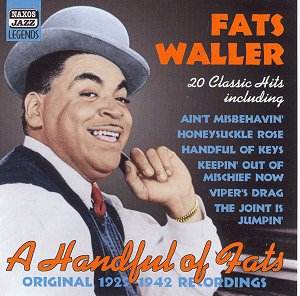
Thomas Wright Waller was the youngest of 11 children (five survived childhood) born to Adeline Locket Waller and Reverend Edward Martin Waller in New York City.
He started playing the piano when he was six and graduated to the organ of his father’s church four years later.
His mother instructed him as a youth. At the age of 14 he was playing the organ at Harlem’s Lincoln Theater and within 12 months he had composed his first rag. Waller’s first piano solos (“Muscle Shoals Blues” and “Birmingham Blues”) were recorded in October 1922 when he was 18 years old.
He was the prize pupil, and later friend and colleague, of stride pianist James P. Johnson.
Overcoming opposition from his clergyman father, Waller became a professional pianist at 15, working in cabarets and theaters.[citation needed] In 1918 he won a talent contest playing Johnson’s “Carolina Shout”, a song he learned from watching a player piano play it.
Waller ultimately became one of the most popular performers of his era, finding critical and commercial success in his homeland and in Europe. He was also a prolific songwriter and many songs he wrote or co-wrote are still popular, such as “Honeysuckle Rose”, “Ain’t Misbehavin'” and “Squeeze Me”.
Fellow pianist and composer Oscar Levant dubbed Waller “the black Horowitz”. Waller is believed to have composed many novelty tunes in the 1920s and 1930s and sold them for relatively small sums, the attributions of which, on becoming widely known, went only to a later composer and lyricist.
Standards alternatively and sometimes controversially attributed to Waller include “I Can’t Give You Anything but Love, Baby”.
Biographer Barry Singer conjectured that this jazz classic was written by Waller and lyricist Andy Razaf, and provides a description of the sale given by Waller to the NY Post in 1929—for $500, to a white songwriter, ultimately for use in a financially successful show (consistent with Jimmy McHugh’s contributions first to Harry Delmar’s Revels, 1927, and then to Blackbirds, 1928).
He further supports the conjecture, noting that early handwritten manuscripts in the Dana Library Institute of Jazz Studies of “Spreadin’ Rhythm Around” (Jimmy McHugh ©1935) are in Waller’s hand.
Jazz historian P.S. Machlin comments that the Singer conjecture has “considerable [historical] justification”.
Waller’s son Maurice wrote in his 1977 biography of his father that Waller had once complained on hearing the song, and came from upstairs to admonish him never to play it in his hearing because he had had to sell it when he needed money.
Maurice Waller’s biography similarly notes his father’s objections to hearing “On the Sunny Side of the Street” playing on the radio.
Waller recorded “I Can’t Give You…” in 1938, playing the tune but making fun of the lyrics; the recording was with Adelaide Hall who had introduced the song to the world at Les Ambassadeurs Club in New York in 1928.
The anonymous sleeve notes on the 1960 RCA Victor album Handful of Keys state that Waller copyrighted over 400 songs, many of which co-written with his closest collaborator Andy Razaf.
Razaf described his partner as “the soul of melody… a man who made the piano sing… both big in body and in mind… known for his generosity… a bubbling bundle of joy”.
Gene Sedric, a clarinetist who played with Waller on some of his 1930s recordings, is quoted in these same sleeve notes recalling Waller’s recording technique with considerable admiration: “Fats was the most relaxed man I ever saw in a studio, and so he made everybody else relaxed.
After a balance had been taken, we’d just need one take to make a side, unless it was a kind of difficult number.”
Waller played with many performers, from Nathaniel Shilkret and Gene Austin, to Erskine Tate, Fletcher Henderson, McKinney’s Cotton Pickers and Adelaide Hall, but his greatest success came with his own five- or six-piece combo, “Fats Waller and his Rhythm”.
His playing once put him at risk of injury. Waller was kidnapped in Chicago leaving a performance in 1926. Four men bundled him into a car and took him to the Hawthorne Inn, owned by Al Capone.
Waller was ordered inside the building, and found a party in full swing. Gun to his back, he was pushed towards a piano, and told to play. A terrified Waller realized he was the “surprise guest” at Capone’s birthday party, and took comfort that the gangsters did not intend to kill him.
It is rumored that Waller stayed at the Hawthorne Inn for three days and left very drunk, extremely tired, and had earned thousands of dollars in cash from Capone and other party-goers as tips.
In 1926, Waller began his recording association with the Victor Talking Machine Company/RCA Victor, his principal record company for the rest of his life, with the organ solos “St. Louis Blues” and his own composition, “Lenox Avenue Blues”.
Although he recorded with various groups, including Morris’s Hot Babes (1927), Fats Waller’s Buddies (1929) (one of the earliest multiracial groups to record), and McKinney’s Cotton Pickers (1929), his most important contribution to the Harlem stride piano tradition was a series of solo recordings of his own compositions: “Handful of Keys”, “Smashing Thirds”, “Numb Fumblin'”, and “Valentine Stomp” (1929).
After sessions with Ted Lewis (1931), Jack Teagarden (1931) and Billy Banks’ Rhythmakers (1932), he began in May 1934 the voluminous series of recordings with a small band known as Fats Waller and his Rhythm.
This six-piece group usually included Herman Autrey (sometimes replaced by Bill Coleman or John “Bugs” Hamilton), Gene Sedric or Rudy Powell, and Al Casey.
Waller wrote “Squeeze Me” (1919), “Keepin’ Out of Mischief Now”, “Ain’t Misbehavin'” (1929), “Blue Turning Grey Over You”, “I’ve Got a Feeling I’m Falling” (1929), “Honeysuckle Rose” (1929) and “Jitterbug Waltz” (1942). He composed stride piano display pieces such as “Handful of Keys”, “Valentine Stomp” and “Viper’s Drag”.
He enjoyed success touring the United Kingdom and Ireland in the 1930s. He appeared in one of the first BBC television broadcasts.
Waller was returning to New York City from Los Angeles, after the smash success of Stormy Weather, and after a successful engagement at the Zanzibar Room, during which he had fallen ill.
More than 4,000 people attended his funeral in Harlem, which prompted Dr. Adam Clayton Powell, Jr., who delivered the eulogy, to say that Fats Waller “always played to a packed house.”
Afterwards he was cremated and his ashes were scattered, from an airplane piloted by an unidentified World War black aviator, over Harlem.
One of his surviving relatives is former Georgia Tech Yellow Jacket and current Baltimore Ravens wideout Darren Waller, who is Fats’ paternal great-grandson.
Sources WIKIPEDIA
Instrumental music, Jazz…Daily on RS2 : Between Midnight and 05h00 AM paris Time.
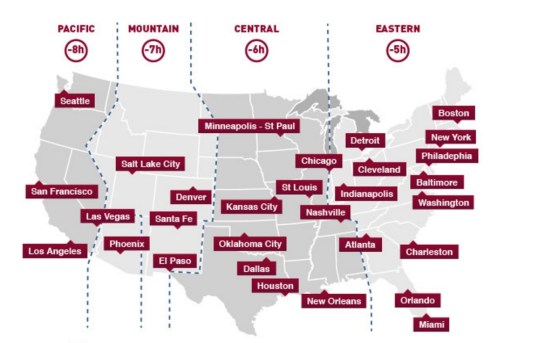
Jet Lag between FRANCE – USA


Video to watch with Google Chrome. Seems that Firefox dosen’t display the video (always)
The statler Brothers are DAILY played on RADIO SATELLITE2 ( click on Logo RS2, to listen)
between 10h00 PM and Midnight Paris Time
Originally performing gospel music at local churches, the group billed themselves as The Four Star Quartet, and later The Kingsmen.
In 1963, when the song “Louie, Louie” by the garage rock band also called The Kingsmen became famous, the group elected to bill themselves as The Statler Brothers. Despite the name, only two members of the group (Don and Harold Reid) are actual brothers and none have the surname of Statler.
The band, in fact, named themselves after a brand of facial tissue they had noticed in a hotel room (they joked that they could have turned out to be the Kleenex Brothers).
Don Reid sang lead; Harold Reid, Don’s older brother, sang bass; Phil Balsley sang baritone; and Lew DeWitt sang tenor and was the guitarist of the Statlers before being replaced by Jimmy Fortune in 1983 due to DeWitt’s ill health.
DeWitt died on August 15, 1990, of heart and kidney disease, stemming from complications of Crohn’s disease.
The band’s style was closely linked to their gospel roots. “We took gospel harmonies,” said Harold Reid, “and put them over in country music.”
The group remained closely tied to their gospel roots, with a majority of their records containing at least one gospel song. They produced several albums containing only gospel music and recorded a tribute song to the Blackwood Brothers, who influenced their music. The Statler Brothers also wrote a tribute song to Johnny Cash, who discovered them. The song was called “We Got Paid by Cash”, and it reminisces about their time with Cash.
Very early on in the group’s history, before the group named themselves “The Statler Brothers,” Joe McDorman was their original lead singer.
The Statler Brothers started their career at a performance at Lyndhurst Methodist Church near their hometown of Staunton.
In 1964, they started to become Johnny Cash’s backing vocal for an 8 1⁄2-year run as his opening act.
This period of their career was memorialized in their song “We Got Paid by Cash”. They were featured regularly on Cash’s hit show The Johnny Cash Show on ABC. The show ran from 1969-1971. Due to their expanding career the Statlers left Cash’s entourage around the mid 1970s to pursue their own careers. They left Cash on good terms.
Two of their best-known songs are “Flowers on the Wall”, their first major hit that was composed and written by Lew DeWitt, and the socially conscious “Bed of Rose’s”. In the 1980s, the Statlers were a mainstay on The Nashville Network (TNN), where their videos were shown regularly. Also on TNN, between 1991 and 1998, they hosted their own show, The Statler Brothers Show, a weekly variety show which was the channel’s top-rated program for its entire run.
Their songs have been featured on several film soundtracks. These range from “Charlotte’s Web” in Smokey and the Bandit II, to “Flowers on the Wall” in the crime dramedy Pulp Fiction.
Throughout their career, much of their appeal was related to their incorporation of comedy and parody into their musical act, thanks in large part to the humorous talent of group member Harold Reid; they were frequently nominated for awards for their comedy as well as their singing. They recorded two comedy albums as Lester “Roadhog” Moran and the Cadillac Cowboys, and one-half of one side of the album Country Music Then and Now was devoted to satirizing small-town radio stations’ Saturday morning shows.
They earned the number one spot on the Billboard chart four times: for “Do You Know You Are My Sunshine?” in 1978; “Elizabeth” in 1984; and in 1985, “My Only Love” and “Too Much on My Heart”.
Since forming, the Statler Brothers have released over 40 albums.
The Statler Brothers purchased and renovated their former elementary school in Staunton, and occupied the complex for several years.
The complex consisted of offices for the group, a small museum and auditorium, as well as an adjacent building which served as office space for unrelated businesses. A garage was built to store the two tour buses that the group had used for many years. The group has since sold the building which has been converted back into a school.[citation needed]
In 1970, the group began performing at an annual Independence Day festival in Gypsy Hill Park in Staunton. The event, known as “Happy Birthday USA”, lasted for 25 years and included many country music figures including Mel Tillis, Charley Pride and many others. The event drew as many as 100,000 fans each year. The group also honored their hometown with the song “Staunton, Virginia” on their 1973 album Do You Love Me Tonight.
The group disbanded and retired after completing a farewell tour on October 26, 2002. Balsley and the Reid brothers continue to reside in Staunton, while Fortune relocated to Nashville, where he is continuing his music career as a solo artist. He has released three albums as a soloist. The Statlers continue to be one of the most awarded acts in the history of country music.
Since the Statlers’ retirement in 2002, Don Reid has pursued a second career as an author. He authored or co-authored three books: Heroes and Outlaws of the Bible, Sunday Morning Memories, and You’ll Know It’s Christmas When…. He and brother Harold co-wrote a history of the Statler Brothers titled Random Memories released in February 2008.
Wil and Langdon Reid, the sons of Harold and Don respectively, formed a duo in the 1990s, originally performing under the name Grandstaff. In 2007, Grandstaff recorded “The Statler Brothers Song”, a tribute song to the Statler Brothers.
In an interview on Nashville’s WSM (AM) on March 25, 2010, Wil Reid said that they decided to change their name to Wilson Fairchild after many people got the name “Grandstaff” wrong during introductions. The name comes from “Wilson”, Wil’s middle name, and “Fairchild”, Langdon’s middle name.
Les Statler Brothers sont un groupe de musique country américain qui s’est formé en 1955 dans la ville de Staunton en Virginie.
Originellement chanteurs de gospel dans les églises de leur état, les membres du groupe se sont ensuite attribué le surnom de « Four Stars » (Quatre étoiles) puis de Kingsmen.
Mais étant donné que le groupe The Kingsmen portait déjà ce nom, le groupe prit finalement le nom de Statler Brothers.
Le groupe avoua par la suite avoir pris ce nom en référence à une marque de mouchoirs. En plaisantant, ils expliquèrent même qu’ils auraient tout aussi bien pu s’appeler les Kleenex Brothers.
Le groupe se compose bel et bien de deux frères, Don Reid (soliste) et Harold Reid (basse).
Les deux autres membres sont le baryton Phil Balsley et le tenor Jimmy Fortune, qui a remplacé Lew DeWitt, l’un des fondateurs du groupe, lorsqu’il prit sa retraite, en 1982, afin de soigner la Maladie de Crohn, dont il souffrait depuis son adolescence, et dont les complications provoquèrent son décès en 1990.
Le style musical du groupe est resté tout au long de sa carrière très proche de ses racines de gospel. Ainsi, Harold Reid expliqua que le groupe utilisa « les mélodies du gospel pour les transposer dans la musique country ».
Ainsi, la plupart des albums proposent des titres issus du gospel. Certains albums reposaient même intégralement sur du gospel.
Les chansons des Statler Brothers sont apparues dans de nombreuses bandes originales de films ou de jeux vidéo. Ainsi, la chanson Flowers on the wall apparaît dans Pulp Fiction de Quentin Tarantino, et les chansons Bed of Roses et New York City apparaissent dans le jeu vidéo Grand Theft Auto: San Andreas, sur la station K-Rose.
La carrière du groupe a duré 47 ans, depuis 1955 jusqu’en 2002, où Don Reid, Harold Reid et Phil Balsley ont annoncé leur retraite au cours d’une tournée d’adieu. Jimmy Fortune (en) continue depuis sa carrière en solo.
La carrière du groupe a débuté dans la Lynhurst Methodist Church située dans leur ville d’origine, Staunton.
En 1963 débuta une série de huit années de premières parties dans les concerts de Johnny Cash. Cette première partie de carrière fut immortalisée dans leur chanson We were paid by cash (littéralement Nous étions payés cash).
Deux de leurs chansons les plus célèbres sont Flowers on the wall, leur premier gros titre, et Bed of Roses qui firent tous deux l’objet d’un album portant le même nom.
Dans les années 1980, les Statlers comptèrent parmi les groupes les plus importants de la chaîne câblée The Nashville Network où leurs vidéos étaient régulièrement diffusées. Entre 1991 et 1998, ils animèrent même leur propre émission, le The Statler Brothers Show, diffusé quotidiennement sur le TTN.
Le programme devint dès lors l’émission la plus regardée de l’émission durant toute la durée de sa diffusion.
Tout au long de leur carrière, leur succès reposa tant sur leurs talents musicaux que sur leur talent pour la comédie et la parodie qu’ils mettaient en œuvres lorsqu’ils chantaient.
Ils étaient ainsi souvent nominés pour des récompenses de comédiens, autant que de chanteurs. Deux de leurs albums, Lester Moran et Cadillac Cowboys se voulaient fondamentalement comiques, et la moitié de l’album Country Music Then and Now était consacré à une satire des émissions dominicales sur les petites radios locales.
Le groupe a atteint à quatre reprises la tête du Classement du Billboard avec leurs chansons Do You Know You Are My Sunshine? en 1978, Elizabeth en 1982, My Only Love en 1984, et Too Much on My Heart en 1985. Au cours de leur carrière, les Statler Brothers ont sorti plus de 40 albums.
La carrière des Statler Brothers a été auréolée de trois Grammy Award : ceux de Best New Country and Western Artist, de Best New Country Music Artist et de Best Contemporary (R&R) Performance en 1965.
Le 29 octobre 2007, cinq années après sa dernière tournée, le groupe a été officiellement intronisé au Gospel Music Hall of Fame de Nashville dans le Tennessee. Le 12 février 2008, l’entrée du groupe dans le Country Music Hall of Fame a été officiellement annoncée.
SOURCES WIKIPEDIA


LINDA HUNT Aka HETTY in NCIS LA
Elle est la fille d’Elsie Doying, professeur de piano, et de Raymond Davy Hunter, vice-président d’une compagnie pétrolière de Long Island, la Harper Fuel Oil. Elle a une sœur, Marcia.
Linda Hunt a étudié à l’université Interlochen Arts Academy. Elle a obtenu l’Oscar de la meilleure actrice dans un second rôle en 1984 pour son rôle dans L’Année de tous les dangers de Peter Weir.
Elle a servi de modèle à Brad Bird pour le personnage d’Edna E. Mode dans Les Indestructibles.
Elle est atteinte de nanisme hypophysaire (et non du syndrome de Turner comme écrit dans certains blogs), ce qui fait qu’elle a une taille (1,45 m) bien en dessous de la moyenne.
After making her film debut playing Mrs. Oxheart in Popeye (1980), Hunt portrayed the male character Billy Kwan, her breakthrough performance, in The Year of Living Dangerously (1982). Her role as Billy Kwan earned her an Academy Award, an Australian Film Institute Award, a Golden Globe nomination and various other awards.
She has had great success in films such as The Bostonians (1984), Dune (1984), Silverado (1985), Eleni (1985), Waiting for the Moon (1987), She-Devil (1989), Kindergarten Cop (1990), If Looks Could Kill (1991), Rain Without Thunder (1992), Twenty Bucks (1993), Younger and Younger (1993), Prêt-à-Porter (1994), Pocahontas (1995), The Relic (1997), Pocahontas II: Journey to a New World (1998), Dragonfly (2002), Yours Mine and Ours (2005) and Stranger Than Fiction (2006).
Hunt has also had a successful television career. She played Rose in the television movie Basements (1987) and narrated in the television movie The New Chimpanzees. She guest starred on Hallmark Hall of Fame in both 1978 and 1987, Space Rangers in 1993, Carnivale in both 2003 and 2005, Without a Trace in 2008, The Unit in 2008 and Nip Tuck in 2009. From 1997 to 2002, Hunt played the recurring role of Judge Zoey Hiller on The Practice. She currently portrays Henrietta ‘Hetty’ Lange on the CBS television series NCIS Los Angeles, a role she has held since the 2009 debut, for which she has received two Teen Choice Awards. She is also the narrator in the God of War video game franchise.
Hunt was born in Morristown, New Jersey, and raised in Westport, Connecticut. She is one of the two daughters of Raymond Davy Hunter, vice president of Harper Fuel Oil on Long Island, and Elsie Doying Hunter, a piano teacher who taught at the Westport School of Music and accompanied the Saugatuck Congregational Church choir. Hunt attended the Interlochen Arts Academy and the Goodman School of Drama in Chicago (now part of DePaul University)
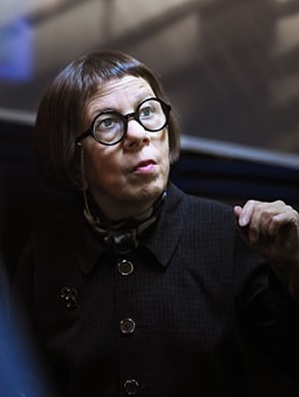
LINDA HUNT
Hunt’s film debut in 1980 was in Robert Altman’s musical comedy Popeye. Two years later, she co-starred as Billy Kwan in The Year of Living Dangerously, Peter Weir’s film adaptation of the novel of the same name.
For her role as the male Chinese-Australian photographer Billy Kwan, Hunt won the Academy Award for Best Supporting Actress in 1983, becoming the first person to win an Oscar for playing a character of the opposite sex.
In addition, the character was Asian and had the condition of dwarfism. In her screen test, Hunt wore a hairpiece, a fake moustache, and “paste-on pieces above her eyes to appear Oriental”.
To accomplish the role during production, Hunt shortened “her hair and dyed it black, wore padding around her waist, shaved her eyebrows, and carried something in her shirt pocket.” In her 1986 interview with the Bomb magazine, Hunt remarked that Billy Kwan “is supra-personal with layers of sexual ambiguity.”
Hunt also played a nurse in She-Devil (1989) and the austere school principal opposite Arnold Schwarzenegger in Kindergarten Cop in 1990.
Also a well known stage actress, Hunt has received two Obie awards and a Tony Award nomination for her theatre work.
She created the role of Aunt Dan in Wallace Shawn’s play Aunt Dan and Lemon. She portrayed Sister Aloysius in the Pasadena Playhouse production of John Patrick Shanley’s play Doubt.
She was praised for her performance as the title character in Bertolt Brecht’s Mother Courage and Her Children.
Hunt also appeared as Pope Joan in Caryl Churchill’s “Top Girls” when London’s Royal Court Theatre’s production was staged at the Public Theater in New York. In an interview with writer Craig Gholson and actor Vincent Caristi, Hunt discusses her experience acting in theatre, “Acting onstage is like an explosion each night.
And what comes in at you all the time as you are trying to create something which is a tremendous act of organization and concentration.”.
Her television appearances include recurring roles as Judge Zoey Hiller on David E. Kelley’s series The Practice and as Dr. Claire Bryson on Without a Trace. She has narrated several installments of The American Experience on PBS.
She now plays the role of an operations manager and supervisor on the CBS fall show NCIS: Los Angeles with Chris O’Donnell, LL Cool J, Daniela Ruah, Eric Christian Olsen and Barrett Foa.

HETTY AND CALLEN IN NCIS LOS ANGELES
Hunt has a rich, resonant voice, which she has used in numerous documentaries, cartoons, and commercials. She is the on-air host for City Arts & Lectures, a radio program recorded by KQED public radio at the Nourse Theater in San Francisco.
Hunt interviews celebrated writers, artists and thinkers addressing contemporary ideas and values, often discussing the creative process.
Hunt was chosen by Walt Disney Feature Animation to lend her enigmatic speaking and singing voice to Grandmother Willow in the animated musical film Pocahontas and its direct-to-video sequel Pocahontas II: Journey to a New World.
Her voice work includes also the character of “Management” in Carnivàle, and the titan Gaia, who serves as the Narrator in the God of War series of video games.
She narrated the introductory film at the International Spy Museum in Washington, D.C., and has also been heard in various commercials of the late 1990s for Tylenol.
Hunt narrated the PBS Nature special entitled “Christmas in Yellowstone”. She also narrated the National Geographic documentary The Great Indian Railway.

HENRIETTA HETTY NCIS L.A.
SOURCES WIKEPEDIA
ALSO ABOUT NCIS ON OUR WEBSITE : ZIVA DAVID AKA COTE PABLO


