Independent music radio dedicated to instrumental and country sounds from around the world. Here, style matters more than language, and music travels across cultures
En raison de la situation actuelle, suite aux attaques terroristes contre la capitale Française; Où que vous soyez dans le monde, restez informés en écoutant
Here is the “page” for RS2 : For computers / Smartphones / Tablets: It’s possible ( and easy) to log and listen: Just click on this link ( FREE of charge of course)
Voici la page de RS2 : Pour ordinateurs/ Smartphones / Tablettes: Il suffit de cliquer sur ce lien ( C’est gratuit bien évidemment)
Marion Lorne (August 12, 1883 – May 9, 1968) was an American actress of stage, film, and television.After a career in theatre in New York and London, Lorne made her first film in 1951, and for the remainder of her life, played small roles in films and television.
Her recurring role, between 1964 and her death in 1968, as Aunt Clara in the comedy series, Bewitched (1964–1972) brought her widespread recognition, and for which she was posthumously awarded an Emmy Award for Outstanding Supporting Actress in a Comedy Series.
She was born Marion Lorne MacDougall in West Pittston, Pennsylvania, a small mining town halfway between Wilkes-Barre and Scranton, of Scottish and English immigrant parents. While her year of birth is listed as 1885 on her tombstone, it was usually listed as 1888 when she was alive and the Social Security Death Index lists it as 1883. She studied at the American Academy of Dramatic Arts in New York City.
Career Lorne debuted on Broadway in 1905; she also acted in London theaters, enjoying a flourishing stage career on both sides of the Atlantic Ocean.
In London she had her own theater, the Whitehall, where she had top billing in plays written by Walter Hackett, her husband. None of her productions at the Whitehall had runs shorter than 125 nights.
After appearing in a couple of Vitaphone shorts, including Success (1931) starring Jack Haley, she made her feature film debut in her late 60s in Strangers on a Train (1951), directed by Alfred Hitchcock.
The role was typical of the befuddled, nervous, and somewhat aristocratic matrons that she usually portrayed.
This slideshow requires JavaScript.
From 1952-55, Lorne was seen as perpetually confused junior high school English teacher Mrs. Gurney on Mr. Peepers. From 1957–58, she co-starred with Joan Caulfield in the NBC sitcom Sally in the role of an elderly widow who happens to be the co-owner of a department store. Although afraid of live television, declaring “I’m a coward when it comes to a live [television] show”, she was persuaded to appear a few times to promote the film The Girl Rush with Rosalind Russell in the mid-1950s.
Between 1958–64, she made regular appearances on The Garry Moore Show (1958–64).Her last role, as Aunt Clara in Bewitched, brought Lorne her widest fame as a lovable, forgetful witch who is losing her powers due to old age and whose spells usually end in disaster. Aunt Clara is obsessed with doorknobs, often bringing her collection with her on visits.
Lorne had an extensive collection of doorknobs in real life, some of which she used as props in the series.[8]DeathShe appeared in twenty-seven episodes of Bewitched, and was not replaced after she died of a heart attack in her Manhattan apartment, just prior to the start of production of the show’s fifth season, at the age of 84 on May 9, 1968.Lorne is buried at Ferncliff Cemetery in Greenburgh, New York.
PosthumousThe producers of Bewitched recognized that Lorne’s performance as Aunt Clara could not be replicated by another actress. Comedic actress Alice Ghostley was recruited to fill the gap as “Esmeralda”, a different type of befuddled witch with wobbly magic whose spells often went astray.
Coincidentally, Lorne and Ghostley had appeared side-by-side as partygoers in the iconic comedy-drama film The Graduate , made the year before Lorne’s death. She received a posthumous Emmy Award for Outstanding Supporting Actress in a Comedy Series for her work on Bewitched.The statue was accepted by Bewitched star Elizabeth Montgomery.Personal lifeShe was married to playwright Walter Hackett, who died in 1944.WIKIPEDIA SOURCES Personal lifeShe was married to playwright Walter Hackett, who died in 1944.
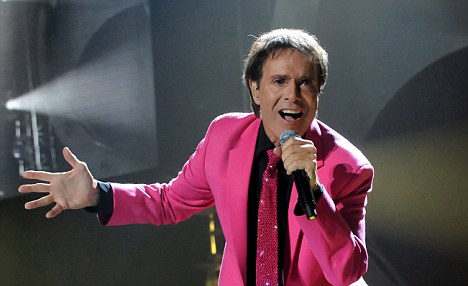
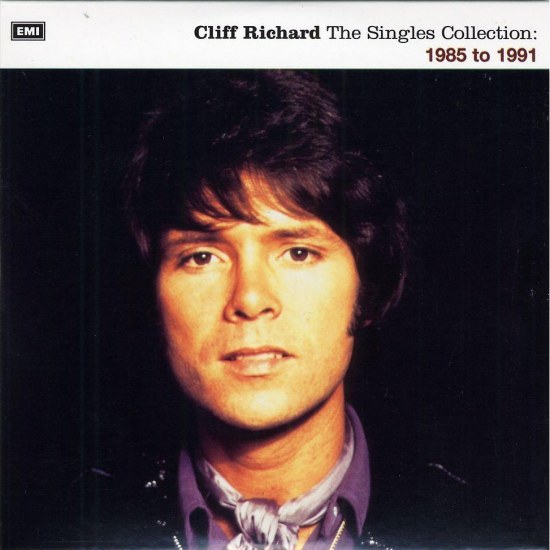
He started life as Harry Webb and spent some of his childhood years in India. Cliff Richard was inspired by the music of Elvis Presley and at age 16, formed a band, ‘The Quintones’, with school friends and performed at their local Youth Club. From there, Cliff Richard went from strength to strength and became a global star.
Having moved to India to help build a system of railways, Rodger Webb married Dorothy Dazely in 1939 and the following year the couple had a baby boy – Harry Rodger Webb.
Born in The King’s English Hospital in Lucknow, Harry was educated in Howrah, until his family moved to England in 1948, following Home Rule in India.
After a privileged life in India, the Webbs faced poverty, and were forced to sleep on mattresses at the houses of various relatives. In 1951, they were given a council house in Chesthunt, and after just failing the eleven-plus exam, Harry was enrolled in the newly built Cheshunt County Secondary School.
After being inspired by the music of Elvis, Harry and a group of school friends formed a group, ‘The Quintones’, and performed at their local Youth Club.
For his 16th birthday, Harry got his first guitar, going on to form ‘The Drifters’ in 1958, with Terry Smart and Norman Mitham. After a number of low-key London gigs, Ian Samwell joined the band and they recorded their first demo, covers of Elvis’ ‘Lawdy Miss Clawdy’ and Jerry Lee Lewis’ ‘Breathless’.
After recording their first hit single, ‘Schoolboy Crush/Move It’, they were quickly signed by Columbia. The song hit No.2 in the British charts, and went on to sell over a million copies.
Now going under the name Cliff Richard, an appearance on the TV show ‘Oh Boy!’ catapulted Cliff to sex symbol status.
In 1958, Hank Marvin and Bruce Welch joined ‘The Drifters’, and by 1959 the band changed their name to ‘The Shadows’. It was also around this time that Cliff made his film debut in ‘Serious Charge’. The film produced the hit ‘Living Doll’, Cliff’s first number one hit.
Cliff’s second movie, ‘Expresso Bongo’, was more successful and critically acclaimed. As the albums and hit singles rolled out, Cliff Richard was building a devoted fan base that would secure his chart success some 40 years later.
In 1961, Cliff starred in ‘The Young Ones’, and the accompanying single shot straight into number one in the charts. The second film with Cliff in the leading role was another musical, ‘Summer Holiday’, which saw him star alongside Una Stubbs.
1968 saw the last album recorded by Cliff with ‘The Shadows’, and Cliff went on to tour with his own gospel album. In 1970, Cliff launched his first television show, featuring a mix of music and comedy. In the same year, he made his stage debut in Peter Shaffer’s ‘Five Finger Exercise’, a play focusing on a ‘deep friendship’ between a student and his tutor. The play was originally considered controversial for its veiled homosexual themes but despite this, reviews were favourable.
One of the most talked about aspects of Cliff’s life is his relationships. A much publicised relationship with tennis star Sue Barker in 1981 ended within a year. Cliff has also been linked with actress Una Stubbs.
In 1986, Cliff and The Young Ones re-recorded ‘Living Doll’ and made it to the top of the charts. In the same year he appeared in the West End musical ‘Time’, and by the end of the decade he had released his highest selling album of all time, ‘Private Collection’, which went on to be certified four-times platinum in the UK alone!
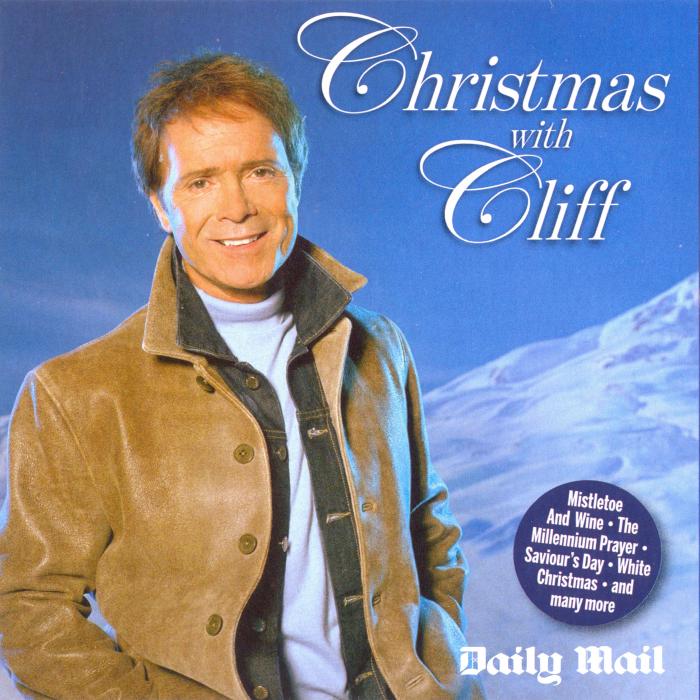
‘Mistletoe & Wine’ become Cliff’s first Christmas-themed No.1 in 1988 and by 1989, Cliff became the first British artist to release 100 singles. Cliff continued to tour and break records throughout the 1990s, and in 1995 he became Sir Cliff Richard – the first pop star to be honoured with a full Knighthood.
Despite selling records by the lorry load, Cliff ran into trouble getting airplay from various radio stations, including a ban by the BBC for his track ‘Misunderstood Man’, which was deemed “too raucous” for listeners.
Perhaps the most significant project for Cliff in the nineties was the fulfilment of his lifelong dream to play the character of Heathcliff in Emily Bronte’s masterpiece, ‘Wuthering Heights’. The show was a runaway success, and gave Cliff his highest selling video ever, topping the UK video charts for two months upon its 1998 release.
In 1999, ‘The Millennium Prayer’ reached number one, regardless of no airplay and scathing reviews. Despite a lack of support in the press, Cliff continues to make music and his recent album and DVD release cracked the top twenty.
Cliff now divides his time between his homes in the UK, Barbados and Portugal, where he has taken to making his own wine.
Comme prévu et convenu, le partenariat RADIO SATELLITE et WINDOWS MEDIA GUIDE a repris sur 2014.
D’une part RADIO SATELLITE, après avoir testé et essayé divers players, il s’est avéré que le plus fiable est celui de WINDOWS: D’où l’installation du WINDOWS MEDIA PLAYER sur la page Facebook de Radio Satellite ( www.facebook.com/radiosatellite.live )
D’autres part, WMG a testé RADIO SATELLITE. Après écoute et analyses, Votre “radio Satellite “fut choisie comme LA radio Numéro 1 , actuellement, sur le site de WMG.
Pour la suite, restez à l’écoute de Radio Satellite pour de nombreuses surprises.
You can listen to Radio Satellite on WINDOWS MEDIA GUIDE.
Partenariat entre Windows media et Satellite Media
incluant Radio Satellite2 & Radio Satellite
Un accord et partenariat déjà conclu en 2013 est renouvellé cette année aussi entre RADIO SATELLITE et WINDOWS MEDIA GUIDE ( du groupe Windows / Microsoft ) EN 2014
Nous rappellons que vous pouvez écouter RADIO SATELLITE sur le site annuaire des guides radios
WINDOWS MEDIA GUIDE.
Radio Satellite fera la UNE en 2014 à plusieurs reprises.
Nous vous conseillons vivement d’écouter Radio Satellite sur le player de Windows qui retransmet une super bonne qualité de son.