Independent music radio dedicated to instrumental and country sounds from around the world. Here, style matters more than language, and music travels across cultures
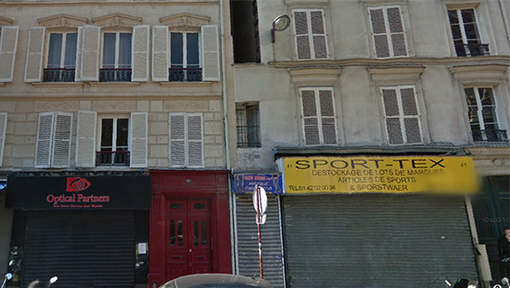
Comme écrasée entre deux grands immeubles, avec ses 5 mètres de haut et son mètre dix de large, cette maison du dixième arrondissement est réputée pour être la plus petite de Paris.
Profonde de trois mètres, on y trouve un minuscule magasin au rez-de-chaussée ainsi qu’une pièce à l’étage. Elle aurait vu le jour suite à un différend familial.
La famille possédant ce qui était à l’origine un passage ne parvenant pas à se mettre d’accord à propos de celui-ci, l’a tout simplement bouché. Ce qui a donné lieu à cette exception architecturale, sise au 39 rue du Château d’eau.
Rejoignez nous sur RS2, si vous aimez la variété Françophone ( Quebec,Suisse, France, Belgique) Si vous aimez la country music Si vous aimez les musiques du monde Si vous aimez les musiques instrumentales Si vous aimez…tout court.
Dans le cadre de nos articles artistiques, nous aimerions vous proposer notre découverte et notre joie de partager cette beauté.
Si vous aimez la beauté,
Si vous aimez l’art,
Si vous appréciez les tableaux artistiques / verre acryliques
Eh bien, vous allez aimer notre découverte:
Il s’agit de CREARTLIVE.
Eh oui… Faites un détour et découvrez ces beautés artistiques.
Les photos parleront d’elles mêmes….Nous vous dirons ensuite, comment vous faire plaisir.. Si…Si… Vous faire plaisir…. Le faites vous souvent???
Pensez y….Pensez vous faire plaisir en noyant vos regards, votre environnement dans ces beautés artistiques.
Nous vous donnerons par la suite, de plus amples détails pour que vous puissiez vous faire plaisir et savoir où, comment?
Reprenons notre présentation :
Creartlive s’est imposée à partir d’expériences positives dans le domaine de la création en passant de la fabrication à la modélisation 3D.
CREARTLIVE – Pour l’amour de l’Art
Marie- José HAIMARD ANDREANI , de la Socité HAIMARD, nous propose un style nouveau, un choix de tableaux originaux, glamour, esthétiques, colorés et attractifs pour embellir et décorer vos meubles ou vos murs.
Ces créations de grande qualité artistique, fruit de milliers d’heures de travail, réalisés en conception graphique 3D refkètent et inspirent le bonheur, la sérénité, la joie de vivre
Elles apporteront à vos espaces une touche inédite, une note personnelle et créeront une ambiance.
Présentation de Mme Marie-José HAIMARD ANDRENI et de l’entreprise HAIMARD
Passionnés par la décoration, la création et l’esthétique,
En 1993 Création de la Sté Haimard. Fabrication de luminaires en résine pâte de verre ( 19 coloris pastels ) commercialisés en France et à l’étranger ( USA, Corée, Portugal, Belgique, Emirats ), référencements nationaux et internationaux ont contribué à une vraie réussite en terme de produits.( décision de cesser l’activité au regard des coûts de fabrication ) ;
Poste occupé par Mme Marie-José HAIMARD ANDREANI : Chargée de la création et de la réalisation de modèles pour la fabrication de moules .
Mon goût de l’esthétique et ma passion de créer demeurent intacts C’est pourquoi aujourd’hui je continue de créer nous dit Marie-José
Et si vous souhaitez entrer en contact direct et personnel avec Marie-José?? Ses profils GOOGLE+ sont à votre disposition
HAIMARD ANDREANI MARIE JOSE
1416 Abonnés – 282 786 Consultations
MARIE JOSE ANDREANI
1205 Abonnés – 105 152 Consultations
Poursuivons notre promenade visuel pour le plaisir.
This slideshow requires JavaScript.
A la fin de cet article, vous pourrez écouter l’annonce faite par CREATLIVE à votre attention.
Avant de cloturer notre article coup de coeur:
CREARTLIVE, présent sur le website de l’entreprise certes
CREARTLIVE présent sur AMAZON.FR ( à partir du 05 Mai 2015 )
CREARTLIVE à votre disposition sur les pages de Mme MARIE-JOSE HAIMARD ( ANDREANI) voir plus haut pour les profils
Voici notre coup de coeur, article, promo…Tous les mots sont valables dans la mesure où nous partageons avec vous la beauté de l’art, des artistes et de leurs oeuvres.
N’hésitez pas à vous connecter sur les sites de CREARTLIVE et par la suite sur AMAZON.FR
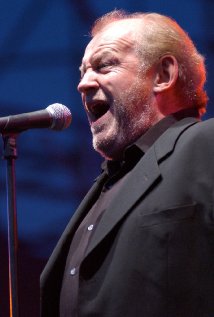
John Robert “Joe” Cocker OBE (20 May 1944 – 22 December 2014) was an English rock and blues singer, who came to popularity in the 1960s, and is known for his gritty voice, his spasmodic body movement in performance and his cover versions of popular songs, particularly those of the Beatles.
His cover of the Beatles’ “With a Little Help from My Friends” reached number one in the UK in 1968, and he performed the song live at Woodstock in 1969. His version also became the theme song for the TV series The Wonder Years. His 1975 hit single, “You Are So Beautiful”, reached number five in the US. Cocker is the recipient of several awards, including a 1983 Grammy Award for his US number one “Up Where We Belong”, a duet with Jennifer Warnes. In 1993 he was nominated for the Brit Award for Best British Male, and in 2008 he received an OBE at Buckingham Palace for services to music.
Cocker was ranked #97 on Rolling Stone’s 100 greatest singers list. Cocker was born on 20 May 1944 at 38 Tasker Road, Crookes, Sheffield, West Riding of Yorkshire. He is the youngest son of a civil servant, Harold Cocker, and Madge Cocker. According to differing family stories, Cocker received his nickname of Joe either from playing a childhood game called “Cowboy Joe” or from a local window cleaner named Joe. Cocker’s main musical influences growing up were Ray Charles and Lonnie Donegan. Cocker’s first experience singing in public was at age 12 when his elder brother Victor invited him on stage to sing during a gig of his skiffle group. In 1960, along with three friends, Cocker formed his first group, the Cavaliers. For the group’s first performance at a youth club, they were required to pay the price of admission before entering. The Cavaliers eventually broke up after a year and Cocker left school to become an apprentice gasfitter while simultaneously pursuing a career in music.
In 1961, under the stage name Vance Arnold, Cocker continued his career with a new group, Vance Arnold and the Avengers. The name was a combination of Vince Everett, Elvis Presley’s character in Jailhouse Rock, (which Cocker misheard as Vance) and country singer Eddy Arnold. The group mostly played in the pubs of Sheffield, performing covers of Chuck Berry and Ray Charles songs. In 1963, they booked their first significant gig when they supported the Rolling Stones atSheffield City Hall. In 1964, Cocker signed a recording contract as a solo act with Decca and released his first single, a cover of the Beatles’ “I’ll Cry Instead” (with Big Jim Sullivan and Jimmy Page playing guitars).
Despite extensive promotion from Decca lauding his youth and working class roots, the record was a flop and his recording contract with Decca lapsed at the end of 1964. After Cocker recorded the single, he dropped his stage name and formed a new group, Joe Cocker’s Big Blues. There is only one known recording of Joe Cocker’s and Big Blues on an EP given out by Sheffield College during Rag Week and called Rag Goes Mad at the Mojo. It contained a cover of Curtis Mayfield’s “I’ve Been Trying” and a track of “Saved”. The Grease Band (1966–1969) In 1966, after a year-long hiatus from music, Cocker teamed up with Chris Stainton, whom he had met several years before, to form the Grease Band.The Grease Band was named after Cocker read an interview with jazz musician Jimmy Smith, where Smith described another musician as “having a lot of grease”.
Like the Avengers, Cocker’s group mostly played in pubs in and around Sheffield. The Grease Band came to the attention of Denny Cordell, the producer of Procol Harum, the Moody Blues and Georgie Fame. Cocker recorded the single “Marjorine” without the Grease Band for Cordell in a London studio. He then moved to London with Chris Stainton, and the Grease Band was dissolved. Cordell set Cocker up with a residency at the Marquee Club in London, and a “new” Grease Band was formed with Stainton and keyboardist Tommy Eyre. After minor success in the US with the single “Marjorine”, Cocker entered the big time with a groundbreaking rearrangement of “With a Little Help from My Friends”, another Beatles cover, which, many years later, was used as the opening theme for The Wonder Years.
The recording features lead guitar from Jimmy Page, drumming by BJ Wilson, backing vocals from Sue and Sunny, and Tommy Eyre on organ. The single made the Top Ten on the British charts, remaining there for thirteen weeks and eventually reaching number one, on 9 November 1968. It also reached number 68 on the US charts. The new touring line-up of Cocker’s Grease Band featured Henry McCullough on lead guitar, who would go on to briefly play with McCartney’s Wings. After touring the UK with the Who in autumn 1968and Gene Pitney and Marmalade in early winter 1969, the Grease Band embarked on their first tour of the US in spring 1969. Cocker’s album With a Little Help from My Friends was released soon after their arrival and made number 35 on the American charts, eventually going gold. During his US tour, Cocker played at several large festivals, including the Newport Rock Festivaland the Denver Pop Festival.
In August, Denny Cordell heard about the planned concert inWoodstock, New York and convinced organiser Artie Kornfeld to book Cocker and the Grease Band for the Woodstock Festival. The group had to be flown into the festival by helicopter due to the large crowds. They performed several songs, including “Delta Lady”, “Something’s Comin’ On”, “Let’s Go Get Stoned”, “I Shall Be Released”, and “With a Little Help from My Friends”. Cocker would later say that the experience was “like an eclipse… it was a very special day.”
Directly after Woodstock, Cocker released his second album, Joe Cocker!. Impressed by his cover of “With a Little Help from My Friends”, Paul McCartney and George Harrison allowed Cocker to use their songs “She Came in Through the Bathroom Window” and “Something” for the album.Recorded during a break in touring in the spring and summer, the album reached number 11 on the US charts and garnered a second UK hit with the Leon Russell song, “Delta Lady”. Throughout 1969 he was featured on variety TV shows like The Ed Sullivan Show and This Is Tom Jones. Onstage, he exhibited an idiosyncratic physical intensity, flailing his arms and playing air guitar, occasionally giving superfluous cues to his band.
At the end of the year Cocker was unwilling to embark on another US tour, so he dissolved the Grease Band. Despite Cocker’s reluctance to venture out on the road again, an American tour had already been booked so he had to quickly form a new band in order to fulfil his contractual obligations. It proved to be a large group of more than 30 musicians, including pianist and bandleader Leon Russell, three drummers, and backing vocalists Rita Coolidge and Claudia Lennear.
The new band was christened “Mad Dogs and Englishmen” by Denny Cordell after the Noël Coward song of the same name. His music at this time evolved into a more bluesy type of rock, often compared to that of the Rolling Stones. During the ensuing Mad Dogs and Englishmen tour (later described by drummer Jim Keltner as “a big, wild party”), Cocker toured 48 cities, recorded a live album, and received very positive reviews from Time and Life for his performances. However, the pace of the tour was exhausting. Russell and Cocker had personal problems and Cocker became depressed and began drinking excessively as the tour wound down in May 1970.
Meanwhile, he enjoyed several chart entries in the US with “Cry Me a River” and “Feelin’ Alright” by Dave Mason. His cover of the Box Tops’ hit “The Letter”, which appeared on the live album and film, Mad Dogs and Englishmen, became his first US Top Ten hit. After spending several months in Los Angeles, Cocker returned home to Sheffield where his family became increasingly concerned with his deteriorating physical and mental health. During this time, in periods between work, Cocker wrote the overture played by Ted Heathon the occasion the Prime Minister famously conducted a live orchestra whilst in office. In the summer of 1971 the A&M Recordssingle release appeared in the US of “High Time We Went”.
This became a hit, reaching number 22 on the US Billboard Hot 100 chart, but was not issued on an album until November 1972 on the Joe Cocker album. In early 1972, after nearly two years away from music, Cocker went on tour with a group that Chris Stainton had formed. He opened with a performance in Madison Square Garden which was attended by about 20,000 people. After touring the US, he embarked on a European tour where he played to large audiences in Milan, Italyand Germany. He then returned to the US for another tour in autumn 1972. During these tours the group cut the songs that would be part of his newest album, Joe Cocker. A mixture of live songs and studio recordings, the album peaked at number 30 on the US charts.
Cocker performing on 16 October 1980 in the National Stadium, Dublin
In October 1972, when Cocker toured Australia, he and six members of his entourage were arrested in Adelaide by police for possession of marijuana. The next day in Melbourne, assault charges were laid after a brawl at the Commodore Chateau Hotel,and Cocker was given 48 hours to leave the country by the Australian Federal Police.
This caused huge public outcry in Australia, as Cocker was a high-profile overseas artist and had a strong support base, especially amongst the baby boomers who were coming of age and able to vote for the first time. It sparked hefty debate about the use and legalisation of marijuana in Australia and gained Cocker the nickname of “the Mad Dog”.Shortly after the Australian tour, Stainton retired from his music career to establish his own recording studio. After his friend’s departure and estrangement from longtime producer Denny Cordell, Cocker sank into depression and began using heroin. In June 1973 he kicked the habit, but continued to drink heavily. At the end of 1973, Cocker returned to the studio to record a new album, I Can Stand A Little Rain. The album, released in August 1974, was number 11 on the US charts and one single, a cover of Dennis Wilson and Billy Preston’s “You Are So Beautiful”, which reached the number 5 slot.Despite positive reviews for the album, Cocker struggled with live performances, largely due to his problems with alcohol.
One such instance was reported in a 1974 issue of Rolling Stone magazine, saying during two West Coast performances in October of that year he threw up on stage. In January 1975, he released a second album that had been recorded at the same time as I Can Stand a Little Rain, Jamaica Say You Will. To promote his new album, Cocker embarked on another tour of Australia, made possible by the country’s newLabor government. In late 1975, he contributed vocals on a number of the tracks on Bo Diddley’s The 20th Anniversary of Rock ‘n’ Roll all-star album. He also recorded a new album in a Kingston, Jamaica studio, Stingray.
However, record sales were disappointing; the album reached only number 70 on the US charts. In 1976, Cocker performed “Feelin’ Alright” on Saturday Night Live. John Belushi joined him on stage doing his famous impersonation of Cocker’s stage movements. At the time, Cocker was $800,000 in debt to A&M Records and struggling with alcoholism. Several months later, he met producer Michael Lang, who agreed to manage him on the condition that he stay sober.
With a new band, Cocker embarked on a tour of New Zealand, Australia and South America. He then recorded a new album with session work by Steve Gadd and Chuck Rainey, and a new, young bassist from Scotland, Rob Hartley. Hartley also toured briefly with Cocker’s friends in 1977. In the autumn of 1978, he went on a North American tour promoting his album, Luxury You Can Afford. Despite this effort, it received mixed reviews and only sold around 300,000 copies. In 1979, Cocker joined the “Woodstock in Europe” tour, which featured musicians like Arlo Guthrie and Richie Havens who had played at the 1969 Woodstock Festival.
He also performed in New York’s Central Park to an audience of 20,000 people. The concert was recorded and released as the live album, Live in New York. He also toured Europe and appeared on the German television recording amphitheatre, Rockpalast, the first of many performances on the show. In 1982, Cocker recorded two songs with the jazz group the Crusaders on their album Standing Tall. One song, ‘I’m So Glad I’m Standing Here Today’ was nominated for a Grammy Award and Cocker performed it with the Crusaders at the awards ceremony. The Crusaders wrote this song with Cocker in mind to sing it. Cocker then released a new reggae-influenced album, Sheffield Steel, recorded with the Compass Point All Stars, produced by Chris Blackwell and Alex Sadkin.
In 1982, at the behest of producer Stewart Levine, Cocker recorded the duet “Up Where We Belong” with Jennifer Warnes for the soundtrack of the 1982 film An Officer and a Gentleman. The song was an international hit, reaching number 1 on theBillboard Hot 100, and winning a Grammy Award for Best Pop Performance by a Duo. The duet also won an Academy Award for Best Original Song, and Cocker and Warnes performed the song at the awards ceremony. Several days later, he was invited to perform “You Are So Beautiful” with Ray Charles in a television tribute to the musician.
He then joined singer Ronnie Lane’s 1983 tour to raise money for the London-based organisation Action for Research into Multiple Sclerosis, in particular because Lane was beginning to suffer from the degenerative disease. Musicians such as Pete Townshend, Eric Clapton, Jimmy Page,Jeff Beck and Chris Stainton also participated in the tour which included a performance at New York City’s Madison Square Garden. While on another tour that year, Cocker was arrested by Austrian police after refusing to perform because of inadequate sound equipment.
The charges were eventually dropped and Cocker was released. Shortly after the incident, he released his ninth studio album, Civilized Man. His next album Cocker was dedicated to his mother, Madge, who died when he was recording in the studio with producer Terry Manning. A track from the album, “You Can Leave Your Hat On” was featured in the 1986 film 9½ Weeks. The album eventually went Platinum on the European charts.
His 1987 album Unchain My Heartwas nominated for a Grammy Award, although it did not win. One Night of Sin was also a commercial success, surpassingUnchain My Heart in sales. Throughout the 1980s, Cocker continued to tour around the world, playing to large audiences in Europe, Australia and the United States.
In 1988, he performed at London’s Royal Albert Hall and appeared on The Tonight Show. After Barclay James Harvest and Bob Dylan Cocker was the first to give Rock concerts in the German Democratic Republic, in East Berlin and Dresden.
The venue, the Blüherwiese, next to the Rudolf-Harbig-Stadion, bears the vernacular name Cockerwiese (Cocker meadow) today.He also performed for President George Bush at an inauguration concert in February 1989. In 1992, his version of Bryan Adams’ “Feels Like Forever” made the UK Top 40. At the 1993 Brit Awards, Cocker was nominated for Best British Male.Cocker performed the opening set at Woodstock ’94 as one of the few alumni who played at the original Woodstock Festival in 1969 and was very well received.
On 3 June 2002, Cocker performed “With A Little Help From My Friends” accompanied by Phil Collins on drums and Queen guitarist Brian May at the Party at the Palace concert in the grounds of Buckingham Palace, an event in commemoration of the Golden Jubilee of Elizabeth II. In 2007, Cocker appeared playing minor characters in the film Across the Universe, as the lead singer on another Beatles’ hit, “Come Together”.Cocker was awarded an OBE in the Queen’s 2007 Birthday Honours list for services to music.To celebrate receiving his award in mid December 2007, Cocker played two concerts in London and in his home town of Sheffield.
In April and May 2009, Cocker conducted a North American tour in support of his album Hymn for My Soul. He sang the vocals on Little Wing for the Carlos Santana album, Guitar Heaven: The Greatest Guitar Classics of All Time, released on 21 September 2010.
In the autumn of 2010, Cocker toured Europe promoting his studio album Hard Knocks. Cocker returned to Australia in 2008 and again in 2011, the latter of which featured George Thorogood and the Destroyers as an opening act.
On 20 March 2011, Joe Cocker took part in a benefit concert for Cornell Dupree at B.B. King’s Blues Club in New York. Dupree played on two Cocker albums Stingray (1976) and Luxury You Can Afford (1978). Dupree’s band Stuff was also Cocker’s backing band on a tour promoting Stingray in 1976. While performing a concert at Madison Square Garden on 17 September 2014, veteran rock singer Billy Joel stated that Cocker was “not very well right now” and asked that he be inducted into the Rock and Roll Hall of Fame.
In 1963, Cocker began dating Eileen Webster, also a resident of Sheffield. The couple dated intermittently for the next 13 years, separating permanently in 1976. In 1978, Cocker moved onto a ranch owned by Jane Fonda in Santa Barbara, California. Pam Baker, a local summer camp director and fan of Cocker’s music, persuaded the actress to let the house to Cocker. Baker began dating Cocker and they eventually married on 11 October 1987.The couple resided on the Mad Dog Ranch in Crawford, Colorado. Cocker was not related to fellow Sheffield-born musician Jarvis Cocker, despite this being a rumour (particularly in Australia, where Jarvis’s father Mac Cocker, a radio DJ, allowed listeners to believe he was Joe Cocker’s brother). On 22 December 2014, Cocker died of lung cancer at his home in Colorado at the age of 70.
Marion Lorne (August 12, 1883 – May 9, 1968) was an American actress of stage, film, and television.After a career in theatre in New York and London, Lorne made her first film in 1951, and for the remainder of her life, played small roles in films and television.
Her recurring role, between 1964 and her death in 1968, as Aunt Clara in the comedy series, Bewitched (1964–1972) brought her widespread recognition, and for which she was posthumously awarded an Emmy Award for Outstanding Supporting Actress in a Comedy Series.
She was born Marion Lorne MacDougall in West Pittston, Pennsylvania, a small mining town halfway between Wilkes-Barre and Scranton, of Scottish and English immigrant parents. While her year of birth is listed as 1885 on her tombstone, it was usually listed as 1888 when she was alive and the Social Security Death Index lists it as 1883. She studied at the American Academy of Dramatic Arts in New York City.
Career Lorne debuted on Broadway in 1905; she also acted in London theaters, enjoying a flourishing stage career on both sides of the Atlantic Ocean.
In London she had her own theater, the Whitehall, where she had top billing in plays written by Walter Hackett, her husband. None of her productions at the Whitehall had runs shorter than 125 nights.
After appearing in a couple of Vitaphone shorts, including Success (1931) starring Jack Haley, she made her feature film debut in her late 60s in Strangers on a Train (1951), directed by Alfred Hitchcock.
The role was typical of the befuddled, nervous, and somewhat aristocratic matrons that she usually portrayed.
This slideshow requires JavaScript.
From 1952-55, Lorne was seen as perpetually confused junior high school English teacher Mrs. Gurney on Mr. Peepers. From 1957–58, she co-starred with Joan Caulfield in the NBC sitcom Sally in the role of an elderly widow who happens to be the co-owner of a department store. Although afraid of live television, declaring “I’m a coward when it comes to a live [television] show”, she was persuaded to appear a few times to promote the film The Girl Rush with Rosalind Russell in the mid-1950s.
Between 1958–64, she made regular appearances on The Garry Moore Show (1958–64).Her last role, as Aunt Clara in Bewitched, brought Lorne her widest fame as a lovable, forgetful witch who is losing her powers due to old age and whose spells usually end in disaster. Aunt Clara is obsessed with doorknobs, often bringing her collection with her on visits.
Lorne had an extensive collection of doorknobs in real life, some of which she used as props in the series.[8]DeathShe appeared in twenty-seven episodes of Bewitched, and was not replaced after she died of a heart attack in her Manhattan apartment, just prior to the start of production of the show’s fifth season, at the age of 84 on May 9, 1968.Lorne is buried at Ferncliff Cemetery in Greenburgh, New York.
PosthumousThe producers of Bewitched recognized that Lorne’s performance as Aunt Clara could not be replicated by another actress. Comedic actress Alice Ghostley was recruited to fill the gap as “Esmeralda”, a different type of befuddled witch with wobbly magic whose spells often went astray.
Coincidentally, Lorne and Ghostley had appeared side-by-side as partygoers in the iconic comedy-drama film The Graduate , made the year before Lorne’s death. She received a posthumous Emmy Award for Outstanding Supporting Actress in a Comedy Series for her work on Bewitched.The statue was accepted by Bewitched star Elizabeth Montgomery.Personal lifeShe was married to playwright Walter Hackett, who died in 1944.WIKIPEDIA SOURCES Personal lifeShe was married to playwright Walter Hackett, who died in 1944.
Racetrack Playa is home to an enduring Death Valley mystery. Littered across the surface of this dry lake, also called a “playa,” are hundreds of rocks — some weighing as much as 320 kilograms (700 pounds) — that seem to have been dragged across the ground, leaving synchronized trails that can stretch for hundreds of meters.
What powerful force could be moving them? Researchers have investigated this question since the 1940s, but no one has seen the process in action — until now.
In a paper published in the journal PLOS ONE on Aug. 27, a team led by Scripps Institution of Oceanography, UC San Diego, paleobiologist Richard Norris reports on first-hand observations of the phenomenon.
Because the stones can sit for a decade or more without moving, the researchers did not originally expect to see motion in person. Instead, they decided to monitor the rocks remotely by installing a high-resolution weather station capable of measuring gusts to one-second intervals and fitting 15 rocks with custom-built, motion-activated GPS units. (The National Park Service would not let them use native rocks, so they brought in similar rocks from an outside source.) The experiment was set up in winter 2011 with permission of the Park Service. Then — in what Ralph Lorenz of the Applied Physics Laboratory at the Johns Hopkins University, one of the paper’s authors, suspected would be “the most boring experiment ever” — they waited for something to happen.
But in December 2013, Norris and co-author and cousin Jim Norris arrived in Death Valley to discover that the playa was covered with a pond of water seven centimeters (three inches) deep. Shortly after, the rocks began moving.
‘Element of luck’
“Science sometimes has an element of luck,” Richard Norris said. “We expected to wait five or 10 years without anything moving, but only two years into the project, we just happened to be there at the right time to see it happen in person.”
Their observations show that moving the rocks requires a rare combination of events. First, the playa fills with water, which must be deep enough to form floating ice during cold winter nights but shallow enough to expose the rocks. As nighttime temperatures plummet, the pond freezes to form thin sheets of “windowpane” ice, which must be thin enough to move freely but thick enough to maintain strength. On sunny days, the ice begins to melt and break up into large floating panels, which light winds drive across the playa, pushing rocks in front of them and leaving trails in the soft mud below the surface.
“On Dec. 21, 2013, ice breakup happened just around noon, with popping and cracking sounds coming from all over the frozen pond surface,” said Richard Norris. “I said to Jim, ‘This is it!’”
These observations upended previous theories that had proposed hurricane-force winds, dust devils, slick algal films, or thick sheets of ice as likely contributors to rock motion. Instead, rocks moved under light winds of about 3-5 meters per second (10 miles per hour) and were driven by ice less than 3-5 millimeters (0.25 inches) thick, a measure too thin to grip large rocks and lift them off the playa, which several papers had proposed as a mechanism to reduce friction. Further, the rocks moved only a few inches per second (2-6 meters per minute), a speed that is almost imperceptible at a distance and without stationary reference points.
“It’s possible that tourists have actually seen this happening without realizing it,” said Jim Norris of the engineering firm Interwoof in Santa Barbara. “It is really tough to gauge that a rock is in motion if all the rocks around it are also moving.”
Individual rocks remained in motion for anywhere from a few seconds to 16 minutes. In one event, the researchers observed rocks three football fields apart began moving simultaneously and traveled over 60 meters (200 feet) before stopping. Rocks often moved multiple times before reaching their final resting place. The researchers also observed rock-less trails formed by grounding ice panels — features that the Park Service had previously suspected were the result of tourists stealing rocks.
Rare events
“The last suspected movement was in 2006, and so rocks may move only about one millionth of the time,” said Lorenz. “There is also evidence that the frequency of rock movement, which seems to require cold nights to form ice, may have declined since the 1970s due to climate change.”
Richard and Jim Norris, and co-author Jib Ray of Interwoof, started studying the Racetrack’s moving rocks to solve the “public mystery” and set up the “Slithering Stones Research Initiative” to engage a wide circle of friends in the effort. They needed the help of volunteers who repeatedly visited the remote dry lake, quarried the rocks that were fitted with GPS, and maintained custom-made instruments. Lorenz and Brian Jackson of the Department of Physics at Boise State University started working on the phenomenon for their own reasons: They wanted to study dust devils and other desert weather features that might have analogs to processes happening on other planets.
“What is striking about prior research on the Racetrack is that almost everybody was doing the work not to gain fame or fortune, but because it is such a neat problem,” said Jim Norris.
So is the mystery of the sliding rocks finally solved?
“We documented five movement events in the two and a half months the pond existed and some involved hundreds of rocks,” says Richard Norris. “So we have seen that even in Death Valley, famous for its heat, floating ice is a powerful force in rock motion. But we have not seen the really big boys move out there….Does that work the same way?”