The voice Kids: Une belle voix : Celle de Jane.
Emotions et bonheur musical assurés
Une vidéo qui n’a pas fini de tourner sur le net: L’émotion du jury, des téléspectateurs face à la jeune Jane et sa sublime voix

Une vidéo qui n’a pas fini de tourner sur le net: L’émotion du jury, des téléspectateurs face à la jeune Jane et sa sublime voix
Une famille folle…Des acteurs géniaux.
Champagne ! “Kendji Girac” est millionnaire.
Le premier album éponyme du chanteur de Bergerac, lauréat de la troisième saison du télé-crochet “The Voice”, vient de franchir le seuil du million de ventes en comptant les derniers chiffres de la semaine (6.000), selon nos informations.
1 million et quatre mille cents exemplaires pour être précis. Un succès retentissant pour le chanteur, réalisé en 13 mois seulement. Le dernier artiste à avoir écoulé plus d’un million d’exemplaires du même disque n’est autre que Stromae avec “Racine carrée” (2013), mais il avait mis moins de temps.
Par ailleurs “Kendji Girac” est le troisième album de la décennie à franchir le cap symbolique du million après “21” d’Adele (2011), et donc “Racine carrée” de Stromae, énième témoignage d’un phénomène qui ne semble pas près de s’essouffler et porté par le succès des titres “Color Gitano“, “Elle m’a aimé”, “Cool” et bien évidemment “Andalouse”, le plus gros tube de Kendji à ce jour.

Kendji Girac attending the charity Global Gift Gala held at the Four Seasons Hotel George V in Paris, France, May 25, 2015. Photo by Audrey Poree/ABACAPRESS.COM | 501964_072 Paris France
Kendji fait donc mieux que “Sans attendre” de Céline Dion (2012), “Génération Goldman” (2012), “Subliminal” de Maître Gims, “Random Access Memories” de Daft Punk (2013) ou encore “Mini World” d’Indila (2014), parmi les plus gros cartons de ces dernières années. Et la carrière de “Kendji Girac” est encore loin d’être terminée ! Le chanteur tentera de faire aussi bien sinon mieux avec son successeur, “Ensemble”, dont la sortie est programmée le 30 octobre. Un premier extrait tourne déjà sur les ondes, “Me quemo”, et s’inscrit dans le sillage gypsypop de ses premiers tubes. Lors d’un entretien accordé à la radio RTL l’été dernier, Kendji avait évoqué une légère évolution et notamment « quelques touches de funk » sur ses nouveaux morceaux.
Ce cru 2015 sera défendu en “live l’année prochaine dans le cadre d’une tournée qui démarrera au Zénith d’Orléans, après un passage sur la scène du Palais des Festivals le samedi 7 novembre, à l’occasion de la 17ème cérémonie des NRJ Music Awards. Des concerts sont programmés un peu partout en France, et notamment quatre, au Palais des Sports de Paris au mois d’avril.
SOURCES: PURE CHARTS / Jonathan Hamard
chartsinfrance.net/Kendji-Girac/news-99248.html
 Source : NOUVELLES PAGES DE RS2 ET RS : Pour écouter sur phone et ordinateurs
#webradio
#Music
#Musique
#Radioonline
#Worldwilde
#GOOGLE
#Facebook
#POP
#Variétés
#Fun
#Free
#Gratuit
#Cadeaux
#Gifts
#Player
#Lecteur
#RS2
#RadioSatellite2
#Tunein
#Itunes
#Windows
#AppleSource : PLAYER PAGE FOR RS2

Don’t hesitate to install them…It’s FREE
So install them and enjoy music all day (and all night)
Pierre.
Chers amis Lecteurs and Auditeurs
Voici nos applications pour vos téléphones portables and tablettes.
N’hésitez pas à les installer…Elles sont gratuites..Et comme je disais plus haut, en anglais..A moins que vous ne souhaitiez payer? 🙂 Evidemment, Je plaisante.
Vous pourrez en profiter Jour et nuit des belles musiques que nos équipes préparent au quotidien
Rien à perdre pour vous.. Au contraire..Tout bénéf: Belle musique, passe temps, vous n’entendrez pas votre voisin vous embêter 🙂 et c’est gratuit.

#Meghan
#Marvin
#Hits
#App
#Application
#Smartphone
#Girac
#Cheerleader
#Apple
#Google
#Iphone
#Android
#BlackBerry
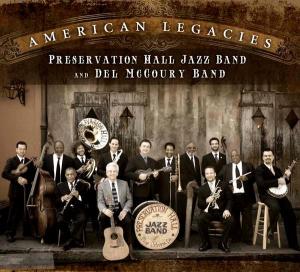
This may not seem like a big deal today, as rock musicians criss-cross the Atlantic all the time, but in May 1958 it was thrilling.
To us, that first generation of rock fans, this guy was the real thing.
And that was important, because, having been completely overlooked by Elvis Presley who’d never come to Britain (and who was by then in the U.S. Army, anyway), there was a feeling that we were getting everything second-hand and missing all the fun.
True, we’d had a couple of would-be early rock stars of our own, but they were limp counterfeits like Tommy Steele, who already seemed to have one eye on becoming the dreaded all-round entertainers.
Jerry Lee Lewis, however, or, “The Killer”, as he was known, had enjoyed two classic worldwide hits with Whole Lotta Shakin’ Goin’ On and Great Balls Of Fire, and had even appeared in a Hollywood rock film, High School Confidential.
Nor was he middle-aged like Bill Haley. He was young and vital.
Could he possibly live up to his advance billing, those of us who bought the music papers wondered, as we read about him on our way to school.
Would he be the wild man of the Louisiana swamps we’d been led to believe?
No sooner had he landed at Heathrow than we had our answer, in no small part due to the inquiries of a Daily Mail reporter called Paul Tanfield.
Meeting the star at the airport, Tanfield noticed that there was a very young girl in The Killer’s party. Tanfield asked whom she might be.
“I’m Myra,” answered the girl. “Jerry’s wife.”
Tanfield was astonished. “And how old is Myra?” he asked Jerry Lee.
“Fifteen,” the singer replied, obviously thinking that sounded suitably mature.
It wasn’t. Despite Lewis’s assertions that Myra was “a grown woman”, as far as Britain was concerned, she was below the age of consent.
The headlines the next day were not good for the star’s first day in Britain.
But they were about to get much worse when it was quickly discovered that Lewis, 22 at the time of the wedding, had been lying.
Myra wasn’t 15. She was 13, and, therefore, absolutely not a “grown woman”.
What’s more, she was the singer’s first cousin once removed.
And if that wasn’t enough, it was also revealed that he may have been bigamously married to her, since he hadn’t yet become divorced from his second wife, whom he’d married at 17, having wed his first wife at 14.
If you’re becoming confused, think how we must have felt back in 1958 as the hillbilly courting behaviour of some citizens of America’s Deep South unfolded in our newspapers.
We’d heard about the phenomenon of the child bride in fiction from the Tennessee Williams’ play and the film Baby Doll. But buttoned-up, respectable, repressed Fifties Britain had never come across the real thing before.
With Jerry Lee, the Louisiana swamps had exceeding all expectations in what they had thrown up.
Goodness gracious, as the man himself was wont to sing. This furore soon was great balls of fire!
In this way began one of the most extraordinary episodes in the history of rock music — and, let’s face it, there have been quite a few.
Right from the beginning, rock and roll music had been soaked in scandal, perhaps not too surprisingly when it’s remembered that the actual words “rock and roll” had been, in black American nightclubs, a euphemism for sexual activity long before they became associated with music.
So, when the music swept the world a couple of years earlier, teachers, preachers, parents and pundits alike had been quick to fulminate against the youthful, on-stage gyrations of Elvis Presley, describing them as obscene, and to read into the lyrics of rock songs a lewd carnality which was probably accurate but being missed by most young fans.
Up to this point, however, most of the outrage against rock had happened in America. Now, as Jerry Lee Lewis and Myra arrived in London, a storm of outrage erupted here, too.
And instantly the fashionable Westbury Hotel in London’s Mayfair, into which The Killer’s retinue was booked, found itself besieged by competing armies of fans, the Press, police and outraged citizens.
To start with, Lewis seemed to find it difficult to understand what all the fuss was about.
In fact, initially he was quite pleased with all the publicity he was getting.
While, for her part, Myra was happy watching children’s television in their suite, chirpily telling anyone who would listen that although her husband had given her a red Cadillac, what she really wanted was a wedding ring.
Were this to happen today, any star would instantly surround himself with a legion of publicists who would do their utmost to put a positive gloss on the situation — not the easiest of tasks, I have to admit.
Come to think of it, just about impossible.
But those were less sophisticated times when it came to media manipulation.
The best thing to do, Jerry Lee decided, was to get on with his tour as if nothing had happened, and, since he maintained he was a God-fearing country boy, to ask the good Lord for help.
Consequently, it is said, he and his whole entourage fell down on their knees and prayed for a full hour before he took the stage at the Gaumont State, Kilburn, North London.
For some reason, God doesn’t seem to have been listening — but then in the Southern states where Lewis came from, many people believed that rock and roll was the Devil’s music.
Whatever the reason, nothing stopped The Killer, dressed in what was described witheringly in one newspaper as a “custard-coloured jacket”, making his British debut to a half-full theatre with a performance that was repeatedly interrupted by whistles and boos and cries of “cradle snatcher” from the audience.
Off stage, things were getting much, much worse.
On learning of Myra’s age, the police had turned up at the Westbury Hotel to interview the star and his bride, after which their notes were passed on to the Director of Public Prosecutions to see if any British laws had been broken.
Meanwhile, in the House of Commons, the Home Office minister, Iain Macleod, was called upon to answer questions from MPs.
Jerry Lee thought he could struggle on and win the fans round. By now, however, the posh Westbury Hotel had had enough.
The star was asked to leave.
Desperately, Lewis and his manager tried to explain that it wasn’t that unusual for girls of 13 to marry in Mississippi, and that the marriage to Myra couldn’t have been bigamous, because at the time of Jerry Lee’s second marriage he’d still been married to his first wife.
Thus the second marriage had been null and void, and as he was now divorced from the first wife, everything was fine and dandy!
Neither the newspaper reporters nor the Rank and Grade organisations, in whose theatres the Jerry Lee concerts were to have taken place, were convinced.
After only three appearances, the tour was cancelled, and Jerry Lee and Myra, his managers and hangers-on, were back on a plane to America.
A little less than nine months later, Myra gave birth to a boy.
The maker of some classic rock hits he might have been, but The Killer’s career never properly recovered. He became a musical pariah.
And after disc jockeys around the world refused to play his records, he never had another big hit.
From $10,000-a-night shows, he was reduced to earning $100 a night.
Myra divorced him in 1970, after 12 years of marriage when she was all of 25, became an estate agent and wrote her autobiography, Great Balls Of Fire, which was filmed with Dennis Quaid as Jerry Lee and Winona Ryder as Myra.
The scandal of 1958 proved, however, to have lasting effects in quite different ways.
It may have been coincidental, but very quickly attempts were made in America to clean up the image of rock and roll.
Payola investigations were begun and several famous disc jockeys were revealed as having taken bribes to play records.
And when the mighty Elvis himself fell in love with a 14-year-old girl, Priscilla Beaulieu, the following year, steps were taken to make sure that not a word of scandal leaked out.
As for us here in Britain, within a few months, we’d come up with our own pop star, someone whose reputation was, and would remain, cleaner than clean.
His name was Cliff Richard.
One thing, however, couldn’t be denied. Although the affair had ruined the career of Jerry Lee Lewis, it had also made him very famous, infamous, actually.
And as the Fifties rolled into the Sixties, rock Svengalis-would soon see that the right kind of scandal, carefully managed and well publicised, could work wonders for the careers of rock stars.
Five years later, Andrew Loog Oldham, the young manager of the Rolling Stones, would give a masterclass in how this could be done.
While the nicely-turned out Beatles began to find fame by sticking carefully, in public, anyway, to the goody-goody script neatly mapped out for them by their manager Brian Epstein, Oldham did everything he could to grab outrageous headlines for the five, gurning, rebellious Rolling Stones.
Stunt followed stunt, from urinating in public, to singing more blatantly than anyone else about sex.
If there was a rule to be broken, the Stones broke it, and in the process built legends for themselves as the bad boys of rock and roll.
Indeed, by the mid-Sixties it had got to the point that just about anything could be believed about them, whether true or not.
There never was a Mars Bar at that party with Marianne Faithfull down at Keith Richards’ house in 1967, but anyone who had followed their careers in the newspapers believed there was, and the band didn’t mind at all.
Confrontational in the extreme, they milked scandal about themselves for all it was worth.
Of course, as with Jerry Lee Lewis and every other rock attraction, there were always a lot of girls involved, though none as young as Myra Lewis — at least, not until, having left the band, 47-year-old bass player Bill Wyman fell for 13-year-old Mandy Smith.
He married her when she was 18.
By the Seventies, outrageous behaviour had become synonymous with rock music, as groups vied with each other for publicity. Some set their amplifiers on fire on stage while others drove cars or pushed grand pianos into swimming pools.
It was all about creating controversy, getting headlines, and nothing to do with music.
Thus the punk group the Sex Pistols swore on television, Ozzy Osbourne was alleged to have bitten the head off a bat and Madonna disgracefully mimed having sex on Top Of The Pops.
And so it goes on, as every new generation of stars struggles to be noticed in the rush.
Sometimes, of course, publicity isn’t sought, as both Michael Jackson and Phil Spector have recently found in lurid and tragic circumstances.
But, believe me, the bigger the headlines about rock music the greater the stepping stones to stardom.
Quite what Jerry Lee Lewis thinks about the behaviour of some of today’s musicians would be worth knowing.
Today, at 73, after suffering from bouts of alcoholism and depression, he still tours.
Appreciated by some stalwart fans as one of the pioneers of rock and roll, he is remembered by most of us, if at all, for that week in London 50 years ago when his bizarre marital life shocked the nation.
FROM : http://www.dailymail.co.uk/
By RAY CONNOLLY FOR MAILONLINE
FROM : http://www.dailymail.co.uk/
By RAY CONNOLLY FOR MAILONLINE
Si vous aimez la beauté,
Si vous aimez l’art,
Si vous appréciez les tableaux artistiques / verre acryliques
Eh bien, vous allez aimer notre découverte:
Il s’agit de CREARTLIVE.
Eh oui… Faites un détour et découvrez ces beautés artistiques.
Les photos parleront d’elles mêmes….Nous vous dirons ensuite, comment vous faire plaisir.. Si…Si… Vous faire plaisir…. Le faites vous souvent???
Pensez y….Pensez vous faire plaisir en noyant vos regards, votre environnement dans ces beautés artistiques.
Nous vous donnerons par la suite, de plus amples détails pour que vous puissiez vous faire plaisir et savoir où, comment?
Reprenons notre présentation :
Creartlive s’est imposée à partir d’expériences positives dans le domaine de la création en passant de la fabrication à la modélisation 3D.
Marie- José HAIMARD ANDREANI , de la Socité HAIMARD, nous propose un style nouveau, un choix de tableaux originaux, glamour, esthétiques, colorés et attractifs pour embellir et décorer vos meubles ou vos murs.
Ces créations de grande qualité artistique, fruit de milliers d’heures de travail, réalisés en conception graphique 3D refkètent et inspirent le bonheur, la sérénité, la joie de vivre
Elles apporteront à vos espaces une touche inédite, une note personnelle et créeront une ambiance.
Présentation de Mme Marie-José HAIMARD ANDRENI et de l’entreprise HAIMARD
Passionnés par la décoration, la création et l’esthétique,
En 1993 Création de la Sté Haimard. Fabrication de luminaires en résine pâte de verre ( 19 coloris pastels ) commercialisés en France et à l’étranger ( USA, Corée, Portugal, Belgique, Emirats ), référencements nationaux et internationaux ont contribué à une vraie réussite en terme de produits.( décision de cesser l’activité au regard des coûts de fabrication ) ;
Poste occupé par Mme Marie-José HAIMARD ANDREANI : Chargée de la création et de la réalisation de modèles pour la fabrication de moules .
Mon goût de l’esthétique et ma passion de créer demeurent intacts C’est pourquoi aujourd’hui je continue de créer nous dit Marie-José
Pour entrer en contact avec la société? facile : http://creartlive-shop.com/ Téléphone: 04 91 23 31 14
Et si vous souhaitez entrer en contact direct et personnel avec Marie-José?? Ses profils GOOGLE+ sont à votre disposition
HAIMARD ANDREANI MARIE JOSE
1416 Abonnés – 282 786 Consultations
MARIE JOSE ANDREANI
1205 Abonnés – 105 152 Consultations
Poursuivons notre promenade visuel pour le plaisir.
A la fin de cet article, vous pourrez écouter l’annonce faite par CREATLIVE à votre attention.
Avant de cloturer notre article coup de coeur:
CREARTLIVE, présent sur le website de l’entreprise certes
CREARTLIVE présent sur AMAZON.FR ( à partir du 05 Mai 2015 )
CREARTLIVE à votre disposition sur les pages de Mme MARIE-JOSE HAIMARD ( ANDREANI) voir plus haut pour les profils
Voici notre coup de coeur, article, promo…Tous les mots sont valables dans la mesure où nous partageons avec vous la beauté de l’art, des artistes et de leurs oeuvres.
N’hésitez pas à vous connecter sur les sites de CREARTLIVE et par la suite sur AMAZON.FR
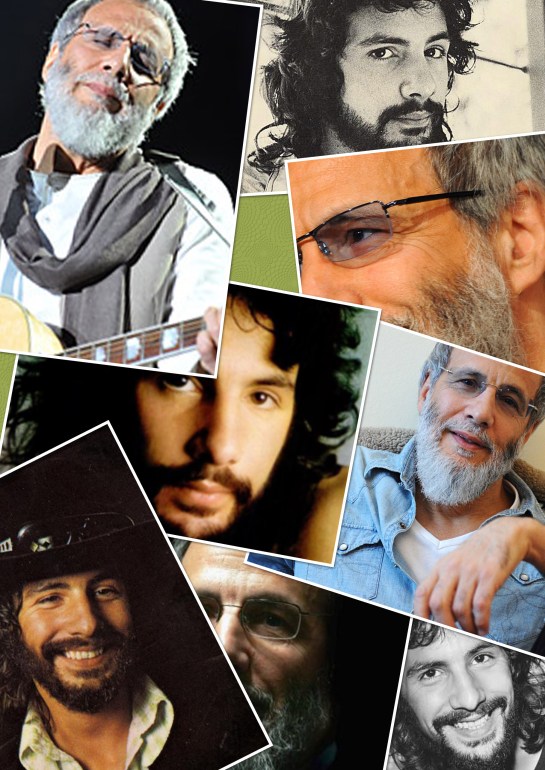
CAT STEVENS

ABBA

barry gibb (bee gees)
CLICK ON THE IMAGE YOU WANT, ACCORDING TO YOUR SMARTPHONE SYSTEM ( OR TABLET)
CLIQUEZ SUR L’IMAGE CORRESPONDANTE AU SYSTEME DE VOTRE SMARTPHONE (OU TABLETTE )

APPLI RS2 IPHONES & IPAD APPLE STORE

RS2 Android (Samsung…)
GOOGLE STORE
Radio Satellite Apple
APPLE STORE ( IPHONES IPADS)

Radio Satellite Android GOOGLE STORE
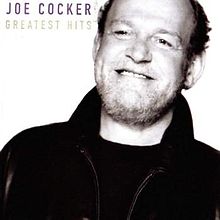 His cover of the Beatles’ “With a Little Help from My Friends” reached number one in the UK in 1968, and he performed the song live at Woodstock in 1969. His version also became the theme song for the TV series The Wonder Years. His 1975 hit single, “You Are So Beautiful”, reached number five in the US. Cocker is the recipient of several awards, including a 1983 Grammy Award for his US number one “Up Where We Belong”, a duet with Jennifer Warnes. In 1993 he was nominated for the Brit Award for Best British Male, and in 2008 he received an OBE at Buckingham Palace for services to music.
Cocker was ranked #97 on Rolling Stone’s 100 greatest singers list. Cocker was born on 20 May 1944 at 38 Tasker Road, Crookes, Sheffield, West Riding of Yorkshire. He is the youngest son of a civil servant, Harold Cocker, and Madge Cocker. According to differing family stories, Cocker received his nickname of Joe either from playing a childhood game called “Cowboy Joe” or from a local window cleaner named Joe.  Cocker’s main musical influences growing up were Ray Charles and Lonnie Donegan. Cocker’s first experience singing in public was at age 12 when his elder brother Victor invited him on stage to sing during a gig of his skiffle group. In 1960, along with three friends, Cocker formed his first group, the Cavaliers. For the group’s first performance at a youth club, they were required to pay the price of admission before entering. The Cavaliers eventually broke up after a year and Cocker left school to become an apprentice gasfitter while simultaneously pursuing a career in music.
In 1961, under the stage name Vance Arnold, Cocker continued his career with a new group, Vance Arnold and the Avengers. The name was a combination of Vince Everett, Elvis Presley’s character in Jailhouse Rock, (which Cocker misheard as Vance) and country singer Eddy Arnold. The group mostly played in the pubs of Sheffield, performing covers of Chuck Berry and Ray Charles songs. In 1963, they booked their first significant gig when they supported the Rolling Stones atSheffield City Hall. In 1964, Cocker signed a recording contract as a solo act with Decca and released his first single, a cover of the Beatles’ “I’ll Cry Instead” (with Big Jim Sullivan and Jimmy Page playing guitars).
Despite extensive promotion from Decca lauding his youth and working class roots, the record was a flop and his recording contract with Decca lapsed at the end of 1964. After Cocker recorded the single, he dropped his stage name and formed a new group, Joe Cocker’s Big Blues. There is only one known recording of Joe Cocker’s and Big Blues on an EP given out by Sheffield College during Rag Week and called Rag Goes Mad at the Mojo. It contained a cover of Curtis Mayfield’s “I’ve Been Trying” and a track of “Saved”.  The Grease Band (1966–1969) In 1966, after a year-long hiatus from music, Cocker teamed up with Chris Stainton, whom he had met several years before, to form the Grease Band.The Grease Band was named after Cocker read an interview with jazz musician Jimmy Smith, where Smith described another musician as “having a lot of grease”.
Like the Avengers, Cocker’s group mostly played in pubs in and around Sheffield. The Grease Band came to the attention of Denny Cordell, the producer of Procol Harum, the Moody Blues and Georgie Fame. Cocker recorded the single “Marjorine” without the Grease Band for Cordell in a London studio. He then moved to London with Chris Stainton, and the Grease Band was dissolved. Cordell set Cocker up with a residency at the Marquee Club in London, and a “new” Grease Band was formed with Stainton and keyboardist Tommy Eyre. After minor success in the US with the single “Marjorine”, Cocker entered the big time with a groundbreaking rearrangement of “With a Little Help from My Friends”, another Beatles cover, which, many years later, was used as the opening theme for The Wonder Years.
The recording features lead guitar from Jimmy Page, drumming by BJ Wilson, backing vocals from Sue and Sunny, and Tommy Eyre on organ. The single made the Top Ten on the British charts, remaining there for thirteen weeks and eventually reaching number one, on 9 November 1968. It also reached number 68 on the US charts. The new touring line-up of Cocker’s Grease Band featured Henry McCullough on lead guitar, who would go on to briefly play with McCartney’s Wings. After touring the UK with the Who in autumn 1968 and Gene Pitney and Marmalade in early winter 1969, the Grease Band embarked on their first tour of the US in spring 1969. Cocker’s album With a Little Help from My Friends was released soon after their arrival and made number 35 on the American charts, eventually going gold.  During his US tour, Cocker played at several large festivals, including the Newport Rock Festivaland the Denver Pop Festival.
In August, Denny Cordell heard about the planned concert inWoodstock, New York and convinced organiser Artie Kornfeld to book Cocker and the Grease Band for the Woodstock Festival. The group had to be flown into the festival by helicopter due to the large crowds. They performed several songs, including “Delta Lady”, “Something’s Comin’ On”, “Let’s Go Get Stoned”, “I Shall Be Released”, and “With a Little Help from My Friends”. Cocker would later say that the experience was “like an eclipse… it was a very special day.”
Directly after Woodstock, Cocker released his second album, Joe Cocker!. Impressed by his cover of “With a Little Help from My Friends”, Paul McCartney and George Harrison allowed Cocker to use their songs “She Came in Through the Bathroom Window” and “Something” for the album. Recorded during a break in touring in the spring and summer, the album reached number 11 on the US charts and garnered a second UK hit with the Leon Russell song, “Delta Lady”. Throughout 1969 he was featured on variety TV shows like The Ed Sullivan Show and This Is Tom Jones. Onstage, he exhibited an idiosyncratic physical intensity, flailing his arms and playing air guitar, occasionally giving superfluous cues to his band.
At the end of the year Cocker was unwilling to embark on another US tour, so he dissolved the Grease Band. Despite Cocker’s reluctance to venture out on the road again, an American tour had already been booked so he had to quickly form a new band in order to fulfil his contractual obligations. It proved to be a large group of more than 30 musicians, including pianist and bandleader Leon Russell, three drummers, and backing vocalists Rita Coolidge and Claudia Lennear.
The new band was christened “Mad Dogs and Englishmen” by Denny Cordell after the Noël Coward song of the same name.  His music at this time evolved into a more bluesy type of rock, often compared to that of the Rolling Stones. During the ensuing Mad Dogs and Englishmen tour (later described by drummer Jim Keltner as “a big, wild party”), Cocker toured 48 cities, recorded a live album, and received very positive reviews from Time and Life for his performances. However, the pace of the tour was exhausting. Russell and Cocker had personal problems and Cocker became depressed and began drinking excessively as the tour wound down in May 1970.
Meanwhile, he enjoyed several chart entries in the US with “Cry Me a River” and “Feelin’ Alright” by Dave Mason. His cover of the Box Tops’ hit “The Letter”, which appeared on the live album and film, Mad Dogs and Englishmen, became his first US Top Ten hit. After spending several months in Los Angeles, Cocker returned home to Sheffield where his family became increasingly concerned with his deteriorating physical and mental health. During this time, in periods between work, Cocker wrote the overture played by Ted Heathon the occasion the Prime Minister famously conducted a live orchestra whilst in office. In the summer of 1971 the A&M Recordssingle release appeared in the US of “High Time We Went”.
This became a hit, reaching number 22 on the US Billboard Hot 100 chart, but was not issued on an album until November 1972 on the Joe Cocker album. In early 1972, after nearly two years away from music, Cocker went on tour with a group that Chris Stainton had formed. He opened with a performance in Madison Square Garden which was attended by about 20,000 people. After touring the US, he embarked on a European tour where he played to large audiences in Milan, Italyand Germany. He then returned to the US for another tour in autumn 1972. During these tours the group cut the songs that would be part of his newest album, Joe Cocker. A mixture of live songs and studio recordings, the album peaked at number 30 on the US charts.
Cocker performing on 16 October 1980 in the National Stadium, Dublin
In October 1972, when Cocker toured Australia, he and six members of his entourage were arrested in Adelaide by police for possession of marijuana. The next day in Melbourne, assault charges were laid after a brawl at the Commodore Chateau Hotel, and Cocker was given 48 hours to leave the country by the Australian Federal Police.
This caused huge public outcry in Australia, as Cocker was a high-profile overseas artist and had a strong support base, especially amongst the baby boomers who were coming of age and able to vote for the first time. It sparked hefty debate about the use and legalisation of marijuana in Australia and gained Cocker the nickname of “the Mad Dog”. Shortly after the Australian tour, Stainton retired from his music career to establish his own recording studio. After his friend’s departure and estrangement from longtime producer Denny Cordell, Cocker sank into depression and began using heroin. In June 1973 he kicked the habit, but continued to drink heavily. At the end of 1973, Cocker returned to the studio to record a new album, I Can Stand A Little Rain. The album, released in August 1974, was number 11 on the US charts and one single, a cover of Dennis Wilson and Billy Preston’s “You Are So Beautiful”, which reached the number 5 slot. Despite positive reviews for the album, Cocker struggled with live performances, largely due to his problems with alcohol.
One such instance was reported in a 1974 issue of Rolling Stone magazine, saying during two West Coast performances in October of that year he threw up on stage.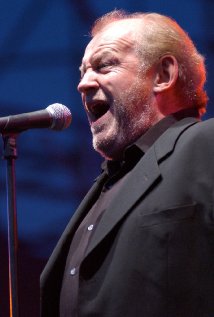 In January 1975, he released a second album that had been recorded at the same time as I Can Stand a Little Rain, Jamaica Say You Will. To promote his new album, Cocker embarked on another tour of Australia, made possible by the country’s newLabor government. In late 1975, he contributed vocals on a number of the tracks on Bo Diddley’s The 20th Anniversary of Rock ‘n’ Roll all-star album. He also recorded a new album in a Kingston, Jamaica studio, Stingray.
However, record sales were disappointing; the album reached only number 70 on the US charts. In 1976, Cocker performed “Feelin’ Alright” on Saturday Night Live. John Belushi joined him on stage doing his famous impersonation of Cocker’s stage movements. At the time, Cocker was $800,000 in debt to A&M Records and struggling with alcoholism. Several months later, he met producer Michael Lang, who agreed to manage him on the condition that he stay sober.
With a new band, Cocker embarked on a tour of New Zealand, Australia and South America. He then recorded a new album with session work by Steve Gadd and Chuck Rainey, and a new, young bassist from Scotland, Rob Hartley. Hartley also toured briefly with Cocker’s friends in 1977. In the autumn of 1978, he went on a North American tour promoting his album, Luxury You Can Afford. Despite this effort, it received mixed reviews and only sold around 300,000 copies. In 1979, Cocker joined the “Woodstock in Europe” tour, which featured musicians like Arlo Guthrie and Richie Havens who had played at the 1969 Woodstock Festival.
He also performed in New York’s Central Park to an audience of 20,000 people. The concert was recorded and released as the live album, Live in New York. He also toured Europe and appeared on the German television recording amphitheatre, Rockpalast, the first of many performances on the show. In 1982, Cocker recorded two songs with the jazz group the Crusaders on their album Standing Tall. One song, ‘I’m So Glad I’m Standing Here Today’ was nominated for a Grammy Award and Cocker performed it with the Crusaders at the awards ceremony.  The Crusaders wrote this song with Cocker in mind to sing it. Cocker then released a new reggae-influenced album, Sheffield Steel, recorded with the Compass Point All Stars, produced by Chris Blackwell and Alex Sadkin.
In 1982, at the behest of producer Stewart Levine, Cocker recorded the duet “Up Where We Belong” with Jennifer Warnes for the soundtrack of the 1982 film An Officer and a Gentleman. The song was an international hit, reaching number 1 on theBillboard Hot 100, and winning a Grammy Award for Best Pop Performance by a Duo. The duet also won an Academy Award for Best Original Song, and Cocker and Warnes performed the song at the awards ceremony. Several days later, he was invited to perform “You Are So Beautiful” with Ray Charles in a television tribute to the musician.
He then joined singer Ronnie Lane’s 1983 tour to raise money for the London-based organisation Action for Research into Multiple Sclerosis, in particular because Lane was beginning to suffer from the degenerative disease. Musicians such as Pete Townshend, Eric Clapton, Jimmy Page,Jeff Beck and Chris Stainton also participated in the tour which included a performance at New York City’s Madison Square Garden. While on another tour that year, Cocker was arrested by Austrian police after refusing to perform because of inadequate sound equipment.
The charges were eventually dropped and Cocker was released. Shortly after the incident, he released his ninth studio album, Civilized Man. His next album Cocker was dedicated to his mother, Madge, who died when he was recording in the studio with producer Terry Manning. A track from the album, “You Can Leave Your Hat On” was featured in the 1986 film 9½ Weeks. The album eventually went Platinum on the European charts.
His 1987 album Unchain My Heartwas nominated for a Grammy Award, although it did not win. One Night of Sin was also a commercial success, surpassingUnchain My Heart in sales. Throughout the 1980s, Cocker continued to tour around the world, playing to large audiences in Europe, Australia and the United States.
In 1988, he performed at London’s Royal Albert Hall and appeared on The Tonight Show. After Barclay James Harvest and Bob Dylan Cocker was the first to give Rock concerts in the German Democratic Republic, in East Berlin and Dresden.
The venue, the Blüherwiese, next to the Rudolf-Harbig-Stadion, bears the vernacular name Cockerwiese (Cocker meadow) today.He also performed for President George Bush at an inauguration concert in February 1989. In 1992, his version of Bryan Adams’ “Feels Like Forever” made the UK Top 40. At the 1993 Brit Awards, Cocker was nominated for Best British Male.Cocker performed the opening set at Woodstock ’94 as one of the few alumni who played at the original Woodstock Festival in 1969 and was very well received.
On 3 June 2002, Cocker performed “With A Little Help From My Friends” accompanied by Phil Collins on drums and Queen guitarist Brian May at the Party at the Palace concert in the grounds of Buckingham Palace, an event in commemoration of the Golden Jubilee of Elizabeth II. In 2007, Cocker appeared playing minor characters in the film Across the Universe, as the lead singer on another Beatles’ hit, “Come Together”. Cocker was awarded an OBE in the Queen’s 2007 Birthday Honours list for services to music.To celebrate receiving his award in mid December 2007, Cocker played two concerts in London and in his home town of Sheffield.
 In April and May 2009, Cocker conducted a North American tour in support of his album Hymn for My Soul. He sang the vocals on Little Wing for the Carlos Santana album, Guitar Heaven: The Greatest Guitar Classics of All Time, released on 21 September 2010.
In the autumn of 2010, Cocker toured Europe promoting his studio album Hard Knocks. Cocker returned to Australia in 2008 and again in 2011, the latter of which featured George Thorogood and the Destroyers as an opening act.
On 20 March 2011, Joe Cocker took part in a benefit concert for Cornell Dupree at B.B. King’s Blues Club in New York. Dupree played on two Cocker albums Stingray (1976) and Luxury You Can Afford (1978). Dupree’s band Stuff was also Cocker’s backing band on a tour promoting Stingray in 1976. While performing a concert at Madison Square Garden on 17 September 2014, veteran rock singer Billy Joel stated that Cocker was “not very well right now” and asked that he be inducted into the Rock and Roll Hall of Fame.
In 1963, Cocker began dating Eileen Webster, also a resident of Sheffield. The couple dated intermittently for the next 13 years, separating permanently in 1976. In 1978, Cocker moved onto a ranch owned by Jane Fonda in Santa Barbara, California. Pam Baker, a local summer camp director and fan of Cocker’s music, persuaded the actress to let the house to Cocker. Baker began dating Cocker and they eventually married on 11 October 1987.The couple resided on the Mad Dog Ranch in Crawford, Colorado. Cocker was not related to fellow Sheffield-born musician Jarvis Cocker, despite this being a rumour (particularly in Australia, where Jarvis’s father Mac Cocker, a radio DJ, allowed listeners to believe he was Joe Cocker’s brother). On 22 December 2014, Cocker died of lung cancer at his home in Colorado at the age of 70.
Source Wikipedia

CLICK ON THIS IMAGE PLS TO FOLLOW RADIOSATELLITE ON TUNEin
CLIQUEZ SUR CETTE IMAGE POUR SUIVRE RADIOSATELLITE SUR TUNEin
 istanbul swimming tours and radiosatellite
 Istanbul
VIDEOS TO WATCH
http://www.lawebradio.com/news/radiosatellite-webradio-en-position-geostationnaire/

Lawebradio.com


