Dans le cadre de la série…. “ils étaient…Ils sont”…Comment sont ils devenus?? A quoi ressemblent ils??
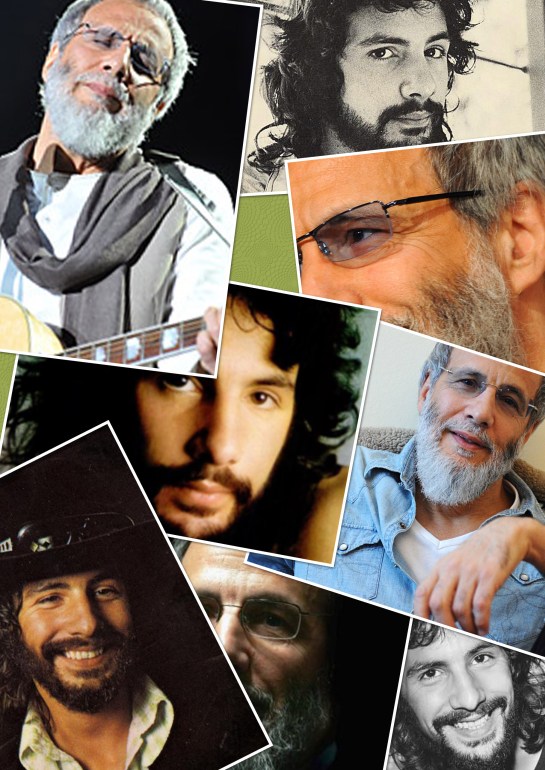
CAT STEVENS

ABBA

barry gibb (bee gees)

CAT STEVENS
ABBA
barry gibb (bee gees)
Demis was a GREEK SINGER and performer who had international hit records as a solo performer in the 1970s after having been a member of Aphrodite’s Child , a progressive rock group that also included Vangelis. He has sold over 60 million albums worldwide.
Roussos was born and raised in Alexandira Egypt , in a family where his father George (engineer Yorgos Roussos) was Greek and mother Nelly MAZLOUM was Egyptian of Italian origin. His parents lost their possessions during the Suez Crisis and consequently decided to move to greece
After settling in Greece, Roussos participated in a series of musical groups beginning with The Idols when he was 17, where he met Evangelos Papathanassiou (later known as VANGELIS ) and Loukas Sideras, his future bandmates in of Aphrodite’s Child . After this he joined We Five (not the San Francisco, California folk-rock group), another cover band which had limited success in Greece.
Roussos came to a wider audience in 1967 when he joined progressive rock band of Aphrodite’s Child , with Vangelis and Sideras, initially as a singer but later also playing bass guitar, achieving commercial success in France and other parts of Europe from 1968 to 1972.
They set off for London to break into the international music scene but as a result of bad weather, the plane landed them in Paris – and they decided to stay there signing a record deal with Philips S.A. His operatic vocal style helped propel the band to international success, notably on their final album 666 , which became a progressive rock cult classic.
After Aphrodite’s Child disbanded, Roussos continued to record sporadically with former bandmate Vangelis
In 1970 the two released Sex Power (although the album has also been disputably credited to Aphrodite’s Child), also recording the 1977 album Magic together. Their most successful collaboration was “Race To The End” (also sung in Spanish as “Tu Libertad”), a vocal adaptation of the musical theme from the Oscar winning film Chariots of fire , while Roussos also guested on the soundtrack to Blade runner (1982), with a song entitled “Tales Of The Future”.
Roussos died early Sunday morning, January 25, 2015, while hospitalized at “Ygeia Hospital” in Athens, Greece. The news of his death where confirmed a day later by his friend and journalist Nikos Aliagas who tweeted, on January 25, 2015, in both Greek and French ]. The death of the famous artist has been confirmed later the same day by his daughter, who spoke in Greek and French media.
Roussos also began a solo career with the song “We Shall Dance” in 1971. Initially unsuccessful, he toured around Europe and became a leading artist. His solo career peaked in the mid 1970 with several hit albums. His single “Forever And Ever” topped the charts in several countries in 1973 (1976 in U.K.).
Other hits were “My Friend The Wind”, “My Reason”, “Velvet Mornings”, “Goodbye My Love, Goodbye”, “Someday Somewhere” and “Lovely Lady Of Arcadia”. His first UK single to chart was in 1975: “Happy To Be On An Island In The Sun” written by an Englishman David Lewis with the record reaching No. 5 in the charts.
His popularity in the rest of Europe, but not the UK, came to fascinate BBC-TV producer John King who made a documentary which he called ‘The Roussos Phenomenon’ in 1976. The programme was aired and Roussos’ scored a number one chart selling E.P. record of the same title and with three back catalogue albums entering the charts.
Roussos was mentioned in the television play Abigail’s Party (1977) and made one of his earliest appearances on English-speaking TV on the Basil Brush Show. Before appearing on the Basil Brush Show, he had appeared on the Nana Mouskouri TV show in the UK, singing a duet version of his hit single “Happy To Be On An Island In The Sun”.
In 1980, Roussos had a hit with a cover of Air Supply’s “Lost In Love”, sung as a duet with Florence Warner. His UK career was now being managed by ex-Phonogram promotion man, Don Percival.
He re-recorded his songs in a number of languages, including Japanese, whereas The Roussos Phenomenon EP was the first No.1 hit for an African-born artist in the history of the UK Singles Chart. He was equally successful across Europe and Latin America, although a gold disc for the LP Demis remains his only success in the United States.
For years Roussos struggled with his weight. In June 1980 he weighed 147 kg. He then began a diet in which he lost 50 kg in 10 months.
In 1982 he co-authored the book A Question Of Weight with his close friend Veronique Skawinska, in which he dealt candidly with his struggles with obesity. Roussos suffered a fallow period during the 1980s in terms of hits and his output dried up as he battled clinical depression.
In June 1985, he was amongst the hostages during the hijacking of TWA Flight 847.
In 1989, he recorded the song “Young Love”, a duet with German singer/songwriter Drafi Deutscher, which was released as a single in Germany and reached No.2 in the famous German music TV show ZDF Hitparade in October of the same year.
The 1990s saw even more substantial releases by Roussos. In 1993 he released Insight (also called Morning Has Broken) to general acclaim. After that he teamed up with BR Music in the Netherlands to produce Immortel, Serenade and In Holland, utilising a variety of ethnic and electronic styles..
Roussos continued to record and tour. The spring of 2002 saw him do a tour of England, whilst in recent years he has appeared in Russia and the United Arab Emirates. A committed follower of the Greek Orthodox faith, he has sung as a guest in a number of churches in Greece and worldwide.
https://youtu.be/9-0Xxcr9ESY?si=xyO7erPh8D8aotM-
In 2006, he released the acclaimed Live In Brasil, which documents his return to a country where his popularity led him to record “Você Você E Nada Mais” – a huge hit in Portuguese.
From 2006 to 2008, he was part of the Âge Tendre Et Têtes De Bois tour, a series of concerts featuring French singers from the sixties and seventies.
A comeback took place in 2009, with Roussos recording a new studio album produced by Marc di Domenico, released on May 11.
WIKIPEDIA SOURCES
CLICK TO LISTEN => JOHN LENNON

John Lennon
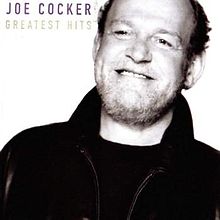 His cover of the Beatles’ “With a Little Help from My Friends” reached number one in the UK in 1968, and he performed the song live at Woodstock in 1969. His version also became the theme song for the TV series The Wonder Years. His 1975 hit single, “You Are So Beautiful”, reached number five in the US. Cocker is the recipient of several awards, including a 1983 Grammy Award for his US number one “Up Where We Belong”, a duet with Jennifer Warnes. In 1993 he was nominated for the Brit Award for Best British Male, and in 2008 he received an OBE at Buckingham Palace for services to music.
Cocker was ranked #97 on Rolling Stone’s 100 greatest singers list. Cocker was born on 20 May 1944 at 38 Tasker Road, Crookes, Sheffield, West Riding of Yorkshire. He is the youngest son of a civil servant, Harold Cocker, and Madge Cocker. According to differing family stories, Cocker received his nickname of Joe either from playing a childhood game called “Cowboy Joe” or from a local window cleaner named Joe.  Cocker’s main musical influences growing up were Ray Charles and Lonnie Donegan. Cocker’s first experience singing in public was at age 12 when his elder brother Victor invited him on stage to sing during a gig of his skiffle group. In 1960, along with three friends, Cocker formed his first group, the Cavaliers. For the group’s first performance at a youth club, they were required to pay the price of admission before entering. The Cavaliers eventually broke up after a year and Cocker left school to become an apprentice gasfitter while simultaneously pursuing a career in music.
In 1961, under the stage name Vance Arnold, Cocker continued his career with a new group, Vance Arnold and the Avengers. The name was a combination of Vince Everett, Elvis Presley’s character in Jailhouse Rock, (which Cocker misheard as Vance) and country singer Eddy Arnold. The group mostly played in the pubs of Sheffield, performing covers of Chuck Berry and Ray Charles songs. In 1963, they booked their first significant gig when they supported the Rolling Stones atSheffield City Hall. In 1964, Cocker signed a recording contract as a solo act with Decca and released his first single, a cover of the Beatles’ “I’ll Cry Instead” (with Big Jim Sullivan and Jimmy Page playing guitars).
Despite extensive promotion from Decca lauding his youth and working class roots, the record was a flop and his recording contract with Decca lapsed at the end of 1964. After Cocker recorded the single, he dropped his stage name and formed a new group, Joe Cocker’s Big Blues. There is only one known recording of Joe Cocker’s and Big Blues on an EP given out by Sheffield College during Rag Week and called Rag Goes Mad at the Mojo. It contained a cover of Curtis Mayfield’s “I’ve Been Trying” and a track of “Saved”.  The Grease Band (1966–1969) In 1966, after a year-long hiatus from music, Cocker teamed up with Chris Stainton, whom he had met several years before, to form the Grease Band.The Grease Band was named after Cocker read an interview with jazz musician Jimmy Smith, where Smith described another musician as “having a lot of grease”.
Like the Avengers, Cocker’s group mostly played in pubs in and around Sheffield. The Grease Band came to the attention of Denny Cordell, the producer of Procol Harum, the Moody Blues and Georgie Fame. Cocker recorded the single “Marjorine” without the Grease Band for Cordell in a London studio. He then moved to London with Chris Stainton, and the Grease Band was dissolved. Cordell set Cocker up with a residency at the Marquee Club in London, and a “new” Grease Band was formed with Stainton and keyboardist Tommy Eyre. After minor success in the US with the single “Marjorine”, Cocker entered the big time with a groundbreaking rearrangement of “With a Little Help from My Friends”, another Beatles cover, which, many years later, was used as the opening theme for The Wonder Years.
The recording features lead guitar from Jimmy Page, drumming by BJ Wilson, backing vocals from Sue and Sunny, and Tommy Eyre on organ. The single made the Top Ten on the British charts, remaining there for thirteen weeks and eventually reaching number one, on 9 November 1968. It also reached number 68 on the US charts. The new touring line-up of Cocker’s Grease Band featured Henry McCullough on lead guitar, who would go on to briefly play with McCartney’s Wings. After touring the UK with the Who in autumn 1968 and Gene Pitney and Marmalade in early winter 1969, the Grease Band embarked on their first tour of the US in spring 1969. Cocker’s album With a Little Help from My Friends was released soon after their arrival and made number 35 on the American charts, eventually going gold.  During his US tour, Cocker played at several large festivals, including the Newport Rock Festivaland the Denver Pop Festival.
In August, Denny Cordell heard about the planned concert inWoodstock, New York and convinced organiser Artie Kornfeld to book Cocker and the Grease Band for the Woodstock Festival. The group had to be flown into the festival by helicopter due to the large crowds. They performed several songs, including “Delta Lady”, “Something’s Comin’ On”, “Let’s Go Get Stoned”, “I Shall Be Released”, and “With a Little Help from My Friends”. Cocker would later say that the experience was “like an eclipse… it was a very special day.”
Directly after Woodstock, Cocker released his second album, Joe Cocker!. Impressed by his cover of “With a Little Help from My Friends”, Paul McCartney and George Harrison allowed Cocker to use their songs “She Came in Through the Bathroom Window” and “Something” for the album. Recorded during a break in touring in the spring and summer, the album reached number 11 on the US charts and garnered a second UK hit with the Leon Russell song, “Delta Lady”. Throughout 1969 he was featured on variety TV shows like The Ed Sullivan Show and This Is Tom Jones. Onstage, he exhibited an idiosyncratic physical intensity, flailing his arms and playing air guitar, occasionally giving superfluous cues to his band.
At the end of the year Cocker was unwilling to embark on another US tour, so he dissolved the Grease Band. Despite Cocker’s reluctance to venture out on the road again, an American tour had already been booked so he had to quickly form a new band in order to fulfil his contractual obligations. It proved to be a large group of more than 30 musicians, including pianist and bandleader Leon Russell, three drummers, and backing vocalists Rita Coolidge and Claudia Lennear.
The new band was christened “Mad Dogs and Englishmen” by Denny Cordell after the Noël Coward song of the same name.  His music at this time evolved into a more bluesy type of rock, often compared to that of the Rolling Stones. During the ensuing Mad Dogs and Englishmen tour (later described by drummer Jim Keltner as “a big, wild party”), Cocker toured 48 cities, recorded a live album, and received very positive reviews from Time and Life for his performances. However, the pace of the tour was exhausting. Russell and Cocker had personal problems and Cocker became depressed and began drinking excessively as the tour wound down in May 1970.
Meanwhile, he enjoyed several chart entries in the US with “Cry Me a River” and “Feelin’ Alright” by Dave Mason. His cover of the Box Tops’ hit “The Letter”, which appeared on the live album and film, Mad Dogs and Englishmen, became his first US Top Ten hit. After spending several months in Los Angeles, Cocker returned home to Sheffield where his family became increasingly concerned with his deteriorating physical and mental health. During this time, in periods between work, Cocker wrote the overture played by Ted Heathon the occasion the Prime Minister famously conducted a live orchestra whilst in office. In the summer of 1971 the A&M Recordssingle release appeared in the US of “High Time We Went”.
This became a hit, reaching number 22 on the US Billboard Hot 100 chart, but was not issued on an album until November 1972 on the Joe Cocker album. In early 1972, after nearly two years away from music, Cocker went on tour with a group that Chris Stainton had formed. He opened with a performance in Madison Square Garden which was attended by about 20,000 people. After touring the US, he embarked on a European tour where he played to large audiences in Milan, Italyand Germany. He then returned to the US for another tour in autumn 1972. During these tours the group cut the songs that would be part of his newest album, Joe Cocker. A mixture of live songs and studio recordings, the album peaked at number 30 on the US charts.
Cocker performing on 16 October 1980 in the National Stadium, Dublin
In October 1972, when Cocker toured Australia, he and six members of his entourage were arrested in Adelaide by police for possession of marijuana. The next day in Melbourne, assault charges were laid after a brawl at the Commodore Chateau Hotel, and Cocker was given 48 hours to leave the country by the Australian Federal Police.
This caused huge public outcry in Australia, as Cocker was a high-profile overseas artist and had a strong support base, especially amongst the baby boomers who were coming of age and able to vote for the first time. It sparked hefty debate about the use and legalisation of marijuana in Australia and gained Cocker the nickname of “the Mad Dog”. Shortly after the Australian tour, Stainton retired from his music career to establish his own recording studio. After his friend’s departure and estrangement from longtime producer Denny Cordell, Cocker sank into depression and began using heroin. In June 1973 he kicked the habit, but continued to drink heavily. At the end of 1973, Cocker returned to the studio to record a new album, I Can Stand A Little Rain. The album, released in August 1974, was number 11 on the US charts and one single, a cover of Dennis Wilson and Billy Preston’s “You Are So Beautiful”, which reached the number 5 slot. Despite positive reviews for the album, Cocker struggled with live performances, largely due to his problems with alcohol.
One such instance was reported in a 1974 issue of Rolling Stone magazine, saying during two West Coast performances in October of that year he threw up on stage.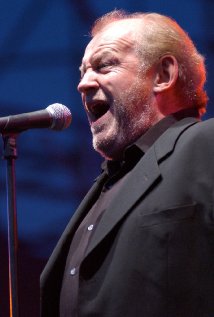 In January 1975, he released a second album that had been recorded at the same time as I Can Stand a Little Rain, Jamaica Say You Will. To promote his new album, Cocker embarked on another tour of Australia, made possible by the country’s newLabor government. In late 1975, he contributed vocals on a number of the tracks on Bo Diddley’s The 20th Anniversary of Rock ‘n’ Roll all-star album. He also recorded a new album in a Kingston, Jamaica studio, Stingray.
However, record sales were disappointing; the album reached only number 70 on the US charts. In 1976, Cocker performed “Feelin’ Alright” on Saturday Night Live. John Belushi joined him on stage doing his famous impersonation of Cocker’s stage movements. At the time, Cocker was $800,000 in debt to A&M Records and struggling with alcoholism. Several months later, he met producer Michael Lang, who agreed to manage him on the condition that he stay sober.
With a new band, Cocker embarked on a tour of New Zealand, Australia and South America. He then recorded a new album with session work by Steve Gadd and Chuck Rainey, and a new, young bassist from Scotland, Rob Hartley. Hartley also toured briefly with Cocker’s friends in 1977. In the autumn of 1978, he went on a North American tour promoting his album, Luxury You Can Afford. Despite this effort, it received mixed reviews and only sold around 300,000 copies. In 1979, Cocker joined the “Woodstock in Europe” tour, which featured musicians like Arlo Guthrie and Richie Havens who had played at the 1969 Woodstock Festival.
He also performed in New York’s Central Park to an audience of 20,000 people. The concert was recorded and released as the live album, Live in New York. He also toured Europe and appeared on the German television recording amphitheatre, Rockpalast, the first of many performances on the show. In 1982, Cocker recorded two songs with the jazz group the Crusaders on their album Standing Tall. One song, ‘I’m So Glad I’m Standing Here Today’ was nominated for a Grammy Award and Cocker performed it with the Crusaders at the awards ceremony.  The Crusaders wrote this song with Cocker in mind to sing it. Cocker then released a new reggae-influenced album, Sheffield Steel, recorded with the Compass Point All Stars, produced by Chris Blackwell and Alex Sadkin.
In 1982, at the behest of producer Stewart Levine, Cocker recorded the duet “Up Where We Belong” with Jennifer Warnes for the soundtrack of the 1982 film An Officer and a Gentleman. The song was an international hit, reaching number 1 on theBillboard Hot 100, and winning a Grammy Award for Best Pop Performance by a Duo. The duet also won an Academy Award for Best Original Song, and Cocker and Warnes performed the song at the awards ceremony. Several days later, he was invited to perform “You Are So Beautiful” with Ray Charles in a television tribute to the musician.
He then joined singer Ronnie Lane’s 1983 tour to raise money for the London-based organisation Action for Research into Multiple Sclerosis, in particular because Lane was beginning to suffer from the degenerative disease. Musicians such as Pete Townshend, Eric Clapton, Jimmy Page,Jeff Beck and Chris Stainton also participated in the tour which included a performance at New York City’s Madison Square Garden. While on another tour that year, Cocker was arrested by Austrian police after refusing to perform because of inadequate sound equipment.
The charges were eventually dropped and Cocker was released. Shortly after the incident, he released his ninth studio album, Civilized Man. His next album Cocker was dedicated to his mother, Madge, who died when he was recording in the studio with producer Terry Manning. A track from the album, “You Can Leave Your Hat On” was featured in the 1986 film 9½ Weeks. The album eventually went Platinum on the European charts.
His 1987 album Unchain My Heartwas nominated for a Grammy Award, although it did not win. One Night of Sin was also a commercial success, surpassingUnchain My Heart in sales. Throughout the 1980s, Cocker continued to tour around the world, playing to large audiences in Europe, Australia and the United States.
In 1988, he performed at London’s Royal Albert Hall and appeared on The Tonight Show. After Barclay James Harvest and Bob Dylan Cocker was the first to give Rock concerts in the German Democratic Republic, in East Berlin and Dresden.
The venue, the Blüherwiese, next to the Rudolf-Harbig-Stadion, bears the vernacular name Cockerwiese (Cocker meadow) today.He also performed for President George Bush at an inauguration concert in February 1989. In 1992, his version of Bryan Adams’ “Feels Like Forever” made the UK Top 40. At the 1993 Brit Awards, Cocker was nominated for Best British Male.Cocker performed the opening set at Woodstock ’94 as one of the few alumni who played at the original Woodstock Festival in 1969 and was very well received.
On 3 June 2002, Cocker performed “With A Little Help From My Friends” accompanied by Phil Collins on drums and Queen guitarist Brian May at the Party at the Palace concert in the grounds of Buckingham Palace, an event in commemoration of the Golden Jubilee of Elizabeth II. In 2007, Cocker appeared playing minor characters in the film Across the Universe, as the lead singer on another Beatles’ hit, “Come Together”. Cocker was awarded an OBE in the Queen’s 2007 Birthday Honours list for services to music.To celebrate receiving his award in mid December 2007, Cocker played two concerts in London and in his home town of Sheffield.
 In April and May 2009, Cocker conducted a North American tour in support of his album Hymn for My Soul. He sang the vocals on Little Wing for the Carlos Santana album, Guitar Heaven: The Greatest Guitar Classics of All Time, released on 21 September 2010.
In the autumn of 2010, Cocker toured Europe promoting his studio album Hard Knocks. Cocker returned to Australia in 2008 and again in 2011, the latter of which featured George Thorogood and the Destroyers as an opening act.
On 20 March 2011, Joe Cocker took part in a benefit concert for Cornell Dupree at B.B. King’s Blues Club in New York. Dupree played on two Cocker albums Stingray (1976) and Luxury You Can Afford (1978). Dupree’s band Stuff was also Cocker’s backing band on a tour promoting Stingray in 1976. While performing a concert at Madison Square Garden on 17 September 2014, veteran rock singer Billy Joel stated that Cocker was “not very well right now” and asked that he be inducted into the Rock and Roll Hall of Fame.
In 1963, Cocker began dating Eileen Webster, also a resident of Sheffield. The couple dated intermittently for the next 13 years, separating permanently in 1976. In 1978, Cocker moved onto a ranch owned by Jane Fonda in Santa Barbara, California. Pam Baker, a local summer camp director and fan of Cocker’s music, persuaded the actress to let the house to Cocker. Baker began dating Cocker and they eventually married on 11 October 1987.The couple resided on the Mad Dog Ranch in Crawford, Colorado. Cocker was not related to fellow Sheffield-born musician Jarvis Cocker, despite this being a rumour (particularly in Australia, where Jarvis’s father Mac Cocker, a radio DJ, allowed listeners to believe he was Joe Cocker’s brother). On 22 December 2014, Cocker died of lung cancer at his home in Colorado at the age of 70.
Source Wikipedia
Her recurring role, between 1964 and her death in 1968, as Aunt Clara in the comedy series, Bewitched (1964–1972) brought her widespread recognition, and for which she was posthumously awarded an Emmy Award for Outstanding Supporting Actress in a Comedy Series.
She was born Marion Lorne MacDougall in West Pittston, Pennsylvania, a small mining town halfway between Wilkes-Barre and Scranton, of Scottish and English immigrant parents. While her year of birth is listed as 1885 on her tombstone, it was usually listed as 1888 when she was alive and the Social Security Death Index lists it as 1883. She studied at the American Academy of Dramatic Arts in New York City.
Career Lorne debuted on Broadway in 1905; she also acted in London theaters, enjoying a flourishing stage career on both sides of the Atlantic Ocean.
In London she had her own theater, the Whitehall, where she had top billing in plays written by Walter Hackett, her husband. None of her productions at the Whitehall had runs shorter than 125 nights.
After appearing in a couple of Vitaphone shorts, including Success (1931) starring Jack Haley, she made her feature film debut in her late 60s in Strangers on a Train (1951), directed by Alfred Hitchcock.
The role was typical of the befuddled, nervous, and somewhat aristocratic matrons that she usually portrayed.
From 1952-55, Lorne was seen as perpetually confused junior high school English teacher Mrs. Gurney on Mr. Peepers. From 1957–58, she co-starred with Joan Caulfield in the NBC sitcom Sally in the role of an elderly widow who happens to be the co-owner of a department store. Although afraid of live television, declaring “I’m a coward when it comes to a live [television] show”, she was persuaded to appear a few times to promote the film The Girl Rush with Rosalind Russell in the mid-1950s.
Between 1958–64, she made regular appearances on The Garry Moore Show (1958–64). Her last role, as Aunt Clara in Bewitched, brought Lorne her widest fame as a lovable, forgetful witch who is losing her powers due to old age and whose spells usually end in disaster. Aunt Clara is obsessed with doorknobs, often bringing her collection with her on visits.
Lorne had an extensive collection of doorknobs in real life, some of which she used as props in the series.[8] Death She appeared in twenty-seven episodes of Bewitched, and was not replaced after she died of a heart attack in her Manhattan apartment, just prior to the start of production of the show’s fifth season, at the age of 84 on May 9, 1968. Lorne is buried at Ferncliff Cemetery in Greenburgh, New York.
Posthumous The producers of Bewitched recognized that Lorne’s performance as Aunt Clara could not be replicated by another actress. Comedic actress Alice Ghostley was recruited to fill the gap as “Esmeralda”, a different type of befuddled witch with wobbly magic whose spells often went astray.
Coincidentally, Lorne and Ghostley had appeared side-by-side as partygoers in the iconic comedy-drama film The Graduate , made the year before Lorne’s death. She received a posthumous Emmy Award for Outstanding Supporting Actress in a Comedy Series for her work on Bewitched. The statue was accepted by Bewitched star Elizabeth Montgomery. Personal life She was married to playwright Walter Hackett, who died in 1944. WIKIPEDIA SOURCES Personal life She was married to playwright Walter Hackett, who died in 1944.

Stan Laurel & Oliver Hardy

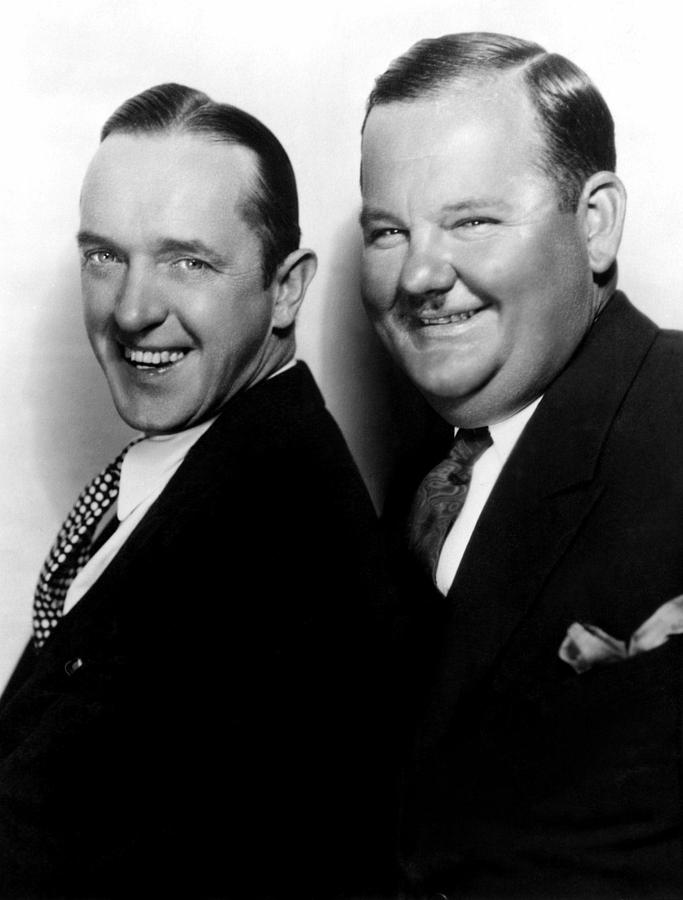
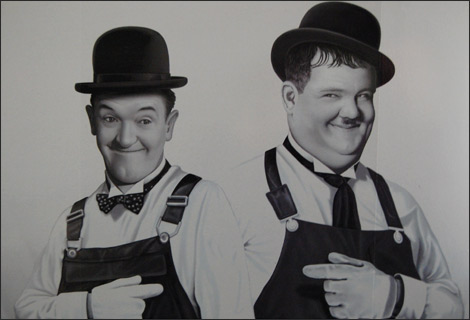
OLIVER HARDY : Here also another article / Voici un autre article
ARTICLE POUVANT VOUS INTERESSER
A womanizing american reporter assigned in Paris (Paul Newman) mistakes a cynical fashion designer (Joanne Woodward) for a prostitute. He decides to interview her for a series of articles then falls in love with her. The girl goes along with it, first out of revenge as he snubbed her during a past encounter, then out of feelings of her own.
Cast
Paul Newman…..Steve Sherman
Joanne Woodward…..Samantha (Sam) Blake / Mimi
Thelma Ritter…..Leena
Eva Gabor…..Felicienne Courbeau
George Tobias…..Joseph Bergner
Marvin Kaplan…..Harry Gorman
Maurice Chevalier…..as Himself
Robert Simon…..Bertram Chalmers
Valerie Varda…..Mrs. Chalmers
Joan Staley….Stewardess
Robert Clary….Frenchman @ Restaurant
Awards and nominations
Academy Award
1964: Nominated, “Best Costume Design, Color”
1964: Nominated, “Best Music, Scoring of Music, Adaptation or Treatment” – Leith Stevens
Golden Globe Award
1964: Nominated, “Best Motion Picture Actress – Musical/Comedy” – Joanne Woodward
Laurel Awards
1964: 3rd Place, “Top Female Supporting Performance” – Thelma Ritter
Source : WIKIPEDIA

New kind of love movie
Paul Newman, taking his second spin on the marriage-go-round, grabbed the brass ring with Joanne Woodward.
On a Hollywood landscape littered with countless broken marriages, the Newman-Woodward pairing became the gold standard: They celebrated 50 years together on Jan. 29.
 And when Newman died Friday at the Connecticut home they shared since 1960, Woodward was still there – until death did them part.
Newman once attributed their lasting union to “correct amounts of lust and respect.”
ACTOR PAUL NEWMAN DEAD AT AGE 83
He offered an oft-quoted response when asked in Playboy magazine about the temptations of other women: “I have steak at home. Why go out for hamburger?”
The couple met and fell in love while Newman made his 1953 Broadway debut in William Inge’s “Picnic,” in which Woodward was an understudy.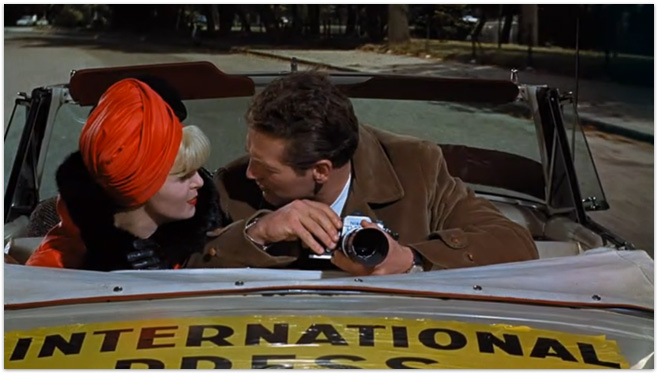
Five years later, shortly after Newman and his first wife divorced, he married the petite blond in a Las Vegas civil ceremony. The couple moved into an 18th-century Connecticut farmhouse, a decision that Woodward later said solidified their marriage.
“We were never Hollywood people,” the Oscar-winning actress told the Daily News in 2001. “We just liked it better here. It also probably helps that we always enjoyed each other’s company.”
NEWMAN AND WOODWARD’S ROMANCE
They appeared in several films together, including “The Long Hot Summer,” “Paris Blues” and “Mr. and Mrs. Bridge.” Newman directed Woodward in several other movies, including “Rachel, Rachel” – a Best Picture nominee.
When Woodward returned to Sarah Lawrence College to earn her degree at age 60, she graduated with youngest daughter Clea. Newman marked the occasion by delivering the commencement address.
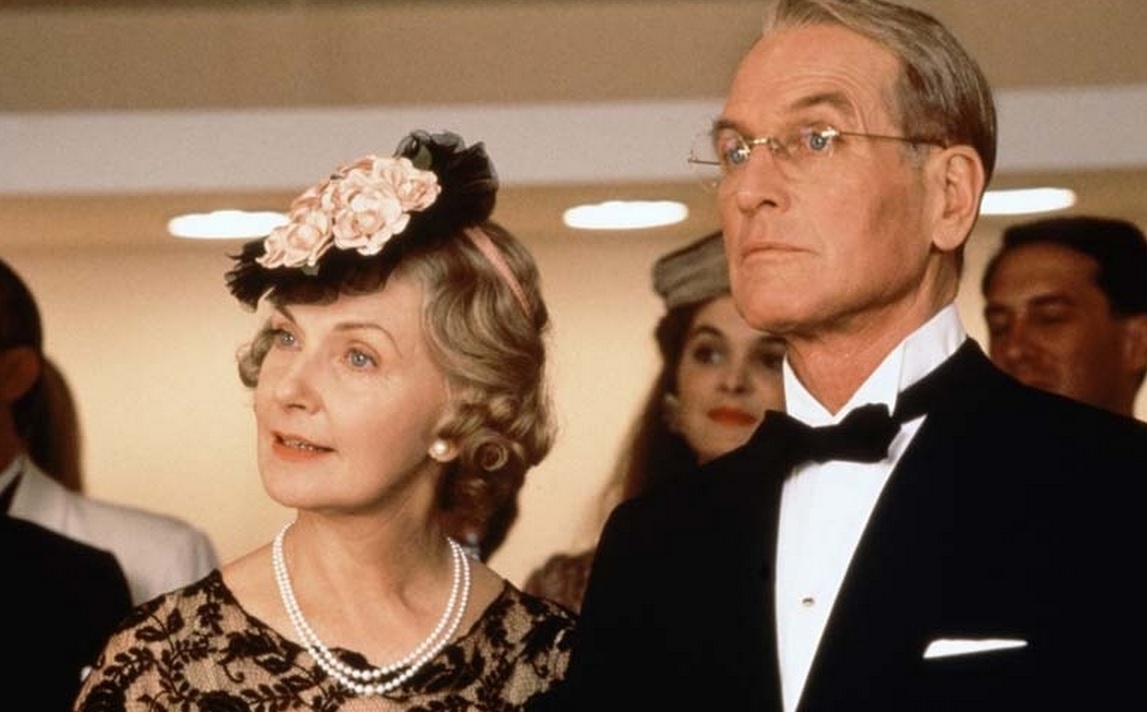
NEWMAN AND WOODWARD 50 YEARS OF LOVE & MARRIAGE Pictures source: http://people.premiere.fr/
The high-profile couple enjoyed their anonymity in Westport, Conn., where they helped restore and reopen the Westport Country Playhouse.
Woodward, as the theater’s artistic director, cast her husband in the Stage Manager role in a production of “Our Town.” It moved to Broadway, where Newman earned his first Tony nomination in 2003.

Paul Newman and his wife Joanne Woodward Pictures source: http://people.premiere.fr/
SOURCE : DAILY NEWS
Pictures source: http://people.premiere.fr/

The story revolves around three single roommates, Janet Wood, Chrissy Snow, and Jack Tripper, who all platonicallyshare Apartment 201 in a Santa Monica, California apartment building owned by Mr. and Mrs. Roper.
Later, followingSuzanne Somers’ departure, Jenilee Harrison joined the cast as Cindy Snow (Chrissy’s cousin), who was later replaced by Priscilla Barnes as Terri Alden. After the Ropers were spun-off into their own sitcom, Don Knotts joined the cast as the roommates’ new landlord Ralph Furley, brother of the new building owner, Bart Furley.
 The show, a comedy of errors, chronicles the escapades and hijinks of the trio’s constant misunderstandings, social lives, and struggle to keep up with the rent.
After crashing a party and finding himself passed out in the bathtub, cooking school student Jack Tripper meets Janet Wood, a florist, and Chrissy Snow, a secretary, in need of a new roommate. Having only been able to afford living at the YMCA, Jack quickly accepts the offer to move in with the duo.
However, due to overbearing landlord Stanley Roper’s intolerance for co-ed living situations, even in a multi-bedroom apartment, Jack is allowed to move in only after Janet tells Mr. Roper that Jack is gay.

don knotts
Although Mrs. Roper figures out Jack’s true sexuality in the second episode, she does not tell her husband, who tolerates but mocks him. Frequently siding with the three roommates instead of her husband, Mrs. Roper’s bond with the roommates grows until the eventual spinoff The Ropers.
Jack continues the charade when new landlord Ralph Furley takes over the apartment complex because Mr. Furley insists that his hard-nosed brother Bart (the building’s new owner) would also never tolerate such living situations.
The show was set minutes from the beach in Santa Monica, California, and was filmed primarily using three main sets: the trio’s apartment, their landlord’s apartment, and a neighborhood pub called The Regal Beagle. In later seasons more sets were used, frequently depicting the apartment of Jack’s friend Larry, Angelino’s restaurant, Jack’s Bistro, the hospital where Terri worked, and Janet’s flower shop.
Humor in the show was based on farce, often relying on innuendo and misunderstanding, as well as physical comedy to punctuate the hare-brained schemes the characters would invariably conjure up to get themselves out of situations and dilemmas.

john ritter
Running jokes were frequently based on Jack’s (supposed) sexual orientation, Mr. Roper’s lack of sexual prowess, and Chrissy’s blonde moments.
Conflict in the show came from the dysfunctional marriage of the Ropers, Janet’s intolerance for a roommate romance, and later on, Jack’s friendship with Larry and Larry’s abuse thereof.
The theme song was composed by Joe Raposo (known for his composing for the children’s television show Sesame Street), and sung by Ray Charles (not to be confused with the blind R&B musician) and Julia Rinker.
Three’s Company had many cast changes over its run. The first of these changes took place in the spring of 1979 with the relocation of the Ropers to their own television series (The Ropers), which revolved around Helen and Stanley, and their neighbors in a townhouse community after Stanley had sold the apartment building. Man About The House had similarly spun the Ropers off for the series George and Mildred.
Two changes took place in the fall of 1979, at the beginning of the fourth season. The first was the addition of Lana, an older woman who chased Jack around. She liked to pursue him but he did not appreciate her advances.
Since Ann Wedgeworth did not appreciate her diminishing role in the series, Lana was dropped from the show without any explanation before the season was half over.
The other new addition that fall was the new building manager, Ralph Furley (played by Don Knotts), whose brother Bart bought the building from the Ropers. Mr. Furley pursued Lana unsuccessfully, as she unsuccessfully pursued Jack. Unlike Lana, he appeared until the end of the series.
Season five (1980–1981) marked the beginning of contract re-negotiations and sparked friction on the set. When Somers’ demands for a heavily increased salary (from $30,000 to $150,000 per episode, plus 10% of the show’s profits) were not met, Somers went on a strike of sorts.
Executives believed that a complete loss of Somers could damage the program’s popularity so a compromise was reached. Somers, who was still under contract, continued to appear in the series, but only in the one-minute tag scene of a handful of episodes. Somers’ scenes were taped on separate days from the show’s regular taping; she did not appear on set with any of the show’s other cast members.
According to the story, her character had returned to her hometown of Fresno to care for her ailing mother, and was only seen when she telephoned her former roommates, and they recounted that week’s adventures to her. This arrangement continued for one season. Somers’ contract was not renewed and Chrissy’s place in the apartment was taken by her clumsy cousin Cindy Snow (Jenilee Harrison).

priscilla barnes
Another replacement, Terri Alden (played by Priscilla Barnes), a clever, sometimes sassy nurse, joined the cast in the sixth season (1981–1982). In the script, Cindy was to move to college to fulfill her dream of becoming a veterinarian, and would continue to visit throughout the sixth season.
The show ended with the departure of all cast members except Ritter, who moved on to the spin-off Three’s a Crowd (syndicated as “Threes Company Too” in the Threes Company syndication package), itself based upon Man About the House’s spin-off Robin’s Nest.
After more than 30 years of not speaking to each other, Suzanne Somers and Joyce DeWitt finally made up and reunited for Suzanne’s web series Breaking Through which aired February 2, 2012.
Primary characters
Jack Tripper season 1–8 A clumsy culinary student (later chef, then restaurant owner) from San Diego, Navy veteran, and swinging bachelor. John Ritter
Janet Wood 1–8 Born in Indiana, she is a down-to-earth woman who was also an aspiring dancer. She worked as manager of the “Arcade Flower Shop” and later in the last season as an aerobics instructor. Joyce DeWitt
Chrissy Snow season 1–5 A ditzy secretary from Fresno whose real name is Christmas Snow. Suzanne Somers
Cindy Snow season 5–6 Chrissy’s accident-prone cousin, a secretary and later, veterinary student at UCLA. Jenilee Harrison
Terri Alden 6–8 An intelligent nurse, unlucky in love. Priscilla Barnes
Secondary characters
Larry Dallas 1–8 A playboy neighbor, used car salesman, and Jack’s best friend. Richard Kline
Stanley Roper 1–3 A hard-nosed landlord. Norman Fell
Helen Roper 1–3 Stanley’s muumuu-wearing, love-starved wife. Audra Lindley
Ralph Furley 4–8 A goofy, yet friendly, flamboyantly-dressed landlord who fancies himself a ladies’ man. Don Knotts
Lana Shields 4 An older female love-starved neighbor who pursued Jack and was in turn pursued by Mr. Furley. Ann Wedgeworth
SOURCE : Wikipedia.
https://www.dailymotion.com/video/x1osci3_une-grand-mere-de-80-ans-realise-une-salsa-endiablee_news

Aria’s songs are currently on light to medium rotation on over 750 commercial FM and internet
stations ( on Radio Satellite, of course ) in 17 countries.
Aria’s new single The Key has been selected on Cool New Music, Hot/Mod/AC on
AllAccess.com.
Both The Key and Dolce were listed on Friday Morning Quarterback
as current AC releases for radio.
Aria’s recent single Dolce has been on the Official (2012)
European Indie Chart, mostly at #2, for five consecutive months on 700 radio stations across
Europe and Canada since March 2012.
Dolce was featured from March-July 2012 as a Cool
Aria’s fan base comprises a wide intergenerational audience of both men and women (50/50), in
an age range from teens to seniors. Fans find Aria’s music to be highly engaging, particularly
those with more selective tastes in modern contemporary music.
BIOGRAPHY :
Rising star teen opera sensation and pop crooner Aria Tesolin is known internationally for her
captivatingly beautiful operatic voice.
Born in Mississauga, Ontario, Aria’s charismatic performances as a child opera singer in
concerts with Canadian tenors became legendary on YouTube, reaching an international
audience of 7 million.
There, she inspired music fans of all ages with her musical talent as a
child opera singing sensation. At the age of 12, in May 2006, she released her first album, a 14
track novelty opera album called Baby Soprano.
10 tracks from Baby Soprano have charted on
Top 100 digital opera charts in 13 countries.
Aria’s amazing vocal talent was featured on major
Canadian national news networks and television shows.
Now nearly 21 and grown up with an original sound, Aria’s exquisite voice is breathtakingly
dramatic and soothingly addictive.
Her EP featuring love songs was released Nov. 2011 with
the first radio single, Dolce, released on Feb. 2, 2012.
DECOUVRONS CETTE ARTISTE
Après avoir passé 8 ans en France. Victoria est revenue à San Antonio au Texas à
l’âge de 12 ans;

VICTORIA CELESTINE
commençant le chant et la guitare un an après, elle a réussi en 3 ans. a sortir
2 albums complets de chansons originales ainsi que un EP produit et écrit avec Jeff Blue le
producteur et découvreur de Likkin Park et Macy gray entre autre.

VICTORIA CELESTINE on RADIO SATELLITE
De plus Victoria se place régulièrement en finale de concours de chants et de musique;
notamment deux fois en 2eme place de l’ISC (International Songwriting Competition) category
teen, se distinguant parmi 20000 candidats payants.
“Homework” un nouveau single, raconte une nuit sans sommeil de Victoria qui essaye de faire
ses devoirs en retard! après avoir été sur les “charts” de itunes 99 fois (dans différents pays)
avec son premier single “In the World”, ce nouveau single sera lui aussi promu par l’application
Video Star de l’Iphone/Ipad le 26 Septembre.
 Victoria Celestine picked up the guitar at age 13 with Bobby Flores, at his Bulverde Academy
of Music, and began writing songs the following summer (2010). Gordon Raphael, (producer –
Regina Spektor, the Strokes) caught her singing during the next Christmas holidays , and
invited her to record her first 7 songs acoustically.
The following April, she recorded her debut album at 14, “From the Outside”, with Jacob Sciba,
at Pedernales Studios, in Austin, TX. She received “Best Female Teen Artist of the Year”, from
Indie Music Channel at the House of Blues in Hollywood, and then received 2nd place (teen
category) from the International Songwriting Competition for the song “In The World”, as well
as Honorable Mention for the song “From the Outside” (performance category). April 2012,
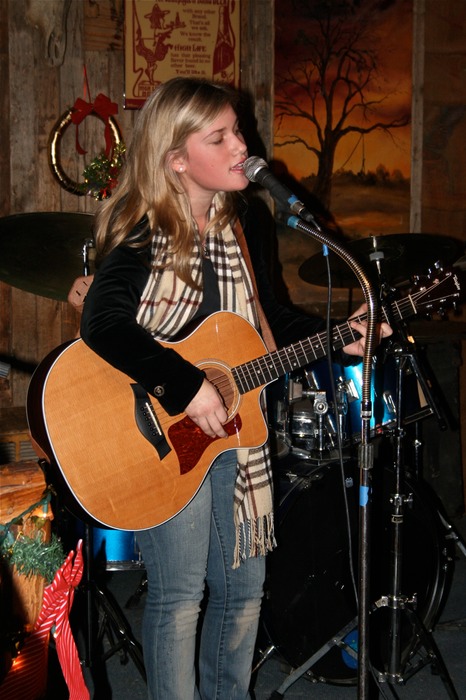 This document was created using iPool music promotion software – http://iPool.info
Victoria co-wrote and recorded 3 singles with Jeff Blue (Linkin Park, Macy Gray) and Mike
Gonsolin in Hollywood (“The Story of Us”, “Mother”, and “It Only Gets Better”) which have been
released. Her first music video (of the song “In the World”), has been distributed by Pulse
Records to 8000 retailers, (including Sam’s Club, where it has recently been played).
The same song caught the attention of Video Star, who featured it on their popular app for iphone/ipad in
Jan.2013 which propped her #42 on USA iTunes Music chart. The song “Mother” as well has
been featured by VideoStar for mother’s day week. She received again the 2nd place Prize from
the ISC 2012 with the song Drift Away .
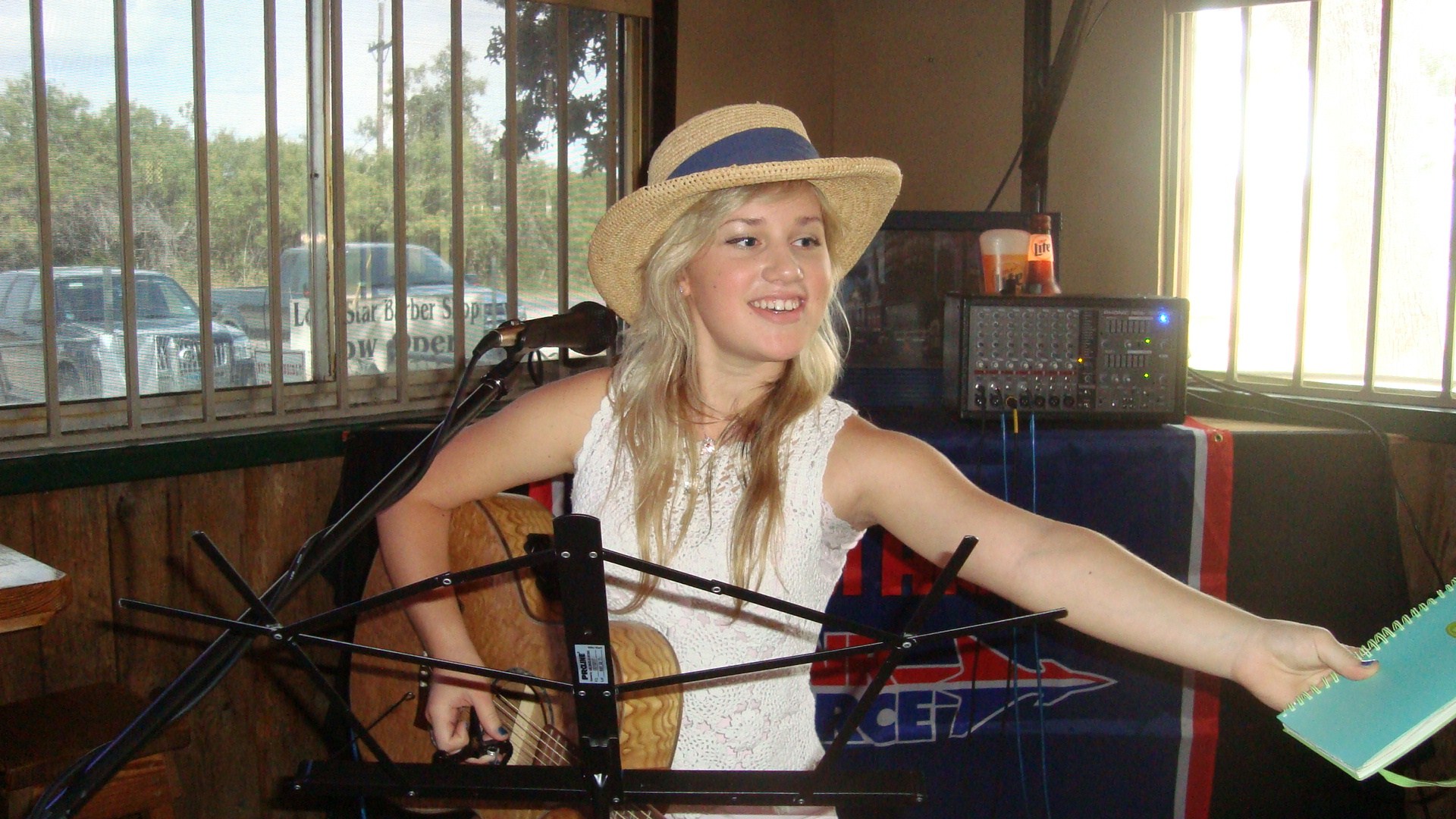 Having turned 17, Victoria has finished recording her latest album “Back home in San Antone” which is expected to be released in few weeks.
In the mean time Video Star is featuring one of her new song “Homework” on Thursday September
26th which has just been released digitally.
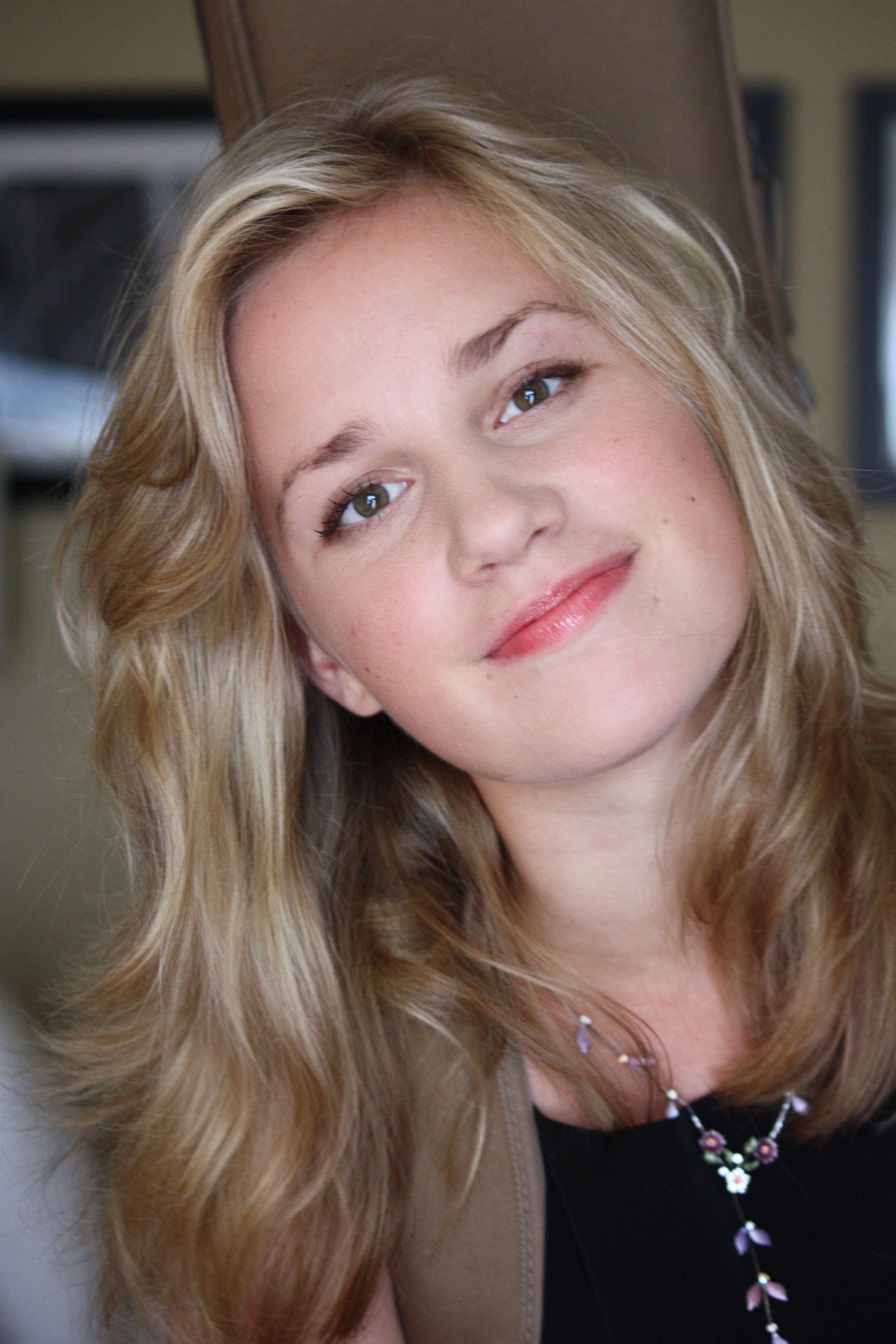
VICTORIA CELESTINE
 Sisca
Sisca
She was born on July 14, 1991, and is the only daugther in her family. She has only had permission to sing in public for when she was nineteen years old.
Her father imposed a ban on the classically trained singer as an infant but with her mother’s help she secretly trained her voice. Sisca is a fresh new talent that has only just begun to be unleashed.South East Asian based Sisca has been singing since the age of 3 and as a teenager turned away from popular music to follow the road much less travelled.

Sisca chose to pursue classical training and found a voice that rang true in the range and emotion that classical music offers.
Sisca’s father forbade his sheltered daughter to perform in public in order to protect her.It was her mother however who had the most influence on her. Her mother initiated her vocal training and helped Sisca evade her father to pursue her dreams. Sisca’s mother’s persistence and constant reassurance has led to the ban on public performance being lifted allowing Sisca to blossom into a talented and gifted performer.

SISCA
She chooses to write about issues on a larger scale rather than then the mundane in an attempt to rally us behind her. Sisca chooses provocative topics and poses questions about life journeys, nature, the environment and world events. A level of drama is also apparent in her songs. Encapsulating her need to express herself artistically juxtaposed with the knowledge of the only recent freedom to do so.
Her debut original album titled ‘Impermanent Life’ has been written and recorded with some of the best contemporary writers and producers in Australasia. Audius and Leon King are responsible for some of the highest charting Australian releases reaching certified platinum sales and number ones in Australia and UK.Sisca’s music is a contradiction of sorts. Her lyrics have both a maturity well beyond her years and experience; with an uplifting and optimistic tone that only a person of her youth and naivety could deliver.
Sisca was she was fast-tracked to have intensive vocal courses with renowned Conductor Avio Priatna Sisca also honed her craft while studying law at the University of Pelita Harapan.She lists her main musical influences as Sarah Brightman, Josh Groban, Andrea Bocelli, Allesandro Safina and outlines her adoration for Cecilia Bartoli. With these diverse musical icons in mind she has strived to create an album well beyond her years. Armed with an album full of diverse and glistening songs, and with permission to perform, Sisca is ready to take on the world.
He started life as Harry Webb and spent some of his childhood years in India. Cliff Richard was inspired by the music of Elvis Presley and at age 16, formed a band, ‘The Quintones’, with school friends and performed at their local Youth Club. From there, Cliff Richard went from strength to strength and became a global star.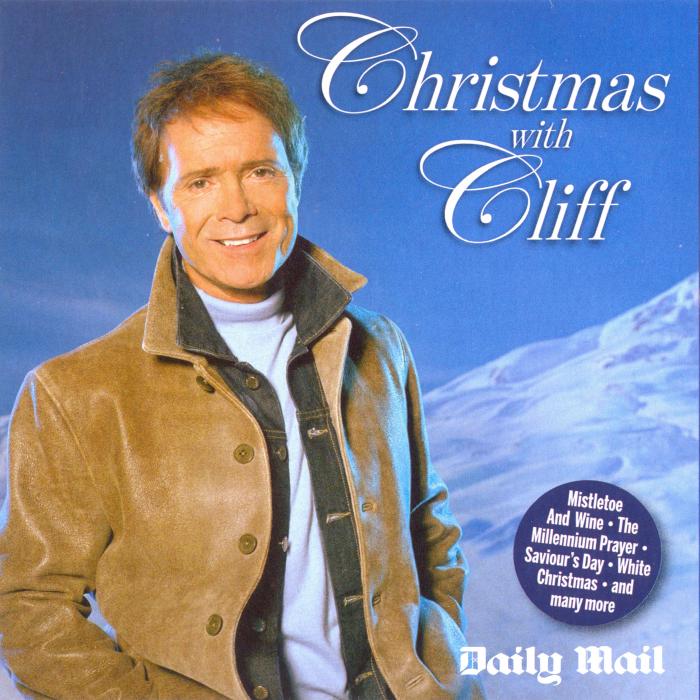
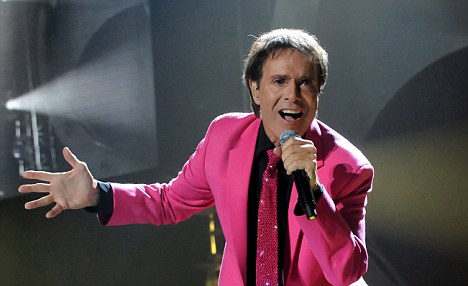
Having moved to India to help build a system of railways, Rodger Webb married Dorothy Dazely in 1939 and the following year the couple had a baby boy – Harry Rodger Webb.
Born in The King’s English Hospital in Lucknow, Harry was educated in Howrah, until his family moved to England in 1948, following Home Rule in India.
After a privileged life in India, the Webbs faced poverty, and were forced to sleep on mattresses at the houses of various relatives. In 1951, they were given a council house in Chesthunt, and after just failing the eleven-plus exam, Harry was enrolled in the newly built Cheshunt County Secondary School.
After being inspired by the music of Elvis, Harry and a group of school friends formed a group, ‘The Quintones’, and performed at their local Youth Club.
For his 16th birthday, Harry got his first guitar, going on to form ‘The Drifters’ in 1958, with Terry Smart and Norman Mitham. After a number of low-key London gigs, Ian Samwell joined the band and they recorded their first demo, covers of Elvis’ ‘Lawdy Miss Clawdy’ and Jerry Lee Lewis’ ‘Breathless’.
After recording their first hit single, ‘Schoolboy Crush/Move It’, they were quickly signed by Columbia. The song hit No.2 in the British charts, and went on to sell over a million copies.
Now going under the name Cliff Richard, an appearance on the TV show ‘Oh Boy!’ catapulted Cliff to sex symbol status.
In 1958, Hank Marvin and Bruce Welch joined ‘The Drifters’, and by 1959 the band changed their name to ‘The Shadows’. It was also around this time that Cliff made his film debut in ‘Serious Charge’. The film produced the hit ‘Living Doll’, Cliff’s first number one hit.
Cliff’s second movie, ‘Expresso Bongo’, was more successful and critically acclaimed. As the albums and hit singles rolled out, Cliff Richard was building a devoted fan base that would secure his chart success some 40 years later.
 In 1961, Cliff starred in ‘The Young Ones’, and the accompanying single shot straight into number one in the charts. The second film with Cliff in the leading role was another musical, ‘Summer Holiday’, which saw him star alongside Una Stubbs.
1968 saw the last album recorded by Cliff with ‘The Shadows’, and Cliff went on to tour with his own gospel album. In 1970, Cliff launched his first television show, featuring a mix of music and comedy. In the same year, he made his stage debut in Peter Shaffer’s ‘Five Finger Exercise’, a play focusing on a ‘deep friendship’ between a student and his tutor. The play was originally considered controversial for its veiled homosexual themes but despite this, reviews were favourable.
One of the most talked about aspects of Cliff’s life is his relationships. A much publicised relationship with tennis star Sue Barker in 1981 ended within a year. Cliff has also been linked with actress Una Stubbs.
In 1986, Cliff and The Young Ones re-recorded ‘Living Doll’ and made it to the top of the charts. In the same year he appeared in the West End musical ‘Time’, and by the end of the decade he had released his highest selling album of all time, ‘Private Collection’, which went on to be certified four-times platinum in the UK alone!
‘Mistletoe & Wine’ become Cliff’s first Christmas-themed No.1 in 1988 and by 1989, Cliff became the first British artist to release 100 singles. Cliff continued to tour and break records throughout the 1990s, and in 1995 he became Sir Cliff Richard – the first pop star to be honoured with a full Knighthood.
Despite selling records by the lorry load, Cliff ran into trouble getting airplay from various radio stations, including a ban by the BBC for his track ‘Misunderstood Man’, which was deemed “too raucous” for listeners.
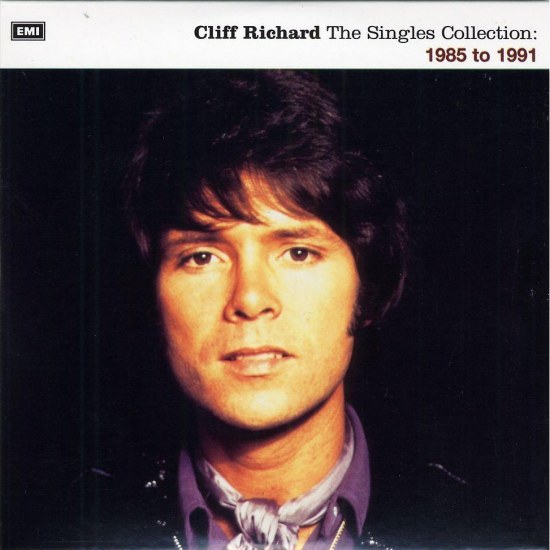 Perhaps the most significant project for Cliff in the nineties was the fulfilment of his lifelong dream to play the character of Heathcliff in Emily Bronte’s masterpiece, ‘Wuthering Heights’. The show was a runaway success, and gave Cliff his highest selling video ever, topping the UK video charts for two months upon its 1998 release.
In 1999, ‘The Millennium Prayer’ reached number one, regardless of no airplay and scathing reviews. Despite a lack of support in the press, Cliff continues to make music and his recent album and DVD release cracked the top twenty.
Cliff now divides his time between his homes in the UK, Barbados and Portugal, where he has taken to making his own wine.
Source
Old commercials / Anciennes publicités.
Cliquez svp sur le lien pour voir la vidéo
Click pls on the link to watch the commercial ( video)
JOHN WAYNE

john wayne
Marion Mitchell Morrison, dit John Wayne, né le 26 mai 1907 à Winterset dans l’Iowa, aux États-Unis, et mort le 11 juin 1979 àLos Angeles, est un acteur, réalisateur et producteur américain.
S’il a joué dans des films policiers, des films de guerre et quelques comédies romantiques, c’est dans ses nombreux westernsque John Wayne s’est réellement imposé, sous la direction de deux réalisateurs particulièrement : John Ford (La Chevauchée fantastique, Le Massacre de Fort Apache, La Charge héroïque, Rio Grande, La Prisonnière du désert ou encore L’Homme qui tua Liberty Valance) et Howard Hawks (La Rivière rouge, Rio Bravo, El Dorado ou Rio Lobo). Il tourna également plusieurs films avec Henry Hathaway dont Cent dollars pour un shérif, qui lui valut en 1970 l’unique Oscar de sa carrière.
En 1960, il passa derrière la caméra pour réaliser une fresque historique d’envergure, Alamo, relatant les derniers jours de Davy Crockett et ses compagnons lors de la guerre d’indépendance du Texas. Huit ans plus tard, il coréalisa Les Bérets verts, film engagé justifiant l’intervention américaine au Viêt Nam. Ses deux réalisations reflètent l’engagement personnel de John Wayne, républicain et ardent patriote
Classé 13e plus grande star de légende par l’American Film Institute en 1999, John Wayne est certainement un des acteurs les plus représentatifs du western, une incarnation à lui seul de l’Amérique conquérante. Surnommé « The Duke » (le Duc), il reste toujours aujourd’hui, grâce à ses films, le symbole d’une certaine virilité. Il interpréta ce rôle d’homme viril, dur, solitaire et un peu machiste tout au long de sa carrière, ce qui lui fit déclarer : « J’ai joué John Wayne dans tous mes films et ça m’a plutôt pas mal réussi ».
Glendale aujourd’hui, où vécut John Wayne de 1916 à 1924.
Né dans une famille modeste et presbytérienne, son père est Clyde Leonard Morrison (1884–1937), d’ascendance irlandaise et écossaise et fils d’un vétéran de la Guerre de Sécession, Marion Mitchell Morrison (1845–1915). Sa mère est Mary Alberta Brown (1885–1970), d’origine irlandaise. En décembre 1912 naquit son frère Robert. Ses parents changèrent alors son identité en Marion Mitchell Morrison (toutefois il a souvent affirmé que son vrai nom aurait été Marion Michael Morrison).

John Wayne
Peu après son père eut des lésions aux poumons et fut contraint de « changer d’air » pour sa santé. Il mit en vente sa pharmacie et acheta une maison délabrée près du désert des Mojaves, à Palmdale, et des terres où il décida de faire pousser du maïs. Sa femme et ses enfants vinrent le rejoindre en 1914. « Je crois que c’était une misérable baraque. Ni gaz, ni électricité, ni eau courante. […] Nous étions absolument coupés du monde. » C’est pour aider son père qu’il apprit à se servir d’un fusil et à monter à cheval. « Je suis très à l’aise en selle, mais je ne suis pas amoureux des chevaux. Ils sont seulement utiles dans une ferme ou pour tourner un film. »
Lassée du climat rude et de la pauvreté de la famille, Mary Morrison poussa son mari à tout vendre. Ils partirent à Glendale, faubourg de Los Angeles, en 1916, où le père trouva un emploi dans une pharmacie5. Ils déménagèrent régulièrement, s’installant à chaque fois dans une maison plus petite. Marion devint vite un bon élève, lisant beaucoup à la bibliothèque municipale. À douze ans, il enchaîna, en parallèle des cours, des petits boulots : livreur de journaux, livreur, ouvreur du cinéma Palace.
Son premier vrai souvenir d’un film est probablement Les Quatre Cavaliers de l’Apocalypse avec Rudolph Valentino6. Grâce à son job d’ouvreur, il pouvait accéder à un très grand nombre de films, dont des westerns avec Harry Carey ou des films d’aventures avec Douglas Fairbanks. Il se lia d’amitié avec Bob Steele, future star de westerns des années 1920. C’est aussi dès cette époque que Marion fut surnommé « Big Duke » en référence à son chien, « Little Duke », qu’il emmenait partout avec lui. Au collège, il appartenait aux clubs sportifs et culturels, et fit du théâtre, non comme acteur, mais comme accessoiriste. Ses rares performances d’acteur ne furent pas convaincantes, trop pétrifié qu’il était par le trac
En 1924, l’Université de Californie du Sud décida de recruter les meilleurs éléments des clubs alentours pour sa propre équipe de football, les Trojans, dont Marion Morrison. Pouvant faire ses études gratuitement grâce à une bourse sportive, il fut aussi initié à une fraternité, Sigma Chi8. Il rencontra peu après la vedette Tom Mix, qui assistait à tous les matchs de l’équipe. Appréciant la carrure du jeune homme, il lui offrit un rôle dans un film qu’il devait tourner quelques mois après.
Entre-temps, lors d’un weekend à Balboa, il fut victime d’un accident de bodysurf : il se déchira un muscle de l’épaule après une chute qui le fit entrer en contact avec le fond, tenta vainement quelque temps de continuer le football mais fut évincé de l’équipe, avec toutefois un diplôme de la Fédération de football. Il n’y joua plus jamais. L’été au studio, la star méprisa le jeune Morrison, qui fut toutefois engagé, mais comme accessoiriste.
Après une figuration sur le film The drop Kick, il fut appelé sur le tournage de Maman de mon cœur, dirigé par John Ford, réalisateur déjà respecté à Hollywood. Celui-ci décida un jour de provoquer gentiment le jeune footballeur Morrison en le faisant se mettre en position, puis en lui faisant mordre la poussière. La pareille que lui rendit aussitôt le jeune homme le fit grimper dans l’estime du réalisateur.

JOHN FORD
JOHN WAYNE
Il l’embaucha d’ailleurs comme acteur sur son film suivant, La Maison du bourreau, dans un petit rôle de paysan condamné par un juge. John Ford le fit d’abord renvoyer à cause de son comportement (il fut pris d’un fou rire), puis le rappela et tourna la scène.
À partir de 1928, il décida de ne plus aller à l’université. N’ayant plus la bourse accordée grâce à l’équipe de football, il ne pouvait s’offrir les cours. Il retourna à la Fox et devint accessoiriste pendant trois années. « J’ai été menuisier, manœuvre, électricien, charpentier, peintre et tapissier. J’ai tout fait, je connais tous les problèmes du métier et les trucs pour les résoudre. » Il travailla alors de nouveau avec John Ford et d’autres réalisateurs, et fit un peu de figuration, notamment dans Words and music, Rough Romance ou Cheer up and smile. Dans Salute, il se confronta pour une des premières fois à un autre étudiant-footballeur voulant participer au film de Ford, Wardell Bond. Dans Hommes sans femmes il fut engagé comme cascadeur, mais payé au tarif d’un accessoiriste
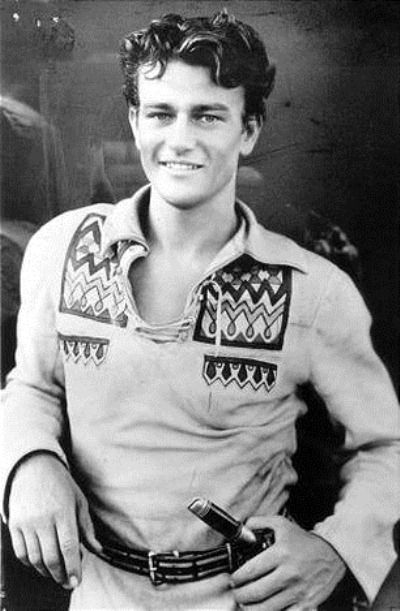
JW young
Le cinéma parlant avait rendu difficile la réalisation de westerns. Le réalisateur Raoul Walsh prouva le contraire en coréalisant In Old Arizona qui fut un gros succès. La Fox voulut alors lui confier la réalisation d’un grand western, au budget d’un million de dollars. Des acteurs de théâtre furent engagés : Tyrone Power et Ian Keith. Pour le rôle principal, le choix s’orienta vers Gary Cooper, mais celui-ci était indisponible car sous contrat avecSamuel Goldwyn. Walsh remarqua alors par hasard cet accessoiriste qui déchargeait un camion, Duke Morrison, puis décida de lui faire faire un bout d’essai. Le producteur délégué et le réalisateur décidèrent juste après de lui faire changer de nom. Par admiration pour le général Anthony Wayne, on lui trouva un nom. Et tout bêtement parce que « John » faisait Américain et simple, on lui donna ce prénom. Ainsi Duke Morrison devint John Wayne, sans même avoir été consulté.
Le tournage de La Piste des géants commença à Yuma. Wayne fut victime d’une dysenterie qui l’obligea à un régime et lui fit perdre trois semaines de tournage. Le film fut tourné en70 mm, près de vingt ans avant le CinemaScope. La première mondiale eut lieu le 24 octobre 1930 dans un grand cinéma de Hollywood et la société de production fit faire à sa nouvelle vedette une promotion mensongère, lui inventant une nouvelle biographie.
Le film fut un échec notoire et la conséquence pour John Wayne fut de redevenir un acteur inconnu, sous contrat, à 75 dollars la semaine. De plus, il se fâcha quelque temps avec John Ford
Duke fut engagé en 1930 pour tourner Girls demand excitement, une comédie musicale dirigée par un chorégraphe de New York parfaitement inexpérimenté, avec Virginia Cherrill. Puis avec Loretta Young, ce fut Three girls lost. Présenté le 1er mai 1931, le film fut résumé par un critique par : « Tout cela est assez idiot ! » La Fox ne renouvela pas le contrat de John Wayne, qui fut embauché par Harry Cohn, grand patron de la Columbia, qui lui fit tourner un autre film sans intérêt, Men are like that. Ces films permirent toutefois à Wayne de se faire un public. Mais une brouille avec Cohn lui fit perdre son statut de vedette, et il devint un second rôle, au profit de Tim McCoy notamment. Il n’oublia jamais cette offense et, devenu une grande vedette, refusa toujours de tourner pour la Columbia.
La mode était aux films d’aviation. John Wayne, qui venait de prendre un agent, Al Kingston, tourna L’ombre d’un aigle. C’est sur ce tournage qu’il rencontra Yakima Canutt, qui allait devenir l’un des cascadeurs les plus connus du cinéma américain. Il enchaîna avec Hurricane express où il interprétait un aviateur décidé à venger son père, tué dans un accident de chemin de fer. Le 24 juin 1933, il se maria enfin à celle qu’il aimait depuis des années, Josie (Josephine Saenz).
cette dernière lui permit d’obtenir un petit rôle, celui d’un boxeur, dans La Vie de Jimmy Dolan avec Douglas Fairbanks. Al Kingston arrangea ensuite un entretien avec Trem Carr et Leo Ostrow qui venaient de fonder la sociétéMonogram Pictures et Duke se vit offrir un contrat de huit westerns par an, payés 2500 $. Il tourna la même année Les Cavaliers du destin où il fut un cow-boy chantant. Exaspéré par cette expérience humiliante, il déclara plus tard que sa chansonnette en play-back lui donnait l’impression « d’être une foutue pédale. » Pourtant cette époque laissa à Wayne de bons souvenirs, il déclara plus tard : « D’avril à septembre on travaillait comme des dingues pour fournir de la pellicule aux petites salles qui achetaient la production en bloc et d’avance. Puis, à la fin de l’été, je filais chasser la palombe. Ensuite c’était la saison des oies sauvages et des canards. […] Oui c’était le bon temps

LORETTA YOUNG
Marié et à présent père, John Wayne refusa un nouveau contrat de 24 000 $ proposé par Herbert J. Yates pour Monogram Pictures, las de vivre loin de sa famille et de ses enfants. Il s’essaya sans succès à la gestion d’une agence immobilière. Puis, sous le nom de Duke Morrison, devint boxeur et fit quelques combats dans le Nevada19. Encore une fois, sans grand succès. Résolu à revenir au cinéma, il tenta de se faire remarquer par Cecil B. DeMille,

cecil_b_de_mille
en vain. Son ami Paul Fix lui proposa alors une pièce de théâtre, Red Sky At Evening, avecSally Blane. D’abord enthousiasmé, il déchanta assez vite, se rappelant ses expériences navrantes de jeunesse. La seule et unique représentation fut un désastre : ayant vidé une bouteille de whisky pour se donner du courage, Wayne entra sur scène ivre, oubliant ses répliques et demandant : « Où suis-je? »
Il reprit alors le chemin des studios et tourna pour Universal quelques films où il abandonnait son personnage de cow-boy. Entre 1936 et 1937, il tourna ainsi Les Pirates de la mer, Conflic où il joua un boxeur, I Cover de war dans le rôle d’un reporter, et L’idole de la foule. Produits à coûts réduits, ces films furent des échecs cuisants. Son public fidèle ne voulait de John Wayne qu’il ne fût qu’un cow-boy, sachant se battre et manier son pistolet. Il revint alors vers Herbert J. Yates et tourna d’autres films médiocres, dont certains ne sortirent qu’une fois John Wayne devenu une star.
À l’été 1937, John Ford invita Wayne à bord de son bateau, l’Araner, et lui donna à lire un scénario de Dudley Nichols, La Chevauchée fantastique, pour avoir son avis quant à l’acteur qui pourrait endosser le premier rôle. Vexé, il proposa néanmoins Lloyd Nolan. Ce n’est que le lendemain que Ford lui demanda : « Idiot, tu penses que tu ne pourrais pas le jouer le rôle ? » Mais les producteurs envisageaient plutôt des vedettes confirmées : Gary Cooper et Marlène Dietrich.
Le réalisateur réussit finalement à imposer Wayne et Claire Trevor, ainsi que d’autres acteurs expérimentés, tels que Thomas Mitchell ou George Bancroft.
Le film fut tourné d’octobre à décembre 1938, avec un budget modeste. Quelques scènes furent filmées à Monument Valley, le reste en Californie. Yakima Canutt doubla John Wayne, notamment lors de la grande attaque de la diligence. Ce dernier fut tout au long du tournage tyrannisé par le réalisateur, Ford le reprenant sans cesse sur sa façon de marcher, de jouer, de parler. « Je l’aurais tué. Il me mettait en rage. Mais Ford savait ce qu’il faisait. Il savait que j’avais honte d’être un cow-boy de westerns de séries B et de me retrouver là, en compagnie de ces grandes vedettes. » Ford offrit à son acteur vedette l’une des « plus belles entrées de star de l’histoire du cinéma », avec son fameux mouvement de caméra laissant apparaître Ringo Kid, une selle dans une main, un fusil dans l’autre.

GARY COOPER
La Chevauchée fantastique fut un succès public et reçut sept nominations aux Oscar du cinéma. Les conséquences furent nombreuses : le western comme genre de cinéma fut réhabilité (le critique Frank S. Nugent écrivit : « Dans un grand geste superbe, John Ford a balayé dix ans d’artifice et de compromis et a réalisé un film qui fait chanter la caméra ») et John Wayne sortit enfin de l’impasse dans laquelle il se trouvait depuis le début des années 1930.
 John Wayne dans Les Naufrageurs des mers du sud, de Cecil B. DeMille, en 1942.
Le succès international de La Chevauchée fantastique fit de John Wayne une star, auprès du public et des réalisateurs. Son salaire fut multiplié par trois, puis par onze en 1946, et il devint alors un des acteurs les plus chers avec Gary Cooper ou Clark Gable. Il retrouva le réalisateur Raoul Walsh en 1940 pour un western sur fond de guerre civile, L’Escadron noir, avec Claire Trevor. La même année, il fut engagé pour incarner un Américain accueillant des réfugiés allemands fuyant le régime nazi dans Les Déracinés, et retrouva John Ford pour Les Hommes de la mer. Tourné rapidement et pour un coût relativement modeste, le film ne fut pas un succès public. De plus, Wayne n’était toujours pas pris au sérieux par le réalisateur qui ne le pensait pas capable de jouer des rôles plus complexes. Il tourna un dernier film cette année 1940, La Maison des sept péchés, première collaboration avec Marlène Dietrich, avec qui il s’entendit à merveille33.
PAULETTE GODARD
Il fut contacté par le réalisateur Cecil B. DeMille. Wayne, qui n’avait pas oublié sa première rencontre infructueuse avec lui, refusa de jouer dans son film, en lui adressant une longue notice visant à modifier le scénario. DeMille le rappela, John Wayne se fit prier et, après plusieurs discussions, DeMille obtint que John Wayne tournât dans Les Naufrageurs des mers du sud, en compagnie de Ray Milland et Paulette Goddard,
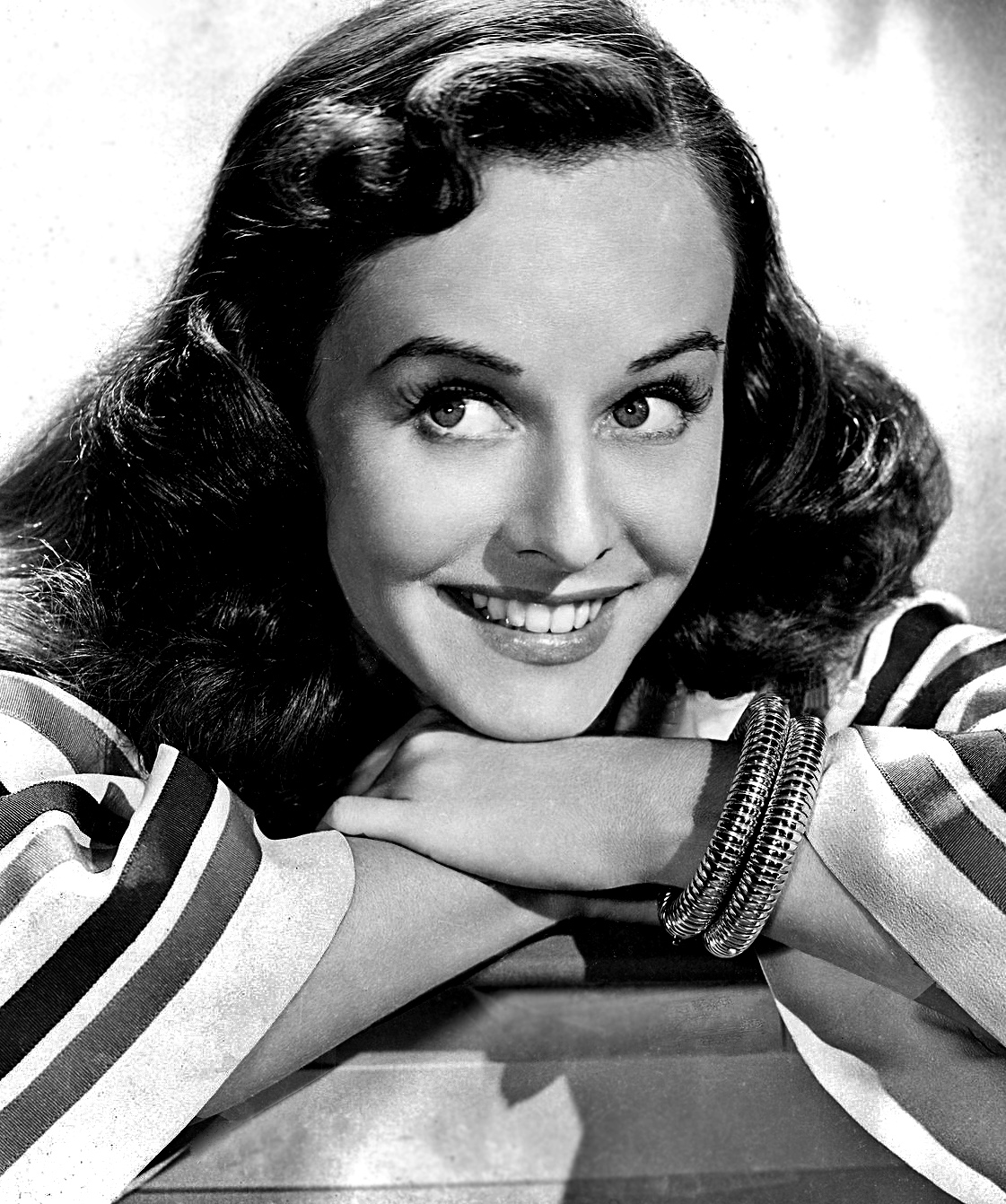
PAULETTE GODARD
l’histoire d’un pilleur d’épaves dans les Caraïbes. Le tournage fut agréable, l’entente parfaite, ce qui fit déclarer à Wayne : « Après avoir tourné avec lui, j’ai pu garder la tête haute, en dépit des films dégueulasses que je devais faire pour Republic. » L’année 1942 vit également Lady for a Night, de Leigh Jason avec Joan Blondell pour partenaire.
Après l’entrée en guerre des États-Unis, John Wayne voulut s’engager pour partir combattre en Europe. Mais, marié et père de quatre enfants, sa demande fut rejetée à plusieurs reprises. Sa participation se réduisit alors à des visites dans des camps. Il déclara plus tard : « J’ai toujours eu honte de ne pas avoir combattu. Lorsque j’interprète un officier à la tête de son commando, j’ai une piètre opinion de moi-même. »
Il retrouva Marlène Dietrich en 1942 dans une nouvelle adaptation du roman de Rex Beach, Les Écumeurs, avec un jeune premier, Randolph Scott, puis dans La Fièvre de l’or noir, qui connut un accueil chaleureux de la part du public. Wayne incarna également un pilote de l’armée américaine combattant les Japonais dans Les Tigres volants, film de propagande réalisé par David Miller. Sacramento, un nouveau western, fut choisi par John Wayne car il devait incarner un pharmacien, une manière de rendre hommage à son père décédé en 1938.
Les années suivantes, John Wayne tourna une série de films de guerre : Quelque part en France de Jules Dassin

JULES DASSIN (qui est aussi le père de Joe Dassin )
où il incarna un pilote réfugié en Normandie, puis Alerte aux marines. Aux côtés d’ Anthony Quinn, il incarna un colonel américain luttant avec les résistants philippins dans Retour aux Philippines. Républicain et patriote, Wayne critiqua par la suite le travail du réalisateur Edward Dmytryk, qui fut lié au parti communiste et figura sur la liste des Dix d’Hollywood, ainsi que le scénario. Il retrouva ensuite John Ford pour Les Sacrifiés – qui se déroule pendant la guerre du Pacifique – aux côtés d’un jeune acteur, Robert Montgomery. Le film rapporta de l’argent et se classa parmi les vingt plus gros succès de l’année.
Entre temps, John Wayne revint au western dans L’Amazone aux yeux verts, revenant sur sa déclaration de ne plus jamais en tourner. Scénarisé et interprété par son ami Paul Fix, le film imposa durablement l’image virile, nonchalante et misogyne de son personnage.
En revanche, King Vidor ne peut le diriger avec Hedy Lamarr dans Duel au soleil (1946), western lyrique et exacerbé finalement interprété par Gregory Peck et Jennifer Jones et devenu un classique. Il enchaîna par la suite quelques films passés inaperçus, La Femme du pionnier, Sans réserve avec Claudette Colbert et L’Ange et le mauvais garçon. Pour faire « rentrer l’argent », il tourna également Taïkoun, de nouveau avec Anthony Quinn. En 1948, John Wayne, devenu une vedette importante, faisait partie des acteurs préférés du public américain, avec Clark Gable, Gary Cooper et Humphrey Bogart.
En 1947, John Ford tourna le premier volet d’une trilogie consacrée à la cavalerie américaine, Le Massacre de Fort Apache avec pour vedettesHenry Fonda et John Wayne dans un rôle d’officier « humain et pacifiste ». Tourné à Monument Valley pour un budget modeste, le film réunit également Ward Bond et Victor McLaglen. John Wayne, habitué aux humeurs du réalisateur, fut un soutien psychologique précieux pour le jeune John Agar, martyrisé par Ford48. L’accueil public fut chaleureux. Il enchaina avec un rôle de nouveau refusé par Gary Cooper, celui de Tom Dunson dans La Rivière rouge de Howard Hawks qui signait là son premier western. Dans un rôle de cow-boy dur et brutal, Wayne eut pour partenaire Montgomery Clift avec qui il ne s’entendit pas immédiatement. Ce film tourné en extérieurs fut également un grand succès, rapportant plus de dix millions de dollars. Et s’il ne fut pas récompensé, John Wayne impressionna John Ford qui déclara par la suite àHawks : « Je ne savais pas que ce grand fils de pute pouvait jouer ».
OLIVER HARDY
En 1948, il engagea à nouveau John Wayne pour Le fils du désert, film en technicolor avec Harry Carey Jr., tourné dans la vallée de la Mort. Wayne tourna ensuite deux films, Le Réveil de la sorcière rouge avec Gail Russell et Le Bagarreur du Kentucky avec Oliver Hardy,

Oliver Hardy
western sans moyens. Deuxième épisode de la trilogie de la cavalerie de Ford, La Charge héroïque fut tourné en 1949 à Monument Valley et remporta un grand succès. L’année suivante, Rio Grande, suite du Massacre de Fort Apache, le mit en scène aux côtés de Maureen O’Haraqui devint une partenaire fidèle en même temps qu’une grande amie.
John Wayne enfila de nouveau l’uniforme de l’armée américaine dans trois films : Iwo Jima de Allan Dwan, pour lequel il fut nommé aux Oscars56, Opération dans le Pacifique puis Les Diables de Guadalcanal de Nicholas Ray (qui désavoua le film par la suite, au même titre que Wayne qui le considérait comme une œuvre mineure), clôturant ainsi sa série de films en hommage aux combattants de la guerre du Pacifique.
En 1952, John Wayne tourna à nouveau avec Maureen O’Hara et John Ford. Si Ford ne peut engager le couple d’acteurs pour son adaptation de What Price Glory (qu’ils ont joué sous sa direction sur scène), ils se consolent largement avec L’Homme tranquille, tourné en Irlande (terre des ancêtres du réalisateur), pour un cachet dérisoire. Le film, qui racontait le retour d’un boxeur américain dans son pays d’origine, fut un gros succès commercial dans le monde entier et remporta l’Oscar du Meilleur Film. Big Jim McLain, réalisé la même année parEdward Ludwig le mettait dans la peau d’un enquêteur de la Commission sur les activités anti-américaines au service du sénateur McCarthy. L’Homme de bonne volonté, réalisé en 1953 par Michael Curtiz ne remporta pas le succès espéré et orienta de nouveau John Wayne vers des films héroïques. Sous la direction de William Wellman, il tourna Aventure dans le Grand Nord, qu’il coproduisit, et refusa un rôle principal dans Géant (qui fut interprété par Rock Hudson). Également coproducteur de Hondo, l’homme du désert, il fut obligé de reprendre le rôle titre, la star du film Glenn Ford étant en désaccord avec le réalisateur, puis retrouva l’équipe de Aventure dans le Grand Nord pour un nouveau film catastrophe, Écrit dans le ciel. Le film fut un grand succès public, nommé aux Oscars (seule la musique de Dimitri Tiomkin reçut la récompense). Sa collaboration avec Lana Turner pour Le Renard des océans fut houleuse, mais il s’entendit à merveille avec Lauren Bacall sur le tournage de L’Allée sanglante, qui fut un succès immédiat.
.JPG) La Prisonnière du désert a été désigné plus grand western de tous les temps par l’American Film Institute.
La Prisonnière du désert a été désigné plus grand western de tous les temps par l’American Film Institute.Le tournage du Conquérant en 1956 fut éprouvant65. Produit par Howard Hughes et réalisé par Dick Powell, il mettait en scène John Wayne dans le rôle … du chef asiatique Gengis Khan, avec Susan Hayward pour partenaire.
Tourné près d’un site d’essais nucléaires, il fut probablement à l’origine du cancer de l’acteur (et d’une grande partie de l’équipe du film). En outre, il fut un lourd échec au box-office. La même année, Wayne tourna un nouveau western sous la direction de John Ford, La Prisonnière du désert. Tourné sur deux saisons (l’hiver et l’été), à Monument Valley notamment, le film permit à John Wayne de créer un personnage sombre et violent. Le film fut un énorme succès à sa sortie et plusieurs critiques louèrent le travail du réalisateur. En outre, il est aujourd’hui considéré par l’American Film Institute comme le plus grand western de tous les temps.
En 1957, de nouveau avec Ford, il tourna L’aigle vole au soleil, un film de guerre adapté de la biographie du héros Frank Wead, avant d’enchainer avec un film d’espionnage, Les espions s’amusent. Mise en scène par Joseph von Sternberg, avec l’actrice Janet Leigh, cette comédie d’espionnage était considérée par John Wayne comme son plus mauvais film. L’année suivante, il forma un couple à l’écran avec Sophia Loren dans La Cité disparue, tourné en partie en Italie par Henry Hathaway, puis entama le tournage du Barbare et la Geisha, sous la direction de John Huston. Les relations furent souvent tendues entre les deux hommes, et le film fut un échec. Wayne fut engagé de nouveau par Howard Hawks pour jouer dans Rio Bravo, aux côtés de Dean Martin et Rick Nelson. Construit comme l’opposition scénaristique du Train sifflera trois fois, le film fut un gros succès populaire et critique. Son nouveau projet avec John Ford et William Holden, Les Cavaliers, fut difficile : le scénario était complexe, le réalisateur vieillissait, des tensions intervinrent entre les sociétés de production et un cascadeur se tua sur le tournage.
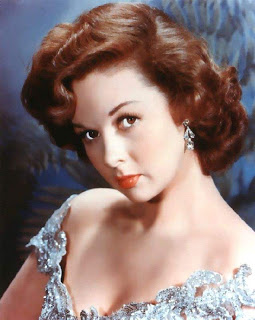
susan hayward
John Wayne réalise en 1960 Alamo, qui fut une très belle fresque historique. Néanmoins le scénariste de ce film se permit quelques libertés par rapport aux causes et au déroulement de la bataille. En réalisant ce film, John Wayne souhaitait montrer l’abnégation des hommes à défendre une cause qui leur semble juste, telle la république ou la liberté. L’acteur reste fidèle à ce genre et retrouve à plusieurs reprises Henry Hathaway (1960 : Le Grand Sam avec Stewart Granger, 1965 : Les Quatre Fils de Katie Elder avec Dean Martin, 1969 : Cent dollars pour un shérif), Howard Hawks (1966 : El Dorado avec Robert Mitchum, 1970 : Rio Lobo avec Jennifer O’Neill), et bien sûr Ford pour L’Homme qui tua Liberty Valance (1962) face àJames Stewart, plus tard tournant beaucoup avec Andrew V. McLaglen (1963 : Le Grand McLintock qui réunit Wayne avec Maureen O’Hara et Yvonne De Carlo, 1969 : Les Géants de l’Ouest face à Rock Hudson, 1970 : Chisum, 1973 : Les Cordes de la potence).
La star continue de privilégier le film d’aventure : exotique (en 1962 Hatari ! de Hawks), de guerre (en 1962 Le Jour le plus long, en 1965 Première Victoire d’Otto Preminger avec Kirk Douglas, en 1966 L’Ombre d’un géant avec Yul Brynner et Frank Sinatra). Il participe aux superproductions Le Plus Grand Cirque du monde d’Hathaway (1964) avec Rita Hayworth

Rita Hayworth
etClaudia Cardinale et La Plus Grande Histoire jamais contée de George Stevens (1965) où il incarne le centurion de la Crucifixion. Finalement il ne se détend vraiment à l’écran que chez Ford, dans La Taverne de l’Irlandais (1963).
Lui-même revient à la mise en scène en 1968 pour le très polémique Les Bérets verts. L’essentiel est ailleurs : miné par la maladie mais toujours très actif, ce grand séducteur de l’écran s’offre un dernier tour avec sa partenaire favorite, Maureen O’Hara, dans Big Jake en 1971 (que Wayne coréalise), et un duel avec une autre géante, Katharine Hepburn, dans le western humoristique Une bible et un fusil (1975). Sur le tard, il tourne deux policiers : Un silencieux au bout du canon de John Sturges (1974) et Brannigan (1975). L’année de sa mort, sa carrière se clôt sur un western au titre mythique : Le Dernier des géants, dirigé par Don Siegel, où John retrouve James Stewart et Lauren Bacall. Une époque disparaît.
En 1964, on diagnostique chez Wayne un cancer du poumon. Des rumeurs affirment que le responsable de ce cancer était le site nucléaire de Yucca Flat, proche du plateau de cinéma lors du tournage du film Le Conquérant. Patriote, John Wayne pensait que les six paquets de cigarettes qu’il fumait par jour en étaient la cause.
 John Wayne dans Rio Bravo
Toujours présent à l’écran dans des premiers rôles malgré la maladie jusqu’en 1976, il décède finalement d’un cancer de l’estomac le 11 juin 1979. D’après son fils Patrick, il se convertit au catholicisme peu avant sa mort . Il est enterré au cimetière de Pacific View à Corona del Mar.
Engagement politique
John Wayne était connu pour ses opinions patriotiques, anti-communistes et conservatrices. Star du parti républicain, il s’impliqua dans la création de la Motion Picture Alliance for the Preservation of American Ideals, une association américaine de cinéma conservatrice. S’il n’a pas été incorporé pendant la Seconde Guerre mondiale pour des raisons familiales, il a toujours soutenu l’effort de guerre américain : il incarnera toutes les catégories de soldats américains et cosigne, en 1968, avec Les Bérets verts le seul film américain ouvertement pro-guerre du Vietnam.
En 1964, il soutient encore la candidature de Barry Goldwater à la présidence des États-Unis et, en 1968, est approché pour être lui-même le candidat du parti républicain. Il déclina la proposition au prétexte qu’il ne pensait pas que le public pourrait envoyer un acteur à la Maison-Blanche. Il fut même approché pour être le colistier du candidat dixiecrat George Wallace. Il ne donna pas suite. John Wayne fut cependant un ardent soutien de son ami, l’acteur Ronald Reagan, lors de ses candidatures au poste de gouverneur de Californie en 1966 et 1970.
Il est le père de Michael Wayne (1934–2003), acteur et producteur, et de Patrick Wayne (né en 1939), acteur.
Le Congrès américain lui décerne le 26 mai 1979 la Médaille d’or du Congrès (plus haute distinction civile qui puisse être accordée à un citoyen). Événement exceptionnel car cette décoration ne fut décernée que deux fois à des acteurs du cinéma, John Wayne et Francis Albert Sinatra, dit Frank Sinatra, le 14 mai 1997.
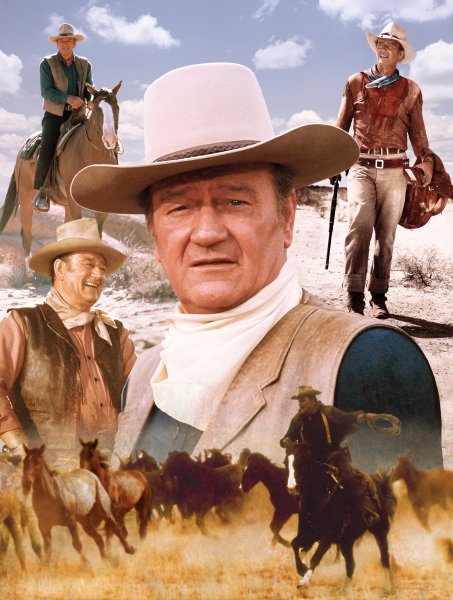
John Wayne the legend
Vous pouvez lire aussi / You can real also : Angie Dickinson (Rio Bravo)
This week, like every week also, activities, festivals and exhibitions were numerous.
The activity that interested us: The “chocolate exhibition” ( salon du chocolat) . In Paris 15 Porte de Versailles.
This show started on October 31 and that, until the evening of Sunday, November 3.
 CLOTHES MADE IN CHOCOLATE / CHOCOLATE CLOTHING
Obviously, the creations were many interesting … made in chocolate!
Chocolate shoes: Shoes also delicious 🙂

PLANE DONE WITH CHOCOLATE
We see on this picture: A Plane in Chocolate.
 SHOES WE CAN EAT: iN CHOCOLATE / CHOCOLATE SHOES
We approached the plane … If the body was really in chocolate …. It seemed to us that the wing was made of wood but coated in chocolate.Well, let’s not be very picky, just look and eat those shoes and chocolate dresses 🙂
We wanted to share these moments with you.
 SHOES WE CAN EAT: iN CHOCOLATE / CHOCOLATE

Wikipedia sources:
Cary Grant (born Archibald Alexander Leach; January 18, 1904 – November 29, 1986) was an English stage and Hollywood film actor who became an American citizen in 1942. Known for his transatlantic accent, debonair demeanor and “dashing good looks”, Grant is considered one of classic Hollywood‘s definitive leading men.
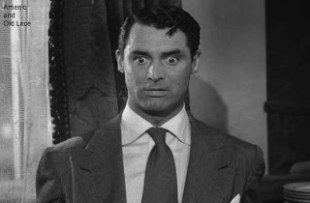
Notorious (1946), The Bishop’s Wife (1947), To Catch a Thief (1955), An Affair to Remember (1957), North by Northwest (1959), and Charade (1963).
Nominated twice for the Academy Award for Best Actor (Penny Serenade and None But the Lonely Heart) and five times for a Golden Globe Award for Best Actor, Grant was continually passed over. In 1970, he was presented an Honorary Oscar at the 42nd Academy Awards by Frank Sinatra “for his unique mastery of the art of screen acting with the respect and affection of his colleagues
Archibald Alexander Leach was born at 15 Hughenden Road, Horfield, Bristol, England, to Elsie Maria (née Kingdon) Leach (1877–1973) and Elias James Leach (1873–1935). An only child, Leach had an unhappy upbringing, attending Bishop Road Primary School.

CARY GRANT WITH AUDREY HEPBURN
His mother had suffered from clinical depression since the death of a previous child. Her husband placed her in a mental institution and told his 9-year-old son only that she had gone away on a “long holiday”. Believing she was dead, Leach did not learn otherwise until he was 31 and discovered her alive in a care facility. When Leach was 10, his father abandoned him after remarrying and having a baby with his new young wife.
Leach was expelled from the Fairfield Grammar School in Bristol in 1918. After joining the “Bob Pender Stage Troupe”, Leach performed as a stilt walker and traveled with the group to the United States in 1920 at the age of 16 on the RMS Olympic, on a two-year tour of the country. He was processed at Ellis Island on July 28, 1920.
When the troupe returned to the UK, he decided to stay in the U.S. and continue his stage career. During this time, he became a part of thevaudeville world and toured with Parker, Rand, and Leach.

Still using his birth name, he performed on the stage at The Muny in St. Louis,Missouri, in such shows as Irene (1931), Music in May (1931), Nina Rosa (1931), Rio Rita (1931), Street Singer (1931), The Three Musketeers (1931), and Wonderful Night (1931). Leach’s experience on stage as a stilt walker, acrobat, juggler, and mime taught him “phenomenal physical grace and exquisite comic timing” and the value of teamwork, skills which would benefit him in Hollywood.
Leach became a naturalized United States citizen on June 26, 1942, at which time he also legally changed his name from “Archibald Alexander Leach” to “Cary Grant”.
After appearing in several musicals on Broadway under the name Archie Leach, Leach went to Hollywood in 1931. When told to change his name, he proposed “Cary Lockwood”, the name of the character he had played in the Broadway show Nikki, based upon the recent film The Last Flight.

He signed with Paramount Pictures, where studio bosses decided that the name “Cary” was acceptable but that “Lockwood” was too similar to another actor’s surname. Paramount gave their new actor a list of surnames to choose from, and he selected “Grant” because the initials C and G had already proved lucky for Clark Gable and Gary Cooper, two of Hollywood’s biggest film stars.
Grant appeared as a leading man opposite Marlene Dietrich in Blonde Venus (1932), and his stardom was given a further boost by Mae Westwhen she chose him for her leading man in two of her most successful films, She Done Him Wrong and I’m No Angel (both 1933).
I’m No Angel was a tremendous financial success and, along with She Done Him Wrong, which was nominated for an Academy Award for Best Picture, saved Paramount from bankruptcy. Paramount put Grant in a series of unsuccessful films until 1936, when he signed with Columbia Pictures. His first major comedy hit was when he was loaned to Hal Roach‘s studio for the 1937 Topper (which was distributed by MGM).
The Awful Truth (1937) was a pivotal film in Grant’s career, establishing for him a screen persona as a sophisticated light comedy leading man. As Grant later wrote, “I pretended to be somebody I wanted to be and I finally became that person. Or he became me. Or we met at some point.” Grant is said to have based his characterization in The Awful Truth on the mannerisms and intonations of the film’s director, Leo McCarey, whom he resembled physically. As writer/director Peter Bogdanovich noted, “After The Awful Truth, when it came to light comedy, there was Cary Grant and then everyone else was an also-ran.”

CARY GRANT and GRACE KELLY
The Awful Truth began what The Atlantic later called “the most spectacular run ever for an actor in American pictures”. During the next four years, Grant appeared in several classic romantic comedies and screwball comedies, including Holiday (1938) and Bringing Up Baby (1938), both opposite Katharine Hepburn; The Philadelphia Story (1940) with Hepburn and James Stewart; His Girl Friday (1940) with Rosalind Russell; and My Favorite Wife (1940), which reunited him with Irene Dunne, his co-star in The Awful Truth. During this time, he also made the adventure films Gunga Din (1939) with Douglas Fairbanks, Jr. and Only Angels Have Wings (1939) with Jean Arthur and Rita Hayworth and dramas Penny Serenade (1941), also with Dunne, and Suspicion (1941), the first of Grant’s four collaborations with Alfred Hitchcock.
Grant remained one of Hollywood’s top box-office attractions for almost 30 years. Howard Hawks said that Grant was “so far the best that there isn’t anybody to be compared to him”.[15] David Thomson called him “the best and most important actor in the history of the cinema“.
Grant was a favorite of Hitchcock, who called him “the only actor I ever loved in my whole life”.
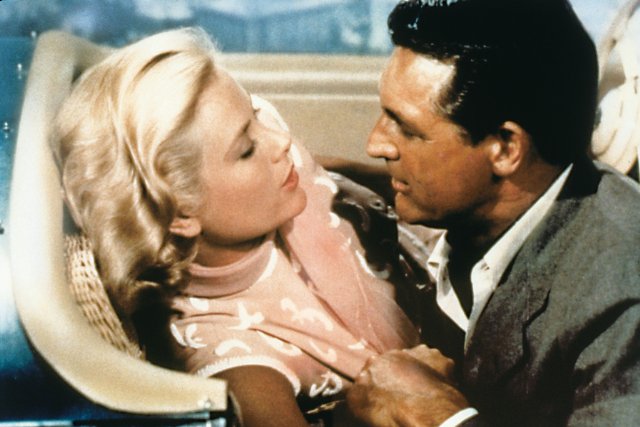
Besides Suspicion, Grant appeared in the Hitchcock classics Notorious (1946), To Catch a Thief(1955), and North by Northwest (1959). Biographer Patrick McGilligan wrote that in 1965 Hitchcock asked Grant to star in Torn Curtain (1966) only to learn that Grant had decided to retire after making one more film, Walk, Don’t Run (1966);
Paul Newman was cast instead, oppositeJulie Andrews. Producers Broccoli and Saltzman originally sought Cary Grant for the role of James Bond in Dr. No but discarded the idea as Grant would be committed to only one feature film and the producers decided to go after someone who could be part of a franchise.
In the mid-1950s, Grant formed his own production company, Granart Productions, and produced a number of films distributed by Universal, such as Operation Petticoat (1959), Indiscreet (1958),That Touch of Mink (co-starring with Doris Day, 1962), and Father Goose (1964). In 1963, he appeared opposite Audrey Hepburn in Charade. His last feature film was Walk, Don’t Run three years later, with Samantha Eggar and Jim Hutton.
Grant was the first actor to “go independent” by not renewing his studio contract, effectively leaving the studio system, which almost completely controlled what an actor could or could not do. In this way, Grant was able to control every aspect of his career, at the risk of not working because no particular studio had an interest in his career long term.
He decided which films he was going to appear in, often had personal choice of directors and co-stars, and at times even negotiated a share of the gross revenue, something uncommon at the time. Grant received more than $700,000 for his 10% of the gross for To Catch a Thief while Hitchcock received less than $50,000 for directing and producing it.
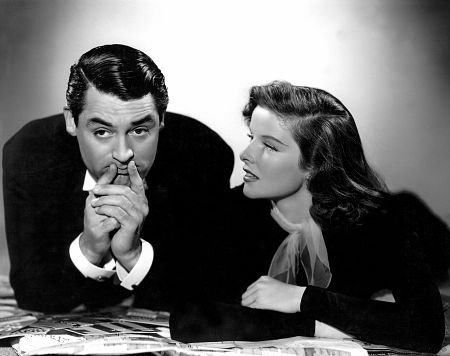
Grant was nominated for two Academy Awards, for Penny Serenade (1941) and None But the Lonely Heart (1944), but never won a competitive Oscar; he received a special Academy Award for Lifetime Achievement in 1970. Accepting the Best Original Screenplay Oscar in 1965, Father Goose co-writer Peter Stone had quipped, “My thanks to Cary Grant, who keeps winning these things for other people.” In 1981, Grant was accorded the Kennedy Center Honors.
Grant poked fun at himself with statements such as “Everyone wants to be Cary Grant—even I want to be Cary Grant”, and in ad-lib lines—such as in the film His Girl Friday, saying, “I never had so much fun since Archie Leach died”. In Arsenic and Old Lace (1944), a gravestone is seen bearing the name Archie Leach. According to a famous story now believed to be apocryphal, after seeing a telegram from a magazine editor to his agent asking “How old Cary Grant?” Grant reportedly responded with “Old Cary Grant fine. How you?
Cary Grant retired from the screen at 62 when his daughter Jennifer was born, in order to focus on bringing her up and to provide a sense of permanency and stability in her life.
While bringing up his daughter, he archived artifacts of her childhood and adolescence in a bank-quality room-sized vault he had installed in the house.
His daughter attributed this meticulous collection to the fact that artifacts of his own childhood had been destroyed during the Luftwaffe’s bombing of Bristol in the Second World War (an event that also claimed the lives of his uncle, aunt, and cousin as well as the cousin’s husband and grandson), and he may have wanted to prevent her from experiencing a similar loss.
Although Grant had retired from the screen, he remained active.

CARY GRANT – MARTIN LANDAU
In the late 1960s, he accepted a position on the board of directors at Fabergé. By all accounts this position was not honorary, as some had assumed; Grant regularly attended meetings and his mere appearance at a product launch would almost certainly guarantee its success. The position also permitted use of a private plane, which Grant could use to fly to see his daughter wherever her mother, Dyan Cannon, was working.
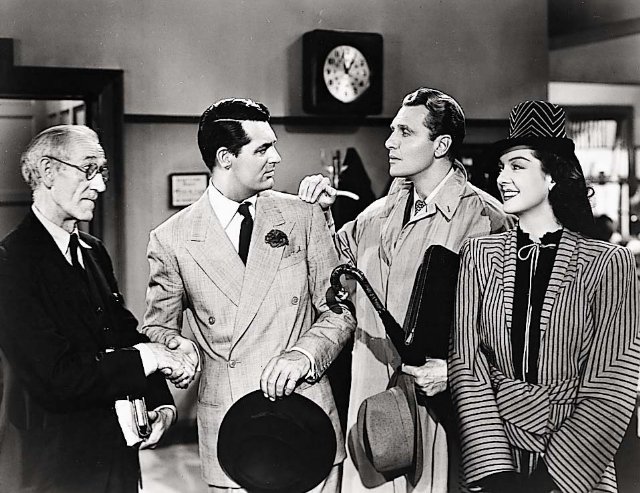
He later joined the boards of Hollywood Park, the Academy of Magical Arts (The Magic Castle, Hollywood, California), Western Airlines (now Delta Air Lines), andMGM.
He was a keen motoring enthusiast and, like many other Hollywood stars of the era, owned many notable cars. One of the first he owned was a 1929 Cadillac Cabriolet. His love of Cadillacs never waned and he later purchased a Cadillac Eldorado Biarritz. Other cars that he owned included an MG Magnette and a Sunbeam Alpine series one roadster.
In the last few years of his life, Grant undertook tours of the United States in a one-man show, A Conversation with Cary Grant, in which he would show clips from his films and answer audience questions. Grant was preparing for a performance at the Adler Theatre in Davenport, Iowa, on the afternoon of November 29, 1986, when he sustained a cerebral hemorrhage (he had previously suffered a stroke in October 1984). His wife did not know what was going on and she went to a local pharmacy to get aspirin. He died at 11:22 p.m. in St. Luke’s Hospital at the age of 82.
The bulk of his estate, worth millions of dollars, went to his fifth wife, Barbara Harris, and his daughter, Jennifer Grant
In 2001, a statue of Grant was erected in Millennium Square, a regenerated area next to Bristol Harbour in his city of birth, Bristol.
In November 2005, Grant came in first in the “The 50 Greatest Movie Stars of All Time” list by Premiere magazine. Richard Schickel, the film critic, said about Grant: “He’s the best star actor there ever was in the movies.
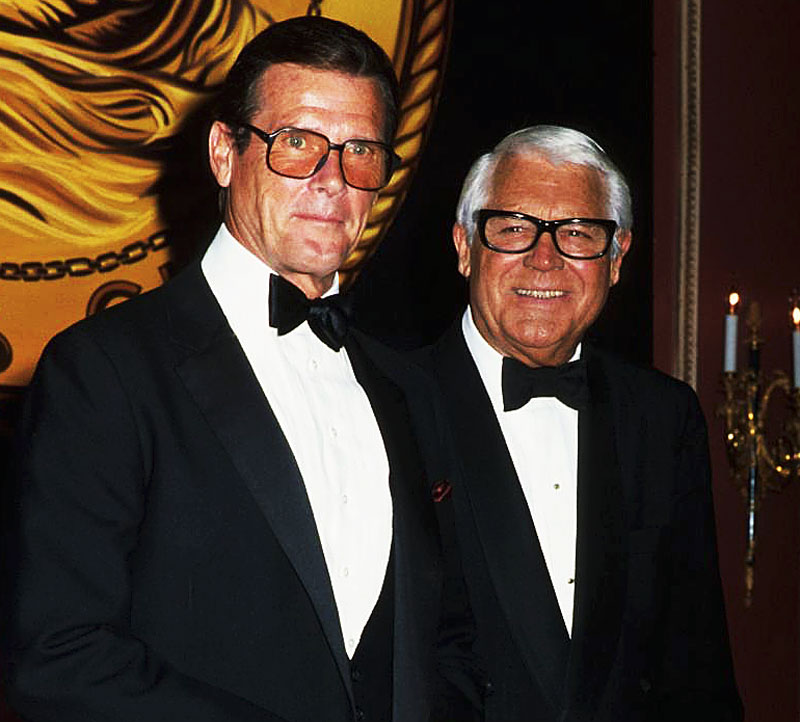
CARY GRANT – ROGER MOORE
A lire aussi ( A french article)
http://www.radiosatellite2.com/archives/2014/07/06/30199855.html