Independent music radio dedicated to instrumental and country sounds from around the world. Here, style matters more than language, and music travels across cultures
Aldo Maccione est un acteur et chanteur italien né le 27 novembre 1935 à Turin (Italie).
Acteur de comédie, il a tourné dans son pays d’origine, mais c’est en France qu’il est devenu une vedette et où il a fait l’essentiel de sa carrière dans les années 1970 et les années 1980.
Après avoir gagné un radio-crochet dans les années 60, Aldo Maccione est engagé par un théâtre turinois où il se fait remarquer en imitant les stars de l’époque comme Jerry Lewis et Clark Gable. Venu travailler à Paris, il fait les entractes de l’Olympia avec son groupe italien, le quatuor « Les Brutos ». Ils se produisent aux quatre coins de la planète.
Entre quelques scopitones (ancêtres des clips) dont un tourné par son futur réalisateur, Claude Lelouch, et quelques émissions télé de variété, il crée un nouveau groupe parodique, « Les Tontos », qui se produit six ans d’affilée à l’Emporium de Barcelone. C’est en accompagnant Sacha Distel à Londres et à l’Olympia qu’il crée et popularise sa marque de fabrique : « Aldo la classe »
En 1970, Claude Lelouch, amusé par sa démarche cambrée « empruntée » à Alberto Sordi, lui donne son premier rôle au cinéma dans Le Voyou. En 1972, il retrouve Claude Lelouch pour L’aventure c’est l’aventure où, aux côtés de vedettes comme Lino Ventura, Charles Denner et Jacques Brel, il fait une célèbre démonstration de groupe de sa démarche.
Dans les années 1970, les rôles comiques se succèdent. Il apparaît dans le premier volet de la Septième Compagnie en 1973 (Henri Guybet reprendra son rôle dans les deux épisodes suivants), mais aussi aux côtés de Pierre Richard (Je suis timide mais je me soigne, C’est pas moi, c’est lui) ou Jean-Paul Belmondo (L’Animal).
Les années 1980 s’avèrent glorieuses et il est une vedette qui permet à des comédies de se monter sur son seul nom. Il abandonne son personnage d’« Aldo la classe » à la fin des années 1980 et a du mal à donner un nouveau souffle à sa carrière, faisant néanmoins quelques apparitions dans des films ou téléfilms.
En 2005, il apparaît dans le film français Travaux, on sait quand ça commence… aux côtés de Carole Bouquet et Jean-Pierre Castaldi, dans le rôle d’un carreleur un peu trop imbu de sa personne.
This slideshow requires JavaScript.
Il vit désormais à Saint-Paul-de-Vence dans les Alpes-Maritimes.
À partir du 29 janvier 2010, il participe à la troisième saison de La Ferme Célébrités en Afrique qu’il quitte le 5 février 2010, pour cause de problèmes de santé.
Le 5 juin 2015, le journaliste et réalisateur Gilles Botineau publie aux Éditions Christian Navarro une biographie entièrement consacrée au comédien. L’ouvrage, titréAldo Maccione, la classe , est préfacé par Claude Lelouch.
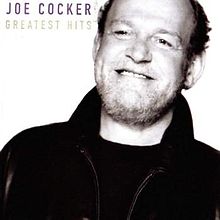
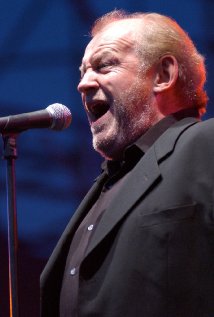
John Robert “Joe” Cocker OBE (20 May 1944 – 22 December 2014) was an English rock and blues singer, who came to popularity in the 1960s, and is known for his gritty voice, his spasmodic body movement in performance and his cover versions of popular songs, particularly those of the Beatles.
His cover of the Beatles’ “With a Little Help from My Friends” reached number one in the UK in 1968, and he performed the song live at Woodstock in 1969. His version also became the theme song for the TV series The Wonder Years. His 1975 hit single, “You Are So Beautiful”, reached number five in the US. Cocker is the recipient of several awards, including a 1983 Grammy Award for his US number one “Up Where We Belong”, a duet with Jennifer Warnes. In 1993 he was nominated for the Brit Award for Best British Male, and in 2008 he received an OBE at Buckingham Palace for services to music.
Cocker was ranked #97 on Rolling Stone’s 100 greatest singers list. Cocker was born on 20 May 1944 at 38 Tasker Road, Crookes, Sheffield, West Riding of Yorkshire. He is the youngest son of a civil servant, Harold Cocker, and Madge Cocker. According to differing family stories, Cocker received his nickname of Joe either from playing a childhood game called “Cowboy Joe” or from a local window cleaner named Joe. Cocker’s main musical influences growing up were Ray Charles and Lonnie Donegan. Cocker’s first experience singing in public was at age 12 when his elder brother Victor invited him on stage to sing during a gig of his skiffle group. In 1960, along with three friends, Cocker formed his first group, the Cavaliers. For the group’s first performance at a youth club, they were required to pay the price of admission before entering. The Cavaliers eventually broke up after a year and Cocker left school to become an apprentice gasfitter while simultaneously pursuing a career in music.
In 1961, under the stage name Vance Arnold, Cocker continued his career with a new group, Vance Arnold and the Avengers. The name was a combination of Vince Everett, Elvis Presley’s character in Jailhouse Rock, (which Cocker misheard as Vance) and country singer Eddy Arnold. The group mostly played in the pubs of Sheffield, performing covers of Chuck Berry and Ray Charles songs. In 1963, they booked their first significant gig when they supported the Rolling Stones atSheffield City Hall. In 1964, Cocker signed a recording contract as a solo act with Decca and released his first single, a cover of the Beatles’ “I’ll Cry Instead” (with Big Jim Sullivan and Jimmy Page playing guitars).
Despite extensive promotion from Decca lauding his youth and working class roots, the record was a flop and his recording contract with Decca lapsed at the end of 1964. After Cocker recorded the single, he dropped his stage name and formed a new group, Joe Cocker’s Big Blues. There is only one known recording of Joe Cocker’s and Big Blues on an EP given out by Sheffield College during Rag Week and called Rag Goes Mad at the Mojo. It contained a cover of Curtis Mayfield’s “I’ve Been Trying” and a track of “Saved”. The Grease Band (1966–1969) In 1966, after a year-long hiatus from music, Cocker teamed up with Chris Stainton, whom he had met several years before, to form the Grease Band.The Grease Band was named after Cocker read an interview with jazz musician Jimmy Smith, where Smith described another musician as “having a lot of grease”.
Like the Avengers, Cocker’s group mostly played in pubs in and around Sheffield. The Grease Band came to the attention of Denny Cordell, the producer of Procol Harum, the Moody Blues and Georgie Fame. Cocker recorded the single “Marjorine” without the Grease Band for Cordell in a London studio. He then moved to London with Chris Stainton, and the Grease Band was dissolved. Cordell set Cocker up with a residency at the Marquee Club in London, and a “new” Grease Band was formed with Stainton and keyboardist Tommy Eyre. After minor success in the US with the single “Marjorine”, Cocker entered the big time with a groundbreaking rearrangement of “With a Little Help from My Friends”, another Beatles cover, which, many years later, was used as the opening theme for The Wonder Years.
The recording features lead guitar from Jimmy Page, drumming by BJ Wilson, backing vocals from Sue and Sunny, and Tommy Eyre on organ. The single made the Top Ten on the British charts, remaining there for thirteen weeks and eventually reaching number one, on 9 November 1968. It also reached number 68 on the US charts. The new touring line-up of Cocker’s Grease Band featured Henry McCullough on lead guitar, who would go on to briefly play with McCartney’s Wings. After touring the UK with the Who in autumn 1968and Gene Pitney and Marmalade in early winter 1969, the Grease Band embarked on their first tour of the US in spring 1969. Cocker’s album With a Little Help from My Friends was released soon after their arrival and made number 35 on the American charts, eventually going gold. During his US tour, Cocker played at several large festivals, including the Newport Rock Festivaland the Denver Pop Festival.
In August, Denny Cordell heard about the planned concert inWoodstock, New York and convinced organiser Artie Kornfeld to book Cocker and the Grease Band for the Woodstock Festival. The group had to be flown into the festival by helicopter due to the large crowds. They performed several songs, including “Delta Lady”, “Something’s Comin’ On”, “Let’s Go Get Stoned”, “I Shall Be Released”, and “With a Little Help from My Friends”. Cocker would later say that the experience was “like an eclipse… it was a very special day.”
Directly after Woodstock, Cocker released his second album, Joe Cocker!. Impressed by his cover of “With a Little Help from My Friends”, Paul McCartney and George Harrison allowed Cocker to use their songs “She Came in Through the Bathroom Window” and “Something” for the album.Recorded during a break in touring in the spring and summer, the album reached number 11 on the US charts and garnered a second UK hit with the Leon Russell song, “Delta Lady”. Throughout 1969 he was featured on variety TV shows like The Ed Sullivan Show and This Is Tom Jones. Onstage, he exhibited an idiosyncratic physical intensity, flailing his arms and playing air guitar, occasionally giving superfluous cues to his band.
At the end of the year Cocker was unwilling to embark on another US tour, so he dissolved the Grease Band. Despite Cocker’s reluctance to venture out on the road again, an American tour had already been booked so he had to quickly form a new band in order to fulfil his contractual obligations. It proved to be a large group of more than 30 musicians, including pianist and bandleader Leon Russell, three drummers, and backing vocalists Rita Coolidge and Claudia Lennear.
The new band was christened “Mad Dogs and Englishmen” by Denny Cordell after the Noël Coward song of the same name. His music at this time evolved into a more bluesy type of rock, often compared to that of the Rolling Stones. During the ensuing Mad Dogs and Englishmen tour (later described by drummer Jim Keltner as “a big, wild party”), Cocker toured 48 cities, recorded a live album, and received very positive reviews from Time and Life for his performances. However, the pace of the tour was exhausting. Russell and Cocker had personal problems and Cocker became depressed and began drinking excessively as the tour wound down in May 1970.
Meanwhile, he enjoyed several chart entries in the US with “Cry Me a River” and “Feelin’ Alright” by Dave Mason. His cover of the Box Tops’ hit “The Letter”, which appeared on the live album and film, Mad Dogs and Englishmen, became his first US Top Ten hit. After spending several months in Los Angeles, Cocker returned home to Sheffield where his family became increasingly concerned with his deteriorating physical and mental health. During this time, in periods between work, Cocker wrote the overture played by Ted Heathon the occasion the Prime Minister famously conducted a live orchestra whilst in office. In the summer of 1971 the A&M Recordssingle release appeared in the US of “High Time We Went”.
This became a hit, reaching number 22 on the US Billboard Hot 100 chart, but was not issued on an album until November 1972 on the Joe Cocker album. In early 1972, after nearly two years away from music, Cocker went on tour with a group that Chris Stainton had formed. He opened with a performance in Madison Square Garden which was attended by about 20,000 people. After touring the US, he embarked on a European tour where he played to large audiences in Milan, Italyand Germany. He then returned to the US for another tour in autumn 1972. During these tours the group cut the songs that would be part of his newest album, Joe Cocker. A mixture of live songs and studio recordings, the album peaked at number 30 on the US charts.
Cocker performing on 16 October 1980 in the National Stadium, Dublin
In October 1972, when Cocker toured Australia, he and six members of his entourage were arrested in Adelaide by police for possession of marijuana. The next day in Melbourne, assault charges were laid after a brawl at the Commodore Chateau Hotel,and Cocker was given 48 hours to leave the country by the Australian Federal Police.
This caused huge public outcry in Australia, as Cocker was a high-profile overseas artist and had a strong support base, especially amongst the baby boomers who were coming of age and able to vote for the first time. It sparked hefty debate about the use and legalisation of marijuana in Australia and gained Cocker the nickname of “the Mad Dog”.Shortly after the Australian tour, Stainton retired from his music career to establish his own recording studio. After his friend’s departure and estrangement from longtime producer Denny Cordell, Cocker sank into depression and began using heroin. In June 1973 he kicked the habit, but continued to drink heavily. At the end of 1973, Cocker returned to the studio to record a new album, I Can Stand A Little Rain. The album, released in August 1974, was number 11 on the US charts and one single, a cover of Dennis Wilson and Billy Preston’s “You Are So Beautiful”, which reached the number 5 slot.Despite positive reviews for the album, Cocker struggled with live performances, largely due to his problems with alcohol.
One such instance was reported in a 1974 issue of Rolling Stone magazine, saying during two West Coast performances in October of that year he threw up on stage. In January 1975, he released a second album that had been recorded at the same time as I Can Stand a Little Rain, Jamaica Say You Will. To promote his new album, Cocker embarked on another tour of Australia, made possible by the country’s newLabor government. In late 1975, he contributed vocals on a number of the tracks on Bo Diddley’s The 20th Anniversary of Rock ‘n’ Roll all-star album. He also recorded a new album in a Kingston, Jamaica studio, Stingray.
However, record sales were disappointing; the album reached only number 70 on the US charts. In 1976, Cocker performed “Feelin’ Alright” on Saturday Night Live. John Belushi joined him on stage doing his famous impersonation of Cocker’s stage movements. At the time, Cocker was $800,000 in debt to A&M Records and struggling with alcoholism. Several months later, he met producer Michael Lang, who agreed to manage him on the condition that he stay sober.
With a new band, Cocker embarked on a tour of New Zealand, Australia and South America. He then recorded a new album with session work by Steve Gadd and Chuck Rainey, and a new, young bassist from Scotland, Rob Hartley. Hartley also toured briefly with Cocker’s friends in 1977. In the autumn of 1978, he went on a North American tour promoting his album, Luxury You Can Afford. Despite this effort, it received mixed reviews and only sold around 300,000 copies. In 1979, Cocker joined the “Woodstock in Europe” tour, which featured musicians like Arlo Guthrie and Richie Havens who had played at the 1969 Woodstock Festival.
He also performed in New York’s Central Park to an audience of 20,000 people. The concert was recorded and released as the live album, Live in New York. He also toured Europe and appeared on the German television recording amphitheatre, Rockpalast, the first of many performances on the show. In 1982, Cocker recorded two songs with the jazz group the Crusaders on their album Standing Tall. One song, ‘I’m So Glad I’m Standing Here Today’ was nominated for a Grammy Award and Cocker performed it with the Crusaders at the awards ceremony. The Crusaders wrote this song with Cocker in mind to sing it. Cocker then released a new reggae-influenced album, Sheffield Steel, recorded with the Compass Point All Stars, produced by Chris Blackwell and Alex Sadkin.
In 1982, at the behest of producer Stewart Levine, Cocker recorded the duet “Up Where We Belong” with Jennifer Warnes for the soundtrack of the 1982 film An Officer and a Gentleman. The song was an international hit, reaching number 1 on theBillboard Hot 100, and winning a Grammy Award for Best Pop Performance by a Duo. The duet also won an Academy Award for Best Original Song, and Cocker and Warnes performed the song at the awards ceremony. Several days later, he was invited to perform “You Are So Beautiful” with Ray Charles in a television tribute to the musician.
He then joined singer Ronnie Lane’s 1983 tour to raise money for the London-based organisation Action for Research into Multiple Sclerosis, in particular because Lane was beginning to suffer from the degenerative disease. Musicians such as Pete Townshend, Eric Clapton, Jimmy Page,Jeff Beck and Chris Stainton also participated in the tour which included a performance at New York City’s Madison Square Garden. While on another tour that year, Cocker was arrested by Austrian police after refusing to perform because of inadequate sound equipment.
The charges were eventually dropped and Cocker was released. Shortly after the incident, he released his ninth studio album, Civilized Man. His next album Cocker was dedicated to his mother, Madge, who died when he was recording in the studio with producer Terry Manning. A track from the album, “You Can Leave Your Hat On” was featured in the 1986 film 9½ Weeks. The album eventually went Platinum on the European charts.
His 1987 album Unchain My Heartwas nominated for a Grammy Award, although it did not win. One Night of Sin was also a commercial success, surpassingUnchain My Heart in sales. Throughout the 1980s, Cocker continued to tour around the world, playing to large audiences in Europe, Australia and the United States.
In 1988, he performed at London’s Royal Albert Hall and appeared on The Tonight Show. After Barclay James Harvest and Bob Dylan Cocker was the first to give Rock concerts in the German Democratic Republic, in East Berlin and Dresden.
The venue, the Blüherwiese, next to the Rudolf-Harbig-Stadion, bears the vernacular name Cockerwiese (Cocker meadow) today.He also performed for President George Bush at an inauguration concert in February 1989. In 1992, his version of Bryan Adams’ “Feels Like Forever” made the UK Top 40. At the 1993 Brit Awards, Cocker was nominated for Best British Male.Cocker performed the opening set at Woodstock ’94 as one of the few alumni who played at the original Woodstock Festival in 1969 and was very well received.
On 3 June 2002, Cocker performed “With A Little Help From My Friends” accompanied by Phil Collins on drums and Queen guitarist Brian May at the Party at the Palace concert in the grounds of Buckingham Palace, an event in commemoration of the Golden Jubilee of Elizabeth II. In 2007, Cocker appeared playing minor characters in the film Across the Universe, as the lead singer on another Beatles’ hit, “Come Together”.Cocker was awarded an OBE in the Queen’s 2007 Birthday Honours list for services to music.To celebrate receiving his award in mid December 2007, Cocker played two concerts in London and in his home town of Sheffield.
In April and May 2009, Cocker conducted a North American tour in support of his album Hymn for My Soul. He sang the vocals on Little Wing for the Carlos Santana album, Guitar Heaven: The Greatest Guitar Classics of All Time, released on 21 September 2010.
In the autumn of 2010, Cocker toured Europe promoting his studio album Hard Knocks. Cocker returned to Australia in 2008 and again in 2011, the latter of which featured George Thorogood and the Destroyers as an opening act.
On 20 March 2011, Joe Cocker took part in a benefit concert for Cornell Dupree at B.B. King’s Blues Club in New York. Dupree played on two Cocker albums Stingray (1976) and Luxury You Can Afford (1978). Dupree’s band Stuff was also Cocker’s backing band on a tour promoting Stingray in 1976. While performing a concert at Madison Square Garden on 17 September 2014, veteran rock singer Billy Joel stated that Cocker was “not very well right now” and asked that he be inducted into the Rock and Roll Hall of Fame.
In 1963, Cocker began dating Eileen Webster, also a resident of Sheffield. The couple dated intermittently for the next 13 years, separating permanently in 1976. In 1978, Cocker moved onto a ranch owned by Jane Fonda in Santa Barbara, California. Pam Baker, a local summer camp director and fan of Cocker’s music, persuaded the actress to let the house to Cocker. Baker began dating Cocker and they eventually married on 11 October 1987.The couple resided on the Mad Dog Ranch in Crawford, Colorado. Cocker was not related to fellow Sheffield-born musician Jarvis Cocker, despite this being a rumour (particularly in Australia, where Jarvis’s father Mac Cocker, a radio DJ, allowed listeners to believe he was Joe Cocker’s brother). On 22 December 2014, Cocker died of lung cancer at his home in Colorado at the age of 70.
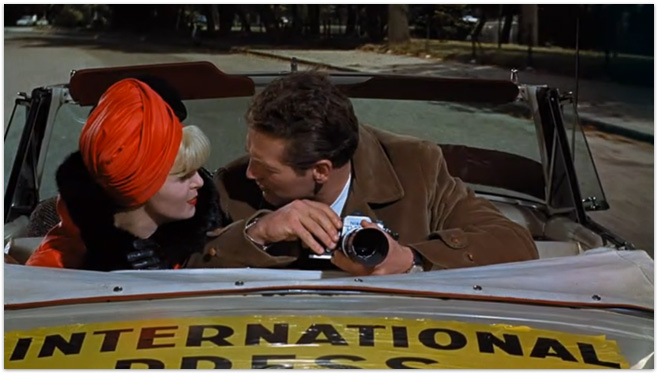
A womanizing american reporter assigned in Paris (Paul Newman) mistakes a cynical fashion designer (Joanne Woodward) for a prostitute. He decides to interview her for a series of articles then falls in love with her. The girl goes along with it, first out of revenge as he snubbed her during a past encounter, then out of feelings of her own.
Cast
Paul Newman…..Steve Sherman
Joanne Woodward…..Samantha (Sam) Blake / Mimi
Thelma Ritter…..Leena
Eva Gabor…..Felicienne Courbeau
George Tobias…..Joseph Bergner
Marvin Kaplan…..Harry Gorman
Maurice Chevalier…..as Himself
Robert Simon…..Bertram Chalmers
Valerie Varda…..Mrs. Chalmers
Joan Staley….Stewardess
Robert Clary….Frenchman @ Restaurant
Awards and nominations
Academy Award
1964: Nominated, “Best Costume Design, Color”
1964: Nominated, “Best Music, Scoring of Music, Adaptation or Treatment” – Leith Stevens
Paul Newman, taking his second spin on the marriage-go-round, grabbed the brass ring with Joanne Woodward.
On a Hollywood landscape littered with countless broken marriages, the Newman-Woodward pairing became the gold standard: They celebrated 50 years together on Jan. 29.
And when Newman died Friday at the Connecticut home they shared since 1960, Woodward was still there – until death did them part.
Newman once attributed their lasting union to “correct amounts of lust and respect.”
ACTOR PAUL NEWMAN DEAD AT AGE 83
He offered an oft-quoted response when asked in Playboy magazine about the temptations of other women: “I have steak at home. Why go out for hamburger?”
The couple met and fell in love while Newman made his 1953 Broadway debut in William Inge’s “Picnic,” in which Woodward was an understudy.
Five years later, shortly after Newman and his first wife divorced, he married the petite blond in a Las Vegas civil ceremony. The couple moved into an 18th-century Connecticut farmhouse, a decision that Woodward later said solidified their marriage.
“We were never Hollywood people,” the Oscar-winning actress told the Daily News in 2001. “We just liked it better here. It also probably helps that we always enjoyed each other’s company.”
NEWMAN AND WOODWARD’S ROMANCE
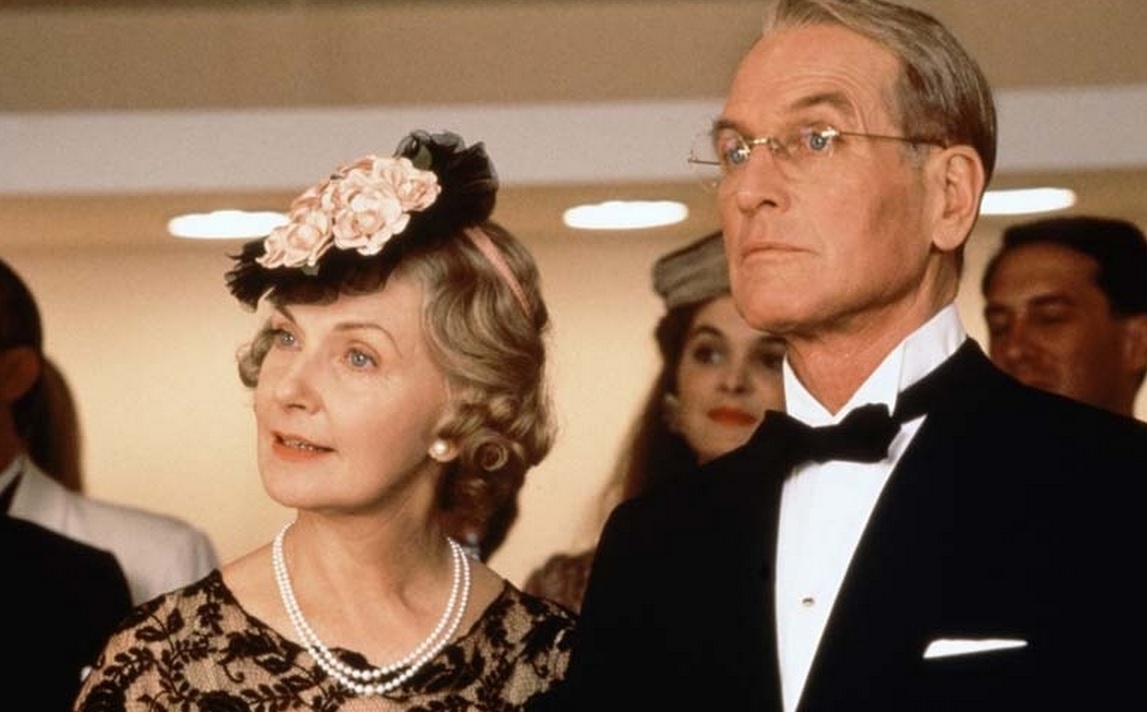
They appeared in several films together, including “The Long Hot Summer,” “Paris Blues” and “Mr. and Mrs. Bridge.” Newman directed Woodward in several other movies, including “Rachel, Rachel” – a Best Picture nominee.
When Woodward returned to Sarah Lawrence College to earn her degree at age 60, she graduated with youngest daughter Clea. Newman marked the occasion by delivering the commencement address.
The high-profile couple enjoyed their anonymity in Westport, Conn., where they helped restore and reopen the Westport Country Playhouse.
Woodward, as the theater’s artistic director, cast her husband in the Stage Manager role in a production of “Our Town.” It moved to Broadway, where Newman earned his first Tony nomination in 2003.
Cary Grant (born Archibald Alexander Leach; January 18, 1904 – November 29, 1986) was an English stage and Hollywood film actor who became an American citizen in 1942. Known for his transatlantic accent, debonair demeanor and “dashing good looks”, Grant is considered one of classic Hollywood‘s definitive leading men.
Archibald Alexander Leach was born at 15 Hughenden Road, Horfield, Bristol, England, to Elsie Maria (née Kingdon) Leach (1877–1973) and Elias James Leach (1873–1935). An only child, Leach had an unhappy upbringing, attending Bishop Road Primary School.
CARY GRANT WITH AUDREY HEPBURN
His mother had suffered from clinical depression since the death of a previous child. Her husband placed her in a mental institution and told his 9-year-old son only that she had gone away on a “long holiday”. Believing she was dead, Leach did not learn otherwise until he was 31 and discovered her alive in a care facility. When Leach was 10, his father abandoned him after remarrying and having a baby with his new young wife.
Leach was expelled from the Fairfield Grammar School in Bristol in 1918. After joining the “Bob Pender Stage Troupe”, Leach performed as a stilt walker and traveled with the group to the United States in 1920 at the age of 16 on the RMS Olympic, on a two-year tour of the country. He was processed at Ellis Island on July 28, 1920.
When the troupe returned to the UK, he decided to stay in the U.S. and continue his stage career. During this time, he became a part of thevaudeville world and toured with Parker, Rand, and Leach.
Still using his birth name, he performed on the stage at The Muny in St. Louis,Missouri, in such shows as Irene (1931), Music in May (1931), Nina Rosa (1931), Rio Rita (1931), Street Singer (1931), The Three Musketeers (1931), and Wonderful Night (1931). Leach’s experience on stage as a stilt walker, acrobat, juggler, and mime taught him “phenomenal physical grace and exquisite comic timing” and the value of teamwork, skills which would benefit him in Hollywood.
Leach became a naturalized United States citizen on June 26, 1942, at which time he also legally changed his name from “Archibald Alexander Leach” to “Cary Grant”.
After appearing in several musicals on Broadway under the name Archie Leach, Leach went to Hollywood in 1931. When told to change his name, he proposed “Cary Lockwood”, the name of the character he had played in the Broadway show Nikki, based upon the recent film The Last Flight.
He signed with Paramount Pictures, where studio bosses decided that the name “Cary” was acceptable but that “Lockwood” was too similar to another actor’s surname. Paramount gave their new actor a list of surnames to choose from, and he selected “Grant” because the initials C and G had already proved lucky for Clark Gable and Gary Cooper, two of Hollywood’s biggest film stars.
I’m No Angel was a tremendous financial success and, along with She Done Him Wrong, which was nominated for an Academy Award for Best Picture, saved Paramount from bankruptcy. Paramount put Grant in a series of unsuccessful films until 1936, when he signed with Columbia Pictures. His first major comedy hit was when he was loaned to Hal Roach‘s studio for the 1937 Topper (which was distributed by MGM).
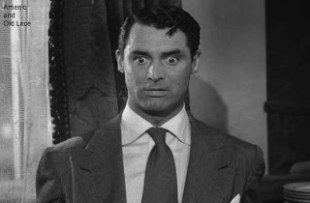
The Awful Truth (1937) was a pivotal film in Grant’s career, establishing for him a screen persona as a sophisticated light comedy leading man. As Grant later wrote, “I pretended to be somebody I wanted to be and I finally became that person. Or he became me. Or we met at some point.” Grant is said to have based his characterization in The Awful Truth on the mannerisms and intonations of the film’s director, Leo McCarey, whom he resembled physically. As writer/director Peter Bogdanovich noted, “After The Awful Truth, when it came to light comedy, there was Cary Grant and then everyone else was an also-ran.”
Grant remained one of Hollywood’s top box-office attractions for almost 30 years. Howard Hawks said that Grant was “so far the best that there isn’t anybody to be compared to him”.[15]David Thomson called him “the best and most important actor in the history of the cinema“.
Grant was a favorite of Hitchcock, who called him “the only actor I ever loved in my whole life”.
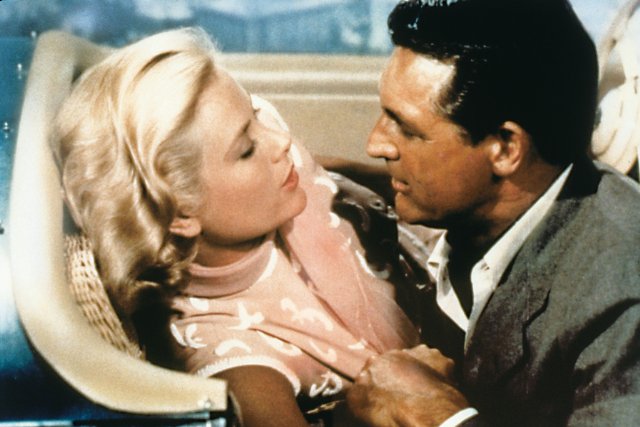
Besides Suspicion, Grant appeared in the Hitchcock classics Notorious (1946), To Catch a Thief(1955), and North by Northwest (1959). Biographer Patrick McGilligan wrote that in 1965 Hitchcock asked Grant to star in Torn Curtain (1966) only to learn that Grant had decided to retire after making one more film, Walk, Don’t Run (1966);
Paul Newman was cast instead, oppositeJulie Andrews. Producers Broccoli and Saltzman originally sought Cary Grant for the role of James Bond in Dr. No but discarded the idea as Grant would be committed to only one feature film and the producers decided to go after someone who could be part of a franchise.
Grant was the first actor to “go independent” by not renewing his studio contract, effectively leaving the studio system, which almost completely controlled what an actor could or could not do. In this way, Grant was able to control every aspect of his career, at the risk of not working because no particular studio had an interest in his career long term.
He decided which films he was going to appear in, often had personal choice of directors and co-stars, and at times even negotiated a share of the gross revenue, something uncommon at the time. Grant received more than $700,000 for his 10% of the gross for To Catch a Thief while Hitchcock received less than $50,000 for directing and producing it.
Grant poked fun at himself with statements such as “Everyone wants to be Cary Grant—even I want to be Cary Grant”, and in ad-lib lines—such as in the film His Girl Friday, saying, “I never had so much fun since Archie Leach died”. In Arsenic and Old Lace (1944), a gravestone is seen bearing the name Archie Leach. According to a famous story now believed to be apocryphal, after seeing a telegram from a magazine editor to his agent asking “How old Cary Grant?” Grant reportedly responded with “Old Cary Grant fine. How you?
Cary Grant retired from the screen at 62 when his daughter Jennifer was born, in order to focus on bringing her up and to provide a sense of permanency and stability in her life.
While bringing up his daughter, he archived artifacts of her childhood and adolescence in a bank-quality room-sized vault he had installed in the house.
His daughter attributed this meticulous collection to the fact that artifacts of his own childhood had been destroyed during the Luftwaffe’s bombing of Bristol in the Second World War (an event that also claimed the lives of his uncle, aunt, and cousin as well as the cousin’s husband and grandson), and he may have wanted to prevent her from experiencing a similar loss.
Although Grant had retired from the screen, he remained active.
CARY GRANT – MARTIN LANDAU
In the late 1960s, he accepted a position on the board of directors at Fabergé. By all accounts this position was not honorary, as some had assumed; Grant regularly attended meetings and his mere appearance at a product launch would almost certainly guarantee its success. The position also permitted use of a private plane, which Grant could use to fly to see his daughter wherever her mother, Dyan Cannon, was working.
He later joined the boards of Hollywood Park, the Academy of Magical Arts (The Magic Castle, Hollywood, California), Western Airlines (now Delta Air Lines), andMGM.
He was a keen motoring enthusiast and, like many other Hollywood stars of the era, owned many notable cars. One of the first he owned was a 1929 Cadillac Cabriolet. His love of Cadillacs never waned and he later purchased a Cadillac Eldorado Biarritz. Other cars that he owned included an MG Magnette and a Sunbeam Alpine series one roadster.
In the last few years of his life, Grant undertook tours of the United States in a one-man show, A Conversation with Cary Grant, in which he would show clips from his films and answer audience questions. Grant was preparing for a performance at the Adler Theatre in Davenport, Iowa, on the afternoon of November 29, 1986, when he sustained a cerebral hemorrhage (he had previously suffered a stroke in October 1984). His wife did not know what was going on and she went to a local pharmacy to get aspirin. He died at 11:22 p.m. in St. Luke’s Hospital at the age of 82.
The bulk of his estate, worth millions of dollars, went to his fifth wife, Barbara Harris, and his daughter, Jennifer Grant
In 2001, a statue of Grant was erected in Millennium Square, a regenerated area next to Bristol Harbour in his city of birth, Bristol.
In November 2005, Grant came in first in the “The 50 Greatest Movie Stars of All Time” list by Premiere magazine. Richard Schickel, the film critic, said about Grant: “He’s the best star actor there ever was in the movies.