Independent music radio dedicated to instrumental and country sounds from around the world. Here, style matters more than language, and music travels across cultures
There are few things in life considered timeless, among them are The Beatles, red lipstick, and, of course, Friends. Seriously, that show kept me alive during my junior semester abroad in a city that’s tied for least things to do and worst food. If you’re ever in Spain, be sure to not visit to Salamanca.…
Scènes de ménages est un sitcom français , relatant des séquences de vie au quotidien de plusieurs ménages.
Les ménages sont divers et assez fantasques souvent.
Des couples de tous les âges, de toutes catégories sociales et culturelles.
De quoi brasser relativement large entre les couples vivant en zone urbaine
Et ceux vivant en zone rurale.
Scènes de ménages
Les séniors de la série : Huguette et Raymond.
Leur trait principal (commun ) qui les caractérise : Le scinisme ( sympa), la méchanceté gratuite envers leurs voisins, envers leurs entourage et même entre eux.
Raymond : Gendarme à la retraite s’ennuie. Huguette, son épouse : Femme au foyer passe son temps à taquiner son mari ( et réciproquement)
Huguette est une fan inconditionnelle d’un chanteur : Michael François.
Huguette & Raymond ont une fille : Caroline. Fille pour laquelle, ils n’ont aucun sentiment, pire, c’est presque de la destestation et moquerie qu’ils expriment lorsqu’ils parlent d’elle.
José et Liliane :
Un couple Quinquagénaire. Liliane est esthéticienne. José Fonctionnaire à la mairie.
Les premières saisons, Liliane poussait fortement son mari à se présenter aux élections municipales. Les campagnes et promos organisées par Liliane . L’impression ( et c’est la réalité ) que José se présente en candidat aux élections en tant que maire parce que c’est Liliane qui le veut.
En fait, nous voyons Liliane gérer toute sa campagne électorale ; José suivant sagement pas convaincu et pas réellement intéressé par le poste.
Le slogan de la campagne électorale : Osez José
Sa passion : Le foot. Assez paresseux, il ne rate aucune occasion pour rentrer plus tôt à la maison. Son épouse le pousse assez souvent de repartir travailler.
Ils ont un enfant : Manu. Le point faible de Liliane. Manu qui vit en chine pour son boulot.
La plupart du temps, José , gauche et maladroit blesse ses amis aussi bien que sa femme sans pour autant réaliser l’impact de ses paroles et gestes.
Cédric et Marion : Un couple fantasque
Cédric, gestionnaire, salarié durant les premiers épisodes. Par la suite, il va connaitre le chômage. Radin,
En revanche, sa compagne ( qui devient son épouse par la suite) s’auto proclame « femme d’affaires » et recrute des stagiaires à la pelle qu’elle (mal)traite comme des soldats à sa disposition.
Cédric et Marion se considèrent très beaux, très intelligents et pensent que les autres les jalousent. (ce qui n’est nullement le cas : quant à l’intelligence notamment )
Fabien et Emma : Le couple citadin qui a décidé de s’installer à la campagne.
Emma :bricoleuse au caractère assez “cash”.
D’ailleurs, elle occupe un poste chez Bricoflex. Côté culture, ce n’est pas son fort. Même si parfois elle essaie de faire des efforts pour donner la réplique à son conjoint.
Justement Fabien : Fier d’être professeur « agrégé ». Il n’est même pas bricoleur du dimanche. Plus posé, il lui arrive souvent d’agir bizarrement notamment lorsqu’il s’agit de combattre ses peurs et phobies. Peur de tout. Il suffit qu’il visionne un film d’horreur en soirée et ce, « malgré lui », c’est parti pour une nuit blanche.
Ils ont transformé leur maison en maison d’hôte ( ou gîte ) mais étant amateurs dans ce domaine, ce n’est pas trop leur fort « la fidélisation des clients »
Philippe et Camille
Philippe est Pharmacien. Bourgeois à la tête de sa pharmacie qui engendre des recettes énormes. Philippe ne s’en cache pas. Il répète à qui veut qu’il est pharmacien. Il considère qu’il a réussi sa vie « puisqu’il est pharmacien » . Beaucoup plus âgé que Camille , Philippe vit dans l’angoisse que Camille le quitte. A cause de son âge justement
Philippe a 2 enfants issus d’une première union avec Isabelle : Ulysse et Camille.
Ulysse paresseux et vivant aux crochets de son père.
Camille : Professeur de Yoga. Assez ouverte ( voire trop parfois ). Elle reprend ses histoires amoureuses de nombreuses fois durant ses conversations avec ses invités. Ce qui choque et fait peur à Philippe.
A préciser que Camille essaie d’imposer à Philippe un régime alimentaire drastique.
Léo et Leslie : Le couple Geek
Lelo et Leslie Scènes de ménages
C’est le dernier né des couples de « scènes de ménages » : Ils viennent remplacer le duo ( Marion et Fabien )
Léo et Leslie sont un couple assez « nerd » (geek ) passionnés de nouvelles technologies.
Photos : M6, Le parisien, Google, programme tv, antenne réunion, Paris Match, Ouest France etc… diverses autres sources.
American Graffiti is a 1973 American coming-of-age comedy-drama film directed and co-written by George Lucas starring Richard Dreyfuss, Ron Howard, Paul Le Mat, Harrison Ford, Charles Martin Smith, Cindy Williams, Candy Clark, Mackenzie Phillips, Bo Hopkins, and Wolfman Jack. Suzanne Somers and Joe Spano also appear in the film.
Set in Modesto, California in 1962, the film is a study of the cruising and rock and roll cultures popular among the post–World War II baby boom generation. The film is told in a series of vignettes, telling the story of a group of teenagers and their adventures over a single night.
The genesis of American Graffiti was in Lucas‘ own teenage years in early 1960s Modesto. He was unsuccessful in pitching the concept to financiers and distributors but found favor at Universal Pictures after United Artists, 20th Century Fox, Columbia Pictures, Metro-Goldwyn-Mayer, Warner Bros., and Paramount Pictures turned him down. Filming was initially set to take place in San Rafael, California, but the production crew was denied permission to shoot beyond a second day.
American Graffiti premiered on August 2, 1973 at the Locarno International Film Festival in Switzerland and was released on August 11, 1973 in the United States. The film received widespread critical acclaim and was nominated for the Academy Award for Best Picture. Produced on a $777,000 budget, it has become one of the most profitable films of all time. Since its initial release, American Graffiti has garnered an estimated return of well over $200 million in box office gross and home video sales, not including merchandising. In 1995, the United States Library of Congress deemed the film “culturally, historically, or aesthetically significant” and selected it for preservation in the National Film Registry.
In early September 1962 in Modesto, California, on the last evening of summer vacation, recent high school graduates and longtime friends, Curt Henderson and Steve Bolander, meet John Milner, the drag-racing king of the town, and Terry “The Toad” Fields in the parking lot of the local Mel’s Drive-In diner. Curt and Steve are scheduled to travel the next morning to Northeastern United States to start college. Despite receiving a $2,000 scholarship from the local Moose Lodge, Curt has second thoughts about leaving Modesto. Steve gives Toad his 1958 Chevrolet Impala to watch while he’s away at college until he returns at Christmas. Steve’s girlfriend, Laurie, who is also Curt’s sister, arrives in her car. Steve suggests to Laurie, who is already glum about him going to college, that they see other people while he is away in order to “strengthen” their relationship. Though not openly upset, she is displeased with his proposal which affects their interactions the rest of the evening.
Curt accompanies Steve, last year’s high school student class president, and Laurie, the current head cheerleader, to the back-to-high-school sock hop. In one story line, Curt is desperate to find a beautiful blonde girl driving a white 1956 Ford Thunderbird that he sees en route to the dance: at a stoplight, she appears to say “I love you” before disappearing around the corner. After leaving the hop, Curt is coerced by a group of greasers (“The Pharaohs”) to participate in an initiation rite that involves hooking a chain to a police car and ripping out its back axle. The Pharaohs tell Curt that “The Blonde” is a trophy wife or prostitute, but he refuses to believe either.
Determined to get a message to the blonde girl, Curt drives to the local radio station to ask DJ Wolfman Jack, who is omnipresent on the car radios, to announce a message for the blonde girl. Inside the radio station, Curt encounters a bearded man who tells him that the voice of The Wolfman is pre-taped from afar.
The man still accepts the message from Curt to see what he could do. As he is leaving the station, Curt sees the man talking into the microphone and hears the voice of The Wolfman, and realizes the man is the actual DJ himself.
Sure enough, The Wolfman eventually reads the message on the radio for “The Blonde” to meet Curt or call him at a number which happens to be a telephone booth. Curt waits by the telephone booth and early the next morning, he is awakened by the phone ringing. It turns out to be “The Blonde” who says she knows him and maybe she would see him cruising the coming night. Curt replies probably not, intimating that he decided to go to college and will be leaving that morning.
The Toad, in Steve’s car, and John, in his yellow 1932 Ford Deuce Coupé hot rod, cruise the strip of Modesto. Toad, who is normally socially inept with girls, successfully picks up a flirtatious, and somewhat rebellious, girl named Debbie. John inadvertently picks up Carol, an annoying 12-year-old who seems fond of him. Another drag racer, the handsome and arrogant Bob Falfa, is searching out John in order to challenge him to a race.
Steve and Laurie have a series of arguments and make-ups through the evening. They finally split and, as the story lines intertwine, Bob Falfa picks up Laurie in his black 1955 Chevrolet One-Fifty Coupé. Bob finally finds John and goads him into racing. A parade of cars follow them to “Paradise Road” to watch the race. Laurie rides shotgun with Bob as Toad starts the race. As Bob begins taking a lead in the race, he loses control of the car when a front tire blows, and the car plunges into a ditch and rolls over. Steve and John leap out of their cars and rush to the wreck as a dazed Bob and Laurie stagger out of the car before it explodes. Distraught, Laurie grips Steve tightly and begs him not to leave her. He assures her that he will stay in Modesto.
At the airfield in the morning, Curt says goodbye to his parents, his sister Laurie, Steve, John and The Toad. As the plane takes off, Curt, gazing out of the window, sees the white Ford Thunderbird belonging to the mysterious blonde driving down a country road.
An on-screen epilogue reveals that
John is killed by a drunk driver in December 1964,
Toad is reported missing in action near An Lộc in December 1965,
Steve is an insurance agent in Modesto, California,
Angie Dickinson (born September 30, 1931) is an American actress. She began her career on television, appearing in many anthology series during 1950s, before landing her breakthrough role in the 1959 western film Rio Bravo, for which she received Golden Globe Award for New Star of the Year.
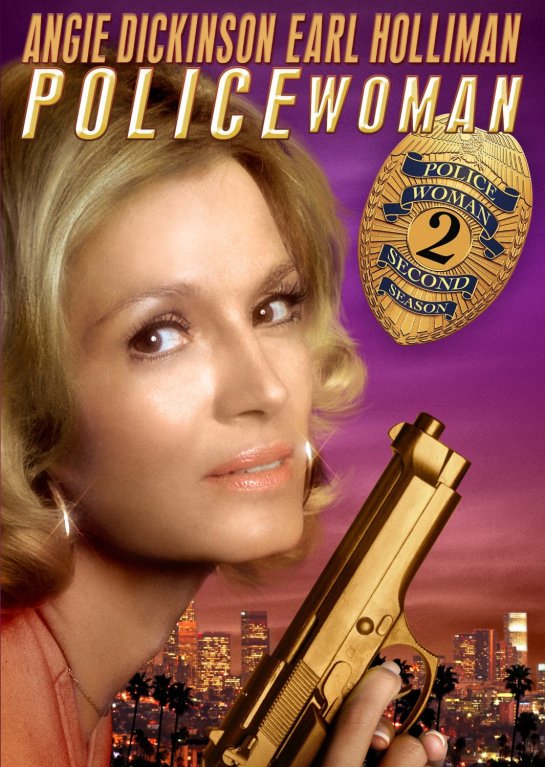
Dickinson has appeared in more than 50 films, including Ocean’s 11 (1960), The Sins of Rachel Cade (1961), Jessica (1962), Captain Newman, M.D. (1963), The Killers (1964), The Art of Love (1965), The Chase (1966) and the neo-noir classic Point Blank (1967). From 1974 to 1978, Dickinson starred as Sergeant Leann “Pepper” Anderson in the NBC crime series Police Woman, for which she received Golden Globe Award for Best Actress – Television Series Drama and three Primetime Emmy Award for Outstanding Lead Actress in a Drama Series nominations.
During her later career, Dickinson starred in a number of television movies and miniseries, also playing supporting roles in films such as Sabrina (1995), Pay It Forward (2000) and Big Bad Love (2001). As lead actress, she starred in the 1980 erotic crime thriller Dressed to Kill, for which she received a Saturn Award for Best Actress.
Dickinson, the second of four daughters, was born Angeline Brown (called “Angie” by family and friends) in Kulm, North Dakota, the daughter of Fredericka (née Hehr) and Leo Henry Brown.
Her family is of German descent and she was raised Roman Catholic.
Her father was a small-town newspaper publisher and editor, working on the Kulm Messenger and the Edgeley Mail.
In 1942, her family moved to Burbank, California, where she attended Bellarmine-Jefferson High School, graduating in 1947 at 15 years of age. The previous year, she had won the Sixth Annual Bill of Rights essay contest.
She studied at Glendale Community College and in 1954 graduated from Immaculate Heart College with a degree in business. Taking a cue from her publisher father, she had intended to be a writer. While a student from 1950–52, she worked as a secretary at Lockheed Air Terminal in Burbank (now Bob Hope Airport) and in a parts factory. She became Angie Dickinson in 1952, when she married football player Gene Dickinson.
Dickinson entered a beauty pageant in 1953 and placed second. The exposure brought her to the attention of a television industry producer, who asked her to consider a career in acting. She studied the craft and a few years later was approached by NBC to guest-star on a number of variety shows, including The Colgate Comedy Hour. She soon met Frank Sinatra, who became a lifelong friend. She later was cast as Sinatra’s wife in the film Ocean’s 11.
On New Year’s Eve 1954, Dickinson made her television acting debut in an episode of Death Valley Days. This led to other roles in such productions as Matinee Theatre (eight episodes), Buffalo Bill Jr., City Detective, It’s a Great Life (two episodes), Gray Ghost, General Electric Theater, Broken Arrow, The People’s Choice (twice), Meet McGraw (twice), Northwest Passage, Gunsmoke, The Virginian, Tombstone Territory, Cheyenne, and The Restless Gun.
In 1956, Dickinson was cast as Ann Drew, who slips a gun to her jailed husband, Harry (John Craven), a former associate of the Jesse James gang, in the ABC/Desilu western series, The Life and Legend of Wyatt Earp, starring Hugh O’Brian. In the story line, Harry vowed never to go to prison and was shot to death while escaping.
In 1957, she was cast as Amy Bender in Richard Boone’s series “Have Gun-Will Travel” in the episode “A Matter of Ethics.” She played the sister of a man who was killed and who wanted the murderer lynched.
In 1958, she was cast as Laura Meadows in the episode “The Deserters” of an ABC/Warner Brothers western series, Colt .45, with Wayde Preston.
That year she also played the role of defendant Mrs. Fargo in the Perry Mason episode “The Case of the One-Eyed Witness.”
Dickinson went on to create memorable characters in Mike Hammer, Wagon Train, and Men into Space. In 1965, she had a recurring role as Carol Tredman on NBC’s Dr. Kildare. She had a memorable turn as the duplicitous murder conspirator in a 1964 episode of The Fugitive series with David Janssen and fellow guest star Robert Duvall. She was at her evil best as an unfaithful wife and bank robber in the 1958 “Wild Blue Yonder” episode of Rod Cameron’s syndicated television series State Trooper.
She starred in two Alfred Hitchcock Hour episodes, “Captive Audience” with James Mason on Oct. 18, 1962, and “Thanatos Palace Hotel” on Feb. 1, 1965.
Dickinson’s motion picture career began with a small, uncredited role in Lucky Me (1954) starring Doris Day, followed by The Return of Jack Slade (1955), Man with the Gun (1955), and Hidden Guns (1956). She had her first starring role in Gun the Man Down (1956) with James Arness, followed by the Sam Fuller cult film China Gate (1957), which depicted an early view of the Vietnam War.
Rejecting the Marilyn Monroe/Jayne Mansfield style of platinum blonde sex-symbolism because she felt it would narrow her acting options, Dickinson initially allowed studios to lighten her naturally brunette hair to only honey-blonde.
She appeared early in her career mainly in B-movies or westerns, including Shoot-Out at Medicine Bend (1957), in which she co-starred with James Garner. In the 1958 crime drama Cry Terror!, Dickinson had a supporting role opposite James Mason and Rod Steiger as a femme fatale.
In 1959, Dickinson’s big-screen breakthrough role came in Howard Hawks’ Rio Bravo, in which she played a flirtatious gambler called “Feathers” who becomes attracted to the town sheriff played by Dickinson’s childhood idol John Wayne. The film co-starred Dean Martin, Ricky Nelson, and Walter Brennan. When Hawks sold his personal contract with her to a major studio without her knowledge, she was unhappy. Dickinson nonetheless became one of the more prominent leading ladies of the next decade, beginning with The Bramble Bush with Richard Burton. She also took a supporting role in Ocean’s 11 with friends Sinatra and Martin, released in 1960.
These were followed by a political potboiler, A Fever in the Blood (1961); a Belgian Congo-based melodrama, The Sins of Rachel Cade (1961), in which she played a missionary nurse tempted by lust; a scheming woman in Rome Adventure (1962), filmed in Italy, and the title role in Jean Negulesco’s Jessica (1962) with Maurice Chevalier, in which she played a young midwife resented by the married women of the town, set in Sicily.
Angie would also share the screen with friend Gregory Peck as a military nurse in the dark comedy Captain Newman, M.D. (1963).
For The Killers (1964), originally intended to be the very first made-for-television movie but released to theatres due to its violent content, Dickinson played a femme fatale opposite future U.S. President Ronald Reagan in his last movie role.
Directed by Don Siegel, it was a remake of the 1946 version based on a story by Ernest Hemingway and the only film Reagan made in which he was cast as a villain. He viciously slaps Dickinson in one of the film’s scenes.[8]
Dickinson co-starred in the comedy The Art of Love (1965), playing the love interest of both James Garner and Dick Van Dyke. She joined a star-studded Arthur Penn/Sam Spiegel production, The Chase (1966), along with Marlon Brando, Jane Fonda, Robert Redford, and Robert Duvall. That same year she was featured in Cast a Giant Shadow, a war story with Kirk Douglas.
Dickinson’s best movie of this era was arguably John Boorman’s cult classic Point Blank (1967), a lurid crime drama with Lee Marvin as a criminal betrayed by his wife and best friend and out for revenge. The film epitomized the stark urban mood of the period, and its reputation has grown through the years.
Westerns would continue to be a part of her work in the late ’60s, when she starred in The Last Challenge opposite Glenn Ford, in Young Billy Young with Robert Mitchum, and in Sam Whiskey, where she gave rising star Burt Reynolds his first on-screen kiss.
In 1971, she played a lascivious substitute high school teacher in the dark comedy Pretty Maids All in a Row for director Roger Vadim and writer-producer Gene Roddenberry, in which her character seduces a sexually inexperienced student, portrayed by John David Carson, against the backdrop of a series of murders of female students at the same high school; it was a box-office failure. In 1972’s The Outside Man, a French movie shot in L.A., with Jean-Louis Trintignant, directed by Jacques Deray, she plays the wife of a mobster. In 1973, she co-starred with Roy Thinnes in the supernatural thriller The Norliss Tapes, a TV movie produced and directed by Dan Curtis.
One of Dickinson’s best known and most sexually provocative movie roles followed, that of the tawdry widow Wilma McClatchie from the Great Depression romp Big Bad Mama (1974) with William Shatner and Tom Skerritt. Although well into her forties at the time, she appeared nude in several scenes, which created interest in the movie and a new generation of male fans for Dickinson.
A 1966 Esquire magazine cover gained Dickinson additional fame and notoriety, her having posed in nothing but a sweater and a pair of panty hose. The photo became so iconic that, while celebrating the magazine’s 70th anniversary in 2003, the Dickinson pose was recreated for the cover by Britney Spears.
Police Woman
Dickinson as Pepper Anderson, 1975 in Police Woman
Dickinson returned to the small screen in March 1974 for an episode of the critically acclaimed hit anthology series Police Story. That one guest appearance proved to be so popular that NBC offered Dickinson her own television show, which became a ground-breaking weekly series called Police Woman; it was the first successful dramatic TV series to feature a woman in the title role. At first, Dickinson was reluctant, but when producers told her she could become a household name, she accepted the role. They were right.
In the series, she played Sgt. Leann “Pepper” Anderson, an officer of the Los Angeles Police Department’s Criminal Conspiracy Unit who often works undercover.
The show became a hit, reaching number one in many countries in which it aired during its first year. It ran for four seasons and Dickinson would win a Golden Globe award, and receive Emmy nominations for three consecutive years.
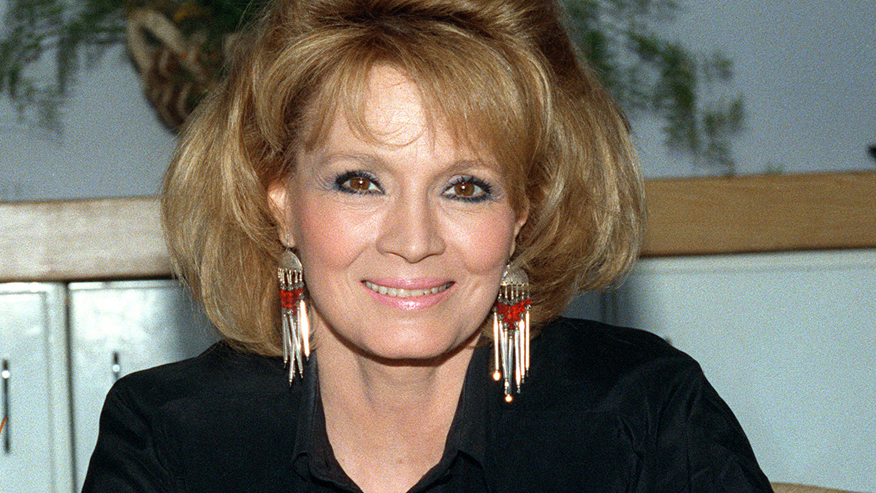
Angie Dickinson
Co-starring on the show was Earl Holliman as Sergeant Bill Crowley, Anderson’s commanding officer, along with Charles Dierkop as investigator Pete Royster and Ed Bernard as investigator Joe Styles.
The series ran from 1974 to 1978. The same year the show ended, Dickinson reprised her Pepper Anderson character on the television special Ringo, co-starring with Ringo Starr and John Ritter. She also parodied the part in the 1975 and 1979 Bob Hope Christmas specials for NBC. She would do the same years later on the 1987 Christmas episode of NBC’s Saturday Night Live.
Police Woman caused a surge of applications for employment from women to police departments around the United States; journalists who have in recent years examined the inspiration for long-term female law enforcement officials to adopt this vocation as their own have been surprised by how often Dickinson’s Police Woman has been referenced.
Dickinson and Police Woman proved that a female lead could carry an hour-long television series, paving the way for several female-starring, hour-long TV series during the 1970s and 1980s, such as Charlie’s Angels, Wonder Woman, The Bionic Woman and Cagney and Lacey. In 1987, the Los Angeles Police Department awarded Dickinson an honorary doctorate, which led her to quip, “Now you can call me Doctor Pepper.”
On occasion during the 1970s, Dickinson took part in the popular Dean Martin Celebrity Roast on television, and herself was the guest of honor on August 2, 1977, roasted by a dais of celebrities that included James Stewart, Orson Welles and her Police Woman series co-star Earl Holliman.
The 1980s
Having done a television series plus the mini-series Pearl (1978) about the Pearl Harbor bombing of 1941, Dickinson’s career in feature films appeared to be in decline. But she returned to the big screen in Brian De Palma’s erotic thriller Dressed to Kill (1980), for which she gained considerable notice, particularly for a long, silent scene in a museum before the character meets her fate. The role of Kate Miller, a sexually frustrated New York housewife, earned her a 1981 Saturn Award for Best Actress. “The performers are excellent,” wrote Vincent Canby in his July 25, 1980 New York Times review, “especially Miss Dickinson.”
She took a less substantial role in 1981’s Death Hunt, reuniting her with Lee Marvin, and also appeared in Charlie Chan and the Curse of the Dragon Queen. Earlier that year, she had been the first choice to play the character Krystle Carrington on the television series Dynasty but, deciding she wanted to spend more time with her daughter, she turned it down; the role instead went to Linda Evans. In the mid-1980s Dickinson declined the role of Sable Colby on the Dynasty spin-off, The Colbys.
After nixing her own Johnny Carson-produced prospective sitcom, The Angie Dickinson Show, in 1980 after only two episodes had been shot because she did not feel she was funny enough, the private-eye series Cassie & Co. became her unsuccessful attempt at a television comeback. She then starred in several TV movies, such as One Shoe Makes It Murder (1982), Jealousy (1984), A Touch of Scandal (1984), and Stillwatch (1987). She had a pivotal role in the highly rated mini-series Hollywood Wives (1985), based on a novel by Jackie Collins.
In 1982, and again in 1986, Dickinson appeared in two of Perry Como’s Christmas specials for the ABC television network, in both of which she did something she was not known to have done before: singing. The specials in which she appeared, and in which she sang songs, were Perry Como’s Christmas In Paris, produced on location in Paris, France, which was transmitted on Saturday, December 18, 1982, and The Perry Como Christmas Special, produced on location in San Antonio, Texas, and transmitted on Saturday, December 6, 1986. As of early January of 2013, these two specials were not known to be available on home video.[citation needed] Dickinson later denied having sung on camera since then in an interview with Larry King conducted at the approximate time of her appearance in Duets.
In motion pictures, Dickinson reprised her role as Wilma McClatchie for Big Bad Mama II (1987) and completed the television movie Kojak: Fatal Flaw, in which she was reunited with Telly Savalas. She co-starred with Willie Nelson and numerous buddies in the 1988 television western Once Upon a Texas Train.
She was presented one of the Golden Boot Awards in 1989 for her contributions to western cinema.
1990s and 2000s
In the 1993 ABC miniseries Wild Palms, produced by Oliver Stone, she was the sadistic, militant sister of Senator Tony Kruetzer, played by Robert Loggia. That same year, she starred as a ruthless Montana spa owner in Gus Van Sant’s Even Cowgirls Get the Blues with Uma Thurman.
In 1995, Sydney Pollack cast her as the prospective mother-in-law of Greg Kinnear in the romantic comedy Sabrina starring Harrison Ford, a remake of the Billy Wilder classic. She played Burt Reynolds’ wife in the thriller The Maddening and the mother of Rick Aiello and Robert Cicchini in the National Lampoon comedy The Don’s Analyst. In 1997, she seduced old flame Artie (Rip Torn) in an episode of HBO’s The Larry Sanders Show called “Artie and Angie and Hank and Hercules.”
Dickinson acted out the alcoholic, homeless mother of Helen Hunt’s character in Pay It Forward (2000); the grandmother of Gwyneth Paltrow’s character in the drama Duets (2000), and the mother of Arliss Howard’s character in Big Bad Love (2001), co-starring Debra Winger.
Having appeared in the original Ocean’s 11 (1960) with good friends Frank Sinatra and Dean Martin, four decades later she made a brief cameo in the 2001 remake with George Clooney and Brad Pitt.
An avid poker player, during the summer of 2004 she participated in the second season of Bravo’s Celebrity Poker Showdown. After announcing her name, host Dave Foley said, “Sometimes, when we say ‘celebrity,’ we actually mean it.”
Dickinson is a recipient of the state of North Dakota’s Rough Rider Award.
In 1999, Playboy ranked Dickinson No. 42 on their list of the “100 Sexiest Stars of the Century.” In 2002, TV Guide ranked her No. 3 on a list of the “50 Sexiest Television Stars of All Time,” behind Diana Rigg and George Clooney (who tied for No. 1).
In 2009, Dickinson starred in a Hallmark Channel film, Mending Fences. It is her last screen role to date.
Personal life
With husband-composer Burt Bacharach and new child, 1966
She was married to Gene Dickinson, a former football player, from 1952 to 1960. Close friends with John Kenneth Galbraith and Catherine Galbraith, her extensive visits to them and touring when John was American Ambassador to India is amply recounted in Galbraith memoirs including Ambassador’s Journal and A Life in Our Times. Dickinson kept her married name after her first divorce.
She married Burt Bacharach in 1965. They remained a married couple for 15 years, though late in their marriage, they had a period of separation where each dated other people.
Their daughter, Lea Nikki, known as Nikki, arrived a year after they were married. Born three months prematurely, Nikki suffered from chronic health problems, including visual impairment; she was later diagnosed with Asperger syndrome. Burt composed the music of the song Nikki for their fragile young daughter, and Angie rejected many roles to focus on caring for their daughter. Nikki’s parents eventually placed her at the Wilson Center, a psychiatric residential treatment facility for adolescents in Faribault, Minnesota, where she remained for nine years. Later, Nikki studied geology at California Lutheran University, but her poor eyesight prevented her from pursuing a career in that field. On January 4, 2007, Nikki killed herself by suffocation in her apartment in the Ventura County suburb of Thousand Oaks. She was 40.
In a joint statement, Dickinson and Bacharach said, “She quietly and peacefully committed suicide to escape the ravages to her brain brought on by Asperger’s… She loved kitties, earthquakes, glacial calving, meteor showers, science, blue skies and sunsets, and Tahiti. She was one of the most beautiful creatures created on this earth, and she is now in the white light, at peace.”
In a 2006 interview with NPR, Dickinson stated that she was a Democrat. She supported John F. Kennedy’s presidential campaign in 1960.
The Change-Up is a 2011 American comedy film produced and directed by David Dobkin, written by Jon Lucas and Scott Moore, and starring Ryan Reynolds and Jason Bateman.
The film was released on August 5, 2011, in North America, by Universal Pictures, and received mostly negative reviews, with commentators criticizing the overly crude humor and generic plot, but praising the cast and particularly Bateman’s against-type performance.
Dave Lockwood (Jason Bateman) and Mitch Planko (Ryan Reynolds) are close friends who are each jealous of the other’s lifestyle.
While Dave is a lawyer with a wife and kids, Mitch is a freewheeling actor who has sex with many different women.
After getting drunk at a bar, Mitch and Dave urinate in a park’s fountain, and simultaneously wish that they had each other’s lives.
The next morning, Mitch and Dave realize they have switched bodies. Mitch remembers the wish they made the night before and they drive back to the park, planning to urinate again in the fountain and wish for their original lives back, but find the fountain has been removed for restorations.