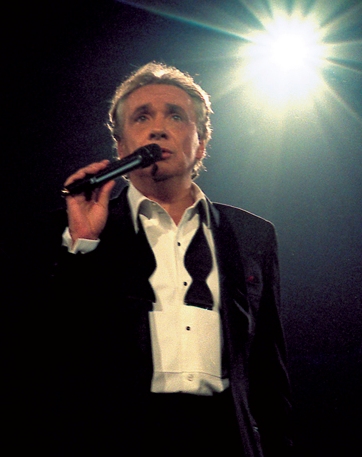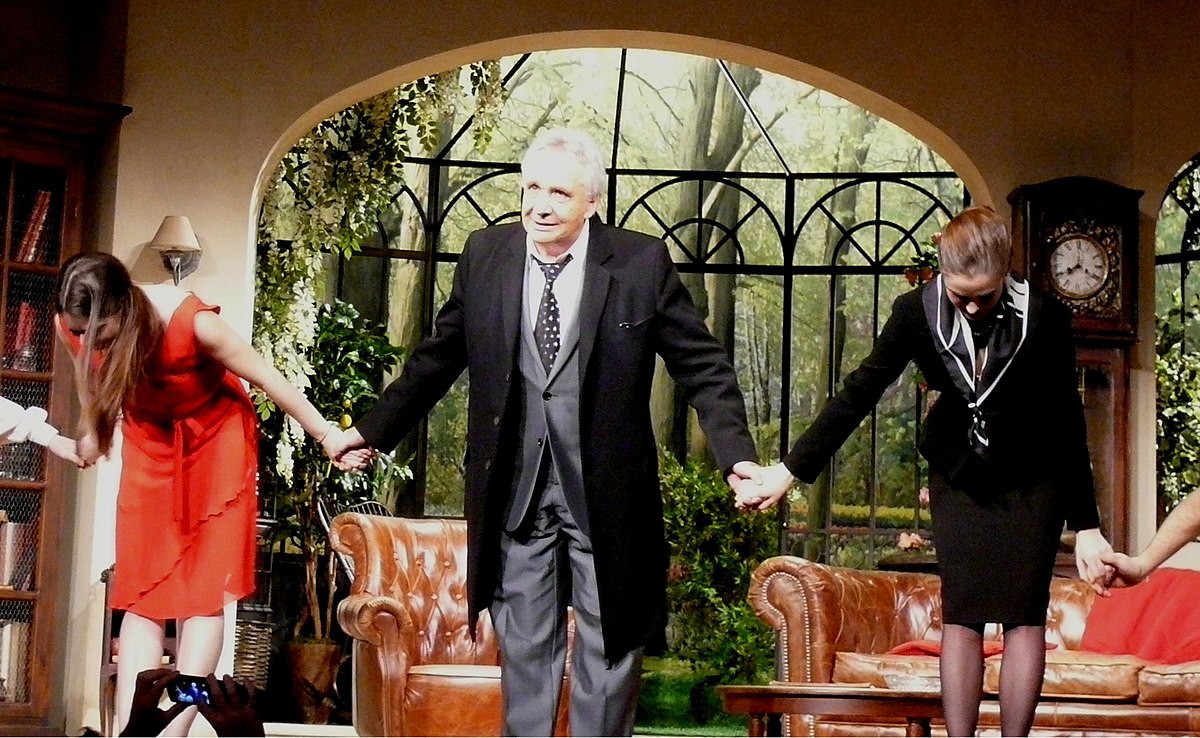
NEIL DIAMOND


(English version. French version below )

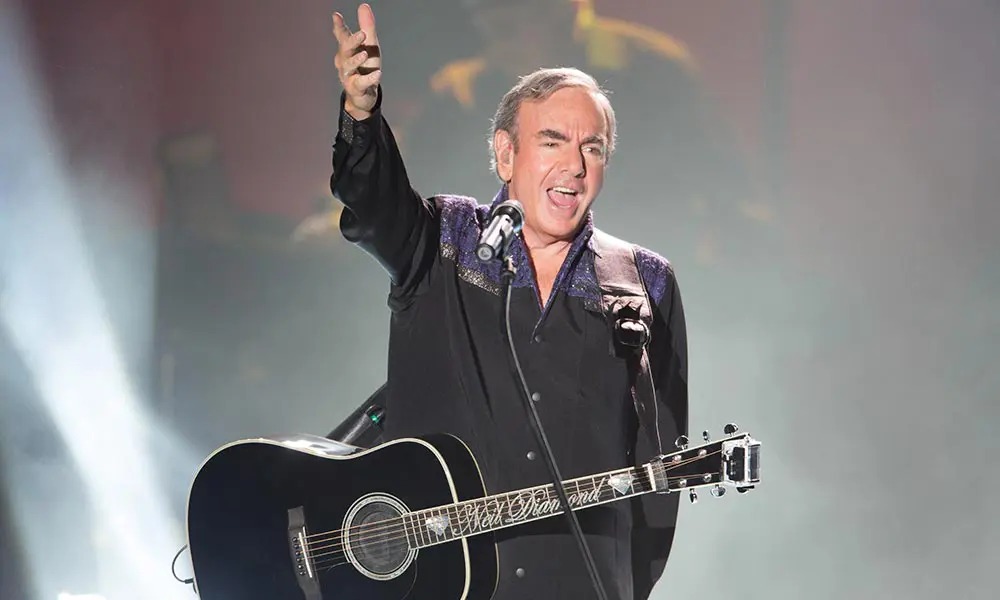
Neil Leslie Diamond (born January 24, 1941)is an American singer-songwriter. He has sold more than 130 million records worldwide, making him one of the best-selling musicians of all time. 

He has had ten No. 1 singles on the U.S. Billboard Hot 100 and Adult Contemporary charts: “Cracklin’ Rosie”, “Song Sung Blue“, “Longfellow Serenade”, “I’ve Been This Way Before”, “If You Know What I Mean”, “Desirée“, “You Don’t Bring Me Flowers”, “America“, “Yesterday’s Songs”, and “Heartlight”. Thirty-eight songs by Diamond have reached the top 10 on the Billboard Adult Contemporary charts, including “Sweet Caroline“. He has also acted in films, making his screen debut in the 1980 musical drama film The Jazz Singer.

Diamond was inducted into the Songwriters Hall of Fame in 1984 and into the Rock and Roll Hall of Fame in 2011, and he received the Sammy Cahn Lifetime Achievement Award in 2000. In 2011, he was an honoree at the Kennedy Center Honors, and he received the Grammy Lifetime Achievement Award in 2018

Diamond was born in Brooklyn, New York City, . All four of his grandparents were immigrants, from Poland on his father’s side and Russia on his mother’s. His parents were Rose (née Rapoport; 1918–2019) and Akeeba “Kieve” Diamond (1917–1985), a dry-goods merchant. He grew up in several homes in Brooklyn, having also spent four years in Cheyenne, Wyoming, where his father was stationed in the army. 

In Brooklyn, he attended Erasmus Hall High School and was a member of the Freshman Chorus and Choral Club, along with classmate Barbra Streisand; Diamond recalled they were not close friends at the time: “We were two poor kids in Brooklyn. We hung out in the front of Erasmus High and smoked cigarettes.” Also in their class was chess grandmaster Bobby Fischer. After his family moved to Brighton Beach, he attended Abraham Lincoln High Schooland was a member of the fencing team. Also on the team was his best friend, future Olympic fencer Herb Cohen.
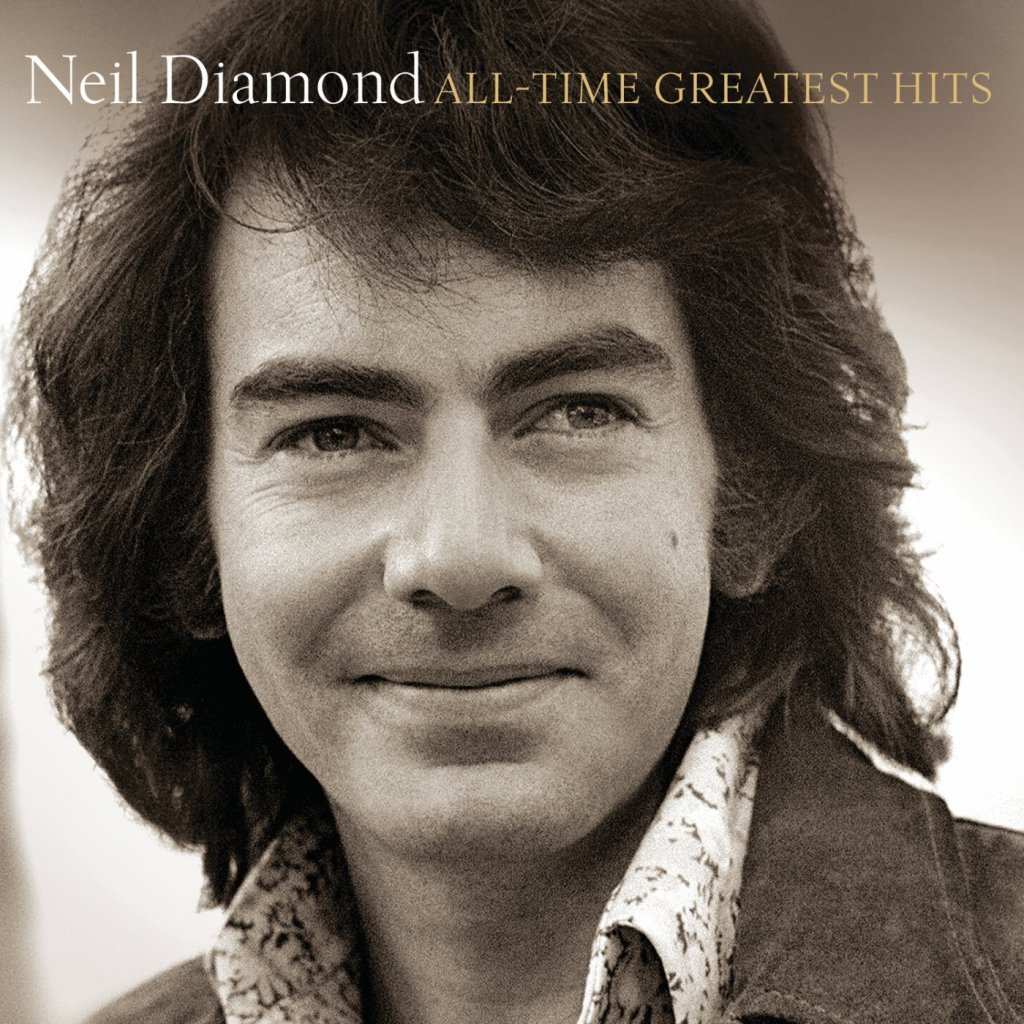
For his 16th birthday, he received his first guitar. When he was 16 and still in high school, Diamond spent a number of weeks at Surprise Lake Camp, a camp for Jewish children in upstate New York, when folk singer Pete Seeger performed a small concert. 

Seeing the widely recognized singer perform, and watching other children singing songs for Seeger that they wrote themselves, had an immediate effect on Diamond, who then became aware of the possibility of writing his own songs. “And the next thing, I got a guitar when we got back to Brooklyn, started to take lessons and almost immediately began to write songs”, he said. He added that his attraction to songwriting was the “first real interest” he had growing up, while also helping him release his youthful “frustrations”.

Diamond also used his newly developed skill to write poetry. By writing poems for girls he was attracted to in school, he soon learned it often won their hearts. His male classmates took note and began asking him to write poems for them, which they would sing and use with equal success. He spent the summer after graduation working as a waiter in the Catskills resort area. There he first met Jaye Posner, who would years later become his wife.

Diamond next attended New York University as a pre-med major on a fencing scholarship, again on the fencing team with Herb Cohen.He was a member of the 1960 NCAA men’s championship fencing team. Often bored in class, he found writing song lyrics more to his liking.

He began cutting classes and taking the train up to Tin Pan Alley, where he tried to get some of his songs heard by local music publishers. In his senior year, when he was just 10 units short of graduation, Sunbeam Music Publishing offered him a 16-week job writing songs for $50 a week (equivalent to about $460 per week, in 2021), and he dropped out of college to accept it.

Diamond was not rehired after his 16 weeks with Sunbeam, and he began writing and singing his own songs for demos. “I never really chose songwriting”, he says. “It just absorbed me and became more and more important in my life.” His first recording contract was billed as “Neil and Jack”, an Everly Brothers-type duet with high school friend Jack Packer.They recorded the unsuccessful singles “You Are My Love at Last” with “What Will I Do”, and “I’m Afraid” with “Till You’ve Tried Love”, both records released in 1962. 

Cashbox and Billboard magazines gave all four sides positive reviews, and Diamond signed with Columbia Records as a solo performer later in 1962. In July 1963, Columbia released the single “At Night” with “Clown Town”; Billboard gave a laudatory review to “Clown Town”, and Cashbox was complimentary to both sides, but it still failed to make the charts. Columbia dropped him from their label and he went back to writing songs in and out of publishing houses for the next seven years.

He wrote wherever he could, including on buses, and used an upright piano above the Birdland Club in New York City. One of the causes of this early nomadic life as a songwriter was his songs’ wordiness: “I’d spent a lot of time on lyrics, and they were looking for hooks, and I didn’t really understand the nature of that”, he says; He was able to sell only about one song a week during those years, barely enough to survive.

He found himself only earning enough to spend 35 cents a day on food (equivalent to $3 in 2021).But the privacy that he had above the Birdland Club allowed him to focus on writing without distractions. “Something new began to happen. I wasn’t under the gun, and suddenly interesting songs began to happen, songs that had things none of the others did.” 

Among them were “Cherry, Cherry” and “Solitary Man“. “Solitary Man” was the first record that Diamond recorded under his own name which made the charts. It remains one of his personal favorites, as it was about his early years as a songwriter, even though he failed to realize it at the time. He describes the song as “an outgrowth of my despair”.

Diamond spent his early career in the Brill Building. His first success as a songwriter came in November 1965 with “Sunday and Me”, a Top 20 hit for Jay and the Americans. Greater success followed with “I’m a Believer“, “A Little Bit Me, a Little Bit You“, “Look Out (Here Comes Tomorrow)”, and “Love to Love”, all performed by the Monkees. He wrote and recorded the songs for himself, but the cover versions were released before his own. The unintended consequence was that Diamond began to gain fame as a songwriter. “I’m a Believer” became a gold record within two days of its release and stayed at the top of the charts for seven weeks, making it the Popular Music Song of the Year in 1966.

And the Grass Won’t Pay No Mind” brought covers from Elvis Presley (who also interpreted “Sweet Caroline”) and Mark Lindsay, former lead singer for Paul Revere & the Raiders. Other notable artists who recorded his early songs were LuluCliff Richard and the English hard-rock band Deep Purple.

In 1966, Diamond signed a deal with Bert Berns‘s Bang Records, then a subsidiary of Atlantic. His first release on that label was “Solitary Man”, which was his first true hit as a solo artist.[e] Diamond followed with “Cherry, Cherry” and “Kentucky Woman“. His early concerts featured him opening for bands such as Herman’s Hermits and the Who. As a guest performer with The Who, he was shocked to see Pete Townshend swinging his guitar like a club and then throwing it against walls and off the stage until the instrument’s neck broke.

Diamond began to feel restricted by Bang Records because he wanted to record more ambitious, introspective music, such as “Brooklyn Roads” from 1968. Berns wanted to release “Kentucky Woman” as a single, but Diamond was no longer satisfied writing simple pop songs, so he proposed “Shilo”, which was not about the Civil War but rather an imaginary childhood friend. Bang believed that the song was not commercial enough, so it was relegated to being an LP track on Just for You.

Diamond was also dissatisfied with his royalties and tried to sign with another record label after discovering a loophole in his contract that did not bind him exclusively to either WEB IV or Tallyrand, but the result was a series of lawsuits that coincided with a slump in his record sales and professional success. A magistrate refused WEB IV’s request for a temporary injunction to prevent Diamond from joining another record company while his contract dispute continued in court, but the lawsuits persisted until February 1977, when he triumphed in court and purchased the rights to his Bang-era master tapes.

In March 1968, Diamond signed a deal with Uni Records; the label was named after Universal Pictures, the owner of which, MCA Inc., later consolidated its labels into MCA Records (now called Universal Music after merging with PolyGram ( Mix of POLYDOR (germany) and PHONOGRAM ( Philips music Netherlands) in 1999). His debut album for Uni/MCA was in late 1968 with Velvet Gloves and Spit, produced by Tom Catalano, which did not chart, and he recorded the early 1969 follow-up Brother Love’s Traveling Salvation Show at American Sound Studios in Memphis with Tommy Cogbill and Chips Moman producing.

In mid 1969, Diamond moved to Los Angeles. His sound mellowed with such songs as “Sweet Caroline” (1969), “Holly Holy” (1969), “Cracklin’ Rosie” (1970) and “Song Sung Blue” (1972), the last two reaching No. 1 on the Hot 100. “Sweet Caroline” was Diamond’s first major hit after his slump. In 2007, Diamond said he had written “Sweet Caroline” for Caroline Kennedy after seeing her on the cover of Life in an equestrian riding outfit, but in 2014 he said in an interview on the Today show that it was written for his then wife, Marcia. He could not find a good rhyme with the name “Marcia” and so used the name Caroline.It took him just one hour in a Memphis hotel to write and compose it. The 1971 release “I Am…I Said” was a Top 5 hit in both the US and UK and was his most intensely personal effort to date, taking over four months to complete.

the 70s

In 1971, Diamond played seven sold-out concerts at the Greek Theater in Los Angeles. The outdoor theater, which was noted for showcasing the best of current entertainers, added a stereo sound system for the first time. Diamond was also backed by a 35-piece string orchestra and six backing singers. After the first night, one leading newspaper called it “the finest concert in Greek Theater history.”

In August 1972, he played again at the Greek, this time doing ten shows. When the show was first announced, tickets at the 5000-seat theater sold out rapidly. He added a quadraphonic sound system for his performance to create full surround sound. The performance of August 24, 1972, was recorded and released as the live double album Hot August Night. Diamond recalled: “Hot August Night captures a very special show for me.

We went all out to really knock ’em dead in LA.” Many consider it his best work; critic Stephen Thomas Erlewine called Hot August Night “the ultimate Neil Diamond record… [showing] Diamond the icon in full glory.” The album became a classic, and was remastered in 2000 with additional selections. In Australia, which at the time was said to have the most Neil Diamond fans per capita of any country, the album ranked No. 1 for 29 weeks and stayed in their top 20 bestsellers for two years.

In the fall of 1972, Diamond performed for 20 consecutive nights at the Winter Garden Theater in New York City. That theater had not staged a one-man show since Al Jolson in the 1930s. The approximately 1,600-seat Broadway venue provided an intimate concert setting not common at the time, with every performance reportedly sold out. It also made Diamond the first rock-era star to headline on Broadway. The review in The New York Times stated:

Neil Diamond’s one-man show seemed, on the face of it, to be a brash idea. One-man shows have traditionally been associated with talents like Judy Garland and Danny Kaye. But Mr. Diamond is clearly a brash young man and one with both the musical track record and the performance macho to bring it off…He needn’t worry about comparisons with the likes of Garland and Kaye.

After the Winter Garden shows, Diamond announced that he needed a break, and he engaged in no live performances until 1976. He used those four years to work on the score for Hall Bartlett’s film version of Richard Bach’s Jonathan Livingston Seagull and to record two albums, Serenade and Beautiful Noise. He said years later, “I knew I’d come back, but I wasn’t sure when. I spent one year on each of those albums…I’d been on the road six years. I had a son 2½ and I felt he needed me more than the audience did. So for four years I devoted myself to my son Jesse.” He also said he needed to get back to having a private life, one where he could be anonymous.

In 1973, Diamond switched labels again, returning to Columbia Records for a million-dollar-advance-per-album contract (about $6.1 million per album in 2021).

His first project, released as a solo album, was the soundtrack to Jonathan Livingston Seagull. The film received hostile reviews and did poorly at the box office, and the album grossed more than the film did. Richard Bach, author of the best-selling source story, disowned the film, and he and Diamond sued Bartlett, though for differing reasons; in Bach’s case, it was because he felt the film omitted too much from the original novella, whereas in Diamond’s case, it was because he felt the film had butchered his score.

“After ‘Jonathan,'” Diamond declared, “I vowed never to get involved in a movie again unless I had complete control.” Bartlett angrily responded to Diamond’s lawsuit by criticizing his music as having become “too slick…and it’s not as much from his heart as it used to be.” Bartlett also added, “Neil is extraordinarily talented. Often his arrogance is just a cover for the lonely and insecure person underneath.”

Despite the controversy surrounding the film, the soundtrack was a success, peaking at No. 2 on the Billboard albums chart. Diamond also won a Golden Globe Award for Best Original Score and a Grammy Award for Best Score Soundtrack Album for a Motion Picture. Thereafter, Diamond often included a Jonathan Livingston Seagull suite in his live performances, as he did in his 1976 Love at the Greek concert and for his show in Las Vegas that same year.

Diamond returned to live shows in 1976 with an Australian tour, “The ‘Thank You Australia’ Concert”, which was broadcast to 36 television outlets nationwide. He also again appeared at the Greek Theater in a 1976 concert, Love at the Greek. An album and accompanying video/DVD of the show includes a version of “Song Sung Blue” with duets with Helen Reddy and Henry Winkler, a.k.a. Arthur “The Fonz” Fonzarelli of Happy Days.

He began wearing colorful beaded shirts in concert, originally so that everyone in the audience could see him without binoculars. Bill Whitten designed and made the shirts for Diamond from the 1970s until approximately 2007.

In 1974, Diamond released the album Serenade, from which “Longfellow Serenade” and “I’ve Been This Way Before” were issued as singles. The latter had been intended for the Jonathan Livingston Seagull score, but Diamond had completed it too late for inclusion. That same year he appeared on a TV special for Shirley Bassey and sang a duet with her.

In 1976, he released Beautiful Noise, produced by Robbie Robertson of The Band. On Thanksgiving 1976, Diamond made an appearance at The Band’s farewell concert, The Last Waltz, performing “Dry Your Eyes”, which he wrote jointly with Robertson, and which had appeared on Beautiful Noise. He also joined the rest of the performers onstage at the end in a rendition of Bob Dylan‘s “I Shall Be Released”.

Diamond was paid $650,000 (about $3.1 million in 2021) by the Aladdin Hotel in Las Vegas, Nevada, to open its new $10 million Theater For the Performing Arts on July 2, 1976.

The show played through July 5 and drew sold-out crowds at the 7,500-seat theater. A “who’s who” of Hollywood attended opening night, ranging from Elizabeth Taylor to Chevy Chase, and Diamond walked out on stage to a standing ovation. He opened the show with a story about an ex-girlfriend who dumped him before he became successful.

His lead-in line to the first song of the evening was, “You may have dumped me a bit too soon, baby, because look who’s standing here tonight.”

He performed at Woburn Abbey on July 2, 1977, to an audience of 55,000 British fans. The concert and interviews were taped by film director William Friedkin, who used six cameras to capture the performance.

In 1977, Diamond released I’m Glad You’re Here with Me Tonight, including “You Don’t Bring Me Flowers“, for which he composed the music and on the writing of whose lyrics he collaborated with Alan Bergman and Marilyn BergmanBarbra Streisand covered the song on her album Songbird, and later, a Diamond-Streisand duet was recorded, spurred by the success of radio mash-ups.

That version hit No. 1 in 1978, his third song to top the Hot 100. They appeared unannounced at the 1980 Grammy awards ceremony, where they performed the song to a surprised and rapturous audience.

His last 1970s album was September Morn, which included a new version of “I’m a Believer“. It and “Red Red Wine” are his best-known original songs made more famous by other artists. In February 1979, the uptempo “Forever in Blue Jeans”, co-written and jointly composed with his guitarist, Richard Bennett, was released as a single from You Don’t Bring Me Flowers, Diamond’s album from the previous year.

In 1979, Diamond collapsed on stage in San Francisco and was taken to the hospital, where he endured a 12-hour operation to remove what turned out to be a tumor on his spine.He said he had been losing feeling in his right leg “for a number of years but ignored it”. When he collapsed, he had no strength in either leg.[50] He underwent a long rehabilitation process just before starting principal photography on his film The Jazz Singer (1980).

He was so convinced he was going to die that he wrote farewell letters to his friends.

the 80s

A planned film version of “You Don’t Bring Me Flowers” to star Diamond and Streisand fell through when Diamond instead starred in a 1980 remake of the Al Jolson classic The Jazz Singer alongside Laurence Olivier and Lucie Arnaz. Though the movie received poor reviews, the soundtrack spawned three top-10 singles, “Love on the Rocks”, “Hello Again”, and “America“, the last of which had emotional significance for Diamond. “‘America’ was the story of my grandparents,” he told an interviewer. “It’s my gift to them, and it’s very real for me … In a way, it speaks to the immigrant in all of us.” The song was performed in full by Diamond during the film’s finale. An abbreviated version played over the film’s opening titles.

The song was also the one he was most proud of, partly because of when it was later used: national news shows played it when the hostages were shown returning home after the Iran hostage crisis ended; it was played on the air during the 100th anniversary of the Statue of Liberty; and at a tribute to slain civil rights leader Martin Luther King Jr., as well as the Vietnam Vets Welcome Home concert, he was asked to perform it live. At the time, a national poll found the song to be the number-one most recognized song about America, more than “God Bless America”. It also became the anthem of his world tour two weeks after the attacks on America on September 11, 2001, when he changed the lyric at the end from; “They’re coming to America”, to “Stand up for America!” Earlier that year he performed it after a request from former heavyweight champion Muhammad Ali.

The film’s failure was due in part to Diamond never having acted professionally before. “I didn’t think I could handle it,” he said later, seeing himself as “a fish out of water”. For his performance, Diamond became the first-ever winner of a Worst Actor Razzie Award, even though he was nominated for a Golden Globe Award for the same role. Critic David Wild noted that the film showed that Diamond was open about his religion: “Who else but this Jewish Elvis could go multi-platinum with an album that featured a version of ‘the Kol Nidre?'” Diamond later told the Los Angeles Times, “For me, this was the ultimate bar mitzvah.”

Another Top 10 selection, “Heartlight“, was inspired by the blockbuster 1982 movie E.T. the Extra-Terrestrial. Though the film’s title character is never mentioned in the lyrics, Universal Pictures, which had released E.T. the Extra-Terrestrial and was the parent company of the Uni Records label (by then called MCA Records), for which Diamond had recorded for years, briefly threatened legal action against both Diamond and Columbia Records.

Diamond’s record sales slumped somewhat in the 1980s and 1990s, his last single to make the Billboard Pop Singles chart coming in 1986, but his concert tours continued to be big draws. Billboard magazine ranked Diamond as the most profitable solo performer of 1986. He released his 17th studio album in 1986, Headed for the Future, which reached number 20 on the Billboard 200. Three weeks later he starred in Hello Again, his first television special in nine years, performing comedy sketches and a duo medley with Carol Burnett.

In January 1987, Diamond sang the national anthem at the Super Bowl. His “America” became the theme song for the Michael Dukakis 1988 presidential campaign. That same year, British band UB40‘s reggae interpretation of Diamond’s ballad “Red Red Wine” topped the Billboard Pop Singles chart and, like the Monkees’ version of “I’m a Believer”, became better known than Diamond’s original version.

1990s

During the 1990s, Diamond produced six studio albums. He covered many classic songs from the movies and from famous Brill Building-era songwriters. He also released two Christmas albums, the first of which peaked at No. 8 on Billboard’s Album chart. Diamond also recorded two albums of mostly new material during this period. In 1992, he performed for President George H. W. Bush‘s final Christmas in Washington NBC special. In 1993, Diamond opened the Mark of the Quad Cities (now the iWireless Center) with two shows on May 27 and 28 to a crowd of 27,000-plus.

The 1990s saw a resurgence in Diamond’s popularity. “Sweet Caroline” became a popular sing-along at sporting events. It was used at Boston College football and basketball games. College sporting events in other states also played it, and it was even played at sports events in other countries, such as a Hong Kong Sevens rugby tournament or a soccer match in Northern Ireland. It is played at every home game of the Sydney Swans of the Australian Football League. It became the theme song of Red Sox Nation, the fans of the Boston Red Sox.

The New York Rangers also adapted it as their own and played it whenever they were winning at the end of the third period of their games. The Pittsburgh Panthers football team also played it after the third quarter of all home games, with the crowd cheering, “Let’s go Pitt”. The Carolina Panthers played it at the end of every home game they won. The Davidson College pep band likewise played it in the second half of every Davidson Wildcats men’s basketball home game.

2000s

A more severely stripped-down-to-basics album, 12 Songs, produced by Rick Rubin, was released on November 8, 2005, in two editions: a standard 12-song release, and a special edition with two bonus tracks, including one featuring backing vocals by Brian Wilson.

The album debuted at No. 4 on the Billboard chart, and received generally positive reviews; Earliwine describes the album as “inarguably Neil Diamond’s best set of songs in a long, long time.”12 Songs also became noteworthy as one of the last albums to be pressed and released by Sony BMG with the Extended Copy Protection software embedded in the disc. (See the 2005 Sony BMG CD copy protection scandal.)

In 2007, Diamond was inducted into the Long Island Music Hall of Fame.

On March 19, 2008, it was announced on the television show American Idol that Diamond would be a guest mentor to the remaining Idol contestants, who would sing Diamond songs for the broadcasts of April 29 and 30, 2008. On the April 30 broadcast, Diamond premiered a new song, “Pretty Amazing Grace”, from his then recently released album Home Before Dark. On May 2, 2008, Sirius Satellite Radio started Neil Diamond Radio.

On April 8, 2008, Diamond made a surprise announcement in a big-screen broadcast at Fenway Park that he would be appearing there “live in concert” on August 23, 2008, as part of his world tour. The announcement, which marked the first official confirmation of any 2008 concert dates in the US, came during the traditional eighth-inning singalong of “Sweet Caroline”, which had by that time become an anthem for Boston fans.

On April 28, 2008, Diamond appeared on the roof of the Jimmy Kimmel building to sing “Sweet Caroline” after Kimmel was jokingly arrested for singing the song dressed as a Diamond impersonator.

Home Before Dark was released May 6, 2008, and topped the album charts in New Zealand, the United Kingdom and the United States.

On June 29, 2008, Diamond played to an estimated 108,000 fans at the Glastonbury Festival in Somerset, England on the Concert of a Lifetime Tour; technical problems marred the concert. 

In August, Diamond allowed cameras to record his entire four-night run at New York’s Madison Square Garden; he released the resulting DVD in the US in 2009, one year to the day of the first concert. Hot August Night/NYC debuted at No. 2 on the charts. On the same day the DVD was released, CBS aired an edited version, which won the ratings hour with 13 million viewers. The next day, the sales of the DVD surged, prompting Sony to order more copies to meet the high demand.

On August 25, 2008, Diamond performed at The Ohio State University while suffering from laryngitis. The result disappointed him as well as his fans, and on August 26, he offered refunds to anyone who applied by September 5.

Diamond was honored as the MusiCares Person of the Year on February 6, 2009, two nights before the 51st Annual Grammy Awards.

Long loved in Boston, Diamond was invited to sing at the July 4, 2009, Independence Day celebration.

On October 13, 2009, he released A Cherry Cherry Christmas, his third album of holiday music.

2010s

On November 2, 2010, Diamond released the album Dreams, a collection of 14 interpretations of his favorite songs by artists from the rock era. The album also included a new slow-tempo arrangement of his “I’m a Believer“. In December, he performed a track from the album, “Ain’t No Sunshine“, on NBC‘s The Sing-Off with Committed and Street Corner Symphony, two a cappella groups featured on the show. The Very Best of Neil Diamond, a compilation CD of Diamond’s 23 studio recordings from the Bang, UNI/MCA, & Columbia catalogs, was released on December 6, 2011, on the Sony Legacy label.

The years 2011 and 2012 were marked by several milestones in Diamond’s career. On March 14, 2011, he was inducted into the Rock and Roll Hall of Fame at a ceremony at the Waldorf-Astoria Hotel in New York City. In December, he received a lifetime achievement award from the Kennedy Center at the 2011 Kennedy Center Honors

On August 10, 2012, Diamond received a star on the Hollywood Walk of Fame. In November 2012, he topped the bill at the centenary edition of the Royal Variety Performance in the UK, which was transmitted on December 3. He also appeared in the Macy’s Thanksgiving Day Parade.

On April 20, 2013, Diamond made an unannounced appearance at Fenway Park to sing “Sweet Caroline” during the 8th inning. It was the first game at Fenway since the Boston Marathon bombing

On July 2, he released the single “Freedom Song (They’ll Never Take Us Down)”, with 100% of the purchase price benefiting One Fund Boston and the Wounded Warrior Project.Sporting a beard, Diamond performed live on the west lawn of the U.S. Capitol as part of A Capitol Fourth, which was broadcast nationally by PBS on July 4, 2013.

In January 2014, it was confirmed that Diamond had signed with the Capitol Music Group unit of Universal Music Group, which also owned Diamond’s Uni/MCA catalog. UMG also took over Diamond’s Columbia and Bang catalogues, which meant that all of his recorded output would be consolidated for the first time.
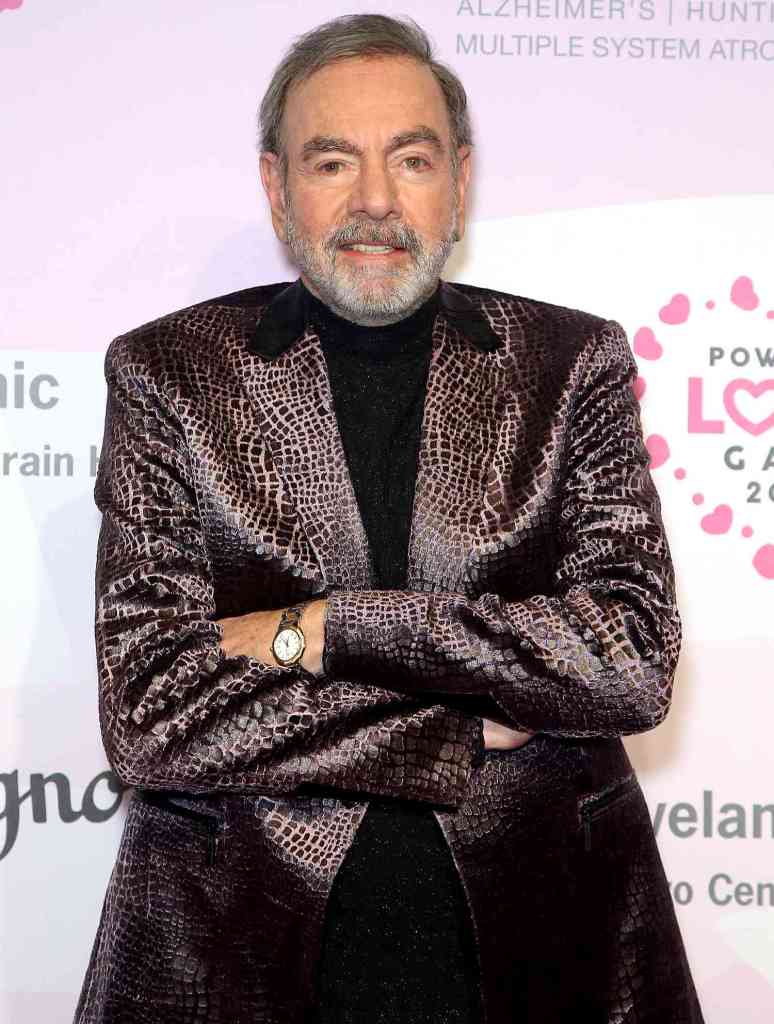
On July 8, 2014, Capitol Records announced, via a flyer included with Diamond’s latest greatest hits compilations, All-Time Greatest Hits, which charted at 15 in the Billboard 200, that his next album, Melody Road, which was to be produced by Don Was and Jacknife Lee, would be released on September 30, 2014. In August, the release date was moved to October 21.

In September 2014, Diamond performed a surprise concert at his alma mater, Erasmus High School in Brooklyn. The show was announced via Twitter that afternoon. On the same day, he announced a 2015 “Melody Road” World Tour.

 The North American leg of the World Tour 2015 launched with a concert in Allentown, PA at the PPL Center on February 27 and ended at the Pepsi Center in Denver, Colorado on May 31, 2015.

Diamond used new media platforms and social media extensively throughout the tour, streaming several shows live on Periscope and showing tweets from fans who used the hashtag #tweetcaroline on two large screens. The San Diego Union-Tribune wrote: “This, my friends, wasn’t your grandfather’s Neil Diamond concert. It was a multimedia extravaganza. Twitter. Periscope…It was a social media blitzkrieg that, by all accounts, proved to be an innovative way to widen his fan base.”

In October 2016, Diamond released Acoustic Christmas, a folk-inspired Christmas album of original songs as well as acoustic versions of holiday classics. Produced by Was and Lee, who had produced Melody Road, the idea for the album began to take shape as the Melody Road sessions ended. To “channel the intimate atmosphere of ’60s folk, Diamond recorded Acoustic Christmas with a handful of musicians, sitting around a circle of microphones, wires and, of course, Christmas lights.”

In March 2017, the career-spanning anthology Neil Diamond 50 – 50th Anniversary Collection was released. He began his final concert tour, the 50 Year Anniversary World Tour in Fresno, California, in April.[86][87]

In 2019, his 1969 signature song “Sweet Caroline” was selected by the Library of Congress for preservation in the National Recording Registry for being “culturally, historically, or aesthetically significant”.

2020s

On March 7, 2020, despite his retirement due to Parkinson’s disease, Diamond gave a rare performance at the Keep Memory Alive Power of Love Gala at the MGM Grand Garden Arena in Las Vegas, where he was being honored.

On March 22, 2020, Diamond posted a video to YouTube playing “Sweet Caroline” with slightly modified lyrics (“…washing hands, don’t touch me, I won’t touch you…”) in response to the widespread social distancing measures implemented due to the worldwide COVID-19 pandemic.

In April 2021, The New York Times reported that A Beautiful Noise, a musical based on Diamond’s life and featuring his songs, would open at the Emerson Colonial Theater in Boston in the summer of 2022. The musical was scheduled to open on Broadway following the month-long run in Boston.

Universal Music Group acquired Diamond’s songwriting catalog and the rights to his Bang Records, Columbia Records, and Capitol recordings in February 2022. The acquisition also included 110 unreleased tracks, an unreleased album and archival videos.

On June 18, 2022, Diamond sang “Sweet Caroline” during the 8th-inning stretch of a Red Sox game at Fenway Park. In a surprise appearance, he was joined by Will Swenson, who portrays Diamond in the musical A Beautiful Noise. 

Retirement from touring

In January 2018, Diamond announced that he would stop touring after he was diagnosed with Parkinson’s disease.Tour dates on the final leg of Diamond’s “50 Year Anniversary World Tour” in Australia and New Zealand were cancelled. An announcement on his official website said he was not retiring from music and that the cancellation of the live performances would allow him to “continue his writing, recording and development of new projects.”

On July 28, 2018, Diamond and his wife Katie McNeil made a surprise visit to the Incident Command post in Basalt, Colorado—near where Diamond lives—to thank the firefighters and families with a solo acoustic guitar concert for efforts in containing the Lake Christine Fire, which began on July 3 and had scorched 12,000 acres (4,900 ha; 49 km2) of land.

In popular culture

In 1967, Diamond was featured on the fourth episode of the detective drama Mannix as the ‘featured’ artist in a small underground club called ‘The Bad Scene’ and was interrupted during his singing by one of many fights that took place weekly on the show.

In 2000, Neil Diamond appeared onstage with a Diamond tribute band, Super Diamond, surprising them before their show at House of Blues in Los Angeles.

In the 2001 comedy film Saving Silverman, the main characters play in a Diamond cover band, and Diamond made an extended cameo appearance as himself. Diamond even wrote and composed a new song, “I Believe in Happy Endings”, for the film. He sat in with the tribute band Super Diamond at the film’s premiere party.

Personal life

Diamond has been married three times. In 1963, he married his high-school sweetheart, Jaye Posner, who had become a schoolteacher. They had two daughters. They separated in 1967 and divorced in 1969.

On December 5, 1969, Diamond married production assistant Marcia Murphey.They had two sons.The marriage lasted 25 years, ending in 1994 / 1995.

In 1996, Diamond began a relationship with Australian Rae Farley after the two met in BrisbaneAustralia. The songs on Home Before Dark were written and composed during her struggle with chronic back pain.

On September 7, 2011, in a message on Twitter, the 70-year-old Diamond announced his engagement to the 41-year-old Katie McNeil. Diamond said that his 2014 album Melody Road was fueled by their relationship, explaining:

There’s no better inspiration or motivation for work than being in love. It’s what you dream of as a creative person. I was able to complete this album—start it, write it and complete it—under the spell of love, and I think it shows somehow.

The couple married in front of family and close friends in Los Angeles in 2012.In addition to serving as Diamond’s manager, McNeil produced the documentary Neil Diamond: Hot August Nights NYC.

VERSION FRANÇAISE

Neil Diamond, né le 24 janvier 1941 à Brooklyn (New York), est un auteur-compositeur-interprète et acteur américain.

Sa musique couvre une pluralité de genres (pop, rock, folk, country, soft rock, easy listening). Très connu dans son pays, il est l’un des artistes ayant vendu le plus de disques avec des ventes estimées à 100 millions à travers le monde.

Biographie

Enfance

Il naît le 24 janvier 1941 à Brooklyn, de Rose (née Rapoport) et Akeeba « Kieve » Diamond, couple de descendants d’immigrés russes et polonais.

Carrière

En 1966 et 1967, il connaît le succès avec Solitary Man (repris par Johnny Cash en 2000) Cherry, CherryGirl, You’ll Be a Woman Soon, (repris par Urge Overkill dans la B.O. du film Pulp Fiction), Kentucky Woman (repris par Deep Purple), I’m a Believer écrite pour The Monkees (B.O. du film Shrek, titre également repris par Robert Wyatt) et Red Red Wine (repris par Tony Tribe et surtout UB40).

À partir de 1968, il signe pour MCA de nombreux tubes en quelques années : Sweet CarolineHolly HolyCracklin’ RosieI Am…I’SaidSong Sung BluePlay Me, titres repris entre autres par Elvis Presley, Frank Sinatra, Johnny Mathis, U2, Serge Lama ou Joe Dassin. Au Québec, en 1970, la chanson Holly Holy a été reprise par Donald Lautrec sous le titre Hosannah alors que l’année précédente Pierre Lalonde adapta en française Sweet Caroline sous le titre Caroline.

En 1971, il produit l’album généralement considéré comme le plus accompli : Stones, dans lequel il reprend des classiques de Leonard Cohen (Suzanne), Randy Newman (I Think It’s Going to Rain Today), Joni Mitchell (Chelsea Morning), Roger Miller (Husbands and Wives), ou encore Jacques Brel (If You Go Away), cette dernière Ne Me Quitte Pas en français, dans des arrangements de cordes majestueux avec un nouveau texte de Rod McKuen.

Il y a aussi trois chansons de Neil Diamond, Crunchy Granola SuiteI Am…I Said (celle-ci en deux parties) ou encore la pièce-titre, une de ses plus belles chansons. Les chefs d’orchestre et arrangeurs étaient Lee Holdridge, Marty Paich et Larry Muhoberac. La photo de couverture a été prise à Luxford House, Crowborough, East Sussex. La maison était occupée à l’époque par le manager de musique rock Tony Stratton-Smith (qui a l’époque travaillait avec Genesis entre autres).

Les premiers exemplaires de l’album vinyle comportaient une étiquette illustrée de la photo de la jaquette et une version unique de la couverture avec une fermeture de style œillet à l’arrière. La couverture elle-même était conçue comme une enveloppe qui s’ouvrait par le haut.

Cela a ensuite été abandonné et remplacé par une jaquette standard à ouverture latérale. Inspiré par l’expérience d’un test d’écran raté pour un film sur le comique rebelle Lenny Bruce, la chanson I Am… I Said s’est finalement avéré être la chanson la plus difficile et la plus longue que Neil ait jamais écrite.

Et même si “ça a pris quatre mois à chaque jour, toute la journée… C’était une bataille quotidienne pour mettre cette chanson sur papier… mais quand ça a été fait, ça s’est avéré être l’une des chansons les plus satisfaisantes que j’aie jamais écrites.”

En 1972, son double album Hot August Night reprend ses titres les plus marquants dans des versions live.

En 1973, Columbia Records, sa nouvelle maison de disques (avec laquelle il signe le plus important contrat discographique jamais conclu à cette époque) réalise la B.O du film Jonathan Livingston Seagull, inspiré du livre de Richard Bach, (l’album éponyme, Jonathan Livingston Seagull) dont Neil Diamond est l’auteur-compositeur-interprète et qui lui permettra d’obtenir un nouveau succès mondial ainsi qu’un Grammy Award.

L’album concept Beautiful Noise, sorti en 1976, est produit par Robbie Robertson. Neil Diamond repart en tournée aux États-Unis mais aussi en Europe et Australie. Dès lors, il entreprendra des tournées mondiales tous les deux ou trois ans.

Il participe au concert filmé de 1976 The Last Waltz, réalisé par Martin Scorsese, sur les adieux du groupe The Band, où l’on retrouve aussi Eric ClaptonJoni MitchellVan MorrisonRon WoodNeil YoungRingo Starr et Muddy Waters, entre autres. Une prétendue altercation qu’il aurait eue avec Bob Dylan ce soir-là n’est rapportée que par Ronnie Wood. Le film est sorti en DVD en 2002, de même qu’un coffret de 4 CD incluant le concert et des enregistrements en studio liés.

De 1977 à 1982, Neil dirige sa carrière vers les casinos de Las Vegas (où il se produit pour la première fois en 1976). Son répertoire s’enrichit de collaborations avec Gilbert Bécaud (September morn’ – C’est en septembre), Burt Bacharach (I’ll See You on the Radio (Laura)), Richard Bennett (Forever In Blue Jeans), David Foster (The Man you Need), Michel Legrand (If There Were no Dreams), Carole Bayer Sager (Heartlight) ou encore Stevie Wonder (Lost in Hollywood).

Ses disques rencontrent toujours le même succès grâce à des titres tels que DésiréeYou Don’t Bring me Flowers en duo avec Barbra Streisand et particulièrement avec Love on the RocksAmerica et Hello Again, trois chansons extraites de la B.O du film The Jazz Singer (sorti en 1980) dans lequel il joue le rôle principal.

Ce film n’obtiendra pas le succès attendu et lui vaudra le Razzie Award du pire Acteur en 1981. Pourtant l’album du même nom se placera au top des meilleures ventes aux États-Unis et dans le monde.

De 1983 à 2000, il enchaîne les disques (tous au moins disque d’or) les tournées et les shows télévisés. Il sort l’album Tennessee Moon (1996) réalisé avec des vedettes de la country dont Waylon Jennings. Pendant cette période, ses disques se vendent moins, pourtant ses concerts attirent de plus en plus de spectateurs.

Diamond a été intronisé au Songwriters Hall of Fame en 1984 et au Rock and Roll Hall of Fame.

En 2005, la critique est unanime pour louer son nouvel album 12 Songs réalisé par le producteur Rick Rubin. Ce disque acoustique est considéré comme sa meilleure production depuis les années 1970.

En 2008, son album Home Before Dark se place no 1 du billboard Américain et no 1 en Grande-Bretagne. Ce nouvel opus est suivi par une tournée mondiale de mai 2008 à janvier 2009. En juillet, sort le DVD Neil Diamond – The Thank You Australia Concert 1976. Un mois après, sort le DVD et double-disque Hot August Night/ NYC, enregistré en public au Madison Square Garden en 2008 lors de sa dernière tournée.

En novembre 2010, il sort un album de reprises intitulé Dreams et effectue une tournée dans plusieurs pays de mars à juillet 2011.

Le 14 mars 2011, il est reçu par Paul Simon au Rock and Roll Hall of Fame.

Le 6 décembre 2011, il sort un best of, annonce de deux concerts en février 2012 à Hawaii, et une tournée nord-américaine de juin à septembre 2012. Son dernier album à ce jour, Melody Road, est sorti en 2014.

Le 24 juin 2015, il donne un concert unique en France, au Zénith de Paris, son seul passage en France depuis 1978. Devant une salle comble, et à 74 ans, accompagné de son « Neil Diamond Band » (certains musiciens du groupe travaillant avec lui en tournée depuis 1978), il interprète ses plus grands succès durant un show de plus de deux heures.

En 2012, ses chiffres de vente s’élèvent à environ 125 millions de disques à travers le monde[réf. nécessaire].

En 2018, il reçoit un Grammy Lifetime Achievement Award.

En 2019, son titre Sweet Caroline (1969) a été sélectionné par la Bibliothèque du Congrès pour être conservé dans le Registre national des enregistrements en raison de son caractère « culturel, historique ou esthétique significatif ».

Vie privée

De 1963 à 1969, il est en couple avec Jayne Posner. De 1969 à 1995, il vit avec Marcia Murphey. Depuis 2012, il partage sa vie avec Katie McNeil, de vingt-neuf ans sa cadette.

Le 22 janvier 2018, il annonce être atteint de la maladie de Parkinson et annule sa tournée

Sources WIKIPEDIA

Sources Google

Sources Youtube.

Sources diverses / Several sources
DAVE


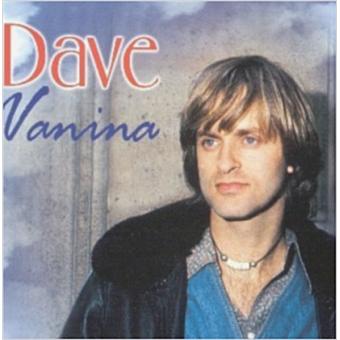
Dave, nom de scène de Wouter Otto Levenbach, né le 4 mai 1944 à Amsterdam, est un chanteur néerlandais. Il commence sa carrière en 1963 et connaît le succès dans les années 1970 avec des chansons francophones comme Vanina et Du côté de chez Swann. Il se consacre plus nettement ces dernières années à la présentation ou à l’animation d’émissions de télévision, principalement en France.

Dave : Vanina

Wouter Otto Levenbach apprend à 14 ans à jouer de la guitare et du piano avec sa mère. Il est alors très influencé musicalement par les Everly Brothers. Il n’a pas d’idole mais aime écouter Gene Pitney et Roy Orbison. Au même âge, il obtient son premier boulot d’été et travaille dans une imprimerie non loin de sa ville d’Amsterdam. Sa mission est de fabriquer des pochettes plastiques destinées à protéger des albums 33 tours.

À 16 ans, il envisage de faire des études de théologie. Il entame des études de droit pour être celui qu’on écoute.

Dave : Laura mon coeur est malade

Bien qu’étudiant, il choisit en 1965 à 21 ans de ne pas s’engager dans la vague « provo » (équivalent néerlandais de Mai 68). Passionné par la mer et les rivières (il tient cela de son grand-père), il quitte les Pays-Bas, à l’automne, par les canaux et atteint Marseille en France, sur un bateau à fond plat, avec 1 000 florins en poche (de quoi vivre à peu près deux mois).

Outre le néerlandais, il parle couramment le français, l’anglais, l’italien et l’allemand.

Deux ans auparavant, en 1963, à 19 ans, il enregistre à Londres au Royaume-Uni son tout premier 45 tours. Il sera commercialisé en 1964, uniquement aux Pays-Bas avec pour nom de scène Dave Rich, qu’il raccourcira plus tard en Dave. Il démarre au Boucanier de Lydie Bastien au 11 rue Jules-Chaplain dans le quartier Notre-Dame-des-Champs, à Paris, en France.

En 1968, il commence sa carrière grâce à Eddie Barclay qu’il vient de rencontrer à Saint-Tropez (Var).

En 1969, il participe à la sélection néerlandaise pour le Concours Eurovision de la chanson. Sa chanson Niets Gaat Zo Snel (qu’on pourrait traduire par Rien ne va aussi vite), termine troisième sur dix candidats. La même année, il rencontre Mick Micheyl, avec qui il écrira Le long des quais, et représente les Pays-Bas à la Coupe d’Europe du tour de chant.

Dave

En 1971, il participe à la comédie musicale Godspell qui connaîtra un franc succès jusqu’en 1974. C’est là qu’il fait notamment la connaissance de Daniel Auteuil qui devient son meilleur ami. Parallèlement, il se produit dans de nombreux cabarets parisiens, notamment Chez ma Cousine, sous l’impulsion de son propriétaire d’alors, le chanteur François Deguelt qui croit en son talent

C’est en 1974 qu’il sort Trop beau, reprise du tube Sugar Baby Love des Rubettes, puis Vanina (plus d’un million de 45 tours vendus) adaptée par Patrick Loiseau du Runaway de Del Shannon, il devient alors célèbre dans différents pays francophones et en France.

En 1975 sortent Mon cœur est malade puis Dansez maintenant. Son premier album est publié à la fin de cette même année, en même temps que Du côté de chez Swann.

Dave : Dansez maintenant

En 1978, sa Lettre à Hélène est un nouveau succès tout comme Comment ne pas être amoureux de vous. En 1979, il sort Allô Elisa : Maritie et Gilbert Carpentier lui consacrent un grand Numéro Un.

En 1980, Dave fait ses débuts au cinéma où il joue son propre rôle dans L’Esprit de famille de Jean-Pierre Blanc, dont il signe la musique. En 1982, il réitère l’expérience pour la télévision dans le feuilleton en 6 épisodes Dickie-Roi, d’après le roman de Françoise Mallet-Joris.

En 1993 sort un nouvel album du chanteur éponyme. Puis en 1994, il fait son retour, amorcé par le succès de sa compilation sortie en 1994 (plus de 200 000 ventes). Il peut alors enregistrer un nouvel album inédit intitulé Toujours le même bleu ; le single extrait de cet album lui permet de renouer avec les hit-parades. Dès cette époque-là, il ne fait plus secret de sa bisexualité.

En 1994, il fait un caméo dans La Cité de la peur, le film des Nuls.

En 1996, il tourne une publicité pour le fromage de son pays, les Pays-Bas (“Il paraît que Dave n’aime pas les dames” / “Dave aime l’édam”). Dans la première année de l’émission française, Salut les Chouchous sur TF1, il devient animateur de télé aux côtés de Sheila, puis seul l’année suivante.

À la demande des éditions Lattès, il sort une autobiographie intitulée Du côté de chez moi suivie d’un album Dave classique, réalisation d’un de ses vieux rêves : enregistrer quelques-uns des grands thèmes de la musique classique.

Dave : Du côté de chez Swann

Dave : Du côté de chez Swann

Pour la chaine de télévision France 3, il commente, en direct et en duo avec Marc-Olivier Fogiel, deux éditions du concours Eurovision de la chanson : le 12 mai 2001 en direct de Copenhague (Danemark) et le 25 mai 2002 en direct de Tallinn (Estonie). En 2001, 2002, 2004 et 2005, il co-présente l’émission Domino Day avec Denis Brogniart et Flavie Flament en prime-time sur TF1.

En 2003, il sort un livre Soit dit en passant… mes années paillettes5, sur la vie d’une vedette de variétés dans les années 1970. L’auteur y évoque l’époque des succès tels que Du côté de chez Swann ou Vanina, mais aussi son brusque déclin au début des années 1980 puis son retour, notamment sur les plateaux de télé. Il y révèle également l’histoire d’amour qui l’unit depuis plus de trente ans à son parolier et compagnon Patrick Loiseau, lequel intervient également dans l’ouvrage pour apporter sa vision des faits. Au cours de cette même année, il participe à l’Olympia à la Rose d’Or 2003 aux côtés de Nicole Croisille et d’Esther Galil.

Dave

En 2006, il sort, sous le nom de Dave Levenbach, un nouvel album : Tout le plaisir a été pour moi. Le 16 avril 2007, il sort un album live, Dave refait un tour reprenant les chansons de ses concerts donnés à l’Européen en 2006.

L’été 2009, il anime sur Europe 1 en compagnie d’Aline Afanoukoé, une émission sur les 25 ans du Top 50, tous les après-midi de 14h30 à 16h. Le 30 juillet 2009 sur Arte, il participe à une rétrospective des années 1980 appelée Nighting eighties au cours de laquelle il reprend des chansons de Eurythmics (Sweet dreams) et A-ha (Take on me) avec des arrangements d’Albin de la Simone.

En 2010, Dave participe à la nouvelle campagne de Old Dutch Master, les fromages hollandais. Dans une série de spots publicitaires, Dave joue finement avec le vieux maître hollandais.

Le 6 avril 2010, il se produit à l’Olympia à Paris.

En 2010, il devient l’un des jurés de l’émission de télé-crochet La France a un incroyable talent sur M6 aux côtés de Gilbert Rozon et de Sophie Edelstein.

En 2011, il fait à nouveau partie du jury de Incroyable talent, apparaît en guest-star du clip Coming out du groupe les Fatals Picards, et un nouvel album intitulé Blue-eyed Soul sort en fin novembre 2011. Dave y reprend ses plus grands succès, réorchestrés dans le style soul des labels Motown et Stax.

Fin 2011 – début 2012, il anime avec Sandrine Corman la série d’émissions Les années 80 : le retourLes années 90 : le retour et Les années 2000 : le retour sur M6.

Dave : vanina

En 2013, il est l’invité d’honneur et parrain de la huitième saison de la tournée Âge tendre, la tournée des idoles.

En mai 2014, Dave est sur la scène de l’Olympia de Paris pour y fêter ses 70 ans. Le même mois, il annonce qu’il quitte, avec les jurées Sophie Edelstein, Andrée Deissenberg et l’animatrice Sandrine Corman, La France a un incroyable talent sur M6.

Du 7 septembre 2014 au 16 mai 2016, il présente l’émission de divertissement Du côté de chez Dave le dimanche sur France 3, qui remplace Les Chansons d’abord présentée par Natasha St-Pier.

Il est, à partir du 18 octobre 2014, l’une des vedettes de la tournée Rendez-vous avec les Stars 2014-2015.

Les 4 et 5 décembre 2015, il anime le Téléthon avec Sophie Davant.

À partir du 4 septembre 2016, il co-anime aux côtés de Wendy Bouchard une nouvelle émission culturelle intitulée Même le dimanche, chaque dimanche sur France 3 à 13 h 35.

À partir du 12 janvier 2018, il participe à la tournée Âge tendre, la tournée des idoles, aux côtés notamment de SheilaNicolettaMichèle Torr, ou encore Dick Rivers. Auparavant, il participe à la croisière organisée par la tournée, en novembre 2017.

En janvier 2018, il fait son retour à la télévision sur la chaîne thématique Melody pour présenter l’émission Les parents du petit écran.

En 2020, il participe à l’émission Mask Singer. Caché sous un costume de hibou samouraï, il est le cinquième éliminé sur douze participants.

En 2021, il participe à Fort Boyard en compagnie de Jérémy Frérot, Carinne Teyssandier, Elsa Fayer, Vincent Blier et Paul El Kharrat.

Le 25 janvier 2022, le chanteur est victime d’une “lourde chute”, quelques heures seulement après avoir donné une interview à Nikos Aliagas dans la cadre de l’émission 50 min Inside Depuis, il a été hospitalisé mais ses jours ne furent pas en danger

Dave : Photo4 “le progrès”

Sources : Wikipedia / youtube / Photo4 source “le progrès

MICHEL SARDOU


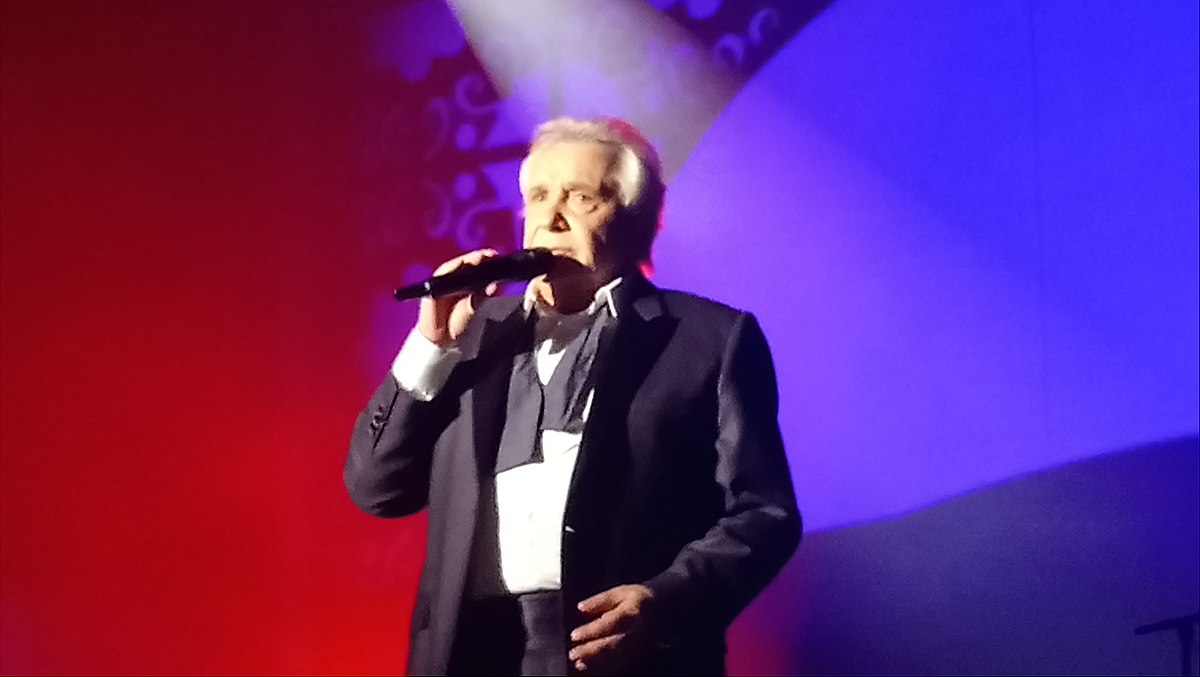
Michel Sardou , né le 26 janvier 1947 à Paris, est un chanteur et comédien français.


Fils des comédiens Fernand Sardou et Jackie Sardou, et petit-fils de Valentin Sardou, Michel Sardou est le descendant d’une tradition familiale dans le monde du spectacle depuis le milieu du xixe siècle.

Auteur de nombreux succès, il compte parmi les chanteurs français les plus populaires.


Après des débuts difficiles chez Barclay Records, Sardou connaît un début de notoriété, en 1967, avec Les Ricains, d’autant que la censure qui frappe la chanson attire l’attention sur lui.

Ce n’est cependant qu’au début des années 1970 que sa carrière connaît un véritable second départ. Il enchaîne alors les succès et devient en quelques années l’un des artistes les plus appréciés du public.

à partir des années 1990 les tubes se font moins nombreux, sa popularité demeure intacte et il établit souvent des records de fréquentation lors de ses tournées et concerts parisiens.

Depuis la fin des années 2000, il accorde une place de plus en plus importante à ses activités de comédien de théâtre.


Michel Sardou développe tout au long de sa carrière une identité artistique singulière, du fait de la grande diversité des thèmes abordés dans ses chansons.

Bien qu’il récuse le terme de « chanteur engagé », les nombreux regards qu’il lance sur la société ont divisé la classe médiatique et les commentateurs à de multiples reprises, déclenchant plusieurs controverses dans les années 1970 et s’attirant les foudres de nombreuses associations, politisées ou non, et principalement du Mouvement de libération des femmes (MLF).

Sardou5

Il subit des polémiques qui, toutefois, n’ont jamais affecté son succès puisque en cinquante années de carrière, il a enregistré 26 albums studio et 18 albums live, réunissant un total de plus de 350 chansons, et reçu quatre Victoires de la musique.

Michel Sardou a vendu plus de 100 millions de disques, ce qui le classe parmi les plus grands vendeurs de disques français.


Michel Sardou naît le 26 janvier 1947 à Paris, à 14 heures, dans une clinique de la rue Caulaincourt située dans le 18e arrondissement .

« Enfant de la balle », fils unique de la danseuse et comédienne Jackie Sardou et du chanteur et comédien Fernand Sardou, petit-fils de Valentin Sardou, il est l’héritier d’une longue tradition familiale dans les métiers du spectacle.

Il est d’origine provençale par son père et parisienne par sa mère. Ses grands-parents paternels étaient en effet comiques de scène à Marseille et sa grand-mère maternelle était danseuse de cabaret dans la capitale.

Frédéric Quinonero émet l’hypothèse que le nom « Sardou » renverrait à « sarde », une langue parlée en Sardaigne

Très jeune, il est élevé dans le petit village de Kœur-la-Petite dans la Meuse par une nourrice qui exerce la profession de garde-barrière , Marie-Jeanne, à qui il dédie la chanson Marie ma belle en 19946.

Mais cette existence ne dure pas, et il passe son enfance à suivre ses parents dans les cabarets parisiens où ils se produisent et assiste à leurs tournées , ce qui représente une passion pour lui.


Alors pensionnaire au collège du Montcel , établissement privé luxueux de Jouy-en-Josas, sa situation scolaire peu brillante et la vie qu’il mène, entre coulisses et salles de spectacles, le poussent petit à petit à envisager d’arrêter ses études qui ne l’intéressent pas.

En 1964, âgé de dix-sept ans, après avoir passé la première partie de son baccalauréat, il projette de s’enfuir au Brésil afin d’y monter une boîte de strip-tease . Son père le rattrape de justesse à l’aéroport.

Durant la première partie des années 1960, Michel Sardou chante dans différents cabarets de Montmartre, dont celui de Patachou  (mère de l’auteur-compositeur Pierre Billon, avec qui il se lie d’amitié et avec lequel il collabore à partir des années 1970). Il officie également le soir comme serveur-artiste (1963) et chanteur (1964-1965) au cabaret Chez Fernand Sardou ; dans la journée il prend des cours de théâtre chez Raymond Girard puis chez Yves Furet.


C’est au théâtre du Châtelet qu’il rencontre la danseuse Françoise Pettré, avec laquelle il se marie en 1965 à l’église Saint-Pierre de Montmartre.


Après avoir tourné en tant que figurant dans le film Paris brûle-t-il ? de René Clément en 1965, Michel Sardou décroche un premier contrat avec la maison de disques Barclay Records. Il débute dans la chanson la même année avec le 45 tours Le Madras coécrite avec ses amis Michel Fugain et Patrice Laffont.

Cette chanson qui est une charge contre le mouvement hippie lui offre un premier passage à la télévision, durant lequel il est confronté à un jury, dans lequel figure l’acteur Jean Yanne.

Ces derniers ne l’estiment pas capable de percer dans le monde de la chanson, et la sortie du Madras passe incognito. S’ensuit une série de 45 tours qui, petit à petit, lui donnent un début de notoriété, sans pour autant rencontrer de véritable succès commercial.


En 1966, il fait la rencontre de Jacques Revaux, qui devient son plus fidèle collaborateur et le compositeur de nombreuses chansons, dont beaucoup figurent parmi les classiques de son répertoire.

Mais la même année, il est arrêté par les gendarmes, pour avoir oublié de répondre au recensement militaire, dans la salle de Bobino où il assure la première partie du spectacle de François Deguelt. Conduit à la caserne de Montlhéry, il doit alors assumer dix-huit mois de service militaire.

Cette expérience lui inspire, cinq ans plus tard, la chanson satirique Le Rire du sergent.


Sa carrière est réellement lancée en 1967, avec le titre Les Ricains, aussitôt censuré : alors que la France est sortie du commandement intégré de l’OTAN un an plus tôt, et que la guerre du Viêt Nam provoque une vague d’antiaméricanisme, Michel Sardou chante le devoir de reconnaissance envers les États-Unis sans qui, affirme-t-il, « vous seriez tous en Germanie / À parler de je ne sais quoi / À saluer je ne sais qui », claires allusions à la Libération de 1944 par les forces alliées.

La chanson n’est pas du goût du Président de la République Charles de Gaulle qui recommande sa non diffusion à l’ORTF, le refrain étant notamment perçu comme une critique de la ligne géopolitique gaullienne. Un gendarme intervient même à Europe n°1 pour se saisir du 45 tours.

Cet épisode confère au chanteur une notoriété nouvelle mais encore fragile. Entre 1967 et 1970, il peine toujours à rencontrer un franc succès ; seule la chanson Petit, en 1968, obtient un succès d’estime. Devant l’enchaînement de 45 tours au succès très mitigé, Eddie Barclay décide en 1969 de résilier son contrat, ne l’estimant « pas fait pour ce métier ». Le même jour, Barclay licencie également Pierre Perret.


Le 27 juin 1969, Michel Sardou signe avec la maison de disque Tréma, un label discographique créé la même année par Jacques Revaux et Régis Talar afin de poursuivre la production de ses disques. Sa première fille, Sandrine, naît le 15 janvier 1970.


En 1970, il atteint véritablement le statut de vedette. Il enregistre l’album J’habite en France, dont est extrait le 45 tours qui devient son premier grand succès radiophonique et commercial : Les Bals populaires. Alors qu’il n’en voulait initialement pas, cette chanson le place en première place du hit-parade et termine quatrième plus gros succès de l’année 1970.

Plus tard dans l’année, les titres J’habite en France et Et mourir de plaisir, extraits du même album, s’imposent aussi comme de grands succès.

Le style de l’album J’habite en France, qui obtient le prix de l’Académie Charles-Cros remis par le Président de la République Georges Pompidou en 1971, vaut à Sardou d’être classé dans la catégorie « chanteur populaire ». La chanson du même nom l’impose même comme le chanteur de la « France profonde » aux yeux des médias. C’est une image dont il peine à se défaire au cours de sa carrière, bien qu’il ne se soit pas éternisé dans le registre de la chanson à boire.


Les Bals populaires ouvrent cependant la voie à une décennie de succès permanent : à chaque sortie d’album, Sardou se hisse dans les premières places du hit-parade. C’est le cas avec Le Rire du sergent (1971), Le Surveillant général (1972), et en 1973, avec La Maladie d’amour.

Cette chanson reste à ce jour son plus gros succès radiophonique, l’album du même nom restant 21 semaines en tête des ventes, un record pour l’époque. Cette réussite est confirmée avec le succès rencontré par les chansons qui suivent : Les Vieux Mariés, Les Villes de solitude (1973), Une fille aux yeux clairs (1974).

En 1971, Michel Sardou se produit pour la première fois à l’Olympia. Mais parallèlement à sa popularité, le chanteur fait l’objet de polémiques de plus en plus vives.

Des voix féministes, dont le Mouvement de libération des femmes, s’élèvent contre les chansons Les Villes de solitude, où Sardou se mettant dans la peau d’un homme sous l’emprise de l’alcool, chante « J’ai envie de violer des femmes, de les forcer à m’admirer » et Les Vieux Mariés, au ton perçu comme patriarcal en raison des vers suivants : « Tu m’as donné de beaux enfants, tu as le droit de te reposer maintenant ». Ces militantes manifestent fréquemment devant les salles où le chanteur doit se produire.


Sa seconde fille Cynthia voit le jour le 4 décembre 1973. Un fils, Romain, lui naît le 6 janvier 1974 de sa relation avec Élizabeth Haas, dite « Babette », qu’il épouse par la suite en 1977.


Durant l’été 1974, Johnny Hallyday et Michel Sardou se produisent ensemble, le 3 août, aux arènes de Béziers et le 28 août à la patinoire de Genève. L’ordre d’entrée en scène est joué aux dés par les deux protagonistes : Sardou joue en première partie et Hallyday assure la seconde. Il le rejoint pour le final et pour La Musique que j’aime et Johnny B. Goode interprétés en duos.


Le chanteur se produit une deuxième fois à l’Olympia du 26 décembre 1974 au 2 février 1975, spectacle dont Carlos assure la première partie.


En novembre 1975, sort le 45 tours Le France, chanson dans laquelle Sardou s’exprime au nom du paquebot du même nom, à cette époque amarré à un quai du port du Havre, alors que le gouvernement de Jacques Chirac a annoncé mettre fin à la prise en charge de son déficit : « Ne m’appelez plus jamais France / La France, elle m’a laissé tomber », chante-t-il.

Sardou2

La chanson, qui devient par la suite un classique de son répertoire, se vend à plus d’un million d’exemplaires et lui vaut d’être salué par les syndicats et le Parti communiste français , malgré son image de chanteur engagé à droite et les hostilités qui les avaient déjà séparés. En signe de rétorsion, Valéry Giscard d’Estaing lance contre lui une procédure de redressement fiscal, comme l’explique plus tard le chanteur . Cette chanson précède un album – La Vieille – qui, malgré son succès, cause au chanteur de forts désagréments.


Le père de Michel Sardou, Fernand Sardou, meurt le 31 janvier 1976.

Fernand_Sardou

Au début de la même année, Sardou se lance dans l’édition d’un magazine, M.S. Magazine, dans un esprit de rivalité et même de polémique avec Claude François qui a repris Podium et en a fait un magazine à succès. Cinq numéros paraissent entre le 1er janvier et le mois de juin 1976.

Après avoir suscité moqueries et controverses, le journal disparaît dans l’indifférence générale. C’est un gouffre financier pour Sardou qui y a investi plus de deux millions et demi de francs.

https://youtu.be/gm6MDAzJe84

À l’été 1976, la chanson Je vais t’aimer, deuxième extrait de l’album à paraître, vaut à Sardou un nouveau très gros succès et s’impose comme l’un des titres les plus importants de sa carrière. Le 14 juillet 1976, dans le cadre des célébrations de la fête nationale, Sardou se produit à Strasbourg devant plus de 150 000 spectateurs, accompagné par un orchestre dirigé par Jean Claudric et composé de cent musiciens. L’événement est retransmis en direct sur Europe n°1 et sur FR3.


En outre, malgré le grand succès public de l’album La Vieille – qui dépasse le million d’exemplaires vendus –, plusieurs titres issus de cet opus suscitent la polémique : J’accuse, Le Temps des colonies et surtout Je suis pour lui valent de nombreux déboires.


Avec Le Temps des colonies, Sardou se voit accusé de faire l’apologie d’un colonialisme primaire et raciste. Les radios refusent de diffuser le titre, sauf France Inter, qui ne le passe qu’une seule fois.

Le quotidien Libération commente alors au sujet de la chanson : « Le fascisme n’est pas passé et Sardou va pouvoir continuer à sortir ses sinistres merdes à l’antenne ». Face aux incompréhensions que la chanson suscite, Sardou demande lui-même le retrait de sa commercialisation en format 45 tours.

Sardou comédien au théatre

Le caractère social des chansons de l’album s’étend jusqu’à Je suis pour, chanson qui évoque un père dont l’enfant a été assassiné et qui clame à cor et à cri : « Tu as tué l’enfant d’un amour / Je veux ta mort, je suis pour ».

Le titre sort en pleine affaire Patrick Henry et met définitivement le feu aux poudres, Sardou se voyant accusé de faire l’apologie de la peine de mort. Le chanteur s’en est pourtant toujours défendu en prétendant illustrer la loi du talion.


Alors que le chanteur semble se positionner nettement à droite, ses principaux détracteurs sont Libération, Rouge et Le Quotidien du Peuple, trois journaux marqués à gauche. Sardou déchaîne des batailles éditoriales, comme dans les colonnes de L’Humanité, mais il suscite également de profondes interrogations sur le sens sociologique de son succès.

Dans Rouge, on peut lire par exemple : « Le propre d’un chanteur comme Sardou est d’être parvenu à donner forme à une chanson réactionnaire, au sens fort du mot. Il exprime les effets de la crise des valeurs et de l’idéologie traditionnelle sur ceux qui ne sont pas prêts à remettre présentement celle-ci en cause ».

https://youtu.be/MtUHGfensaI

Les pro et les anti-Sardou, journalistes comme artistes, font entendre leur voix. Ses soutiens écrivent dans les colonnes du Figaro, de Paris Match ou même du Monde. Plusieurs artistes, pourtant engagés à gauche, le soutiennent, comme Yves Montand, Serge Reggiani, Bernard Lavilliers ou encore Maxime Le Forestier, au nom de la liberté d’expression.

Le 11 mars 1977, l’écrivain et polémiste Jean Cau prend la défense de Sardou dans Paris Match, dans un style teinté d’ironie à l’égard de ses détracteurs, et rapportant le climat de violence qui règne alors autour du chanteur.

Début 1977, un comité « anti-Sardou » se forme sous l’impulsion du journaliste belge Bernard Hennebert, se donnant pour but d’empêcher le chanteur de donner ses récitals au cours de la tournée qui commence en février 1977. Des manifestations sont organisées en province contre sa venue, les manifestants l’accueillent par des insultes à son arrivée, peignent des croix gammées sur les véhicules de sa caravane, distribuent des tracts très virulents.


Le 18 février 1977, une bombe artisanale est même retrouvée dans la chaufferie de Forest National, à Bruxelles. Michel Sardou prend la décision d’annuler les deux derniers concerts de sa tournée.


En 1978 paraît un opuscule intitulé Faut-il brûler Sardou ? écrit par Louis-Jean Calvet et Jean-Claude Klein, dans lequel ils accusent Sardou d’accointances avec l’extrême droite


Devant l’ampleur des événements, Michel Sardou prend du recul avec la chanson à caractère social — sans y renoncer pour autant, comme en témoignent les chansons Le Prix d’un homme et Monsieur Ménard, extraits de l’album Je vole (1978), qui évoquent respectivement un enlèvement (l’actualité de cette année-là est marquée par l’enlèvement d’Aldo Moro en Italie  ou encore celui du baron Empain en France) et la violence scolaire (un professeur frappé par un élève).


En 1977, il sort un album à nouveau dominé par la chanson d’amour qui lui vaut quelques sommets dans les hit-parades : La Java de Broadway, qui s’écoule à plus d’un million d’exemplaires  et contient notamment la chanson éponyme ainsi que le single le plus vendu de toute sa carrière , succès de l’été 1977, le slow Dix ans plus tôt, dont les ventes dépassent 1,3 million d’exemplaires .

Ce 33 tours, comme celui de 1978 Je vole, lui permettent d’enregistrer des records de vente, prouvant que les événements liés à l’album précédent n’ont pas altéré sa popularité. Les tubes En chantant et Je vole manifestent un retour à la thématique de l’enfance, voire à l’introspection.

À propos d’En chantant, il déclare : « J’avais besoin d’une vraie chanson populaire, facile à entendre et simple à retenir. Les chansons de combat commençaient à me fatiguer. J’avais dans l’idée de changer de métier. J’étais malade, et aucun médecin ne savait de quoi je souffrais. Quelqu’un m’a conseillé de partir en voyage ; en m’assurant que j’allais m’ennuyer partout, mais qu’en rentrant je serais guéri. Je suis parti ».

sardou3

Sardou se marie avec Babette en octobre 1977. Son quatrième et dernier enfant, Davy, naît le 1er juin 1978.


Du 28 octobre au 29 novembre 1978, il se produit pour la première fois au Palais des congrès de Paris. Le Temps des colonies figure au programme, mais ni J’accuse ni Je suis pour, l’artiste ayant définitivement renoncé à l’interpréter sur scène.


Les albums de 1979 (Verdun) et 1980 (Victoria), qui poussent plus loin cette logique intimiste et personnelle, affichent moins de tubes et moins de titres sortis en 45 tours. Des rumeurs circulent d’ailleurs un temps sur une éventuelle maladie grave, car Sardou se fait plus rare dans les médias.


En 1980, il participe à la création de la comédie musicale Les Misérables, interprétant la chanson À la volonté du peuple en prêtant sa voix à Enjolras, personnage du roman éponyme de Victor Hugo. Selon son propre témoignage, il souhaitait incarner le personnage sur scène mais Robert Hossein, le metteur en scène, ne voulait pas de vedette dans la distribution

Michel Sardou

Pendant les années 1980, Michel Sardou voit sa popularité se pérenniser. Tout au long de cette décennie, il produit de nombreux tubes, aidé par la diffusion radiophonique importante, avant chaque sortie d’album, d’une chanson rythmée représentant le nouvel opus (Afrique adieu, Chanteur de jazz, Musulmanes, La même eau qui coule…).

L’album de 1981 (qui contient deux de ses plus grands succès : Les Lacs du Connemara et Être une femme) entre au Livre Guinness pour le niveau de ses ventes.


En outre, la fréquentation de ses spectacles, au Palais des congrès de Paris puis, à partir de 1989, au Palais omnisports de Paris-Bercy, est sans cesse croissante. Il se produit la plupart du temps à guichets fermés et bat des records de durée dans plusieurs salles. Les chiffres qu’il établit le classent toujours parmi les chanteurs français les plus populaires. Paraissant plus consensuel, même ses titres les plus « engagés » (le chanteur réfute encore et toujours ce qualificatif) sortis au cours de cette décennie ne suscitent que peu d’émoi.


Que ce soient Vladimir Ilitch (1983), à la fois hommage aux idéaux de Lénine et dénonciation des dérives du régime communiste en URSS, Les Deux Écoles (1984), qui évoque l’opposition école libre / école publique au moment du projet de loi Savary, ou Musulmanes (1986), regard amer sur la condition de la femme dans les pays arabes, ces chansons rencontrent plus de succès que de polémique.

Avec cette dernière chanson, qui rend avant tout hommage aux femmes musulmanes, Sardou permet également d’éloigner de lui les suspicions de racisme portées contre lui après Le Temps des colonies, d’autant qu’il précise refuser l’amalgame entre musulmans et « talibans ou poseurs de bombes », qui commencent à sévir dans les années 1980.

Il déclare le 26 novembre 2012 : « Je regrette que des gens bruyants stigmatisent une communauté à des fins électoralistes. J’avais écrit Musulmanes pour rendre hommage à une civilisation, une culture déjà montrée du doigt à l’époque. Mais là, ça devient dément ».


Il participe à deux reprises au rallye Paris-Dakar, en voiture, comme co-pilote de Jean-Pierre Jabouille, en 1984 et en 1985, sans jamais parvenir toutefois à terminer la course. Cette expérience au cœur des paysages sahariens est à l’origine de l’écriture de la chanson Musulmanes.


En 1987, Michel Sardou obtient la reconnaissance de la profession en recevant aux Victoires de la musique la Victoire de la chanson originale pour Musulmanes. Il fait son premier passage sur la scène du Palais omnisports de Paris-Bercy en 1989.

Lors de la tournée de cette année, chaque représentation parisienne se termine alors par une mise en scène de Robert Hossein impliquant plus de cent figurants sur la chanson Un jour la liberté, écrite spécialement pour commémorer le bicentenaire de la Révolution française.

Au terme de la tournée, le 3 février 1990, il reçoit une Victoire de la musique pour avoir fédéré le plus grand nombre de spectateurs.


L’opus Le Successeur paru en 1988, malgré son million d’exemplaires vendu, n’affiche pas de succès probant bien que deux titres soient parus en singles (La même eau qui coule et Attention les enfants… danger).


À la fin des années 1980, il participe à plusieurs œuvres caritatives. En 1989, il figure dans la chanson humanitaire de Charles Aznavour Pour toi Arménie, parue quelques mois après le séisme du 7 décembre 1988 ayant violemment frappé l’Arménie, parmi de nombreuses personnalités françaises.

Il y interprète un couplet entier. Sardou, qui était un ami de Coluche et était présent le jour de la création des Restos du Cœur, participe également avec Véronique Sanson, Jean-Jacques Goldman, Johnny Hallyday et Eddy Mitchell à la première tournée des Enfoirés, en 1989. Dans le documentaire Qui êtes-vous Michel Sardou ? de Mireille Dumas diffusé en 2012, il affirme avoir donné « dix briques », soient 100 000 francs, à Coluche pour le lancement de l’association.

Il participe à nouveau aux Enfoirés en 1998, 2004 et 2005.


Michel Sardou se marie avec Françoise Pettré en 1965, alors qu’il est âgé de dix-huit ans, pour s’émanciper de l’autorité parentale, la majorité étant à l’époque établie à vingt et un ans. Leur première fille, Sandrine, naît le 15 janvier 1970 et la seconde, Cynthia, le 4 décembre 1973. Ils divorcent en 1977.

Sardou à Bercy

Il se marie une deuxième fois, le 14 octobre 1977, avec Elizabeth Haas, dite « Babette » (sœur de l’astrologue Christine Haas). Elle est la mère de ses fils Romain, né le 6 janvier 1974, et Davy, né le 1er juin 1978.

Mais la tumultueuse relation qu’ils mènent durant plus de vingt années, ponctuée d’infidélités, les pousse au divorce en 1998. Le chanteur déclare entretenir un rapport amical avec elle depuis leur séparation.


Michel Sardou se marie une troisième fois le 11 octobre 1999 avec l’ancienne rédactrice en chef de Elle, Anne-Marie Périer. Nicolas Sarkozy, alors maire de Neuilly-sur-Seine, se charge de les unir dans sa mairie.


Le fait que son premier fils Romain soit devenu écrivain, mais surtout que son second fils Davy soit devenu comédien perpétue la dynastie d’artistes de la famille Sardou. Davy déclare dans une interview accordée au Figaro : « Il y avait quelque chose de magique. Je n’ai pas choisi ce métier par atavisme, je ne me suis pas dit que je devais continuer la dynastie pour que mes proches soient fiers de moi. Jouer, c’était une envie. »


Bien qu’il ait toujours été particulièrement discret sur sa vie privée, Michel Sardou a vu sa fille Cynthia mise sous les feux de la rampe médiatique en 1999. La journaliste, qui allait rejoindre son véhicule le soir du 24 décembre 1999, est victime d’un viol collectif.

Elle raconte ce traumatisme dans le livre Appelez-moi Li Lou, paru en 2005. Si elle a, durant de longues années, pris de froides distances avec son père, elle lui témoigne aujourd’hui une grande reconnaissance pour l’avoir soutenue.


Michel Sardou est aujourd’hui cinq fois grand-père : ses petits-enfants se nomment Loïs (fils de Sandrine), Aliénor, Gabriel, Victor-Scott (enfants de Romain) et Lucie (fille de Davy).


Il est également notoire que Sardou a entretenu des relations cordiales avec le président de la République François Mitterrand, malgré des opinions politiques a priori opposées, qui l’a par ailleurs décoré de la légion d’honneur. Il entretient aussi une amitié avec l’ancien président Nicolas Sarkozy qui a assisté à son concert le 7 juin 2013 à l’Olympia, bien qu’il ait pris ses distances avec lui depuis.


Depuis les années 1970, il est passionné par les chevaux et le sport hippique. En 2011, il décide de s’impliquer dans ce domaine et achète peu à peu sept chevaux de course. L’un de ses chevaux remporte le Prix de Louvigny en 2015.


Après avoir habité en Corse, à Miami et à Megève, Sardou réside depuis 2010 dans un manoir du xvie siècle situé à Bénerville-sur-Mer, dans le Calvados, près de Deauville. Il possède une collection de près de deux mille livres anciens.


Opinions politiques

Bien qu’il soit toujours considéré comme un des principaux « chanteurs de droite »français

Michel Sardou cite Pierre Mendès France et François Mitterrand parmi ses hommes politiques préférés : « Mes hommes politiques préférés sont morts : de Gaulle, Mendès, Mitterrand ». Il aurait également milité en faveur de Georges Pompidou. Pour Sophie Girault, il serait un anarchiste de droite, campant le plus souvent des personnages hostiles à la « facilité des idéaux conventionnels »


Dans un entretien accordé à Paris Match le 23 janvier 1987, il assume être de droite : « Je suis jeune et pourtant je suis de droite. Je vous le dis. Je ne vois pas ce qu’il y a d’antinomique dans cette affirmation. Je le répète donc calmement : je suis de droite », bien qu’il refuse de se « définir uniquement dans ce concept de droite ».

Il poursuit en évoquant un positionnement négatif : « Quand j’affirme être de droite, c’est avant tout une réaction. Je hais le système socialiste au sens historique du terme. C’est-à-dire que j’accepte de vire dans ce qu’il a de primaire, un anti-soviétisme épidermique.

Je commence à me croire de droite à partir du moment où je ne peux pas être de gauche. ». Il précise ensuite que son acception de la droite correspond à un « individualisme moral et social » et à « la tentation de me croire responsable de mon existence », et en exclut  toute forme de xénophobie ou de racisme. Il rejette ainsi toute accointance avec les personnalités Charles Pasqua et Jean-Marie Le Pen.


Michel Sardou émet un avis critique à propos de la classe politique actuelle, tous horizons confondus.


Il déclare aujourd’hui n’être « ni de droite, ni de gauche, mais chanteur populaire » et critique la mondialisation : « Aujourd’hui tu dépends d’un connard qui est à l’autre bout du monde, qui fait faillite et d’un seul coup 5 000 mecs en Provence sont au chômedu. Je n’aime pas cette mondialisation. Et le président ne peut pas y faire grand-chose ».


Ainsi, après avoir un temps soutenu Nicolas Sarkozy, il s’est finalement déclaré déçu par son action lors de son quinquennat, lui reprochant d’avoir beaucoup promis et peu tenu.

Des déclarations qui furent peu appréciées par l’intéressé et qui valurent à Michel Sardou d’être convoqué à l’Élysée (un jour férié), pour le lui faire savoir. « On s’est expliqués, je lui ai redit que j’attendais autre chose de lui, de sa politique. Je suis reparti et il me fait toujours la gueule. Il est très rancunier. »

Après cet épisode, il annonça en 2011 que pour la prochaine présidentielle, tout était possible, même qu’il vote à gauche, mais il vota blanc finalement.


Après l’élection de François Hollande, il annonce qu’il aurait finalement préféré un second mandat de Nicolas Sarkozy.

Il déclare en 2013 que « s’il avait 25 ans, il quitterait la France ». Concernant la gauche dans son ensemble, il affirme : « C’est pas la vraie gauche, c’est la gauche où il y a un malentendu. C’est à dire qu’avec la gauche les gens s’imaginent que les petits vont grandir et les gros vont maigrir et en fait, c’est les gros qui maigrissent et les petits qui maigrissent encore plus ».


Enfin il émet des réserves sur le système du suffrage universel, argumentant : « C’est le boulevard des promesses qui ne sont jamais tenues. N’importe qui peut se présenter. Moi, demain, si j’ai un peu de pognon, je m’inscris, je passe à la télé et je propose un programme, c’est ridicule »


Au revoir de Sardou à la chanson en vidéo

Sardou en Larmes


https://www.youtube.com/watch?v=-7OUwsWAoDs


Sources Wikipedia / YouTube 

JERRY LEWIS


radiosatellite.co's avatarRADIOSATELLITE

Jerry Lewis  (born Joseph Levitch; March 16, 1926) is an American actor, comedian, singer, film producer, film director, screenwriter and humanitarian. He is known for his slapstick humor in film, television, stage and radio.

Picture taken during the 60s of US comedian, direc JERRY LEWIS

He and Dean Martin were partners as the hit popular comedy duo of Martin and Lewis. Following that success, he was a solo star in film, nightclubs, television, concerts and musicals. Lewis served as national chairman of the Muscular Dystrophy Association and hosted the live Labor Day broadcast of the Jerry Lewis MDA Telethon for 44 years.

Lewis has received several awards for lifetime achievements from the American Comedy Awards, Los Angeles Film Critics Association, Venice Film Festival, Academy of Motion Picture Arts and Sciences and been honored with two stars on the Hollywood Walk of Fame.

Early life

Lewis was born on March 16, 1926 in Newark, New Jersey to Russian Jewish parents His father, Daniel Levitch (1902–80), was a master of ceremonies

View original post 3,047 more words

TALENTS


Nous avons utilisé comme titre ” talents

Ceci exprime réellement ce que possède ce jeune homme :

D’autant plus que ce titre passe bien en anglais et en français  (tant qu’à faire) 🙂

Plus sérieux: Visionnez cette vidéo et vous serez émus.

Autiste et non voyant cependant, sa voix, sa prestation compensent de loin ce handicap

Nous vous laissons avec  la vidéo.


DEMIS ROUSSOS: Good bye…


Artemios “Demis” Ventouris Roussos  (June 15, 1946 – January 25, 2015)

Demis was a GREEK SINGER  and performer who had international hit records as a solo performer in the 1970s after having been a member of    Aphrodite’s Child , a progressive rock group that also included Vangelis. He has sold over 60 million albums worldwide.

Roussos was born and raised in Alexandira Egypt , in a family where his father George (engineer Yorgos Roussos) was Greek and mother  Nelly MAZLOUM  was Egyptian of Italian origin. His parents lost their possessions during the Suez Crisis and consequently decided to move to  greece  

This slideshow requires JavaScript.

After settling in Greece, Roussos participated in a series of musical groups beginning with The Idols when he was 17, where he met Evangelos Papathanassiou (later known as  VANGELIS ) and Loukas Sideras, his future bandmates in of    Aphrodite’s Child  . After this he joined We Five (not the San Francisco, California folk-rock group), another cover band which had limited success in Greece.

Roussos came to a wider audience in 1967 when he joined progressive rock  band of    Aphrodite’s Child , with Vangelis and Sideras, initially as a singer but later also playing bass guitar, achieving commercial success in France and other parts of Europe from 1968 to 1972.


They set off for London to break into the international music scene but as a result of bad weather, the plane landed them in Paris – and they decided to stay there signing a record deal with Philips S.A. His operatic vocal style helped propel the band to international success, notably on their final album  666  , which became a progressive rock  cult classic.

After Aphrodite’s Child disbanded, Roussos continued to record sporadically with former bandmate Vangelis

 In 1970 the two released Sex Power (although the album has also been disputably credited to Aphrodite’s Child), also recording the 1977 album Magic together. Their most successful collaboration was “Race To The End” (also sung in Spanish as “Tu Libertad”), a vocal adaptation of the musical theme from the Oscar winning film  Chariots of fire , while Roussos also guested on the soundtrack to  Blade runner (1982), with a song entitled “Tales Of The Future”.

Roussos died early Sunday morning, January 25, 2015, while hospitalized at “Ygeia Hospital” in Athens, Greece. The news of his death where confirmed a day later by his friend and journalist Nikos Aliagas  who tweeted, on January 25, 2015, in both Greek and French ]. The death of the famous artist has been confirmed later the same day by his daughter, who spoke in Greek and French media.


Roussos also began a solo career with the song “We Shall Dance” in 1971. Initially unsuccessful, he toured around Europe and became a leading artist. His solo career peaked in the mid 1970 with several hit albums. His single “Forever And Ever” topped the charts in several countries in 1973 (1976 in U.K.).

 Other hits were “My Friend The Wind”, “My Reason”, “Velvet Mornings”, “Goodbye My Love, Goodbye”, “Someday Somewhere” and “Lovely Lady Of Arcadia”. His first UK single to chart was in 1975: “Happy To Be On An Island In The Sun” written by an Englishman David Lewis with the record reaching No. 5 in the charts.

His popularity in the rest of Europe, but not the UK, came to fascinate BBC-TV producer John King who made a documentary which he called ‘The Roussos Phenomenon’ in 1976. The programme was aired and Roussos’ scored a number one chart selling E.P. record of the same title and with three back catalogue albums entering the charts.

Roussos was mentioned in the television play Abigail’s Party (1977) and made one of his earliest appearances on English-speaking TV on the Basil Brush Show. Before appearing on the Basil Brush Show, he had appeared on the Nana Mouskouri TV show in the UK, singing a duet version of his hit single “Happy To Be On An Island In The Sun”.

 In 1980, Roussos had a hit with a cover of Air Supply’s “Lost In Love”, sung as a duet with Florence Warner. His UK career was now being managed by ex-Phonogram promotion man, Don Percival.

He re-recorded his songs in a number of languages, including Japanese, whereas The Roussos Phenomenon EP was the first No.1 hit for an African-born artist in the history of the UK Singles Chart. He was equally successful across Europe and Latin America, although a gold disc for the LP Demis remains his only success in the United States.

For years Roussos struggled with his weight. In June 1980 he weighed 147 kg. He then began a diet in which he lost 50 kg in 10 months.

 In 1982 he co-authored the book A Question Of Weight with his close friend Veronique Skawinska, in which he dealt candidly with his struggles with obesity. Roussos suffered a fallow period during the 1980s in terms of hits and his output dried up as he battled clinical depression.

In June 1985, he was amongst the hostages during the hijacking of TWA Flight 847.

In 1989, he recorded the song “Young Love”, a duet with German singer/songwriter Drafi Deutscher, which was released as a single in Germany and reached No.2 in the famous German music TV show ZDF Hitparade in October of the same year.

The 1990s saw even more substantial releases by Roussos. In 1993 he released Insight (also called Morning Has Broken) to general acclaim. After that he teamed up with BR Music in the Netherlands to produce Immortel, Serenade and In Holland, utilising a variety of ethnic and electronic styles..

Roussos continued to record and tour. The spring of 2002 saw him do a tour of England, whilst in recent years he has appeared in Russia and the United Arab Emirates. A committed follower of the Greek Orthodox faith, he has sung as a guest in a number of churches in Greece and worldwide.

In 2006, he released the acclaimed Live In Brasil, which documents his return to a country where his popularity led him to record “Você Você E Nada Mais” – a huge hit in Portuguese.

From 2006 to 2008, he was part of the Âge Tendre Et Têtes De Bois tour, a series of concerts featuring French singers from the sixties and seventies.

A comeback took place in 2009, with Roussos recording a new studio album produced by Marc di Domenico, released on May 11.

WIKIPEDIA  SOURCES