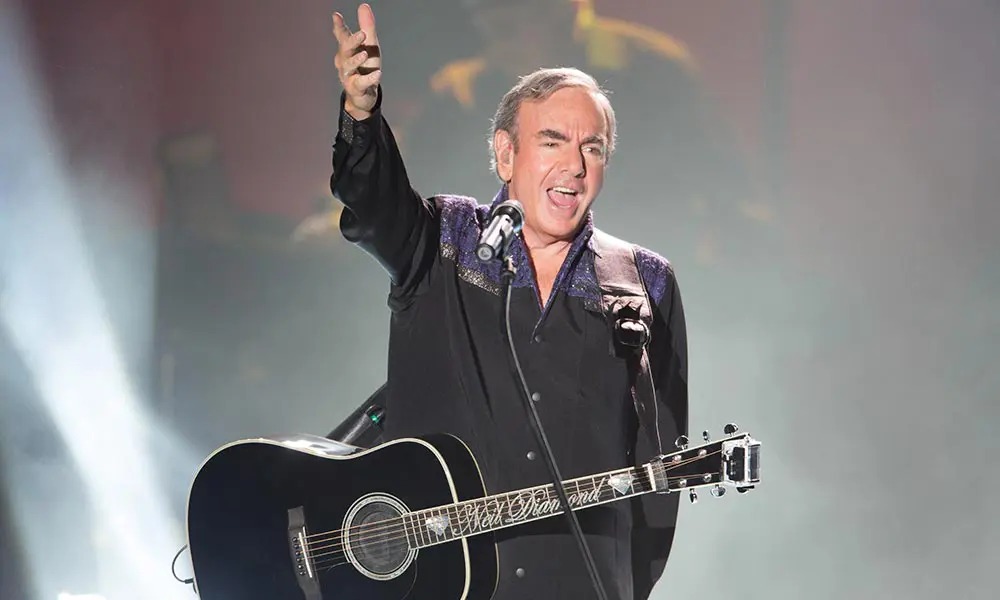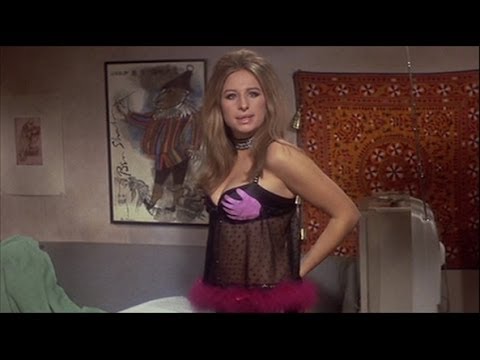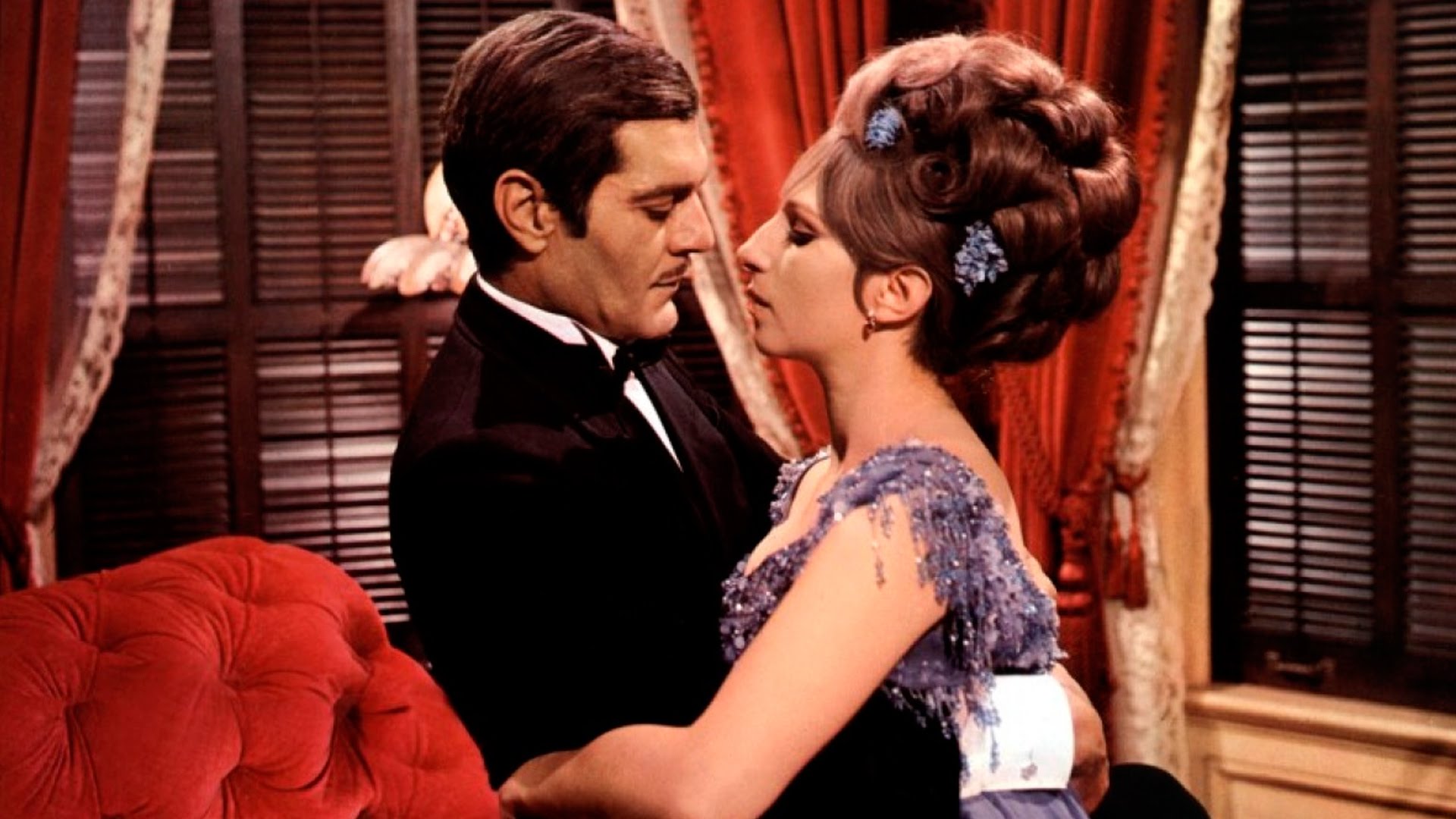
NEIL DIAMOND


(English version. French version below )

Neil Leslie Diamond (born January 24, 1941)is an American singer-songwriter. He has sold more than 130 million records worldwide, making him one of the best-selling musicians of all time. 

He has had ten No. 1 singles on the U.S. Billboard Hot 100 and Adult Contemporary charts: “Cracklin’ Rosie”, “Song Sung Blue“, “Longfellow Serenade”, “I’ve Been This Way Before”, “If You Know What I Mean”, “Desirée“, “You Don’t Bring Me Flowers”, “America“, “Yesterday’s Songs”, and “Heartlight”. Thirty-eight songs by Diamond have reached the top 10 on the Billboard Adult Contemporary charts, including “Sweet Caroline“. He has also acted in films, making his screen debut in the 1980 musical drama film The Jazz Singer.

Diamond was inducted into the Songwriters Hall of Fame in 1984 and into the Rock and Roll Hall of Fame in 2011, and he received the Sammy Cahn Lifetime Achievement Award in 2000. In 2011, he was an honoree at the Kennedy Center Honors, and he received the Grammy Lifetime Achievement Award in 2018

Diamond was born in Brooklyn, New York City, . All four of his grandparents were immigrants, from Poland on his father’s side and Russia on his mother’s. His parents were Rose (née Rapoport; 1918–2019) and Akeeba “Kieve” Diamond (1917–1985), a dry-goods merchant. He grew up in several homes in Brooklyn, having also spent four years in Cheyenne, Wyoming, where his father was stationed in the army. 

In Brooklyn, he attended Erasmus Hall High School and was a member of the Freshman Chorus and Choral Club, along with classmate Barbra Streisand; Diamond recalled they were not close friends at the time: “We were two poor kids in Brooklyn. We hung out in the front of Erasmus High and smoked cigarettes.” Also in their class was chess grandmaster Bobby Fischer. After his family moved to Brighton Beach, he attended Abraham Lincoln High Schooland was a member of the fencing team. Also on the team was his best friend, future Olympic fencer Herb Cohen.
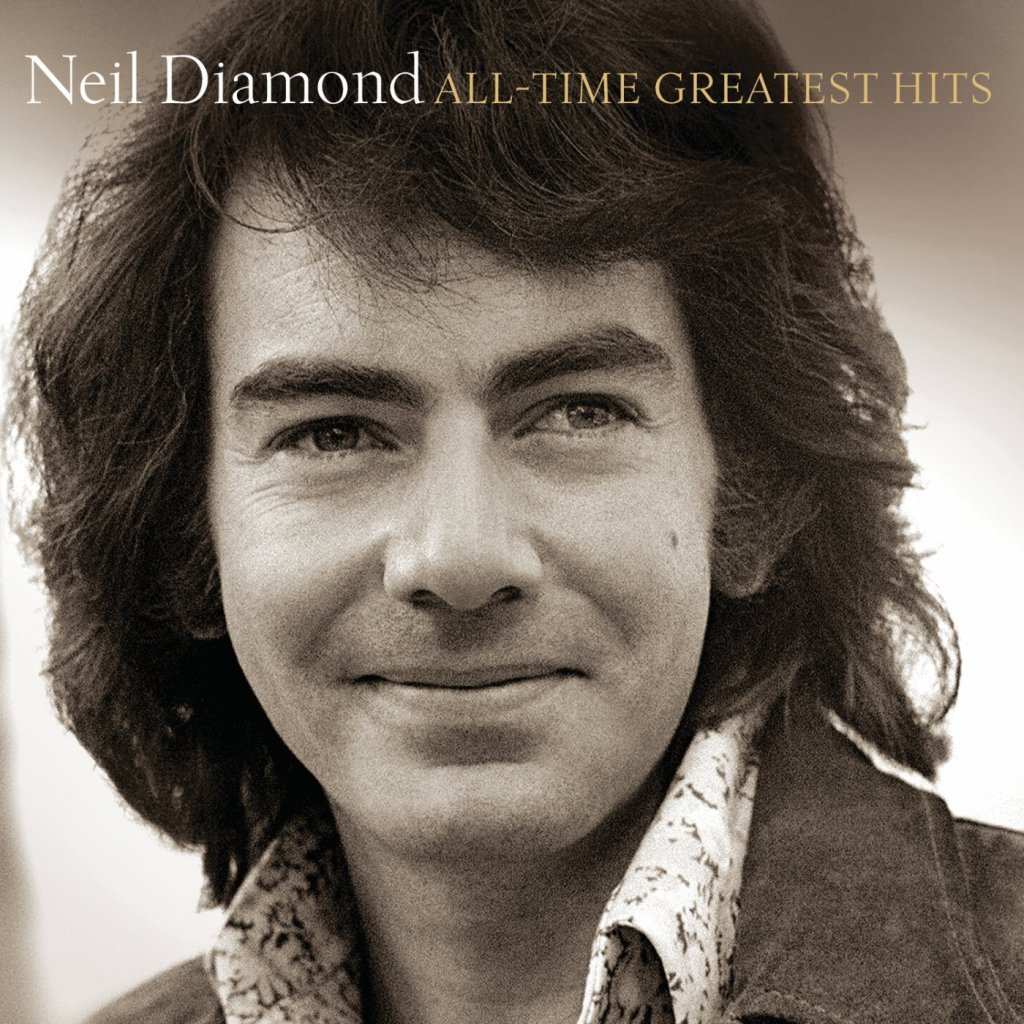
For his 16th birthday, he received his first guitar. When he was 16 and still in high school, Diamond spent a number of weeks at Surprise Lake Camp, a camp for Jewish children in upstate New York, when folk singer Pete Seeger performed a small concert. 

Seeing the widely recognized singer perform, and watching other children singing songs for Seeger that they wrote themselves, had an immediate effect on Diamond, who then became aware of the possibility of writing his own songs. “And the next thing, I got a guitar when we got back to Brooklyn, started to take lessons and almost immediately began to write songs”, he said. He added that his attraction to songwriting was the “first real interest” he had growing up, while also helping him release his youthful “frustrations”.

Diamond also used his newly developed skill to write poetry. By writing poems for girls he was attracted to in school, he soon learned it often won their hearts. His male classmates took note and began asking him to write poems for them, which they would sing and use with equal success. He spent the summer after graduation working as a waiter in the Catskills resort area. There he first met Jaye Posner, who would years later become his wife.

Diamond next attended New York University as a pre-med major on a fencing scholarship, again on the fencing team with Herb Cohen.He was a member of the 1960 NCAA men’s championship fencing team. Often bored in class, he found writing song lyrics more to his liking.

He began cutting classes and taking the train up to Tin Pan Alley, where he tried to get some of his songs heard by local music publishers. In his senior year, when he was just 10 units short of graduation, Sunbeam Music Publishing offered him a 16-week job writing songs for $50 a week (equivalent to about $460 per week, in 2021), and he dropped out of college to accept it.

Diamond was not rehired after his 16 weeks with Sunbeam, and he began writing and singing his own songs for demos. “I never really chose songwriting”, he says. “It just absorbed me and became more and more important in my life.” His first recording contract was billed as “Neil and Jack”, an Everly Brothers-type duet with high school friend Jack Packer.They recorded the unsuccessful singles “You Are My Love at Last” with “What Will I Do”, and “I’m Afraid” with “Till You’ve Tried Love”, both records released in 1962. 

Cashbox and Billboard magazines gave all four sides positive reviews, and Diamond signed with Columbia Records as a solo performer later in 1962. In July 1963, Columbia released the single “At Night” with “Clown Town”; Billboard gave a laudatory review to “Clown Town”, and Cashbox was complimentary to both sides, but it still failed to make the charts. Columbia dropped him from their label and he went back to writing songs in and out of publishing houses for the next seven years.

He wrote wherever he could, including on buses, and used an upright piano above the Birdland Club in New York City. One of the causes of this early nomadic life as a songwriter was his songs’ wordiness: “I’d spent a lot of time on lyrics, and they were looking for hooks, and I didn’t really understand the nature of that”, he says; He was able to sell only about one song a week during those years, barely enough to survive.

He found himself only earning enough to spend 35 cents a day on food (equivalent to $3 in 2021).But the privacy that he had above the Birdland Club allowed him to focus on writing without distractions. “Something new began to happen. I wasn’t under the gun, and suddenly interesting songs began to happen, songs that had things none of the others did.” 

Among them were “Cherry, Cherry” and “Solitary Man“. “Solitary Man” was the first record that Diamond recorded under his own name which made the charts. It remains one of his personal favorites, as it was about his early years as a songwriter, even though he failed to realize it at the time. He describes the song as “an outgrowth of my despair”.

Diamond spent his early career in the Brill Building. His first success as a songwriter came in November 1965 with “Sunday and Me”, a Top 20 hit for Jay and the Americans. Greater success followed with “I’m a Believer“, “A Little Bit Me, a Little Bit You“, “Look Out (Here Comes Tomorrow)”, and “Love to Love”, all performed by the Monkees. He wrote and recorded the songs for himself, but the cover versions were released before his own. The unintended consequence was that Diamond began to gain fame as a songwriter. “I’m a Believer” became a gold record within two days of its release and stayed at the top of the charts for seven weeks, making it the Popular Music Song of the Year in 1966.

And the Grass Won’t Pay No Mind” brought covers from Elvis Presley (who also interpreted “Sweet Caroline”) and Mark Lindsay, former lead singer for Paul Revere & the Raiders. Other notable artists who recorded his early songs were LuluCliff Richard and the English hard-rock band Deep Purple.

In 1966, Diamond signed a deal with Bert Berns‘s Bang Records, then a subsidiary of Atlantic. His first release on that label was “Solitary Man”, which was his first true hit as a solo artist.[e] Diamond followed with “Cherry, Cherry” and “Kentucky Woman“. His early concerts featured him opening for bands such as Herman’s Hermits and the Who. As a guest performer with The Who, he was shocked to see Pete Townshend swinging his guitar like a club and then throwing it against walls and off the stage until the instrument’s neck broke.

Diamond began to feel restricted by Bang Records because he wanted to record more ambitious, introspective music, such as “Brooklyn Roads” from 1968. Berns wanted to release “Kentucky Woman” as a single, but Diamond was no longer satisfied writing simple pop songs, so he proposed “Shilo”, which was not about the Civil War but rather an imaginary childhood friend. Bang believed that the song was not commercial enough, so it was relegated to being an LP track on Just for You.

Diamond was also dissatisfied with his royalties and tried to sign with another record label after discovering a loophole in his contract that did not bind him exclusively to either WEB IV or Tallyrand, but the result was a series of lawsuits that coincided with a slump in his record sales and professional success. A magistrate refused WEB IV’s request for a temporary injunction to prevent Diamond from joining another record company while his contract dispute continued in court, but the lawsuits persisted until February 1977, when he triumphed in court and purchased the rights to his Bang-era master tapes.

In March 1968, Diamond signed a deal with Uni Records; the label was named after Universal Pictures, the owner of which, MCA Inc., later consolidated its labels into MCA Records (now called Universal Music after merging with PolyGram ( Mix of POLYDOR (germany) and PHONOGRAM ( Philips music Netherlands) in 1999). His debut album for Uni/MCA was in late 1968 with Velvet Gloves and Spit, produced by Tom Catalano, which did not chart, and he recorded the early 1969 follow-up Brother Love’s Traveling Salvation Show at American Sound Studios in Memphis with Tommy Cogbill and Chips Moman producing.

In mid 1969, Diamond moved to Los Angeles. His sound mellowed with such songs as “Sweet Caroline” (1969), “Holly Holy” (1969), “Cracklin’ Rosie” (1970) and “Song Sung Blue” (1972), the last two reaching No. 1 on the Hot 100. “Sweet Caroline” was Diamond’s first major hit after his slump. In 2007, Diamond said he had written “Sweet Caroline” for Caroline Kennedy after seeing her on the cover of Life in an equestrian riding outfit, but in 2014 he said in an interview on the Today show that it was written for his then wife, Marcia. He could not find a good rhyme with the name “Marcia” and so used the name Caroline.It took him just one hour in a Memphis hotel to write and compose it. The 1971 release “I Am…I Said” was a Top 5 hit in both the US and UK and was his most intensely personal effort to date, taking over four months to complete.

the 70s

In 1971, Diamond played seven sold-out concerts at the Greek Theater in Los Angeles. The outdoor theater, which was noted for showcasing the best of current entertainers, added a stereo sound system for the first time. Diamond was also backed by a 35-piece string orchestra and six backing singers. After the first night, one leading newspaper called it “the finest concert in Greek Theater history.”

In August 1972, he played again at the Greek, this time doing ten shows. When the show was first announced, tickets at the 5000-seat theater sold out rapidly. He added a quadraphonic sound system for his performance to create full surround sound. The performance of August 24, 1972, was recorded and released as the live double album Hot August Night. Diamond recalled: “Hot August Night captures a very special show for me.

We went all out to really knock ’em dead in LA.” Many consider it his best work; critic Stephen Thomas Erlewine called Hot August Night “the ultimate Neil Diamond record… [showing] Diamond the icon in full glory.” The album became a classic, and was remastered in 2000 with additional selections. In Australia, which at the time was said to have the most Neil Diamond fans per capita of any country, the album ranked No. 1 for 29 weeks and stayed in their top 20 bestsellers for two years.

In the fall of 1972, Diamond performed for 20 consecutive nights at the Winter Garden Theater in New York City. That theater had not staged a one-man show since Al Jolson in the 1930s. The approximately 1,600-seat Broadway venue provided an intimate concert setting not common at the time, with every performance reportedly sold out. It also made Diamond the first rock-era star to headline on Broadway. The review in The New York Times stated:

Neil Diamond’s one-man show seemed, on the face of it, to be a brash idea. One-man shows have traditionally been associated with talents like Judy Garland and Danny Kaye. But Mr. Diamond is clearly a brash young man and one with both the musical track record and the performance macho to bring it off…He needn’t worry about comparisons with the likes of Garland and Kaye.

After the Winter Garden shows, Diamond announced that he needed a break, and he engaged in no live performances until 1976. He used those four years to work on the score for Hall Bartlett’s film version of Richard Bach’s Jonathan Livingston Seagull and to record two albums, Serenade and Beautiful Noise. He said years later, “I knew I’d come back, but I wasn’t sure when. I spent one year on each of those albums…I’d been on the road six years. I had a son 2½ and I felt he needed me more than the audience did. So for four years I devoted myself to my son Jesse.” He also said he needed to get back to having a private life, one where he could be anonymous.

In 1973, Diamond switched labels again, returning to Columbia Records for a million-dollar-advance-per-album contract (about $6.1 million per album in 2021).

His first project, released as a solo album, was the soundtrack to Jonathan Livingston Seagull. The film received hostile reviews and did poorly at the box office, and the album grossed more than the film did. Richard Bach, author of the best-selling source story, disowned the film, and he and Diamond sued Bartlett, though for differing reasons; in Bach’s case, it was because he felt the film omitted too much from the original novella, whereas in Diamond’s case, it was because he felt the film had butchered his score.

“After ‘Jonathan,'” Diamond declared, “I vowed never to get involved in a movie again unless I had complete control.” Bartlett angrily responded to Diamond’s lawsuit by criticizing his music as having become “too slick…and it’s not as much from his heart as it used to be.” Bartlett also added, “Neil is extraordinarily talented. Often his arrogance is just a cover for the lonely and insecure person underneath.”

Despite the controversy surrounding the film, the soundtrack was a success, peaking at No. 2 on the Billboard albums chart. Diamond also won a Golden Globe Award for Best Original Score and a Grammy Award for Best Score Soundtrack Album for a Motion Picture. Thereafter, Diamond often included a Jonathan Livingston Seagull suite in his live performances, as he did in his 1976 Love at the Greek concert and for his show in Las Vegas that same year.

Diamond returned to live shows in 1976 with an Australian tour, “The ‘Thank You Australia’ Concert”, which was broadcast to 36 television outlets nationwide. He also again appeared at the Greek Theater in a 1976 concert, Love at the Greek. An album and accompanying video/DVD of the show includes a version of “Song Sung Blue” with duets with Helen Reddy and Henry Winkler, a.k.a. Arthur “The Fonz” Fonzarelli of Happy Days.

He began wearing colorful beaded shirts in concert, originally so that everyone in the audience could see him without binoculars. Bill Whitten designed and made the shirts for Diamond from the 1970s until approximately 2007.

In 1974, Diamond released the album Serenade, from which “Longfellow Serenade” and “I’ve Been This Way Before” were issued as singles. The latter had been intended for the Jonathan Livingston Seagull score, but Diamond had completed it too late for inclusion. That same year he appeared on a TV special for Shirley Bassey and sang a duet with her.

In 1976, he released Beautiful Noise, produced by Robbie Robertson of The Band. On Thanksgiving 1976, Diamond made an appearance at The Band’s farewell concert, The Last Waltz, performing “Dry Your Eyes”, which he wrote jointly with Robertson, and which had appeared on Beautiful Noise. He also joined the rest of the performers onstage at the end in a rendition of Bob Dylan‘s “I Shall Be Released”.

Diamond was paid $650,000 (about $3.1 million in 2021) by the Aladdin Hotel in Las Vegas, Nevada, to open its new $10 million Theater For the Performing Arts on July 2, 1976.

The show played through July 5 and drew sold-out crowds at the 7,500-seat theater. A “who’s who” of Hollywood attended opening night, ranging from Elizabeth Taylor to Chevy Chase, and Diamond walked out on stage to a standing ovation. He opened the show with a story about an ex-girlfriend who dumped him before he became successful.

His lead-in line to the first song of the evening was, “You may have dumped me a bit too soon, baby, because look who’s standing here tonight.”

He performed at Woburn Abbey on July 2, 1977, to an audience of 55,000 British fans. The concert and interviews were taped by film director William Friedkin, who used six cameras to capture the performance.

In 1977, Diamond released I’m Glad You’re Here with Me Tonight, including “You Don’t Bring Me Flowers“, for which he composed the music and on the writing of whose lyrics he collaborated with Alan Bergman and Marilyn BergmanBarbra Streisand covered the song on her album Songbird, and later, a Diamond-Streisand duet was recorded, spurred by the success of radio mash-ups.

That version hit No. 1 in 1978, his third song to top the Hot 100. They appeared unannounced at the 1980 Grammy awards ceremony, where they performed the song to a surprised and rapturous audience.

His last 1970s album was September Morn, which included a new version of “I’m a Believer“. It and “Red Red Wine” are his best-known original songs made more famous by other artists. In February 1979, the uptempo “Forever in Blue Jeans”, co-written and jointly composed with his guitarist, Richard Bennett, was released as a single from You Don’t Bring Me Flowers, Diamond’s album from the previous year.

In 1979, Diamond collapsed on stage in San Francisco and was taken to the hospital, where he endured a 12-hour operation to remove what turned out to be a tumor on his spine.He said he had been losing feeling in his right leg “for a number of years but ignored it”. When he collapsed, he had no strength in either leg.[50] He underwent a long rehabilitation process just before starting principal photography on his film The Jazz Singer (1980).

He was so convinced he was going to die that he wrote farewell letters to his friends.

the 80s

A planned film version of “You Don’t Bring Me Flowers” to star Diamond and Streisand fell through when Diamond instead starred in a 1980 remake of the Al Jolson classic The Jazz Singer alongside Laurence Olivier and Lucie Arnaz. Though the movie received poor reviews, the soundtrack spawned three top-10 singles, “Love on the Rocks”, “Hello Again”, and “America“, the last of which had emotional significance for Diamond. “‘America’ was the story of my grandparents,” he told an interviewer. “It’s my gift to them, and it’s very real for me … In a way, it speaks to the immigrant in all of us.” The song was performed in full by Diamond during the film’s finale. An abbreviated version played over the film’s opening titles.

The song was also the one he was most proud of, partly because of when it was later used: national news shows played it when the hostages were shown returning home after the Iran hostage crisis ended; it was played on the air during the 100th anniversary of the Statue of Liberty; and at a tribute to slain civil rights leader Martin Luther King Jr., as well as the Vietnam Vets Welcome Home concert, he was asked to perform it live. At the time, a national poll found the song to be the number-one most recognized song about America, more than “God Bless America”. It also became the anthem of his world tour two weeks after the attacks on America on September 11, 2001, when he changed the lyric at the end from; “They’re coming to America”, to “Stand up for America!” Earlier that year he performed it after a request from former heavyweight champion Muhammad Ali.

The film’s failure was due in part to Diamond never having acted professionally before. “I didn’t think I could handle it,” he said later, seeing himself as “a fish out of water”. For his performance, Diamond became the first-ever winner of a Worst Actor Razzie Award, even though he was nominated for a Golden Globe Award for the same role. Critic David Wild noted that the film showed that Diamond was open about his religion: “Who else but this Jewish Elvis could go multi-platinum with an album that featured a version of ‘the Kol Nidre?'” Diamond later told the Los Angeles Times, “For me, this was the ultimate bar mitzvah.”

Another Top 10 selection, “Heartlight“, was inspired by the blockbuster 1982 movie E.T. the Extra-Terrestrial. Though the film’s title character is never mentioned in the lyrics, Universal Pictures, which had released E.T. the Extra-Terrestrial and was the parent company of the Uni Records label (by then called MCA Records), for which Diamond had recorded for years, briefly threatened legal action against both Diamond and Columbia Records.

Diamond’s record sales slumped somewhat in the 1980s and 1990s, his last single to make the Billboard Pop Singles chart coming in 1986, but his concert tours continued to be big draws. Billboard magazine ranked Diamond as the most profitable solo performer of 1986. He released his 17th studio album in 1986, Headed for the Future, which reached number 20 on the Billboard 200. Three weeks later he starred in Hello Again, his first television special in nine years, performing comedy sketches and a duo medley with Carol Burnett.

In January 1987, Diamond sang the national anthem at the Super Bowl. His “America” became the theme song for the Michael Dukakis 1988 presidential campaign. That same year, British band UB40‘s reggae interpretation of Diamond’s ballad “Red Red Wine” topped the Billboard Pop Singles chart and, like the Monkees’ version of “I’m a Believer”, became better known than Diamond’s original version.

1990s

During the 1990s, Diamond produced six studio albums. He covered many classic songs from the movies and from famous Brill Building-era songwriters. He also released two Christmas albums, the first of which peaked at No. 8 on Billboard’s Album chart. Diamond also recorded two albums of mostly new material during this period. In 1992, he performed for President George H. W. Bush‘s final Christmas in Washington NBC special. In 1993, Diamond opened the Mark of the Quad Cities (now the iWireless Center) with two shows on May 27 and 28 to a crowd of 27,000-plus.

The 1990s saw a resurgence in Diamond’s popularity. “Sweet Caroline” became a popular sing-along at sporting events. It was used at Boston College football and basketball games. College sporting events in other states also played it, and it was even played at sports events in other countries, such as a Hong Kong Sevens rugby tournament or a soccer match in Northern Ireland. It is played at every home game of the Sydney Swans of the Australian Football League. It became the theme song of Red Sox Nation, the fans of the Boston Red Sox.

The New York Rangers also adapted it as their own and played it whenever they were winning at the end of the third period of their games. The Pittsburgh Panthers football team also played it after the third quarter of all home games, with the crowd cheering, “Let’s go Pitt”. The Carolina Panthers played it at the end of every home game they won. The Davidson College pep band likewise played it in the second half of every Davidson Wildcats men’s basketball home game.

2000s

A more severely stripped-down-to-basics album, 12 Songs, produced by Rick Rubin, was released on November 8, 2005, in two editions: a standard 12-song release, and a special edition with two bonus tracks, including one featuring backing vocals by Brian Wilson.

The album debuted at No. 4 on the Billboard chart, and received generally positive reviews; Earliwine describes the album as “inarguably Neil Diamond’s best set of songs in a long, long time.”12 Songs also became noteworthy as one of the last albums to be pressed and released by Sony BMG with the Extended Copy Protection software embedded in the disc. (See the 2005 Sony BMG CD copy protection scandal.)

In 2007, Diamond was inducted into the Long Island Music Hall of Fame.

On March 19, 2008, it was announced on the television show American Idol that Diamond would be a guest mentor to the remaining Idol contestants, who would sing Diamond songs for the broadcasts of April 29 and 30, 2008. On the April 30 broadcast, Diamond premiered a new song, “Pretty Amazing Grace”, from his then recently released album Home Before Dark. On May 2, 2008, Sirius Satellite Radio started Neil Diamond Radio.

On April 8, 2008, Diamond made a surprise announcement in a big-screen broadcast at Fenway Park that he would be appearing there “live in concert” on August 23, 2008, as part of his world tour. The announcement, which marked the first official confirmation of any 2008 concert dates in the US, came during the traditional eighth-inning singalong of “Sweet Caroline”, which had by that time become an anthem for Boston fans.

On April 28, 2008, Diamond appeared on the roof of the Jimmy Kimmel building to sing “Sweet Caroline” after Kimmel was jokingly arrested for singing the song dressed as a Diamond impersonator.

Home Before Dark was released May 6, 2008, and topped the album charts in New Zealand, the United Kingdom and the United States.

On June 29, 2008, Diamond played to an estimated 108,000 fans at the Glastonbury Festival in Somerset, England on the Concert of a Lifetime Tour; technical problems marred the concert. 

In August, Diamond allowed cameras to record his entire four-night run at New York’s Madison Square Garden; he released the resulting DVD in the US in 2009, one year to the day of the first concert. Hot August Night/NYC debuted at No. 2 on the charts. On the same day the DVD was released, CBS aired an edited version, which won the ratings hour with 13 million viewers. The next day, the sales of the DVD surged, prompting Sony to order more copies to meet the high demand.

On August 25, 2008, Diamond performed at The Ohio State University while suffering from laryngitis. The result disappointed him as well as his fans, and on August 26, he offered refunds to anyone who applied by September 5.

Diamond was honored as the MusiCares Person of the Year on February 6, 2009, two nights before the 51st Annual Grammy Awards.

Long loved in Boston, Diamond was invited to sing at the July 4, 2009, Independence Day celebration.

On October 13, 2009, he released A Cherry Cherry Christmas, his third album of holiday music.

2010s

On November 2, 2010, Diamond released the album Dreams, a collection of 14 interpretations of his favorite songs by artists from the rock era. The album also included a new slow-tempo arrangement of his “I’m a Believer“. In December, he performed a track from the album, “Ain’t No Sunshine“, on NBC‘s The Sing-Off with Committed and Street Corner Symphony, two a cappella groups featured on the show. The Very Best of Neil Diamond, a compilation CD of Diamond’s 23 studio recordings from the Bang, UNI/MCA, & Columbia catalogs, was released on December 6, 2011, on the Sony Legacy label.

The years 2011 and 2012 were marked by several milestones in Diamond’s career. On March 14, 2011, he was inducted into the Rock and Roll Hall of Fame at a ceremony at the Waldorf-Astoria Hotel in New York City. In December, he received a lifetime achievement award from the Kennedy Center at the 2011 Kennedy Center Honors

On August 10, 2012, Diamond received a star on the Hollywood Walk of Fame. In November 2012, he topped the bill at the centenary edition of the Royal Variety Performance in the UK, which was transmitted on December 3. He also appeared in the Macy’s Thanksgiving Day Parade.

On April 20, 2013, Diamond made an unannounced appearance at Fenway Park to sing “Sweet Caroline” during the 8th inning. It was the first game at Fenway since the Boston Marathon bombing

On July 2, he released the single “Freedom Song (They’ll Never Take Us Down)”, with 100% of the purchase price benefiting One Fund Boston and the Wounded Warrior Project.Sporting a beard, Diamond performed live on the west lawn of the U.S. Capitol as part of A Capitol Fourth, which was broadcast nationally by PBS on July 4, 2013.

In January 2014, it was confirmed that Diamond had signed with the Capitol Music Group unit of Universal Music Group, which also owned Diamond’s Uni/MCA catalog. UMG also took over Diamond’s Columbia and Bang catalogues, which meant that all of his recorded output would be consolidated for the first time.
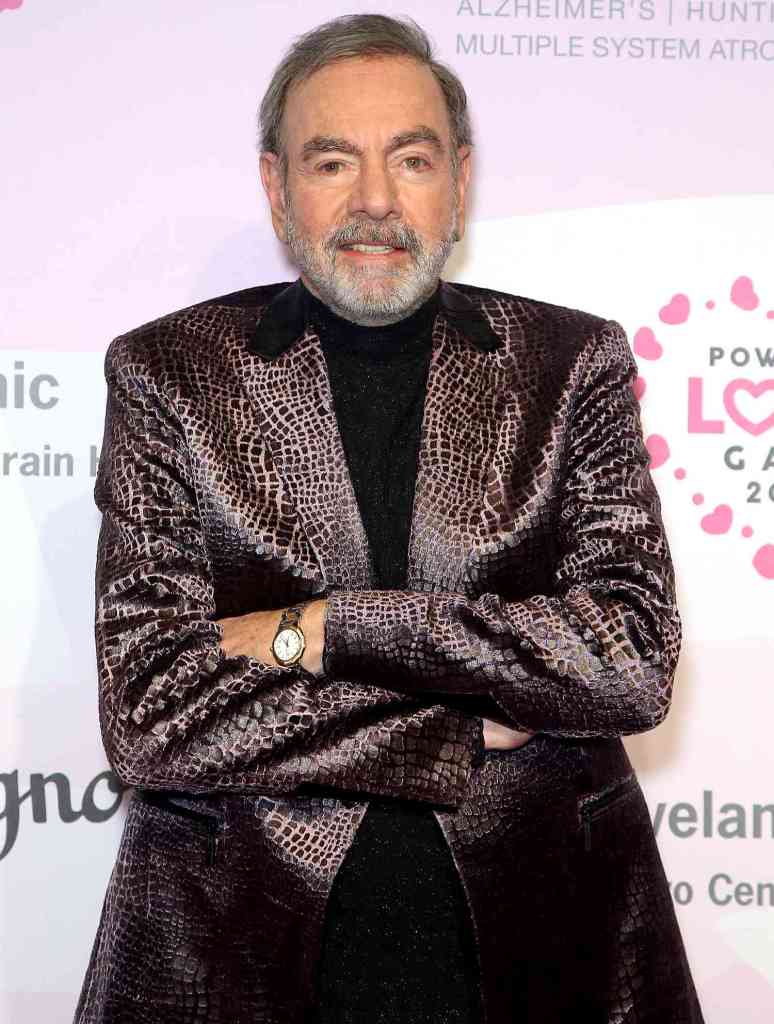
On July 8, 2014, Capitol Records announced, via a flyer included with Diamond’s latest greatest hits compilations, All-Time Greatest Hits, which charted at 15 in the Billboard 200, that his next album, Melody Road, which was to be produced by Don Was and Jacknife Lee, would be released on September 30, 2014. In August, the release date was moved to October 21.

In September 2014, Diamond performed a surprise concert at his alma mater, Erasmus High School in Brooklyn. The show was announced via Twitter that afternoon. On the same day, he announced a 2015 “Melody Road” World Tour.

 The North American leg of the World Tour 2015 launched with a concert in Allentown, PA at the PPL Center on February 27 and ended at the Pepsi Center in Denver, Colorado on May 31, 2015.

Diamond used new media platforms and social media extensively throughout the tour, streaming several shows live on Periscope and showing tweets from fans who used the hashtag #tweetcaroline on two large screens. The San Diego Union-Tribune wrote: “This, my friends, wasn’t your grandfather’s Neil Diamond concert. It was a multimedia extravaganza. Twitter. Periscope…It was a social media blitzkrieg that, by all accounts, proved to be an innovative way to widen his fan base.”

In October 2016, Diamond released Acoustic Christmas, a folk-inspired Christmas album of original songs as well as acoustic versions of holiday classics. Produced by Was and Lee, who had produced Melody Road, the idea for the album began to take shape as the Melody Road sessions ended. To “channel the intimate atmosphere of ’60s folk, Diamond recorded Acoustic Christmas with a handful of musicians, sitting around a circle of microphones, wires and, of course, Christmas lights.”

In March 2017, the career-spanning anthology Neil Diamond 50 – 50th Anniversary Collection was released. He began his final concert tour, the 50 Year Anniversary World Tour in Fresno, California, in April.[86][87]

In 2019, his 1969 signature song “Sweet Caroline” was selected by the Library of Congress for preservation in the National Recording Registry for being “culturally, historically, or aesthetically significant”.

2020s

On March 7, 2020, despite his retirement due to Parkinson’s disease, Diamond gave a rare performance at the Keep Memory Alive Power of Love Gala at the MGM Grand Garden Arena in Las Vegas, where he was being honored.

On March 22, 2020, Diamond posted a video to YouTube playing “Sweet Caroline” with slightly modified lyrics (“…washing hands, don’t touch me, I won’t touch you…”) in response to the widespread social distancing measures implemented due to the worldwide COVID-19 pandemic.

In April 2021, The New York Times reported that A Beautiful Noise, a musical based on Diamond’s life and featuring his songs, would open at the Emerson Colonial Theater in Boston in the summer of 2022. The musical was scheduled to open on Broadway following the month-long run in Boston.

Universal Music Group acquired Diamond’s songwriting catalog and the rights to his Bang Records, Columbia Records, and Capitol recordings in February 2022. The acquisition also included 110 unreleased tracks, an unreleased album and archival videos.

On June 18, 2022, Diamond sang “Sweet Caroline” during the 8th-inning stretch of a Red Sox game at Fenway Park. In a surprise appearance, he was joined by Will Swenson, who portrays Diamond in the musical A Beautiful Noise. 

Retirement from touring

In January 2018, Diamond announced that he would stop touring after he was diagnosed with Parkinson’s disease.Tour dates on the final leg of Diamond’s “50 Year Anniversary World Tour” in Australia and New Zealand were cancelled. An announcement on his official website said he was not retiring from music and that the cancellation of the live performances would allow him to “continue his writing, recording and development of new projects.”

On July 28, 2018, Diamond and his wife Katie McNeil made a surprise visit to the Incident Command post in Basalt, Colorado—near where Diamond lives—to thank the firefighters and families with a solo acoustic guitar concert for efforts in containing the Lake Christine Fire, which began on July 3 and had scorched 12,000 acres (4,900 ha; 49 km2) of land.

In popular culture

In 1967, Diamond was featured on the fourth episode of the detective drama Mannix as the ‘featured’ artist in a small underground club called ‘The Bad Scene’ and was interrupted during his singing by one of many fights that took place weekly on the show.

In 2000, Neil Diamond appeared onstage with a Diamond tribute band, Super Diamond, surprising them before their show at House of Blues in Los Angeles.

In the 2001 comedy film Saving Silverman, the main characters play in a Diamond cover band, and Diamond made an extended cameo appearance as himself. Diamond even wrote and composed a new song, “I Believe in Happy Endings”, for the film. He sat in with the tribute band Super Diamond at the film’s premiere party.

Personal life

Diamond has been married three times. In 1963, he married his high-school sweetheart, Jaye Posner, who had become a schoolteacher. They had two daughters. They separated in 1967 and divorced in 1969.

On December 5, 1969, Diamond married production assistant Marcia Murphey.They had two sons.The marriage lasted 25 years, ending in 1994 / 1995.

In 1996, Diamond began a relationship with Australian Rae Farley after the two met in BrisbaneAustralia. The songs on Home Before Dark were written and composed during her struggle with chronic back pain.

On September 7, 2011, in a message on Twitter, the 70-year-old Diamond announced his engagement to the 41-year-old Katie McNeil. Diamond said that his 2014 album Melody Road was fueled by their relationship, explaining:

There’s no better inspiration or motivation for work than being in love. It’s what you dream of as a creative person. I was able to complete this album—start it, write it and complete it—under the spell of love, and I think it shows somehow.

The couple married in front of family and close friends in Los Angeles in 2012.In addition to serving as Diamond’s manager, McNeil produced the documentary Neil Diamond: Hot August Nights NYC.

VERSION FRANÇAISE

Neil Diamond, né le 24 janvier 1941 à Brooklyn (New York), est un auteur-compositeur-interprète et acteur américain.

Sa musique couvre une pluralité de genres (pop, rock, folk, country, soft rock, easy listening). Très connu dans son pays, il est l’un des artistes ayant vendu le plus de disques avec des ventes estimées à 100 millions à travers le monde.

Biographie

Enfance

Il naît le 24 janvier 1941 à Brooklyn, de Rose (née Rapoport) et Akeeba « Kieve » Diamond, couple de descendants d’immigrés russes et polonais.

Carrière

En 1966 et 1967, il connaît le succès avec Solitary Man (repris par Johnny Cash en 2000) Cherry, CherryGirl, You’ll Be a Woman Soon, (repris par Urge Overkill dans la B.O. du film Pulp Fiction), Kentucky Woman (repris par Deep Purple), I’m a Believer écrite pour The Monkees (B.O. du film Shrek, titre également repris par Robert Wyatt) et Red Red Wine (repris par Tony Tribe et surtout UB40).

À partir de 1968, il signe pour MCA de nombreux tubes en quelques années : Sweet CarolineHolly HolyCracklin’ RosieI Am…I’SaidSong Sung BluePlay Me, titres repris entre autres par Elvis Presley, Frank Sinatra, Johnny Mathis, U2, Serge Lama ou Joe Dassin. Au Québec, en 1970, la chanson Holly Holy a été reprise par Donald Lautrec sous le titre Hosannah alors que l’année précédente Pierre Lalonde adapta en française Sweet Caroline sous le titre Caroline.

En 1971, il produit l’album généralement considéré comme le plus accompli : Stones, dans lequel il reprend des classiques de Leonard Cohen (Suzanne), Randy Newman (I Think It’s Going to Rain Today), Joni Mitchell (Chelsea Morning), Roger Miller (Husbands and Wives), ou encore Jacques Brel (If You Go Away), cette dernière Ne Me Quitte Pas en français, dans des arrangements de cordes majestueux avec un nouveau texte de Rod McKuen.

Il y a aussi trois chansons de Neil Diamond, Crunchy Granola SuiteI Am…I Said (celle-ci en deux parties) ou encore la pièce-titre, une de ses plus belles chansons. Les chefs d’orchestre et arrangeurs étaient Lee Holdridge, Marty Paich et Larry Muhoberac. La photo de couverture a été prise à Luxford House, Crowborough, East Sussex. La maison était occupée à l’époque par le manager de musique rock Tony Stratton-Smith (qui a l’époque travaillait avec Genesis entre autres).

Les premiers exemplaires de l’album vinyle comportaient une étiquette illustrée de la photo de la jaquette et une version unique de la couverture avec une fermeture de style œillet à l’arrière. La couverture elle-même était conçue comme une enveloppe qui s’ouvrait par le haut.

Cela a ensuite été abandonné et remplacé par une jaquette standard à ouverture latérale. Inspiré par l’expérience d’un test d’écran raté pour un film sur le comique rebelle Lenny Bruce, la chanson I Am… I Said s’est finalement avéré être la chanson la plus difficile et la plus longue que Neil ait jamais écrite.

Et même si “ça a pris quatre mois à chaque jour, toute la journée… C’était une bataille quotidienne pour mettre cette chanson sur papier… mais quand ça a été fait, ça s’est avéré être l’une des chansons les plus satisfaisantes que j’aie jamais écrites.”

En 1972, son double album Hot August Night reprend ses titres les plus marquants dans des versions live.

En 1973, Columbia Records, sa nouvelle maison de disques (avec laquelle il signe le plus important contrat discographique jamais conclu à cette époque) réalise la B.O du film Jonathan Livingston Seagull, inspiré du livre de Richard Bach, (l’album éponyme, Jonathan Livingston Seagull) dont Neil Diamond est l’auteur-compositeur-interprète et qui lui permettra d’obtenir un nouveau succès mondial ainsi qu’un Grammy Award.

L’album concept Beautiful Noise, sorti en 1976, est produit par Robbie Robertson. Neil Diamond repart en tournée aux États-Unis mais aussi en Europe et Australie. Dès lors, il entreprendra des tournées mondiales tous les deux ou trois ans.

Il participe au concert filmé de 1976 The Last Waltz, réalisé par Martin Scorsese, sur les adieux du groupe The Band, où l’on retrouve aussi Eric ClaptonJoni MitchellVan MorrisonRon WoodNeil YoungRingo Starr et Muddy Waters, entre autres. Une prétendue altercation qu’il aurait eue avec Bob Dylan ce soir-là n’est rapportée que par Ronnie Wood. Le film est sorti en DVD en 2002, de même qu’un coffret de 4 CD incluant le concert et des enregistrements en studio liés.

De 1977 à 1982, Neil dirige sa carrière vers les casinos de Las Vegas (où il se produit pour la première fois en 1976). Son répertoire s’enrichit de collaborations avec Gilbert Bécaud (September morn’ – C’est en septembre), Burt Bacharach (I’ll See You on the Radio (Laura)), Richard Bennett (Forever In Blue Jeans), David Foster (The Man you Need), Michel Legrand (If There Were no Dreams), Carole Bayer Sager (Heartlight) ou encore Stevie Wonder (Lost in Hollywood).

Ses disques rencontrent toujours le même succès grâce à des titres tels que DésiréeYou Don’t Bring me Flowers en duo avec Barbra Streisand et particulièrement avec Love on the RocksAmerica et Hello Again, trois chansons extraites de la B.O du film The Jazz Singer (sorti en 1980) dans lequel il joue le rôle principal.

Ce film n’obtiendra pas le succès attendu et lui vaudra le Razzie Award du pire Acteur en 1981. Pourtant l’album du même nom se placera au top des meilleures ventes aux États-Unis et dans le monde.

De 1983 à 2000, il enchaîne les disques (tous au moins disque d’or) les tournées et les shows télévisés. Il sort l’album Tennessee Moon (1996) réalisé avec des vedettes de la country dont Waylon Jennings. Pendant cette période, ses disques se vendent moins, pourtant ses concerts attirent de plus en plus de spectateurs.

Diamond a été intronisé au Songwriters Hall of Fame en 1984 et au Rock and Roll Hall of Fame.

En 2005, la critique est unanime pour louer son nouvel album 12 Songs réalisé par le producteur Rick Rubin. Ce disque acoustique est considéré comme sa meilleure production depuis les années 1970.

En 2008, son album Home Before Dark se place no 1 du billboard Américain et no 1 en Grande-Bretagne. Ce nouvel opus est suivi par une tournée mondiale de mai 2008 à janvier 2009. En juillet, sort le DVD Neil Diamond – The Thank You Australia Concert 1976. Un mois après, sort le DVD et double-disque Hot August Night/ NYC, enregistré en public au Madison Square Garden en 2008 lors de sa dernière tournée.

En novembre 2010, il sort un album de reprises intitulé Dreams et effectue une tournée dans plusieurs pays de mars à juillet 2011.

Le 14 mars 2011, il est reçu par Paul Simon au Rock and Roll Hall of Fame.

Le 6 décembre 2011, il sort un best of, annonce de deux concerts en février 2012 à Hawaii, et une tournée nord-américaine de juin à septembre 2012. Son dernier album à ce jour, Melody Road, est sorti en 2014.

Le 24 juin 2015, il donne un concert unique en France, au Zénith de Paris, son seul passage en France depuis 1978. Devant une salle comble, et à 74 ans, accompagné de son « Neil Diamond Band » (certains musiciens du groupe travaillant avec lui en tournée depuis 1978), il interprète ses plus grands succès durant un show de plus de deux heures.

En 2012, ses chiffres de vente s’élèvent à environ 125 millions de disques à travers le monde[réf. nécessaire].

En 2018, il reçoit un Grammy Lifetime Achievement Award.

En 2019, son titre Sweet Caroline (1969) a été sélectionné par la Bibliothèque du Congrès pour être conservé dans le Registre national des enregistrements en raison de son caractère « culturel, historique ou esthétique significatif ».

Vie privée

De 1963 à 1969, il est en couple avec Jayne Posner. De 1969 à 1995, il vit avec Marcia Murphey. Depuis 2012, il partage sa vie avec Katie McNeil, de vingt-neuf ans sa cadette.

Le 22 janvier 2018, il annonce être atteint de la maladie de Parkinson et annule sa tournée

Sources WIKIPEDIA

Sources Google

Sources Youtube.

Sources diverses / Several sources
A star is born (version 2018)


A Star Is Born ou Une étoile est née est un film musical américain coécrit, coproduit et réalisé par Bradley Cooper, sorti en 2018. Salué à la fois par le public et les critiques, le film et sa bande originale remportent plus d’une soixantaine de prix.

Il s’agit du quatrième remake du film Une étoile est née de William A. Wellman, sorti en 1937.

Jackson Maine (Bradley Cooper) se produit dans des concerts qui se vendent bien tout en ayant des acouphènes assez fréquents et des addictions à l’alcool et à la drogue qu’il cache au public. Son principal soutien et manager n’est autre que son demi-frère aîné Bobby (Sam Elliott) qui s’occupe de lui. Ally Campana (Lady Gaga) est une jeune autrice-compositrice qui travaille comme serveuse avec son ami Ramon (Anthony Ramos), tout en chantant dans un bar de drag queens. Après un concert au Coachella Festival, Jackson arrive dans ce même bar pour boire un verre et découvre Ally qui chante La Vie en rose. Impressionné par son talent, il partage un verre avec elle. Ally lui révèle qu’elle n’a jamais poursuivi de carrière professionnelle car les gens de l’industrie lui ont trop souvent dit qu’elle avait un nez trop grand et qu’elle n’arriverait jamais à rien. Jackson lui avoue trouver cela séduisant et lui propose d’écrire des chansons ensemble. Elle le ramène chez elle, où elle vit avec son père veuf, Lorenzo (Andrew Dice Clay), qui dirige un service de chauffeurs avec ses amis. Jackson demande à Ally de venir à son concert le soir même, mais elle refuse malgré l’insistance de Lorenzo. Elle change finalement d’avis et emmène Ramon avec elle. Jackson demande à Ally de chanter avec lui sur scène. Après hésitation, elle cède et finit par être adulée sur les réseaux sociaux grâce à son interprétation de Shallow.

Jackson et Ally partent sur les routes, chantent ensemble à plusieurs concerts et commencent à se lier. Après l’évanouissement de Jackson à cause de son alcoolisme, Bobby dit à Ally qu’elle doit être très prudente avec lui. Jackson emmène Ally en Arizona voir une ferme qu’il a achetée pour Bobby et où son père est enterré, mais découvre que Bobby a vendu le terrain et que le corps de leur père a été emporté dans une tornade. Furieux de sa trahison, Jackson frappe Bobby, qui décide de démissionner de son poste de manager.

À la fin d’un concert, Ally rencontre Rez (Rafi Gavron), un producteur qui lui propose un contrat après l’avoir entendu chanter Always Remember Us This Way. Malgré le fait qu’il soit visiblement contrarié, Jackson soutient sa décision et aide Ally à traverser les premières épreuves de sa notoriété. Pendant un de ces concerts, Rez réprimande Ally sur sa décision d’annuler le numéro de danse initialement prévu et lui suggère de se teindre les cheveux en blond platine, ce qu’elle refuse. Supposé venir au concert, Jackson, ivre, s’évanouit en centre ville et est aidé par Noodles (Dave Chappelle), un de ses amis d’enfance qui l’autorise à rester temporairement chez lui. Ally le rejoint et lui avoue avoir de plus en plus de mal à supporter ses addictions. Jackson lui fait alors sa demande en mariage en créant une bague avec un bout de corde de guitare, et ils se marient le jour même.

Pendant qu’Ally se produit dans l’émission Saturday Night Live, Bobby arrive et se réconcilie avec Jackson. Plus tard, Jackson exprime sa réprobation face à une des chansons d’Ally, qui perd en authenticité et se transforme petit à petit en produit commercial. La traitant de « laide », ils se disputent puis essaient rapidement de laisser le problème derrière eux. Sous l’emprise de l’alcool et des opiacés, Jackson se produit aux Grammy Awards avec un hommage à Roy Orbison. Ally gagne le Grammy de la meilleure nouvelle artiste. Pendant qu’elle prononce son discours, Jackson arrive sur scène au même moment mais s’humilie en s’urinant dessus et en perdant connaissance. Lorenzo emmène Jackson dans les coulisses, le réprimande et le met sous une douche pour le faire dessoûler. À la suite de cet incident, Jackson part en cure de désintoxication.

Ally lui rend visite et Jackson s’excuse pour son comportement. Avant le retour de Jackson chez lui à la fin de sa cure, Ally propose à Rez de faire une tournée commune avec son mari, désormais sobre et remis sur pied. Mais le manager refuse catégoriquement. Hors d’elle, Ally lui dit qu’elle préfère annuler la tournée. Rez se rend à leur domicile et dit en privé à Jackson qu’il finira par replonger tôt ou tard et qu’il pourrait ruiner la carrière d’Ally à cause de ses addictions, mais qu’elle n’osera jamais lui dire. Celle-ci ment à Jackson et lui explique qu’elle a annulé sa tournée européenne pour enregistrer son deuxième album. Lorsqu’elle part pour son dernier show, elle lui demande de la rejoindre sur scène pour chanter ensemble. Il accepte. Mais après le départ d’Ally, Jackson prend des pilules et se suicide en se pendant, comme il avait tenté de le faire durant sa jeunesse.

Ally demeure inconsolable malgré les efforts de Lorenzo et de Ramon pour l’aider. Bobby lui explique que la mort de Jackson n’est pas sa faute mais celle de Jackson lui-même. Elle s’approprie une chanson que Jackson avait écrite mais jamais présentée en public, I’ll Never Love Again, et décide de la chanter à une cérémonie de commémoration, au Shrine Auditorium, où elle se présente elle-même comme Ally Maine. Elle se remémore le moment où Jackson la lui avait présentée chez eux et regarde vers le haut, une larme à l’œil.

LES VERSIONS DE ” A STAR IS BORN”

A star is born  (William Wellman, 1937)

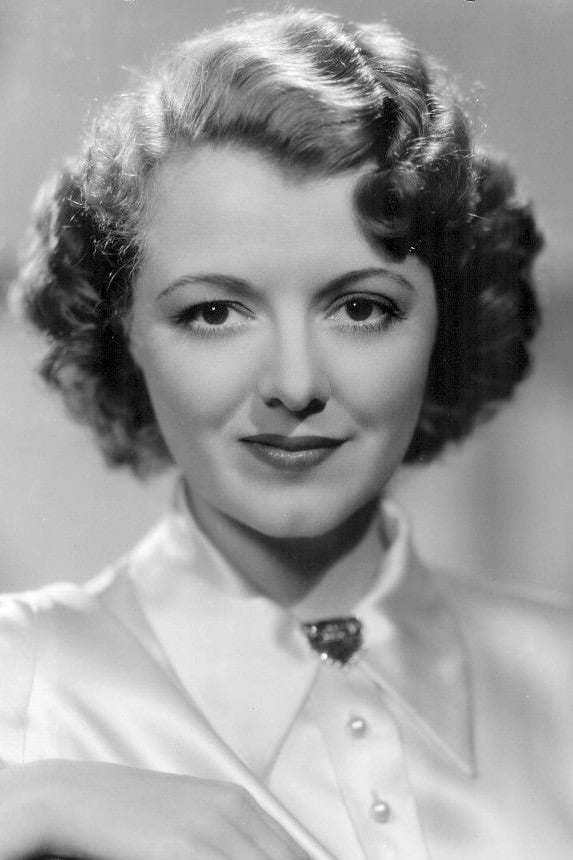
Avec : Janet Gaynor et Fredric March.

A star is born (George Cukor, 1954)

Avec : Judy Garland ( Rappel : Judy Garland étant la mère de liza Minelli ) et James Mason.

A star is born (Frank Pierson, 1976)

Avec : Barbra Streisand et Kris Kristofferson

BRADLEY COOPER SPEAKING FRENCH / BRADLEY COOPER PARLANT EN FRANCAIS

Sources Wikipedia / Youtube / Divers

Ryan O’Neil


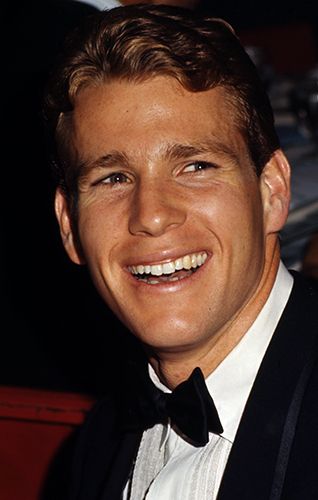
Charles Patrick Ryan O’Neal (born April 20, 1941) is an American actor and former boxer. O’Neal trained as an amateur boxer before beginning his career in acting in 1960.

Ryan O neal

Ryan O neal

In 1964, he landed the role of Rodney Harrington on the ABC nighttime soap opera Peyton Place. The series was an instant hit and boosted O’Neal’s career. He later found success in films, most notably Love Story (1970), for which he received Academy Award and Golden Globe nominations as Best Actor, What’s Up, Doc? (1972), Paper Moon (1973), Stanley Kubrick‘s Barry Lyndon (1975), and A Bridge Too Far (1977). He had a recurring role in the TV series Bones as Max, the father of the series’ protagonist.

O’Neal was born in Los Angeles, California, the eldest son of actress Patricia Ruth Olga (née Callaghan; 1907–2003) and novelist and screenwriter Charles O’Neal.

His father was of English and Irish descent, while his mother was of paternal Irish and maternal Ashkenazi Jewish ancestry.

His brother, Kevin, is an actor and screenwriter.

Ryan O neal in Peyton Place

Ryan O neal in Peyton Place

O’Neal attended University High School in Los Angeles, and trained there to become a Golden Gloves boxer. During the late 1950s, his father had a job writing on a television series called Citizen Soldier, and moved the family to Munich, where O’Neal attended Munich American High School.


O’Neal appeared in guest roles on series that included The Many Loves of Dobie Gillis, Leave It to Beaver, Bachelor Father, Westinghouse Playhouse, Perry Mason and Wagon Train.

From 1962 to 1963, he was a regular on NBC’s Empire, another modern day western, where he played “Tal Garrett”. Also, was in an episode of My Three Sons as Chug Williams in 1962.


In 1964 he was cast as Rodney Harrington in the prime time serial drama Peyton Place. The series was a big success, making national names of its cast including O’Neal. Several were offered movie roles, including Mia Farrow and Barbara Parkins.


Eventually O’Neal was cast in the lead of The Big Bounce (1969), based on an Elmore Leonard novel. Then he played an Olympic athlete in The Games (1970). Neither film was particularly successful.

The Games had been co written by Erich Segal, who recommended O’Neal for the lead in Love Story, based on Segal’s novel and script.

A number of actors had turned down the role including Beau Bridges and Jon Voight before it was offered to O’Neal. His fee was $25,000; he had an offer that paid five times as much to appear in a Jerry Lewis film but O’Neal knew that Love Story was the better prospect and selected that instead.

“I hope the young people like it,” he said before the film came out. “I don’t want to go back to TV. I don’t want to go back to those NAB conventions.”


In between the film’s production and release. O’Neal appeared in a TV movie written by Eric Ambler, Love Hate Love, which received good ratings. He also made a Western, Wild Rovers with William Holden for director Blake Edwards.


Love Story turned out to be a box office phenomenon. It made O’Neal a star and earned him a nomination for an Academy Award for Best Actor (although O’Neal was bitter he was never given a percentage of the profits, unlike co-star Ali MacGraw).


Wild Rovers, badly cut by MGM, was considerably less popular, yet O’Neal was going to make another film for MGM, Deadly Honeymoon from a novel by Larry Block.

However, O’Neal pulled out – Peter Bogdanovich later said MGM head Jim Aubrey was “cruel” to O’Neal.

(The film became Nightmare Honeymoon.) He was also wanted by director Nic Roeg to appear opposite Julie Christie in an adaptation of Out of Africa that was never made.


Instead O’Neal starred in What’s Up Doc? (1972) for Bogdanovich opposite Barbra Streisand. This was the third-highest-grossing film of 1972 and led to him receiving an offer to star in a movie for Stanley Kubrick, Barry Lyndon.

While that was in pre production, O’Neal played a jewel thief in The Thief Who Came to Dinner (1972) opposite Jacqueline Bisset and Warren Oates. Then he was reunited with Bogdanovich for Paper Moon (1973) in which he starred opposite his daughter Tatum O’Neal. Tatum won an Oscar for her performance in a very popular movie and in 1973, Ryan O’Neal was voted by exhibitors as the second most popular star in the country, behind Clint Eastwood.

O’Neal spent over a year making Barry Lyndon (1975) for Kubrick.

The resulting film was considered a commercial disappointment and had a mixed critical reception; it won O’Neal a Harvard Lampoon Award for the Worst Actor of 1975. Its reputation has risen in recent years but O’Neal says his career never recovered from the film’s reception.

“Oh it’s all right but he [Kubrick] completely changed the picture during the year he spent editing it,” said O’Neal.

O’Neal had been originally meant to star in Bogdanovich’s At Long Last Love but was replaced by Burt Reynolds. He made Nickelodeon (1976) with Reynolds, Bogdanovich and Tatum O’Neal, for a fee of $750,000. The film flopped at the box office.


He followed this with a small role in the all-star war film A Bridge Too Far (1977), playing General James Gavin. O’Neal’s performance as a hardened general was much criticised, although O’Neal was only a year older than Gavin at the time of the events in the film.

“Can I help it if I photograph like I’m 16 and they gave me a helmet that was too big for my head?” he later said. “At least I did my own parachute jump.”

The film performed poorly at the US box office but did well in Europe.

O’Neal initially turned down a reported $3 million to star in Oliver’s Story (1978), a sequel to Love Story.

Instead he appeared in the car-chase film The Driver (1978), directed by Walter Hill, who had written The Thief Who Came to Dinner.

This was a box office disappointment in the US but, like A Bridge Too Far, did better overseas. Hill later said he “was so pleased with Ryan in the movie and I was very disappointed that people didn’t particularly give him any credit for what he did. To me, he’s the best he’s ever been. I cannot imagine another actor.”

O’Neal was meant to follow this with The Champ (1979), directed by Franco Zeffirelli, but decided to pull out after Zeffirelli refused to cast O’Neal’s son Griffin opposite him.[13] Instead he agreed to make Oliver’s Story after all once the script was rewritten.

However the film was a flop at the box office.


“What I have to do now, seriously, is win a few hearts as an actor,” he said in 1978. “The way Cary Grant did. I know I’ve got a lot of winning to do. But I’m young enough. I’ll get there…”


Around this time, O’Neal was meant to star in The Bodyguard, from a Lawrence Kasdan script, opposite Diana Ross for director John Boorman. However the film fell over when Ross pulled out, and it would not be made until 1992, with Kevin Costner in O’Neal’s old role.

There was some talk he would appear in a film from Michelangelo Antonioni, Suffer or Die, but this did not eventuate.


O’Neal instead played a boxer in a comedy, The Main Event, reuniting him with Streisand. He received a fee of $1 million plus a percentage of the profits. The Main Event was a sizeable hit at the box office.


A 1980 profile of O’Neal described him:


“           Unlike most stars of the post-Hoffman era he is very handsome, especially when moustached: he has blond curly hair and a toothpaste smile: he seems to lead an interesting life.

Maybe he would really come on if he had the apprenticeship of the stars of the 30s: for he is, to underline the point, a throwback to that era. There are no nervous tics, solemnity is at bag; his is an easy, genial presence, and thank heaven for it!      ”

O’Neal was looking to follow it as the lead in the film version of The Thorn Birds to be directed by Arthur Hiller but the book ended up being adapted as a mini series.

Instead O’Neal made a British-financed thriller, Green Ice (1981), for the most money he had ever received up front.

The movie had a troublesome production (the original director quit during filming) and flopped at the box office.

Ryan O Neal and Farah Fawcett

Ryan O Neal and Farah Fawcett

He had a cameo in Circle of Two, a film his daughter made with Richard Burton.

O’Neal says Burton told him during filming he was “five years away from winning acceptance as a serious actor. On the other hand, my agent, Sue Mengers says I’m right on the threshold. Split the difference, that’s two and a half years. One good picture, that’s all I need…”


However, in the early 80s he focused on comedies. He received $2 million for the lead in So Fine.

This was followed by Partners (1982), a farce written by Francis Veber in which O’Neal played a straight cop who goes undercover as one half of a gay couple.

He then played a film director loosely based on Peter Bogdanovich in Irreconcilable Differences (1984); he received no upfront fee but got a percentage of the profits.

It was a minor box office success.


A 1984 profile called him “the Billy Martin of Hollywood, whether it’s his love affair with Farrah Fawcett… his precocious actor daughter Tatum or fisticuffs with his son Griffin. He just can’t seem to stay out of the news.” O’Neal said he felt more like Rocky Marciano, “wondering why guys are always picking fights with me. If I’m in a good picture, they’ll like me. If I’m not they’ll hate me. Hey I’m mad too when I don’t make good pictures.”


O’Neal said too many of the roles he had played were “off the beaten path for me”.[6] In particular he regretted doing The Thief Who Came to Dinner, A Bridge Too Far, The Driver, So Fine, Partners and Green Ice.

He blamed this in part on having to pay alimony and child support. He also said agent Sue Mengers encouraged him to constantly work.


“If I could get a good director to choose me for a picture, I was okay,” he said. “But they stopped calling me in the mid-70s… I made a whole bunch of pictures that didn’t make any money and people lost interest in me… Directors take me reluctantly. I feel I’m lucky to be here in the first place and they know it too. I’m a glamour boy, a Hollywood product. I have a TV background and they can point to the silly movies I’ve made.”


He tried something different playing a gambler in Fever Pitch (1985), the last movie for Richard Brooks. Even less conventional was Tough Guys Don’t Dance (1987) for director Norman Mailer. Both movies flopped at the box office.


O’Neal had a good supporting role in the romantic comedy Chances Are (1989). He returned to TV opposite his then-partner Farrah Fawcett in Small Sacrifices (1989).


He and Fawcett made a short-lived CBS series Good Sports (1991).


He had a good role in Faithful (1996) with Cher. It was directed by Paul Mazursky who later said of O’Neal:


He’s sweet as sugar, and he’s volatile. He’s got some of that Irish stuff in him, and he can blow up a bit. One day he was doing a scene, and I said, ‘Bring it down a little bit,’ and Ryan said, ‘I quit! You can’t say “Bring it down” to me that loud!’ I said, ‘If you quit, I’m going to break your nose.’ He started to cry. He’s sort of a big baby at times, but he’s a good guy, and he’s very talented. He’s had a strange career, but he was a monster star.


He is a recurring character on Fox’s Bones (2007–2017; died in the hospital after a shootout saving his grandchildren).


In 2011, Ryan and Tatum attempted to restore their broken father/daughter relationship after 25 years. Their reunion and reconciliation process was captured in the Oprah Winfrey Network series, Ryan and Tatum: The O’Neals.


In 2016, O’Neal reunited with Love Story co-star Ali MacGraw in a staging of A.R. Gurney’s play Love Letters.

Ryan O neal and Ali Mac Graw

Ryan O neal and Ali Mac Graw


O’Neal said that in 2009 he “made a tremendous amount of money on real estate, more than [he] deserve[s]”.


O’Neal was in a long-term relationship with actress Farrah Fawcett from 1979 until 1997.

They then reunited in 2001 and were together until her death in 2009.

He was previously married to actresses Joanna Moore and Leigh Taylor-Young; both marriages ended in divorce.

He has four children: Tatum O’Neal and Griffin O’Neal (with Moore), Patrick O’Neal (with Taylor-Young), and Redmond James Fawcett O’Neal (with Fawcett).


“I got married at 20, and I was not a real mature 20,” said O’Neal. “My first child was born when I was 21. I was a man’s man; I didn’t discover women until I was married, and then it was too late.”

O’Neal had custody of Tatum and Griffin due to his first wife’s drug and alcohol issues. He had romances with Ursula Andress, Bianca Jagger, Anouk Aimee, Jacqueline Bisset, Barbra Streisand, Diana Ross, and Anjelica Huston.

For several years, O’Neal was estranged from his elder three children. However, in 2011, Tatum reconciled with her father with a book and a television show. On August 4, O’Neal, Tatum, and Patrick attended Redmond’s court appearance on firearms and drug charges.

Ryan Oneal

Ryan Oneal

In 2001, O’Neal was diagnosed with chronic myelogenous leukemia (CML). After struggling with leukemia, O’Neal was frequently seen at Fawcett’s side when she was battling cancer.

He told People magazine, “It’s a love story. I just don’t know how to play this one. I won’t know this world without her. Cancer is an insidious enemy.” In April 2012, O’Neal revealed he had been diagnosed with stage IV prostate cancer. He reported that it had been detected early enough to give a prognosis of full recovery.


Also : https://radiosatellite.co/2018/01/14/ali-mac-graw


Sources : Wikipedia / YouTube
BARBRA STREISAND


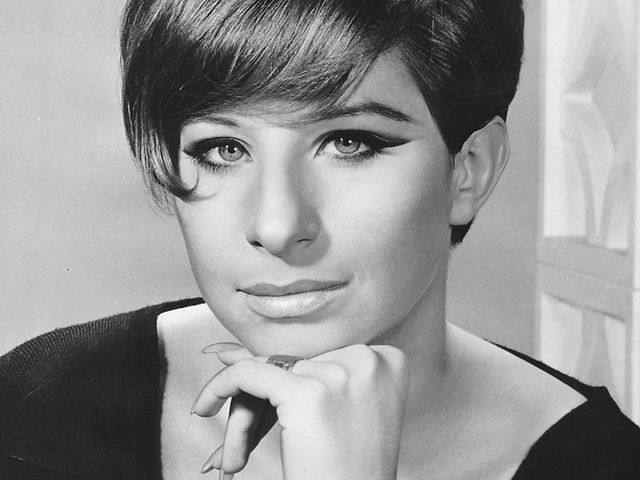
Barbara Joan “Barbra” Streisand born April 24, 1942 is an American singer, songwriter, actress, and filmmaker.

Her career spanning six decades, she has become an icon in multiple fields of entertainment, and has been recognized with two Academy Awards, ten Grammy Awards including the Grammy Lifetime Achievement Award and the Grammy Legend Award, five Emmy Awards including one Daytime Emmy, a Special Tony Award, an American Film Institute award, a Kennedy Center Honors prize, four Peabody Awards, the Presidential Medal of Freedom, and nine Golden Globes.


She is among a small group of entertainers who have been honored with an Emmy, Grammy, Oscar, and Tony Award, and is one of only two artists who have also won a Peabody.

barbra-streisand

Barbra Streisand

Streisand is one of the best-selling music artists of all time, with more than 68.5 million albums in the United States and with a total of 145 million records sold worldwide, (The only female in the top ten, and the only artist outside of the rock ‘n’ roll genre.) making her the best-selling female artist among the top-selling artists recognized by the Recording Industry Association of America


After beginning a successful recording career in the 1960s, Streisand ventured into film by the end of that decade. She starred in the critically acclaimed Funny Girl, for which she won the Academy Award and Golden Globe Award for Best Actress.

Her other films include The Owl and the Pussycat, The Way We Were, and A Star Is Born, for which she received her second Academy Award, composing music for the love theme “Evergreen”, the first woman to be honored as a composer.

With the release of Yentl in 1983, Streisand became the first woman to write, produce, direct, and star in a major studio film.

The film won an Oscar for Best Score and a Golden Globe for Best Motion Picture Musical; Streisand received the Golden Globe Award for Best Director, the first (and to date only) woman to win that award.


The RIAA and Billboard recognize Streisand as holding the record for the most top 10 albums of any female recording artist: a total of 34 since 1963. According to Billboard, Streisand holds the record for the female with the most number one albums .


Billboard also recognizes Streisand as the greatest female of all time on its Billboard 200 chart and one of the greatest artists of all time on its Hot 100 chart.

Streisand is the only recording artist to have a number-one album in each of the last six decades, having released 53 gold albums, 31 platinum albums, and 14 multi-platinum albums in the United States.


barbara-streisand3

Barbra streisand ( barbara)


Family


Barbara Joan Streisand was born on April 24, 1942, in Brooklyn, New York, the daughter of Diana (born Ida Rosen) and Emanuel Streisand. Her mother had been a soprano singer in her youth and considered a career in music, but later became a school secretary.

Her father was a high school teacher at the same school, where they first met. Her paternal grandparents emigrated from Galicia (Poland–Ukraine) and her maternal grandparents from the Russian Empire, where her grandfather had been a cantor.


Her father earned a master’s degree from City College of New York in 1928 and was considered athletic and handsome. As a student, he spent his summers outdoors, once working as a lifeguard and another hitchhiking through Canada. “He’d try anything,” his sister Molly said. “He wasn’t afraid of anything.” He married Ida in 1930, two years after graduating, and became a highly respected educator with a focus on helping underprivileged and delinquent youth.


In August 1943, a few months after Streisand’s first birthday, her father died suddenly at age 34 from complications from an epileptic seizure, possibly the result of a head injury years earlier.

The family fell into near-poverty, with her mother working as a low-paid bookkeeper.

As an adult, Streisand remembered those early years as always feeling like an “outcast,” explaining, “Everybody else’s father came home from work at the end of the day. Mine didn’t.”

Her mother tried to pay their bills but could not give her daughter the attention she craved: “When I wanted love from my mother, she gave me food,” Streisand says.

bs8

Barbra Streisand the 70s


Streisand recalls that her mother had a “great voice” and sang semi-professionally on occasion, in her operatic soprano voice. During a visit to the Catskills when Streisand was thirteen, she told Rosie O’Donnell, she and her mother recorded some songs on tape. That session was the first time Streisand ever asserted herself as an artist, which also became her “first moment of inspiration” as an artist.


She has an older brother, Sheldon, and a half-sister, the singer Roslyn Kind, from her mother’s remarriage to Louis Kind in 1949. Roslyn is nine years younger than Streisand.


Education


Streisand began her education at the Jewish Orthodox Yeshiva of Brooklyn when she was five. There, she was considered to be bright and extremely inquisitive about everything; however, she lacked discipline, often shouting answers to questions out of turn.

She next entered Public School 89 in Brooklyn, and during those early school years began watching television and going to movies. Watching the glamorous stars on the screen, she was soon entranced by acting and now hoped someday to become an actress, partly as a means of escape: “I always wanted to be somebody, to be famous . . .You know, get out of Brooklyn.


Streisand became known by others in the neighborhood for her voice. With the other kids she remembers sitting on the stoop in front of their flat and singing: “I was considered the girl on the block with the good voice.” That talent became a way for her to gain attention. She would often practice her singing in the hallway of her apartment building which gave her voice an echoing quality.


She made her singing debut at a PTA assembly, where she became a hit to everyone but her mother, who was mostly critical of her daughter. Young Streisand was invited to sing at weddings and summer camp, along with having an unsuccessful audition at MGM records when she was nine. By the time she was thirteen, her mother began supporting her talent, helping her make a four-song demo tape, including “Zing! Went the Strings of My Heart,” and “You’ll Never Know.”


Although she knew her voice was good and she liked the attention, becoming an actress was her main objective. That desire was made stronger when she saw her first Broadway play, The Diary of Anne Frank, when she was fourteen. The star in the play was Susan Strasberg, whose acting she wanted to emulate if ever given the chance.

To help achieve that goal, Streisand began spending her spare time in the library, studying the biographies of various stage actresses such as Eleanora Duse and Sarah Bernhardt. In addition, she began reading novels and plays, including some by Shakespeare and Ibsen, and also on her own, studied the acting theories of Konstantin Stanislavski and Michael Chekhov.


She attended Erasmus Hall High School in Brooklyn in 1955 where she became an honor student in modern history, English, and Spanish. She also joined the Freshman Chorus and Choral Club, where she sang with another choir member and classmate, Neil Diamond.

Diamond recalls, “We were two poor kids in Brooklyn. We hung out in the front of Erasmus High and smoked cigarettes.” The school was near an art-movie house, and he recalls that she was always aware of the films they were showing, while he wasn’t as interested.


During the summer of 1957 she got her first stage experience as a walk-on at the Playhouse in Malden Bridge, New York. That small part was followed by a role as the kid sister in Picnic and one as a vamp in Desk Set.


She returned to school in Brooklyn but never took dramatic arts classes, preferring instead to gain some real-world stage experience. To that end, in her sophomore year, she took a night job at the Cherry Lane Theater in Greenwich Village helping backstage. When she was a senior, she rehearsed for a small part in Driftwood, a play staged in a midtown attic space.

Her co-star in Driftwood was Joan Rivers.


At age sixteen, she graduated from Erasmus Hall in January 1959, and despite her mother’s pleas that she stay out of show business, she immediately set out trying to get roles on the New York City stage.

After renting a small apartment on 48th street, in the heart of the theater district, she accepted any job she could involving the stage, and at every opportunity, she “made the rounds” of the casting offices.


Career beginnings


At sixteen, then living on her own, Streisand’s youth and ambition worked in her favor, but she lacked a mature woman’s physical features which were needed for serious female roles. She therefore took various menial jobs to have some income.

At one period, she lacked a permanent address, and found herself sleeping at the home of friends or anywhere else she could set up the army cot she carried around to save on rent expense. When desperate, she would return to her mother’s flat in Brooklyn for a home-cooked meal.

However, her mother would be horrified by her daughter’s “gypsy-like lifestyle,” wrote biographer Karen Swenson, and again begged her to give up trying to get into show business;

but Streisand took her mother’s pleadings as even more reason to keep trying: “My desires were strengthened by wanting to prove to my mother that I could be a star.”


She took a job as an usher at the Lunt-Fontanne Theater for The Sound of Music, early in 1960. During the run of the play, she heard that the casting director was auditioning for more singers, and it marked the first time she sang in pursuit of a job.

Although the director felt she was not right for the part, he encouraged her to begin including her talent as a singer on her résumé when looking for other work.

That suggestion prodded Streisand to think seriously about a singing career, in addition to acting. She asked her boyfriend, Barry Dennen, to tape her singing, copies of which she could then give out to possible employers. Dennen had acted with her briefly in an off-Broadway play, but had no reason to think she had any talent as a singer, and she never mentioned it. Nevertheless, he agreed and found a guitarist to accompany her:


We spent the afternoon taping, and the moment I heard the first playback I went insane. . . . This nutty little kook had one of the most breathtaking voices I’d ever heard . . . when she was finished and I turned off the machine, I needed a long moment before I dared look up at her.


Dennen grew enthusiastic and he convinced her to enter a talent contest at the Lion, a gay nightclub in Manhattan’s Greenwich Village. She performed two songs, after which there was a “stunned silence” from the audience, followed by “thunderous applause” when she was pronounced the winner.

She was invited back and sang at the club for several weeks.

It was during this time that she dropped the second “a” from her first name, switching from “Barbara” to “Barbra”, due to her dislike of her original name.


Nightclub shows and Broadway stage


Streisand was next asked to audition at the Bon Soir nightclub, after which she was signed up at $125 a week. It became her first professional engagement, in September 1960, where she was the opening act for comedian Phyllis Diller. She recalls it was the first time she had been in that kind of upper-scale environment: “I’d never been in a nightclub until I sang in one.”


Dennen now wanted to expose Streisand to his vast record collection of female singers, including Billie Holiday, Mabel Mercer, Ethel Waters, and Édith Piaf. His effort made a difference in her developing style, as she gained new respect for the art of popular singing. She also realized that she could still become an actress by first gaining recognition as a singer.

According to biographer Christopher Nickens, hearing other great female singers benefited her style, as she began creating different emotional characters when performing, which gave her singing a greater range.

This range allowed her to sing with a dramatic voice or a lighthearted, and playful one. Feeling more self-confident, she improved her stage presence when speaking to the audience between songs. She discovered that her Brooklyn-bred style of humor was received quite favorably.

During the next six months appearing at the club, some began comparing her singing voice to famous names such as Judy Garland, Lena Horne and Fanny Brice. Her conversational ability to charm an audience with spontaneous humor during performances became more sophisticated and professional.

Theater critic Leonard Harris, in one of his reviews, could already envision her future success: “She’s twenty; by the time she’s thirty she will have rewritten the record books.”

Streisand, however, never lost her desire to be a stage actress, and accepted her first role on the New York stage in Another Evening with Harry Stoones, a satirical comedy play in which she acted and sang two solos. The show received terrible reviews and closed the next day.

With the help of her new personal manager, Martin Erlichman, she had successful shows in Detroit and St. Louis.

Erlichman then booked her at an even more upscale nightclub in Manhattan, the Blue Angel, where she became an even bigger hit during the period of 1961 to 1962. Streisand once told Jimmy Fallon, whom she sang a duet with, on the Tonight Show, that Erlichman was a “fantastic manager” and still managed her career after 50 years.


While appearing at the Blue Angel, theater director and playwright Arthur Laurents asked her to audition for a new musical comedy he was directing, I Can Get It for You Wholesale. She got the part of secretary to the lead actor businessman, played by then unknown Elliott Gould.

They fell in love during rehearsals and eventually moved into a small apartment together above a seafood restaurant on Third Avenue. The show opened on March 22, 1962, at the Shubert Theater, and received rave reviews. Her performance “stopped the show cold,” writes Nickens, and she became Broadway’s most exciting and youngest new star.

Groucho Marx, while hosting the Tonight Show, told her that twenty was an “extremely young age to be a success on Broadway.”

Streisand received a Tony nomination and a New York Drama Critic’s prize for Best Supporting Actress.

The show was recorded and it was the first time the public could purchase an album of her singing.


https://www.youtube.com/watch?v=78Ruh0ewBVo


Television appearances, marriage, and first albums


Streisand’s first television appearance was on The Tonight Show, then credited to its usual host Jack Paar. She was seen during an April 1961 episode on which Orson Bean substituted for Paar. She sang Harold Arlen’s “A Sleepin’ Bee”.

During her appearance, Phyllis Diller, also a guest on the show, called her “one of the great singing talents in the world.”


Later in 1961, before she was cast in Another Evening With Harry Stoones, she became a semi-regular on PM East/PM West, a talk/variety series hosted by Mike Wallace and Joyce Davidson.


Her appearance with Orson Bean and his other guest Phyllis Diller on The Tonight Show was preserved by kinescope and has been viewed online by many people who were not alive in 1961. None of the video of Streisand on PM East/PM West was preserved for posterity.


In May 1962, Streisand appeared on The Garry Moore Show, where she sang “Happy Days Are Here Again” for the first time. Her sad, slow version of the 1930s upbeat Democratic Party theme song became her signature song during this early phase of her career.


Johnny Carson had her on the Tonight Show half a dozen times in 1962 and 1963, and she became a favorite of his television audience and himself personally. He described her as an “exciting new singer.”

During one show she joked with Groucho Marx, who liked her style of humor.


In December 1962 she made the first of a number of appearances on the Ed Sullivan Show, was later a cohost on the Mike Douglas Show, and made an impact on a number of Bob Hope specials. Performing with her on the Ed Sullivan Show was Liberace who became an instant fan of the young singer. Liberace invited her to Las Vegas, Nevada to perform as his opening act at the Riviera Hotel.


Liberace is credited with introducing Barbara to Western American audiences.

The following September, during her ongoing shows at Harrah’s Hotel in Lake Tahoe, she and Elliott Gould took time off to get married in Carson City, Nevada. With her career and popularity rising so quickly, she saw her marriage to Gould as a “stabilizing influence.”


Her first album, The Barbra Streisand Album in early 1963, made the top 10 on the Billboard chart and won three Grammy Awards.

The album made her the best-selling female vocalist in the country.

That summer she also released The Second Barbra Streisand Album, which established her as the “most exciting new personality since Elvis Presley.”

She ended that breakthrough year of 1963 by performing one-night concerts in Indianapolis, San Jose, Chicago, Sacramento, and Los Angeles.


Streisand returned to Broadway in 1964 with an acclaimed performance as entertainer Fanny Brice in Funny Girl at the Winter Garden Theatre. The show introduced two of her signature songs, “People” and “Don’t Rain on My Parade.”

Because of the play’s overnight success, she appeared on the cover of Time. In 1964 Streisand was nominated for a Tony Award for Best Actress in a Musical but lost to Carol Channing in Hello, Dolly! Streisand received an honorary “Star of the Decade” Tony Award in 1970.


In 1966, she repeated her success with Funny Girl in London’s West End at the Prince of Wales Theatre. From 1965 to 1967 she appeared in her first four solo television specials.


Career


Singing


Streisand has recorded 50 studio albums, almost all with Columbia Records.

Her early works in the 1960s (her debut The Barbra Streisand Album, The Second Barbra Streisand Album, The Third Album, My Name Is Barbra, etc.) are considered classic renditions of theatre and cabaret standards, including her pensive version of the normally uptempo “Happy Days Are Here Again”.

She performed this in a duet with Judy Garland on The Judy Garland Show. Garland referred to her on the air as one of the last great belters. They also sang “There’s No Business Like Show Business” with Ethel Merman joining them.


Beginning with My Name Is Barbra, her early albums were often medley-filled keepsakes of her television specials. Starting in 1969, she began attempting more contemporary material, but like many talented singers of the day, she found herself out of her element with rock.

Her vocal talents prevailed, and she gained newfound success with the pop and ballad-oriented Richard Perry-produced album Stoney End in 1971. The title track, written by Laura Nyro, was a major hit for Streisand.


During the 1970s, she was also highly prominent on the pop charts, with Top 10 recordings such as “The Way We Were” (US No. 1),

“Evergreen (Love Theme from A Star Is Born)” (US No. 1),

“No More Tears (Enough Is Enough)” (1979, with Donna Summer), which as of 2010 is reportedly still the most commercially successful duet, (US No. 1),

“You Don’t Bring Me Flowers” (with Neil Diamond) (US No. 1)

and “The Main Event” (US No. 3), some of which came from soundtrack recordings of her films.

As the 1970s ended, Streisand was named the most successful female singer in the U.S. — only Elvis Presley and The Beatles had sold more albums.

In 1980, she released her best-selling effort to date, the Barry Gibb-produced Guilty. The album contained the hits “Woman in Love” (which spent several weeks on top of the pop charts in the fall of 1980), “Guilty”, and “What Kind of Fool”.


After years of largely ignoring Broadway and traditional pop music in favor of more contemporary material, Streisand returned to her musical-theatre roots with 1985’s The Broadway Album, which was unexpectedly successful, holding the coveted No. 1 Billboard position for three straight weeks, and being certified quadruple platinum.


The album featured tunes by Rodgers and Hammerstein, George Gershwin, Jerome Kern, and Stephen Sondheim, who was persuaded to rework some of his songs especially for this recording.

The Broadway Album was met with acclaim, including a Grammy nomination for album of the year and, ultimately, handed Streisand her eighth Grammy as Best Female Vocalist.

After releasing the live album One Voice in 1986, Streisand was set to release another album of Broadway songs in 1988.

She recorded several cuts for the album under the direction of Rupert Holmes, including “On My Own” (from Les Misérables),

a medley of “How Are Things in Glocca Morra?”

and “Heather on the Hill” (from Finian’s Rainbow and Brigadoon, respectively),

“All I Ask of You” (from The Phantom of the Opera), “Warm All Over” (from The Most Happy Fella) and an unusual solo version of “Make Our Garden Grow” (from Candide).

Streisand was not happy with the direction of the project and it was ultimately scrapped.

Only “Warm All Over” and a reworked, lite FM-friendly version of “All I Ask of You” were ever released, the latter appearing on Streisand’s 1988 effort, Till I Loved You.

At the beginning of the 1990s, Streisand started focusing on her film directorial efforts and became almost inactive in the recording studio. In 1991, a four-disc box set, Just for the Record, was released.

A compilation spanning Streisand’s entire career to date, it featured over 70 tracks of live performances, greatest hits, rarities and previously unreleased material.


The following year, Streisand’s concert fundraising events helped propel former Pres. Bill Clinton into the spotlight and into office.

Streisand later introduced Clinton at his inauguration in 1993. Streisand’s music career, however, was largely on hold. A 1992 appearance at an APLA benefit as well as the aforementioned inaugural performance hinted that Streisand was becoming more receptive to the idea of live performances.

A tour was suggested, though Streisand would not immediately commit to it, citing her well-known stage fright as well as security concerns. During this time, Streisand finally returned to the recording studio and released Back to Broadway in June 1993.

The album was not as universally lauded as its predecessor, but it did debut at No. 1 on the pop charts (a rare feat for an artist of Streisand’s age, especially given that it relegated Janet Jackson’s Janet to the No. 2 spot).

One of the album’s highlights was a medley of “I Have A Love” / “One Hand, One Heart”, a duet with Johnny Mathis, who Streisand said is one of her favorite singers.

barbra-streisand2

Barbra Streisand THE star is really borned

In 1993, New York Times music critic Stephen Holden wrote that Streisand “enjoys a cultural status that only one other American entertainer, Frank Sinatra, has achieved in the last half century”.

In September 1993, Streisand announced her first public concert appearances in 27 years (if one does not count her Las Vegas nightclub performances between 1969 and 1972).

What began as a two-night New Year’s event at the MGM Grand Las Vegas eventually led to a multi-city tour in the summer of 1994. Tickets for the tour were sold out in under one hour.

Streisand also appeared on the covers of major magazines in anticipation of what Time magazine named “The Music Event of the Century.”

The tour was one of the biggest all-media merchandise parlays in history. Ticket prices ranged from US$50 to US$1,500 – making Streisand the highest-paid concert performer in history. Barbra Streisand:

The Concert went on to be the top-grossing concert of the year and earned five Emmy Awards and the Peabody Award, while the taped broadcast on HBO is, to date, the highest-rated concert special in HBO’s 30-year history.

Following the tour’s conclusion, Streisand once again kept a low profile musically, instead focusing her efforts on acting and directing duties as well as a burgeoning romance with actor James Brolin.


In 1996, Streisand released “I Finally Found Someone” as a duet with Canadian singer and songwriter Bryan Adams. The song was nominated for an Oscar as it was part of the soundtrack of Streisand’s self-directed movie The Mirror Has Two Faces. It reached #8 on the Billboard Hot 100, and was her first significant hit in almost a decade and her first top 10 hit on the Hot 100 (and first gold single) since 1981.


In 1997, she finally returned to the recording studio, releasing Higher Ground, a collection of songs of a loosely inspirational nature which also featured a duet with Céline Dion.

The album received generally favorable reviews and, remarkably, once again debuted at No. 1 on the pop charts. Following her marriage to Brolin in 1998, Streisand recorded an album of love songs entitled A Love Like Ours the following year.

Reviews were mixed, with many critics complaining about the somewhat syrupy sentiments and overly-lush arrangements; however, it did produce a modest hit for Streisand in the country-tinged “If You Ever Leave Me”, a duet with Vince Gill.

bs-7

On New Year’s Eve 1999, Streisand returned to the concert stage, selling out in the first few hours, eight months before her return.

At the end of the millennium, she was the number one female singer in the U.S., with at least two No. 1 albums in each decade since she began performing.

A two-disc live album of the concert entitled Timeless: Live in Concert was released in 2000. Streisand performed versions of the Timeless concert in Sydney and Melbourne, Australia, in early 2000. In advance of four concerts (two each in Los Angeles and New York) in September 2000, Streisand announced that she was retiring from playing public concerts. Her performance of the song “People” was broadcast on the Internet via America Online.


Streisand’s most recent albums have been Christmas Memories (2001), a somewhat somber collection of holiday songs (which felt entirely —albeit unintentionally— appropriate in the early post-9/11 days), and The Movie Album (2003), featuring famous film themes and backed by a large symphony orchestra. Guilty Pleasures (called Guilty Too in the UK), a collaboration with Barry Gibb and a sequel to their Guilty, was released worldwide in 2005.


In February 2006, Streisand recorded the song “Smile” alongside Tony Bennett at Streisand’s Malibu home.

The song is included on Bennett’s 80th birthday album, Duets. In September 2006, the pair filmed a live performance of the song for a special directed by Rob Marshall entitled Tony Bennett: An American Classic.

The special aired on NBC November 21, 2006, and was released on DVD the same day. Streisand’s duet with Bennett opened the special. In 2006, Streisand announced her intent to tour again, in an effort to raise money and awareness for multiple issues.

After four days of rehearsal at the Sovereign Bank Arena in Trenton, New Jersey, the tour began on October 4 at the Wachovia Center in Philadelphia, continued with a featured stop in Fort Lauderdale, Florida, (this was the concert Streisand chose to film for a TV special), and concluded at Staples Center in Los Angeles on November 20, 2006. Special guests Il Divo were interwoven throughout the show.

The show was known as Streisand: The Tour.


Streisand’s 20-concert tour set box-office records.

At the age of 64, well past the prime of most performers, she grossed $92,457,062 and set house gross records in 14 of the 16 arenas played on the tour.

She set the third-place record for her October 9, 2006 show at Madison Square Garden, the first- and second-place records of which are held by her two shows in September 2000.

She set the second-place record at the MGM Grand Garden Arena, with her December 31, 1999 show being the house record and the highest-grossing concert of all time.

This led many people to openly criticize Streisand for price gouging, as many tickets sold for upwards of $1,000.


A collection of performances culled from different stops on this tour, Live in Concert 2006, debuted at No. 7 on the Billboard 200, making it Streisand’s 29th Top 10 album.

In the summer of 2007, Streisand gave concerts for the first time in continental Europe. The first concert took place in Zürich (June 18), then Vienna (June 22), Paris (June 26), Berlin (June 30), Stockholm (July 4, canceled), Manchester (July 10) and Celbridge, near Dublin (July 14), followed by three concerts in London (July 18, 22 and 25), the only European city where Streisand had performed before 2007.

Tickets for the London dates cost between £100.00 and £1,500.00 and for the Ireland date between €118 and €500.

The Ireland date was marred by problems, with serious parking and seating problems leading to the event’s being dubbed a fiasco by Hot Press. The tour included a 58-piece orchestra.


In February 2008, Forbes listed Streisand as the No.-2-earning female musician, between June 2006 and June 2007, with earnings of about $60 millions.

On November 17, 2008, Streisand returned to the studio to begin recording what would be her sixty-third album and it was announced that Diana Krall was producing the album.

Streisand is one of the recipients of the 2008 Kennedy Center Honors. On December 7, 2008, she visited the White House as part of the ceremonies.


On April 25, 2009, CBS aired Streisand’s latest television special, Streisand: Live in Concert, highlighting the aforementioned featured stop from her 2006 North American tour, in Fort Lauderdale, Florida.

On September 26, 2009, Streisand performed a one-night-only show at the Village Vanguard in New York City’s Greenwich Village.

This performance was later released on DVD as One Night Only: Barbra Streisand and Quartet at The Village Vanguard.

On September 29, 2009, Streisand and Columbia Records released her newest studio album, Love is the Answer, produced by Diana Krall.

On October 2, 2009, Streisand made her British television performance debut with an interview on Friday Night with Jonathan Ross to promote the album.

This album debuted at No. 1 on the Billboard 200 and registered her biggest weekly sales since 1997, making Streisand the only artist in history to achieve No. 1 albums in five different decades.


On February 1, 2010, Streisand joined over eighty other artists in recording a new version of the 1985 charity single “We Are the World”. Quincy Jones and Lionel Richie planned to release the new version to mark the 25th anniversary of its original recording.

These plans changed, however, in view of the devastating earthquake that hit Haiti on January 12, 2010, and on February 12, the song, now called “We Are the World 25 for Haiti”, made its debut as a charity single to support relief aid for the beleaguered island nation.


In 2011, she sang Somewhere from the Broadway musical West Side Story, with child prodigy Jackie Evancho, on Evancho’s album Dream with Me.


Streisand was honored as MusiCares Person of the Year on February 11, 2011, two days prior to the 53rd Annual Grammy Awards.


On October 11, 2012, Streisand gave a three-hour concert performance before a crowd of 18,000 as part of the ongoing inaugural events of Barclays Center (and part of her current Barbra Live tour) in her native Brooklyn (her first-ever public performance in her home borough). Streisand was joined onstage by trumpeter Chris Botti, Italian operatic trio Il Volo, and her son Jason Gould. The concert included musical tributes by Streisand to Donna Summer and Marvin Hamlisch, both of whom had died earlier in 2012.

Confirmed attendees included Barbara Walters, Jimmy Fallon, Sting, Katie Couric, Woody Allen, Michael Douglas and New York City mayor Michael Bloomberg, as well as designers Calvin Klein, Donna Karan, Ralph Lauren and Michael Kors.

In June 2013 she gave two concerts in Bloomfield Stadium, Tel Aviv.


Streisand is one of many singers who use teleprompters during their live performances. Streisand has defended her choice in using teleprompters to display lyrics and, sometimes, banter.


In September 2014, she released Partners, a new album of duets that features collaborations with Elvis Presley, Andrea Bocelli, Stevie Wonder, Lionel Richie, Billy Joel, Babyface, Michael Bublé, Josh Groban, John Mayer, John Legend, Blake Shelton and Jason Gould. This album topped the Billboard 200 with sales of 196,000 copies in the first week, making Streisand the only recording artist to have a number-one album in each of the last six decades.

It was also certified gold in November 2014 and platinum in January 2015, thus becoming Streisand’s 52nd gold and 31st Platinum album, more than any other female artist in history.


In May 2016, Streisand announced the upcoming album Encore: Movie Partners Sing Broadway to be released in August following a nine-city concert tour, Barbra: The Music, The Mem’ries, The Magic, including performances in Los Angeles, Las Vegas, Philadelphia, and a return to her hometown of Brooklyn.


Acting


Her first film was a reprise of her Broadway hit, Funny Girl (1968), an artistic and commercial success directed by Hollywood veteran William Wyler. Streisand won the 1968 Academy Award for Best Actress for the role,  sharing it with Katharine Hepburn (The Lion in Winter), the only time there has been a tie in this Oscar category.

Her next two movies were also based on musicals, Jerry Herman’s Hello, Dolly!, directed by Gene Kelly (1969); and Alan Jay Lerner’s and Burton Lane’s On a Clear Day You Can See Forever, directed by Vincente Minnelli (1970); while her fourth film was based on the Broadway play The Owl and the Pussycat (1970).


During the 1970s, Streisand starred in several screwball comedies, including What’s Up, Doc? (1972) and The Main Event (1979), both co-starring Ryan O’Neal, and For Pete’s Sake (1974) with Michael Sarrazin. One of her most famous roles during this period was in the drama The Way We Were (1973) with Robert Redford, for which she received an Academy Award nomination as Best Actress. She earned her second Academy Award for Best Original Song (with lyricist Paul Williams) for the song “Evergreen”, from A Star Is Born in 1976,[76] in which she also starred.


Along with Paul Newman, Sidney Poitier and later Steve McQueen, Streisand formed First Artists Production Company in 1969, so that the actors could secure properties and develop movie projects for themselves. Streisand’s initial outing with First Artists was Up the Sandbox (1972).


From a period beginning in 1969 and ending in 1980, Streisand appeared in Top Ten Money Making Stars Poll, the annual motion picture exhibitors poll of Top 10 Box Office attractions a total of 10 times, often as the only woman on the list. After the commercially disappointing All Night Long in 1981, Streisand’s film output decreased considerably. She has acted in only eight films since.


Streisand produced a number of her own films, setting up Barwood Films in 1972. For Yentl (1983), she was producer, director, and star, an experience she repeated for The Prince of Tides (1991) and The Mirror Has Two Faces (1996).


There was controversy when Yentl received five Academy Award nominations, but none for the major categories of Best Picture, Actress, or Director.[80] The Prince of Tides received even more Oscar nominations, including Best Picture and Best Screenplay, although not for director. Upon completion of the film, its screenwriter, Pat Conroy, who also authored the novel, called Streisand “a goddess who walks upon the earth.”


Streisand also scripted Yentl, something for which she is not always given credit. According to The New York Times editorial page editor Andrew Rosenthal in an interview with Allan Wolper, “The one thing that makes Barbra Streisand crazy is when nobody gives her the credit for having written Yentl.”


In 2004, Streisand made a return to film acting after an eight-year hiatus, in the comedy Meet the Fockers (a sequel to Meet the Parents), playing opposite Dustin Hoffman, Ben Stiller, Blythe Danner and Robert De Niro.

In 2005, Streisand’s Barwood Films, Gary Smith, and Sonny Murray purchased the rights to Simon Mawer’s book Mendel’s Dwarf.

In December 2008, she stated that she was considering directing an adaptation of Larry Kramer’s play The Normal Heart, a project she has worked on since the mid-1990s.


In December 2010, Streisand appeared in Little Fockers, the third film from the Meet the Parents trilogy. She reprised the role of Roz Focker alongside Dustin Hoffman.


On January 28, 2011, The Hollywood Reporter announced that Paramount Pictures had given the green light to begin shooting the road-trip comedy My Mother’s Curse, with Seth Rogen playing Streisand’s character’s son.

Anne Fletcher directed the project with a script by Dan Fogelman, produced by Lorne Michaels, John Goldwyn, and Evan Goldberg. Executive producers included Streisand, Rogen, Fogelman, and David Ellison, whose Skydance Productions co-financed the road movie.

Shooting began in spring 2011 and wrapped in July; the film’s title was eventually altered to The Guilt Trip, and the movie was released in December 2012.


It’s confirmed that Streisand has been set to star in a new feature film adaptation of the musical Gypsy – featuring music by Jules Styne, a book by Arthur Laurents and lyrics by Stephen Sondheim – with Richard LaGravenese reportedly attached to the project as screenwriter.[85] In April 2016, it was reported that Streisand was in advanced negotiations to star in and produce the film, which will be directed by Barry Levinson and distributed by STX Entertainment.

Two months later, it was reported that the film’s script had been completed and that production is aiming to begin in early 2017.


Barbra Streisand is set to direct the historical drama Catherine the Great, a feature biopic about the 18th-century Russian empress, based on the top 2014 Black List script, produced by Gil Netter.


Artistry


Streisand is a mezzo-soprano who has a range consisting of three octaves and 2 notes from B2 to a D6.

However, she has been identified by Whitney Balliett of The New Yorker as “a contralto with a couple of octaves at her command, and she wows her listeners with her shrewd dynamics (in-your-ear soft here, elbowing-loud there), her bravura climbs, her rolling vibrato, and the singular Streisand-from-Brooklyn nasal quality of her voice — a voice as immediately recognizable in its way as Louis Armstrong’s.

Music writer Allegra Rossi adds that Streisand creates complete compositions in her head:


Even though she can’t read or write music, Barbra hears melodies as completed compositions in her head. She hears a melody and takes it in, learning it quickly. Barbra developed her ability to sustain long notes because she wanted to. She can mold a tune that others cannot; she’s able to sing between song and speech, keeping in tune, carrying rhythm and meaning.


While she is predominantly a pop singer, Streisand’s voice has been described as “semi-operatic” due to its strength and quality of tone.[94] According to Adam Feldman of Time Out, Streisand’s “signature vocal style” is “a suspension bridge between old-school belting and microphone pop.”

She is known for her ability to hold relatively high notes, both loud and soft, with great intensity, as well as for her ability to make slight but unobtrusive embellishments on a melodic line. The former quality led classical pianist Glenn Gould to call himself “a Streisand freak”.

In recent years, critics and audiences have noted that her voice has “lowered and acquired an occasionally husky edge”. However, New York Times music critic Stephen Holden noted that her distinctive tone and musical instincts remain, and that she still “has the gift of conveying a primal human longing in a beautiful sound”.

Paul Taylor of The Independent wrote that Streisand “has sounded a little scratchy and frayed, though the stout resolve and superb technique with which Streisand manages to hoist it over these difficulties has come to seem morally as well aesthetically impressive.”

Reviewing Streisand’s most recent studio effort Partners, Gil Naveh of Haaretz described Streisand’s voice as “velvety, clear and powerful … and the passing years have given it a fascinating depth and roughness.


Personal life


Streisand has been married twice. Her first husband was actor Elliott Gould, to whom she was married from 1963 until 1971. They had one child, Jason Gould, who appeared as her on-screen son in The Prince of Tides. In 1969 and 1970, Streisand dated Canadian Prime Minister Pierre Trudeau.


She started a relationship with hairdresser/producer Jon Peters in 1974. He went on to be her manager and producer. She is the godmother of his daughters, Caleigh Peters and Skye Peters.


Streisand dated tennis champion Andre Agassi in the early 1990s. Writing about the relationship in his 2009 autobiography, Agassi said: “We agree that we’re good for each other, and so what if she’s twenty-eight years older? We’re simpatico, and the public outcry only adds spice to our connection. It makes our friendship feel forbidden, taboo – another piece of my overall rebellion. Dating Barbra Streisand is like wearing Hot Lava.”


Her second husband is actor James Brolin, whom she married on July 1, 1998.

While they have no children together, Brolin has two children from his first marriage, including actor Josh Brolin, and one child from his second marriage.


Name


Streisand changed her name from Barbara to Barbra because, she said, “I hated the name, but I refused to change it.”

Streisand further explained, “Well, I was 18 and I wanted to be unique, but I didn’t want to change my name because that was too false. You know, people were saying you could be Joanie Sands, or something like that. (My middle name is Joan.) And I said, ‘No, let’s see, if I take out the ‘a,’ it’s still ‘Barbara,’ but it’s unique.”

A 1967 biography with a concert program said, “the spelling of her first name is an instance of partial rebellion: she was advised to change her last name and retaliated by dropping an “a” from the first instead.”


Politics


Streisand has long been an active supporter of the Democratic Party and many of its causes.


In 1971, Streisand was one of the celebrities listed on President Richard Nixon’s infamous Enemies List.


Streisand is a supporter of gay rights, and in 2007 helped raise funds in an unsuccessful attempt to defeat Proposition 8 in California.

In June 2013 she helped celebrate the 90th birthday of Shimon Peres held at Jerusalem’s international convention center.

She also performed at two other concerts in Tel Aviv that same week, part of her first concert tour of Israel.


In August 2016 she stated that if Donald Trump is elected President that she will either move to Australia or Canada.


Philanthropy


In 1984, Streisand donated the Emanuel Streisand Building for Jewish Studies to the Hebrew University of Jerusalem, in the Mount Scopus campus, in memory of her father, an educator and scholar who died when she was young.


Streisand has personally raised $25 millions  for organizations through her live performances. The Streisand Foundation, established in 1986, has contributed over $16 million through nearly 1,000 grants to “national organizations working on preservation of the environment, voter education, the protection of civil liberties and civil rights, women’s issues and nuclear disarmament”.


In 2006, Streisand donated $1 million to the William J. Clinton Foundation in support of former President Bill Clinton’s climate change initiative.


In 2009, Streisand gifted $5 million to endow the Barbra Streisand Women’s Cardiovascular Research and Education Program at Cedars-Sinai Medical Center’s Women’s Heart Center.

In September that year, Parade magazine included Streisand on its Giving Back Fund’s second annual Giving Back 30 survey, “a ranking of the celebrities who have made the largest donations to charity in 2007 according to public records”, as the third most generous celebrity. The Giving Back Fund claimed Streisand donated $11 million, which The Streisand Foundation distributed.

In 2012 she raised $22 million to support her women’s cardiovascular center, bringing her own personal contribution to $10 million.

The program was officially named the Barbra Streisand Women’s Heart Center.


At Julien’s Auctions in October 2009, Streisand, a longtime collector of art and furniture, sold 526 items, with all the proceeds going to her foundation. Items included a costume from Funny Lady and a vintage dental cabinet purchased by the performer at 18 years old. The sale’s most valuable lot was a painting by Kees van Dongen.


In December 2011, she appeared at a fundraising gala for Israel Defense Forces charities.
bs-and-robert-redford

Barbra Streisand and Robert Redford

Legacy


Honors


Streisand was presented Distinguished Merit Award by Mademoiselle in 1964, and selected as Miss Ziegfeld in 1965.

In 1968, she received the Israel Freedom Medal, the highest civilian award of Israel, and she was awarded Pied Piper Award by ASCAP and Prix De L’Academie Charles Cros in 1969, Crystal Apple by her hometown City of New York, Woman of Achievement in the Arts by Anti-Defamation League in 1978.


In 1984, Streisand was awarded the Women in Film Crystal Award for outstanding women who, through their endurance and the excellence of their work, have helped to expand the role of women within the entertainment industry.

She received the Woman of Courage Award by the National Organization for Women (NOW), the Ordre des Arts et des Lettres and Scopus Award by American Friends of The Hebrew University.


She received Breakthrough Awards for “making films that portray women with serious complexity” at the Women, Men and Media symposium in 1991.

In 1992, she was given the Commitment to Life Award by AIDS Project Los Angeles(APLA), and the Bill of Rights Award by the American Civil Liberties Union of Southern California, the Dorothy Arzner Special Recognition by Women in Film, and the Golden Plate by the Academy of Achievement.

She was honored with the Harry Chapin Humanitarian Award from the ASCAP in 1994 and the Peabody Award in 1995, the same year she was accorded an Honorary Doctorate In Arts and Humanities by Brandeis University.

She was also awarded Filmmaker of the Year Award for “lifetime achievement in filmmaking” by ShowEast and Peabody Award in 1996, Christopher Award in 1998.

bs10

In 2000, President Bill Clinton presented Streisand with the National Medal of Arts,the highest honor specifically given for achievement in the arts and Library of Congress Living Legend

she also received the highest honor for a career in film AFI Life Achievement Award from American Film Institute and Liberty and Justice Award from Rainbow/PUSH Coalition, Gracie Allen Award,First Annual Jewish Image Awards in 2001, and Humanitarian Award “for her years of leadership, vision, and activism in the fight for civil liberties, including religion, race, gender equality and freedom of speech, as well as all aspects of gay rights” from Human Rights Campaign in 2004.

In 2007, French President Nicolas Sarkozy presented Streisand with Legion of Honour, the highest decoration in France, and President George W. Bush presented her Kennedy Center Honors, the highest recognition of cultural achievement.

bs12-and-omar-shariff

B Streisand and Omar Sharif

In 2011, she was given Board of Governors Humanitarian Award for her efforts on behalf of women’s heart health and her many other philanthropic activities.” by Cedars-Sinai Heart Institute. She received the L’Oréal Paris Legend Award in 18th Elle Magazine Women in Hollywood. In 2012, she received a Lifetime Achievement Award from the Women Film Critics Circle.

She was accorded an Honorary Doctorate of Philosophy by the Hebrew University of Jerusalem in 2013.

In that year, she was also recipient of the Charlie Chaplin Award for Lifetime Achievement by the Film Society of Lincoln Center as the only female artist to direct, write, produce and star in the same major studio film, Yentl

along with a Lifetime Achievement Glamour Awards.

In 2014, Streisand was on one of eight different New York Magazine covers celebrating the magazine’s “100 Years, 100 Songs, 100 Nights: A Century of Pop Music in New York”. She also received the American Society of Cinematographers (ASC) Board of Governors Award, the Sherry Lansing Leadership Award at The Hollywood Reporter’s annual Women in Entertainment Breakfast, and came first in the 1010 Wins Iconic Celebrity Poll by CBS in 2015.

In November 2015, President Barack Obama announced that Streisand would receive the Presidential Medal of Freedom, the highest civilian award of the United States.

Streisand was inducted into and Hollywood Walk of Fame in 1976, Goldmine Hall of Fama in 2002, Long Island Music Hall of Fame in 2007, the Hit Parade Hall of Fame in 2009, National Museum of American Jewish History and California Hall of Fame in 2010.


In 1970, she received a Special Tony Award named Star of the Decade,and selected as Star of the Decade by the National Association of Theatre Owners (NATO) in 1980, Star of Decade by NATO/ShowWest and President’s Award by NARM in 1988.

That year she was also named as All-Time Favorite Musical Performer by People’s Choice Awards. In 1986, Life named her as one of Five Hollywood’s Most Powerful Women.

In 1998, Harris Poll reported that she is the “Most Popular Singer Among Adult Americans of All Ages.”

She was also featured on VH1’s 100 Greatest Women of Rock N Roll, the Top 100 Singers of all time by Mojo magazine, named the century’s best female singer in a Reuters/Zogby poll and “Top Female Artist of the Century” by Recording Industry Association of America in 1999.

In 2006, Streisand was one of honorees at Oprah Winfrey’s white-tie Legends Ball.

In 2011, the British tabloid The Sun ranked Streisand as “The 50 female singers who will never be forgotten”.


The Daily Telegraph ranked Streisand as the 10 top female singer-songwriters of all time.

A&E’s Biography magazine ranked Streisand as one of their favorite leading actress of all time,[she was also featured on the Voices of the Century list by BBC, the “100 Greatest Movie Stars of Time” list compiled by People,
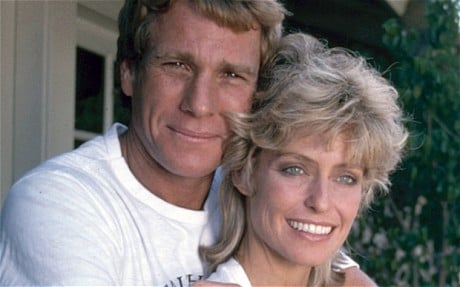
VH1’s list of the “200 Greatest Pop Culture Icons of All Time”,

the “100 Greatest Entertainers of All Time”(ranked at #13) and the “Greatest Movie Star of all time list” by Entertainment Weekly, “The 50 Greatest Actresses of All Tim” by AMC, and Billboard Hot 100 All-Time Top Artists.

Billboard also ranked Streisand as the top female Jewish musician of all time. As a gay icon, Streisand was named by The Advocate as one of the “25 Coolest Women” and the “9 Coolest Women Appealing to Both Lesbians and Gay Men”, and was also placed among the “12 Greatest Female Gay Icons of All Time” by Out magazine.

She was recognized as one of the top gay icons of the past three decades by Gay Times.


During the first decade of the 21st century, the American Film Institute celebrated 100 years of the greatest films in American cinema. Four of Streisand’s songs were represented on AFI’s 100 Years…

100 Songs, which highlighted “America’s Greatest Music in the Movies”: “The Way We Were” at

“Evergreen (Love Theme From A Star Is Born)” , “People” , and “Don’t Rain On My Parade” . Many of her films were represented on AFI’s 100 Years… series. AFI’s 100 Years…100 Laughs, highlighting “the films and film artists that have made audiences laugh throughout the century,” ranked What’s Up, Doc? . AFI’s 100 Years…

100 Passions highlighted the top 100 greatest love stories in American cinema and placed The Way We Were at, Funny Girl at, and What’s Up, Doc? at . AFI’s Greatest Movie Musicals highlighted the 25 greatest American movie musicals, ranking Funny Girl at


Professional memberships


As one of the most acclaimed actresses, singers, directors, writers, composers, producers, designers, photographers, and activists in every medium that she’s worked in, Barbra is the only artist who is concurrently a member of the American Society of Composers, Authors and Publishers, the Screen Actors Guild, the American Federation of Television and Radio Artists, the Academy of Motion Pictures Arts and Sciences, and Actors’ Equity Association, as well as the honorary chairwoman of the board of directors of Hadassah’s International Research Institute on Women.


Barbra Streisand in popular culture


References in television


On the sketch comedy show Saturday Night Live, in the recurring skit “Coffee Talk”, character Linda Richman, played by Mike Myers, hosts a talk show dedicated to, among other things, the adoration of Streisand. Streisand, in turn, made an unannounced guest appearance on the show, surprising Myers and his guests Madonna and Roseanne Barr. Myers also appeared as the Linda Richman character on stage with Streisand at her 1994 MGM Grand concert, as well as a few of the 1994 Streisand tour shows.


References in music


Sound clips of Streisand’s heated exchange with a supporter of former U.S. president George W. Bush were sampled in the 2009 Lucian Piane dance song “Bale Out”, making it sound as if she were arguing with actor Christian Bale (whose recorded outbursts during the filming of Terminator Salvation were the centerpiece of the song).


“Barbra Streisand” is a disco house song by American-Canadian DJ duo Duck Sauce (Armand Van Helden & A-Trak). It was released on September 10, 2010. The song peaked at number one in Poland, Belgium, the Netherlands, Finland, Switzerland and Austria. It became a top ten hit in Australia, the United Kingdom, France, Germany, Ireland, and Italy.


References on stage


Daniel Stern’s 2003 Off-Broadway play Barbra’s Wedding was set against the backdrop of Streisand’s 1998 wedding to James Brolin.


The 2013 comedy play Buyer & Cellar, written by Jonathan Tolins, is set in Streisand’s Malibu house cellar. A struggling actor finds a job there and one day meets the star. It is a one-man show starring Michael Urie that premiered at Rattlestick Playwrights Theatre in April 2013.


References in fashion


In 1972, the modern hair crimping iron was invented by Geri Cusenza, the original founder of Sebastian, for Streisand’s hair.


In 1977, Streisand become the first woman celebrity to be on the cover of Playboy who was interviewed inside.


In 2011, Jennifer Aniston paid tribute to Streisand in a series of poses that recreated some of Streisand’s classic looks on the cover of Harper’s Bazaar.


In 2013, Victoria Beckham revealed that Streisand was her own style icon. “She is the epitome of chic. She looked magnificent. She wears lots of Donna Karan, and she had on this fabulous Donna Karan dress that just draped perfectly. She had this gorgeous hair. She was just beautiful. I love her.”.


Sources Wikipedia