Photos from Flickr


Sources photos : Raffaele Camardella blog ( Flickr)

Sources photos : Raffaele Camardella blog ( Flickr)
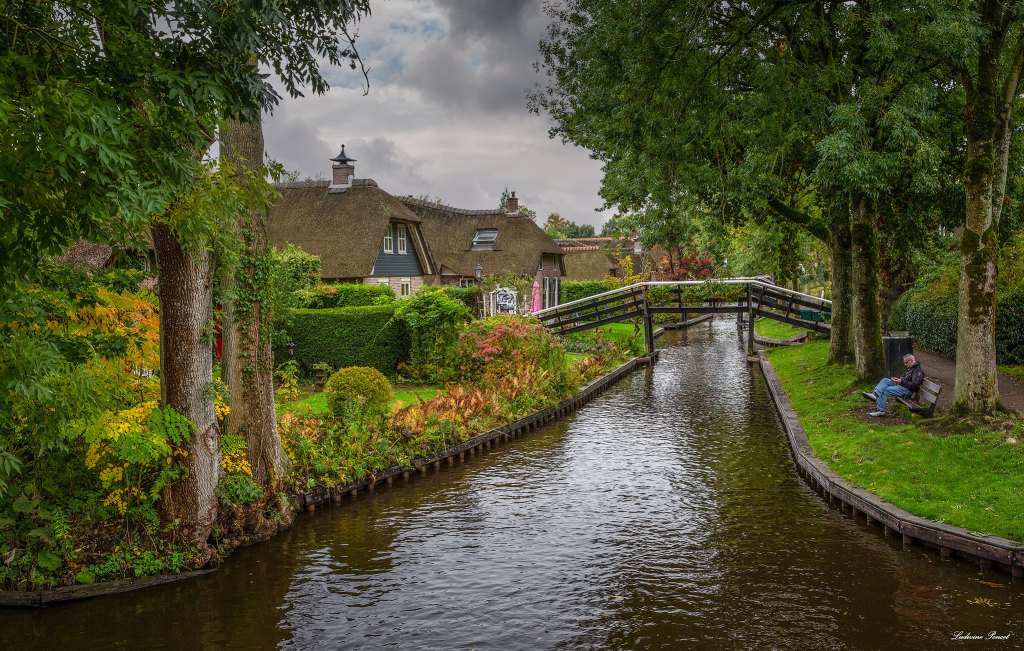



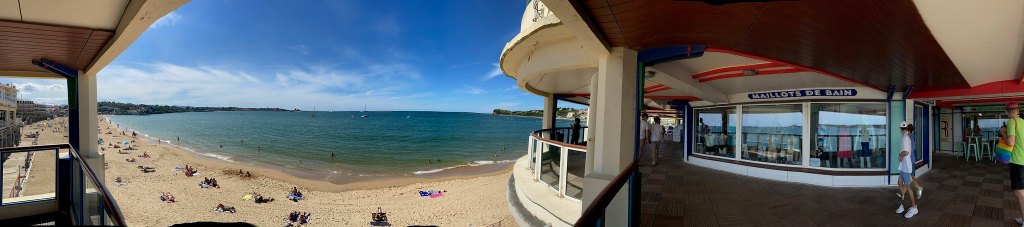
Sources photos (except Saint Jean de Luze)
http://www.flickr.com/photos/191333875@N06/ ( Amaizing photos on this blog)
LUDIVINE 27

Sources Photos Saint Jean de Luze
http://www.flickr.com/photos/192116669@N02/
RADIOSATELLITE WEBRADIO


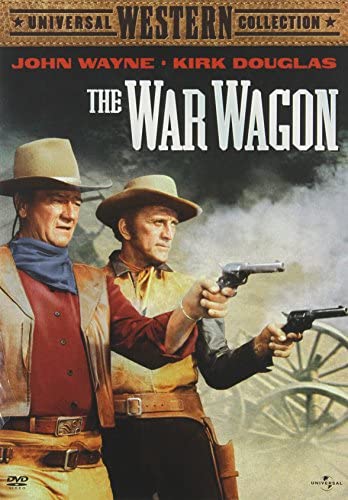
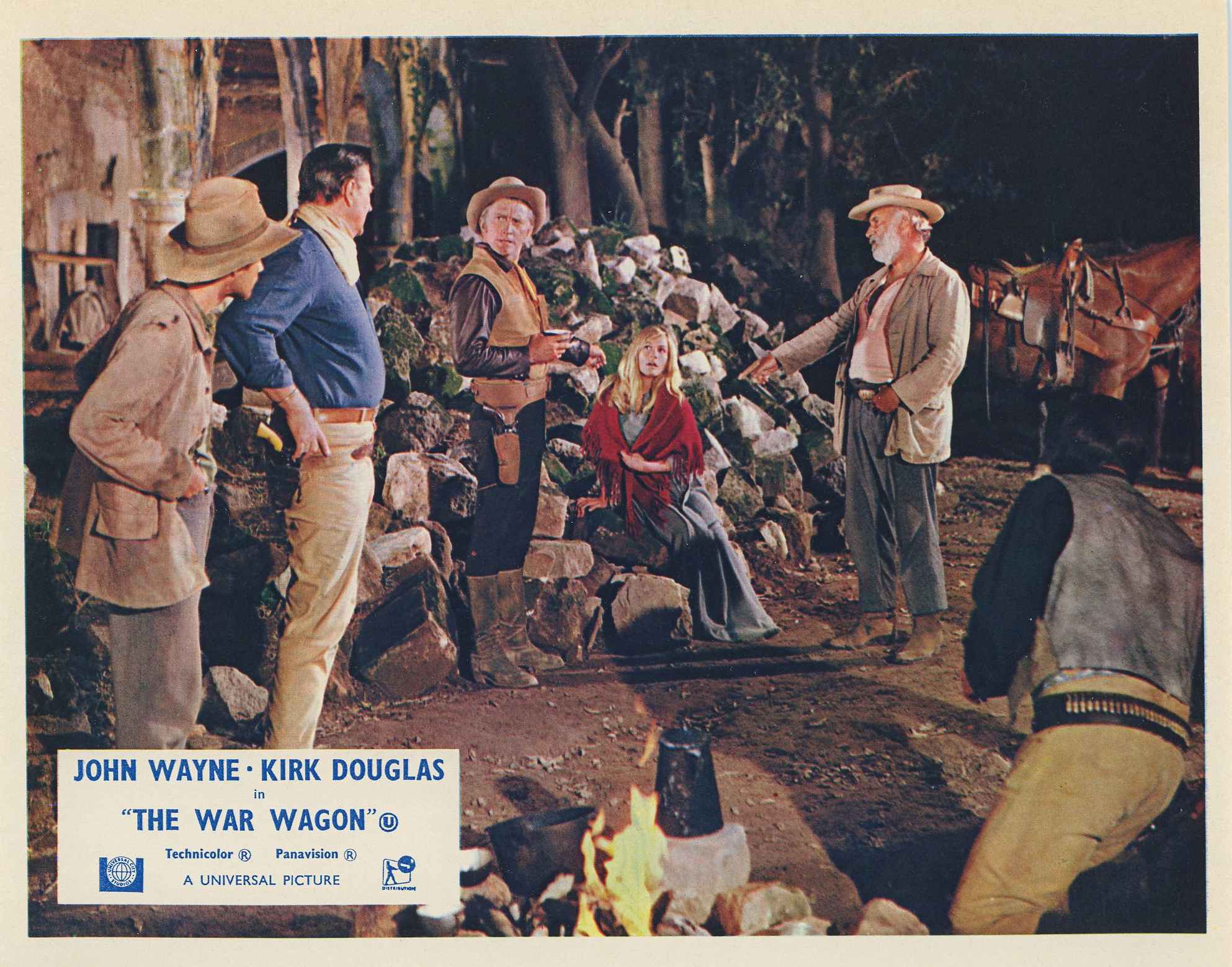
Filming took place in Sierra de Órganos National Park in the town of Sombrerete, Mexico.
Rancher Taw Jackson returns to his hometown to settle a score, after being released early from prison for good behavior. Three years earlier, he was framed by corrupt businessman Frank Pierce and wrongfully imprisoned, while Pierce appropriated his ranch and lands, as well as the recently discovered gold on the property.
Jackson decides to steal Pierce’s largest gold shipment, worth $500,000 (approximately $12M-$13M today). Jackson learns the date of the shipment from Wes Fletcher, an elderly wagon driver employed by Pierce.
He then hires a marksman and safecracker known only as “Lomax” to assist him, even though Lomax had helped Pierce send Jackson to prison. The safe of gold dust is being transported in a “war wagon”, a heavily armored stagecoach surrounded by armed guards on horseback.
Lomax and Jackson rescue Levi Walking Bear, a Kiowa translator, from a gang of Mexican banditos. Lomax is then sent to pick up Billy Hyatt, supposedly an expert on explosives, and is dismayed to find he is a teenage drunkard. Jackson, Fletcher, Hyatt, Lomax and Levi meet up to discuss their next move, and Fletcher instantly objects to Hyatt’s presence around his teenage “wife” Kate.
Lomax rides into town and is confronted by Pierce, who offers him $12,000 for Jackson’s head. Lomax spends the night with Lola, an old acquaintance, at one point having to stop Hyatt, who has become drunk again, from spilling the beans about the robbery. Jackson and Levi return from negotiations with the Kiowas, during which the warriors agreed to help, since Pierce is starving the tribe out. Jackson sends Hyatt to wait at Fletcher’s farm. Kate, in Fletcher’s absence, reveals to Hyatt that she is not married and was actually sold by her abusive parents. Hyatt starts trying to defend Kate from Fletcher’s harsh behaviors, and Jackson has to stop Fletcher from killing Hyatt.
Levi, Jackson, and Lomax cause a disturbance in town to confuse Pierce’s men. The conspirators later sneak onto Jackson’s old ranch to steal some nitroglycerin from a safe in the mining shack. Jackson keeps Pierce distracted by pretending to collect some of his old things, while Lomax and Hyatt put the nitro in bottles.
The next day, Hyatt rigs a bridge to explode with the bottles of nitro, Levi blocks the normal route with a felled tree, and Lomax and Jackson set up a booby trap in a narrow gorge. Pierce reveals he has added a turret with a Gatling Gun to the war wagon, and he and his guards set out with the shipment. The Kiowa warriors create a dust screen and separate the guard riders from the War Wagon. The bridge explodes behind the wagon as it crosses, stranding the guards on the other side of the cliffs. Chief Wild Horse and some more Kiowa warriors attack the wagon and try to take all the gold for themselves, but many are killed by the Gatling Gun.
When the wagon is diverted into the gorge by the fallen tree, Jackson and Lomax spring their trap, killing the drivers. Pierce shoots the last two of his men when they try to desert him and the wagon, but one of them shoots back as he dies, killing Pierce. The wagon crashes into a gulch, and the conspirators quickly load the gold dust into some flour barrels on Fletcher’s cart. However, the Kiowa warriors kill Fletcher and attempt to take all the gold (and the flour) for themselves. Hyatt uses the last bottle of nitro to kill the chief and scare the warriors off, but the cart horses spook and run off. The flour barrels are lost and broken, with the Kiowa women, unaware of all that transpired, gathering up the flour to feed their families.
Jackson finds $100,000 worth of gold dust in a hidden compartment in the cart, where Fletcher had tried to steal it. Lomax angrily takes Jackson’s horse as payment, and Jackson gives a small amount of dust to Hyatt, who rides off with Kate while Levi returns to the Kiowas. They plan to meet in six months to divide the rest, when the robbery will be old news.
Sources Wikipedia / youtube
Some short videos. just to enjoy and to laugh
In the pilot episode, “The Lady in the Bottle“, astronaut Captain Tony Nelson, United States Air Force, is on a space flight when his one-man capsule Stardust One comes down far from the planned recovery area, near a deserted island in the South Pacific. On the beach, Tony notices a strange bottle that rolls by itself. When he rubs it after removing the stopper, smoke starts shooting out and a Persian-speaking female genie materializes and kisses Tony on the lips, shocking him.
They cannot understand each other until Tony expresses his wish that Jeannie (a homophone of genie) could speak English, which she then does. Then, per his instructions, she “blinks” and causes a recovery helicopter to show up to rescue Tony, who is so grateful, he tells her she is free, but Jeannie, who has fallen in love with Tony at first sight after being trapped for 2,000 years, re-enters her bottle and rolls it into Tony’s duffel bag so she can accompany him back home. One of the first things Jeannie does, in a subsequent episode, is break up Tony’s engagement to his commanding general’s daughter, Melissa, who, along with that particular general, is never seen or mentioned again. Producer Sidney Sheldon realized the romantic triangle between Jeannie, Tony, and Melissa would not pan out in the long run.
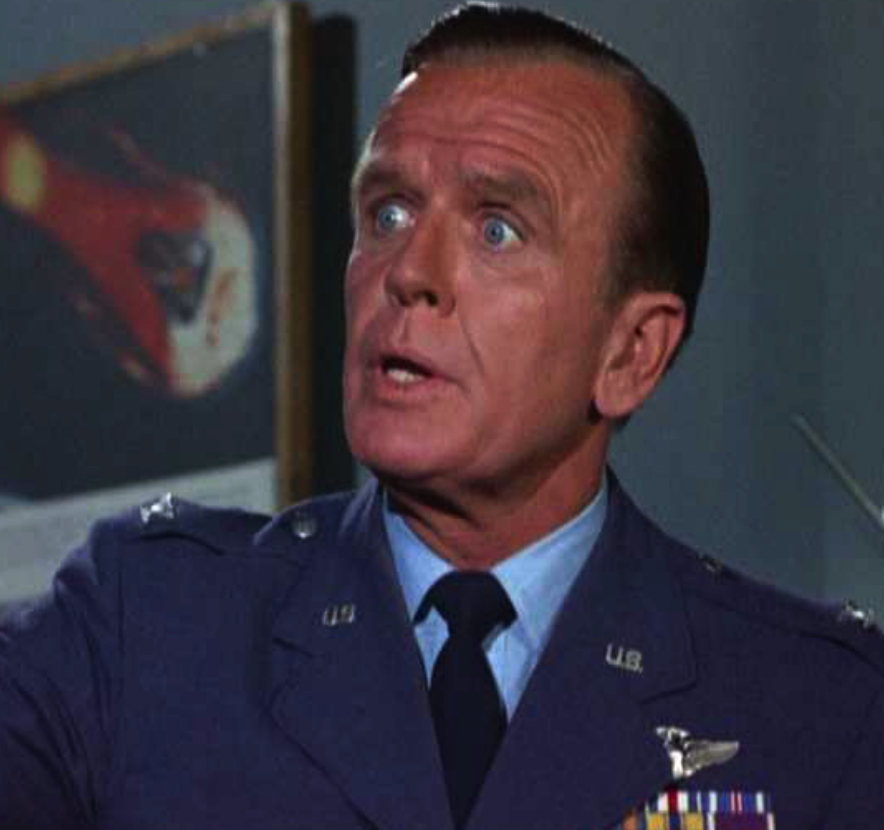
Tony at first keeps Jeannie in her bottle most of the time, but he finally relents and allows her to enjoy a life of her own. However, her life is devoted mostly to his, and most of their existential problems stem from her love for him and her often-misguided efforts to please him, even when he does not want her assistance. His efforts to cover up Jeannie’s antics, because of his fear that he would be dismissed from the space program if her existence were known, brings him to the attention of NASA’s resident psychiatrist, U.S. Air Force Colonel Dr. Alfred Bellows. In a running gag, Dr. Bellows tries over and over to prove to his superiors that Tony is either crazy or hiding something, but he is always foiled (“He’s done it to me again!”) and Tony’s job remains secure. A frequently used plot device is that Jeannie loses her powers when she is confined in a closed space. She is unable to leave her bottle when it is corked, and under certain circumstances, the next person who removes the cork becomes her new master. A multiple-episode story arc involves Jeannie (in miniature) becoming trapped in a safe when it is accidentally locked.
Tony’s best friend and fellow astronaut, United States Army Corps of Engineers Captain Roger Healey, does not know about Jeannie’s magic for the first 16 episodes, although they meet in episode 12. When Roger finds out she is a genie, he steals her bottle, temporarily becoming her master. Roger is often shown as girl-crazy or scheming to make a quick buck. He occasionally has hopes of claiming Jeannie so he can use her to have a lavish lifestyle or gain beautiful girlfriends, but overall he is respectful that Tony is Jeannie’s master. Both Tony and Roger are promoted to the rank of major late in the first season. In later seasons, Roger’s role is retconned to portray him knowing about Jeannie from the beginning (i.e., to him having been with Tony on the space flight that touched down, and thus having seen Jeannie introduce herself to Tony).
Jeannie’s evil fraternal twin sister, mentioned in a second-season episode (also named Jeannie – since, as Barbara Eden’s character explains it, all female genies are named Jeannie — and also portrayed by Barbara Eden, in a brunette wig), proves to have a mean streak starting in the third season (as in her initial appearance in “Jeannie or the Tiger?”), repeatedly trying to steal Tony for herself, with her as the real “master”. Her final attempt in the series comes shortly after Tony and Jeannie are married, with a ploy involving a man played by Barbara Eden’s real-life husband at the time, Michael Ansara (in a kind of in-joke, while Jeannie’s sister pretends to be attracted to him, she privately scoffs at him). The evil sister wears a green costume, with a skirt rather than pantaloons.
Early in the fifth season, Jeannie is called upon by her uncle Sully (Jackie Coogan) to become queen of their family’s native country, Basenji. Tony inadvertently gives grave offense to Basenji national pride in their feud with neighboring Kasja. To regain favor, Tony is required by Sully to marry Jeannie and to avenge Basenji’s honor by killing the ambassador from Kasja when he visits NASA. After Sully puts Tony through an ordeal of nearly killing the ambassador, Tony responds in a fit of anger that he is fed up with Sully and his cohorts and he would not marry Jeannie even if she were “the last genie on earth”. Hearing this, Jeannie bitterly leaves Tony and returns to Basenji. With Jeannie gone, Tony realizes how deeply he loves her. He flies to Basenji to win Jeannie back. Upon their return, Tony introduces Jeannie as his fiancée. She dresses as a modern American woman in public. This changed the show’s premise: hiding Jeannie’s magical abilities rather than her existence. This, however, contradicts what is revealed in “The Birds and Bees Bit”, in which it is claimed that upon marriage a genie loses all of her magical powers.
The role of Jeannie’s mother was played by several actresses:
Sources Wikepedia / Youtube



OTHER ARTICLES

Lately Paddy and I have been on a quest to find the best milkshake in our area. It is a craving we can’t describe – but in the depth of winter, we love to have ice cream – and right now, we are sampling milkshakes in lots of different places. Usually it is a chocolate shake – but occasionally we throw in a strawberry one. Pat had a vanilla milkshake once but decided that was a waste of time since it was so ‘blah’ – that is his technical term. We have tested small local shops as well as chains – and not just the same franchise of a chain – but different locations because strange as it may sound – they all make them differently!
Of course, throughout this quest we have to try to not get so big we can’t get in the car to go on our…
View original post 516 more words

Sources : Youtube
Photo :
Crédits : The LIFE Picture Collection/Getty Images
Time Life Pictures

Sources Youtube
Photo Maxitendance













Sources “around the world” (Facebook)https://www.facebook.com/Around-the-World-109402800767702

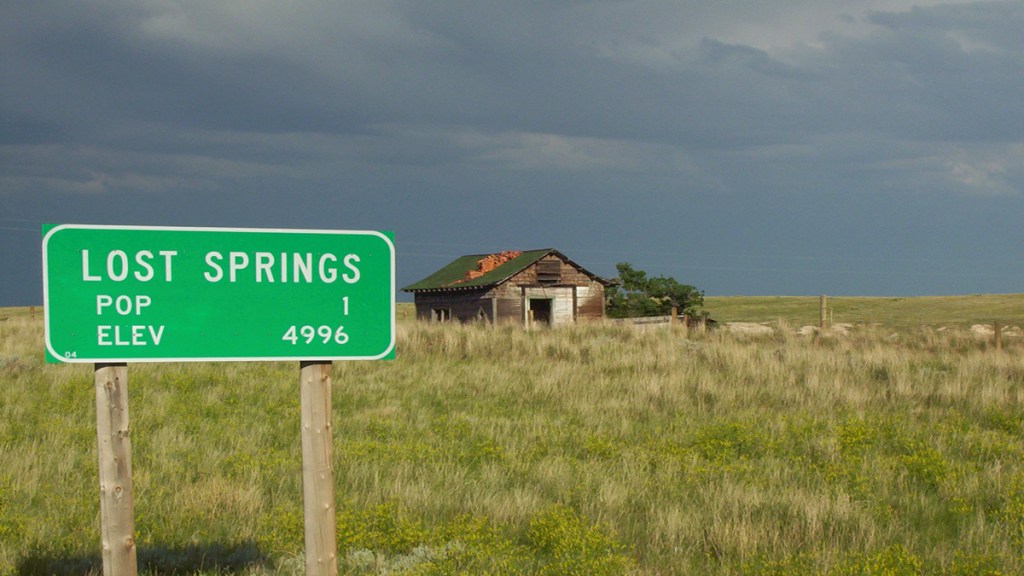
Lost Springs was first inhabited in the 1880s, when it received its name from railroad workers who could not find the springs shown on survey maps of the area. The town was incorporated in 1911, and it originally had 200 residents, most of whom worked at the nearby Rosin coal mine. After the coal mine closed around 1930, the population of Lost Springs steadily declined.
Edward John Sanmann of York, Nebraska, and his wife, Lauretta Mae (Rogers) of Bloomington, Nebraska, moved to Lost Springs in 1948 where they lived and worked in the general store and assisted with running the town’s post office. Sanmann was a member of the American Sunday School Union and Bible Class at Shawnee. The couple had a daughter who died in infancy, Virginia Arlene, and an adopted daughter, Louise Marie. Sanmann and his wife died 17 days apart in September 1967.
By 1960, the population of the town had dropped to five. In 1976, both the state of Wyoming and the U.S. Bicentennial Commission designated Lost Springs as the smallest incorporated town in America; its population was then eleven.
In 1983, Lost Springs became involved in a court battle with the Chicago and North Western Transportation Company. The railroad, which ran adjacent to the town, attempted to seize 5.2 acres (2.1 ha) of land to build a 22-foot (6.7 m) railway embankment. Lost Springs Mayor Leda Price alleged that the embankment, which would lie between the town and U.S. Highways 18 and 20, would separate the town from traffic on the highway. A Wyoming district judge ruled in the town’s favor, and the railroad ultimately agreed to build an unobstructing track bed and use its own land for track.
As of the censusof 2010, there were 4 people, 3 households, and 0 families residing in the town. The population density was 44.4 inhabitants per square mile (17.1/km2). There were 3 housing units at an average density of 33.3 per square mile (12.9/km2). The racial makeup of the town was 100.0% White.
There were 3 households, of which 100.0% were non-families. 66.7% of all households were made up of individuals. The average household size was 1.33.
The median age in the town was 59.5 years. 100% of residents were between the ages of 45 to 64. The gender makeup of the town was 50.0% male and 50.0% female.

For the 2000 census, only one person resided in Lost Springs, Wyoming. According to the United States Census Bureau, the town is one of only four places in the United States to have a population of one person. Since 2000, the population of Monowi, Nebraska also fell to one. However, Lost Springs mayor Leda Price claims the census was inaccurate, and that Lost Springs had four residents in 2000. The population reached five by 2002.By 2009, the population had dropped to three.According to the 2010 Census, the population was four.
There is no public education in Lost Springs because there are no children in Lost Springs. If the need arose for public education it would be provided by Converse County School District
Hill was a prominent figure in British culture for nearly four decades. His show proved to be one of the great success stories of television comedy and was among the most-watched programmes in the UK, with the audience peaking at more than 21 million in 1971. The Benny Hill Show was also exported to half the countries around the world. He received a BAFTA Television Award for Best Writer, a Rose d’Or, and was nominated for the BAFTA for Best Entertainment Performance and two Emmy Awards for Outstanding Variety. In 2006, Hill was voted by the British public number 17 in ITV’s poll of TV’s 50 Greatest Stars.
Outside of television, Hill starred in films including the Ealing comedy Who Done It? (1956), Chitty Chitty Bang Bang (1968) and The Italian Job (1969). His comedy song “Ernie (The Fastest Milkman in the West)” was 1971’s Christmas number one on the UK Singles Chart, and he received an Ivor Novello Award from the British Academy of Songwriters, Composers and Authors in 1972.


Sources Wikipedia / Youtube
The group competed in and won the fourth season of The Sing-Off on NBC in 2013. They sang an arrangement of Hunter Hayes’s “I Want Crazy” as their final competitive song, earning the group $100,000 and a recording contract with Sony.
Home Free released their first album under a major label, Crazy Life, on February 18, 2014. Their most recent album, Land of the Free, was released in June 2021.
The group Home Free was originally formed in January 2001 by Chris Rupp in Mankato, Minnesota, when some of its members were still in their teens. The five founding members were brothers Chris and Adam Rupp, Matt Atwood, Darren Scruggs, and Dan Lemke; taking their name from a boat owned by Atwood’s grandfather who helped support the group financially in the early years. The group began as a hobby for the singers, but they gradually gained in experience and popularity. By 2007 they had enough of a following to pursue music full-time. During this period, the Rupp brothers and Atwood formed the core of the group, with Atwood singing lead tenor. Other members of the group came and went. Current member Rob Lundquist, another Minnesotan, joined in 2008.
For much of the group’s history they worked with many talented bass singers, but did not have a full-time committed bass voice. In 2007 Chris Foss sang with them. Elliott Robinson was added as bass in September 2008, and was replaced in June 2009 by Troy Horne. Later that year, Horne left to rejoin The House Jacks. To replace Horne they turned to Tim Foust, who first sang with them as a guest on their 2010 tour. A Texas native, Foust was then pursuing a career as a singer/songwriter of country music and had recently released a solo album, but was not ready to sign on full-time. Matthew Tuey sang with the group in the interim of 2011, until Foust joined them full-time in January 2012.
In 2012, Austin Brown was working on a Royal Caribbean cruise ship as a featured singer in their production shows. When Home Free joined the cruise as a guest performing group, they met and became close. Brown, who was born in Tifton, Georgia, let Home Free know that he would be interested in joining the group if they ever had an opening. At the end of 2012 lead singer Matt Atwood and his wife, who had married the previous year, were expecting their first child. Finding the group’s touring schedule incompatible with family life, and having an opportunity to take over his family’s real estate business in Mankato, Atwood made the decision to retire from the group. Home Free then invited Brown to join as lead tenor. He sang his first show with the group in October 2012, and became full-time in January 2013. In 2015 they made a guest appearance on Kenny Rogers’s holiday album Once Again It’s Christmas on the track “Children Go Where I Send Thee”; a music video was released in November 2015.
On March 18, 2016 it was announced that, after sixteen years performing with the group, co-founder Chris Rupp would be leaving to pursue a solo career. He would be replaced after May 8 by Adam Chance, formerly of Street Corner Symphony.
All five of Home Free’s singers have formal musical training. Lundquist and the Rupp brothers all have bachelor’s degrees in music. Adam Rupp’s primary instrument is trumpet, but he also plays drums, keyboard, and bass guitar. Since joining, Foust and Brown have also become very active in writing and arranging.
In terms of musical roles, Home Free personnel includes a lead tenor, a high tenor, a baritone, a bass, and a beatboxer. The High tenor, who often fronts the group, is Austin Brown who sings in the register of a high tenor. Traditional tenor harmony is sung by Rob Lundquist, baritone harmony is sung by Adam Chance, and Tim Foust sings bass with the range of a basso profundo. Occasionally, the latter two switch roles in their singing voice. In addition to the four voices, percussion sounds are provided by beatboxer Adam Rupp. All of the singers occasionally sing solos supported by the harmonies of the other singers.
Home Free’s styling as a country group is relatively recent. Before Foust joined the group, Home Free was an all-purpose a cappella group, singing in a wide variety of styles, of which country was only a minor one. With the additions of Foust and Brown, the group moved more in the direction of country and found that audiences responded well to it. Home Free had auditioned three times for The Sing-Off (without Foust and Brown) and not been accepted. When auditioning for the fourth season, they made a conscious decision to style themselves as a country group. In an interview Brown said this identity is what grabbed the attention of The Sing-Off’s casting director, who said, “You guys really fit something we don’t have.”



Source : Wikipedia / Youtube /Home free /Google